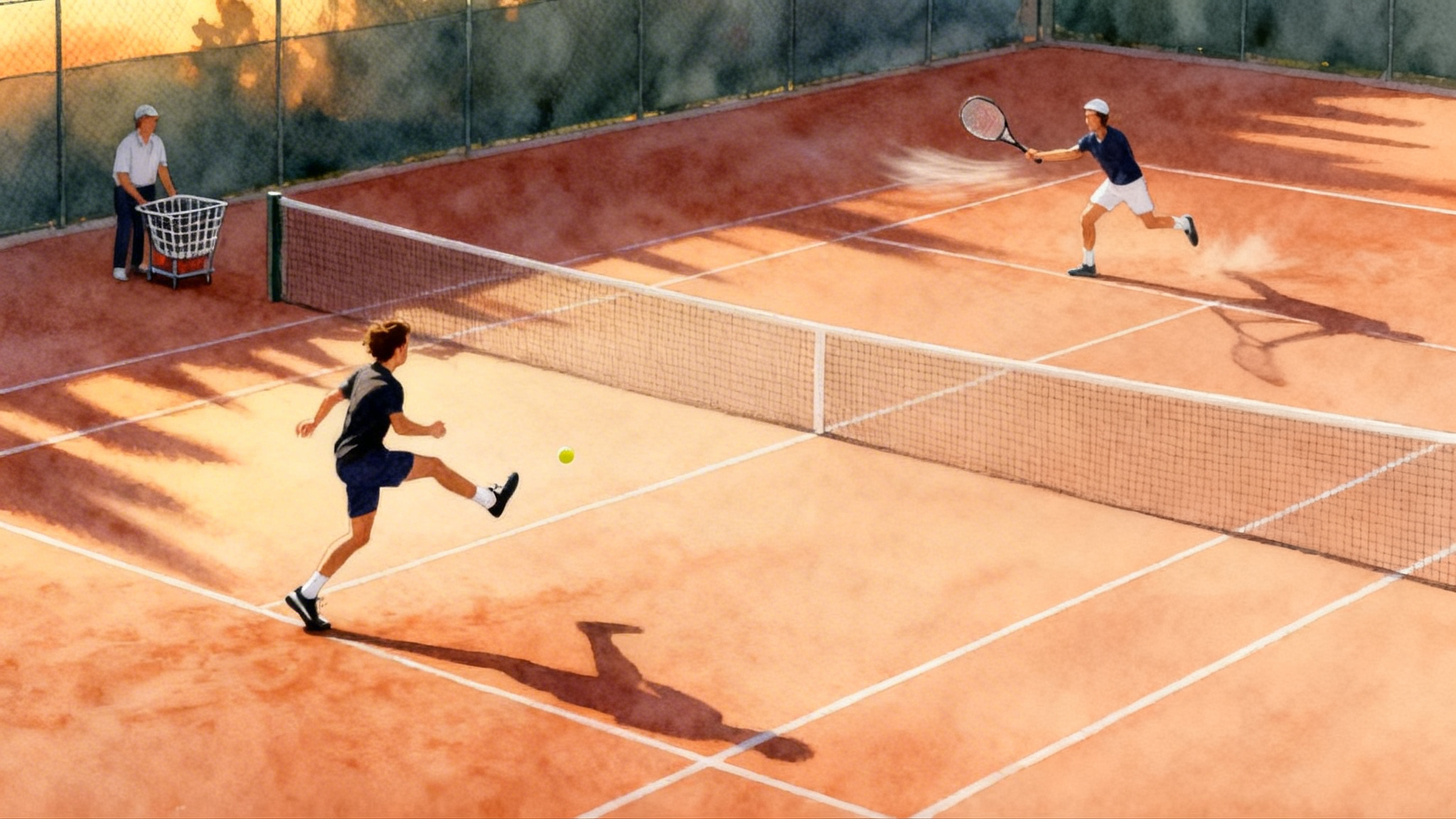
Gulf Winter Tennis Triangle: Dubai, Abu Dhabi, Doha Guide
From December to March, the United Arab Emirates and Qatar form the most reliable winter training corridor in the Northern Hemisphere. Here is how to plan 2–4 focused weeks with pro-level venues, dry weather, and easy flight access.
 Tommy
Tommy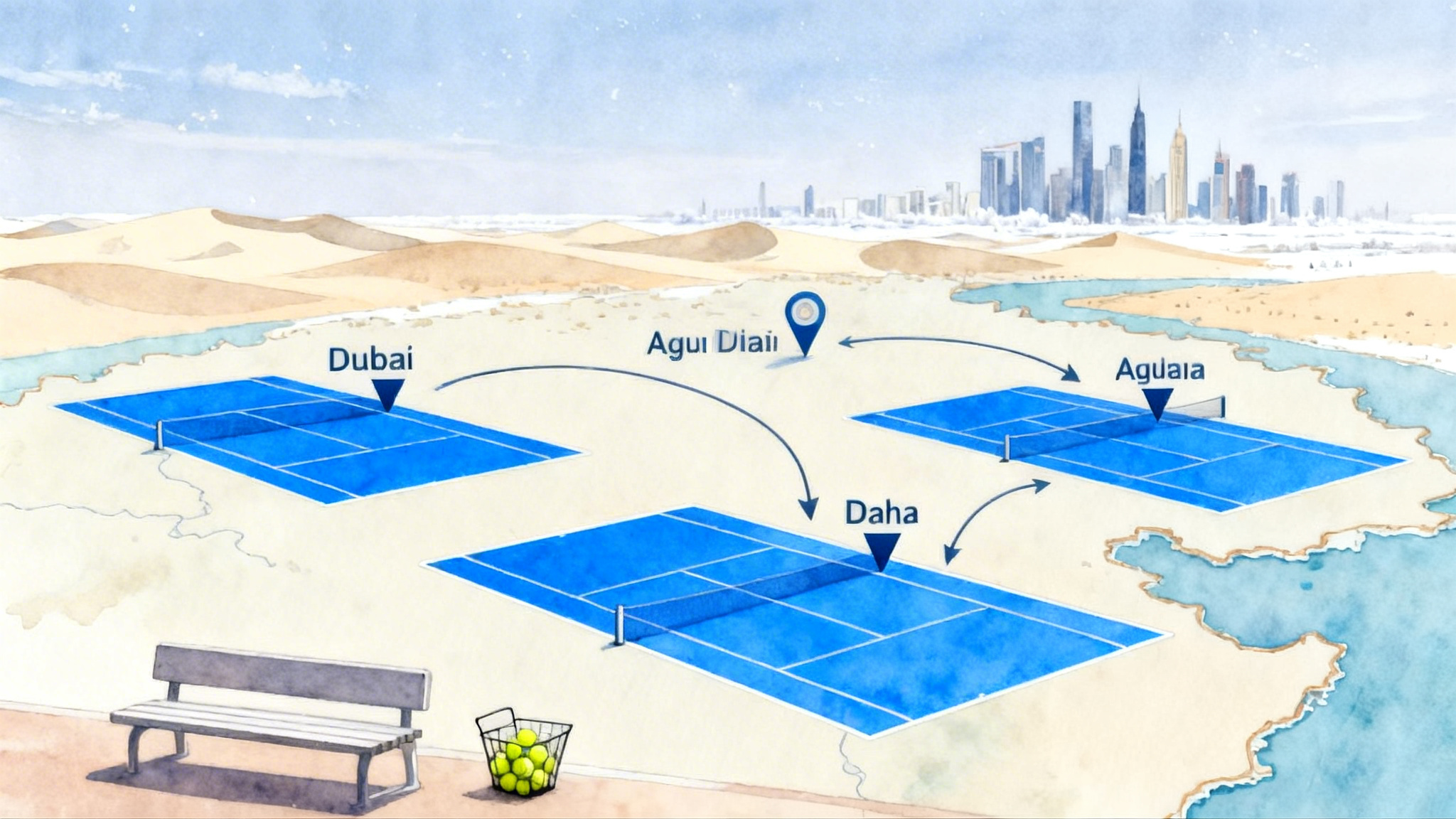
Why the United Arab Emirates–Qatar corridor works in winter
From early December through March, the arc that runs from Abu Dhabi to Dubai to Doha gives tennis players a rare combination: dry and predictable weather, pro tour facilities, and nonstop flight access from almost anywhere. If you are looking to stack quality court hours with minimal weather risk and zero snow delays, this corridor is the safest bet in the Northern Hemisphere. Think of it as a three-court triangle on a giant hard court: two bases in the United Arab Emirates, one in Qatar, all close enough to combine in a single trip. If you want a stateside comparison for climate and scheduling, see our dry desert training in Palm Springs.
- Reliability: Rain is uncommon, humidity is manageable compared with the tropics, and daylight is plentiful. Evening sessions run under excellent lighting.
- Surfaces: Almost every complex uses medium to medium-fast hard courts, so you can build a repeatable ball.
- Access: Dubai International Airport (DXB), Abu Dhabi International Airport (AUH), and Hamad International Airport in Doha (DOH) are global hubs. Emirates, Etihad, and Qatar Airways run frequent long-haul services, which keeps fares and schedules practical in winter.
How the pro swing shapes your plan
The Association of Tennis Professionals and the Women’s Tennis Association cluster Middle East events in February. That lets you train by day and watch elite match play at night. Check the ATP tournament calendar to anchor your dates, then build backward for training blocks in December and January or forward into March for a consolidation week. If you want to prioritize women’s tennis, review the WTA tournament calendar and mirror the same approach.
Typical pattern in recent seasons
- Abu Dhabi: WTA event in early February at the International Tennis Centre, Zayed Sports City.
- Doha: ATP and WTA weeks around mid to late February at the Khalifa International Tennis and Squash Complex.
- Dubai: ATP and WTA weeks in late February at the Dubai Duty Free Tennis Stadium.
Exact dates shift year to year, so confirm your week-by-week plan around ticket releases and main draw schedules.
Weather by month: humidity and wind at a glance
Use these tendencies as planning signals. Daytime highs are mid 60s to mid 80s Fahrenheit, roughly 18 to 30 degrees Celsius.
| Month | Dubai: Temp, Humidity, Wind | Abu Dhabi: Temp, Humidity, Wind | Doha: Temp, Humidity, Wind | What it means for training |
|---|---|---|---|---|
| December | 20–27 C, 50–65 percent, light sea breeze, rare showers | 20–27 C, 50–60 percent, light breeze | 18–25 C, 45–55 percent, slightly breezier | Prime for volume. Midday is pleasant, evenings are cool and crisp. |
| January | 19–24 C, 50–65 percent, periodic northwesterly gusts during Shamal episodes | 19–24 C, 50–60 percent, similar gust risk | 16–23 C, 45–55 percent, windier on average | Best quality ball in sun, pack a light layer for nights. Expect a few windy days that are great for percentage tennis. |
| February | 20–26 C, 45–55 percent, variable winds, minimal rain | 20–26 C, 45–55 percent, steady breeze | 18–25 C, 45–55 percent, occasional gusts | Tournament month. Schedule high-intensity drills mornings, match play late afternoon. |
| March | 23–30 C, 45–60 percent, sea breeze builds | 23–30 C, 45–55 percent, slightly warmer inland | 22–28 C, 40–50 percent, driest feel of the three | Heat rises late month. Shift to earlier starts, add hydration and shade breaks. |
Wind note: Winter can bring Shamal winds from the northwest. Use those days to train serve targets, footwork stability, and high over-net margins rather than forcing line-painting.
Facilities snapshot: indoor or outdoor, public or resort
- Outdoor versus indoor: The flagship venues in Dubai, Abu Dhabi, and Doha are outdoor hard courts with excellent lighting. True indoor courts are limited but exist in a few private clubs and temporary bubbles. The practical plan is to schedule early or late sessions on potential warm days and keep a light gym or video session ready if rare rain or dust shortens play.
- Public courts: Municipal and community courts typically offer bookable hard courts with lights by the hour. Surfaces are consistent, though not pristine. This is your value play, especially for volume drilling. Examples include community club courts near residential districts and larger sport parks in each city.
- Resort courts: Most four and five star hotels operate a small bank of hard courts, often with pro shop support, stringing, and ball machines. Surfaces are immaculate and towels, water, and shaded seating are standard. Prices reflect the service level and convenience.
- Tournament complexes:
- Dubai Duty Free Tennis Stadium area hosts the Dubai Championships and opens for public play or camps outside event windows.
- International Tennis Centre at Zayed Sports City in Abu Dhabi runs year-round programs and major events.
- Khalifa International Tennis and Squash Complex in Doha is the reference facility in Qatar and home base of the federation’s programs.
If you want a guaranteed daily hitting partner or a small group clinic, secure it first, then layer court bookings around it. You can also request a coach through our platform to match by level and schedule.
Getting there and moving around
- Flights: Dubai International Airport (DXB) is often the cheapest intercontinental arrival. Abu Dhabi International Airport (AUH) can be smoother at immigration during peak weeks. Hamad International Airport in Doha (DOH) is efficient and close to the city centre.
- Transfers: Dubai to Abu Dhabi is roughly 140 kilometres by road, about 75 to 100 minutes depending on traffic. Dubai to Doha is a short flight, often about one hour gate to gate. Ride hailing is available in all three cities, and Dubai’s metro links the airport to many hotel districts and the tennis stadium area.
- Time zones: Dubai and Abu Dhabi observe UTC+4 year-round. Doha observes UTC+3 year-round. None of the three use daylight saving time, which keeps body clocks simpler for multiweek stays.
Coaching, clinics, and match play
The region has a deep bench of English speaking coaches, plus strong junior and adult club ladders. Typical offerings you can book three to four weeks ahead:
- Adult live ball clinics, 90 minutes, 6 to 8 players, strong workout focus.
- Technical sessions with video breakdown for serve or backhand.
- Hitting partner blocks of 60 to 120 minutes for grooving patterns.
- Junior squads by level with match play ladders on weekends.
For predictable volume, set a recurring time slot on your first message. Example: Mondays, Wednesdays, and Fridays at 8:00, then hold one floating slot for a late afternoon match. For broader winter-planning context, see our Florida vs Canary Islands comparison.
Budgets that actually add up
Per person, per week, excluding flights. Prices vary by week and neighborhood, so treat these as working ranges.
| Item | Public or community | Club or academy | Resort hotel courts |
|---|---|---|---|
| Court rental, 60–90 min | 15–35 USD | 25–55 USD | 50–120 USD |
| Private lesson, 60 min | 70–120 USD | 80–140 USD | 100–160 USD |
| Group clinic | 20–40 USD | 25–45 USD | 30–60 USD |
| Stringing, per racquet | 15–30 USD plus string | 20–35 USD plus string | 25–45 USD plus string |
Weekly lodging by city
- Dubai: 3 star or serviced studio 120–180 USD per night, 4 star 180–300, 5 star 300–600.
- Abu Dhabi: Often 10 to 20 percent below Dubai for similar quality, good value for families.
- Doha: Comparable to Dubai in tournament weeks, better value outside event windows.
All-in weekly estimates, excluding flights
- Value build: 1,200–1,900 USD for a solo player using public courts, 5 to 7 sessions, a few clinics.
- Balanced training: 1,900–2,900 USD with a mix of club courts, three private lessons, two clinics, one massage or physiotherapy session.
- Resort immersion: 3,000–5,500 USD with five star lodging, daily coaching, and spa recovery.
Booking windows that work
- Flights: Eight to twelve weeks out for February. Six to ten weeks for December, January, or March.
- Lodging: Six to ten weeks for tournament periods, three to six weeks otherwise.
- Courts: Three to ten days ahead for public or community courts, one to three weeks for hotel courts.
- Coaching or clinics: Three to four weeks for prime morning and late afternoon slots, ten to fourteen days for midday.
- Tournament tickets: As soon as the host opens sales. Evening sessions sell fastest.
Set calendar reminders for payments and refund deadlines. Build one flex day per week to absorb schedule shifts or to watch evening matches without rushing.
A two to four week planner that tracks the swing
Below are two sample routes. Swap the order if ticket availability pushes you to start in Doha or Dubai.
Two week express plan
- Days 1–4, Abu Dhabi base: Arrive, acclimate, and run a technique plus movement focus at the International Tennis Centre area. Schedule a 90 minute live ball clinic on Day 2 and a private technical session on Day 3. Light sightseeing in the afternoon. If your timing catches the early February women’s event, grab an evening session ticket for live scouting.
- Days 5–8, Doha base: Short flight to Doha. Book two morning hitting blocks at the Khalifa complex region and one private serve session. If the calendar aligns, catch an evening ATP or WTA session to study patterns under lights.
- Days 9–14, Dubai base: Move to Dubai to close the block. Use the first two mornings for heavy pattern drilling, then two afternoons of practice sets. If the Dubai events are on, watch a night session midweek to keep motivation high.
Four week full plan
- Week 1, Abu Dhabi: Volume week. Four on-court sessions including one two hour live ball, one serve plus return build, and two aerobic base gym sessions. One technical video session midweek for checkpoints.
- Week 2, Doha: Mixed intensity week. Two high intensity court days, one tactical match play day, one recovery skills day with mobility and pool work. Evening match viewing when the tournament is live.
- Week 3, Dubai: Specificity week. Serve plus first ball patterns, plus two practice matches with local sparring partners. One day focused on transition and finishing at net.
- Week 4, Dubai or Abu Dhabi: Consolidation and testing. Early morning session to reduce heat. Two match days with scoring goals, one strength plus power day, one rest and sightseeing day, then a final evaluation lesson.
Tip: Stagger stringing across cities to avoid a single big expense and to test local stringers. Keep your go-to string in the bag in case a shop’s inventory runs low.
Sample microcycles
Adult performance microcycle, 7 days
- Monday: 90 minutes drills, depth to corner patterns, 30 minutes shoulder care and mobility. Target volume 350 to 450 balls struck.
- Tuesday: 60 minutes serve plus first ball, 45 minutes gym session, lower body strength, finish with 10 minutes breath work.
- Wednesday: 90 minutes live ball clinic or practice set to four games x three sets. Evening walk for light recovery.
- Thursday: Off-court video review, 45 minutes mobility, optional 30 minutes wall session or mini court touch.
- Friday: 60 minutes return plus neutral rally tolerance, 45 minutes power in the gym, medicine ball and jumps.
- Saturday: Match play with constraints, no let serves, second serve targets only in game two and game six, chart first serve percentage.
- Sunday: Recovery, pool or beach, 20 minutes band work, hydration focus.
Junior family microcycle, 7 days
- Monday: Schoolwork morning, 60 minutes technique in the afternoon, 20 minutes agility ladder.
- Tuesday: 90 minutes squad clinic, group rally games and serve plus return, social ice cream at the club after.
- Wednesday: Light day, museum or desert trip, 30 minutes band routine in the evening.
- Thursday: 60 minutes private lesson focused on one theme, for example continental grip volleys, followed by 20 minutes serves.
- Friday: 60 minutes match play with peer group, parents watch and record three points for feedback.
- Saturday: Free morning. Afternoon sand-based fun run, 15 to 20 minutes, then pool recovery.
- Sunday: Friendly family doubles. Keep it playful, emphasize split steps and simple patterns.
What to pack and how to tune
- Grips and strings: Bring two to three sets per racquet. The air is dry, but volume goes up because of reliable weather. If you string at 52 pounds in a cool climate, consider 50 to 51 pounds in January to add pocketing, then return to normal in March as temperatures climb.
- Sun plan: Midday winter sun is mild, yet hydration and sunscreen still matter. Use light colored shirts and a cap with ventilation.
- Shoes: Courts are generally medium pace. A durable outsole pays off because you will play more, not because surfaces chew through rubber.
- Recovery: Most hotels have gyms, saunas, and pools. Book a 30 to 45 minute sports massage once per week if you are increasing load.
Public versus resort: when each makes sense
- Choose public or community courts when you want two sessions per day and you are price sensitive. Book a recurring slot and accept that surface perfection is not the point.
- Choose resort courts when you need convenience, a quick turnaround from room to court, on-site stringing, and shade. Consider this in the last week when fatigue is higher and time is tight.
- Mix both: Drill and volume on public courts, then use resort sessions for match play with a coach or for a clean video capture.
Common pitfalls and how to avoid them
- Overbooking early mornings only: Add one or two midday sessions per week to simulate match conditions and build resilience to warmth.
- Skipping windy days: Train crosscourt height, spin, and safe margins when gusts arrive. You will leave more match ready than players who hid indoors.
- Forgetting to hold a back-up: Keep one flexible slot for a coach each week. If a match opportunity appears, you can swap without losing volume.
- Not aligning tickets and hotels: During tournament weeks, book lodging walking distance or one metro stop from the venue. You will save time and catch night sessions without a long ride back.
A closing word: build a triangle, not a checklist
Dubai, Abu Dhabi, and Doha are not just sunny backdrops. Together they form a reliable system for winter tennis: world class courts, predictable skies, and simple travel between hubs. Use the pro calendar to set your anchors, then build two to four weeks that climb from volume to specificity to testing. For another triangle-based itinerary, explore a year‑round triangle in Portugal. Plan your courts and coaching early, budget with eyes open, and let a few windy days sharpen your patterns. If you do, you will leave the Gulf with a cleaner ball, match-ready habits, and a plan you can repeat every winter without reinventing the wheel.