Lowcountry Clay Circuit Guide: Charleston, Hilton Head, Savannah
 Tommy
Tommy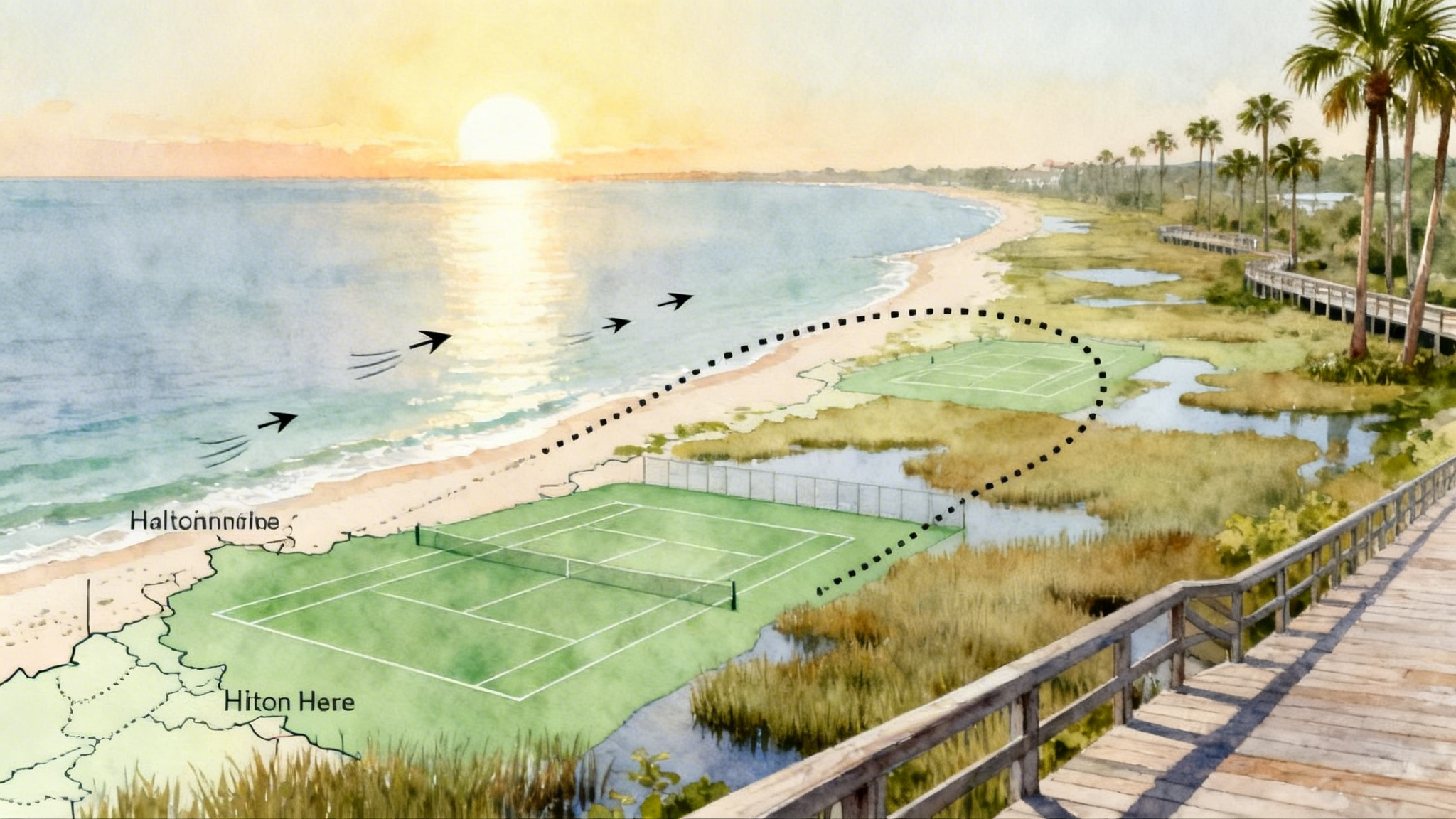
Why the Lowcountry is the most dependable spring and fall base in the United States
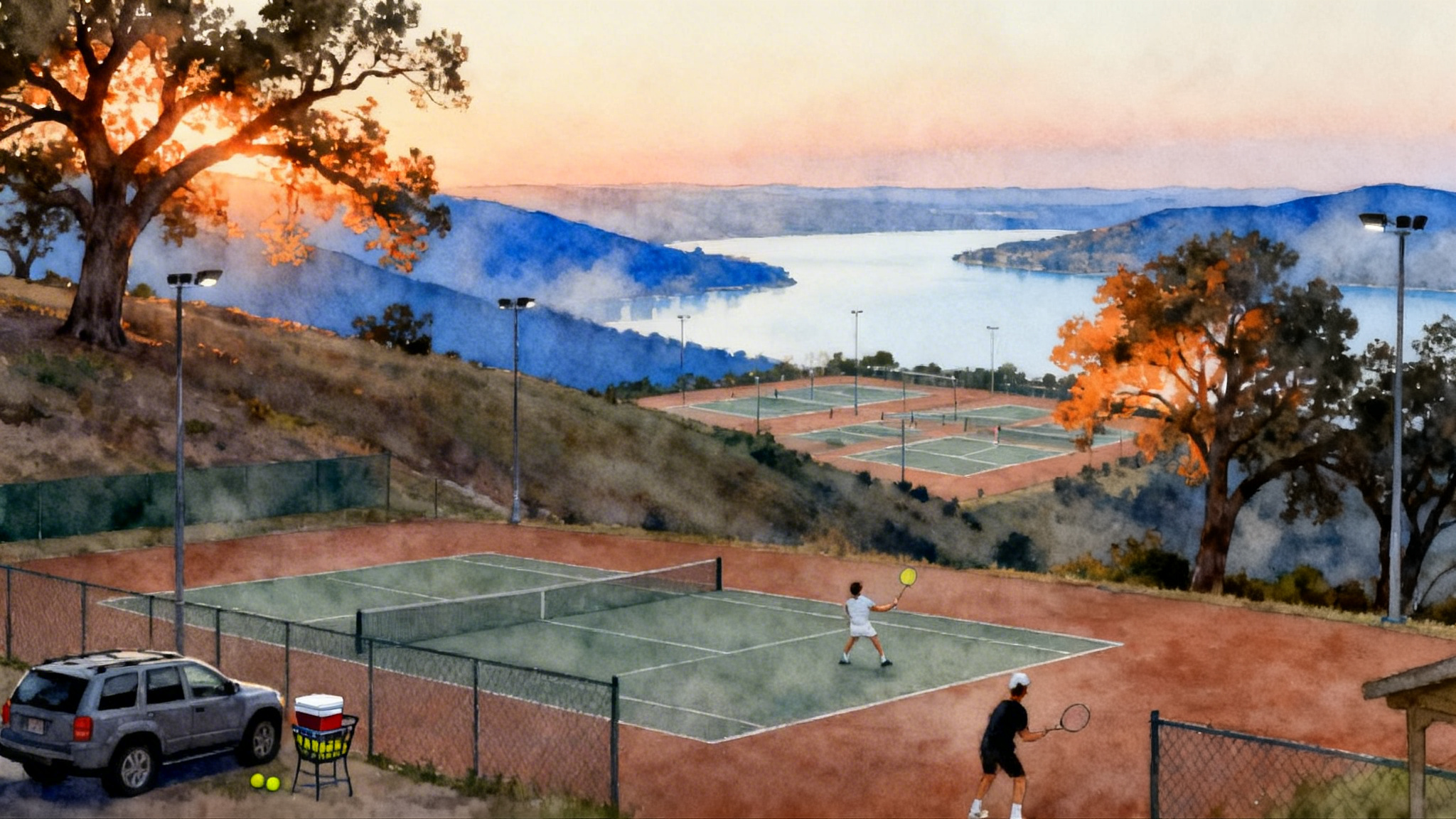
If you train on clay in March to May or late September to November, the South Carolina and Georgia coast delivers a rare combination: stable temperatures, quick-drying green clay, and an event calendar that lets you watch world-class tennis in the morning and groove your patterns in the afternoon.
Two forces make it work.
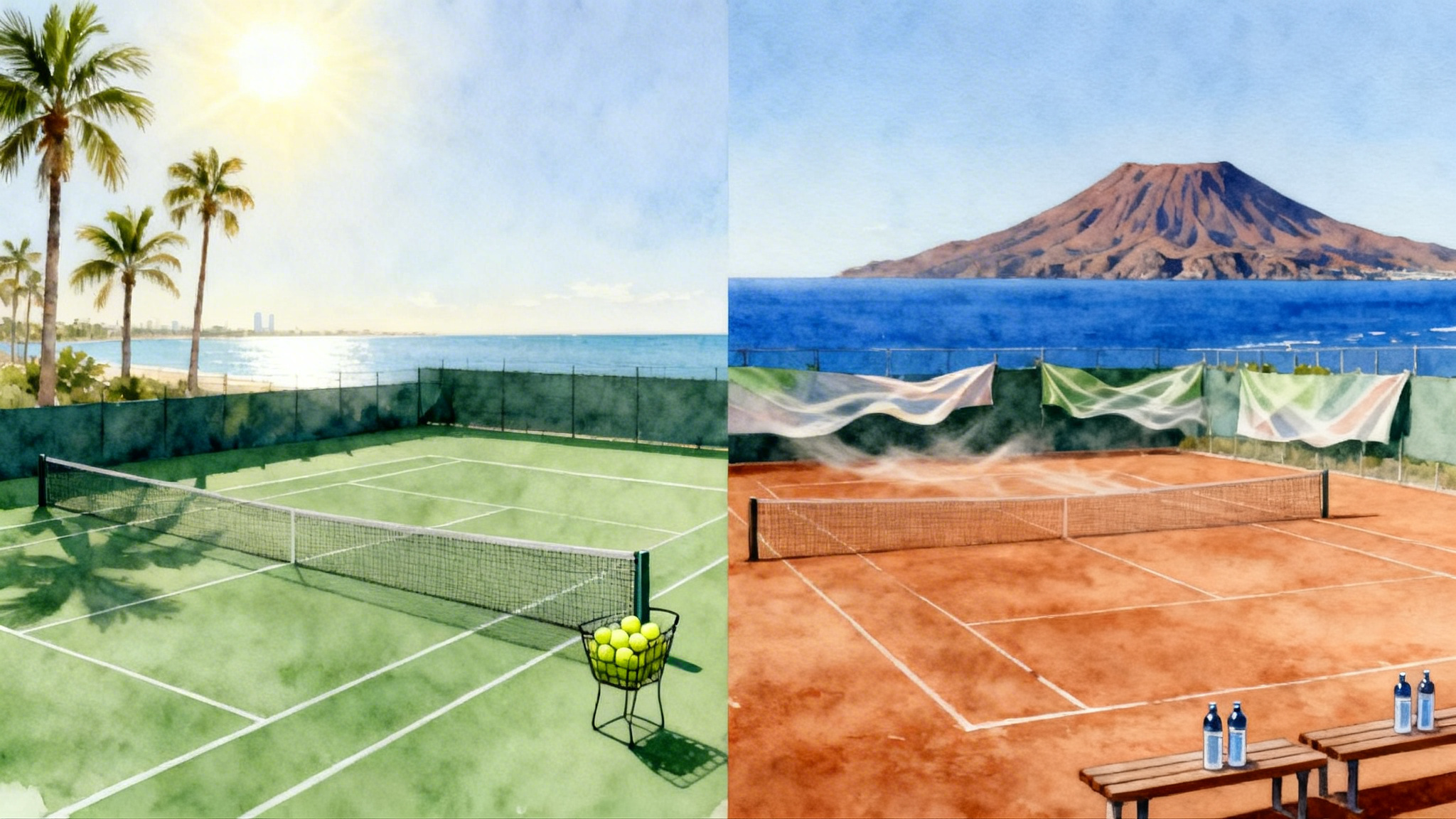
- Marine moderation: The Atlantic acts like a battery for heat. Water warms and cools slowly, so coastal air swings less between cool mornings and hot afternoons. Fewer extremes mean more sessions that feel the same from day to day. The reliable afternoon sea breeze also trims perceived heat and helps keep courts playable after a brief shower.
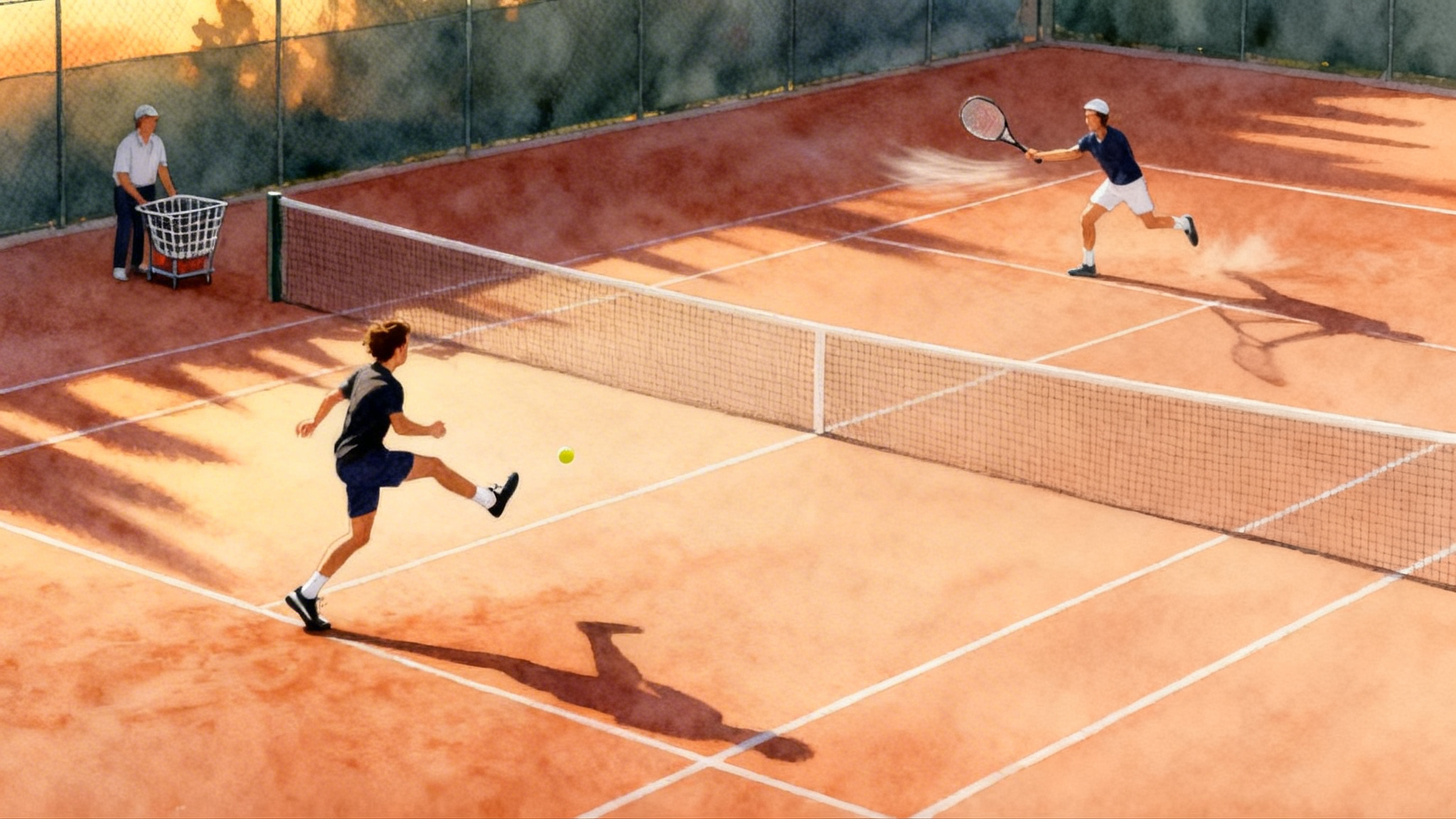
- Har-Tru prevalence: Most Lowcountry resort and club complexes run on Har-Tru, the green clay common in the Eastern United States. The surface is compacted layers of crushed metabasalt. It absorbs light rain, sheds water through its base, and refreshes with a drag broom and line sweeper. On a drizzly morning that would cancel a hard-court hit, a Har-Tru crew can have you rallying by lunch. Your legs also thank you. The surface softens impact and encourages sliding into contact, which reduces joint load during high-volume drilling.
Result: predictable training and fewer canceled sessions, especially in the shoulder seasons when many inland cities are still swinging from cold fronts to heat spikes. If you prize stable weather blocks, see our Lošinj microclimate tennis base for a European parallel.
When to come
- Spring block: Target mid March to early May. Daytime highs typically run in the upper sixties to upper seventies Fahrenheit along the coast. Morning clinics are cool enough for volume; afternoons feel warm but manageable with shade breaks.
- Fall block: Target late September to mid November. The ocean is still warm from summer, which steadies mornings, and the worst humidity has faded. Storm risk declines after October begins, and clinics often have more space once peak beach season ends.
If your schedule is flexible, plan Sunday arrival to Thursday departure. Weekend crowds thin, court time opens, and hotel rates often improve. For true winter months, compare our Florida vs Canary Islands tennis base to plan December through February.
Pair your week with the Charleston Open
The women’s tour stops on Daniel Island every spring, and the grounds transform into a training classroom. Check the Charleston Open schedule for exact dates and day-session timing, then build your clinic and match play around it. The pattern that works for many adult players is simple:
- Morning: Two hours of drilling on green clay to lock in footwork and targets.
- Midday: Lunch and a one to two hour spectating block to study patterns and point construction from the best players in the world. Focus on court position after the serve, directionals off the backhand wing, and how pros manage short balls without rushing.
- Late afternoon: Ninety minutes of live ball or sets to apply what you watched. Keep one theme, such as first ball depth after the return, and track a single stat like balls landed past the service line.
Tickets, hospitality packages, and on-site clinics sell out early. If you want your group clinic within a short ride of Daniel Island, book three to six months ahead.
Where to book adult clinics and organized play
The region is dense with programs that welcome visitors. Always call ahead to confirm visitor access and sign-up windows.
Charleston area
- Kiawah Island Golf Resort, Roy Barth Tennis Center: Daily adult clinics and doubles tactics, plus ball machine access. Good for groups that want a resort base, cycling, and beach recovery.
- LTP Daniel Island: Adult clinics often run mornings and evenings. Close to the tournament during the Charleston Open window.
- Seabrook Island Racquet Club: Technical clinics with a relaxed pace, ideal for players returning from injury.
- Wild Dunes Tennis Center: Doubles-heavy sessions and round robins for social match play.
Hilton Head Island
- Palmetto Dunes Tennis and Pickleball Center: Frequent adult clinics, live-ball sessions, and daily mixers. Easy to stack two sessions with a break.
- Sea Pines Racquet Club: Classic instruction and court access near Harbor Town. Book early in spring.
- Van Der Meer Tennis Center: Structured clinics and high-rep drilling. Flexible for singles travelers.
Savannah
- Savannah Tennis Center at Bacon Park: Public facility with clinics, lessons, and league-style match play. Call for nonresident drop-in options.
- Forsyth Park courts: Public courts near historic squares. Bring a hitting partner or post for partners on local social groups.
- The Landings Club: Primarily member access, but check lodging partnerships or guest options if your group is staying nearby.
Tip: When you call, ask three questions. What is the typical player rating for this clinic. How many students per pro. Are courts watered and groomed before the session. Those three details determine whether you get reps at your level, individual feedback, and consistent bounces.
Humidity and heat playbook that actually works
Hot and sticky days do happen. Plan like a local and you will still improve.
- Schedule: Train early. Book the first clinic of the day, then lift or do mobility inside from late morning to early afternoon. Add a second hit near sunset when the sea breeze returns.
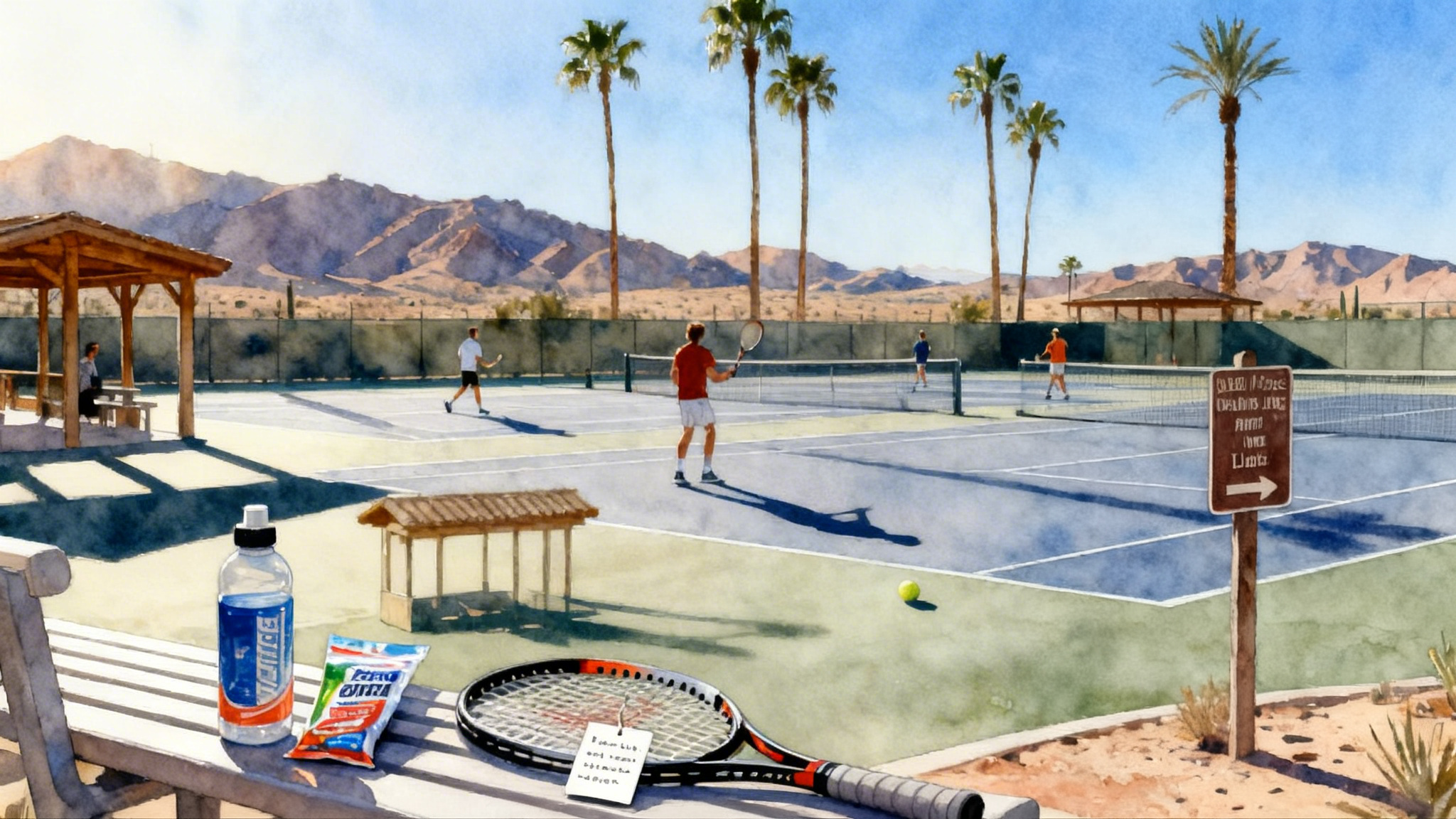
- Hydration: Start the day already hydrated. A simple rule is one large glass of water at wake up, then 500 to 750 milliliters of fluid per hour on court with 400 to 600 milligrams of sodium. If you cramp easily, add a second bottle with a higher sodium mix for match days. Sip, do not chug.
- Fuel: Eat light, salty, and frequent. A banana and a small nut butter packet before live ball, then a small recovery snack within thirty minutes after play.
- Grip and sweat control: Pack two to three overgrips per session in peak humidity. Use a rosin bag or liquid chalk between games. Antiperspirant on palms the night before tough sessions can help, just test it at home first.
- String and balls: Humid air can slow the ball slightly. If you are a topspin forehand player with polyester string, drop two pounds of tension to maintain depth. For flat hitters on multifilament, consider a half gauge thicker string for control.
- Skin and eyes: Broad spectrum sunscreen rated at least 30, reapplied every 90 minutes, a brimmed hat, and amber lens sunglasses that cut glare on green clay.
- Lightning and pop-up storms: Coastal showers can pass quickly. If thunder is close, clear the court immediately and wait twenty to thirty minutes after the last thunder before restarting.
Three practical itineraries
These sample plans assume you are an adult player rated between 3.0 and 4.5 who wants to improve doubles patterns and point construction while enjoying the coast. Adjust the start times to your fitness and the forecast.
A three day Charleston sprint
Day 1, Arrival and reset
- Fly into Charleston International Airport. Check in on Kiawah, Seabrook, Daniel Island, or Isle of Palms depending on your base.
- Evening: Forty five minutes of easy hitting to groove timing after travel. Early dinner, lights out.
Day 2, Clinic plus scouting
- Morning: Two hour adult clinic focused on first serve plus first ball patterns. Track a simple stat, such as first volley depth.
- Midday: Lunch and one to two hours watching pro matches if your dates overlap with the Charleston Open. If not, stream a recent match and take notes on serve plus one patterns.
- Late afternoon: Ninety minutes of doubles point play. Apply one coaching cue from the morning.
Day 3, Live ball and sets
- Morning: High tempo live ball session. Emphasize transition footwork through the middle.
- Midday: Recovery walk on the beach. Ten minutes of easy strides barefoot along the firm sand line, then a short calf and hip flexor mobility series.
- Late afternoon: Two sets with a local round robin. Ask to play a pair one level higher for the first set, then your level for the second set.
A four day Hilton Head rhythm builder
Day 1, Arrival
- Drive from Charleston in about two hours or fly direct to Hilton Head Island Airport or Savannah. Check in at Palmetto Dunes or Sea Pines.
- Evening: Thirty minute equipment check and easy wall session if available.
Day 2, Foundations and vision
- Morning: Two hour technical clinic for forehand shape and height control.
- Midday: Lunch in shade, then a short video review of your strokes on your phone. Focus on one element, such as contact point in front on the backhand.
- Late afternoon: Seventy five minutes of crosscourt live ball with targets. End with serve plus one patterns.
Day 3, Doubles patterns
- Morning: Doubles clinic with poaching and signals. Note which return side suits your strengths.
- Midday: Pool recovery. Ten minutes cool immersion, then stretch.
- Late afternoon: Local mixer or organized point play. Track net touches and first volley location.
Day 4, Application and exit
- Morning: Match play. Two short sets first to four games with tiebreaks for time.
- Midday: Lunch and pack. If the forecast turned hot, shift this to early morning and hit the road after a shower.
A five day coast connector, Charleston to Hilton Head to Savannah
Day 1, Charleston arrival and light hit
Day 2, Clinic near Daniel Island, then watch session play if in season
Day 3, Morning hit, midday transfer to Hilton Head in about two hours, sunset recovery walk
Day 4, Hilton Head live ball and doubles mixer
Day 5, Morning drive to Savannah in about one hour, public clinic at Savannah Tennis Center, late afternoon sets in Forsyth Park if courts are open
Build in an extra day as a weather cushion. If you do not need it, use it for a marsh kayak or a food tour. If you do need it, you will still hit your volume target without compressing sessions.
Logistics that save time and energy
- Airports: Charleston International for the north end of the circuit, Savannah and Hilton Head Island for the south. All three pair well with rental cars so you can chase clinics and mixers across neighborhoods.
- Drive times: Charleston to Hilton Head is roughly two hours. Hilton Head to Savannah is forty five to sixty minutes depending on bridge traffic. Charleston to Savannah is just under two hours outside rush periods.
- Booking windows: Resort programs often post clinics two to four weeks ahead, but spring and fall weeks tied to school breaks can sell out. Call and ask for a wait list even when a slot looks closed online.
- Court fees: Many resorts include court time with clinic fees. Clarify whether the ball machine or evening court rentals are included.
When weather flips, pivot to Atlanta
Cold snap rolling in. Tropical moisture stacking up. Or maybe you want a weekend of guaranteed reps indoors. The larger Atlanta metro offers indoor and outdoor options and a higher density of year-round academies than the coast. You can reach the northeastern suburbs from Savannah or Hilton Head in four to five hours, and from Charleston in about five to six hours depending on routing.
For a reliable backup, look at Life Time Tennis Academy programs. The chain’s Atlanta area clubs often blend indoor and outdoor courts, structured drilling blocks, strength and mobility sessions, and flexible drop-in options. Call ahead to confirm guest access, whether day passes are available, and the ratio of students to coaches for adult sessions.
Two day Atlanta pivot plan
- Day 1: Midday arrival, ninety minute indoor drilling block, then a thirty minute mobility session in the fitness area. Finish with a short video review.
- Day 2: Morning live ball, lunch break, then organized point play or a round robin. If the sun returns and wind calms, finish with an outdoor set to re-adapt to natural light.
Gear for the pivot
- Clay and hard shoes: Bring one pair dedicated to clay and one pair for hard courts with fresh tread. Label bags so clay does not gum up indoor surfaces.
- Two string setups: One set at your usual clay tension and one two pounds tighter if you expect indoor hard court play.
- Layers: Indoor courts can feel cool after coastal humidity. A light long sleeve keeps warm up crisp.
A simple planning checklist
One month out
- Choose your base city and clinic centers. If you want to watch the Charleston Open, decide which day sessions you will attend and buy tickets.
- Reserve lodging within a fifteen to twenty minute drive of your courts. Waterfront is nice, but proximity to courts protects sleep and recovery.
Two weeks out
- Confirm clinics, round robins, and any private lessons. Ask for the current pro roster and which coach matches your goals.
- Book a ball machine block on your light day to groove serves and returns.
- If you plan a possible Atlanta pivot, identify a club and call to confirm day pass policies.
Travel week
- Pack match balls, overgrips, sunscreen, sweatbands, electrolyte packets, and a small first aid kit. Add a rosin bag, a spare hat, and a small towel for the handle.
- Screenshot directions to each court in case your phone signal blips crossing bridges or marsh.
- Message your hitting partners to reconfirm start times and court numbers.
What improvement looks like in one week here
Your goals should be specific, measurable, and clay informed. To sharpen reaction and footwork, review our split step timing drills before day one.
- Depth on first groundstroke: Track how many first groundstrokes after serve or return land past the service line. Aim to lift your percentage by ten points by the end of the week.
- Neutral ball patience: Count rally balls above net height that you accept and redirect crosscourt without forcing a line. Aim for three more per rally on average in your final session than on day one.
- Doubles first volley quality: Place a cone or target two feet inside the baseline and two feet from the sideline. In clinics and mixers, note how often you land first volleys in that zone. Clay gives you time to close in and shape the ball.
By Friday, you should feel steadier through contact, more willing to slide into neutral shots, and more confident choosing height over raw pace. The coastal rhythm and the surface help your brain and body settle into those patterns.
Sample daily schedule that balances training and the coast
- 7:00 a.m. Wake up, hydrate, light breakfast.
- 8:00 to 10:00 a.m. Clinic or private lesson on clay.
- 10:30 to 11:00 a.m. Mobility and light band work. Ten leg swings each side, ankle rocks, hip circles, and thoracic rotations.
- 11:30 a.m. Lunch and shade.
- 1:30 to 2:30 p.m. Video study or light bike ride. If the Charleston Open is running, attend a day session window.
- 4:30 to 6:00 p.m. Live ball or sets. Choose one theme and one stat to track.
- 7:00 p.m. Dinner with protein and carbohydrate, light walk, and lights out by 10:00 p.m.
Common mistakes to avoid
- Overstuffed schedule: Three serious hits per day looks great on paper and leads to blisters by Wednesday. Two quality on-court blocks plus mobility wins.
- Ignoring dew point: Temperature alone is not destiny. If dew point sits above the upper sixties Fahrenheit, plan shorter bursts and a longer shade break.
- Wrong clinic level: If you are a strong 3.5 player and land in a 4.5 live ball, you will spray and learn little. If you are a 4.0 in a 3.0 clinic, you will groove bad habits. Ask the desk for a reality check.
- Not rotating clay shoes: Clay lives in tread. Knock soles clean at the hose or brush after sessions to keep traction.
The big picture
The Lowcountry is not just a pretty place to play. It is a system. The ocean smooths the weather. Har-Tru smooths the bounce. The event calendar teaches you while you rest. The short drives between Charleston, Hilton Head, and Savannah let you keep momentum when one day’s forecast goes sideways. And when the pattern truly shifts, Atlanta gives you a dependable indoor and outdoor backup without a flight.
Build your block with intention. Choose the right month, call the clinics that fit your level, plan hydration like an athlete, and put one or two days on your calendar to watch pros shape points on the same surface you train on. You will leave with better movement, cleaner contact, and a doubles playbook you can trust when matches tighten back home.