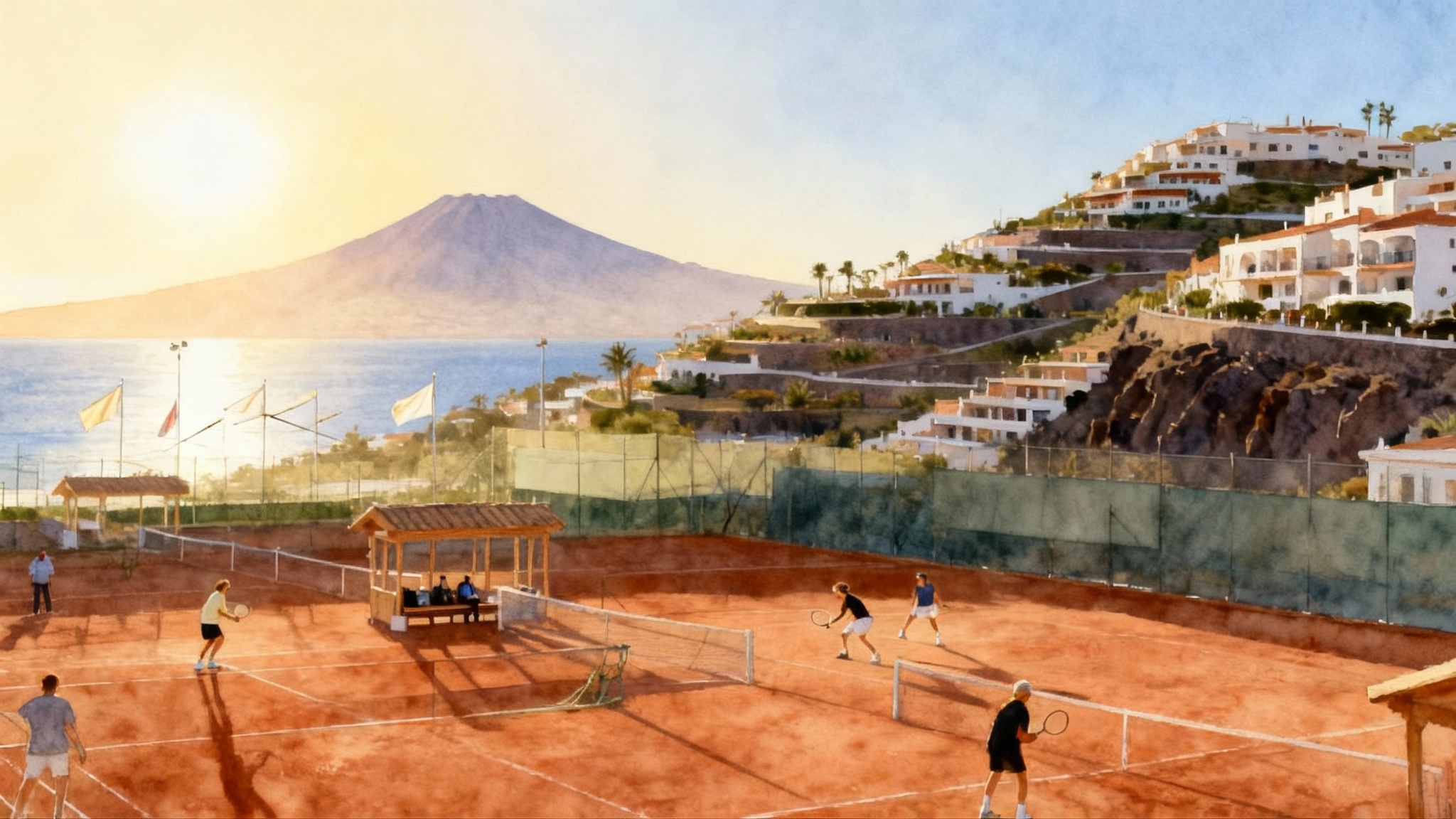
Indoor Tennis Capitals: Vilnius, Warsaw, Berlin Winter Guide
Build a reliable February to April training block by tapping Northern Europe’s indoor dome culture. Compare climate, costs, and access while spotlighting SEB Arena in Vilnius, Tenis Kozerki near Warsaw, and TennisTree Berlin.
 Tommy
Tommy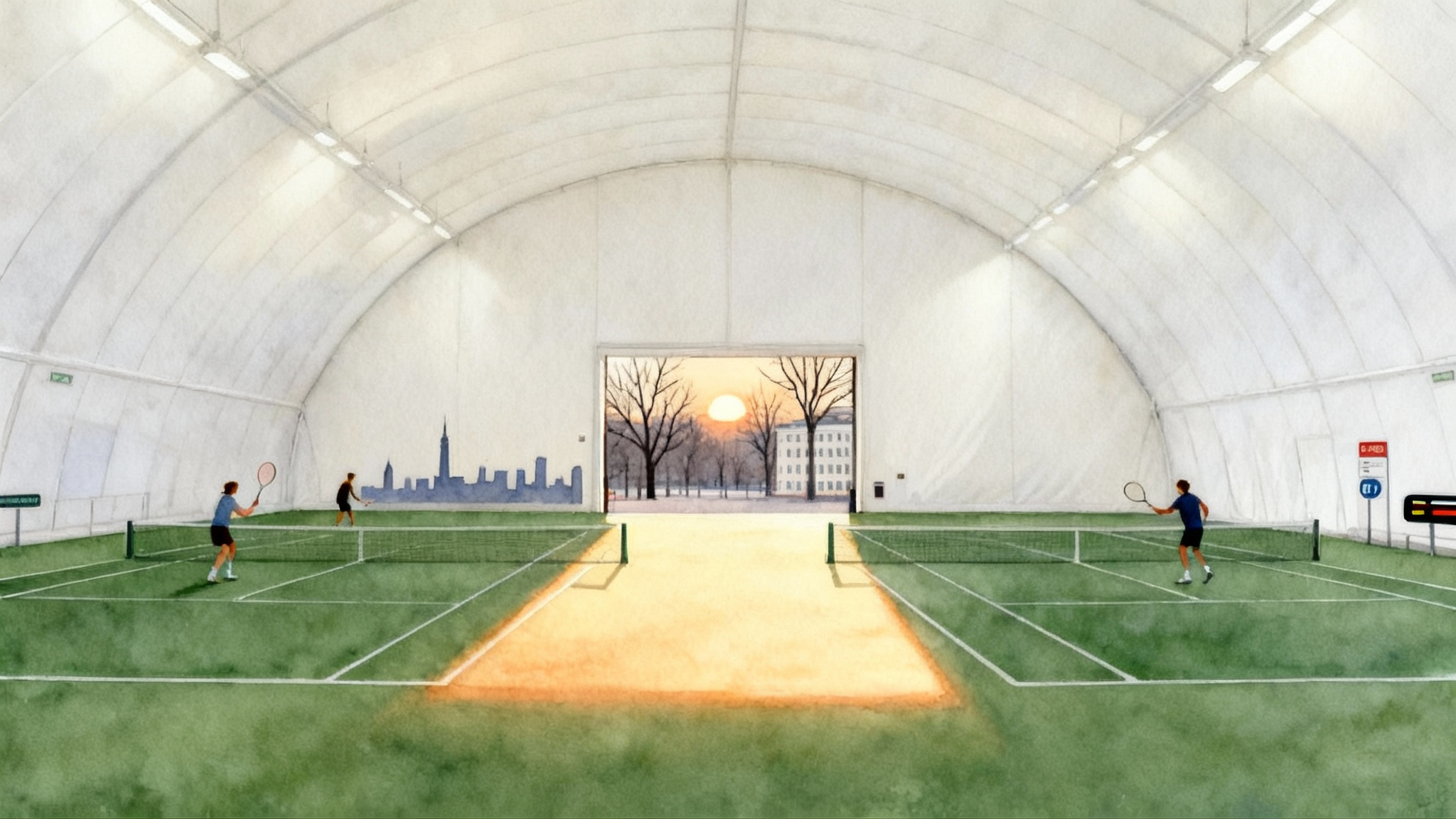
Why Europe’s indoor domes solve the February–April problem
For many players, February to April sits in the awkward middle of the season. Outdoors is unreliable. Travel to warm‑weather camps can be expensive and unpredictable with spring rain. Northern Europe treats winter tennis like public transport: it runs on time. Cities such as Vilnius, Warsaw, and Berlin rely on a dense network of air‑supported domes and permanent halls that keep courts available every day of the year. That reliability is the foundation for productive training blocks.
Think of a tennis dome as a climate‑controlled practice partner. It removes the most common reason training plans fail in late winter: canceled sessions. When you can count on a court at the same hour five days a week, you can stack volume, progress technical changes, and integrate physical work without the weather dictating your life.
This guide shows how to build a February–April block around three hubs that complement one another:
- Vilnius, Lithuania: the SEB Arena and Vilnius Tennis Academy offer year‑round courts, consolidated under one roof with performance services.
- Warsaw region, Poland: the Tenis Kozerki training campus provides a campus model with boarding, sport science, and technology‑supported sessions.
- Berlin, Germany: the TennisTree Berlin academy unlocks flexible, citywide booking for players who need top‑quality sessions fitted around work or school.
Along the way, we compare climate, costs, and access, then finish with a simple step‑by‑step plan to transition back to outdoor clay as temperatures rise.
If you want a single place to map the schedule, save session templates, and share a team calendar, you can build your training block in TennisAcademy.
How to structure a February–April block
Divide the period into three phases, each two to four weeks long depending on your goals and competition dates.
- Accumulate volume (Weeks 1–3)
- Goal: restore or raise daily ball contacts and aerobic base without overloading tendons.
- Tennis: 4 to 5 on‑court sessions per week, 90 minutes each. Keep 60 percent drill‑based, 40 percent situational points.
- Physical: 2 full‑body strength sessions and 2 low‑impact conditioning sessions per week.
- Technical focus: repeatable contact points, neutral‑ball depth, and second‑serve reliability.
- Sharpen with constraints (Weeks 4–7)
- Goal: increase intensity while protecting consistency.
- Tennis: 5 sessions per week, with 2 high‑intensity days built around serve plus one and first‑strike patterns.
- Physical: shift to power‑focused lifts, add short change‑of‑direction work.
- Match play: one practice match per week with specific constraints, such as first two shots to a target.
- Transition to clay (Weeks 8–10)
- Goal: groove clay‑specific footwork, height, and patience.
- Tennis: 4 sessions indoors plus 1 to 2 outdoor clay sessions when weather allows.
- Physical: add eccentric‑dominant lower‑body work, hips and adductors mobility, and longer aerobic efforts.
Vilnius: 365‑day rhythm with SEB Arena and Vilnius Tennis Academy
What you get
- Consistency. The SEB Arena and Vilnius Tennis Academy operate across multiple indoor halls with year‑round courts. Everything you need is in one place: booking, coaching, fitness zones, and sports medicine nearby.
- Surfaces for learning. Most courts are hard or carpet with modern cushioning, so foot and ankle stress stays predictable during volume weeks.
- A compact city. Vilnius is navigable, so you can book morning and late‑afternoon sessions without losing hours to transport.
Who it suits
- Juniors and pros who need repetition under stable conditions.
- Adult competitors returning from a break who want to get sharp while avoiding travel logistics.
- Teams that want a reliable, single‑site base for two to three weeks.
Sample week in Vilnius
- Monday: 90 minutes basket and rhythm patterns; 45 minutes lower‑body strength.
- Tuesday: 90 minutes serve plus first ball; 30 minutes conditioning on bike or rower.
- Wednesday: 60 minutes drills, 60 minutes points starting cross‑court; mobility session.
- Thursday: 90 minutes return plus depth control; upper‑body strength.
- Friday: 90 minutes practice set with scoring constraints.
- Saturday: optional 60 minutes technique block; long walk and recovery.
- Sunday: off or light mobility.
Access
- Airport: Vilnius International is close to the city center. A taxi ride to the main tennis district is short and affordable compared with larger capitals.
- Local transport: ride‑hailing and compact bus routes keep transfers simple. Booking consecutive sessions is realistic because you will not lose time crossing town.
Costs and availability
- Court prices trend lower than in Western Europe. Peak‑hour rates rise on weekday evenings, but mornings and early afternoons are accessible.
- Coaching fees are competitive, especially for small‑group or team blocks.
- Booking tip: lock in recurring slots for two‑week windows, then add individual extras 48 hours out when gaps appear.
Warsaw region: Kozerki’s campus model with boarding and technology
What you get
- A training campus. Tenis Kozerki sits just west of Warsaw and brings courts, strength facilities, dining, and boarding together. The campus format removes friction. You wake up, train, recover, and review video without leaving the grounds.
- Technology that helps. Smart cameras and reliable video setups allow immediate feedback on serve mechanics and contact height. If you want to review a pattern within minutes, you can do it on site.
- Tournaments nearby. The Warsaw area has an active competition calendar by late March, making it easy to test progress with a one‑day or weekend event.
Who it suits
- Juniors, small national squads, and college groups who benefit from dorm‑style accommodation and team meals.
- Players who want sport science input on movement screens, heart rate monitoring, and recovery choices.
Sample week at Kozerki
- Monday morning: movement screen and court session focused on load acceptance and first step.
- Monday afternoon: strength with emphasis on posterior chain and trunk rotation.
- Tuesday: serve and return video session with immediate review; afternoon match play sets.
- Wednesday: aerobic flush on bike and mobility; light technical tune‑up.
- Thursday: high‑intensity first‑strike day, scoring to seven with no‑ad play.
- Friday: clay‑prep footwork circuit on a slower court; evening tactics review.
- Saturday: practice match or short trip to a local event.
- Sunday: recovery, campus walk, and goal setting for next week.
Access
- From Warsaw Chopin Airport, plan about an hour by car depending on traffic. Trains to Grodzisk Mazowiecki plus a short ride‑share are also realistic.
- Because everything is on site, once you arrive you can keep non‑court travel close to zero.
Costs and availability
- Court time and coaching rates are generally mid‑range by European standards, with value increasing in group formats that include boarding and meals.
- Booking tip: contact the campus early for February slots, then add competition entries for late March as weather warms.
Berlin: flexible city sessions with TennisTree Berlin
What you get
- A network, not just a club. TennisTree Berlin coordinates court access across multiple domes and indoor halls in the city. That flexibility is useful for players with work or study schedules.
- High session quality. The coaching culture leans modern, with clear progressions, constraint‑led drills, and sharp hitting partners available on short notice.
- City energy. Berlin’s food and recovery options are excellent, from affordable lunch bowls to sports physio and saunas. You can train, work, and still feel like you are living in a city, not in a camp bubble.
Who it suits
- Adults balancing career and competition.
- Juniors who need late‑afternoon or evening sessions without losing school hours.
- Short‑stay visitors who want two or three high‑quality hits rather than a full camp.
Sample week in Berlin
- Monday: evening serve and plus‑one session after work.
- Tuesday: morning strength at a neighborhood gym; optional 60‑minute technique tune‑up.
- Wednesday: match play set with target zones and first‑serve percentage goals.
- Thursday: recovery day, sauna, and mobility.
- Friday: high‑intensity hitting with time pressure scoring.
- Weekend: outdoor exploration if the sun breaks through, or a second dome session if rain returns.
Access
- Berlin Brandenburg Airport connects directly to the city by rail. The public transport network makes it easy to reach different domes without a car.
Costs and availability
- Court prices trend higher than in Vilnius or Warsaw, especially during prime time. Early mornings, late evenings, and shoulder hours are your friend.
- Booking tip: pair 60‑minute technical blocks with 30‑minute feeding add‑ons when peak hours are booked. Short, focused sessions beat long, unfocused ones.
Climate, costs, and access at a glance
Climate from February to April
- Vilnius is the coldest of the three through early March. Expect sub‑zero mornings in February and slow thaws in March. Outdoor clay is usually impractical until April.
- Warsaw is slightly milder. Late March can deliver the first playable clay afternoons, but rain remains common.
- Berlin is generally the mildest, with increasing daylight and occasional outdoor days by late March. Still, rely on domes for consistency.
Relative cost picture
- Court time index: Berlin higher, Warsaw mid, Vilnius lower. If Berlin evening peak equals 100 on a notional scale, Warsaw often sits roughly 70 to 85 depending on slot, and Vilnius roughly 55 to 75. Your actual prices will vary by time and surface, but the pattern holds:
- Choose Vilnius for the most hours per budget.
- Choose Warsaw for campus value if you include boarding and meals.
- Choose Berlin if you need flexible, high‑quality singles sessions and are time constrained.
Access and logistics
- Airports: all three cities have efficient access from the airport to training areas.
- Transfers: Vilnius is the quickest cross‑town; Warsaw requires planning if you are not staying on campus; Berlin is straightforward via public transport but distances can be larger.
Step‑by‑step: transition to outdoor clay in four weeks
Week 1: Indoor clay cues without the clay
- Raise net clearance. Add 30 minutes per session of heavy‑topspin cross‑court drills with targets two meters inside the baseline.
- Footwork primer. Introduce controlled slide entries on a safe surface if available. If not, rehearse step patterns and exit angles without sliding.
- Racquet and string tweaks. Drop string tension by 1 to 2 kilograms to help with spin and safety on off‑center hits.
Week 2: Mixed‑surface strategy
- Split sessions. Keep one or two indoor hard sessions for timing, and add one outdoor clay session when weather allows. If clay is not yet available, extend high net clearance drills and lengthen rallies indoors.
- Serve patterns. Practice kick serves wide on the ad side and body serves on deuce. Build rallies that start with a high, heavy first ball.
- Movement conditioning. Add lateral shuttles with deceleration and controlled slide finishes on a smooth surface. Protect groin and adductors with eccentric work and targeted mobility.
Week 3: Clay‑first habits
- Point construction. Play games to 11 with a mandatory cross‑court neutral ball before any line change. The goal is patience and depth, not speed.
- Return adjustments. Stand a step further back on second serves and prioritize height over pace.
- Equipment check. Switch to clay‑appropriate shoes with a full herringbone tread. Keep a towel and dry grip in your bag for humid days.
Week 4: Match readiness
- Scored sets on clay with clear statistics targets: first‑serve percentage above 60, unforced errors per set under a defined number, and at least two successful depth changes per game.
- Recovery. Clay adds eccentric load. Plan an extra mobility block and one easier aerobic session per week.
- Travel window. Identify two possible outdoor days each week and keep your dome reservation as a backup. If weather turns, you still train.
A practical 10‑week plan using all three cities
Weeks 1–3: Base volume in Vilnius
- Focus on rhythm and repetition under consistent indoor conditions.
- Book morning or early afternoon sessions to keep costs down and recovery long.
Weeks 4–7: Campus sharpening near Warsaw
- Move to Tenis Kozerki for a combined tennis and strength block.
- Add weekly practice matches and brief weekend events to test progress.
- Begin clay cues in Week 6 with higher net clearance and longer rallies.
Weeks 8–10: Flexible finish in Berlin
- Use TennisTree Berlin to slot high‑quality hits around your calendar.
- Slot in the first outdoor clay days as temperatures allow. Keep dome bookings in reserve.
- Schedule one taper week if a tournament is approaching.
Booking and logistics checklist
- Courts: set recurring bookings for two weeks, then add singles hits 48 hours before play when schedules open.
- Coaches and hitters: request a clear session plan before you confirm. Ask for a drill‑to‑points ratio and a short video recap.
- Strength and recovery: block two strength sessions and one mobility session into your calendar before adding extra hitting.
- Travel: align flight arrival with your first easy day. Avoid landing into a high‑intensity session.
- Weather: carry a clay transition kit in March and April. Include clay shoes, a fresh set of overgrips, and a soft towel for damp conditions.
- Admin: if you are traveling as a team, create a shared calendar in TennisAcademy so everyone sees court numbers, partners, and coaching notes.
How to choose your base
- Pick Vilnius if your top priority is stacking reliable hours at consistent times with minimal transit.
- Pick Warsaw’s Kozerki campus if you want an all‑in‑one environment with boarding, dining, and technology support that turns training into a routine.
- Pick Berlin if you need flexible, high‑intensity sessions integrated around work or school and value access to multiple domes in one city.
The bottom line
February to April rewards players who value reliability over drama. Northern Europe’s indoor culture gives you reliable courts, consistent coaching, and direct transport so your plan does not depend on a weather app. Use Vilnius for volume, Warsaw for campus sharpening, and Berlin for flexible finishing. Transition to clay with four deliberate steps and you will arrive in late spring with match fitness, better patterns, and a confident first‑serve routine. The weather can change. Your training does not have to.