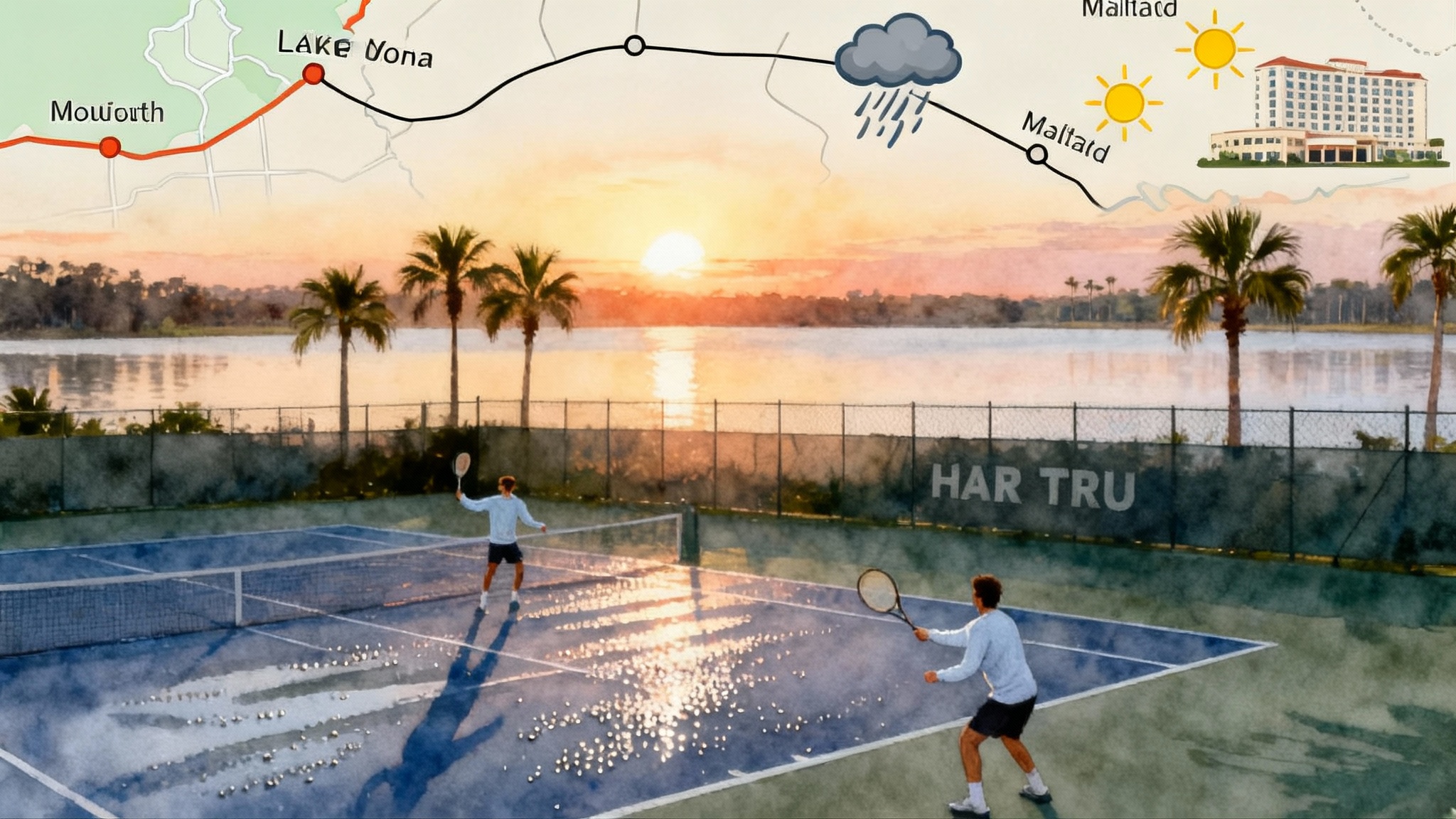
Philippines Dry-Season Tennis: Manila Basecamp and Island Hits
 Tommy
Tommy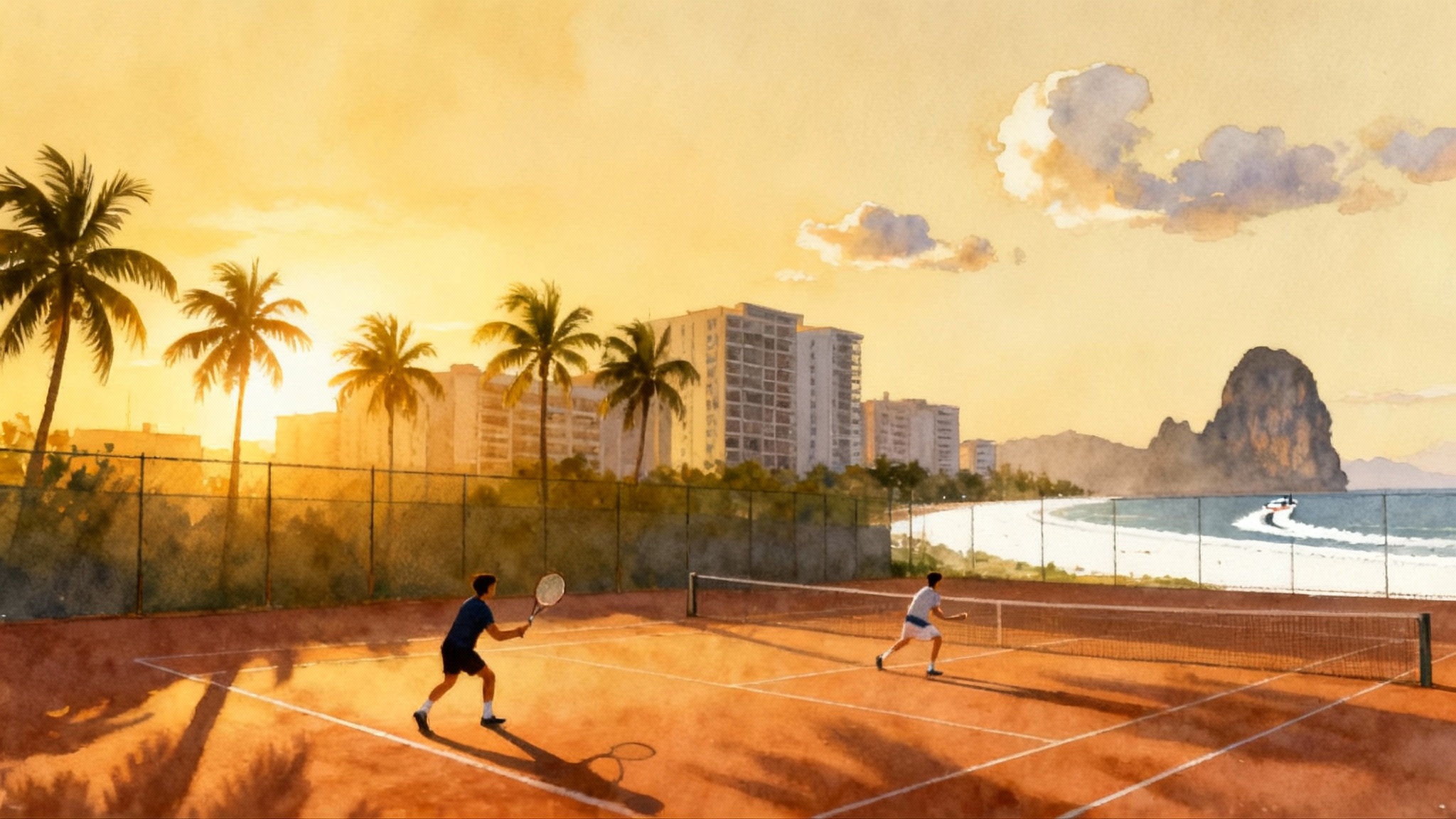
Why the Philippines is a smart dry-season tennis play
If you want outdoor reps without watching the sky every hour, the Philippines from November to May is a smart window. The plan is simple and practical. Use Metro Manila as your weekday base so you can stack structured sessions without travel friction, then reward the legs with an island weekend where the courts sit near powdery beaches and blue water. The basecamp keeps the training consistent. The islands keep the motivation high.
The cornerstone is Muntinlupa in southern Metro Manila. It is close to major expressways and large residential communities, which means a dense network of outdoor hard courts, quality coaches, and hitting partners. Anchor your sessions with Philippine Tennis Academy for predictable weekday volume. Then, when Friday comes, fly or ferry to Cebu, Bohol, or Palawan for two to three hits wrapped around snorkeling, island hopping, or just sleeping in a hammock until your afternoon knock.
This article compares wet season risk against Thailand and Vietnam, lists which surfaces you can expect, outlines flight and court costs from the United States, and gives ready to use 7 to 10 day itineraries for juniors and adults. Read it once, paste the plan into your calendar, and you are ready to book.
Weather you can plan on
The Philippines sits in a monsoon pattern with a dry stretch that in most years runs from November through May, with the leanest rain in January to April for Metro Manila. You do not need perfect weather infographics to make a reliable training plan, you just need the pattern. PAGASA, the national weather service, describes the seasons and regional differences clearly. See the high level framing in the Climate of the Philippines.
What this means on court:
- In Metro Manila from December to April you are likely to see blue mornings and warm, breezy afternoons. Expect isolated showers to be short, often late day. Plan doubles or fitness in the late afternoon if clouds build.
- Shoulder months November and May are generally playable, but you should expect a few more pop up showers. Put your heaviest technical work earlier in the day.
Rain odds compared with Thailand and Vietnam
- Bangkok and central Thailand are also very dry from November to February, then pre monsoon heat builds in March and April. Thai meteorologists call it cool and dry followed by hot and dry before the rains arrive. For a broad baseline see the Climate of Thailand overview. Net takeaway for tennis: December to February in Bangkok is as reliable as Manila for daytime hits. By April Bangkok is often hotter than Manila at the same time of day.
- Phuket and much of Thailand’s Andaman coast can still catch scattered showers in December and January, with calm spells in February to March, then monsoon by May. Courts are playable in the mornings most days in mid winter, but plan flexibility.
- Southern Vietnam, especially Ho Chi Minh City, stays quite dry from December to April, comparable to Manila. Central Vietnam around Da Nang and Hoi An is wetter in November and can stay unsettled into January. Northern Vietnam near Hanoi trends cool and misty in winter, which does not pair well with outdoor tempo sessions.
Bottom line for reliability: for weekday volume, Manila is a strong bet from December to April. For island weekends, Cebu and Bohol have a similar dry profile to Manila. Palawan is also favorable in these months, with localized showers that usually pass quickly.
For more dry-season play ideas, see the Pacific Mexico dry-season guide and the Tenerife winter tennis guide.
Surfaces, facilities, and court culture
- Surfaces in Metro Manila: predominantly outdoor hard courts with acrylic or asphalt finishes. Clay exists in a handful of private clubs but is not common. Indoor courts are rare; most facilities have lights for evening play.
- Court density: southern Metro Manila districts such as Muntinlupa and nearby cities have a high concentration of barangay courts, school courts, and private club courts. Weekday mornings and mid afternoons are often open for training blocks.
- Typical fees: public or municipal courts often run roughly 400 to 800 Philippine pesos per hour for a court with lights. Private clubs vary widely, from day passes around 1,000 to 1,800 pesos plus court fees. A reliable hitting partner often runs 600 to 1,200 pesos per hour. Private coaching typically ranges from 1,500 to 3,000 pesos per hour depending on credentials and location. Evening prime time slots command the higher end of the range.
- Balls and stringing: new balls are available at major sporting chains and club pro shops; stringing is common in Muntinlupa and Alabang sports hubs. Bring your preferred strings and grips in case stock is limited.
Why Muntinlupa makes a strong basecamp
- Location wins: Muntinlupa sits near the South Luzon Expressway and the Skyway, so you can reach it from Ninoy Aquino International Airport in 30 to 60 minutes in off peak traffic. Plan 60 to 90 minutes if you land at rush hour.
- Training ecosystem: Muntinlupa and adjacent Alabang have multiple court clusters, coaching programs, and a steady supply of sparring partners. Philippine Tennis Academy operates in this area, with weekday squads and one to one blocks that you can lock onto your calendar.
- Heat management: mornings are cooler, evenings are lit, and lunch hours are easy to leave for recovery and food. Cafes, malls, and grocery stores are nearby, so downtime logistics are painless.
Island weekend add ons that actually work
The point of a weekend add on is to keep your hands and feet honest without destroying your recovery. These three destinations tick the boxes.
Cebu
- Travel: about 1 hour and 30 minutes flight from Manila to Mactan Cebu International Airport. Ride hailing and taxis connect you to Cebu City in 30 to 60 minutes depending on traffic.
- Where to play: outdoor hard courts in Cebu City and Mandaue, plus resort courts on Mactan Island. Contact local clubs ahead of time, and search for lawn tennis on maps to find barangay courts that welcome visitors for a small fee.
- What it feels like: mornings are bright, wind is gentle along the channel, and the air is salty. A two hour morning hit followed by a quick dip makes the body surprisingly fresh for a short afternoon set.
Bohol
- Travel: ferry from Cebu City to Tagbilaran takes about two hours on fast boats. You can also fly direct from Manila to Panglao in roughly 1 hour and 30 minutes.
- Where to play: outdoor hard courts near Tagbilaran and Panglao resorts; availability fluctuates, so call properties or municipal sports offices in advance.
- What it feels like: quiet roads, coconut trees behind the baseline, and soft evening light. Plan a morning hit, lunch near Alona Beach, then an easy late day recovery set.
Palawan
- Travel: flights from Manila to Puerto Princesa take around 1 hour and 30 minutes; to El Nido about 1 hour and 20 minutes on smaller carriers. Expect a short transfer to town or resort.
- Where to play: hotel courts are scattered around Puerto Princesa and some high end resorts. Book courts when you book rooms, and confirm lights if you plan to play after sunset.
- What it feels like: limestone cliffs, quiet bays, and a slight breeze during afternoon rallies. Plan court time early, then island hop or kayak.
Two itineraries you can copy and paste
Below are practical plans that assume you anchor weekday training in Muntinlupa with Philippine Tennis Academy and fly out Friday afternoon for a weekend hit on one island. Adjust flight times based on your chosen carrier and traffic windows.
Seven day junior tune up
Goal: keep volume high, sharpen patterns, and make the island weekend an earned reward rather than a distraction.
- Day 1, Sunday: arrive Manila. Light mobility and 45 minute hit in the evening if energy allows. Early dinner and lights out.
- Day 2, Monday: two hour technical block at 7:00 a.m., one hour fitness at 4:00 p.m., 45 minute serve practice under lights. School work or rest midday.
- Day 3, Tuesday: two hour live ball and pattern work at 7:00 a.m. Video review after lunch. Evening recovery jog and stretch.
- Day 4, Wednesday: one hour strength session in the morning gym, one hour fifteen minute court drilling late afternoon. Early sleep.
- Day 5, Thursday: match play set in the morning, serve plus first ball patterns in the evening. Pack for the island.
- Day 6, Friday: morning tune at 7:00 a.m., light lunch, fly to Cebu or Bohol mid afternoon. Sunset beach walk, early bed.
- Day 7, Saturday: two hour morning hit on island courts, snorkel midday, one hour fun set before dinner. Sunday morning hit, then fly back to Manila if you are extending or connect to your international flight.
Coach notes for juniors:
- Use baskets for serve and return twice in the week. One hundred balls per session builds reliable starts.
- Record ten minutes of cross court pattern play on Tuesday, then watch the clips together on Wednesday to set a single focus for Thursday and Friday.
- Keep Saturday island hit playful but purposeful. Work on poaching reads or transition footwork, not heavy grinding.
Ten day adult player block
Goal: mix skill work with conditioning, protect the shoulder, and keep the island hit as a carrot for consistency.
- Day 1: arrive, sleep, hydration focus. Short band routine in the room.
- Day 2: two hour morning lesson on contact height and spacing, evening 60 minute doubles.
- Day 3: one hour serve and return, one hour coached point play. Midday massage or recovery swim.
- Day 4: strength basics for 45 minutes, then ninety minute drilling. Light dinner and early bed.
- Day 5: match play in the morning, no second hit. City walk for circulation.
- Day 6: repeat Day 2 structure. Pack for island.
- Day 7: Friday morning light hit, afternoon flight to Palawan. Early night.
- Day 8: two hour island hit, kayak or island hop. Evening stretch and foam roll.
- Day 9: ninety minute morning doubles, afternoon nap. Sunset walk.
- Day 10: easy forty five minute feel hit, fly back to Manila and connect onward.
Adult notes:
- Protect the shoulder by capping total serves at 120 per heavy day. Use fewer balls with more video feedback.
- Under Manila heat, fueling matters. A simple plan works: 500 to 700 milliliters of electrolyte drink per hour on court, a banana or dates before play, and a salty breakfast after.
Travel costs and booking tips from the United States
- Flights: from West Coast gateways such as Los Angeles or San Francisco to Manila, roundtrip economy often ranges from 700 to 1,300 United States dollars in the dry season, with direct options on some carriers and one stop options through Tokyo, Taipei, or Seoul. From New York area airports, expect 900 to 1,500 dollars with one stop. Prices swing with holidays and advance purchase. As of January 2026, booking four to eight weeks out for late January or February travel often lands in the mid range.
- Domestic hops: Manila to Cebu, Bohol, or Palawan typically runs 50 to 150 dollars one way if booked early, more on peak weekends. Bohol by ferry from Cebu costs less and offers flexible timing.
- Ground transport: ride hailing apps are widely used in Manila and Cebu. Budget 8 to 15 dollars for typical city rides. Airport to Muntinlupa can run 12 to 25 dollars depending on time and route.
- Lodging: business hotels in Muntinlupa and Alabang from 60 to 120 dollars per night. Island resorts range from 80 to 300 dollars depending on location and season.
Booking tips:
- Lock weekday court blocks first. You can then slot flights around those anchors.
- Book the first morning flight for island weekends to protect your Saturday hit if Friday gets delayed.
- Ask coaches to arrange a hitting partner on island days. Local sparring partners often know the windy corners of a court and the right time window for a clean bounce.
How to source courts fast
- Search for the phrase lawn tennis on maps when you hunt for public courts. The local naming convention pulls up smaller facilities that do not always show under tennis club.
- Call municipal sports offices for court availability and lighting schedules. Many post hours and fees on community pages but respond faster by phone.
- For resort courts, email the property and ask two specific questions. What is the exact surface type and when was it last resurfaced. Are there court brushes or squeegees if a quick shower passes in the afternoon.
Heat, hydration, and gear for this climate
- Bring a light colored cap, two shirts per session, and a small towel. Shirts dry quickly between sets in the sun, but a fresh shirt keeps the feel crisp.
- Sunscreen with high protection, reapplied every ninety minutes. The sun angle in February and March can surprise visitors coming from winter.
- Shoes with breathable uppers and good outsole durability. Outdoor hard courts in tropical heat chew through soft rubber.
- Two sets of strings at your preferred tension. Heat softens stringbed feel, so some players string two pounds higher than their home baseline.
A simple rain plan
Even in dry months you might see a passing shower. Protect the training block with these tweaks.
- Start earlier. A 6:30 a.m. hit buys the most rain free window.
- Keep a squeegee in the trunk if you are driving to public courts. Many facilities have one, but the courts dry much faster when you help.
- Shift the day’s priority. If rain threatens at 3:00 p.m., swap in footwork ladders and medicine ball throws under a covered area, then serve practice when the court dries.
Who should choose the Philippines instead of Thailand or Vietnam
- Players who want a Monday to Friday court routine with minimal uncertainty, plus beautiful but calm weekend add ons. Manila makes the weekday plan simple. Cebu, Bohol, and Palawan make the weekend memorable without heavy logistics.
- Juniors who need volume and structure heading into spring tournaments. The morning and evening lights in Muntinlupa make double days practical without heat overload.
- Adults who want a training vacation that feels balanced. The islands deliver the recharge without derailing the work.
If your main priority is the absolute driest cool mornings in mid winter, Bangkok equals Manila for December and January and can be slightly cooler on some days, but it is further from islands that combine pristine beaches with quiet courts. If your priority is combining tennis with urban food tours, Ho Chi Minh City is appealing from December to March, but weekday court sourcing can take longer unless you are plugged into a club.
How to book the whole plan in one afternoon
- Step 1: email Philippine Tennis Academy for weekday blocks in Muntinlupa. Ask for two mornings and two evenings, plus one match play slot.
- Step 2: book flights to arrive Sunday and depart the following Sunday or Wednesday depending on your chosen itinerary.
- Step 3: hold a hotel in Alabang or Filinvest area for the weekday stretch. Confirm commute times to courts.
- Step 4: pick one island and secure either a resort with on site courts or a club near town. Book a Saturday morning and Sunday morning slot.
- Step 5: add a backup Sunday afternoon court in Manila in case of a flight delay.
The takeaway
Start with the weather pattern, then build a week that respects it. Manila’s dry season gives you repeatable blue sky windows. Muntinlupa delivers courts, coaches, and sparring partners in an easy radius. Cebu, Bohol, and Palawan add joy without blowing up your routine. When a plan is this simple, the results come from showing up in the right place at the right time with a racquet bag, a towel, and a clear focus. Book the weekday anchors, choose one island carrot, and let the Philippines dry season do what it does best: give you day after day of clean ball striking under a bright sky.