Monsoon‑Smart Tennis India: Mohali, Pune, Bengaluru, Goa
 Tommy
Tommy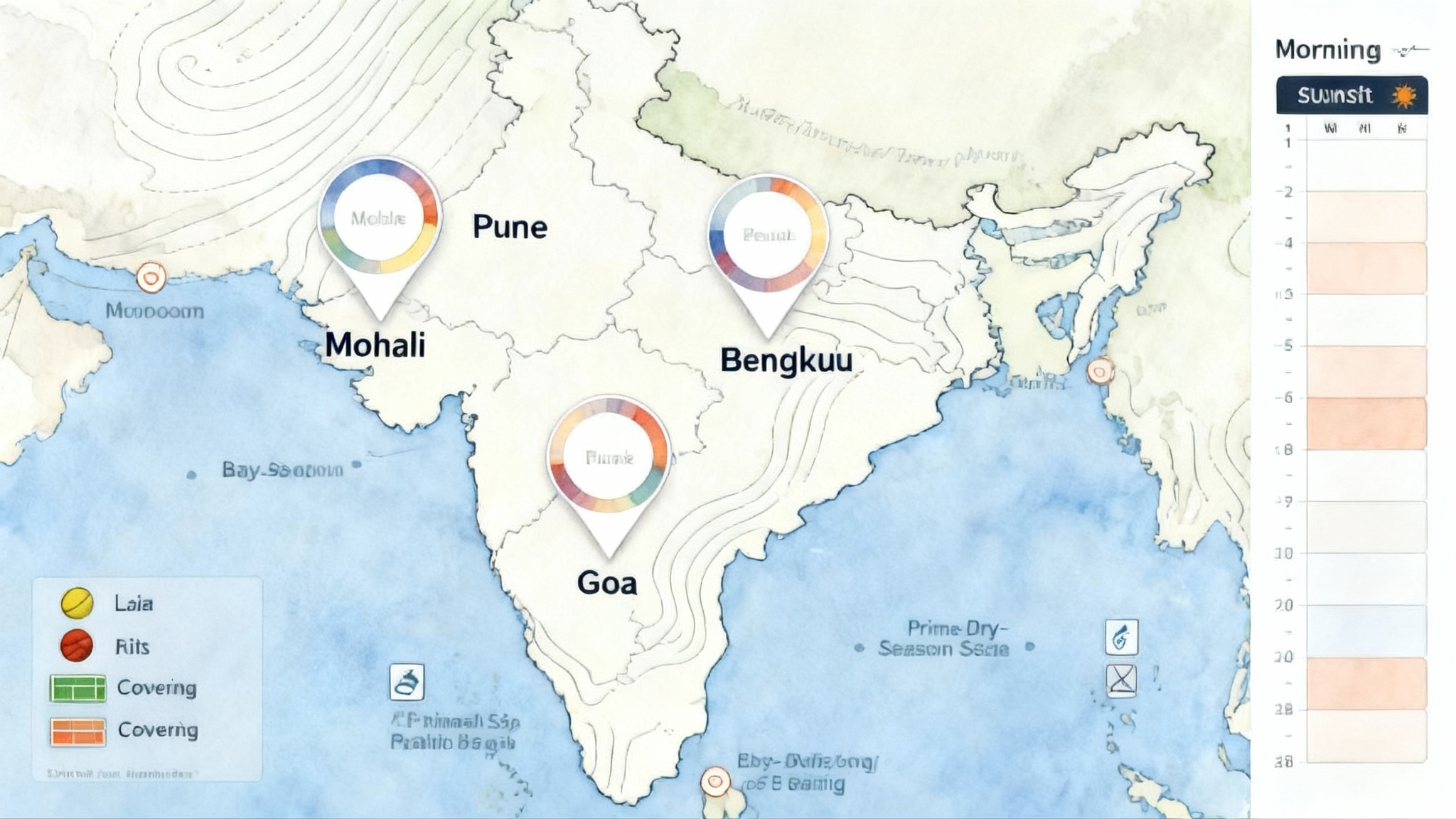
Why a climate-first tennis plan wins in India
If you plan your training in India by school holidays alone, you will lose days to rain. Plan it by the monsoons and you gain reliable hours on court. India runs on two seasonal engines. The southwest monsoon surges up the west coast from June through September, soaking Goa, Karnataka and Maharashtra. The weaker northeast monsoon arrives October through December, focused on the southeast coast. Knowing which monsoon touches which city tells you when hard courts dry fast, when clay turns heavy and when a covered dome is worth the fee. For a concise primer on timing and spread, see the India Meteorological Department monsoon overview.
For another example of climate-led planning, scan our Philippines dry-season tennis guide.
The quick map: playable windows by city
- Mohali, Punjab: Best October to April. Cool and dry for long blocks. Foggy mornings in December and January can push the first hit to mid‑morning. Hot in May and June. Rain peaks July to September.
- Pune, Maharashtra: Best October to March. April and May are warm but manageable with early starts. Rain concentrates in June to September.
- Bengaluru, Karnataka: Best November to May. Intermittent showers from June to October. Altitude keeps temperatures moderate most of the year.
- Goa: Best October to April. Heavy coastal rains from June to September. Humidity rises in May.
The rest of this guide turns those windows into training decisions you can book.
Spotlight: RoundGlass Tennis Academy, Mohali
When North India dries out in October, the plains of Punjab become one of the country’s most reliable training bases. RoundGlass Tennis Academy in Mohali is designed for long development blocks during the October to April season. The program emphasizes holistic player growth supported by fitness, mental skills and regular performance tracking. See our RoundGlass Tennis Academy profile for pathways, trials and contacts.
How to use it
- Block structure: Aim for 4 to 8 week stays between October and April. The crisp winter air allows high volume live-ball work with minimal heat stress. Use fog-delayed mornings in December and January for strength, mobility and video review, then stack two on-court sessions later in the day.
- Scholarships and pathways: RoundGlass has run selection trials and scholarship pathways since launch. If you are a promising junior, contact the academy early to understand trial windows and what evidence of level they prefer. Plan travel so you can combine a trial with a week of integration sessions.
- Competition access: Mohali, Chandigarh and Panchkula regularly host age‑group and open events. Dry months from November to March tend to be the busiest, which dovetails with a training base in Mohali.
City break add-ons
- Chandigarh’s modernist architecture and green belts are ideal for recovery walks. Day trips include the Rock Garden, Sukhna Lake paddle sessions and nearby hills if you want a mellow altitude hike on your rest day.
Pune and Bengaluru: surfaces, covered options and who they suit
Both cities sit on the Deccan Plateau but play differently.
Pune
- Surfaces you will meet: A mix of hard courts at international-level venues and abundant clay at clubs. Hard plays true and quick post-monsoon; clay slows things down while staying gentle on joints.
- Covered or indoor options: A handful of private bubbles and semi-covered courts exist across the city. These are worth booking in June to September if you must travel in the rains, and handy for April to May afternoons when shade plus fans make sessions viable.
- Who this suits: Players building point construction and fitness. Clay blocks in Pune teach height and spin, while hard courts sharpen first-strike patterns.
Bengaluru
- Surfaces you will meet: Renovated global-standard hard courts at the state association stadium and plenty of synthetic hard at clubs. Ball speed bumps up at Bengaluru’s roughly 900 meters of altitude, which rewards early contact and compact backswings.
- Covered or indoor options: The metro area has several covered or semi-covered courts and domes. These keep you playing during passing showers from June to October and during midday sun in April.
- Who this suits: Players who like to attack behind serve and take on the rise. The city is ideal for tuning serve plus first ball, then defending with knifed backhands that skid in the thinner air.
Choosing between them
- Need a post-monsoon reset from October to December: Pune for clay and controlled volumes; Bengaluru for pace recalibration at altitude.
- Need a pre-season speed block in February or March: Bengaluru’s altitude plus cool mornings are perfect for serve speed and return reaction work.
- Traveling with family who want food and culture: Both shine, but Bengaluru wins for sheer variety of restaurants, coffee and parks within a 20 minute radius of most courts.
Goa: beach breaks that still keep you sharp
Goa is pure delight from November to February and still very playable in October and March to April if you put sessions at sunrise and sunset. Coastal humidity softens felt and makes new balls feel older after just a set, so bring an extra can per session. The region has resort courts and community academies, including all‑weather or covered options. If you must visit in June to September, lock in a roofed court in advance and pattern your week around movement and footwork circuits rather than match play.
Recovery is easy to get right here. Swim, walk long flat beaches, eat fresh, hydrate and sleep.
Heat and altitude tactics that work on Indian courts
Heat management
- Hydrate on a schedule: 400 to 800 milliliters per hour in hot conditions. Include electrolytes. A practical target is 500 to 700 milligrams of sodium per hour for long sessions; adjust upward if you are a heavy sweater with visible salt on clothes.
- Build shade into the day: Two-a-days feel good in November but will sap you in April. In warm months, hit early and late, then do mobility and analysis indoors at noon.
- Cool-first aid: A compact cooling towel, frozen bottle in a sock as a neck roll and ice in the hat during changeovers are small things that prevent a big performance drop.
Altitude management
- Raise string tension 1 to 2 kilograms in Bengaluru. The thinner air reduces drag and kick serves jump. A firmer bed contains launch angle without forcing you to baby the swing.
- Favor spin-friendly patterns: In match sets, add shape to cross-court patterns and flatten only on the short one. Practice with a slightly higher net clearance to keep confidence when the ball carries.
- Use your legs: At altitude, timing beats effort. Cue a lower center of gravity on the split step and a sooner unit turn to meet the ball in front. For more mountain-play tactics, see our Altitude Summer Tennis 2026 guide.
Monsoon moisture management
- Footing: Clay can get glassy in high humidity. Use a fresh outsole and avoid worn herringbone. On hard courts after a shower, check for slick painted lines and move like you would on a damp indoor basketball court.
- Kit checklist: Extra socks, an absorbent wristband rotation, two towels and a felt wiper or squeegee if you are training at a community venue. Fresh grips for every match set.
Sample 7 day itineraries you can actually run
Option A: Mohali base, October to April
- Day 1: Arrive Chandigarh. Evening mobility and 30 minute hit to groove timing after travel.
- Day 2: Morning live-ball patterns, afternoon serve and plus one. Short city walk and early night.
- Day 3: Strength and movement in the morning, mid-day analysis, late afternoon baseline games to 11.
- Day 4: Practice set in the morning, doubles drills at dusk. Recovery dinner.
- Day 5: Day trip to the hills or Rock Garden. Evening serves and returns.
- Day 6: Practice match plus tiebreakers in the morning, mixed patterns in the afternoon.
- Day 7: Local tournament or match play afternoon. Pack and recovery.
Option B: Bengaluru pace tune, November to March
- Day 1: Arrive. Easy 45 minute hit to learn the bounce.
- Day 2: Serve power session at altitude, afternoon return plus transition.
- Day 3: Baseline offense in the morning, net rush patterns at sunset.
- Day 4: Recovery morning in Cubbon Park. Late afternoon two out of three tiebreak sets.
- Day 5: Fitness blocks and mobility. Short evening serve accuracy ladder.
- Day 6: Full match simulation.
- Day 7: Light hit, brunch, depart.
Option C: Goa restorative week, November to February
- Day 1: Arrive, beach walk, evening mini-tennis.
- Day 2: Sunrise patterns, ocean swim, sunset serve basket.
- Day 3: Early doubles, local food tour, mobility session.
- Day 4: Singles set and a breaker. Long nap.
- Day 5: Day off court. Kayak or bike.
- Day 6: Two short sessions and film strokes.
- Day 7: Hit and stretch, depart.
14 day circuit that pairs court time with city breaks
Week 1: Bengaluru then Pune, February or March
- Days 1 to 3 in Bengaluru: Serve plus first ball and return reaction at altitude. Coffee walks and park recovery.
- Day 4 travel to Pune: Evening glide hit on hard or a clay touch session.
- Days 5 to 7 in Pune: Three training days that alternate clay volume with hard-court first-strike points. One day off for Deccan history walks and food.
Week 2: Mohali or Goa, depending on goals
- Mohali choice, October to April: Four days of high volume live-ball under cool skies, then a weekend match play block. Use foggy mornings in mid-winter for strength and video breakdown before on-court work.
- Goa choice, November to February: Four easy-heat days built around sunrise and sunset sessions, with mid-day swims and naps to bank recovery.
Booking logic
- Flights and trains link these cities cleanly. Bengaluru to Pune is a short hop; Pune to Chandigarh or Goa is straightforward with one connection. Plan travel on your lower intensity days.
2026 tournament tie-ins: plan by month, not by exact day
Tournament calendars shift, but India’s dry-season rhythm is stable. Use the pattern below and confirm exact dates six to eight weeks out.
- January: Early season National and age-group events often cluster in North and West India. Good for Mohali or Pune bases while nights are cool.
- February: Professional events and top domestic tournaments often land in Bengaluru and other southern hubs. Combine a Bengaluru speed block with event days as a spectator or player.
- March: Final dry month for much of the country. Pune and Bengaluru are still excellent for match play camps.
- April: Heat rises. If you are heat-adapted, short morning tournaments and evening hits still work in Pune and Bengaluru.
- May to September: The southwest monsoon arrives. Spectating and play are limited along the west coast. If you must compete, look for covered venues or North Indian pockets with lighter rainfall.
- October to December: The post-monsoon series resumes across many Indian cities. Mohali is back to prime form for long training blocks. Goa is at its best for combined holiday and tennis weeks.
Tip: For international points events, monitor the International Tennis Federation and ATP Challenger calendars. For juniors, track All India Tennis Association postings. Align your base city with the month’s dominant cluster to minimize travel mid-week.
Packing and care tips for the wet and the warm
- Strings and tension: Bring two reels if you are on a long trip. Add 1 to 2 kilograms in Bengaluru. Drop back down at sea level in Goa.
- Balls: Humidity and gritty post-rain courts wear felt. Budget one extra can per practice in Goa and during early monsoon weeks anywhere.
- Shoes: Rotate pairs to keep at least one fully dry. Pack silica gel or newspaper to pull moisture overnight.
- Grips and towels: Double your usual count. Sweat management is a performance skill in India’s warm months.
- Skin and sun: Zinc-based sunscreen, cap with dark under-brim to reduce glare and breathable fabrics that do not hold water.
Put it together
Monsoon-smart tennis is not about dodging weather. It is about using India’s seasons as a training tool. In October your rally tolerance grows in Mohali’s cool air. In February your serve speeds up in Bengaluru’s thin air. In March your point construction matures on Pune clay. In November you refill the tank in Goa while keeping feel. Pick the right month for each city, layer covered courts when you need them and structure days so the hottest hours belong to recovery. Do this and India’s two monsoons turn from a scheduling headache into a built-in periodization plan you can trust year after year.
If you like building trips around climate windows, you might also enjoy our Altitude Summer Tennis 2026 guide and our Philippines dry-season tennis guide.