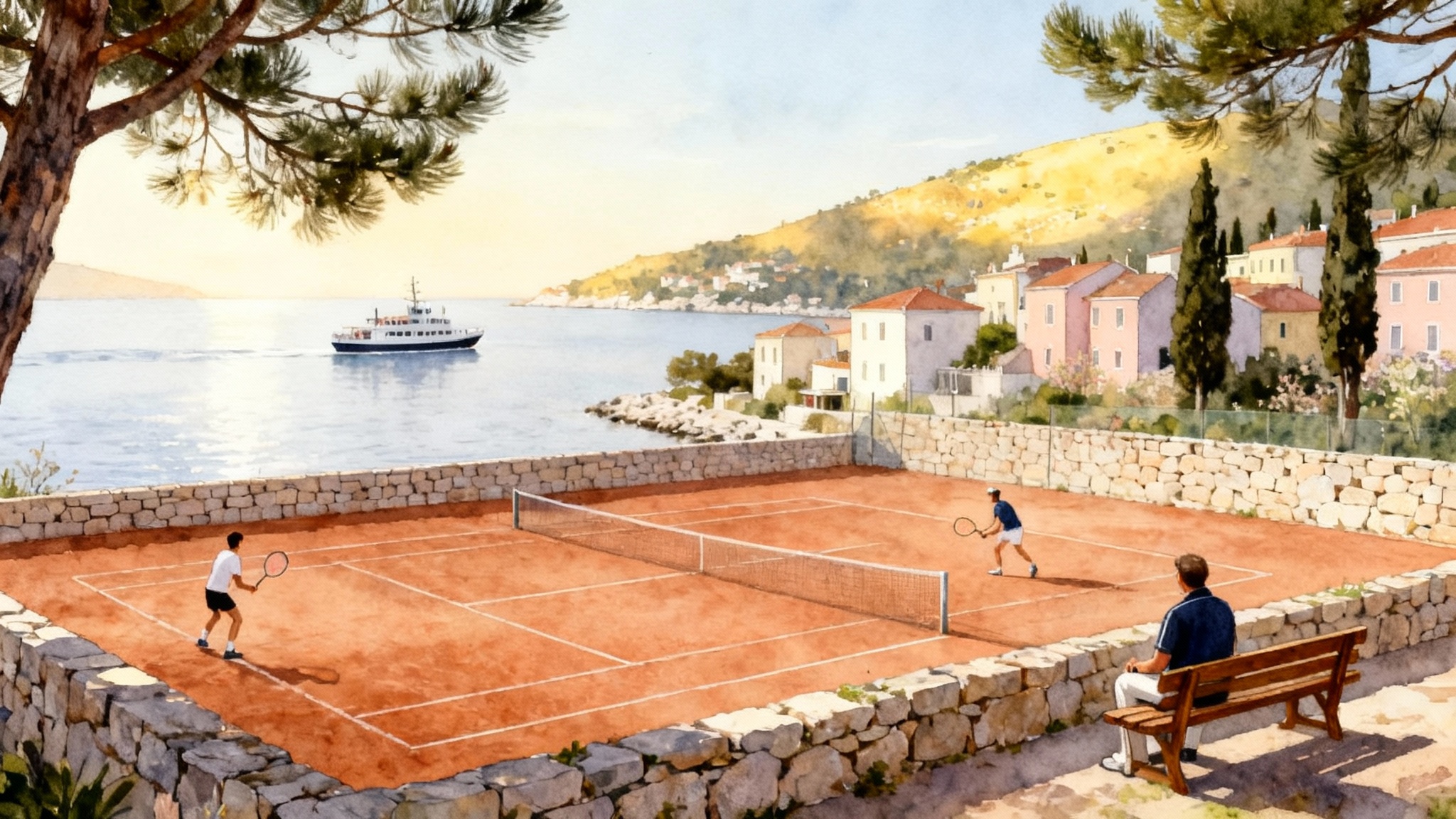
French Riviera Spring Tennis: Nice to Cannes Clay Prep
Use the Côte d’Azur’s March to May sweet spot to build a focused 7 to 14 day clay block. Base in Nice, Antibes, or Villeneuve‑Loubet, combine club day passes with coached time at All In Academy, and add smart recovery by the sea.
 Tommy
Tommy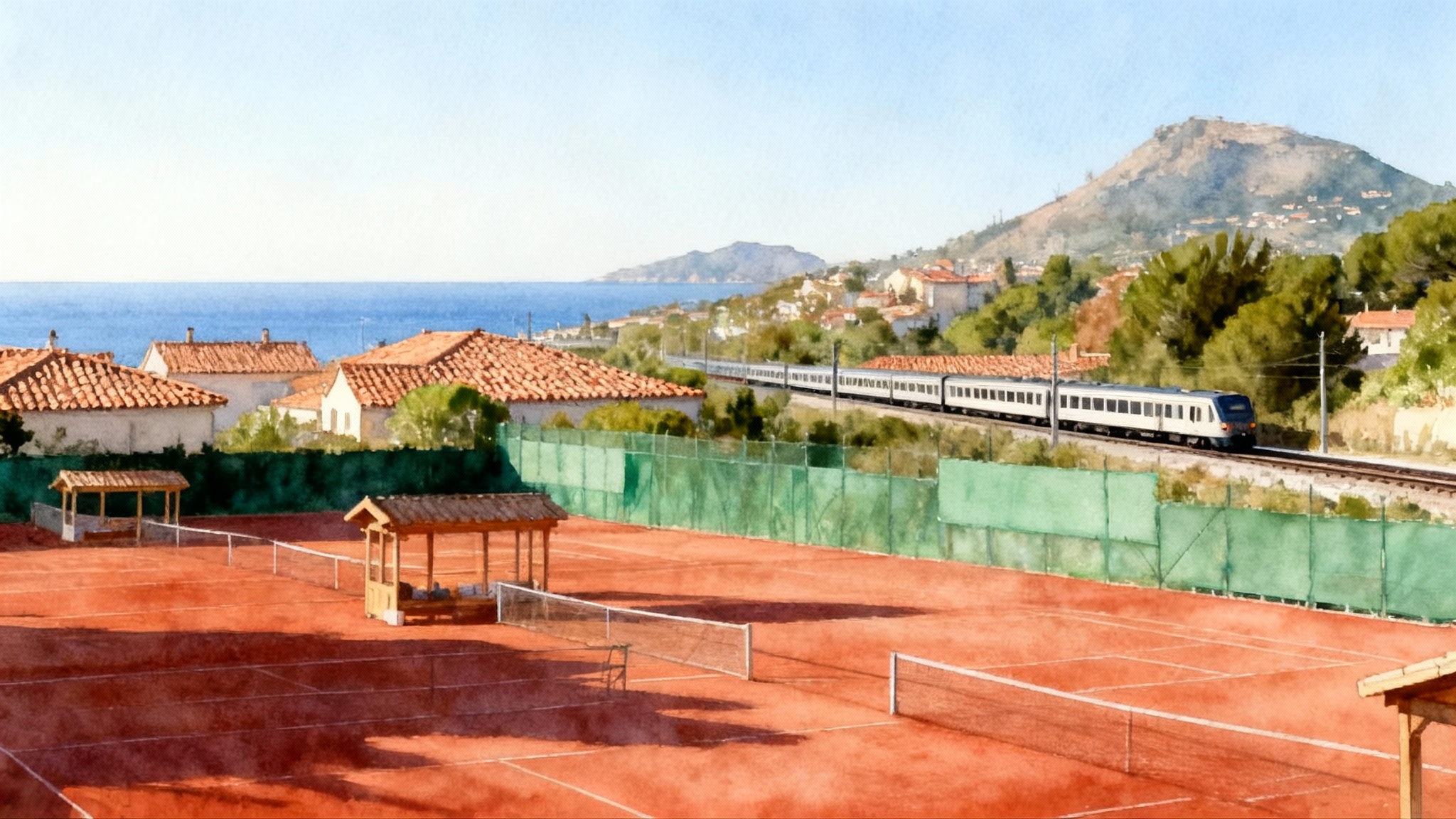
Why the Nice to Cannes corridor is perfect in spring
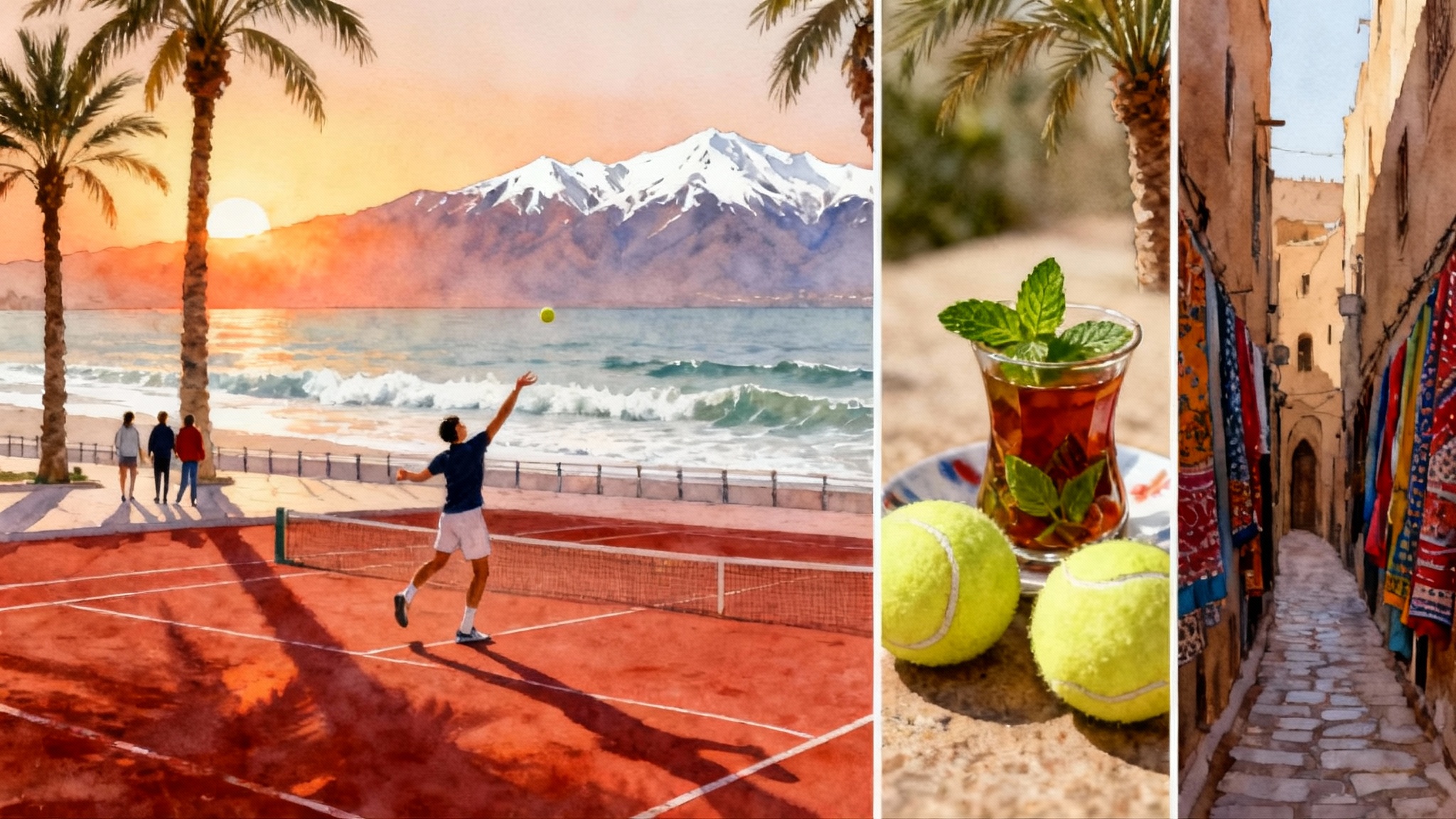
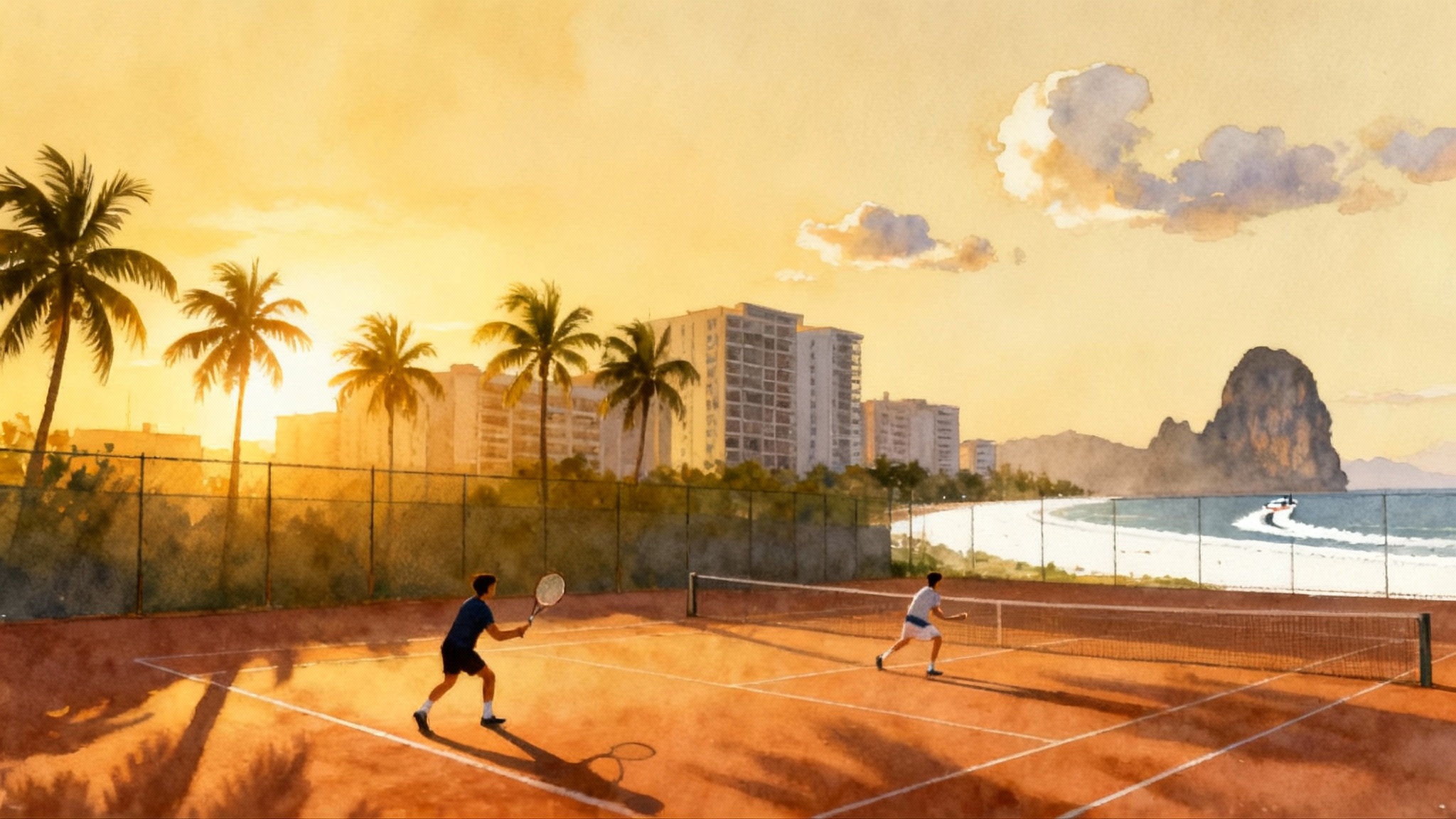
Clay rewards feel, footwork, and patience. Spring on the Côte d’Azur gives you the right canvas to work on all three. Courts are plentiful, mornings are mild, afternoons are bright, and the Mediterranean keeps temperatures stable. You can stack purposeful sessions without the heat or crowds of peak summer. The corridor from Nice to Cannes is also compact. Trains, coastal roads, and bike paths make it simple to move between bases and courts in minutes instead of hours.
If you want a structured block, the region’s mix of public clubs and elite academies is a gift. Book coached days to tune your patterns and fitness, then add self-directed court time for reps. For a deeper look at the program leaders, see our profile of the All In Academy French campuses. Finish with saltwater recovery and you will leave with heavier topspin, better balance, and match habits that travel.
Your three smart bases
Think of the corridor as one long training campus. Pick a primary base, then day-trip when you need variety.
- Nice: Best for first-timers and non-tennis travel partners. You get the old town, the Promenade des Anglais, and a deep bench of restaurants. Staying near the central station keeps you a short ride from clubs to the west and east. The airport is close, which keeps arrival friction low.
- Antibes: Quieter than Nice, with a walkable old town and a yacht-harbor vibe. You are midway to Cannes and minutes from Villeneuve-Loubet. Courts are plentiful and the Cap d’Antibes coastal path doubles as a recovery playground.
- Villeneuve-Loubet: The training purist’s base. Sleep near the courts, wake up and walk to practice, and save commute time for mobility work. It sits neatly between Nice and Antibes, so you can still dip into city life when you want it.
Where to get coached: All In Academy, Villeneuve-Loubet
If your goal is clay-season improvement rather than just holiday hits, anchor the block with coached days at the All In Academy complex in Villeneuve-Loubet. The site offers red-clay courts, strength space, and on-court ratios designed for focused attention. Review formats and dates at the All In Academy Côte d’Azur programs, then place coached days early in the week to set technical themes and revisit late in the week to measure transfer in live points.
How to use coached time well:
- Bring a clear brief. Example: “Build a heavier, deeper cross-court forehand to open the line” or “Improve first-serve percentage with safer targets.”
- Ask for clay-specific movement cues. Practice opening steps, brake steps, and controlled slides into neutral and attacking balls.
- Film two moments. Capture one drill block and one competitive set. Review with your coach at week’s end to confirm what stuck.
Day-pass clubs for volume and variety
You will want extra court hours to groove patterns. The Nice to Cannes corridor has historic clay clubs where visitors can pre-book courts and, in some cases, add a lesson. In Nice, find hours and booking guidance via the Nice Lawn Tennis Club visitor info. In Antibes, the main municipal clubs typically offer multiple clay and hard courts, group activities, and a social clubhouse. Villeneuve-Loubet has neighborhood facilities as well, with coastal access for a quick swim after practice.
Visitor etiquette on French clay:
- Brush the lines and sweep the court fully after play.
- Start new balls for any coaching session or match-play set you want to measure.
- Keep shoes for clay only. Dry the outsole and knock off dust at the exit to protect indoor floors.
Building your 7-day plan
This plan assumes you base in Nice or Antibes and book two coached days at All In Academy. Adjust the order if you start midweek.
- Day 1, Arrival and reset: Light jog on the seafront, 20 minutes of mobility, 30 minutes of shadow swings. Early dinner, early sleep.
- Day 2, Technique and movement: Morning coached block at All In Academy. Focus on serve targets and first-ball patterns. Afternoon easy rally set on club clay to feel the bounce and depth windows. Finish with a sea swim for 8 to 10 minutes of cold exposure.
- Day 3, Patterns and fitness: Morning ball-machine or fed-ball sequences on a club court. Example progression: cross-court forehand heavy to the deep third, then one down the line on command. Afternoon 30 minutes of on-court conditioning: multi-ball, sideline shuttles, and slide-to-stop work.
- Day 4, Competitive set: Morning practice set to eight games with a local hitter or travel partner. Chart first serves in and rally ball depth. Afternoon trail walk around Cap d’Antibes or Parc de la Brague. Focus on ankles and hips.
- Day 5, Coached tune-up: Second day at All In Academy. Ask for return patterns, drop-shot choices, and transition footwork. Film point play. Evening stretch and protein-heavy dinner.
- Day 6, Volume day: Two club sessions at lower intensity. Morning baskets for contact point and height. Late afternoon 60 minutes of doubles for reflexes and fun. Finish with 10 minutes in the sea and 10 minutes of calf and hip mobility.
- Day 7, Taper and test: Morning match set to two tiebreak sets. Keep routines consistent. Log serve percentage and unforced errors. Afternoon espresso, old town stroll, and pack for departure.
Building your 14-day plan
Two weeks let you stack more match play and a full strength cycle. Keep a one-to-two hard day ratio, where a hard day is either intensity or volume, not both.
- Days 1–2, Set the base: Arrival reset, then a coached day at All In Academy to establish one or two technical themes. Light rally and a sea swim.
- Days 3–4, Build patterns: One club day for fed-ball and serves, one for a match set. Add two strength sessions: heavy carries, split-squat variations, and banded rotations.
- Day 5, Recovery and feel: Easy mobility, 30 minutes of touch drills, short-court slice games, and 45 minutes on the coastal path.
- Day 6, Coached checkpoint: Second academy day. Ask for feet-first corrections. Confirm return depth and neutral ball height over the tape.
- Day 7, Social and doubles: Play a doubles session for reactions, poaching reads, and serve-volley experiments.
- Day 8, Rest or travel day: Move bases from Nice to Antibes or to Villeneuve-Loubet if you want a tighter training bubble. Short swim only.
- Days 9–10, Load and compete: Two high-quality practice sets with new hitting partners. Chart patterns you trained. If possible, book a local club ladder or friendly tournament.
- Day 11, Skills lab: Basket work on second-serve kick, drop-shot disguises, and transition volleys. Finish with a 20-minute slide and recover circuit.
- Day 12, Coached polish: Third academy day. All match-play situational drills: 30–30 starts, breaker simulations, 15-ball rallies that finish at net.
- Day 13, Tune and taper: Serve day with target cones. Light movement, long lunch.
- Day 14, Exit test: Two tiebreak sets. Compare video to Day 2. Note changes in contact height, recovery steps, and mistakes under pressure.
If you want a nearby summer complement to this spring block, study our Lošinj spring tennis plan. For a warm-up block earlier in the year, try the Tenerife winter tennis guide.
Recovery that belongs on your calendar
- Short sea swims: The Mediterranean acts as a natural ice bath. Enter gradually, breathe calmly, and limit to 8 to 12 minutes. Rinse and rewarm with a walk and a hot drink.
- Soft-surface walks: Parc de la Brague near Villeneuve-Loubet, the Cap d’Antibes coastal path, and the Mont Boron park above Nice give you shaded footing and gentle climbs.
- Mobility blocks: Morning 10 minutes of ankles, adductors, and thoracic spine. Evening 10 minutes of hips and calves. Treat it like stringing your racket.
- Food that fuels: The corridor is strong on simple, fresh plates. Lean proteins, olive oil, grilled vegetables, and seasonal fruit. Save pastry for post-session, not pre-session.
Where to stay and how to commute
- Nice: Choose the station area for fastest rail hops or the seafront if you value easy swims. Hotels and apartments range widely. You are 10 to 30 minutes by train or car from most club courts to the west.
- Antibes: Stay near the old town if you want restaurants and the station on foot. Parking is easier than in Nice. You are 5 to 20 minutes from Villeneuve-Loubet by car or short train hop.
- Villeneuve-Loubet: Pick a quiet hotel or apart-hotel near La Vanade to cut travel to zero on coached days. Keep a rental car or rely on short rides to the beach between sessions.
Transport tips:
- The coastal TER trains are your friend for moving between bases. Buy tickets on the platform machines, validate before boarding, and build a 10-minute buffer before sessions.
- For early academy starts, a small rental car can save 30 minutes a day. Parking near suburban clubs is usually straightforward.
- Consider carrying two frames and a six-pack of your preferred ball. You will go through more balls on clay during basket work than on hard court.
Spring 2026 booking and budget tips
Set your calendar. March, April, and early May are ideal for training before the summer wave. Expect rates to spike around mid May when the Cannes Film Festival runs, and ease again right after. If you want a May block, secure lodging and courts as early as you can.
Practical budget ranges for a 7-day training week for one player:
- Courts and coaching: Club court rentals often land near a mid-priced gym hour. Private lessons vary by coach seniority and language. Coached camp formats at All In Academy list pricing by program and week. Expect to invest for small-ratio sessions that actually move the needle.
- Lodging: Shoulder-season rates typically sit below summer highs. City hotels and well-located apartments can be excellent value in March and April, then climb toward mid May. Book cancellable rates if you are waiting on partner schedules.
- Local transport: Coastal trains and short rides add up modestly compared with one week of car rental. If you plan three early academy starts and daily cross-town moves, a small car may be worth it. Factor parking into the cost.
- Food: Breakfast at home, light lunch at the club, and a proper dinner. Groceries lower the total, and you will perform better with predictable fuel.
Money-saving moves that do not hurt performance:
- Book coached days first, then wrap day-pass courts around them to avoid paying for idle gaps.
- Train earlier in the day. Courts and coaches are easier to book and the light is steadier for filming.
- Travel with a 16-ounce bag of your usual string and a small toolkit. Local pro shops are good, but having your string saves time and keeps tension consistent if you break two sets in a week.
- Aim for apartments with a washer. Clay dust is real. Clean gear helps prevent blisters and keeps grip tacky.
What to work on specifically for clay
- Depth over pace: Train your rally ball to land past the service line with net clearance of a racket head or more. Set cones for success, not for show.
- Serve patterns, not just speed: On clay, a kick serve to the backhand corner that pushes three feet wide is worth more than five extra miles per hour.
- First step after contact: Win the next shot by recovering to a better home base. Practice hit, recover, adjust as a single rhythm.
- Short ball discipline: If your opponent leaves a ball inside the baseline, commit to an approach or a drop-shot with intent. Do not float.
Sample daily template you can repeat
- Warm up: 10 minutes of cords and bands, then 10 minutes of mini tennis.
- Theme drill: 30 minutes on one shot family. Example: inside-out forehand from the ad side.
- Situational games: 30 minutes. Start points at 30–30. Winner stays. Keep score by patterns, not by games.
- Match play: One set to six games with two new balls added at 3–3.
- Conditioning: 15 to 20 minutes of court sprints, carioca, and controlled slide entries.
- Cool down: 10 minutes mobility. Sea swim or cold shower if available.
Putting it together
A great clay block is not about cramming the most hours. It is about layering the right hours in the right order. The Nice to Cannes corridor gives you rare density: elite coaching at All In Academy in Villeneuve-Loubet, historic red-clay clubs that welcome visitors, and sea-level recovery that resets your legs for tomorrow. Book your coached days, tie them to day-pass volume, and let the Mediterranean do its quiet work between sessions. Then bring the new patterns home and see how many matches they win for you in June.