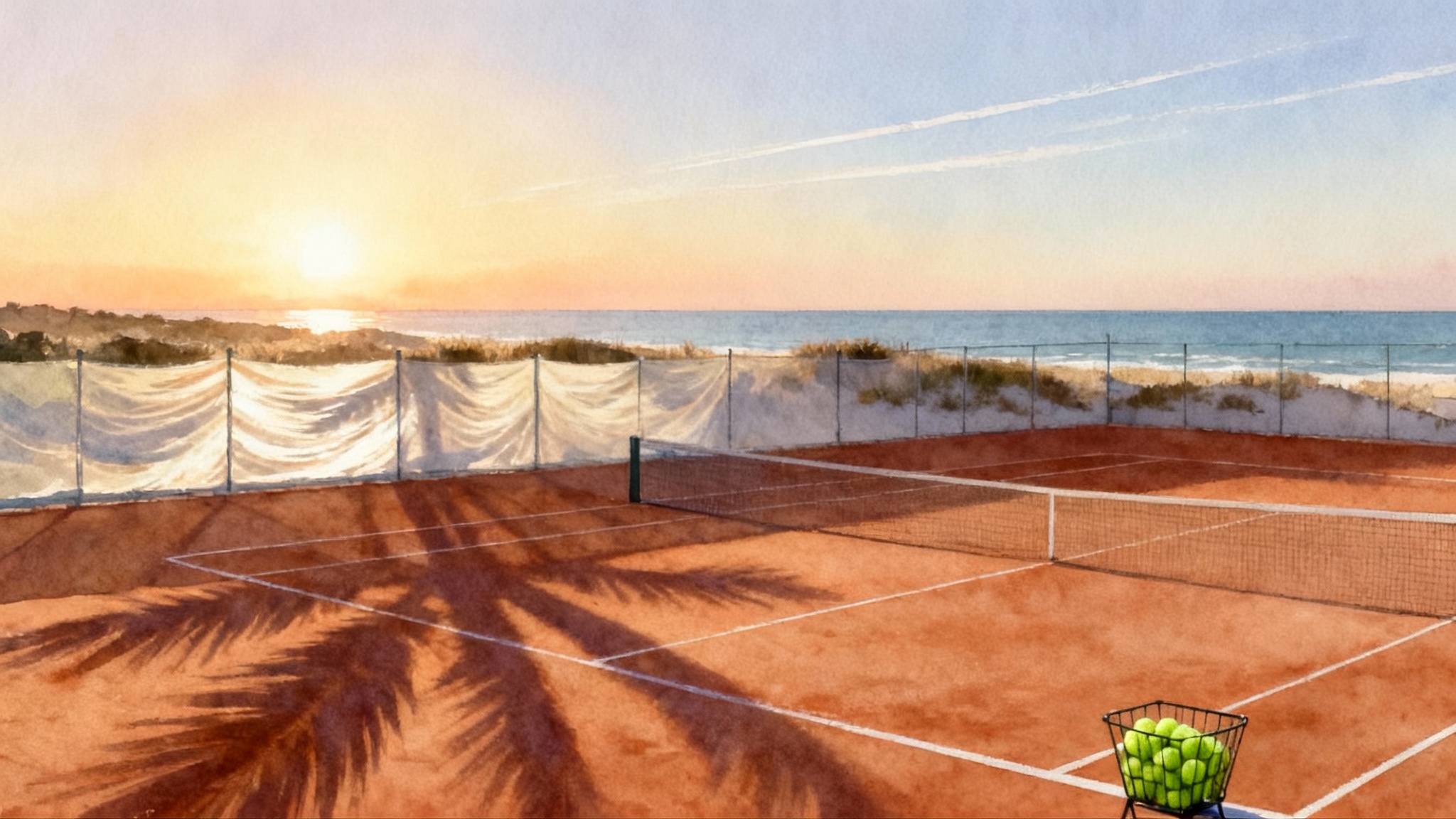
Tenerife Tennis in Winter and Spring: Europe’s Feb to Apr Base
Plan a climate-smart tennis week in south Tenerife. Use the rain-shadow microclimates of Costa Adeje and Chayofa, split time between hard and red clay at Tenerife Tennis Academy, and leave with measurable gains.
 Tommy
Tommy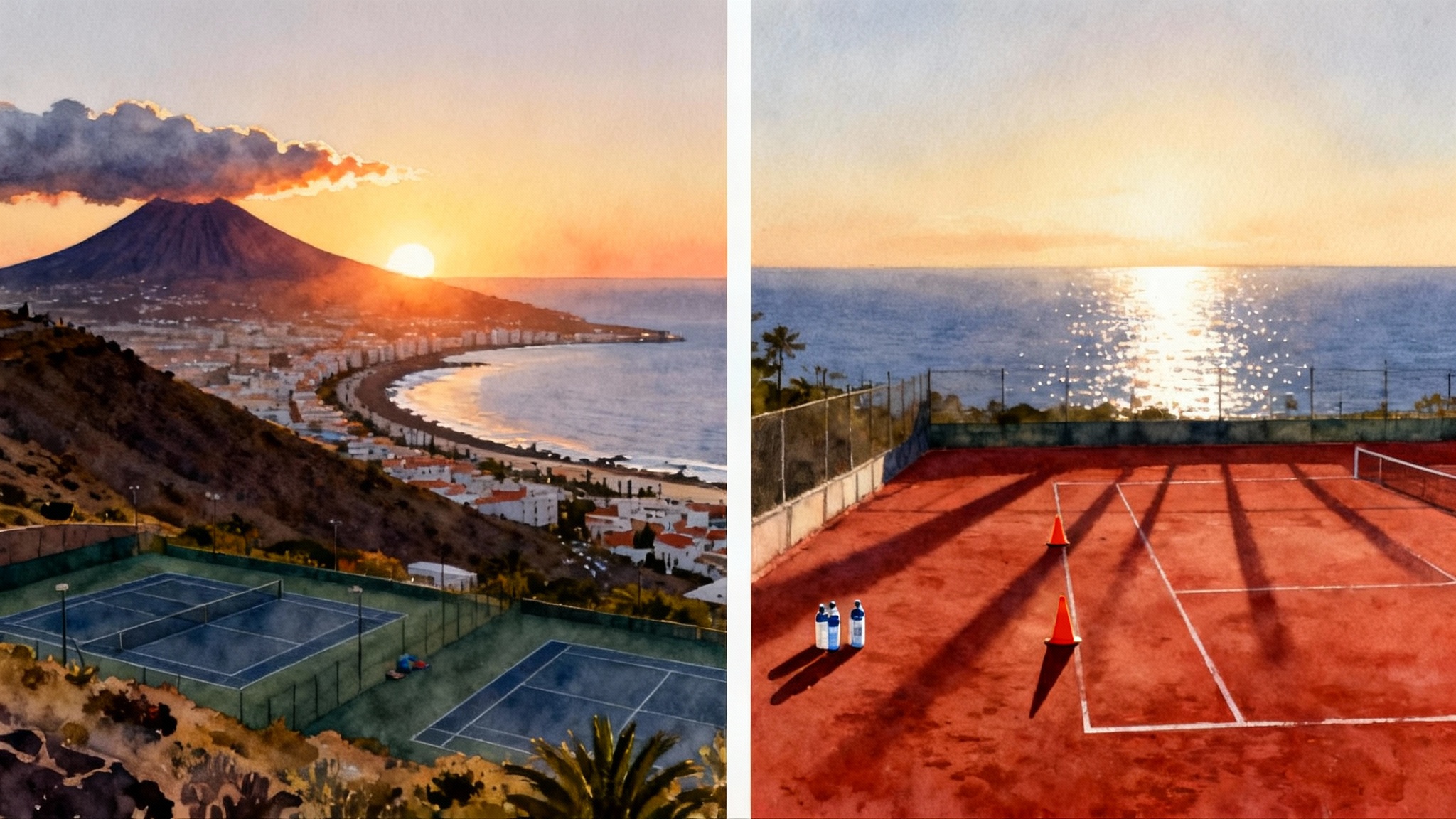
Why south Tenerife works from February to April
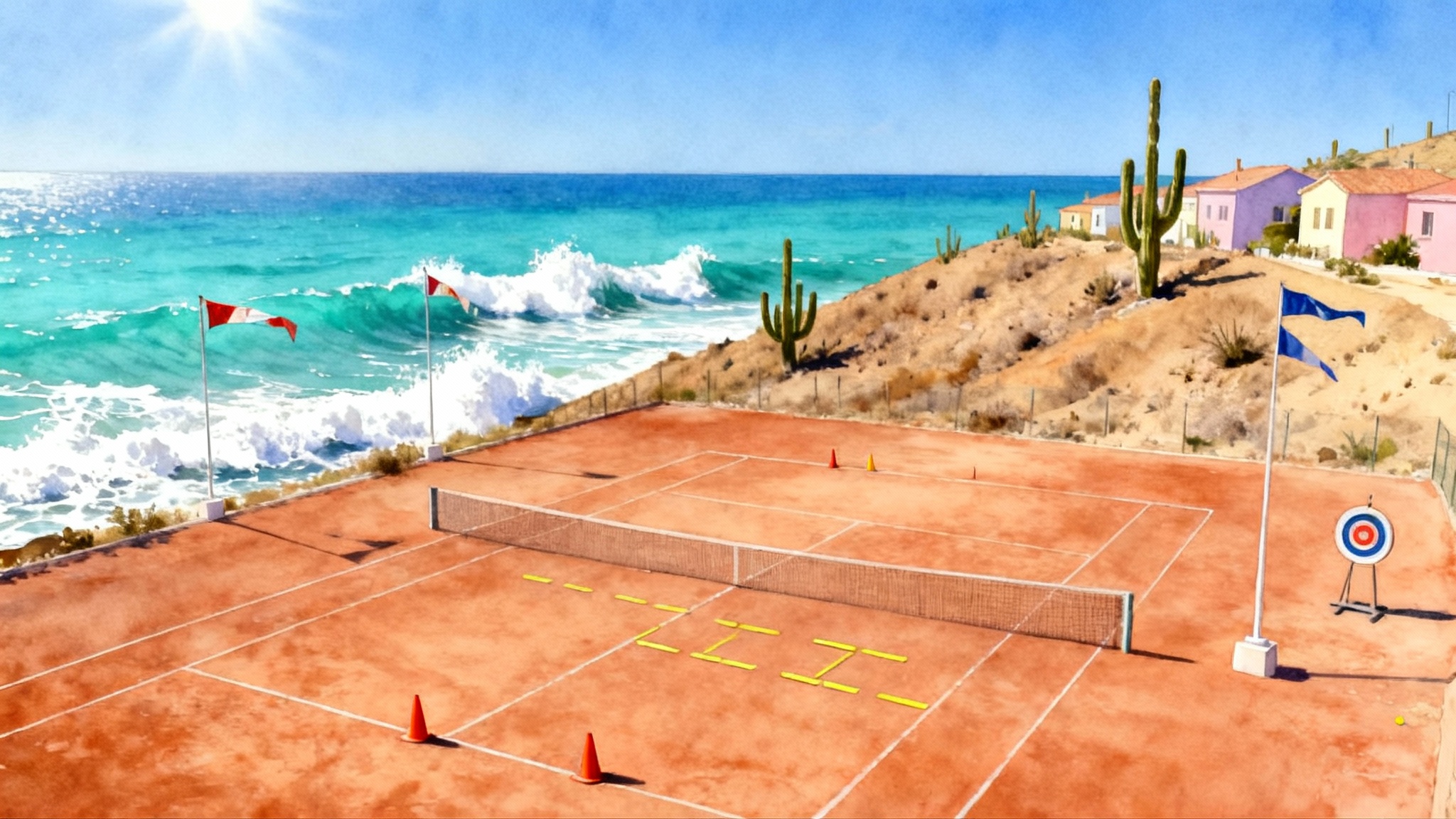
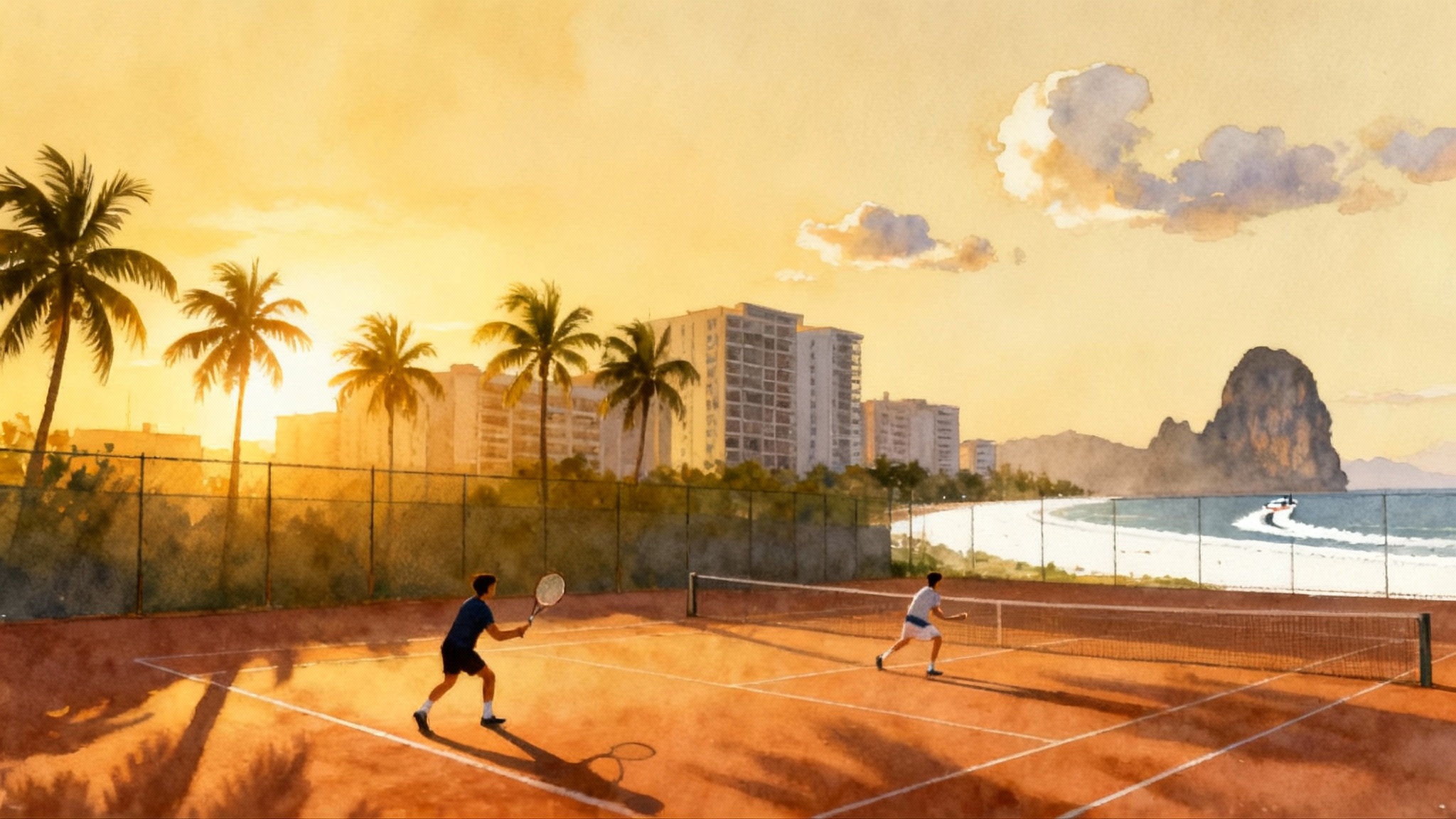
If your tennis goes into hibernation between February and April, south Tenerife is the rare European base that lets you train like it is late May. The island sits far enough south for warm winter sun, and Mount Teide creates a broad rain shadow that protects the southwest coast. Costa Adeje and the hillside of Chayofa sit inside this pocket of stability with cool mornings, bright middays, and only occasional showers. Public climate data backs this up. You will typically see daytime highs in the low to mid 20s Celsius, low rainfall, and many playable hours, as shown in the Spanish state meteorological climate records for Tenerife Sur. See the AEMET climate normals for Tenerife South for the long view.
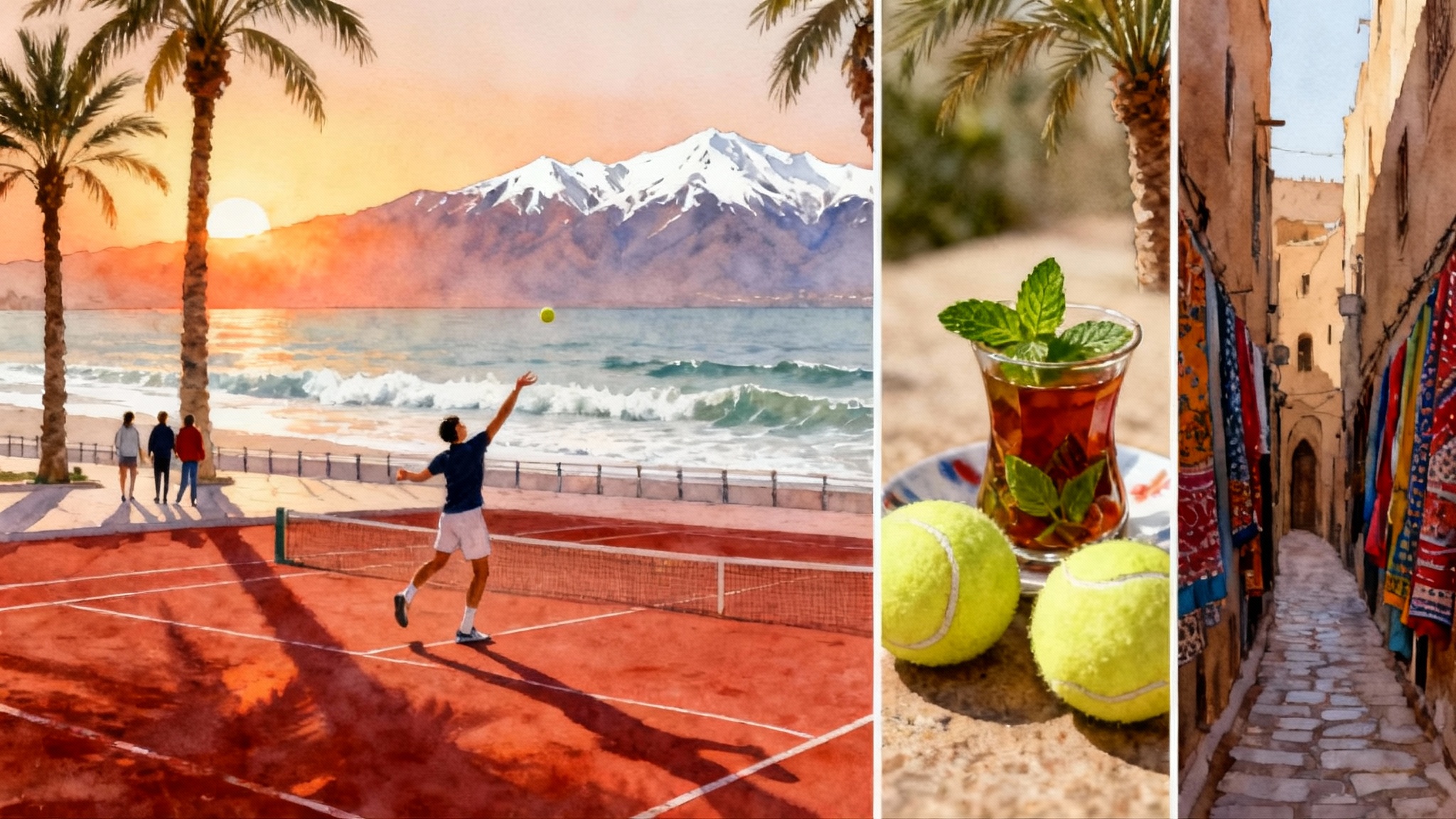
If your window extends into late spring, pair this plan with the nearby French Riviera Spring Tennis guide. For a dry‑season alternative across the water, consider this Morocco winter tennis plan.
Rather than chase clear skies week to week, you build your plan with confidence. That means a real training block, not a weather lottery.
Where to base yourself: Costa Adeje and Chayofa
South Tenerife’s two most practical bases for tennis are neighbors that feel different on the ground.
Costa Adeje
- Sea-level comfort. Mornings are calm more often than not, and midsummer-level heat is rare. This encourages high-intensity work early and tactical, lower-heart-rate drills later in the day.
- Flat travel time. You are close to the coastal road, supermarkets, and family activities. Courts, food, and the beach can sit inside a 15-minute radius.
- Wind pattern. A light northeasterly trade wind often picks up after lunch. Treat it as a training variable rather than a nuisance. Build pattern work that uses crosswinds for depth and height control.
Chayofa
- Hillside microclimate. Chayofa is slightly inland and higher than the beach. It gets a touch less wind and slightly cooler mornings. Clay courts here drain well and dry quickly.
- Quieter feel. If you want focus without the buzz of the promenade, the hillside base is ideal. You can drop to the coast in under 15 minutes when the day’s work is done.
Split the week across both areas and you get two useful environments without long drives.
Dual-surface plan with Tenerife Tennis Academy
Training on two surfaces in a single week is a force multiplier. It sharpens adaptation, footwork, and decision speed. The local pairing is straightforward: hard courts at the coastal performance center in La Caleta and red clay in Chayofa. Book your week through the Tenerife Tennis Academy dual-surface setup and ask for a schedule that blends morning hard-court sessions with afternoon clay.
Why this pairing works:
- Hard court in the morning builds pace tolerance, first-strike clarity, and serve patterns. The ball stays truer in calmer morning air, which is ideal for technical repetitions.
- Red clay in the afternoon extends rallies and raises the footwork demand at lower impact. You practice height, shape, and spin while the day’s breeze adds realistic variables.
If you want a deeper look at the coastal complex itself, check facility details on the Tenerife Top Training courts. Use that page to visualize court orientation and plan around sun angles for morning work.
The 7-day sample block for February to April 2026
This plan assumes you arrive on a Saturday and depart the following Saturday. Adjust start days as needed. All sessions aim for two to three hours on court with a focused strength and conditioning block most days.
Day 1 Saturday, arrival
- Afternoon: Light mobility, 30-minute easy hit on clay in Chayofa. Prioritize rhythm, not power. Finish with 10 minutes of serves to set a baseline.
- Evening: Groceries, hydration setup, and alarms for early starts.
Day 2 Sunday, settle and assess
- Morning, hard court at coastal base: Baseline consistency test, 20-ball tolerance per wing, count completed reps. Serve basket, 30 balls with targets in deuce and advantage courts. Record first-serve percentage.
- Afternoon: Beach walk and recovery swim. Gentle hip and ankle mobility.
Day 3 Monday, first full load
- Morning, hard court: Forehand and backhand speed ladder. Three blocks of cross-court plus down-the-line pattern at 70 percent effort. Serve plus one drill. Finish with 15-minute tiebreak play to get competitive feel.
- Midday, strength and conditioning: Posterior chain lifts, split squats, and calf complex. Keep volume modest on day one. Ten minutes of shoulder care.
- Late afternoon, clay: Depth plus height drill. Rally to two meters past the service line. Add defensive sliding entries. Ten minutes of drop shot and short-angle touch to exploit clay.
Day 4 Tuesday, accuracy under breeze
- Morning, hard court: Return games. Feed second serves to practice aggressive but high-margin returns. Use wind as a constraint. Aim middle third first, then work to corners.
- Midday, strength and conditioning: Medicine ball throws, rotational core, and skipping rope footwork.
- Late afternoon, clay: Patterns for breaking rhythm. High heavy forehand to backhand corner, then step inside the next ball. Finish with 20 minutes of point play to two points clear.
Day 5 Wednesday, mixed formats
- Morning, hard court: Serve and volley starts, then transition volleys. If you play doubles, run Australian and I-formation rehearsals with clear signals.
- Midday, skills lab: Thirty-minute video session to tag technique focus. If you have a speed device, check average first-serve speed. If not, use a simple benchmark like ball depth count per rally.
- Late afternoon, clay: Doubles patterns. First volley depth, lob retrievals, and poach timing with a coach feed.
Day 6 Thursday, resilience and recovery
- Morning: Optional light hit or full rest depending on soreness. If you train, keep it to 60 minutes of serves and returns.
- Midday, long recovery: Mobility, pool, and nap. You win the week by respecting this reset day.
- Late afternoon, clay match play: Two short sets with a super tiebreak. Track break points created and converted. Note your forehand height choices under pressure.
Day 7 Friday, peak day
- Morning, hard court: Benchmark retest. Repeat the Sunday consistency test and serve targets. Compare first-serve percentage and rally count.
- Midday, strength and conditioning: Short, sharp. Two sets instead of three. Stop fresh.
- Late afternoon, clay: Specific weapons. Build your three favorite patterns, record results, and set a carry-home drill list.
Day 8 Saturday, depart
- Optional 45-minute tune-up hit if your flight allows. Pack a post-trip plan with two drills for each surface to continue at home.
This layout is a microcycle that builds pressure across two surfaces, inserts a strategic recovery window, and finishes with a retest so you leave with evidence of improvement, not just the feeling of it.
Travel and logistics that save time
Airports and transfers
- Fly into Tenerife South Airport, also called TFS. Typical transfer to Costa Adeje is 20 to 25 minutes by car, and to Chayofa is about 15 minutes.
- Car hire is usually simplest for a dual-base week. Reserve early if you need child seats. Parking at coastal apartments is often gated or on-street; the hillside is easier.
Daily movement
- Morning hard-court sessions work best when you pre-pack the car the night before. Bring two liters of water per player, electrolytes, towels, and sunscreen.
- Afternoon clay tends to be a touch cooler and breezier. Bring a spare pair of socks and a soft brush for clay outsoles.
Court booking
- If you are booking through the Tenerife Tennis Academy dual-surface setup, request morning slots near sunrise for hard courts and late afternoon for clay. Ask the coaches to sequence your technical themes so each surface reinforces the other.
- Build a wet-weather contingency. Even in the rain shadow, a short shower can pass. Plan a short indoor strength session or a video analysis block so the day still advances your goals.
Sun and wind management
- Ultraviolet index can be higher than you expect in late winter. Apply broad spectrum sunscreen before you leave your apartment and reapply between sessions.
- Use the wind as a training tool. Drill crosswind rally lines and headwind serve targets. The point is to learn trajectory control, not just survive gusts.
Food and recovery
- Stock breakfast basics and simple post-session carbohydrates. The morning-to-midday gap is your critical window for refueling.
- An ocean swim is a free recovery tool. Ten minutes at the end of the day reduces perceived soreness and clears the head.
Budget ranges for 2026, and how to control them
Costs shift with school holidays and booking windows, so treat these as planning ranges for a seven-night stay per player.
Lean focus
- Accommodation: Shared apartment inland or compact studio near the coast.
- Coaching: Group clinics most days, with one private lesson.
- Transport: Small rental car split between players or careful use of taxis.
- Food: Breakfast at the apartment, simple lunches, a few dinners out.
- Typical range: A lean plan can be kept to a modest weekly budget if you travel outside holiday peaks and share costs. The lever is accommodation.
Balanced plan
- Accommodation: Mid-range apartment or apart-hotel near Costa Adeje.
- Coaching: Mix of group clinics with two to three private lessons.
- Transport: Rental car all week for freedom to swap surfaces.
- Food: Mix of self-catering and relaxed dinners on the promenade.
- Typical range: Middle budgets handle two coached sessions per day across most of the week.
Premium build
- Accommodation: Villa or high-spec hotel with pool and gym access.
- Coaching: Two-on-one or private coaching most days, plus structured strength and conditioning.
- Transport: Larger rental car, flexible bookings, and occasional guided excursions for rest-day variety.
- Food: Quality restaurants most evenings, healthy lunches between sessions.
- Typical range: Premium plans purchase certainty. You are paying for minimal friction and fast gains.
How to keep any plan efficient
- Book courts and coaching before flights. The week falls into place once session times are fixed.
- Travel slightly off-peak. Avoid school holiday windows when possible.
- Share resources. A two-player or three-player pod cuts costs for coaching, transport, and accommodation.
Family add-ons that do not blow the plan
You can bring non-players without losing training quality. The area is set up for short, high-value outings that do not drain energy.
- Water parks: Siam Park and Aqualand sit close to the coastal strip. Choose a cooler day or an afternoon after a light morning hit.
- Wildlife: Whale and dolphin watching boats leave from Los Cristianos. Pick a short trip and sit in the shade. It is easier on recovery than a full-day excursion.
- Beaches: Playa del Duque and Playa de Fañabé are gentle options with nearby food. Schedule a family beach hour after your afternoon clay session.
- Short hikes: Barranco del Infierno requires a permit and offers a controlled, time-capped walk. It is a good rest-day morning when the trail is quieter.
- Rain-day fallback: A cinema trip in English or a small playground session at sunset keeps kids happy without a full-day commitment.
Measuring gains so they last
You do not know what to repeat if you do not measure. Keep it simple.
- Serve: Record first-serve percentage to a target box and average speed if you have a pocket radar. If not, track aces and forced errors per 30 serves.
- Rally tolerance: Count completed 20-ball cross-court rallies per side on day two and day seven.
- Patterns: Choose three patterns, such as serve wide plus forehand to the open court, or heavy cross followed by line change. Track point-win percentage in 15-point blocks.
- Movement: Use phone video for four footwork clips across the week. Compare stride length and recovery steps on hard and clay.
- Match stats: Two short sets midweek and on Friday. Note break points created and converted, as well as unforced errors under wind.
If you train with a coach through the Tenerife Tennis Academy dual-surface setup, ask for a one-page scorecard that mirrors these benchmarks. The aim is a portable routine you can run at home after the trip.
Common mistakes in Tenerife and how to avoid them
- Sprinting into overload: The climate tempts you to add a third session. Resist it unless you already carry that load at home. Keep quality high and recovery honest.
- Ignoring the clock: Morning discipline is everything. Be on court by 8:00 to capture calm air and consistent bounce.
- One-surface tunnel vision: The whole point of this base is the dual-surface blend. If a day goes sideways, swap surfaces rather than cancel the second session.
- Poor hydration: Set alarms to drink before, during, and after sessions. Add electrolytes in the afternoon when the wind and sun strip sweat faster than you notice.
- No retest: If you do not measure on day two and day seven, you are leaving value on the table. Build retests into the schedule before you fly.
Pulling it all together
South Tenerife gives you a rare European window where winter light feels like spring tennis. Costa Adeje and Chayofa sit inside a reliable rain shadow, close enough to move between hard and clay in a single day. Book through Tenerife Tennis Academy, claim early mornings for hard-court pace and use late afternoons on clay for spin and shape. Treat wind as a constraint, not an excuse. Keep the week tight with a measured recovery day and a Friday retest. Bring the family without losing focus. Leave with numbers that prove you did more than escape the cold. You built a better game and a template you can run again.