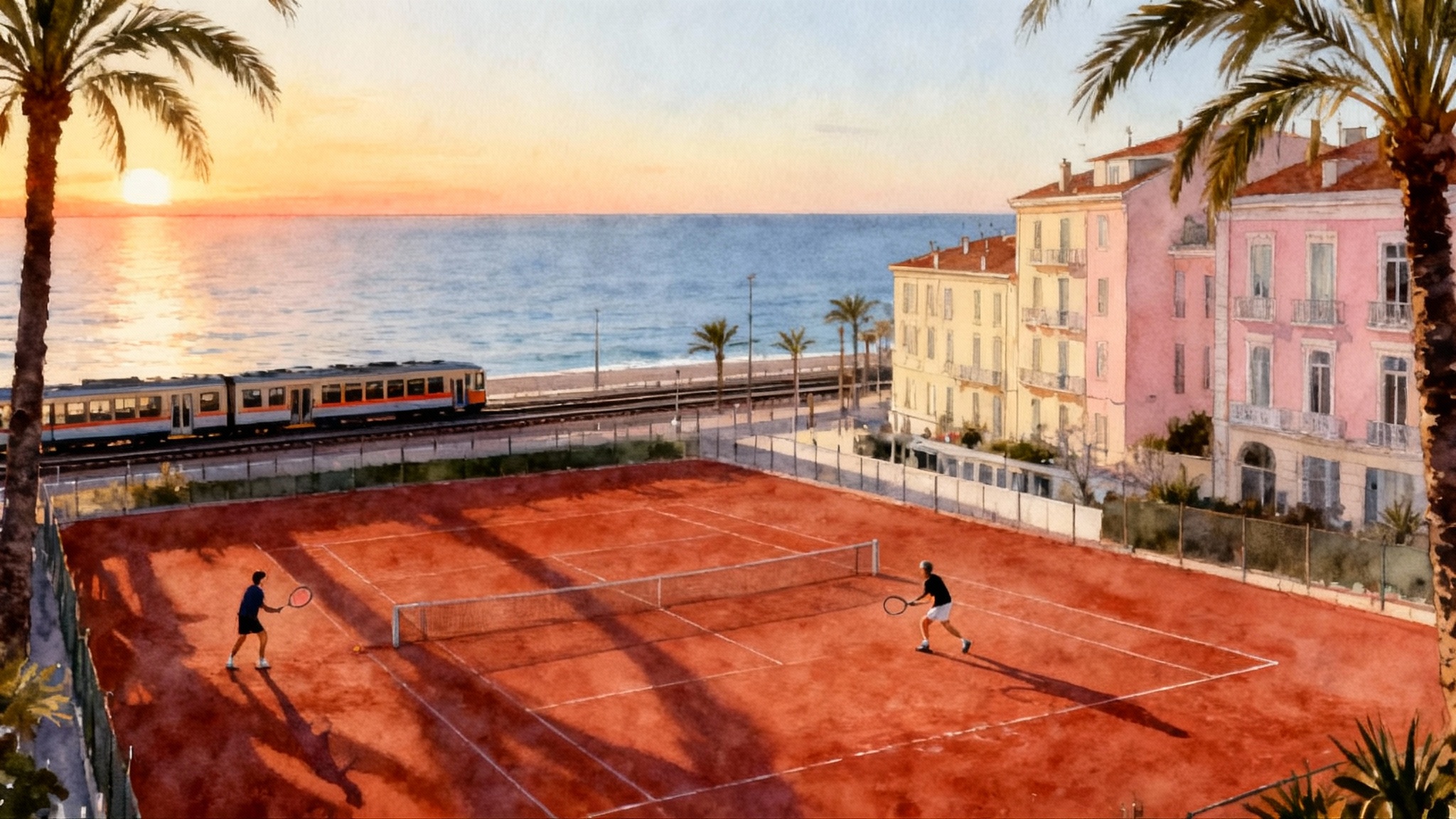
Morocco Winter Tennis 2026: Marrakech to Agadir Dry-Season Plan
Build a January to March tennis camp in Morocco that dodges winter. Morning clay in Marrakech, a coastal recovery block in Agadir, realistic temps and rainfall, how to book courts and pros, sample 7 and 10 day plans, costs, family stays, and visa and flight tips.
 Tommy
Tommy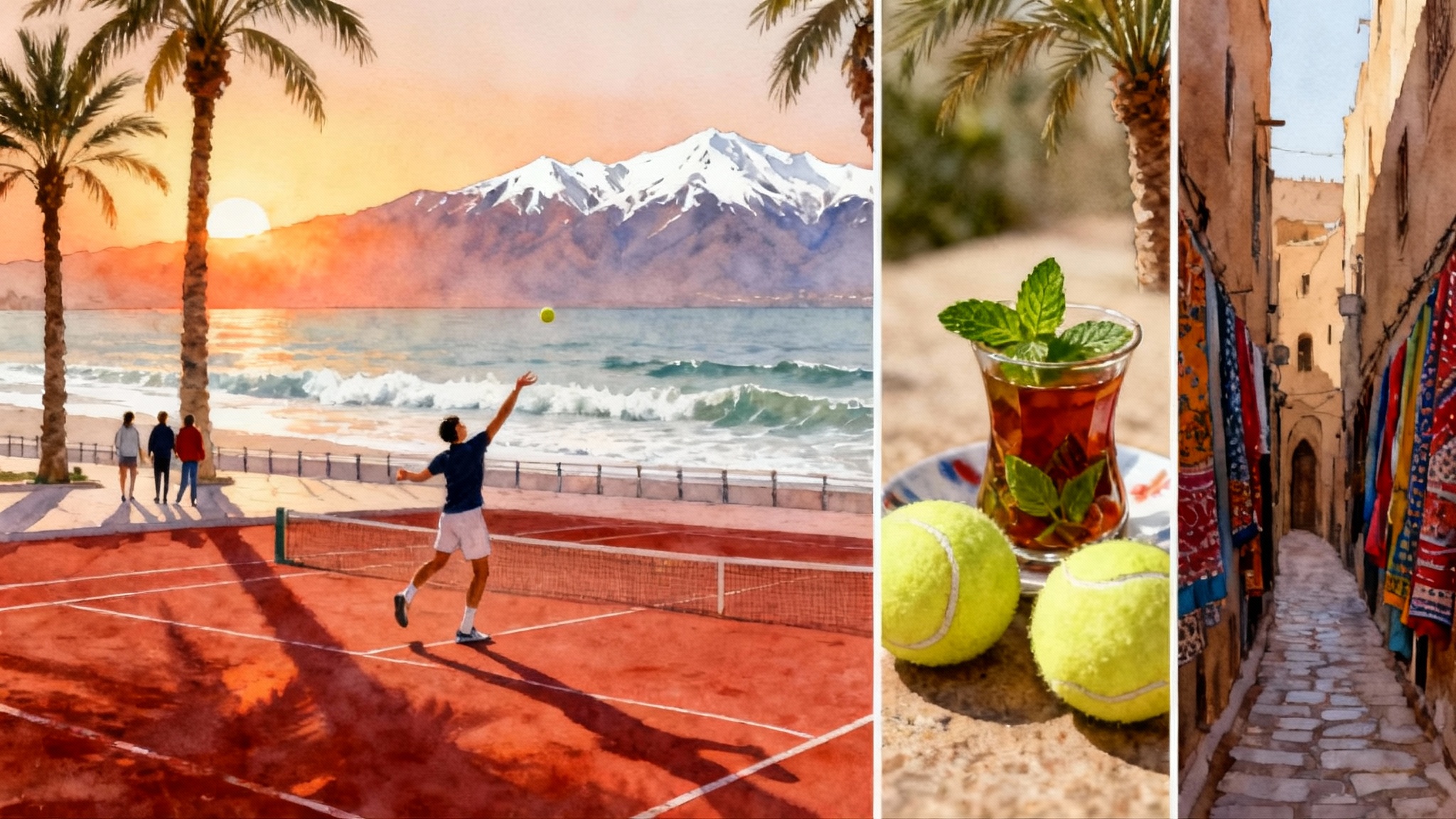
Why Morocco is the January-March escape your tennis needs
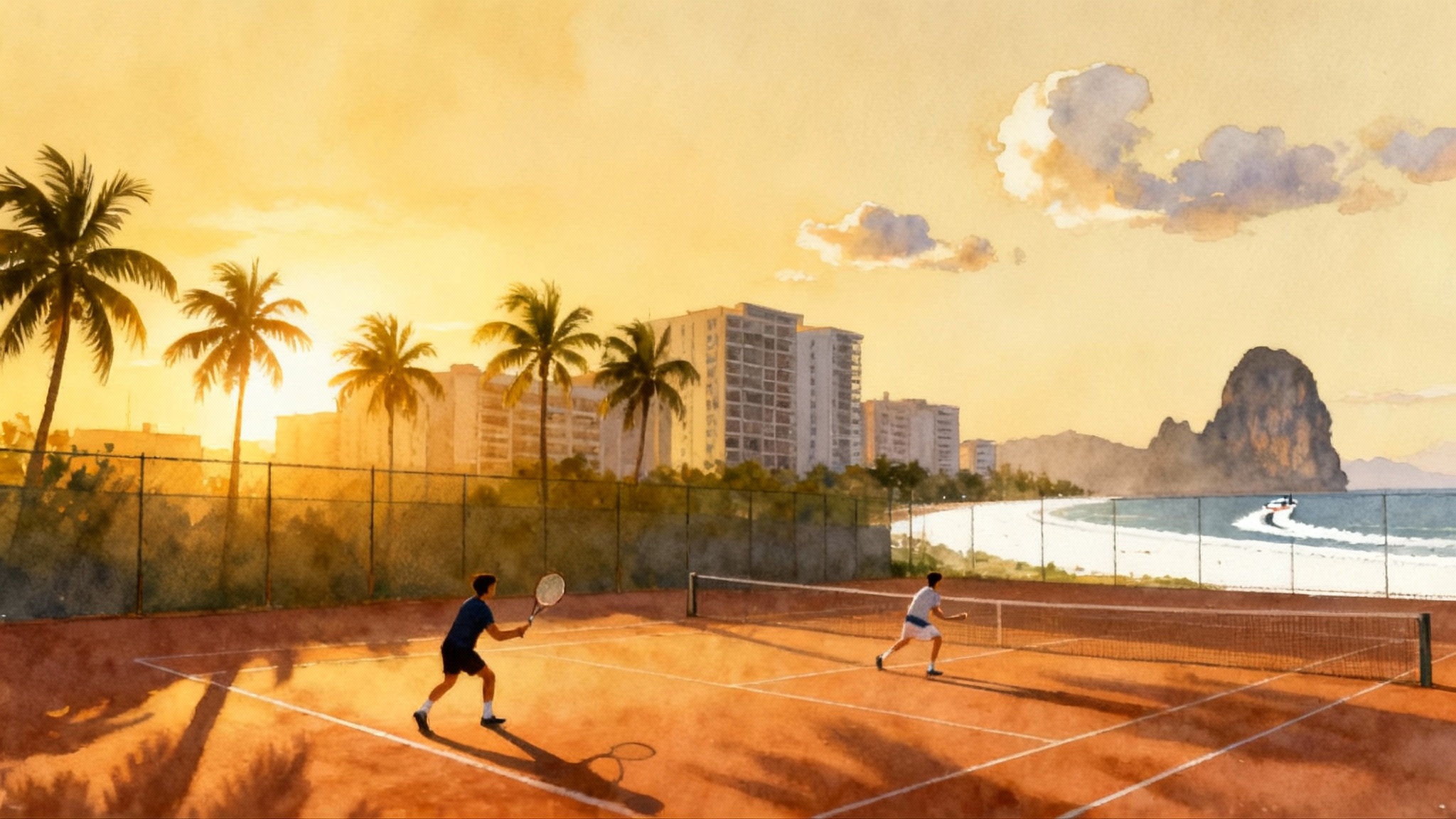
If you want hard training without hard winter, the Marrakech to Agadir corridor gives you a practical weather window when much of Europe is wet and cold. Marrakech sits in a semi-arid basin at the foot of the High Atlas, which blocks some Atlantic systems. Agadir faces the Atlantic with a mild ocean influence that keeps afternoons playable and nights cool. The combination lets you stack quality morning clay sessions in Marrakech, then shift to the coast for recovery, light hitting, and cross-training.
Typical January to March in Marrakech brings cool mornings that warm quickly once the sun clears the palms. The tourism office pegs winter as mild with limited rainfall compared to northern Morocco, and notes that late winter can see passing showers, so plan early starts with a flexible rest window in mid-afternoon. See planning context in the official Marrakech weather guide.
The climate-first plan at a glance
- Mornings in Marrakech: expect crisp warm-ups and rapidly drying clay. Average daytime highs reach the upper teens to low twenties Celsius in late winter. Courts are usually playable by 9:00.
- Middays: strongest sun and drier air. Schedule gym, video review, or lunch in the shade. If a shower passes, clay often recovers within an hour.
- Evenings: cool and calm. Book light active recovery or a short tactical session under lights.
- Coastal recovery in Agadir: ocean breeze, soft winter light, and consistent 19 to 22 degrees Celsius daytime highs that are gentle on joints.
In practical terms, doubles of on-court hours are easiest to sustain in Marrakech, while Agadir is ideal for a lower-impact block that still keeps your touch. For another winter microclimate benchmark, compare with our Tenerife winter tennis guide.
Marrakech: where to train and how to organize it
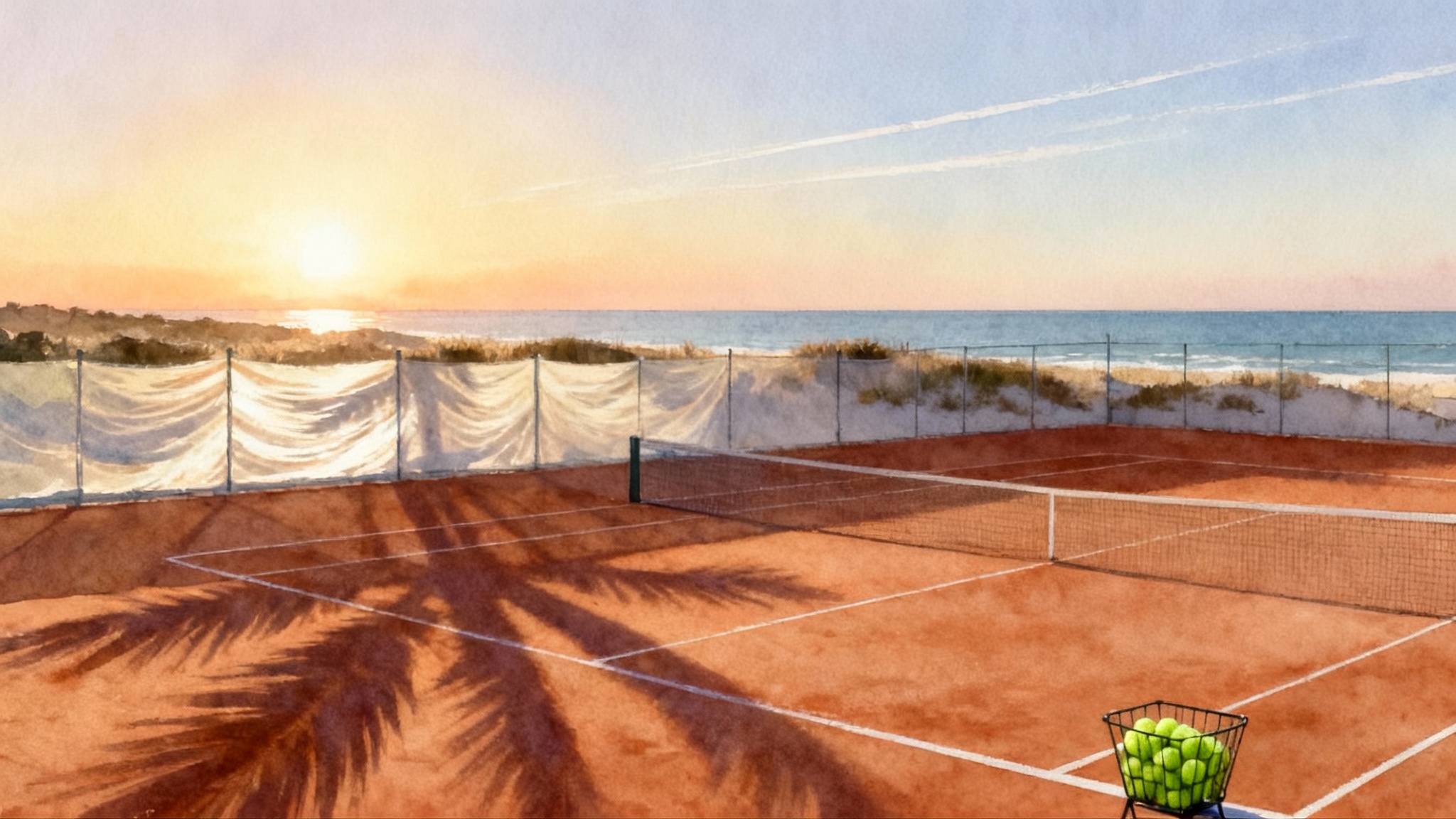
Marrakech has a healthy mix of classic city clubs and resort courts in Palmeraie. Typical setups include 6 to 10 red clay courts, a small fitness room, and a cafe. Examples you will hear about from players include Royal Tennis Club de Marrakech, Hivernage, Palmeraie area resort courts, and several hotel complexes that rent to non-guests.
How to book courts
- Pick your base. Choose a riad or hotel within 15 to 20 minutes of your preferred club. That short transfer is the difference between a smooth daily rhythm and friction.
- Call or message ahead. Many clubs confirm by email or WhatsApp. Ask for morning slots between 8:30 and 10:30 across your first four days, then an afternoon option if you need to double.
- Expect to prepay the first session. Some clubs hold the rest of the week under your name and settle daily.
What to ask when you book
- Surface and watering schedule. Know if they drag and water between morning blocks, which affects bounce and footwork work.
- Lights and evening availability. Useful for a light second hit after sunset.
- Pro-hit or coaching. Ask for a named hitter with a national level background for pace. Clarify tempo: live ball, basket, or point-play.
- Guest access. Clarify whether non-members pay a per-day guest pass or a court fee. In Marrakech, outsiders commonly pay a reasonable court rate plus a small guest supplement.
Typical pricing in 2026 terms
- Court rental: 100 to 200 Moroccan dirhams per hour, roughly 10 to 20 United States dollars depending on exchange rate.
- Hitting partner: 250 to 500 Moroccan dirhams per hour, usually including balls.
- Private lesson with a senior coach: 400 to 700 Moroccan dirhams per hour.
- Weekly pass, where offered: often priced for locals but extended informally to visitors if you train daily. Ask politely.
How the day flows
- 7:00 light breakfast, 7:30 transfer, 8:15 dynamic warm-up and mini tennis.
- 8:30 to 10:30 technical block on clay: serve plus one, forehand height windows, backhand depth, and a 20 minute footwork ladder sequence.
- 11:00 Moroccan mint tea and recovery snack, then mobility work in the shade.
- 13:00 lunch and nap, 15:30 optional video review or gym strength.
- 17:00 optional 60 minute point-play set if legs are fresh.
Agadir: build the coastal recovery block
Agadir is your soft landing after four to six days of load. The ocean air and a flatter diurnal curve make it ideal for keeping touch without redlining your central nervous system.
Court access
- City clubs and resort courts line the main beachfront zone. Look for multi-court clay or green set-courts attached to family hotels. Many will rent by the hour to non-guests.
- The city’s mild winter highs sit around 20 to 22 degrees Celsius with limited wind in the mornings. Courts are rarely weathered out, and a light breeze can help spin work.
Training focus in Agadir
- Day 1 to 2: fifty to sixty minute feel sessions on transitions, drop shots, and serve rhythm.
- Day 3: light match play to test patterns.
- Cross-training: coastal walks for low-impact aerobic base, or a beginner surf lesson in nearby Taghazout to challenge balance and leg endurance without pounding.
Temperatures and rainfall in plain numbers
- Marrakech averages: January mornings near 6 to 8 degrees Celsius, afternoons around 17 to 19. February is similar, tipping toward 19 to 20. March warms to roughly 21 to 23. Rainfall across January to March is modest in total and tends to fall in short bursts that clay survives well.
- Agadir averages: January highs near 20 to 21 degrees Celsius, with nights around 8 to 10. February looks similar, and March often reaches 22 to 23. Rain occurs but is typically brief. On many days you will play in light long sleeves and shed layers by 10:00.
Plan your load accordingly. Front-load volume in Marrakech while mornings are crisp, then keep reps and touch on the coast. For a stateside comparison of winter-friendly setups, see our Naples to Sarasota winter tennis.
Booking courts, pro-hits, and guest passes: the playbook
- Write a single clear email to two or three clubs. Include dates, times, number of players, and whether you want a pro-hit or coaching. Ask for confirmation 48 hours in advance.
- If you need pace, request a hitter rather than a full lesson. Phrase it simply: pace and consistency for live ball, with 15 minutes of serve return. That saves your legs and maximizes rhythm.
- Bring your own balls for day one. Many clubs carry European brands at decent prices, but supply varies. Fresh balls help you feel the court.
- Guest passes often require identification. A photo of your passport page is typically enough. Carry small cash for cafe tips and stringing.
- Stringing is available at major clubs and some hotels. Turnaround is often same day if you drop off by noon. State tension in kilograms and pounds to avoid confusion.
Useful phrases
- French: Je souhaite réserver un court demain matin à huit heures pour deux heures. Avez-vous un partenaire de frappe disponible ?
- Arabic greetings are appreciated. A simple Salam or Shukran goes a long way.
Sample 7 day training itinerary
Day 1 Marrakech arrival
- Afternoon walk, 30 minutes mobility, early sleep.
Day 2 Load in Marrakech
- 8:30 to 10:30 technical block on clay.
- Afternoon gym: posterior chain and core, 40 minutes.
- Optional 45 minutes point-play at 17:30.
Day 3 Marrakech
- 8:30 to 10:30 serve plus first ball, pattern work to backhand corner.
- Midday video review and shoulder care.
Day 4 Marrakech
- 8:30 to 10:30 match-play sets with local hitter.
- Afternoon souk walk for recovery, 6,000 to 8,000 easy steps.
Day 5 Transfer to Agadir
- Morning light hit 60 minutes. Midday transfer by car, about three hours with a snack stop.
- Sunset coastal walk.
Day 6 Agadir recovery block
- 9:00 to 10:00 feel session: volleys, touch, serve rhythm at 70 percent.
- Afternoon surf lesson or pool recovery.
Day 7 Agadir sharpen and depart
- 9:00 to 10:15 short sets. Pack, recover, and head to the airport.
Sample 10 day training itinerary
Day 1 Marrakech arrival
- 30 minutes mobility and bands, sleep early.
Day 2 to 4 Marrakech load
- Daily 8:30 to 10:30 technical blocks with clear themes: Day 2 forehand height and spacing, Day 3 backhand depth and neutral defense, Day 4 serve plus one patterns.
- Evenings alternate between light sets and massage.
Day 5 Marrakech test day
- Morning match-play ladder with a local hitter or coach.
- Afternoon off feet. Try a hammam and gentle stretch.
Day 6 Transition day
- 60 minute tune-up, then transfer to Agadir.
Day 7 to 8 Agadir rebuild
- 90 minute blended sessions: 45 minutes live drills and 45 minutes points.
- Add one aerobic hour on the beachfront promenade.
Day 9 Agadir touch and tactics
- 60 minutes serves and returns, 30 minutes tiebreakers.
Day 10 Depart
- Optional 45 minute feel hit, pack, and go.
Cost reality check vs Spain and the Canary Islands
Court fees and pro time in Morocco are the value play in winter. Expect the following broad ranges for a well located setup:
- Marrakech and Agadir court time: 10 to 20 United States dollars per hour.
- Hitting partners: 25 to 50 United States dollars per hour.
- Private lessons with senior coaches: 40 to 70 United States dollars per hour.
In southern Spain and the Canary Islands in winter, common ranges are higher:
- Court time: 20 to 40 euros per hour for comparable clay.
- Hitting partners: 40 to 70 euros per hour.
- Private lessons: 60 to 90 euros per hour at popular training centers.
If you want another Atlantic option with similar winter reliability, browse our Pacific Mexico dry-season tennis.
Flight and visa logistics from the United States and Europe
From the United States
- Most itineraries route through Casablanca with the national carrier Royal Air Maroc, then connect onward to Marrakech or Agadir. Alternatives route via European hubs such as Paris for Air France, Madrid for Iberia, Lisbon for TAP Air Portugal, or London for British Airways.
- Build a 90 to 120 minute connection buffer in Casablanca for checked bags and security.
From Europe
- Marrakech and Agadir are well served by European full service and low cost carriers. You can often find nonstop flights from major cities in France, Spain, the United Kingdom, Germany, the Netherlands, and Italy. That makes a one week camp feasible with a single cabin bag.
Visa rules in brief
- United States passport holders and most European Union citizens are visa-exempt for visits up to 90 days. Always check the current list before booking because policies can change. Morocco’s consular portal maintains the roster of visa-exempt nationalities. See the official exemption list.
- Your passport should be valid for the duration of your stay, and many airlines prefer six months remaining for their own policies. Bring your return ticket and lodging details for immigration.
- Some nationalities who are not exempt can apply for an electronic visa through the government portal. Processing is often fast, but do not leave it to the last week.
Family-friendly stays and cultural add-ons
- Atlas foothill hike from Marrakech: a half day loop near Imlil offers wide mountain views and crisp air. Great active recovery when legs are heavy from clay.
- Souks and food: set a one hour cap for a gentle walk through the medina on your off afternoon. Catch the spice scents, buy a handful of fresh dates, then get off your feet.
- Gardens for calm: Jardin Majorelle and similar green spaces are perfect for mental reset without taxing the body.
- Coastal play in Agadir: book a late afternoon surf lesson in Taghazout, try sand dune walks near Tamri, or ride bikes on the beachfront path. Sunset is family and recovery friendly.
- Hotels with kids clubs: many coastal properties offer supervised kids time in the afternoon, which frees your second hit and gives the family a break. For European shoulder season ideas, see our French Riviera shoulder-season tennis.
Practical packing for a winter tennis block
- Layers, not bulk. A light down vest and a sun hoodie handle the swing from cool mornings to warm middays.
- Two pairs of clay shoes. Courts can be damp early, and rotations keep your feet healthy.
- Sunscreen and a brimmed hat. Winter sun is softer but persistent, especially in Marrakech.
- Resistance bands and a mini tripod. You will get more out of your video check-ins and warm-ups.
- Travel balls for day one, then buy locally.
When to switch from Marrakech to Agadir
Use your legs as the sensor. If your accelerations feel heavy by day four, it is time to shift. A two to three day coastal block in Agadir lets you keep touch without stacking soreness. If you are still springy by day five, stay in Marrakech for one more test day and then move.
How to protect your training days
- Reserve morning courts for your must-have sessions. If weather interrupts, you still have an afternoon buffer.
- Keep a light bucket session ready for any shower day. You can get quality serve work in 50 minutes once the clay is safe.
- Use ride-hailing or hotel cars for transfers to keep timing predictable.
- Confirm court and hitter the day before by message. It takes one minute and saves headaches.
The takeaway
January to March is not a monsoon-proof promise anywhere, but the Marrakech to Agadir pairing is as close as winter tennis gets to reliable. Marrakech gives you crisp mornings, fast-drying clay, and a strong pool of hitters. Agadir gives you a soft landing that keeps skill sharp and joints happy. Build your week around morning work, respect the afternoon lull, and finish on the coast with family smiles and legs that still want the ball. If you make one winter training change in 2026, make it this Morocco split and let the tennis tell you the rest.