Cape Town Summer Tennis 2026: Train Under Table Mountain
 Tommy
Tommy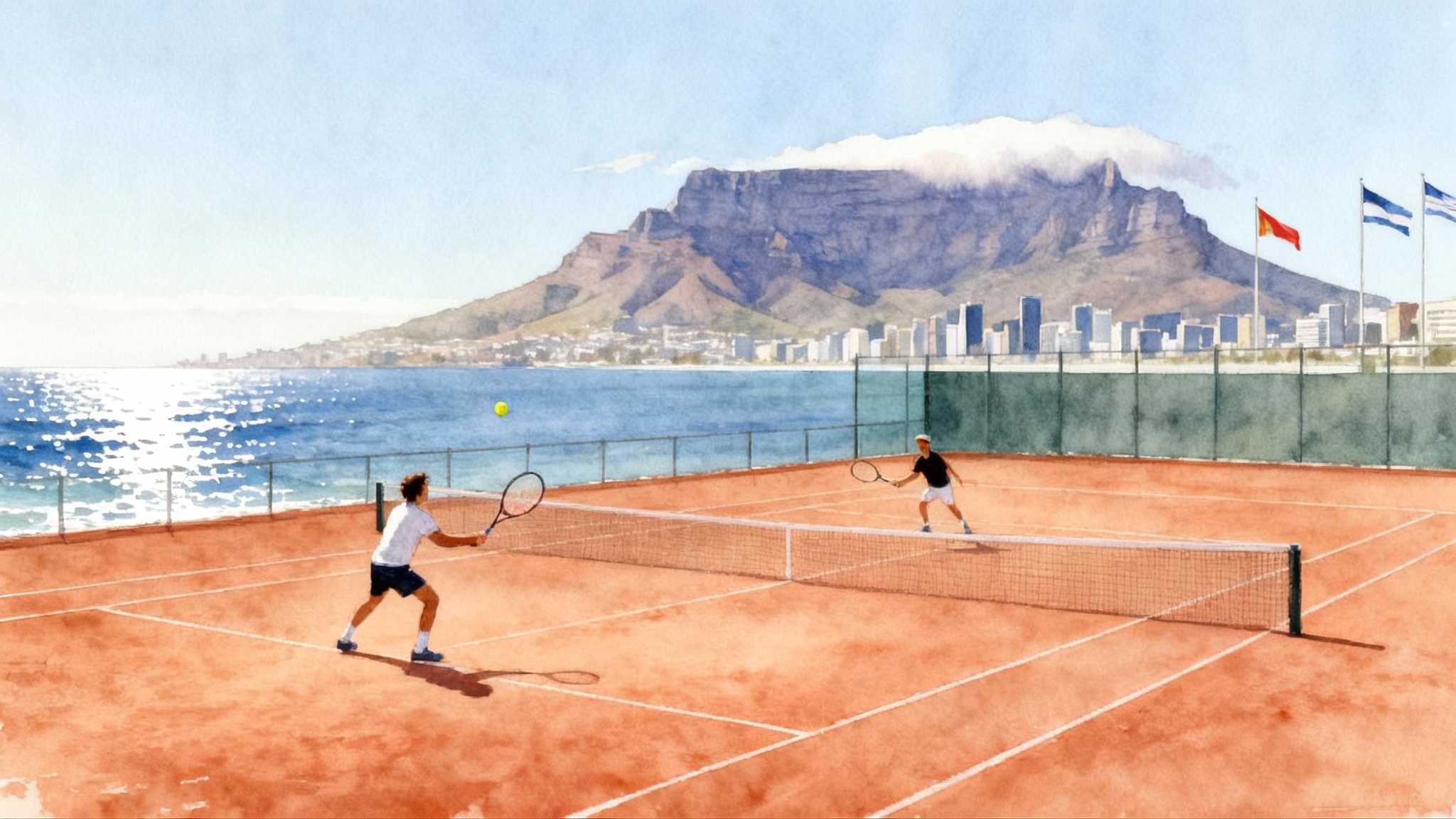
Why Cape Town from December to March
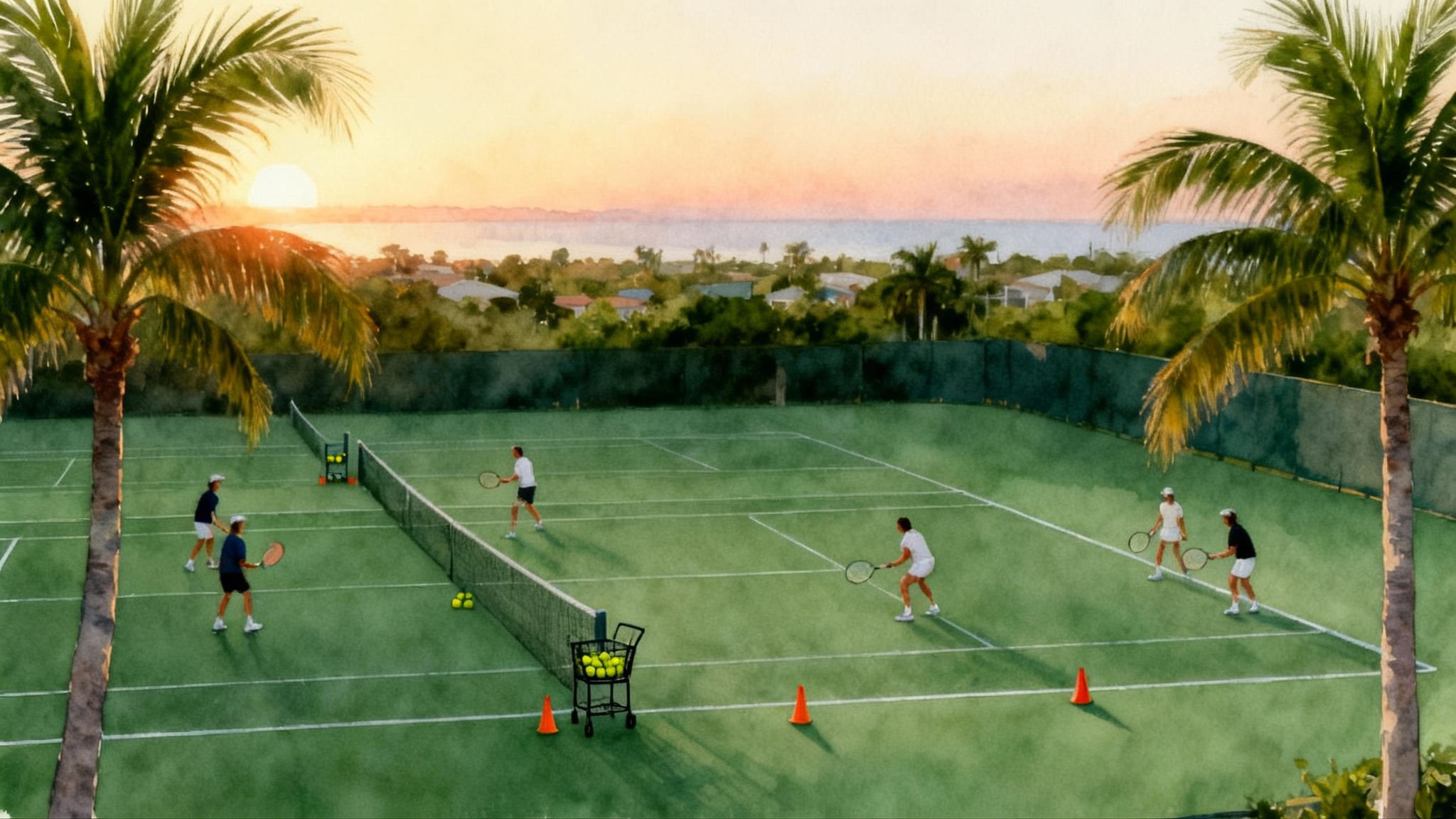
If you live in the Northern Hemisphere, December to March is the dead of winter. In Cape Town it is the height of summer. Daytime highs typically sit in the low to mid 20s Celsius, often between 70 and 83 Fahrenheit, with dry air and big blue skies. Mornings are usually calm, which is perfect for technical work and high ball reps. By mid to late afternoon a south easterly wind known as the Cape Doctor often arrives. Locals welcome it because it clears the air. Tennis players welcome it because it builds match skills in real wind without needing a storm. To get a feel for this pattern, read about the Cape Doctor summer wind.
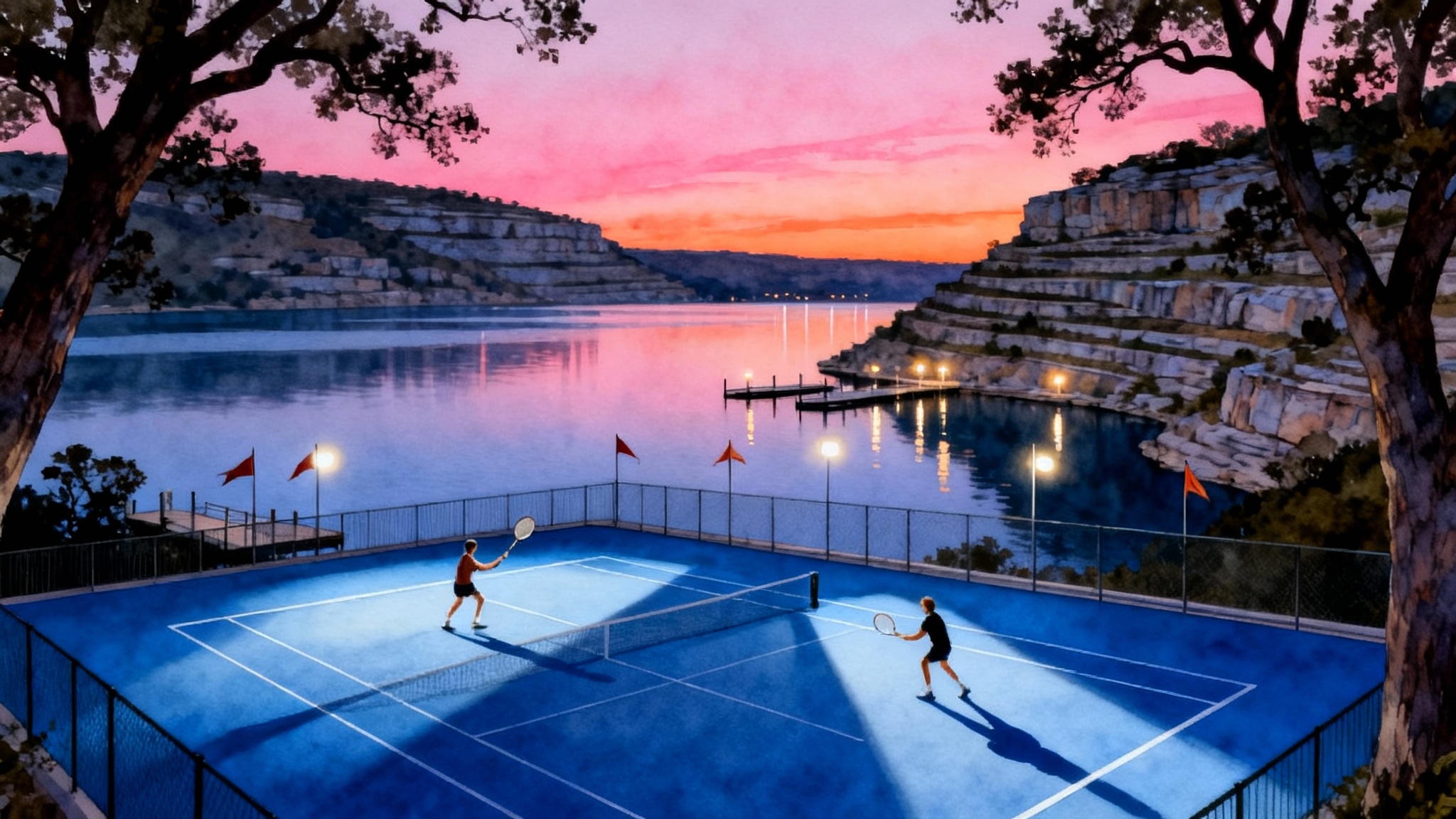
Cape Town adds something else that is rare in classic winter training destinations. Courts cluster close to beaches, mountain trails, and city neighborhoods. That reduces transfer time, which means you can fit more productive hours into a week without feeling like a commuter. For a United States comparison, study Austin wind-smart winter tennis to see how similar breeze days translate to match toughness.
Where to Play: Neighborhood Clubs and Surfaces that Work
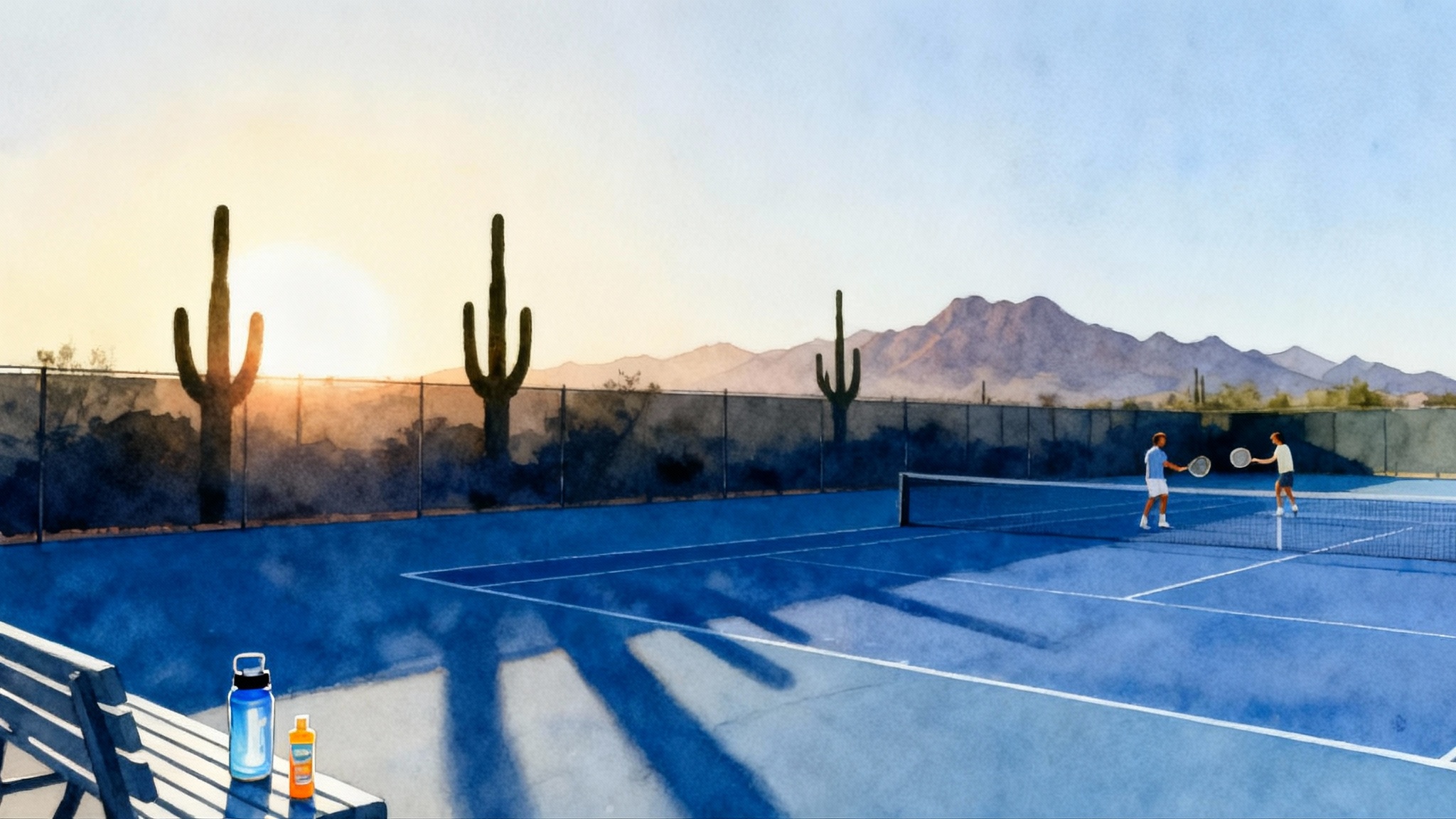
Here is a practical short list that pairs surface quality with training goals. All three clubs welcome visitors in different ways. The easiest path is to book through a local coach or a club office, or to ask us to coordinate introductions. If you prefer desert air as a winter base, compare with Phoenix and Scottsdale winter camps when planning timing and loads.
Green Point Tennis Club
- Surface and setting: Acrylic hard courts a few minutes from the Sea Point Promenade. Courts sit slightly inland, so morning wind is often minimal.
- What it suits: Footwork and pattern work, high rep serve sessions, and controlled match play before lunch. The area has flat sidewalks for warm up runs and cool downs.
- Booking tips: Morning bookings go first in high season. Ask for back to back slots for drilling followed by practice sets. If you are relying on rideshare, allow ten extra minutes at school traffic peaks.
Kelvin Grove Club, Newlands
- Surface and setting: Well maintained hard courts in a leafy pocket beneath the eastern flank of Table Mountain. Shade helps in the late morning. The mountain can block some wind, which keeps balls playable longer on gusty afternoons.
- What it suits: Longer technical blocks, mixed drills and points, and two hour match play. The cricket and rugby grounds next door give the area a classic club feel.
- Booking tips: Guest access often runs through a member or through tennis staff. Plan ahead for weekends and late afternoons.
Camps Bay Tennis Club
- Surface and setting: Hard courts near the Atlantic with a postcard view of Lion’s Head and the Twelve Apostles. Afternoon breezes arrive early here because the courts sit closer to open water.
- What it suits: Serve and return under breeze, transition skills, and pressure sets where you practice percentage tennis. It is a strong place to simulate match messiness.
- Booking tips: Time your sessions for early morning, then walk to the beach for a cold water recovery dip.
The Stellenbosch Clay Option
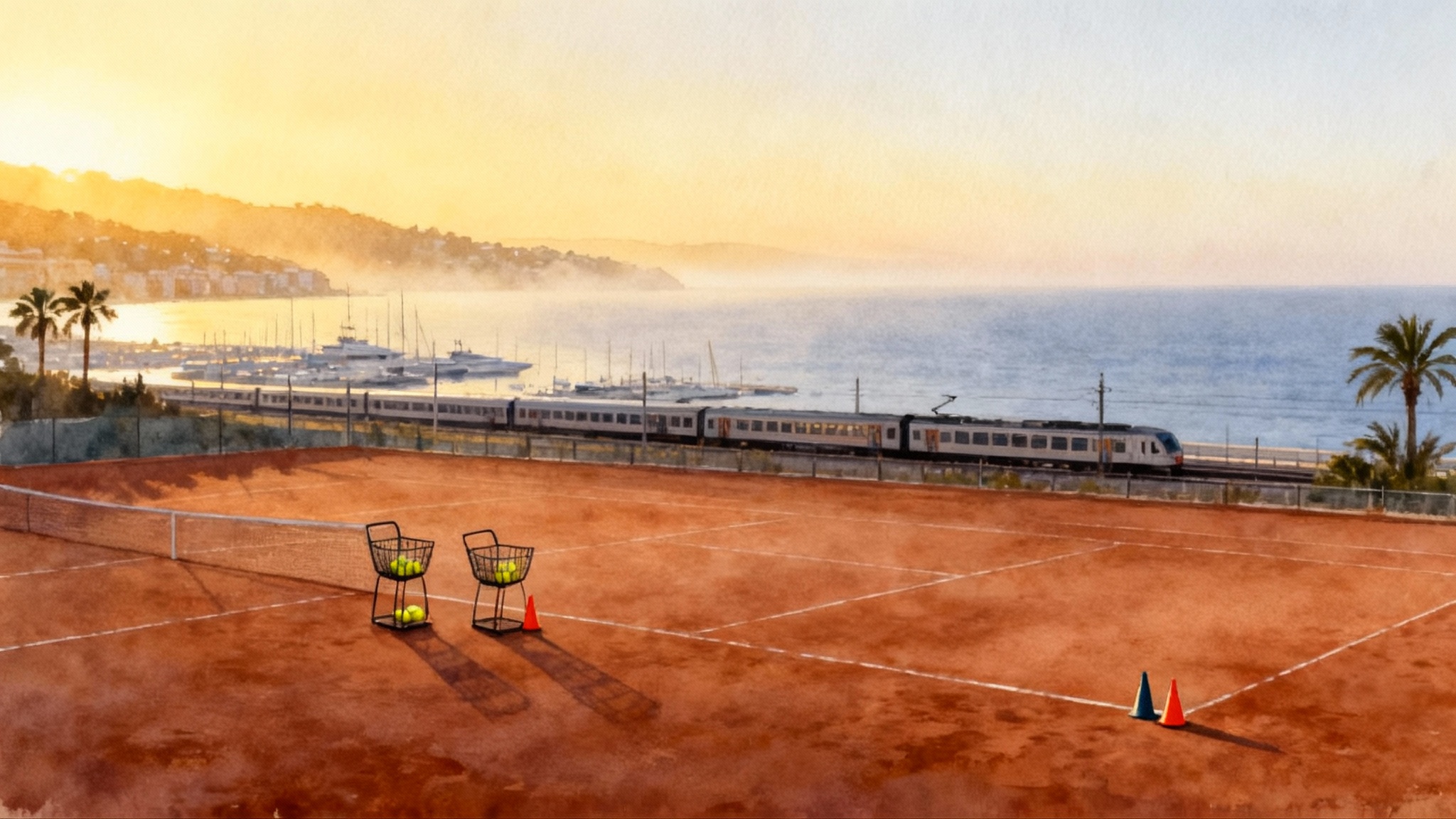
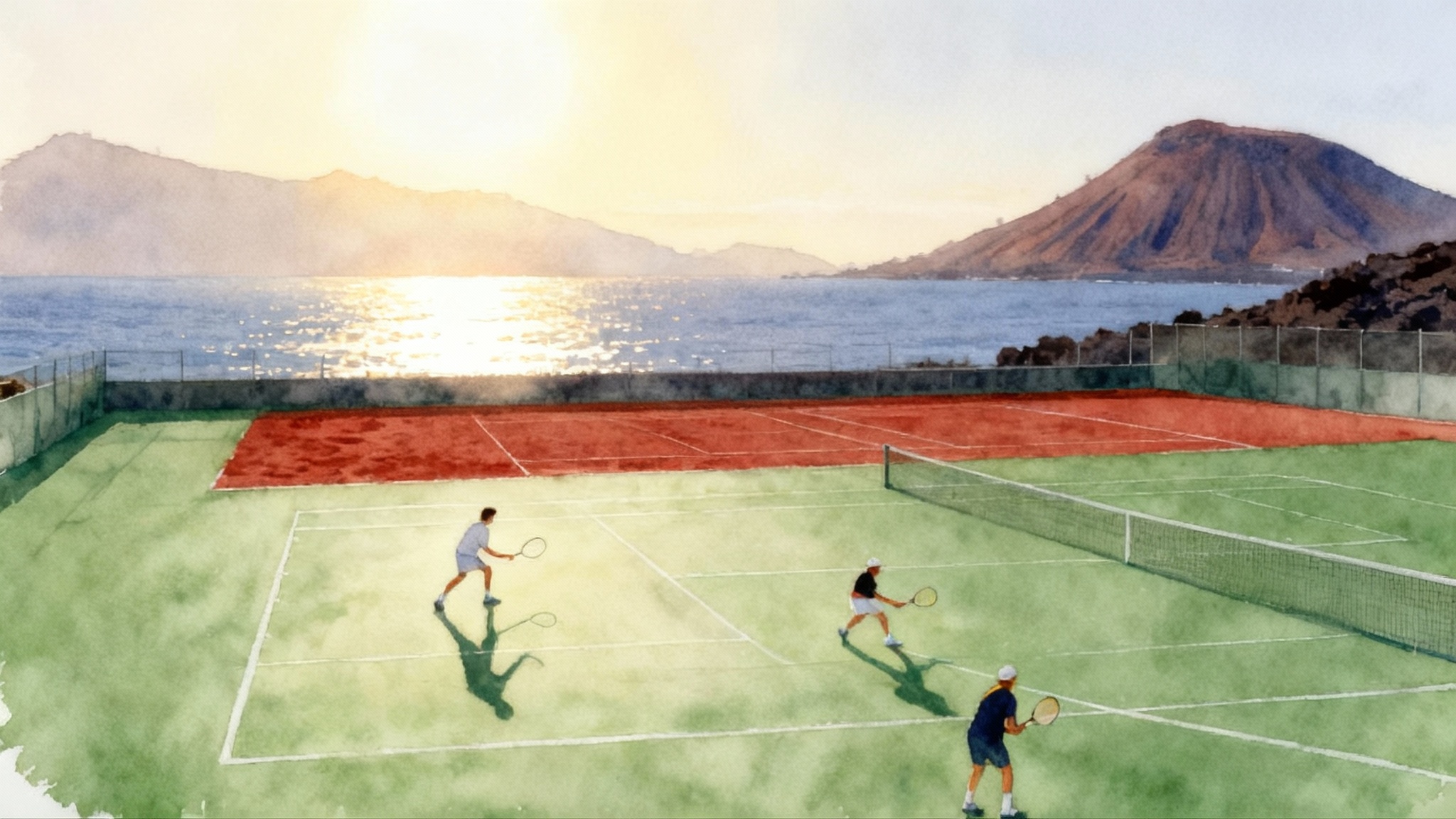
South Africa is a hard court country, but Stellenbosch is your realistic clay play. The university town sits about a one hour drive from the city on the N1. Multiple private clubs and university complexes offer red clay that can be booked through local coaches. Use this as a midweek stimulus for footwork discipline and higher rally counts. If you are training with a group, ask for two adjacent courts and organize king of the court rotations with specific constraints such as two cross then one line.
A Practical 7 Day Camp Plan
The following plan assumes a fit adult player competing in tournaments or leagues, rated roughly in the 4.0 to 5.0 band on the United States tennis scale or its European equivalents. Adjust volume downward if you are restarting or coming off injury. All sessions are two to three hours unless noted.
Day 1, Sunday: Arrival, Reset, and Baseline
- Morning or midday arrival at Cape Town International. Check in near Green Point, Sea Point, Gardens, or Newlands.
- 60 minute mobility walk and easy jog along the promenade or in De Waal Park. No hitting today. Hydrate, grocery shop, and set string tensions for the week.
- Evening: 30 minute visualization and goal setting. Write three session outcomes for Monday.
Day 2, Monday: Technique and Patterns at Green Point
- 07:30–10:00 Technical block. Serve baskets, forehand depth, backhand cross to down the line pattern. Finish with five tie breakers.
- 12:30–13:15 Strength and mobility. Hips, trunk, and shoulder prehab. Bodyweight plus bands.
- 16:00–18:00 Light set play if wind remains below 15 knots. If wind rises, swap to serve plus one drills with targets.
- Recovery: Sunset walk and ten minute lower leg flush in the Atlantic. Two minutes in, two out, repeat.
Day 3, Tuesday: Kelvin Grove Control Day
- 07:30–10:00 Drills on shaded courts. Emphasis on neutral rally tolerance and backhand slice under control. Film twenty minutes for feedback.
- 15:30–17:30 Match play. Two best of two short sets. Track first serve percentage and return depth.
- Optional: Evening mobility class or pool recovery if your accommodation has access.
Day 4, Wednesday: Stellenbosch Clay Block
- 06:30 Drive to Stellenbosch. Bring two liters of fluid and extra overgrips.
- 08:00–10:30 Clay footwork day. Three ball patterns, inside out plus inside in, and long deuce court rallies to twenty balls. Finish with drop short then lob drill.
- Lunch in town. Hydrate and refuel.
- 15:30–17:00 Points to ten on clay with new balls. Switch servers every two points to repeat pressure.
- Recovery: Back in Cape Town by early evening. Ten minute legs up the wall, light dinner.
Day 5, Thursday: Wind Skills at Camps Bay
- 07:30–09:30 Serve and return under a light morning breeze. Practice lower toss and aim zones for slice serve into body. Returns target big cross first, then depth.
- 16:00–18:00 If the Cape Doctor arrives, embrace it. Play short court air rally warm up, then full court with lower net clearance. Scoring: one point for a rally over six balls, two points for a winner, minus one for an unforced error into the wind.
- Recovery: Cold water dip at the beach. Ten minutes total time. Warm up gradually after.
Day 6, Friday: Test Day at Kelvin Grove
- 07:30–10:00 Test session. Two match sets plus a match tie break. Record serve speeds if you have a portable radar or app, and track double faults.
- 14:00–15:00 Sports massage or physio check in. Bring notes from your test session.
- 16:00–17:00 Optional mixed doubles on a nearby public court for social timing.
Day 7, Saturday: Green Point Finisher and Cape Peninsula Spin
- 07:30–09:30 Choice session. Return plus first ball, or offense from neutral. End with competitive games to seven.
- Late morning to afternoon: Non tennis. Easy spin to Chapman’s Peak or a Table Mountain trail if winds are light. Keep total time under three hours and refuel well.
- Evening: Debrief. Lock two technical priorities and two tactical priorities to carry into the next block or into your altitude week.
Recovery and Beach Options that Add Real Value
- Salt water and cold exposure: Clifton or Camps Bay beaches offer clean, cold, short dips. Ten minutes total in intervals supports lower limb recovery.
- Easy aerobic work: Sea Point Promenade for flat cycling or running. Keep the session nose breathing and conversational.
- Mobility and hips: A simple routine works. Ten minutes of hips, ten minutes of thoracic spine, five minutes of ankles and feet.
- Fueling: Breakfast with eggs, fruit, and oats. A light lunch with rice, lean protein, and salad. Dinner with potatoes, fish or chicken, and vegetables. Bring two liters of water to each session and add electrolytes in hotter spells.
Stackable Follow On Week at Altitude in Johannesburg
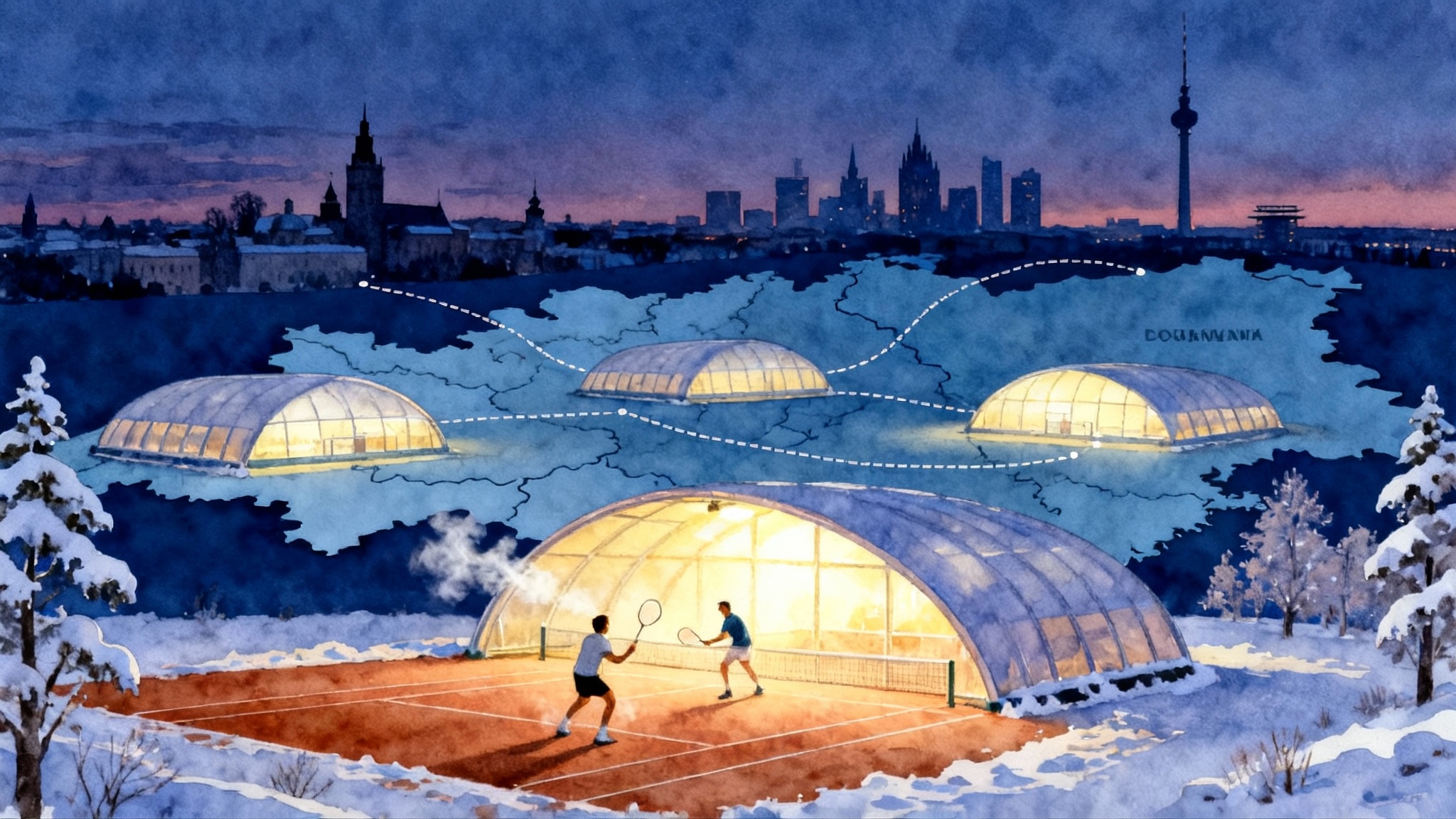
Johannesburg sits about 1,750 meters above sea level. Air density is lower, which means the ball flies faster and carries longer, and spin bites less. A week here after Cape Town can sharpen your reaction speed and help you learn flatter finishing balls. The practical method is to raise string tension slightly, usually by two to three pounds, and to reduce clearance over the net until you find a stable window. The International Tennis Federation explains ball choices for different conditions in its ITF tennis equipment guide.
Players who thrive in wind at sea level often do well at Legend Tennis Academy in Austin after returning home.
A Simple 7 Day Altitude Outline
- Sunday: Fly Cape Town to Johannesburg in the morning. Light mobility and a 45 minute hit.
- Monday to Wednesday: Mornings on court with controlled point construction and serve plus one patterns that finish lower and through the court. Afternoons in the gym or pool.
- Thursday: Two matches to one set each. Focus on return position and shortened backswings.
- Friday: Pattern day. Two ball tolerance, then finishers through the middle.
- Saturday: Match simulation with new balls. Track unforced errors long. Debrief string tension and ball feel.
- Notes: Hydrate more than you think. Expect your first two sessions to feel quick and a bit floaty.
Costs, Booking Windows, and How to Budget
Prices vary by week and venue, but the following ballpark ranges will help you plan for late 2025 to early 2026 high season. Convert to your currency as needed.
-
Courts and clubs
- Guest court time on neighborhood hard courts: 10 to 20 United States dollars per hour for court fees or guest passes.
- Private coaching: 40 to 80 United States dollars per hour depending on certification and demand.
- Group clinics: 20 to 40 United States dollars per person per session.
- Stringing: 10 to 25 United States dollars plus your string.
-
Accommodation for two adults
- Self catering apartment in Sea Point, Green Point, or Gardens: 60 to 140 United States dollars per night.
- Boutique hotel: 120 to 220 United States dollars per night.
- Stellenbosch overnight for the clay block: similar ranges midweek, higher on event weekends.
-
Local transport
- Car hire: 20 to 35 United States dollars per day for a compact car. Check for included mileage and insurance.
- Rideshare across the Atlantic Seaboard or City Bowl: 3 to 8 United States dollars per trip outside rush hours.
- Airport transfers: 12 to 25 United States dollars each way depending on time of day and vehicle size.
-
Flights
- United States East Coast to Cape Town return in January or February: 900 to 1,600 United States dollars in economy with one stop. Shoulder weeks can be lower.
- Major European hubs to Cape Town return: 500 to 900 Euro in economy depending on departure city and school holidays.
- Cape Town to Johannesburg return: 60 to 150 United States dollars if booked three to six weeks out.
-
Recovery and support
- Sports massage or physiotherapy: 25 to 50 United States dollars for 60 minutes.
- Gym day pass: 5 to 12 United States dollars.
- Ice bath or spa access where available: 5 to 15 United States dollars.
-
Booking windows
- Courts: reserve morning hard court slots two to four weeks out in January and February, four to eight weeks in late December. For a clay day in Stellenbosch, line up courts and coach three to four weeks out.
- Accommodation: book eight to twelve weeks ahead for Christmas and New Year weeks, four to eight weeks ahead for January and February.
- Domestic flights: three to six weeks usually works for better fares.
If you want a done for you version, we can coordinate courts, coaching, and logistics. Start with a short brief and request a Cape Town plan.
Logistics for United States and European Travelers
- Entry and visas: United States and many European Union passport holders are commonly granted visa free entry for stays up to ninety days. Check your government website and the South African government site for updates before booking.
- Health and safety: Bring travel insurance that includes sport. Train in daylight. Keep your bag within reach. Use hotel safes and pick accommodation with secure parking.
- Power: South Africa uses large three pin Type M and the newer compact Type N outlets. Bring a universal adapter.
- Money: Cards work almost everywhere, and contactless is common. Carry a little cash for tips and small shops.
- Time zones: South Africa stays on UTC plus two all year. In December to early March it is seven hours ahead of New York and two hours ahead of London. That helps athletes keep a stable sleep window.
- Getting around: Car hire is the most flexible for multi stop days. Rideshare works well within the city. The coastline roads are scenic but can be slow at sunset, so build in buffer time.
Wind and Weather Playbook for Smarter Reps
Wind helps you build real skills if you plan it. Use mornings for mechanics. Use breezy afternoons for problem solving.
- Serving into wind: Lower your toss by a hand width. Aim body and T serves first. Add kick serves only when you can land five of six in.
- Serving with wind at your back: Use more spin and higher net clearance. Aim through the court, then take a little pace off second serves to raise margin.
- Returns: Start one shoe length deeper. Play big crosscourt to buy time. Then adjust forward after two games if you are landing deep consistently.
- Rally balls: In crosswind, aim over the higher part of the net toward the upwind side. The ball will drift back toward the court. Focus on heavy spin and depth.
- Strings and balls: If you spray balls long in heat or wind, go up two pounds in tension or switch to a slightly thicker gauge for the afternoon session.
Packing and Stringing Checklist
- Two frames matched in weight and balance. Set one two pounds tighter for windy afternoons.
- One reel of your go to string and a backup reel in case stock is limited locally.
- Six to eight overgrips. Humidity is moderate but your hands will still sweat.
- Sunscreen, cap, and a light long sleeve for the midday walk.
- Two pairs of clay capable shoes if you plan the Stellenbosch day.
- A small massage ball and a short resistance band for hotel room mobility.
Putting It Together
Cape Town gives you calm mornings for mechanics, a reliable afternoon breeze to turn sessions into match realism, and a scenic city that keeps motivation high. Add a midweek clay day in Stellenbosch to dial in footwork and point construction. Then stack a follow on week in Johannesburg at altitude to sharpen reaction speed and finishing patterns. If you book courts and coaching four to eight weeks ahead, set your budget with the ranges above, and keep your schedule front loaded with morning sessions, you will leave with a better serve, a deeper rally ball, and more confidence in tough wind. When you are ready to pick dates or line up a coach who fits your style, see our Cape Town camp calendar and start building your 2026 plan.