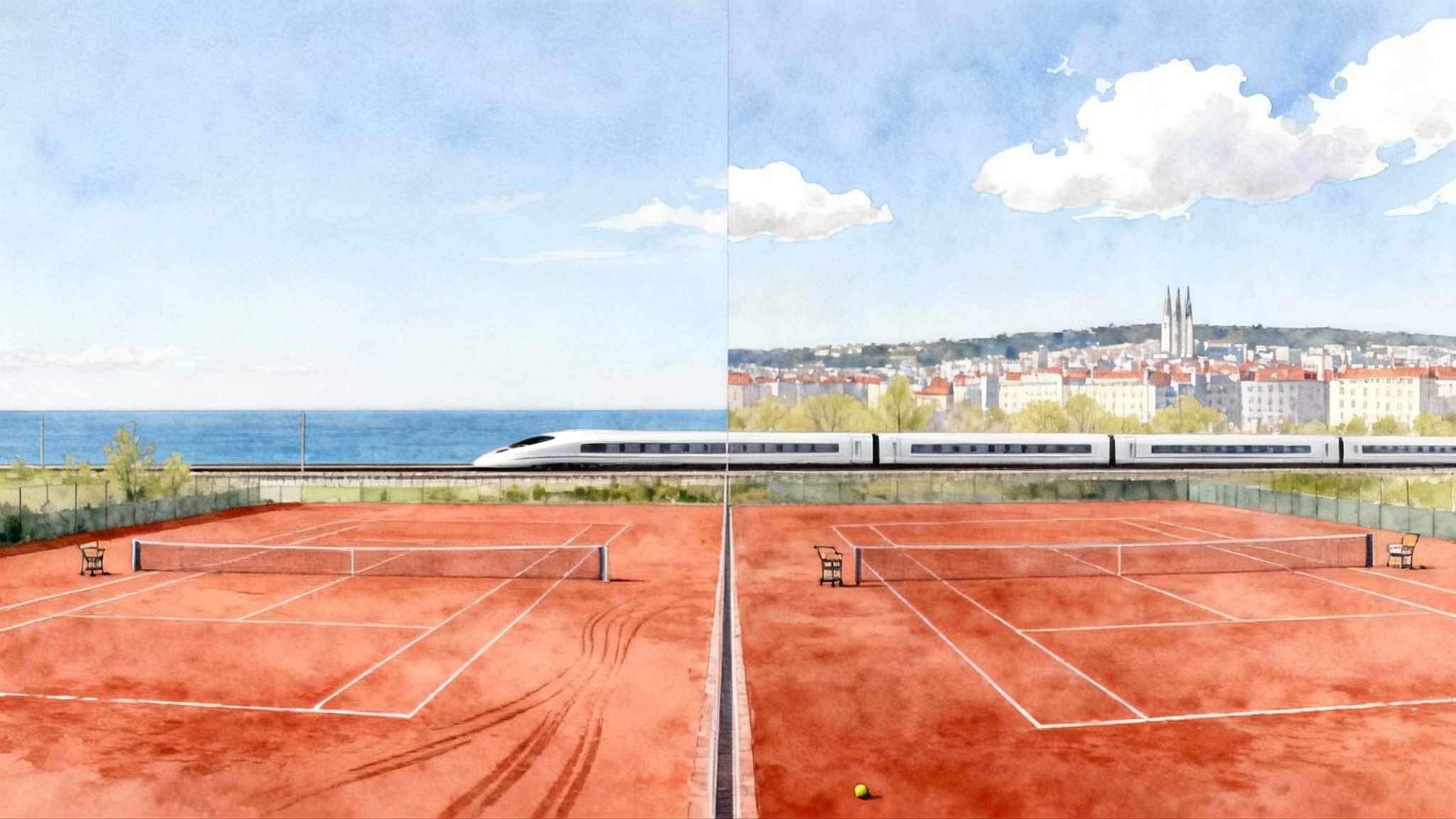
Europe’s Indoor Tennis Belt: Vilnius, Warsaw, Berlin Winter Guide
 Tommy
Tommy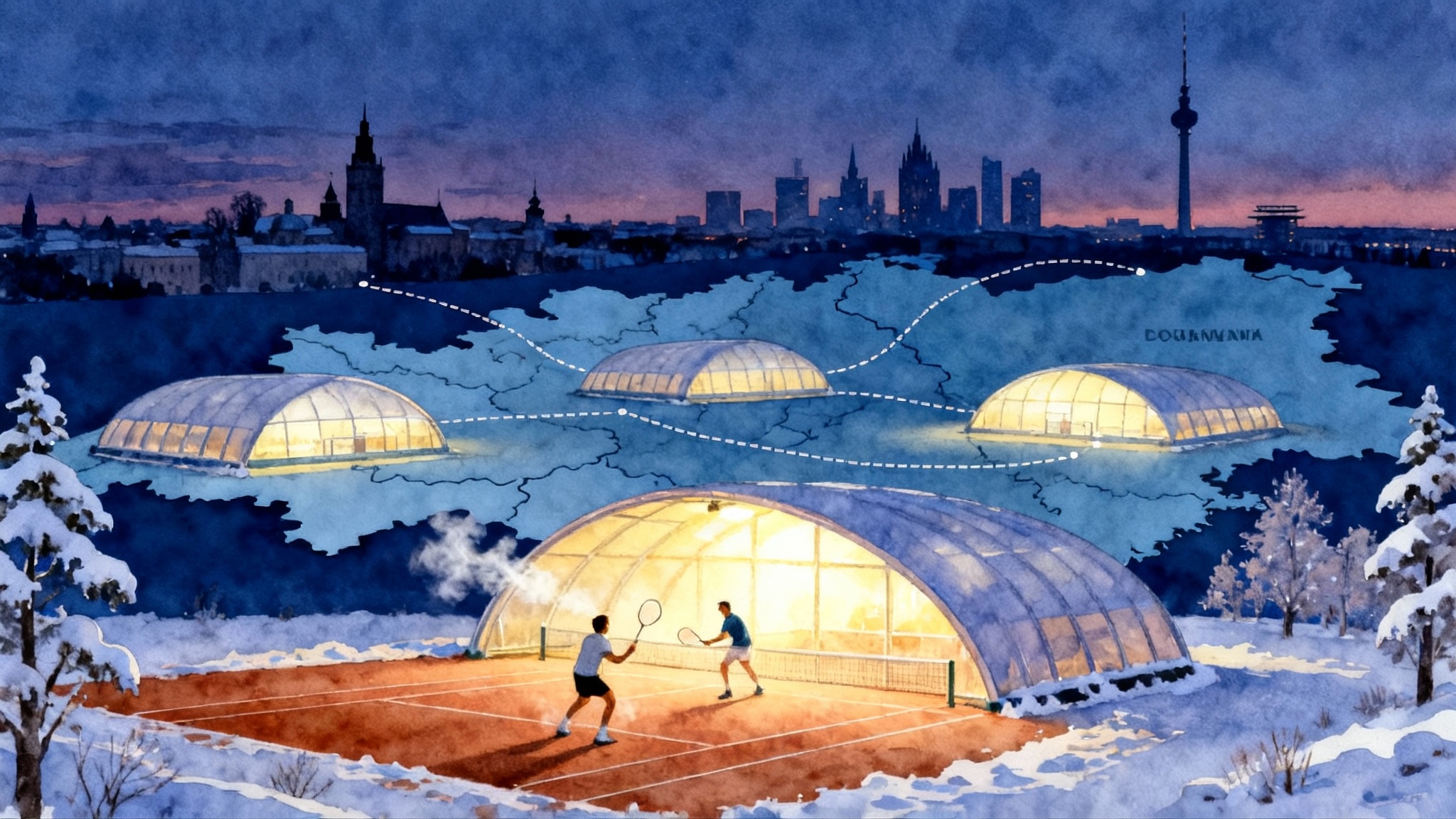
Why this corridor beats winter
If winter tennis in Europe feels like a coin toss between rain, frozen clay, and 4 p.m. darkness, the Baltics-Poland-Germany corridor tilts the odds in your favor. Vilnius, Warsaw, and Berlin have built dense clusters of heated domes and indoor halls. The result is a travel belt where you can plan for two on-court sessions a day in January without watching the forecast like a stock ticker. Daylight may shrink to about seven or eight hours, but modern lighting and climate control keep bounce, grip, and timing stable so you can actually improve.
Think of these cities as a chain of climate shelters that let you set a clear training goal. Each stop offers a slightly different mix of surfaces, price points, and city flavor. String them together for a one-week camp, or pick one base and run a focused microcycle with measured load, verified match play, and recovery you will actually look forward to.
What indoor really means in 2025
Indoor in this corridor usually means one of two settings:
- Air-supported domes with insulated fabric, forced air heat, and humidity control. These are common over clay or hard courts. They play a touch slower and quieter than big steel halls. Sound dampening keeps your timing readable.
- Purpose-built halls with professional lighting, non-slip walkways, and sometimes on-site gyms and physio. In Germany, many halls are carpet with a light sand infill; in Lithuania and Poland, you see more hard and clay under cover.
Both options give you consistency. You will not battle gusts that kill the ball or sleet that destroys touch. That consistency is the foundation for measurable progress in a short trip.
Surfaces by city
- Vilnius: Predominantly indoor hard in major complexes, with clay domes also available. The hard courts favor clean footwork and first-strike tennis. Clay domes are great for patience and heavy spin work without freezing your strings.
- Warsaw area: Mixed ecosystem. You can book both hard and clay under domes. This is ideal for players who want to split the week between tempo on hard and discipline on clay.
- Berlin: Many halls run carpet that plays medium-fast with lower friction, plus a good selection of hard courts. The carpet rewards precise timing and compact swings, which can be a perfect technical checkpoint midwinter.
If you plan a multi-city loop, you can stage your week so the rhythm progresses from slower to faster surfaces, or vice versa, depending on your technical goals.
Costs and availability at a glance
- Court fees: Vilnius is usually the lowest, Warsaw midrange, Berlin the highest. Early afternoons midweek are the sweet spot for price and availability; prime evenings book out first.
- Coaching: Private lessons in Vilnius and Warsaw are typically below Berlin rates. Group clinics lower the per-hour cost everywhere.
- Family economics: Booking adjacent courts or doubles slots brings savings and eases scheduling, especially when mixing ages and levels.
Treat these as planning heuristics rather than fixed numbers. The booking tips later will show how to lock better rates without guesswork.
Getting there and moving between cities
- Arrival hubs: Vilnius International, Warsaw Chopin and Warsaw Modlin, and Berlin Brandenburg all have frequent public transport into the city. Ride-share and taxis are easy at off-peak hours.
- Between cities: Trains connect Warsaw and Berlin in roughly half a day. Flights between Vilnius and either city are common in winter. Overnight coaches also bridge Vilnius and Warsaw comfortably if you want to avoid airport time.
- Inside each city: Metro, trams, and buses work well. Berlin’s rail network is extensive, while Vilnius and Warsaw mix buses with ride-share for quick hops to domes.
Spotlight: Vilnius Tennis Academy at SEB Arena
Vilnius is a compact, easy base, and the anchor facility is the Vilnius Tennis Academy at SEB Arena, a multi-sport complex with a deep bench of indoor courts, strength spaces, and on-site services that simplify winter scheduling. If your goal is to stack daily court time and stay on one campus, you can. Check details at the official SEB Arena pages.
What it feels like: Bright, controlled lighting with consistent bounce and high ceilings. Mornings are calm; midday features a steady flow of club players. If you need back-to-back hours, book earlier in the week.
Who it suits: Families who want everything under one roof, plus juniors targeting technique during a high-repetition phase. Hard courts drive clean contact and serve rhythm. If you split days, a clay dome session can reset patience and point construction.
Where to stay and eat: The old town is close and walkable for dinner and recovery walks. Consider apartments with laundry to simplify a junior’s training load.
Spotlight: Tenis Kozerki near Warsaw
Just outside Warsaw, Tenis Kozerki training village is a purpose-built tennis campus with indoor and outdoor courts, a hotel on site, and a tournament pedigree that keeps the coaching ecosystem sharp. It is a strong choice if you want a live-where-you-train setup. Explore courts and lodging via the Tenis Kozerki site.
What it feels like: A focused training environment with quiet rooms for downtime and quick walks to courts. Winter light is short, but the schedule does not care; your dome slot is ready at 9 a.m. and again at 3 p.m.
Who it suits: Competitive juniors who thrive with structure and families who prefer less city commuting. If you plan to integrate match play, the staff can often arrange hits with local players, which helps when building a Universal Tennis Rating profile.
Where to stay and eat: On-site or nearby hotels simplify logistics. For city days, spend the afternoon in central Warsaw for museums and hearty food, then return for evening recovery.
Spotlight: TennisTree Berlin
Berlin is Europe’s big indoor classroom. TennisTree Berlin coaching group books courts across reputable halls and matches you with coaches who understand winter constraints. Expect a mix of carpet and hard. Sessions emphasize timing on quicker surfaces, efficient footwork, and serve accuracy in quiet conditions.
What it feels like: A citywide campus. One day you train at a carpet hall with crisp acoustics; the next day you are on hard with a little more grip. Public transport makes cross-town travel predictable.
Who it suits: Players who value variety, parents who want a rich city program, and juniors who can translate between surfaces. If you plan a Berlin-only week, aim for at least one recovery-first afternoon to keep total volume sustainable.
How to book courts and coaches like a local
- Book horizon: For winter peak, reserve 3 to 6 weeks out for after-school hours and weekends. If you are flexible, call or message for daytime slots a few days before arrival.
- Strings of hours: Ask for two back-to-back hours instead of one, and request the same court for consistency. Indoor lines and backgrounds vary; keeping them constant helps technical work.
- Communicate your plan: Send a short training brief to the coach. Include goals for serve speed, backhand stability, or movement efficiency, along with recent match clips. This sets the week’s purpose and avoids generic feeding sessions.
- Family scheduling: Reserve two adjacent courts for the first session each day so a parent or sibling can rally while a junior works with a coach. Switch for the second block to keep everyone engaged.
Match play that counts: Universal Tennis Rating and leagues
- Universal Tennis Rating basics: Universal Tennis Rating, often shortened to UTR, is a global number that moves as you record verified matches. Use it to anchor a winter trip to measurable progress. Ask local coaches to arrange matches with known-level opponents. Many clubs host verified sessions where match results upload the same day.
- Local leagues: In Berlin, winter leagues often run team matches on weekends. Short-stay visitors may not join a formal roster midseason, but coaches can set up friendlies that reflect league pace. In Vilnius and Warsaw, club ladders and social match evenings are common; you can often slot in with a quick introduction.
- How to blend it: Aim for two verified match days in a seven-day plan, spaced 48 hours apart. On match days, move the second session to very light serves, returns, and mobility so total load stays manageable.
Two sample training blocks
Five-day family plan, one city base
- Day 1, arrival and feel: 60 minutes easy rally, 30 minutes serves, 15 minutes band work. Evening walk and early sleep.
- Day 2, technique anchor: 120 minutes on hard, technical blocks on forehand and backhand with basket feeding, then pattern play. Afternoon 30 minutes mobility and 20 minutes contrast showers.
- Day 3, match play: 90 minutes singles verified for Universal Tennis Rating if available, then 30 minutes serve targets. Evening light museum visit and carb-forward dinner.
- Day 4, doubles and footwork: 90 minutes doubles patterns, 30 minutes agility ladders and short shuttles. Afternoon recovery swim or sauna and 20 minutes journaling on cues that worked.
- Day 5, test and taper: 60 minutes set play, 30 minutes serve plus one pattern, 15 minutes cool-down. Wrap with a short coach debrief and a written plan for what to keep.
Seven-day competitive junior plan, two-city loop
- Day 1, Vilnius: 90 minutes technique on hard, 30 minutes strength circuits in the gym, evening stretch.
- Day 2, Vilnius: 120 minutes with situational points, 20 minutes serves under fatigue, ice bath or cold shower, lights out early.
- Day 3, travel late morning to Warsaw: Afternoon 60 minutes feel hit under a dome, 20 minutes shoulder care.
- Day 4, Warsaw: Verified match session, then 30 minutes video review with the coach. Evening walk and a hearty meal.
- Day 5, Warsaw: 90 minutes clay patterns or mixed-surface drills, 30 minutes return practice.
- Day 6, Berlin transfer: Evening 60 minutes on carpet for timing and split-step cues.
- Day 7, Berlin: 90 minutes test set, 20 minutes serve targets, 15 minutes mobility. Debrief and next-phase plan.
Keep total weekly on-court time near 10 to 12 hours for juniors, including matches. If you cross 14 hours, reduce basket feeding and increase quality rallying to manage tendons and lower backs.
Recovery that works and city time that delights
- Sauna and cold contrast: All three cities embrace heat therapy in winter. If your venue does not have a sauna, look for public options and keep sessions short. Alternate warm and cool water for a simple reset that helps sleep.
- Walkable recovery: Vilnius old town streets are compact and ideal for low-intensity strolls that flush legs. Warsaw’s parks offer longer loops. Berlin’s river paths let you add sunlight to the day even when it is short.
- Culture sprints: Plan one two-hour window per city for a single highlight instead of a long checklist. In Vilnius, choose a historic quarter walk. In Warsaw, pick one museum with a cafe for a warm finish. In Berlin, choose a gallery or a music venue. Keep the focus on mental reset, not miles.
- Food as fuel: Winter menus are hearty. Balance with soups, potatoes, whole grains, and lean proteins. Pack a simple court snack system of bananas, nut butter, and electrolyte packets so you do not raid a vending machine between sessions.
Practical packing and prep
- Footwear: Bring one pair for hard and one for clay if you plan to split surfaces. For carpet, a clean hard-court outsole is fine; wipe soles before play to improve grip and protect the surface.
- Strings: Cold air makes strings feel stiffer. If you use polyester, consider dropping tension slightly. Pack a fresh reel or at least two pre-strung backups.
- Layers: Courts are warm once you move, but walk-ins and breaks can feel chilly. Use thin, breathable layers and a dry base layer for session two.
- Insurance and paperwork: Carry proof of health coverage and any federation cards you might need to join a club session. A quick email to the venue a week before arrival prevents surprises.
Choosing your base
- Pick Vilnius if you want a one-campus routine where everything is inside one complex and the city is calm and close.
- Pick Tenis Kozerki near Warsaw if you want a self-contained village with easy match arrangements and simple family logistics.
- Pick Berlin if you want variety and culture, and you are comfortable learning fast on different surfaces.
If you have ten days, consider a triangle: start in Vilnius for technical polish, hop to Warsaw for a match-heavy midweek, then end in Berlin for confidence work on faster courts.
Final booking checklist
- Secure dome slots first, then flights, then accommodations near your main venue.
- Confirm surface type for each session and plan shoes and string tension accordingly.
- Pre-arrange two verified matches if you care about Universal Tennis Rating movement. Ask your coach to handle introductions.
- Keep one afternoon free for recovery in each city and protect sleep windows.
- Write down three technical cues for the week and stick to them. Progress comes from repetition, not novelty.
A smarter way to use winter
Winter training does not need to mean short indoor rallies and a long wait for spring. Vilnius, Warsaw, and Berlin have turned cold months into a season of reliable improvement. Pick your base, protect your schedule with indoor bookings, and treat each session like a brick in a wall you can stand on in April. Get the conditions right, and the rest becomes execution.