Choosing the Right Tennis Academy in 2026: A Trial-Week Checklist
Use this step-by-step trial-week playbook to evaluate any tennis academy before you commit. Get a daily schedule template, an objective scorecard, age-specific checklists, red flags, and a pathway map to your goals.
 Tommy
Tommy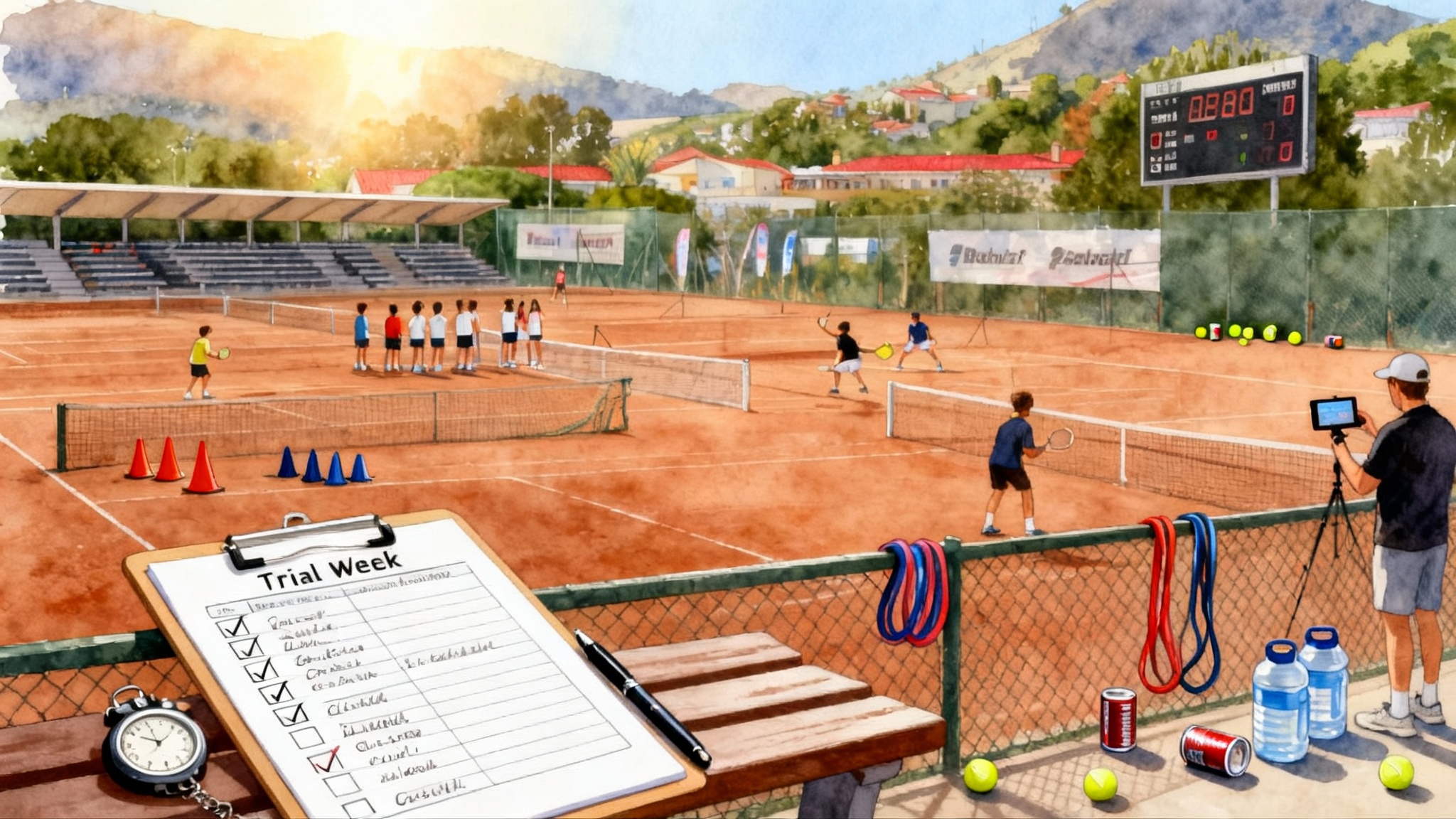
Why a trial week beats glossy brochures
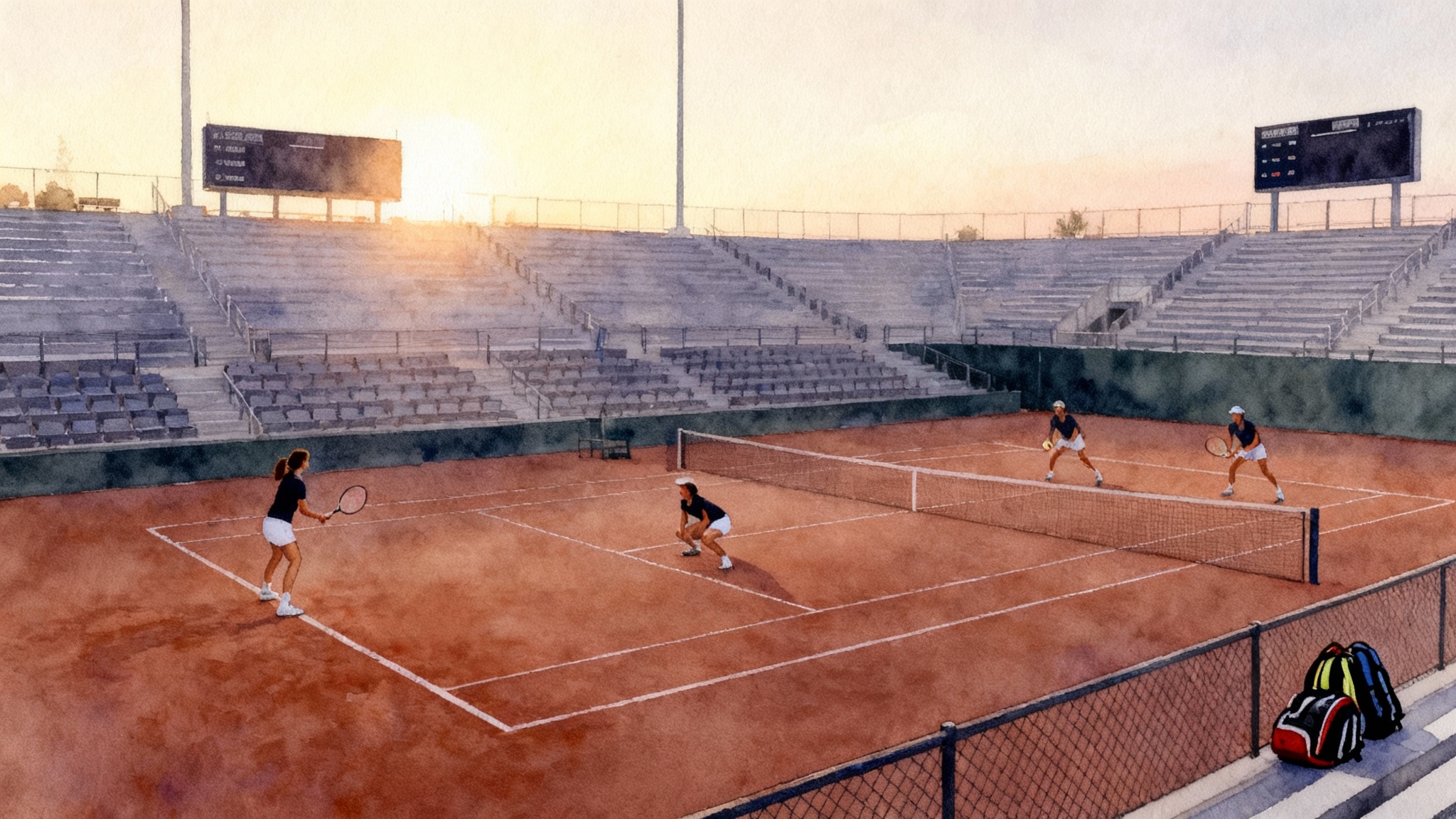
A trial week lets you see how an academy actually coaches, organizes, and measures progress. It reveals what brochures do not show: who talks when a rally breaks down, how quickly coaches adapt the drill, and whether the group intensity holds in the last 20 minutes. Think of a trial week as a wind tunnel for your decision. You put the player and the program under controlled stress, then measure what holds shape.
This guide gives you a complete playbook you can run at any academy in 2026. You will get a daily schedule template, a numeric scorecard, age-specific checklists, red flags to guard against, and a clear way to map an academy’s pathway to your goals, from local Universal Tennis events and United States Tennis Association tournaments to college placement and pro-track scaffolding. Use it as a checklist in your notes app, or print the sections and bring a pen.
The trial-week playbook: day-by-day
Below is a sample five-day template you can adapt. The times are suggestions. The key is the structure, the measurement, and the debrief.
Day 1: Baseline and observation
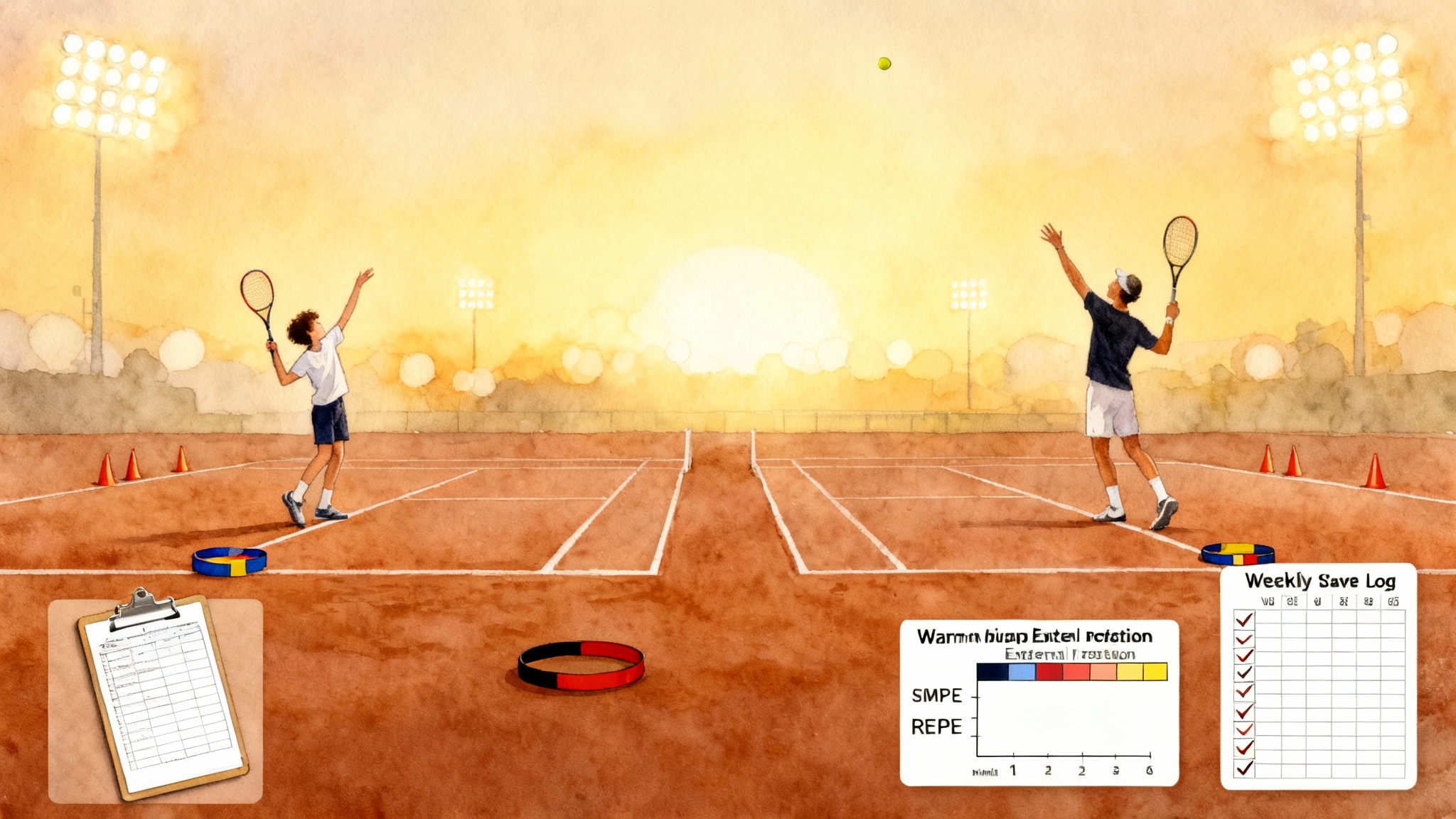
- 8:30–8:45: Arrival and dynamic warm-up observation. Note who leads the warm-up and how movement quality is coached.
- 8:45–10:15: Technical block. Watch coach cues, error correction speed, and whether feedback is individual or generic.
- 10:15–10:30: Hydration and mobility. Look for planned micro-recovery, not random downtime.
- 10:30–11:30: Live-ball drilling. Track rally lengths and intensity.
- 11:30–12:00: Strength and conditioning. Check professional supervision and age-appropriate load.
- 12:00–12:15: Debrief. Ask for the day’s learning objective and how it was measured.
Day 2: Pattern play and decision-making
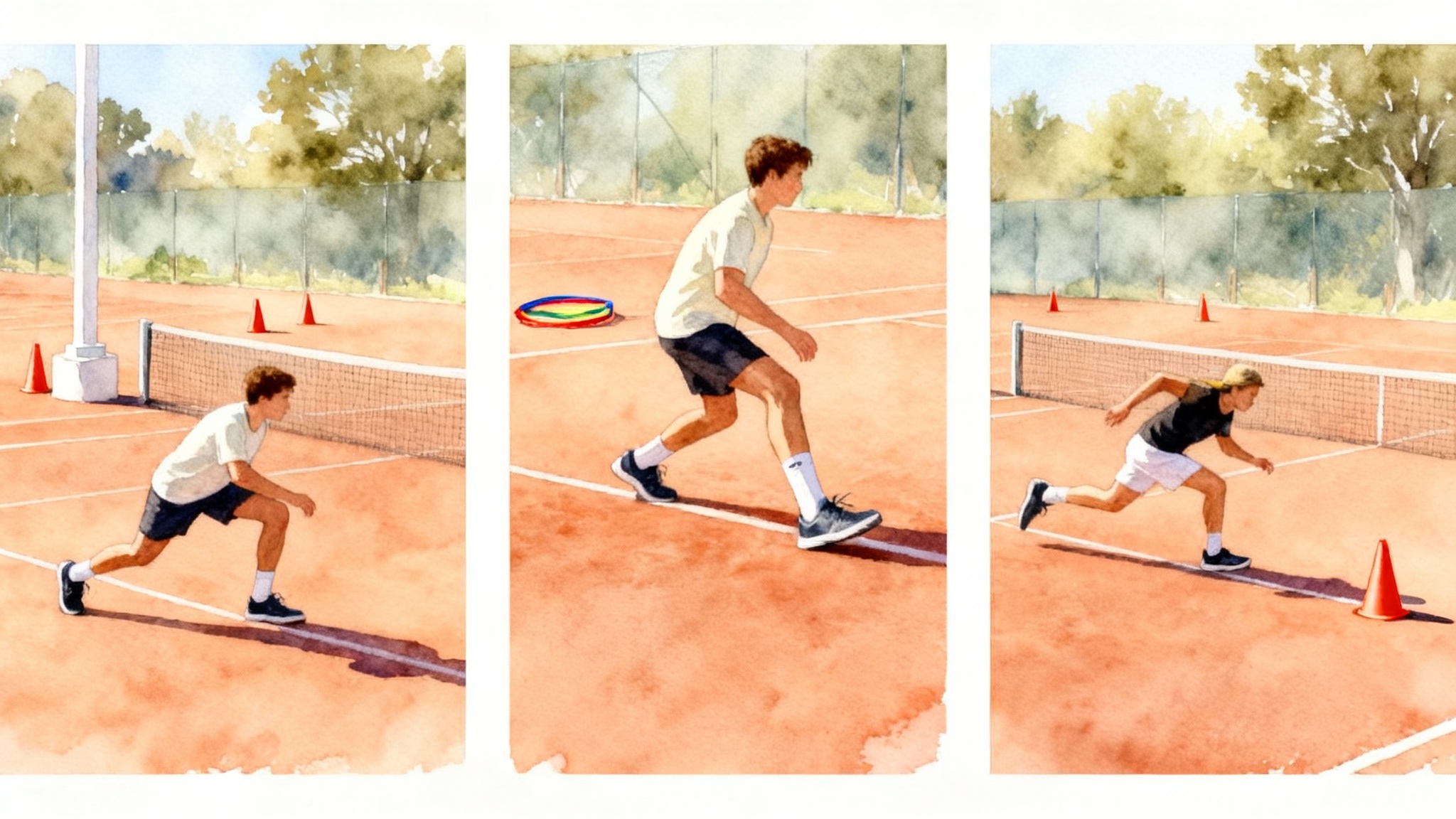
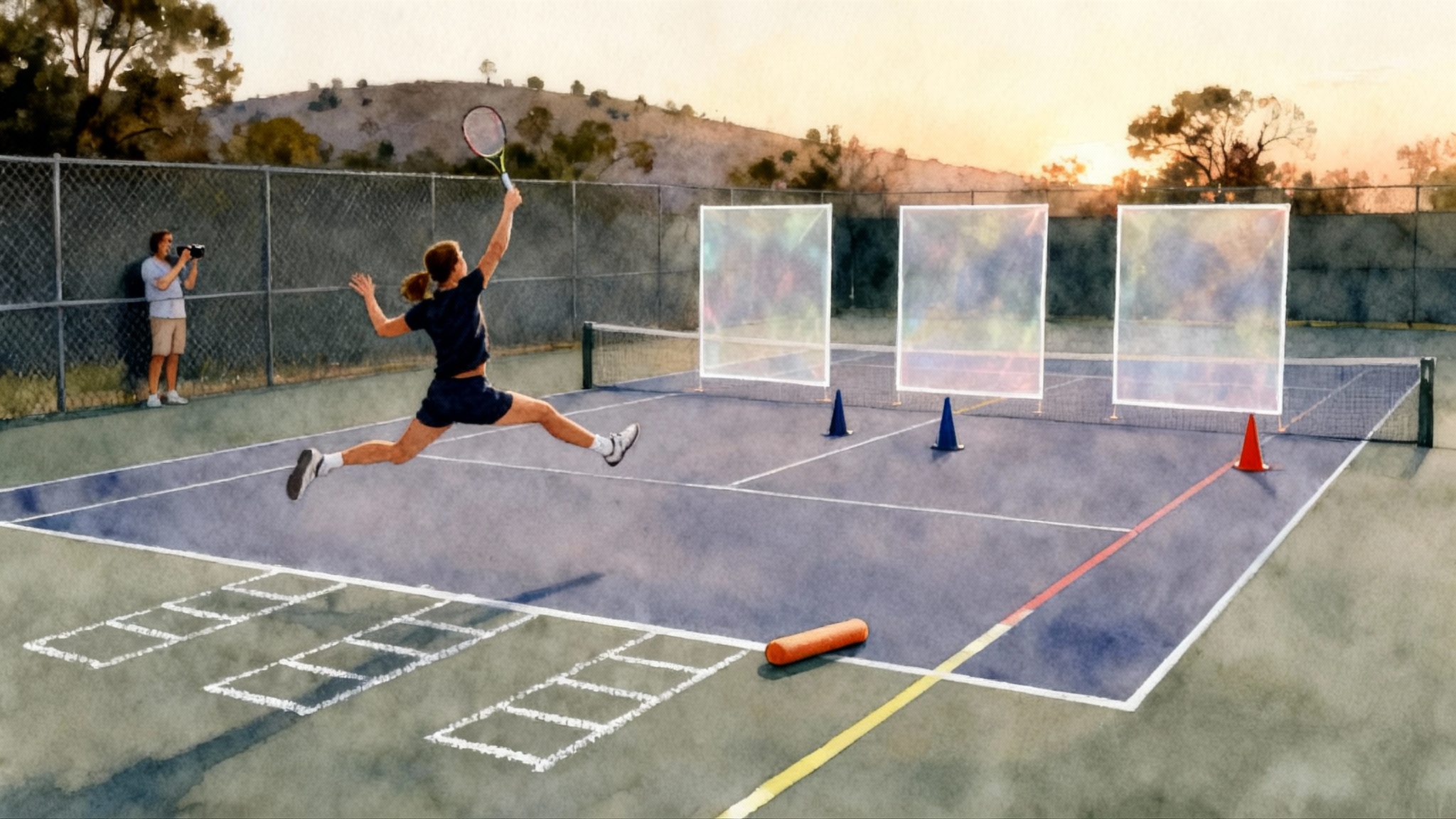
- 8:30–8:45: Activation and footwork ladders.
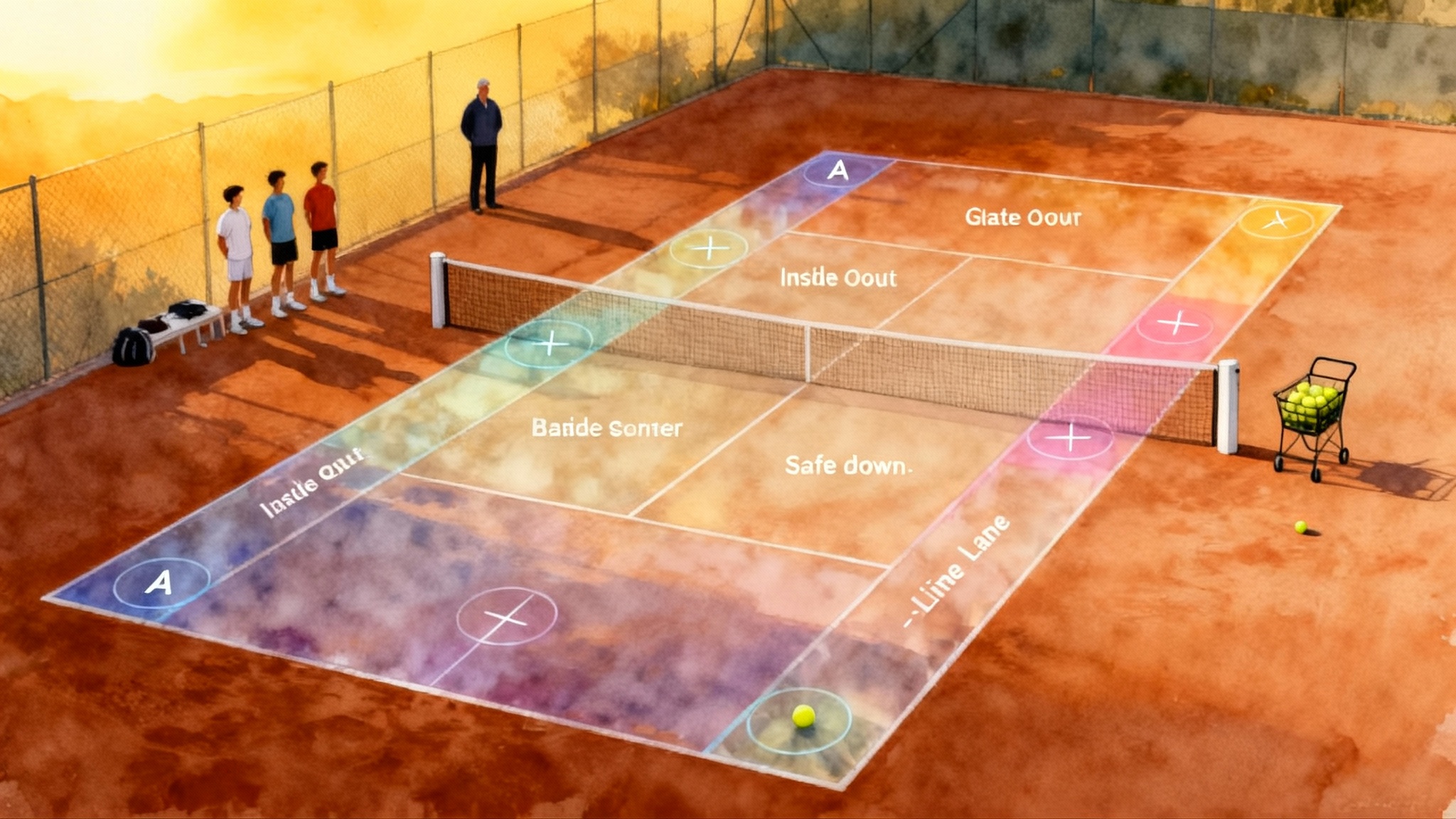
- 8:45–10:00: Pattern play under constraints. Note how coaches shape decisions with court targets and scoring.
- 10:00–10:15: Video or tablet check-in if offered.
- 10:15–11:45: Live-ball situational games. Track live-ball percent and coach touch time per player.
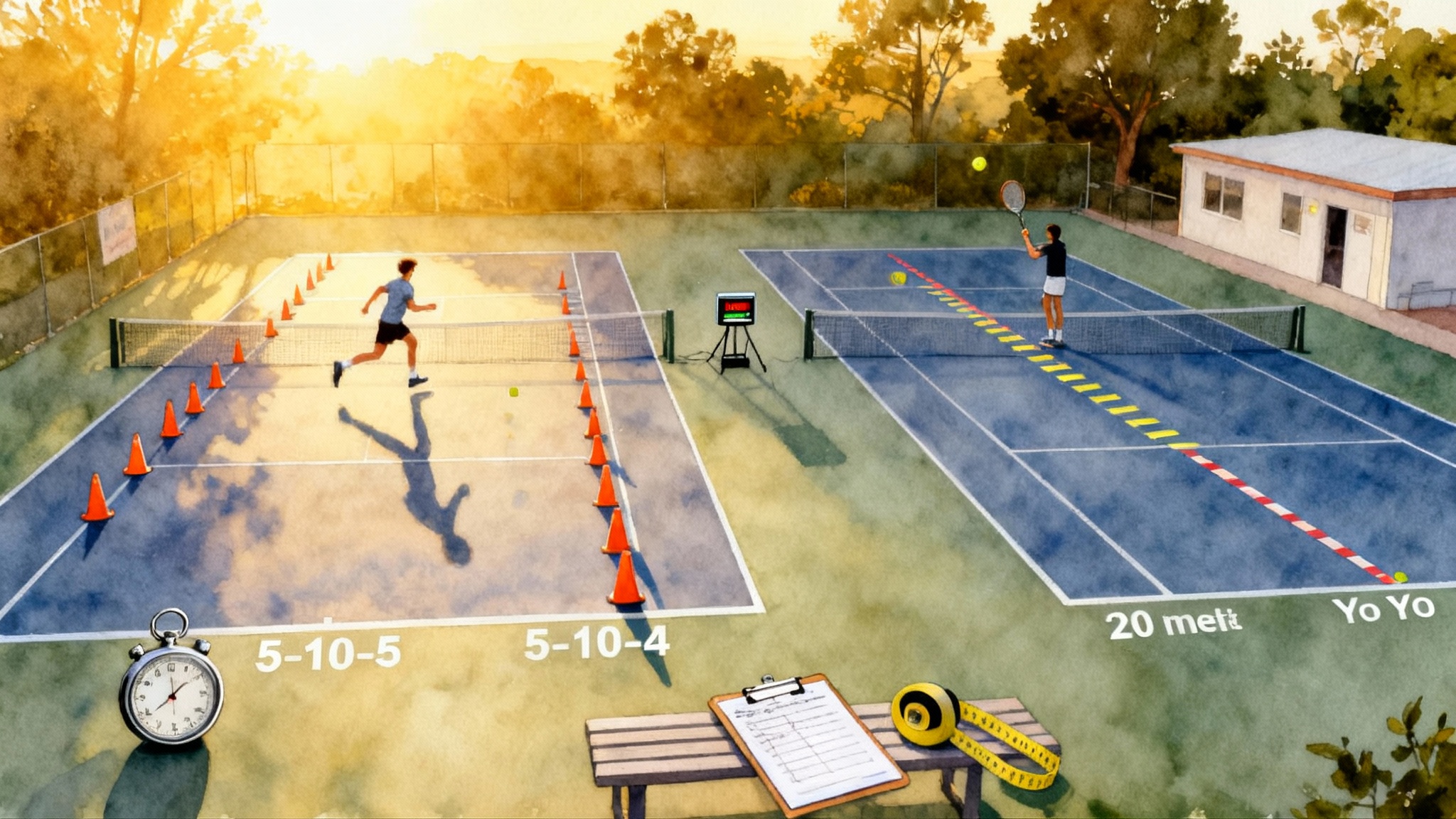
- 11:45–12:15: Strength and conditioning. Look for sprint mechanics and deceleration coaching.
Day 3: Match day
- 8:30–8:45: Warm-up.
- 8:45–11:45: Match play. Record total match minutes, formats used, and between-point routine coaching.
- 11:45–12:15: Recovery, mobility, and debrief. Ask for written results or a quick stats sheet.
Day 4: Technique plus video
- 8:30–8:45: Mobility and activation.
- 8:45–10:15: Targeted technical session. Confirm the technical priority was chosen based on earlier observation, not guesswork.
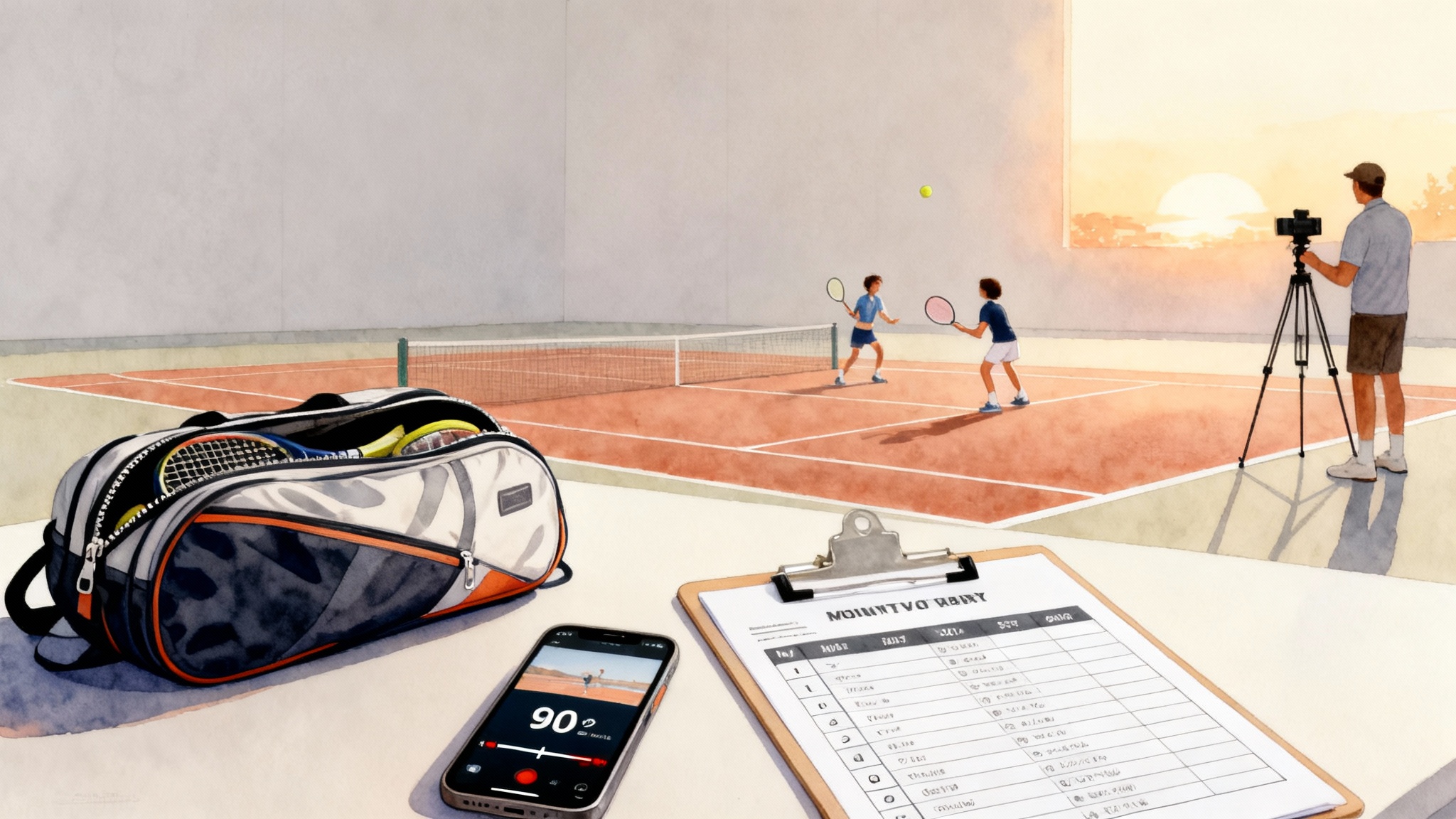
- 10:15–10:45: Video capture and review. Expect slow-motion, key angles, and a one-line technical focus.
- 10:45–12:15: Transfer drills to live-ball and point play.
Day 5: Test set and plan
- 8:30–8:45: Warm-up and intent setting.
- 8:45–10:45: Test set or match series with constraints tied to the week’s theme.
- 10:45–11:30: Conditioning and injury prehab. Look for shoulder care, hip mobility, and ankle stability blocks.
- 11:30–12:15: Written summary and next steps. You should leave with a clear plan.
The objective scorecard
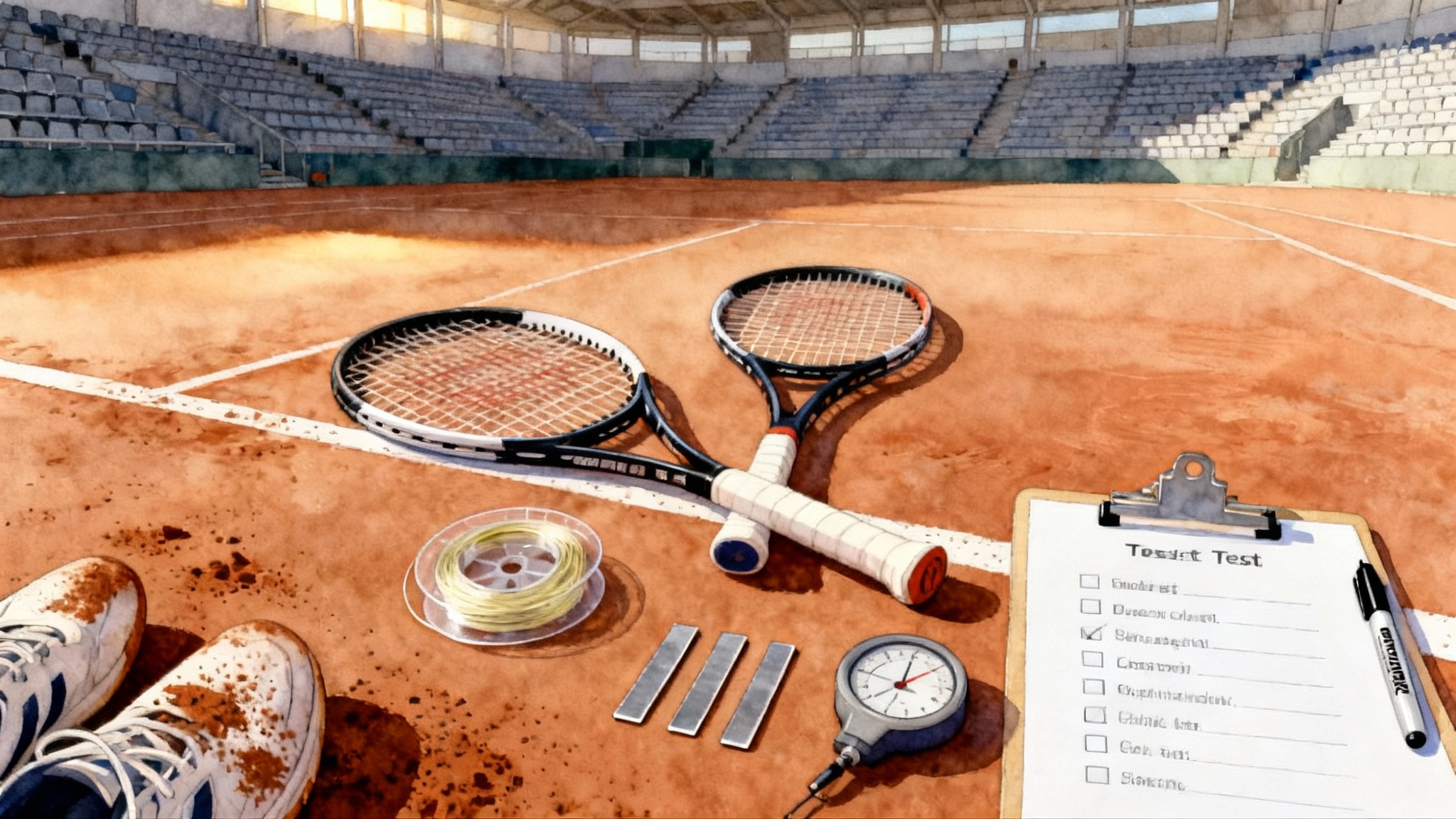
Use this scorecard during the week. Rate each line from 1 to 5, then total your score. Numbers help you compare academies with less emotion and more signal.
- Coach to player ratio
Target: 1 coach per 4 players in drilling, 1 per 2 in technical blocks, and on match days 1 per 6 with roaming feedback. Anything above 1 per 6 in drilling is a concern. - Live-ball to fed-ball percentage
Target: Performance groups 13 and up aim for at least 60 percent live-ball. Younger or technical rebuild blocks can dip to 40 percent live-ball if there is high quality video and transfer. - Video use
Target: one short capture and review per week for each stroke priority, stored in a shared folder or app with simple notes. - Strength and conditioning integration
Target: two to three sessions per week with progression written out. Look for certified coaches and movement standards, not just circuits. - Match-play minutes
Target: 10 and under 90 to 120 minutes per week. Ages 13 to 15 at least 150 to 180 minutes. Ages 16 to 18 performance 180 to 240 minutes with a mix of formats. Adult returners 120 to 180 minutes with skill-level parity. - Feedback specificity
Target: a single actionable cue per player per drill, not a stream of generic praise. Look for precise language with simple checkpoints. - Progress tracking
Target: a visible board, shared notes, or a player development plan with 2 to 3 technical priorities and 2 tactical goals. - Safety and culture
Target: heat management, hydration breaks, sunscreen reminders, and a positive but accountable tone. - Surfaces and environment
Target: surfaces match your competition calendar. Indoors available if weather requires. Ball quality is consistent.
Consider a pass threshold of 35 out of 45 for a strong fit. Adjust for your context.
Age-specific checklists
10 and under
- Red, orange, and green ball pathways with clear graduation criteria.
- Rallies built around sending and receiving, not just feeding.
- Short, frequent coaching cues that build athletic skills like skipping, hopping, and balancing.
- Games that reward contact point awareness and simple targets.
- Friendly match blocks and parent education about how to watch without coaching.
Ages 13 to 15
- Strong live-ball volume and decision-making games.
- Technical priorities documented and revisited weekly.
- Two weekly strength sessions focused on coordination, landing mechanics, and speed.
- Match play with formats that stress specific patterns.
- Clear plan for local Universal Tennis and United States Tennis Association competition.
Ages 16 to 18
- Individual development plan with measurable milestones.
- Match volume consistent with goals and a periodized calendar.
- College guidance options, including video building, email templates, and sample outreach logs.
- Exposure to pressure training, tiebreak sets, and traveling blocks.
- Sufficient recovery strategies and injury-prevention protocols.
Adult returners
- Level-appropriate groups and a welcoming culture.
- Technical triage for one or two key strokes.
- Fitness integration that respects work schedules and recovery.
- Recorded serve or forehand session to anchor improvement.
- Access to leagues, mixers, and match play against similar levels.
Map the academy pathway to your goals
Your pathway should match how you intend to compete. If the plan is local events that count toward a Universal Tennis Rating, ask how the academy builds match blocks around those weekends and how they help you understand the UTR rating overview. If United States Tennis Association events are a priority, ask for a schedule that aligns to school calendars and a ladder of event difficulty. Many juniors benefit from a mix of Universal Tennis events for frequent, level-based matches and United States Tennis Association tournaments for pathway milestones. For tournament structure and levels, review the USTA tournament levels together.
For college placement, request concrete artifacts: sample emails to coaches, a recommended tournament calendar, highlight video outlines, and timelines. Ask how many recent graduates played college tennis, which divisions, and what the academy did to help. You want a replicable process, not a one-off story.
For a pro-track scaffold, probe the support around travel, physiotherapy access, hitting partners, and sparring. Ask how the academy handles training blocks after tough tournament runs, and how they coordinate with outside specialists.
Here are pathway prompts you can use in your meetings:
- Local Universal Tennis events
Do you run weekly match blocks or match ladders that align with nearby events? Who records scores and what stats are tracked? - United States Tennis Association pathway
Which levels are recommended and why? Where does the academy provide coaches on site? Map dates into your school calendar. - College placement
What is your timeline for video, outreach, standardized testing plans, and unofficial visits? Can we see templates and examples? - Pro track
Who manages travel logistics and on-site coaching? How do you integrate physiotherapy, nutrition, and recovery when on the road?
Red flags that save you time and money
- Ratios regularly above 1 coach per 8 players in drilling blocks.
- Fed-ball marathons with little transfer to live-ball.
- No written plan by Thursday of your trial week, or a plan that reads like a generic handout.
- Conditioning that looks like a boot camp rather than progressive athletic development.
- Coaches who talk over each other, or feedback that contradicts from drill to drill.
- Match play without scoring, consequences, or debrief.
- Overuse of lines and ladders without linking to footwork in live rallies.
- Heat and safety gaps, including rare water breaks or no shade protocol.
- A culture that tolerates eye-rolling, sarcasm, or blame without solutions.
- Hard sell tactics before you have a written plan and a price breakdown.
Daily evaluation sheet you can copy
Use this simple template at the end of each session.
- Primary focus today:
- One technical cue captured on video:
- Live-ball percent estimate:
- Coach to player ratio observed:
- One thing the player can do alone tomorrow:
- One thing the academy will provide support on:
- Match-play minutes today:
- Conditioning focus and standard:
- Overall score 1 to 5:
- Notes:
Repeat for five days. At the end, compare Day 1 to Day 5. Look for better clarity of cues, not just harder workouts.
How to compare academies after your trial
Assign weights to your priorities, then compute a simple weighted score. Example weights: coaching quality 30 percent, match-play architecture 20 percent, strength and conditioning 15 percent, culture and safety 15 percent, video and feedback 10 percent, logistics and schedule 10 percent. Score each academy 1 to 5 on each category, multiply by the weight, and sum. If two programs are close, use tie-breakers like coach fit with the player’s personality, schedule convenience, and competition calendar alignment.
Create a one-page takeaway for each academy that includes costs, travel time, expected weekly schedule, and the first eight-week plan. If an academy cannot draft an eight-week plan after your trial, that is a strong signal.
Sidebars: sample trial options and next steps
These are example approaches to booking a trial week at three well-known programs. Use the structure and questions even if you are visiting a different academy.
Legend Tennis Academy, Austin
- Suggested trial structure: three training mornings with one match block and one video session.
- Ask for: written technical priority by Day 2, match stats summary on Day 3, and a two-point plan for the next month.
- Next step: request available dates and trial pricing, then share the player’s schedule and goals. Start with Book a trial at Legend Austin.
Gomez Tennis Academy, Naples
- Suggested trial structure: two technical rebuild sessions, one pattern play morning, and a Friday test set.
- Ask for: one slow-motion capture per stroke priority, plus a written transfer drill to run at home.
- Next step: confirm level placement and whether afternoon fitness is included. Start with Book a trial at Gomez Naples.
Life Time Tennis Academy, national network
- Suggested trial structure: pick a location with a performance group, then schedule three group days and one private or small-group technical block.
- Ask for: a sample tournament calendar and access to level-based match nights.
- Next step: choose your nearest club and request a trial week window. Start with Find a Life Time Academy.
Cost and logistics checklist
- Transparent pricing for monthly training, private lessons, strength and conditioning, and tournament travel.
- Make-up policy and holiday calendar.
- Communication channel and response time standards.
- Availability of indoor courts or shade plans in hot climates.
- Equipment requirements and ball policy, including regular ball changes.
Putting it all together
Here is a quick example of how a family might use this playbook.
- Player: age 15, varsity number one singles, aiming for college tennis.
- Trial week at Academy A
Ratios mostly 1 to 4, high live-ball, two video captures, 210 minutes of match play, strength and conditioning twice.
Pathway: weekly Universal Tennis match nights and monthly United States Tennis Association events, college meeting scheduled in week two. - Trial week at Academy B
Ratios 1 to 6 to 1 to 8, long feeding lines, 120 minutes match play, no video.
Pathway: calendar vague and heavy on conditioning days. - Decision using the weighted score
Academy A wins by a clear margin. Family requests an eight-week plan, including two tournament weekends and a serve priority with weekly video.
You can run the same process for adult returners. Replace college placement with league play goals and swap the match-play minutes targets to align with your schedule. The logic is the same. Measure what matters, then commit to a plan you can execute.
Conclusion: choose the plan, not the promise
A great academy is a system, not a slogan. During a focused trial week you will see the system in action, from how coaches shape decisions under pressure to how the program turns feedback into measurable change. Use the schedule template, collect the numbers on your scorecard, run the age-specific checks, and map a pathway that matches how you want to compete. When the plan is clear on paper and feels right on court, you are not buying hype. You are choosing a structure that will compound effort into results.