Racquet Setup Blueprint 2026: Strings, Tension, and Weight
A science‑informed guide to select string types, set safe tension by age and level, and add weight and balance in small steps without risking injury. Includes on‑court tests, health checkpoints, and sample builds.
 Tommy
Tommy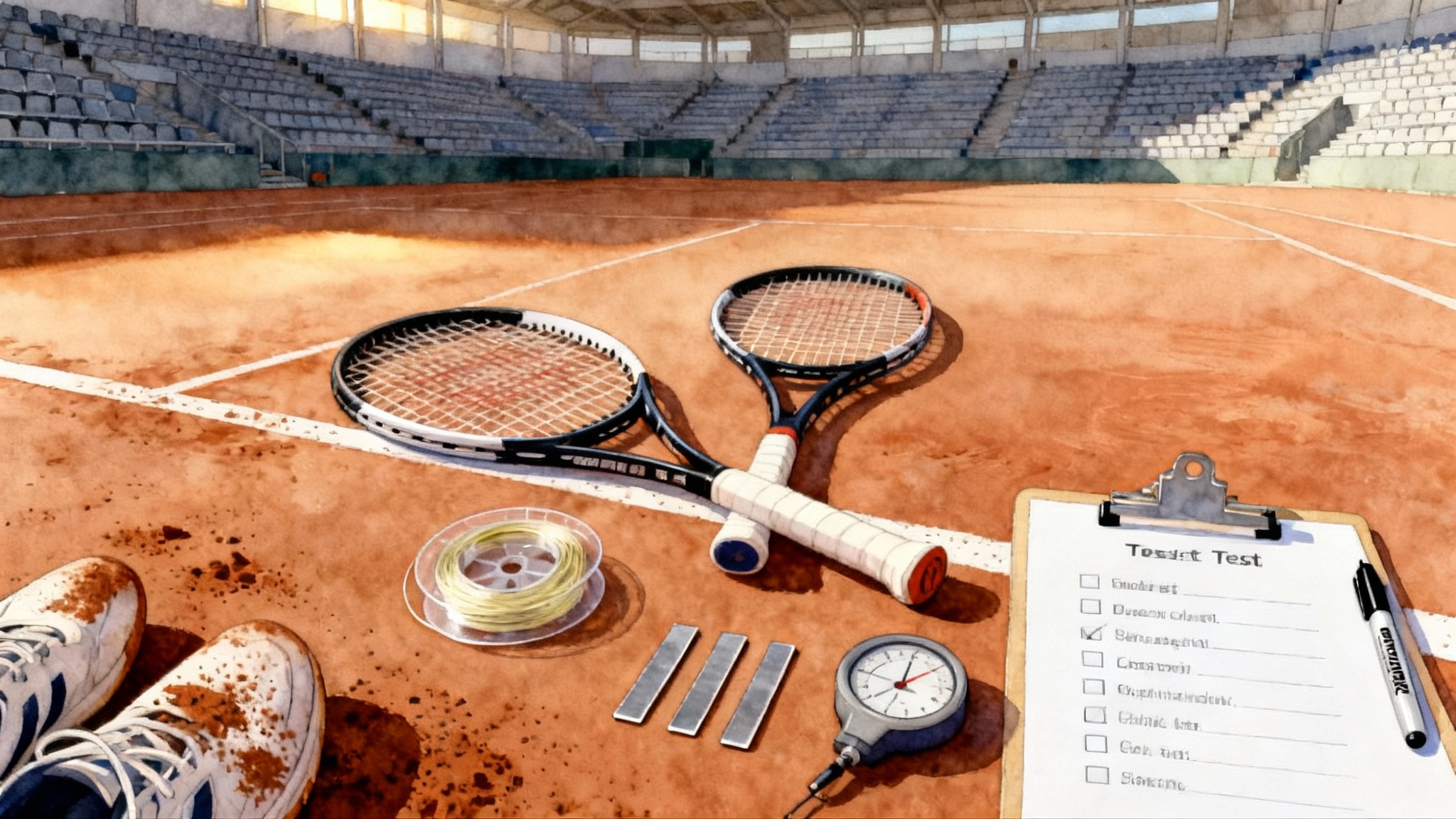
Why your racquet setup matters in 2026
If you want easier depth, cleaner spin, fewer arm aches, and more confidence on big points, start with your racquet setup. A tennis ball is simple rubber and felt, but what happens at contact is physics you control: stringbed stiffness, dwell time, and racquet inertia. The right combination lets the ball sit on the strings long enough to launch on your intended trajectory while keeping shock within what your body can tolerate. The wrong combination feels like you are fighting your racquet on every swing.
This blueprint gives juniors, parents, and adult players a clear path for 2026: how to choose strings, where to set tension by age and level, and how to increase weight and adjust balance in safe increments. You will also get a three-step on-court test, arm-health checkpoints, and sample builds for popular frames. If you plan to ramp up serving volume, skim our safe serve loads guide to protect your shoulder.
Strings decoded: what to use and why
Strings are the engine of the racquet. All else being equal:
- Natural gut: Most elastic and most powerful with excellent comfort. It holds tension well and keeps its performance feel for a long time. Best for juniors, adults with arm sensitivity, doubles players looking for touch, and anyone who values feel over absolute spin control.
- Multifilament: Synthetic fibers bonded into a soft, powerful string. Comfort is high, power is high to moderate, and spin is moderate. It is a safe default for most juniors and many adult players. It notches and frays over time.
- Polyester: Stiffer monofilament with high control and spin potential because it can slide and snap back on contact. It is less powerful, loses tension faster, and can be stressful on the forearm and elbow if tension or volume of play is high. Suited to physically mature players who take fast, modern swings and break softer strings quickly.
- Hybrid: Combine a soft string with a firm string. The classic build is natural gut or multifilament in the mains for feel and power, and polyester in the crosses for control and spin. Hybrids aim to balance performance and comfort.
A simple decision rule:
- If you are under 14, default to multifilament or a hybrid with a soft main. Use polyester only with a coach’s approval, soft gauges, and reduced tension.
- If you are 14 to 17 and play with modern topspin, consider a soft polyester at safe tension or a hybrid with polyester crosses.
- If you are an adult who values comfort or has a history of elbow or shoulder symptoms, choose natural gut, multifilament, or a gut‑polyester hybrid with gut in the mains.
- If you are an advanced adult competitor with long, fast swings, a shaped or smooth polyester at a sensible tension or a hybrid can provide the directional control you want.
Safe tension ranges by age and level
Tension controls the stiffness of the stringbed. Higher tension increases control but also increases shock to the arm. Lower tension increases dwell time and power but can feel springy if you go too low. The ranges below are in pounds, with kilogram equivalents in parentheses.
- Ages 9 to 10 using 25 or 26 inch racquets with green or orange balls: 44 to 50 pounds (20 to 23 kilograms) with multifilament. Do not exceed 52 pounds (24 kilograms).
- Ages 11 to 13 on full or near‑full length racquets: 45 to 52 pounds (20 to 24 kilograms) with multifilament or hybrid. If using polyester under coach supervision, 42 to 48 pounds (19 to 22 kilograms), and restring more often.
- Ages 14 to 17 with modern topspin: multifilament or hybrid at 46 to 52 pounds (21 to 24 kilograms). Soft polyester at 44 to 50 pounds (20 to 23 kilograms) only if physically ready and practicing at least weekly on arm care.
- Adult beginners and social players: multifilament at 50 to 56 pounds (23 to 25 kilograms). If balls are sailing, move up 2 pounds at a time.
- Adult intermediates: hybrid or multifilament at 48 to 54 pounds (22 to 24 kilograms). Polyester only if your mechanics and fitness are solid.
- Adult advanced: polyester or hybrid at 46 to 52 pounds (21 to 24 kilograms). If you string above 52, do so for specific control needs and watch the arm‑health checkpoints closely.
Rules of thumb:
- Change in small steps only: 2 pounds at a time. Never change more than 4 pounds in one restring unless you are correcting a clear mistake.
- Softer is safer for testing. Start low and inch up to control. You can always add 2 pounds next time.
- String choice can be a bigger lever than tension. A hybrid at 48 pounds can feel more controlled than a full multifilament at 54 pounds because of the firmer crosses.
Weight and balance progressions without injury
Racquet mass and where you place that mass affect stability and comfort. More weight increases stability and can reduce shock to the elbow, but it also raises the load on the shoulder. Balance tells you where the racquet pivots. Head‑light balances feel faster to maneuver. Head‑heavy balances feel solid at contact but slow at the net.
Progression principles:
- Total mass changes in very small moves: 2 to 4 grams at a time. That is one or two small lead strips or a slight handle insert.
- Keep the frame’s personality. If you bought a fast, whippy 100 square inch racquet, do not turn it into a sluggish hammer with a single heavy jump.
- Stabilize the hoop before the handle if you are missing the center. Add 2 grams each at 3 and 9 o’clock to resist twisting on off‑center hits.
- For more plow through on groundstrokes, add 2 to 3 grams at 12 o’clock, then counterbalance in the handle with 4 to 6 grams to maintain similar swing feel.
- If your shoulder complains on serves, try removing head weight and move mass into the handle or replace a heavy overgrip with a standard overgrip to reduce swingweight.
A safe month‑by‑month path for many players:
- Month 1: Play stock with an overgrip and a dampener. Learn the frame.
- Month 2: Add 2 grams at 3 o’clock and 2 grams at 9 o’clock. Test for two weeks.
- Month 3: Add 2 grams at 12 o’clock for depth, counter with 4 grams under the butt cap or under the grip. Test for two weeks.
- Month 4: Decide if you keep the 12 o’clock mass or move it partly to 2 and 10 o’clock for a blend of spin and stability.
The three‑step on‑court test protocol
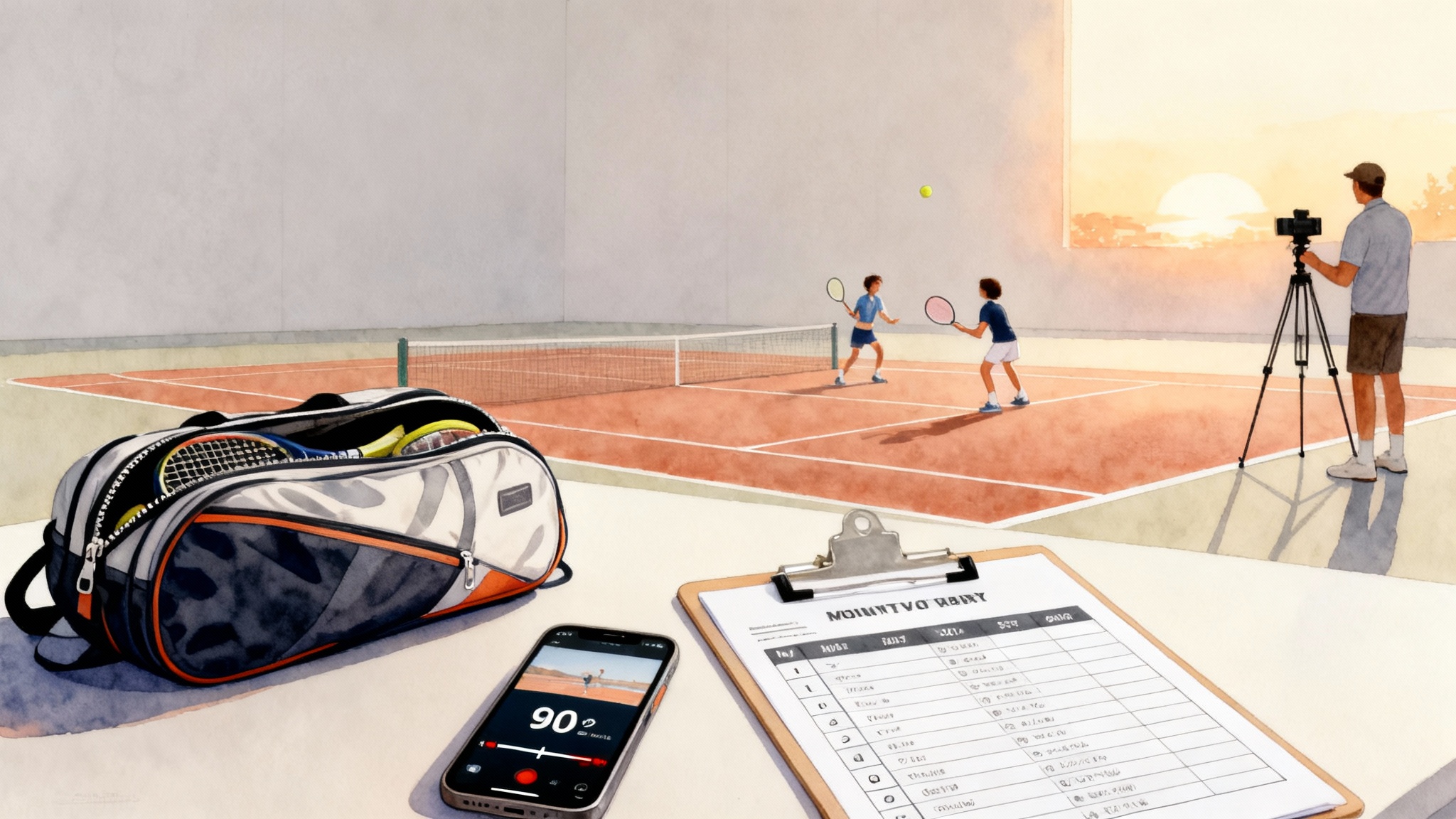
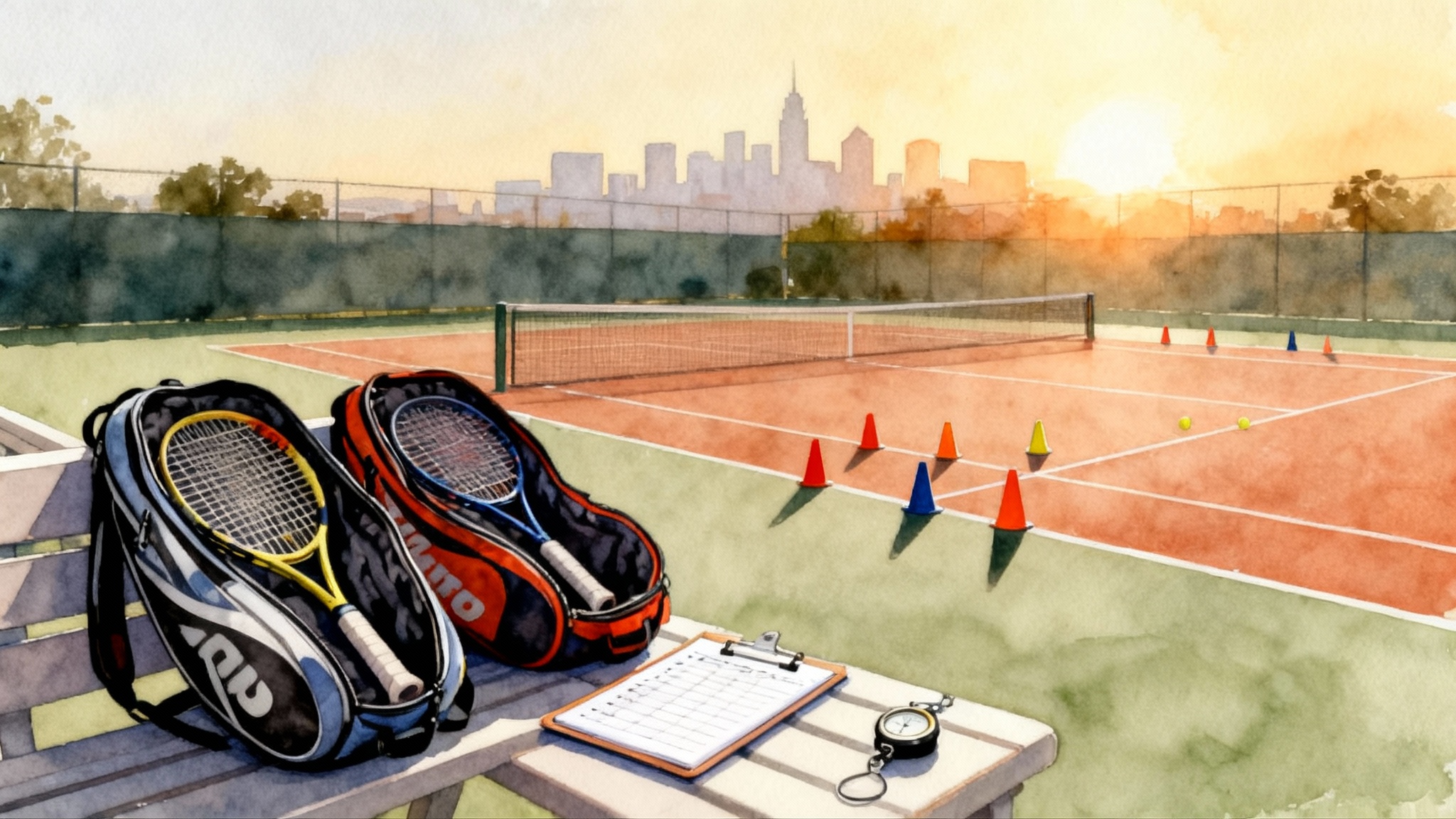
Testing makes the setup yours. Bring a partner, a basket of balls, a smartphone, and a marker pen. For clearer feedback, use the DIY video analysis guide to slow down and tag swings.
Step 1. Depth and launch check
- Use six fresh balls. Hit 20 forehands and 20 backhands aiming to land three feet inside the baseline. Have your partner stand near the net and call “short,” “target,” or “long.”
- Goal: at least 60 percent of balls hit the target zone. If long is frequent, raise tension 2 pounds or reduce 2 grams of head weight. If short is frequent and swing speed is good, lower tension 2 pounds or add 2 grams at 12 o’clock.
Step 2. Spin and directional control
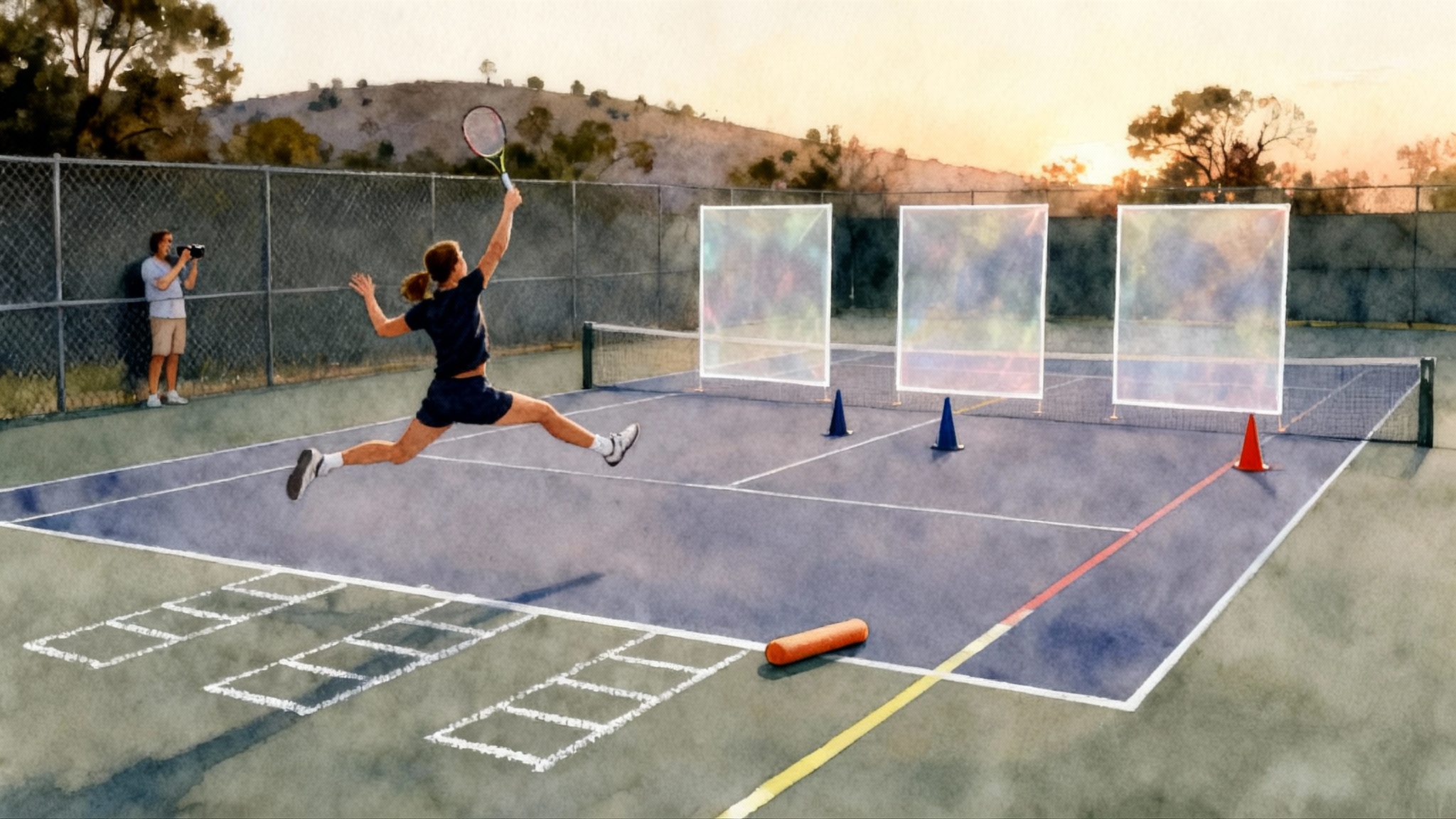
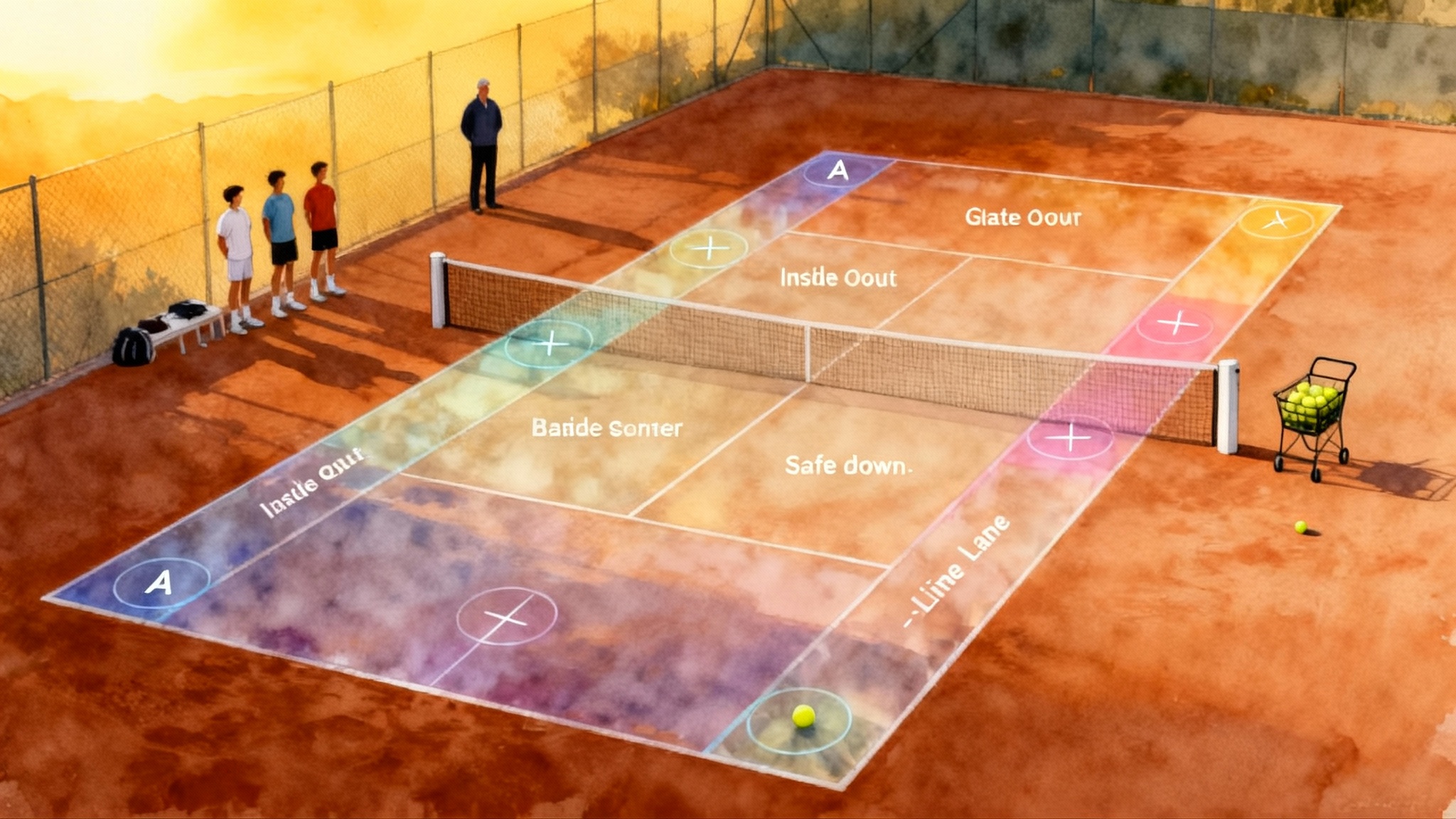
- Place two flat cones three feet inside each singles sideline. Hit 15 crosscourt forehands and 15 down‑the‑line forehands, then repeat on the backhand. Count how many land inside the cone corridor and clear the net by at least two feet.
- Goal: at least 40 percent corridor hits with no significant drop in net clearance. If you miss wide with a harsh feel, your stringbed may be too stiff. Lower tension 2 pounds or switch to a hybrid. If you miss into the net often with a heavy ball, add 2 pounds of tension.
Step 3. Serve load and recovery feel
- Record ten first serves and ten second serves from each side. Rate your shoulder and elbow comfort immediately after, then again the next morning on a zero to ten scale where zero is no discomfort and ten is severe pain.
- Goal: no more than a two out of ten in either time frame. Above that, reduce head weight, choose a softer string, or lower tension by 2 to 4 pounds before the next test.
Arm‑health checkpoints you should not skip
Arm health is your performance limit. If your tissues cannot recover, your swing degrades and your enjoyment fades. If you are adding serve volume, revisit the safe serve loads guide.
- Tenderness over the bony outside of the elbow after play is a red flag for early lateral epicondylitis, often called tennis elbow. Act early by softening the setup and reducing volume.
- Grip strength drop: squeeze a folded towel as hard as you can for three seconds. If you cannot match your usual squeeze on three attempts after a session, the setup is likely too stiff or too head heavy for now.
- Morning stiffness score: if your forearm or shoulder feels tight the morning after testing, lower tension or trim head weight before your next session.
- Recovery rule: two easy days after any session that creates more than a two out of ten discomfort. Replace serves with shadow swings and band work.
These guidelines are educational and are not medical advice. If pain persists, consult a qualified clinician.
Sample builds for popular frames in 2026
Model generations change, but the personalities below stay consistent. Always verify your specific racquet’s factory specs before customizing.
Babolat Pure Drive 100
- Player profile: aggressive baseline play, needs free power and spin with decent comfort.
- Strings: hybrid with natural gut or multifilament mains at 51 pounds and a smooth polyester cross at 48 pounds. For a full multifilament option, 53 pounds.
- Weighting: 2 grams each at 3 and 9 o’clock for stability. If you want extra depth, add 2 grams at 12 o’clock and 4 grams in the handle.
Wilson Blade 98
- Player profile: flatter hitters who want directional control and feel.
- Strings: soft polyester at 47 to 49 pounds, or hybrid with gut mains at 50 and polyester crosses at 47.
- Weighting: start stock. If volleys feel unstable, 2 grams at 3 and 9 o’clock. Keep the balance slightly head light to protect the shoulder on serves.
Yonex Ezone 100
- Player profile: power frame with a generous sweet spot.
- Strings: multifilament at 52 to 54 pounds for comfort, or a hybrid with polyester crosses at 48. If full polyester, keep it 45 to 47 pounds and restring more often.
- Weighting: 2 grams at 12 o’clock to firm up the launch, counter with 4 grams at the butt cap.
Head Speed MP
- Player profile: all‑court balance, fast swings, modern topspin.
- Strings: shaped polyester at 46 to 48 pounds for spin, or a hybrid at 49 to 51 pounds for extra pocketing.
- Weighting: if you miss off center, 2 grams at 3 and 9 o’clock. If you crave more plow, 2 grams at 12 o’clock with 4 grams in the handle.
Wilson Clash 100
- Player profile: comfort‑first frame with low stiffness and easy depth.
- Strings: multifilament at 52 to 55 pounds to tighten the launch angle. Hybrid at 50 to 52 can add control without losing comfort.
- Weighting: usually best left close to stock. If you need more stability, 2 grams at 3 and 9 o’clock only.
Junior 26 inch performance frame
- Player profile: green ball or early yellow ball transition.
- Strings: multifilament at 47 to 49 pounds. Avoid full polyester. If the string breaks quickly, try a hybrid with a soft, thin polyester cross at 44 pounds and a multifilament main at 48 pounds.
- Weighting: avoid head weighting. If you must add mass, use 2 to 4 grams in the handle to improve feel without burdening the shoulder.
When to restring and how to maintain performance
Strings age every time you hit. Performance drop shows up before a string actually breaks.
- Multifilament and gut: restring when control or spin drops off noticeably or when fraying becomes heavy. A practical rule is as many restrings per year as times you play per week. If you play twice a week, restring at least every six months.
- Polyester: performance typically fades faster. Many players notice a change after 10 to 20 hours. If your arm starts to complain on a string that felt fine when fresh, replace it.
- Hybrid: follow the softer component. If the gut or multifilament looks tired, you are due, even if the polyester looks fine.
- Storage: do not leave racquets in cars or direct sunlight. Heat accelerates tension loss and can degrade string performance.
A four‑week progression plan you can actually follow
Week 1: Baseline and choice
- Select your string family based on your profile using the guidance above.
- Start within the recommended tension range for your age and level. Record the exact tension, string name, and gauge in your notes app.
- Play two sessions and perform Step 1 of the on‑court test. Adjust tension 2 pounds only if you are far from the target depth.
Week 2: Stability and control
- Keep tension constant. Add 2 grams each at 3 and 9 o’clock if you are missing the center or your volleys feel flimsy.
- Perform Steps 1 and 2 of the test. If directional misses are wide and feel harsh, soften the setup by lowering 2 pounds or switching to a hybrid.
Week 3: Depth and serve load
- If balls still land short with a full swing, add 2 grams at 12 o’clock and 4 grams in the handle. If long is the issue, remove the 12 o’clock weight or raise tension 2 pounds.
- Complete the full three‑step test and log your comfort scores immediately and the next morning.
Week 4: Lock it in
- Make one last micro‑change only if your scores show a pattern. Lock the setup and play for two to three weeks before the next change.
- Note your restring trigger: hours of play, level of fray, or a comfort score above two out of ten.
What to do if you still feel stuck
- If the ball flies long when you swing freely: raise tension 2 pounds, or switch to a firmer cross in a hybrid, or add 2 grams at 12 o’clock and counterbalance.
- If your arm aches after serves: lower tension by 2 to 4 pounds, move any added head weight into the handle, and try a softer main string.
- If you frame balls more than usual: add 2 grams each at 3 and 9 o’clock, and check grip size and overgrip thickness.
- If your spin is flat: consider a shaped polyester in a hybrid at a low tension. If you are not ready for polyester, drop multifilament tension 2 pounds and work on vertical racquet path.
Book a 30‑minute fit‑and‑string session
The fastest way to get a setup that matches your swing is to test it with a coach who can measure and adjust on the spot. Book a 30‑minute fit‑and‑string session with Life Time Tennis Academy. We will measure grip size, check swing speed, build two string options, and test weight and balance on court with the protocol above. You can also reserve a time directly at our book a 30‑minute fit‑and‑string session.
The takeaway
A racquet is not just a model name. It is a system: string type, tension, weight, and balance. Make small, deliberate changes. Test with simple targets. Protect your arm with clear checkpoints. Use the sample builds to speed up your search. Then lock in the setup that lets you swing freely and recover well. If you want help, schedule that 30‑minute session and turn your 2026 season into a year of confident contact and consistent results.