College Doubles Fast-Track: Formations and 6-Week Plan
 Tommy
Tommy
Why college-style doubles should be your fast track
Three reasons players move up teams and get recruited faster with strong doubles: it scales speed, it rewards structure, and it is easy to measure. College dual matches open with doubles; the team that takes two of three courts earns the first team point. Coaches love athletes who can win that point because it sets the tone and shortens the path to the finish. If you want a primer on format, read the Intercollegiate Tennis Association’s overview of the college dual match format. Then come back, because this guide is about execution, not trivia.
What follows is a coach-led playbook you can run with a partner in six weeks. It covers formations, signals, poaching, return targets, first-volley patterns, and the between-point huddles that make it all hang together. It is written for juniors and their parents, and for adult players in United States Tennis Association leagues or Universal Tennis Rating events (USTA and UTR), so you can plug the same language into matches on Saturday morning or at a college camp next summer.
The core formations you will use every match
You only need three. Master them and your opponents will spend more time guessing than swinging.
1) Standard formation
- Setup: server starts in a normal corner; net player stands about a step inside the service line and halfway between center and alley, racket head high, ready to move.
- When to use: first serve points, early games, or any time you want solid neutral starts. It gives your server more margin and your net player a clean look at the first volley.
- Common mistake: net player drifts backward. Fix it by holding a firm line inside the service line and reacting forward first.
2) I-formation
- Setup: server begins near the center hash. Net player crouches on the center T, signaling behind the back. After the serve, both players explode to preplanned sides.
- When to use: to disrupt strong crosscourt returners, to poach behind a body serve, or to protect a weaker backhand volley by choosing the side you prefer.
- Common mistake: late movement. Solve this by committing to a count, serve-hit-split-move, and by calling an exact move in the huddle.
3) Australian formation
- Setup: server and net player both start on the same side of the court. You invite the return down the line into your server’s strength or you bait a crosscourt lob you plan to cover.
- When to use: to funnel returns into a single lane, to free your net player to own the middle, or to neutralize a returner who loves crosscourt angles.
- Common mistake: server forgets the open lane. Fix it by taking a more central starting position and serving a committed target, then sprinting to close that lane with your first two steps.
Signals that are clear, quick, and actionable
Keep it simple and consistent so your partner never guesses.
- Two-signal system behind the net player’s back before every point.
- Signal 1: net player movement
- Closed fist: stay
- One finger: poach
- Two fingers: fake then recover
- Signal 2: server target
- One finger: serve wide
- Two fingers: serve body
- Three fingers: serve T
- Signal 1: net player movement
The server confirms by touching the strings to the strings, or by a quick yes call. If you need an audible cancel, use the word “reset” before the toss and go back to standard.
Poaching that wins the point, not just makes a move
Poaching is not a guess; it is a trigger-based decision. Move on a cue, not a vibe.
-
Best cues for a green-light poach:
- Second serve that will sit up, especially to the body.
- Contact from the returner behind the baseline, which often reduces pace.
- A returner with a big loop on the backhand; the loop buys you time.
- Server’s target called to body or T, which narrows the return angles.
- A high ball above net height in your lane; never let that ball pass.
-
Footwork rule: cross first, then drive. Think “crossover step, plant, stick the volley” to the open court. If you fake, make it look real, take two hard steps across the center, plant, then snap back.
-
Contact goal: meet the poach volley in front of the center strap, and stick the ball firm and low through the open lane. Do not float.
Return targets that make your first shot do damage
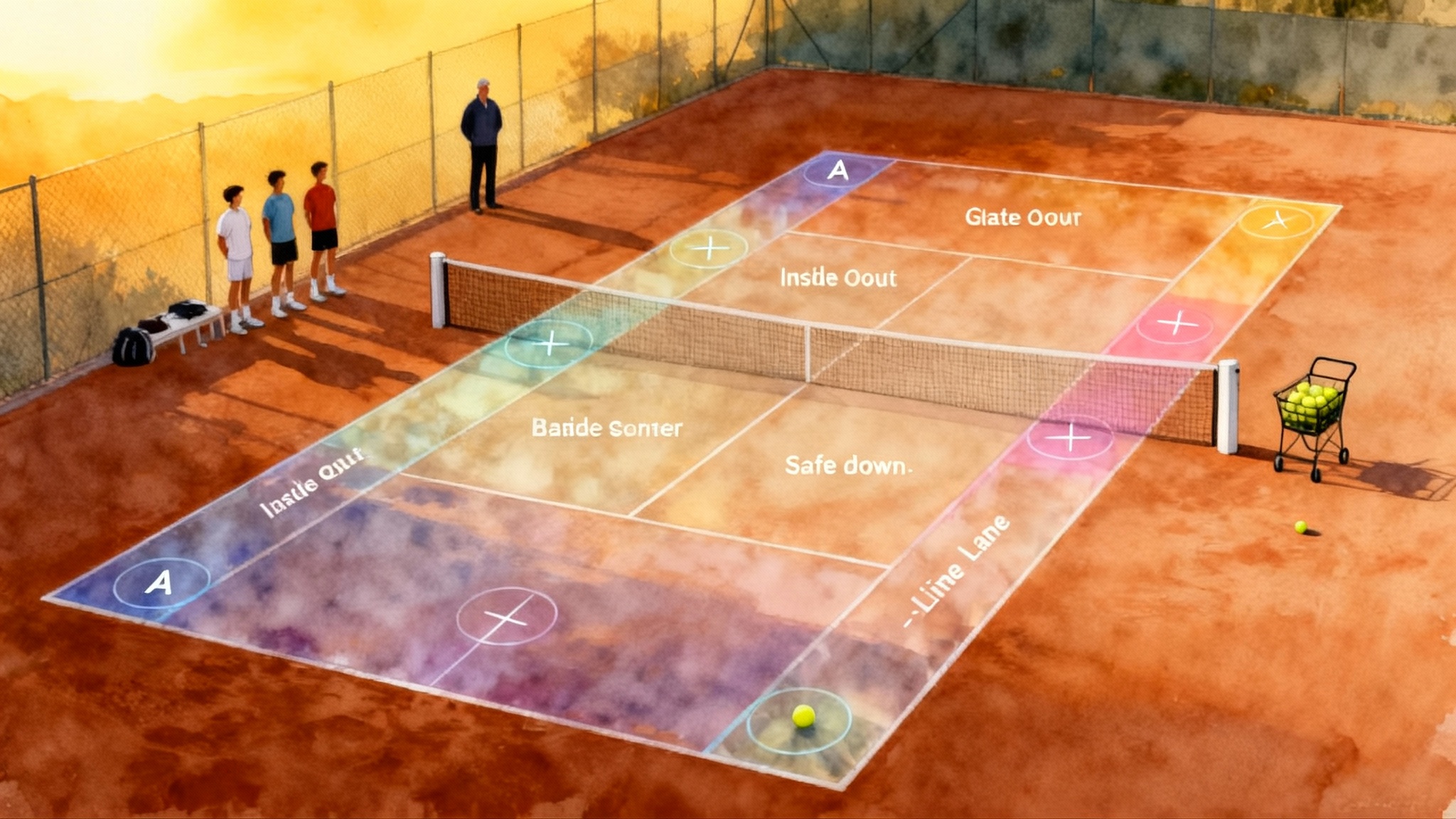
Your return decides whether the point stays predictable or gets chaotic on your terms. Your menu has four main targets:
- Deep crosscourt through the server, heavy and high, landing midpoint between service line and baseline. This pushes the server back and buys your partner time to close.
- Middle through the net strap, lower and firm, a perfect mix of safety and pressure that also reduces the angles for the next ball.
- Down the line when the net player shades too far middle or when you called Australian and you want to test the server’s first volley on the run.
- Lob return over an aggressive net player, best used early in a game to move them backward.
Rule of thumb: if you are on a second serve and the net player is active, go heavy middle and follow it forward two steps so you threaten your own first volley. For more return reads and patterns, see the Return of Serve Accelerator.
First-volley patterns every team should own
Your first volley tells the story. Choose one of these patterns in the huddle and commit.
-
Serve team patterns:
- Body serve, net player poaches to the open lane. Server cheats middle on the split to close the return that leaks crosscourt.
- T serve, net player stays, server hits a forehand first ball back deep middle, then both close the middle gate together.
- Wide serve, server recovers to the center, net player fakes then squeezes middle on ball three.
-
Return team patterns:
- Heavy middle return, both players take two steps forward, play first volley through the hip of the net player.
- Down-the-line return against Australian, partner pinches middle to pick off the next ball.
- Lob return over the net player, partner takes the short angle that follows.
Write your favorite two serve patterns and two return patterns on a note card. Use them until the other team solves them, then switch. If you are increasing serve reps in practice, make sure loads are safe using the Serve Volume Blueprint 2026.
The between-point mini huddle
Treat each point like a short play. The net player initiates the quick huddle, which should last five seconds.
- Call the serve location and the net movement signal.
- Confirm the returner tendencies you see.
- Agree on the first-volley target if you win the first touch.
- Close with a cue word, such as “middle,” “high,” or “spin.”
After the point, debrief in one sentence: “Late poach, switch next time” or “Return too low, go heavy middle.” Then move.
The 6-week practice plan, with session templates and metrics
Each week has two parts: a 75-minute on-court session and a short at-home footwork block. Add one match play slot on the weekend. Track the metrics listed to see your progress.
Week 1: Footwork and signals install
-
On court, 75 minutes
- Dynamic warm up, 8 minutes
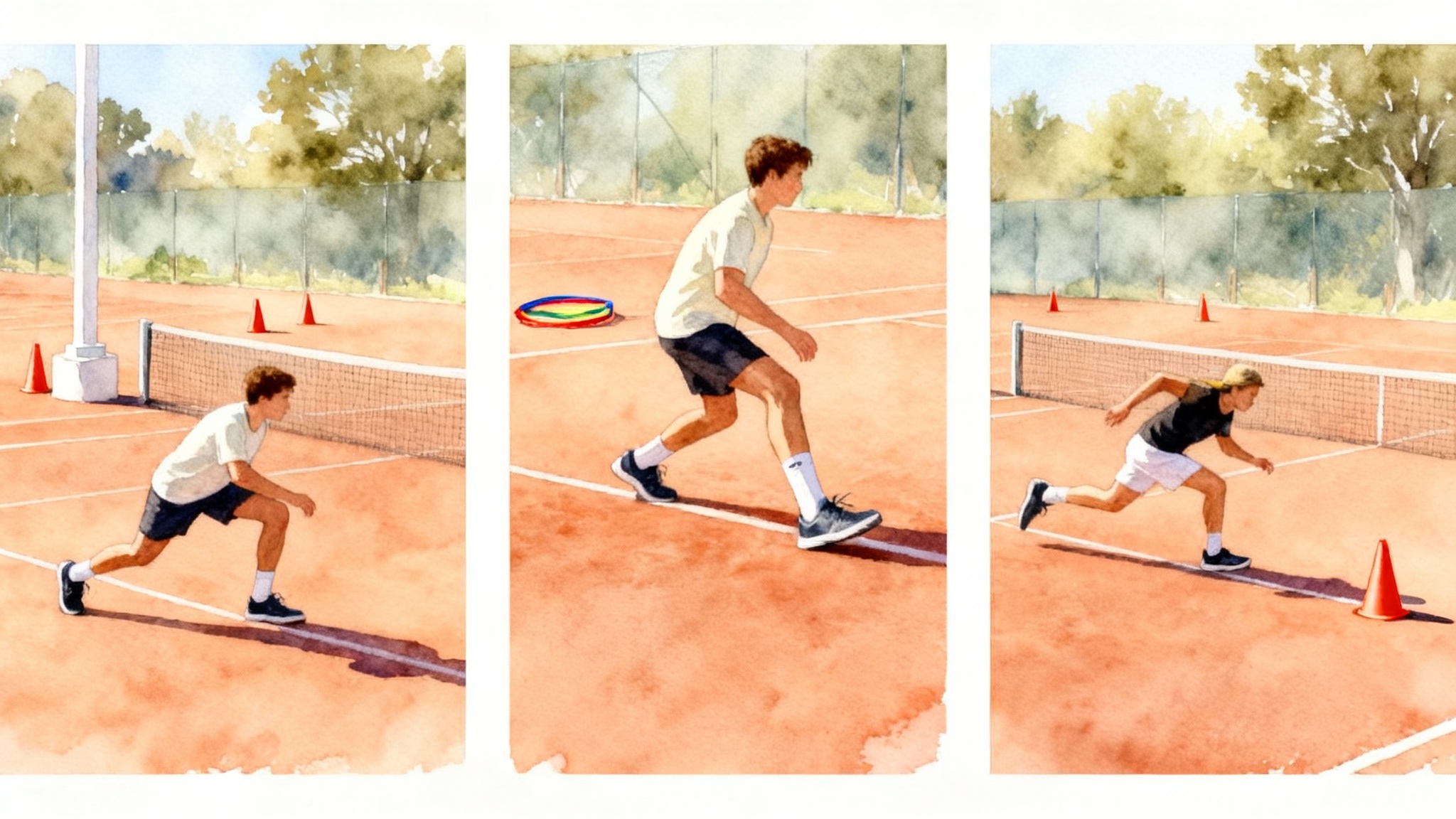
- Split-step timing ladder, 6 minutes: bounce, split, first step to cone
- Signals walk-through, 10 minutes: net player shows three movement signals and three serve targets; server confirms
- Standard formation first volleys, 18 minutes: coach or partner feeds to the server’s first ball, then a live point begins
- Return target ladder, 18 minutes: five balls deep crosscourt, five to middle, five lobs; rotate
- Games to 11, 15 minutes: points start with second serves only; net player must call a move every point
-
At home, 12 minutes
- Jump rope, 3 sets of 60 seconds with 30 seconds rest
- Shadow split and crossover, 3 sets of 10 each side
- Partner signal quiz, 2 minutes: show signals and translate fast
-
Match metrics to track this week
- Return-in percentage on second serves
- Net player called-move compliance, number of points you actually moved
Week 2: Standard formation patterns and depth
-
On court, 75 minutes
- Warm up and serves, 12 minutes
- Serve plus one deep middle, 15 minutes: server must hit the first ball deep middle; net player squeezes
- Return heavy cross plus close, 15 minutes: returner plays high crosscourt and takes two steps in
- Live half-court games, 20 minutes: only crosscourt lane in play; net players must poach on a ball above net height
- Deuce and ad alley plays, 13 minutes: each side runs one chosen pattern three points in a row
-
At home, 10 minutes
- Wall volleys, 2 sets of 50 with target tape at hip height
- Tennis-specific lunge matrix, 3 sets of 6 per direction
-
Match metrics
- First volley depth, percentage landing beyond the service line
- Poach attempts per return game
Week 3: I-formation integration
-
On court, 75 minutes
- Crouch and explode reps for the net player, 8 minutes
- Serve from the hash, 10 minutes; focus on toss consistency
- I-formation scripted points, 20 minutes: alternate stay and poach calls; server sprints to assigned lane
- Returner reads, 15 minutes: partner holds fake signals; returner calls out read after contact
- Scored I-formation games, 22 minutes: first to 15; net player must move on every point
-
At home, 12 minutes
- Core stability, 3 sets of 30 second front planks, 20 second side planks
- Reaction taps, 3 sets of 20 seconds: partner drops a ball from shoulder height; run and catch after split
-
Match metrics
- I-formation success rate, points won when you called I-formation
- Double faults in I-formation games, track and reduce
Week 4: Australian formation and serve lanes
-
On court, 75 minutes
- Target cones for wide, body, T; 12 minutes of serves
- Australian pattern builder, 20 minutes: server starts on same side as net player; call serve target; close the open lane
- Down-the-line return defense, 18 minutes: server recovers middle; net player reads and covers lob or line
- Pattern blend, 20 minutes: rotate among standard, I, and Australian; call two-point blocks
-
At home, 10 minutes
- Short hill sprints or stairs, 6 sprints of 8 to 10 seconds; walk back
- Balance holds on one leg, 3 sets of 30 seconds eyes forward, then 20 seconds eyes to the side
-
Match metrics
- First serve percentage to called targets
- Return down-the-line errors forced when you call Australian
Week 5: Poach, fake, and squeeze pressure
-
On court, 75 minutes
- Poach timing with coach feed, 12 minutes: tosses above net strap that you must cut off
- Fake and recover drill, 12 minutes: two hard steps across; plant; snap back for the reflex volley
- Three-ball squeeze, 18 minutes: serve; first volley deep middle; net player squeezes middle for ball three
- Poach-or-fake live game, 18 minutes: net player silently chooses; partner guesses afterward to improve disguise
- Tie-break to 7, 15 minutes: every point must include a called net move
-
At home, 12 minutes
- Medicine ball or backpack throws, 3 sets of 8 rotational throws each side
- Fast feet ladder or tape boxes, 3 sets of 20 seconds
-
Match metrics
- Poach conversion rate, won points when you moved across
- Forced error count off your poach volleys
Week 6: Pressure week and evaluation
-
On court, 75 minutes
- Serve targets under count, 10 balls in a row to declared spot; restart if you miss
- Return under count, 10 in a row to middle within a hula hoop target
- Dual formation scrimmage, 25 minutes: opponent picks your formation at random; you must run it cleanly
- Live set to 6 with no-ad scoring, 30 minutes; call net moves on every return game
-
At home, 12 minutes
- Skip rope, 2 sets of 90 seconds
- Mobility flow, 3 minutes hips and thoracic spine
-
Final metrics and goals
- Return-in percentage on second serves at 70 percent or higher
- Poach attempts at 1.5 per return game or higher
- First volley depth beyond the service line at 60 percent or higher
- I-formation point win rate at or above your standard formation rate
Record your metrics in a shared note or planner so you keep everything in one place.
Parents and captains: how to guide without hovering
- Align words with the plan. Ask players, what were your two called patterns today, and what was your poach conversion rate. This keeps feedback specific.
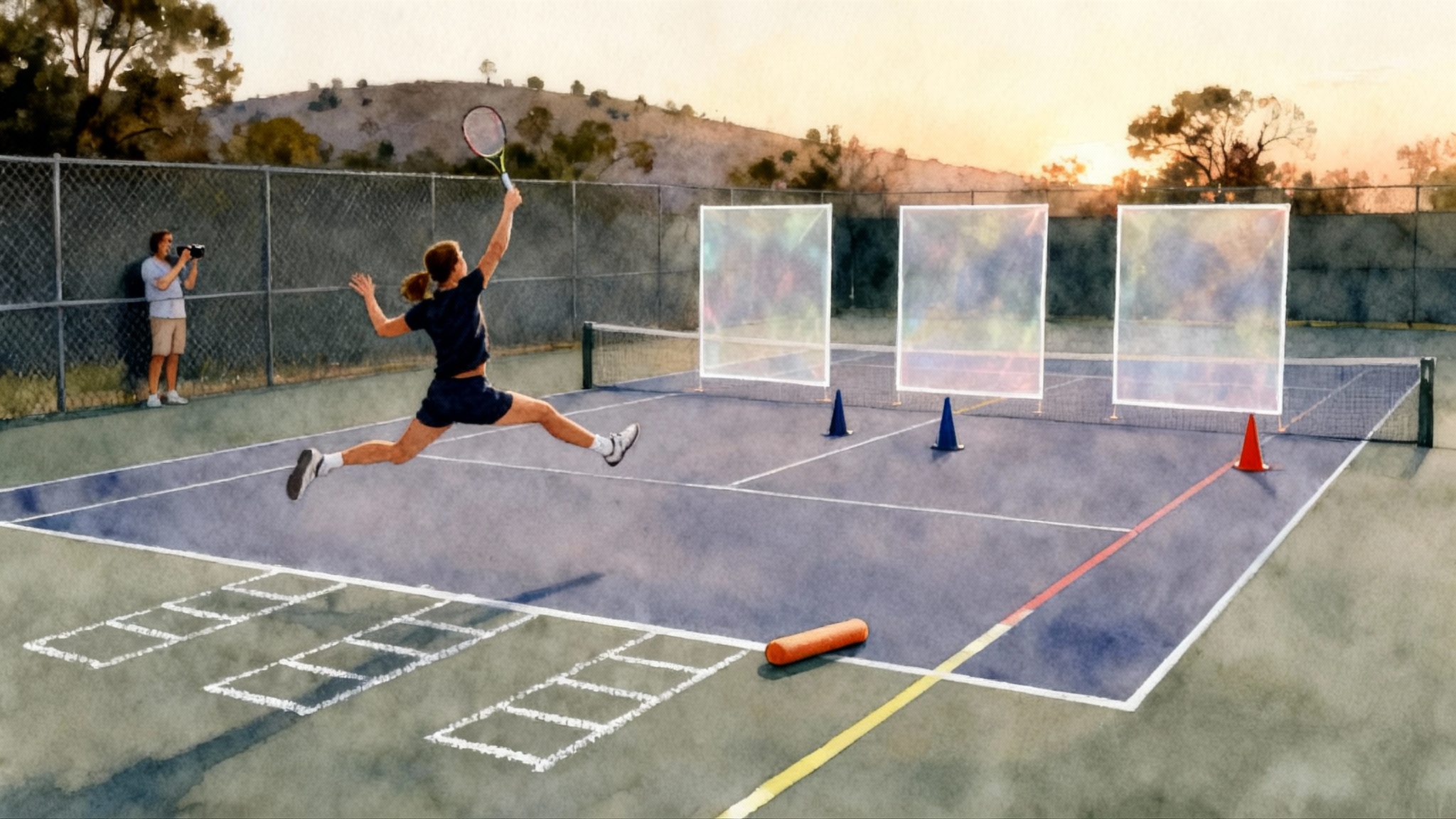
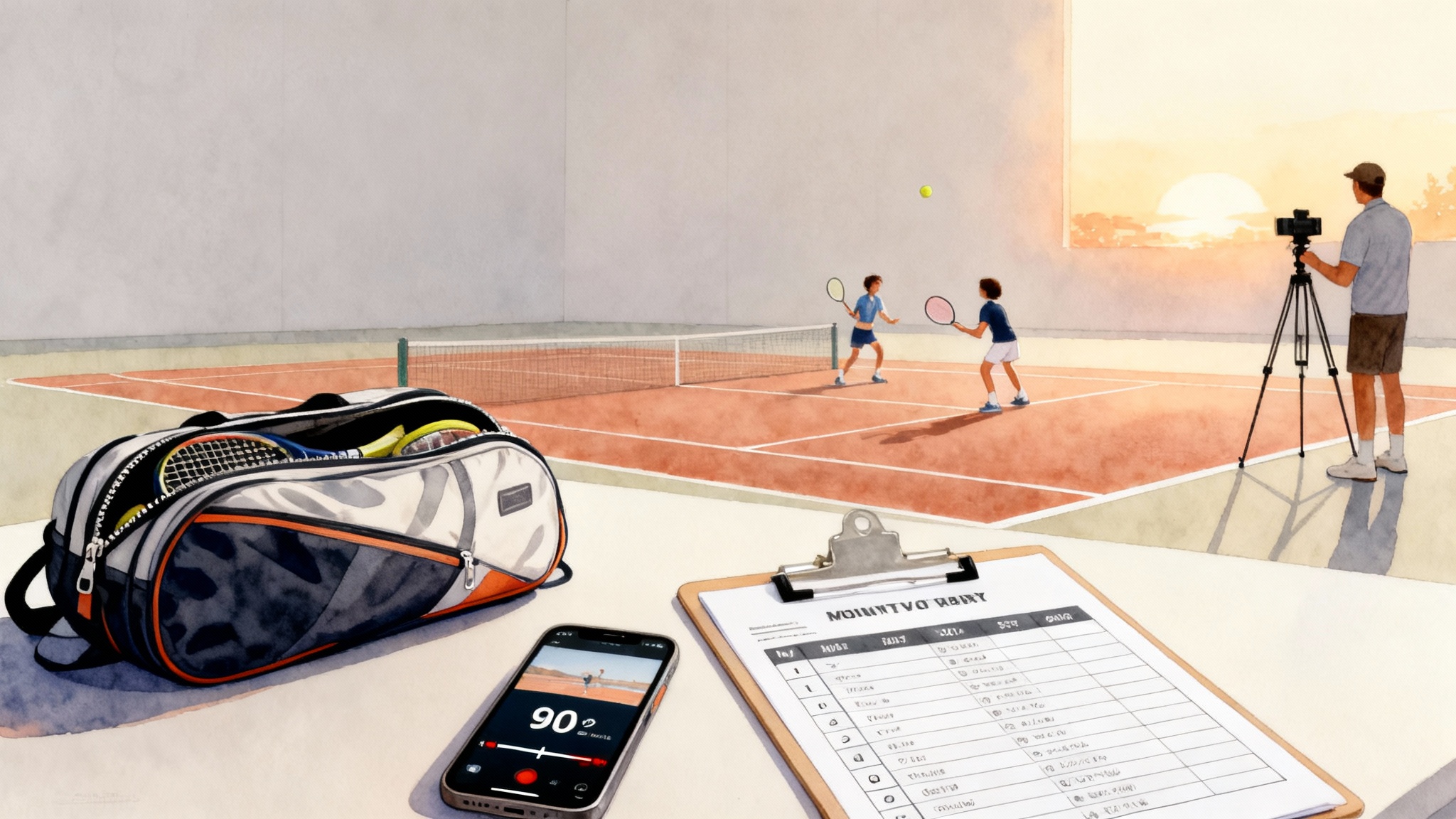
- Film one return game per match from the side fence. Look for depth on returns and net player first step, not for swing flaws.
- Scout with empathy. Note which returns an opponent loves, then share two bullet points, not a speech.
Captains can run ten-minute huddles before league matches. Agree on two serve patterns, two return targets, and a net movement rule, for example, poach on every second serve until they prove they can lob.
How strong doubles influences college tryouts and team selection
Coaches select lineups based on points they can count on. Doubles gives them that if your team communicates, lands first serves to targets, and owns the middle in the first four balls. In a tryout or camp, show these markers:
- You huddle before every point and call a clear plan.
- Your serve targets match the hand signals, and your partner moves on time.
- You chart your own metrics between changeovers; a few tally marks are enough.
- You adapt formations based on the returner, not based on nerves.
For practical drill ideas you can slot into this plan, browse USTA’s doubles tips and drills.
Drills library and further study
If you want more pattern-specific drills, add one or two per week that support your current focus rather than trying everything at once.
Common problems and exact fixes
-
Problem: second serves get attacked crosscourt and your net player freezes.
Fix: call body serves with a planned poach. Net player takes two steps early. Server splits on the center stripe to pick off the ball that leaks middle. -
Problem: Australian formation gives up the line.
Fix: serve T or body only; then the server takes the first two steps to close the open lane. Net player reads the lob first, then the reflex. -
Problem: returns float and your first volley sits up.
Fix: return heavy and high through the center strap; then step in. Practice with a hula hoop target at mid-court. -
Problem: signals take too long and break rhythm.
Fix: standardize the system. Two signals only, movement then target. Add a cancel word. Do the same routine every point.
Optional: join a small-group doubles lab in Austin
If you are in Central Texas and want coaching that runs this exact blueprint, check out the Legend Tennis Academy doubles labs. Groups are small; you will install the system, then play live pressure sets with a coach tracking your metrics.
Your next match plan in 90 seconds
- Choose a partner and agree to use signals on every point.
- Pick one serve pattern and one return pattern for the first three games.
- Set two metrics to track today: return-in on second serves and poach attempts per return game.
- After three games, adjust one variable only, formation or target, not both.
Give the plan an honest six weeks. You will spend more time in patterns that fit your strengths and less time reacting to randomness. That alone will move you up a court on your team and it will make you the kind of player a college coach sees as a doubles point starter. The system is simple, the work is specific, and the results are measurable. Now pick your first pattern and go win the middle.