Return of Serve Accelerator 2026: Read, React, and Attack
Build a dangerous return in four focused weeks. This drill-first guide helps juniors and adult league players read the server, time the split step, move through lanes, swing compact, and aim to high-value targets.
 Tommy
Tommy
Why the return will decide your next match
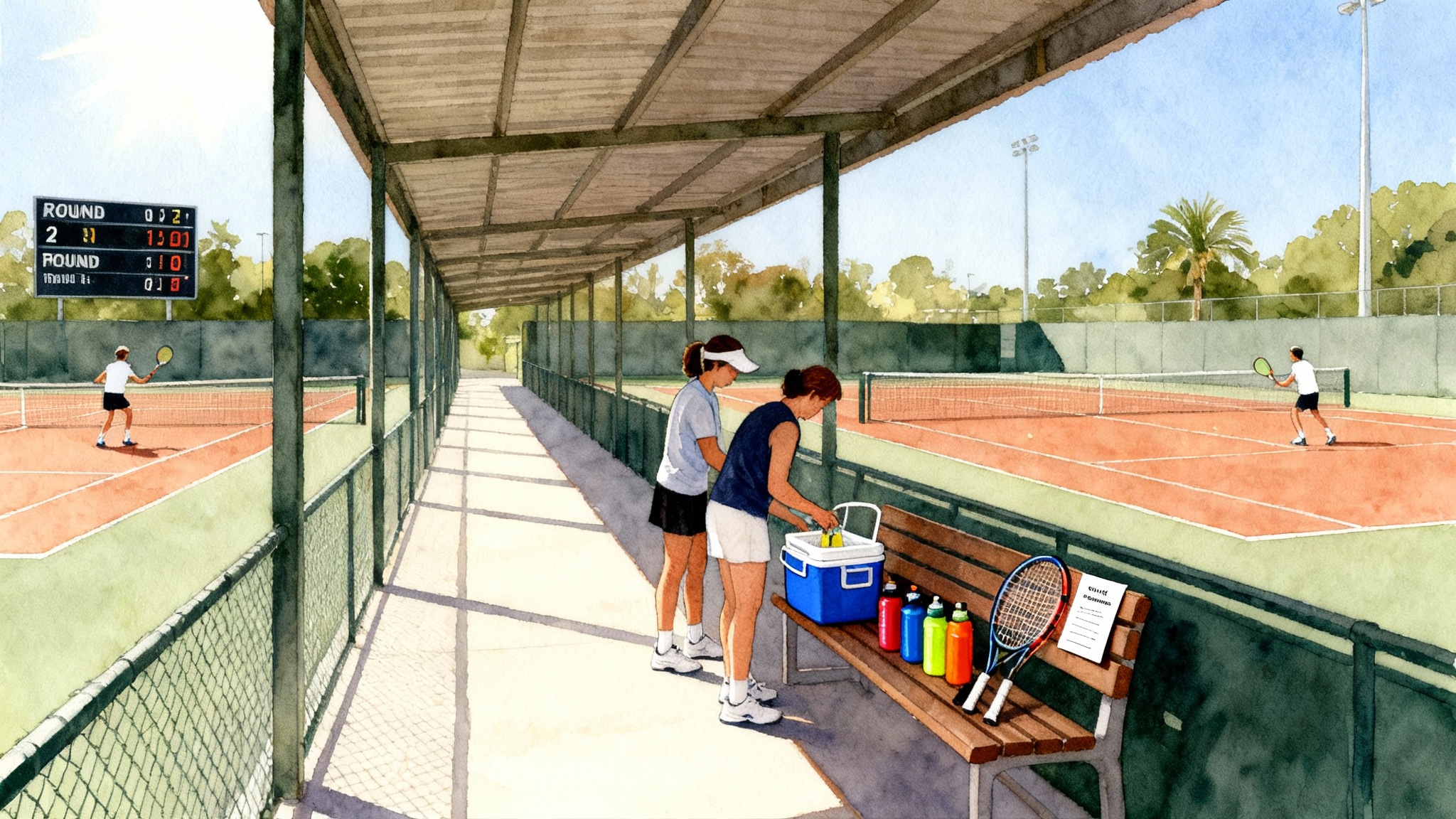
Most points start with serve and return, yet many players practice the return only as a warmup formality. That is a missed edge. If you can read the server faster, land a precise split step, move through a clean lane, and send a compact swing to a high-value target, you will flip holds into breaks. This guide turns that sequence into a four-week microcycle that any junior, parent, or adult league partner can run with simple tools at home, under a covered court, or on a public hard court.
Here is the backbone you will build:
- Read: decode server cues before the ball leaves the strings.
- React: split step into the ball on time and in balance.
- Move: use footwork lanes that match ball height and speed.
- Swing: keep a compact shape that survives real pace.
- Aim: send the ball to maps that stress the server’s first two steps.
The result is not highlight-reel winners. It is steady, repeatable pressure that earns short balls and mistakes, then the occasional strike when the toss or location gives you a gift.
The four-week microcycle at a glance
Each week targets one pillar while touching the others. Sessions are 60 to 75 minutes. If you play twice a week, run Session A then Session B. If you play three times, add an optional short Session C for at-home or covered-court work.
- Week 1: Server-cue recognition
- Week 2: Split-step timing
- Week 3: Footwork lanes and compact swing shapes
- Week 4: Target maps and patterning
Keep a simple log: date, drill, makes out of attempts, and one cue that worked. The goal is not volume alone. The goal is to learn which read, timing, and lane give you reliable depth against different servers.
Week 1: Server-cue recognition
You cannot react early if you do not read early. In return practice, most players watch only the ball toss. Upgrade your scan.
Primary cues to read:
- Toss path: out to the side often signals slice. Over the head and slightly behind often signals kick. Straight ahead with low shoulder tilt often suggests flat.
- Shoulder line: a closed shoulder line at trophy position often aims wide. An open line often points body or T.
- Racket head speed: a late acceleration often pairs with kick. A quick, direct acceleration often pairs with flat.
- Contact height: higher contact tends to produce more topspin or kick. Lower contact tends to produce more slice or flat.
Drills
- Toss Path Bingo
- Setup: server announces three categories before the set: slice, flat, kick. Returner stands in ready position. Parent or partner stands behind the returner holding three colored cards for the categories.
- Action: server serves to all directions without saying type. Returner calls the type out loud by the apex of the toss. Parent flashes the color that matches the guess to mark decision time. Returner then plays the ball.
- Sets and scoring: 5 balls per category, 3 sets. Earn 1 point for a correct early call even if you miss the return. Bonus 1 point for a made return after a correct call.
- Cue: eyes up early, head still. Call by the peak of the toss, not after the hit.
- Shoulder Line Tell
- Setup: place a short line of tape on the server’s collarbones. If you cannot use tape, imagine the line.
- Action: returner calls “wide,” “body,” or “T” at trophy position based on the shoulder line. Then play the point.
- Sets: 15 balls each side. Track accuracy.
- Cue: do not ball-watch too soon. Finish the read, then find the ball.
- Lefty Lens
- Why: many juniors and adult league players struggle with left-handed slice out wide on the ad side and kick up the middle on the deuce side.
- Setup: left-handed server hits only slice or kick for one set per side.
- Action: returner adjusts starting position two shoe lengths toward the expected break, then runs the call-and-hit sequence from the first two drills.
- Cue: for lefty slice, think earlier contact in front and no extra backswing. For lefty kick, give ground a half step and shape up through the ball.
At-home or covered-court option
- Mirror Read: stand 8 feet from a partner with no ball. Partner mimics serve motions. You call type at the toss peak. Do 3 sets of 20 reps. This builds pattern memory without court time.
Week 2: Split-step timing
Reading is wasted if your feet stall. The best returners land their split step as the ball leaves the strings. You want to be in the air a fraction before contact and land into your first move.
Positioning and timing rules
- Start balanced with feet under hips, strings up, eyes on server’s upper body.
- Begin your preload as the racket starts up from the drop to trophy.
- Pop the split just before contact. Land at contact into your first step.
Drills
- Contact Bell
- Setup: a partner stands to the side and claps at server contact. If no partner, the server calls “hit” at contact.
- Action: you must be landing as the clap or call happens. If you land early, hold the ground and avoid rocking. If late, start your preload earlier.
- Sets: 5 clusters of 6 balls. After each cluster, rate timing on a 1 to 3 scale.
- Stopwatch Window
- Setup: place a small cone 18 inches behind the baseline.
- Action: the returner starts a quiet two-count as the server begins the toss: one on the lift, two on the hit, and lands on two. Adjust the count rhythm to the server’s tempo.
- Sets: 4 clusters of 8 balls on each side. Note misses that come from late landings.
- Split-to-First-Step
- Setup: chalk a small square under each foot for the split. Chalk arrows forward, lateral, and back.
- Action: on contact, land into one of the three arrows called by the coach: forward for a short serve, lateral for a wide serve, back for a heavy kick. Then hit a controlled return.
- Sets: 3 rounds of 12 balls. Focus on silent feet and a quick first push.
At-home or covered-court option
- Rope Line Drill: tie a soft rope between two chairs at mid-shin height. Practice light split steps over the rope. Land softly and step in the called direction. Do 5 sets of 40 seconds with 20 seconds rest.
Week 3: Footwork lanes and compact swing shapes
You need a lane for your body and a shape for your swing. Lanes are the paths your feet take relative to the baseline. Shapes are the paths the racket takes relative to the ball.
Footwork lanes
- Forward lane: move forward through contact on short or body serves. Think heel to toe and catch the ball early.
- Neutral lane: land and take a small lateral step, then strike without gaining or losing ground. Use this for most first serves.
- Retreat lane: give a half step back to create space against heavy kick. Keep posture tall and avoid leaning.
Compact swing shapes
- Backhand: unit turn as you land, short takeback with the elbow close, strings slightly closed, through the ball with a firm wrist and small extension. Finish over shoulder only after contact is stabilized.
- Forehand: coil from the ribs, elbow in front of the hip, half loop no bigger than your head. Contact in front, finish with a short wrap that keeps the face stable.
Drills
- Lane Lines
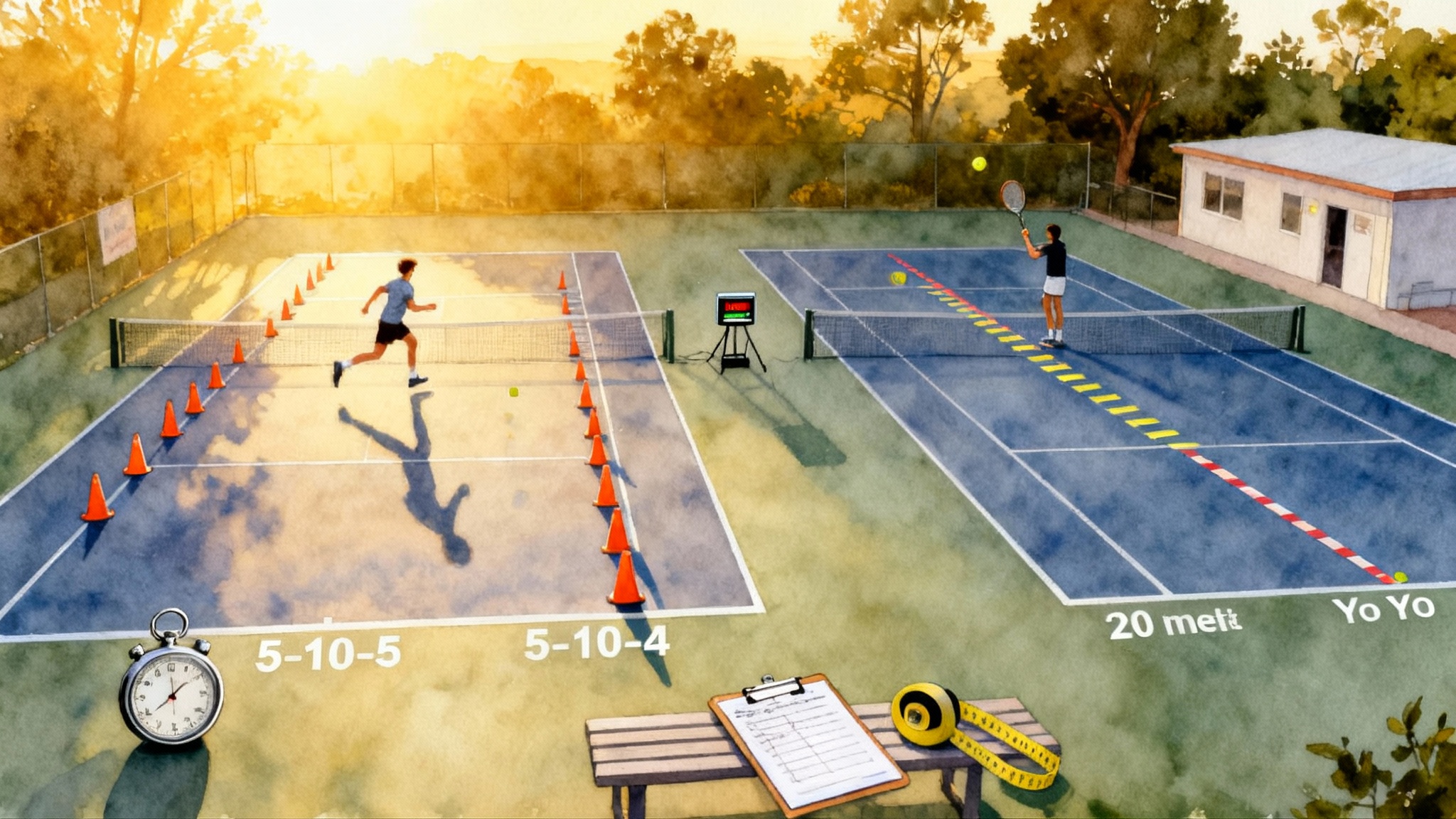
- Setup: lay three strips of tape parallel to the baseline: one 18 inches inside, one on the line, one 18 inches behind.
- Action: coach calls forward, neutral, or retreat as the toss goes up. You must land your split inside the called lane and hit a controlled return.
- Sets: 5 clusters of 6 balls per side. Track which lane produced depth most often.
- Compact Only
- Setup: place a half foam noodle behind your backswing path. If your swing gets long, you will bump it.
- Action: hit returns without touching the noodle. Focus on early shoulder turn and a short, strong move through the ball.
- Sets: 30 balls forehand, 30 balls backhand. If you touch the noodle, reset and slow down the unit turn.
- Two-Ball Consecutive
- Setup: coach or partner feeds a serve, then a neutral ball to the middle.
- Action: you must return compact and then immediately swing full on the second ball. This teaches your brain that the return is a setup, not a finish.
- Sets: 10 sequences per side. Score as a pair. Aim for 7 out of 10 solid pairs.
At-home or covered-court option
- Wall Contact Windows: tape a rectangle on a wall two feet wide by one foot tall. From 15 feet away, hit gentle returns into the window with a soft ball. Focus on lane and compact shape rather than power. Do 5 sets of 30 hits.
Week 4: Target maps and patterning
Your target map forces the server to move in the first two steps. That movement is the hidden pressure that earns breaks. For broader rally structure that pairs with your first strike, study the concepts in Singles Pattern Play 101: high-percentage rally maps.
High-value targets for singles
- Crosscourt deep to the backhand side from both wings. This is the highest margin and pushes the server away from their plus one forehand.
- Body jam to the server’s stronger wing on first serves. It steals time and reduces their full swing.
- Short angle to open the court when the server overcommits wide. Useful on second serves.
Doubles adjustments
- Return crosscourt and low to the server’s feet. Make the net player volley up.
- If the net player poaches often, drive down the line once every ten returns to reset their risk.
Drills
- Three-Tier Targets
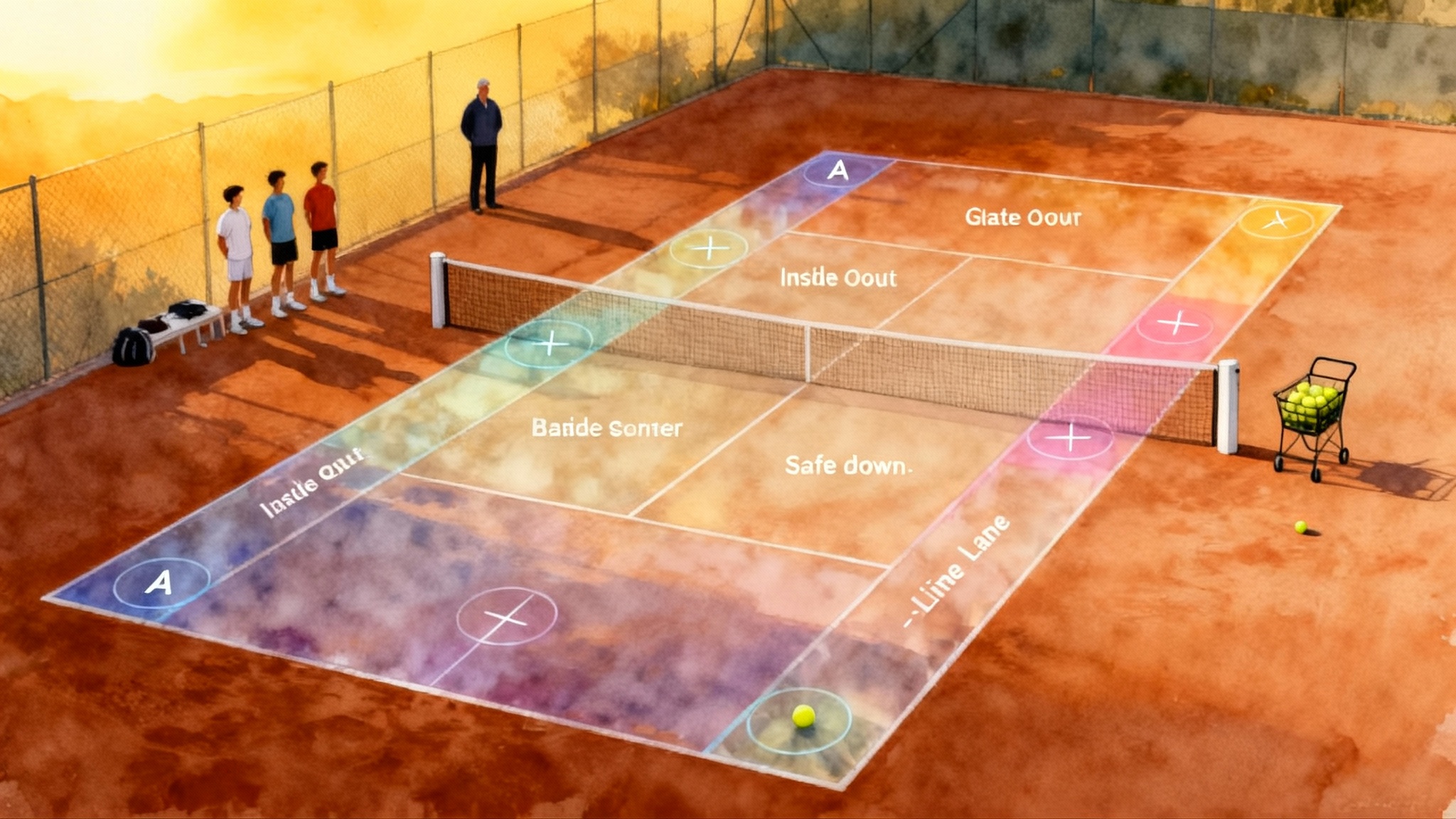
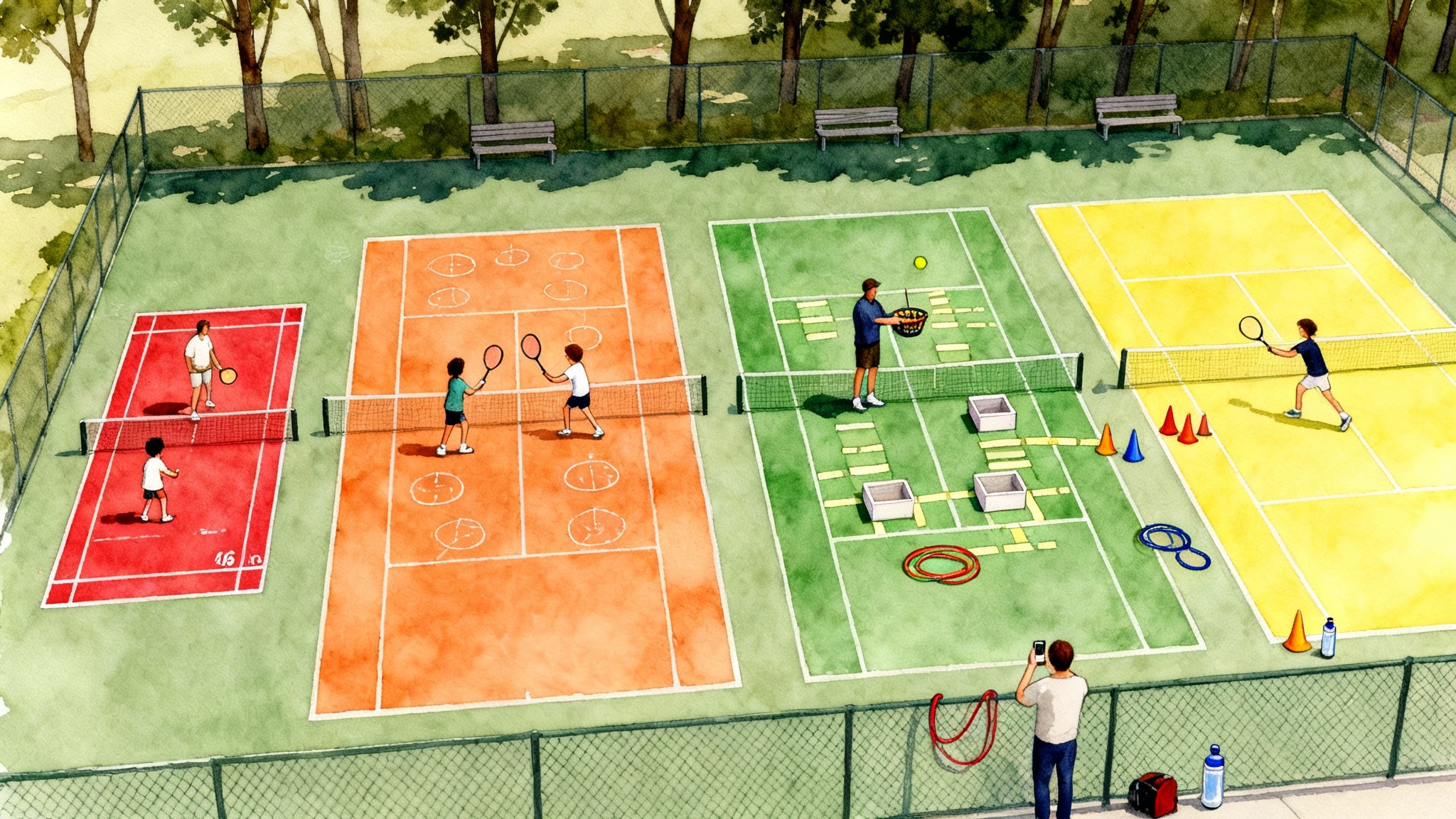
- Setup: chalk three rectangles on the opposite side. Tier 1 is deep crosscourt, Tier 2 is body, Tier 3 is short angle.
- Action: choose your target before the toss. Hit it. If you miss the chosen tier, the attempt does not count even if it lands in.
- Sets: 5 balls per tier per side. The discipline to pre-select is the skill.
- Plus One Denial
- Setup: server announces their plus one preference, for example inside out forehand.
- Action: you must send the return to the map that makes their preference difficult. Track how often they get their preferred next ball.
- Sets: 4 games first to 7 points. Switch roles.
- Pressure Ladder
- Setup: start with only second serves. When you reach 70 percent depth to your chosen map, mix in first serves.
- Action: hold your compact swing even when speed increases. If depth drops below 50 percent, go back to second serves.
At-home or covered-court option
- Chalk and Aim: chalk small squares on the court or driveway and aim soft foam balls into those squares from a shortened distance. Work both wings. Do 6 sets of 12.
Clay versus hard court adjustments
Clay gives you more grip and higher bounce. Hard courts give you skids and faster pace.
On clay
- Start one step deeper, especially against kick. Use the retreat lane more often.
- Add more height to clears. A heavy net clearance still lands deep.
- Slide recoveries carefully on returns wide. Slide on the last step after contact, not before.
On hard courts
-
Start closer and commit to the forward lane on short or body serves.
-
Keep net clearance moderate. Drive through the court to take time.
-
Be stingy with big backswings. Pace arrives sooner, so compact wins.
Lefty-specific reads and responses
Left-handed servers change geometry. Expect ad-side slice that drags you off court and deuce-side kick that climbs into your shoulder.
- Starting position: on the ad side, shade two shoe lengths toward the alley. On deuce, shade toward the middle.
- Contact choice: for ad-side slice, take the ball earlier and flatter. For deuce-side kick, give a half step ground and shape up to the window.
- Target bias: ad side, drive to deep middle or short angle behind the server. Deuce side, drive crosscourt deep to keep the ball away from their plus one forehand.
Roles for juniors, parents, and adult partners
You can run this program without a full coaching staff.
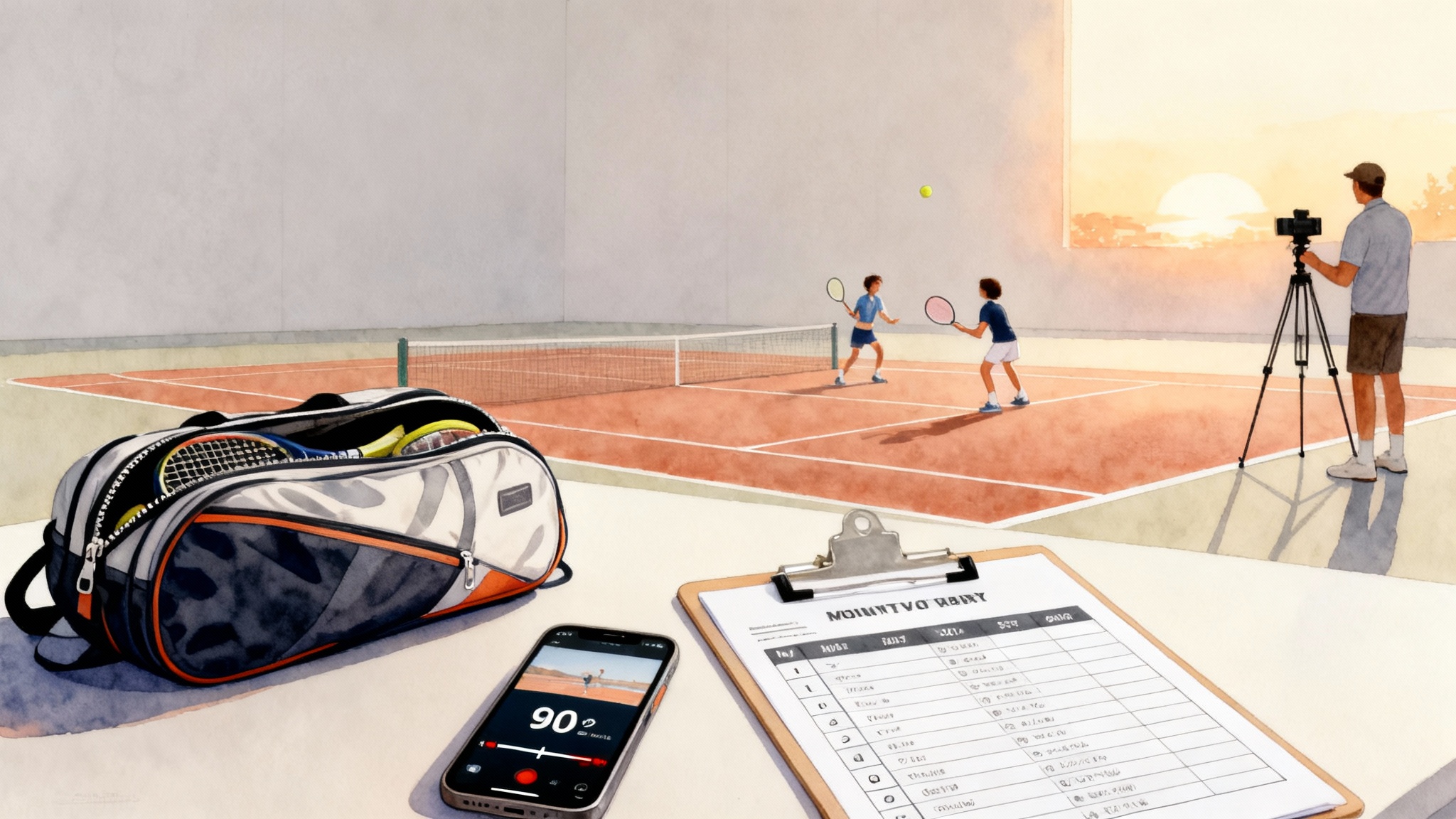
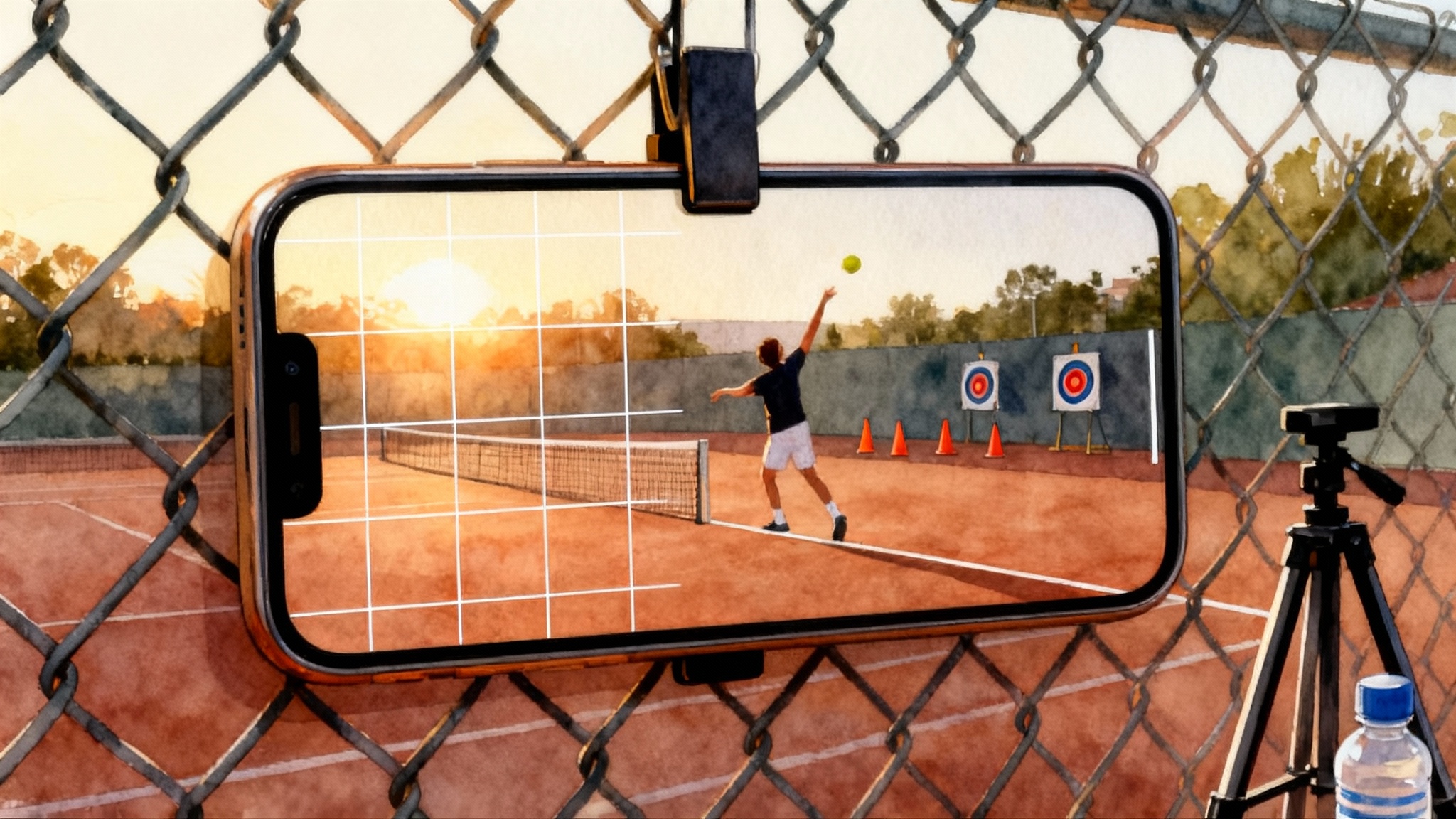
- Parent as watcher: stand behind the returner and call the read early. Hold a phone for slow-motion video at 120 frames per second if available. Film 6-ball clusters and tag only the best and the worst rep. For setup and angles, use our DIY tennis video analysis guide.
- Junior as server: build serve rhythm while feeding live returns. Announce serve type out loud after impact to confirm the returner’s call.
- Adult partner as scorer: track target hits and timing ratings between clusters. Keep recovery times strict.
Communication script
- After each cluster: one read that worked, one timing note, one target result. Then move on. No long lectures.
At-home and covered-court setups
Life gets busy. The return can still improve.
- Driveway lane grid: chalk three lanes parallel to an imaginary baseline. Work split-to-first-step and compact shadow swings. Ten minutes is enough.
- Garage wall window: tape a rectangle on a safe wall. Hit soft foam balls to contact windows and short finishes.
- Covered-court mini return: from inside the service line, have a partner hand toss from the baseline to mimic serve trajectories. Focus on lane and compact shape. Increase distance as control grows.
Equipment checklist
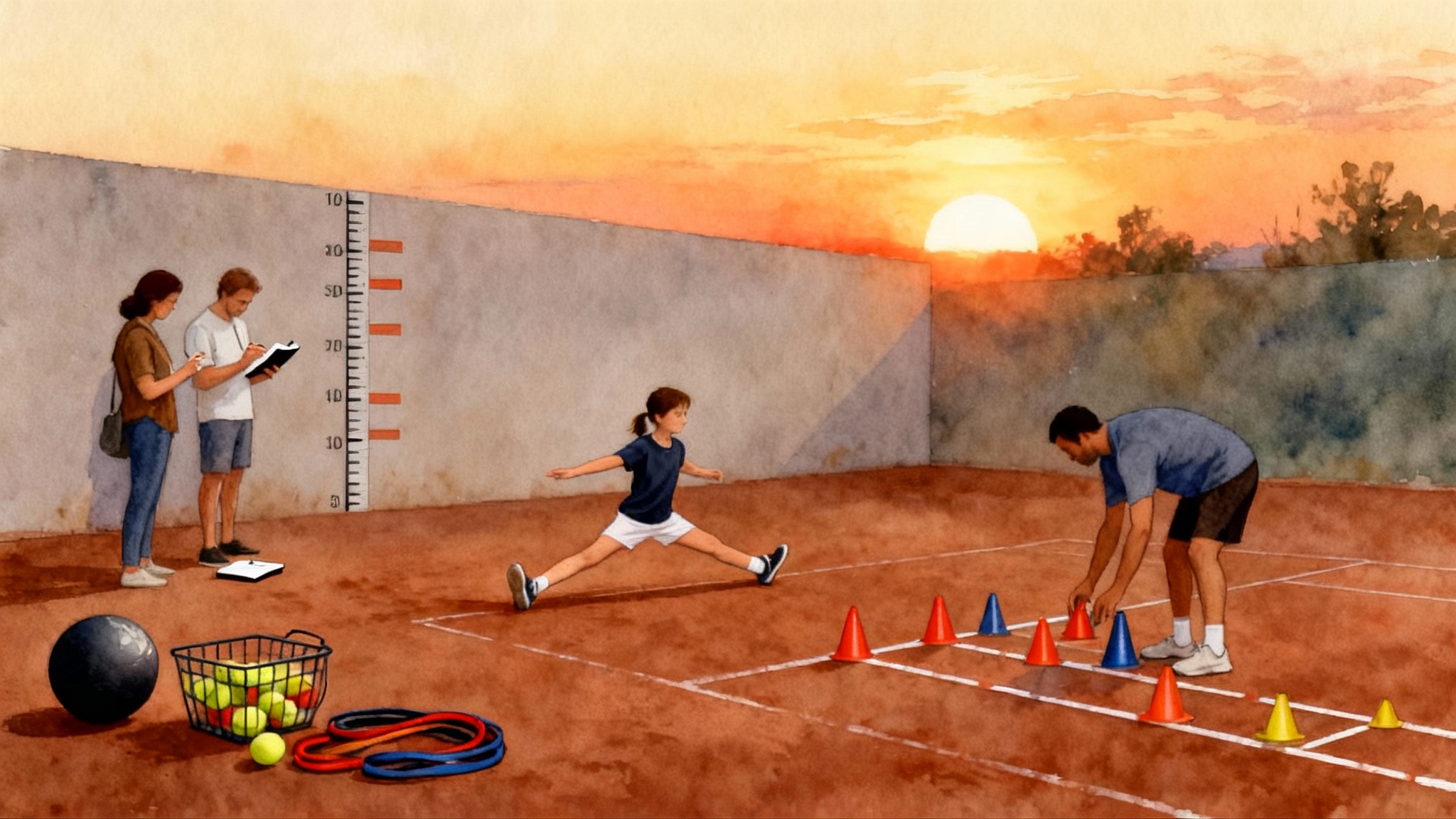
- Two cones, one roll of chalk or tape, a short rope, a foam noodle, and a handful of soft balls. Optional: tripod and phone for slow motion.
Sample session plans inspired by Legend Tennis Academy in Spicewood, Texas
These sample blocks mirror what strong junior groups and adult league clinics in central Texas run to turn the return into a weapon. Learn more about the training vibe at Legend Tennis Academy in Spicewood.
Junior 60-minute session
- 0 to 8 minutes: dynamic warmup. Skips, shuffles, and four light split steps every 10 seconds.
- 8 to 15 minutes: Toss Path Bingo. Two sets per side, coach scoring early calls.
- 15 to 25 minutes: Contact Bell. Three clusters of 6 balls per side. Land on the clap.
- 25 to 35 minutes: Lane Lines. Forward, neutral, retreat on coach call. Record depth percentage.
- 35 to 45 minutes: Compact Only with noodle. Thirty forehands and thirty backhands. Reset if the noodle is bumped.
- 45 to 55 minutes: Three-Tier Targets. Pre-select your map. Five balls per tier.
- 55 to 60 minutes: Two-Ball Consecutive. Return then neutral ball. Ten sequences. Score pairs.
Adult league 75-minute session
- 0 to 10 minutes: mobility and rhythm. Counted split steps to a metronome. Land softly.
- 10 to 20 minutes: Shoulder Line Tell with live serves. Fifteen per side. Call location at trophy.
- 20 to 35 minutes: Stopwatch Window. Four clusters of 8. Rate timing and adjust preload.
- 35 to 50 minutes: Doubles return maps. Crosscourt low to feet, then surprise down the line once per ten.
- 50 to 65 minutes: Pressure Ladder. Second serves to first serves once 70 percent depth is achieved.
- 65 to 75 minutes: Play in. First to 11 points, serve to three locations only. Returner must pre-call a map.
Troubleshooting matrix
Problem: late on the return
- Cause: split step landing after contact.
- Fix: start preload earlier, shorten the count, remove extra bounce in the stance.
Problem: floating returns that sit up
- Cause: open racket face or swing too long.
- Fix: close the strings slightly at contact and keep the finish short. Use Compact Only drill.
Problem: pulled wide off the court on slice
- Cause: starting too central or no forward lane step.
- Fix: shade wider and step through the ball, then recover with a crossover.
Problem: shanked kick serves
- Cause: contact too high or too far back.
- Fix: give half a step ground and raise your hitting elbow. Aim through the top half of the ball.
Problem: doubles net player poaching everything
- Cause: predictable crosscourt aim without deterrent.
- Fix: program one down-the-line drive every ten returns to freeze the net player.
How to measure progress in four weeks
Use this simple scorecard after each session.
- Read accuracy: correct early call on 30-ball sample. Target 80 percent by Week 4.
- Timing rating: average of 2.5 out of 3 by Week 4.
- Lane depth: percentage of returns landing past the service line. Target 65 percent on first serves and 80 percent on second serves.
- Target hits: Tier chosen versus Tier achieved. Target 70 percent accuracy.
If one number stalls, dial back speed and rebuild with second serves for two clusters. Then mix speed back in.
Putting it all together on match day
Routine for the returner
- Before warmup: review your best read cue and your first target map on each side.
- In warmup: practice landing the split on contact with a simple count. Hit three compact returns crosscourt on each wing. For full match-day routines, see the tournament warm-up and recovery playbook.
- First return game: choose conservative maps until you win or earn a short ball. Then add one surprise changeup.
Scouting checklist for your opponent’s serve
- Where does the toss live. If it stays left or right, bias your starting position.
- Does the shoulder line hint wide or T most often.
- What is their plus one shot. Deny it with your first return targets.
Conclusion: make the return your team’s quiet advantage
The return does not need to be flashy to decide matches. It needs to be readable, on time, compact, and aimed with intent. Over four weeks you built each brick, then stacked them into a routine you can repeat under pressure. Juniors gain a reliable way to neutralize bigger servers. Adult league players gain a simple plan that holds up on Tuesday nights and tournament Sundays alike. Keep the journal, keep the drills short and honest, and keep the maps simple. Read, react, and attack, and the scoreboard will start to tilt your way.