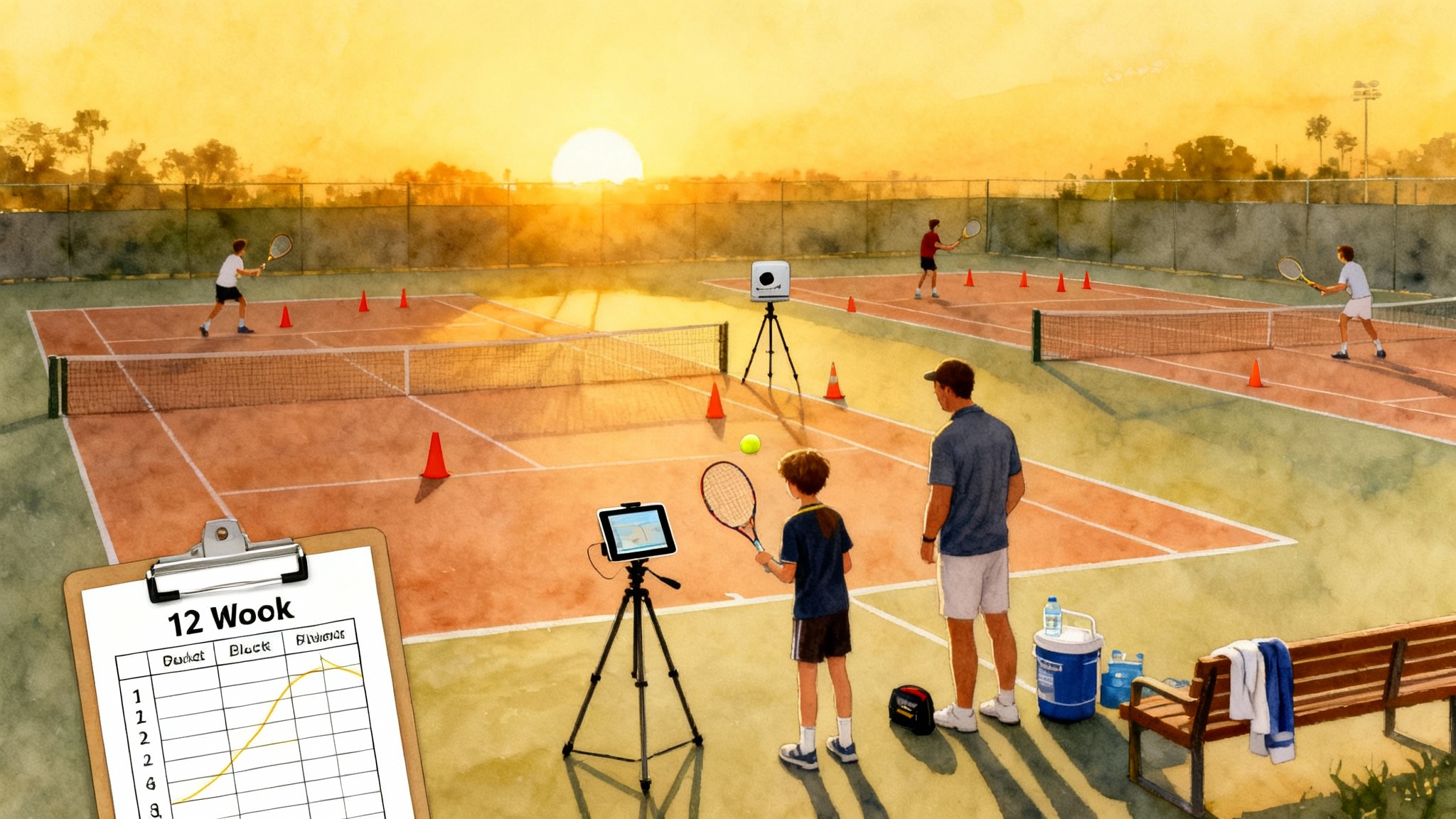
Preseason Tennis Combine 2026: Baseline Tests and 8-Week Plan
 Tommy
Tommy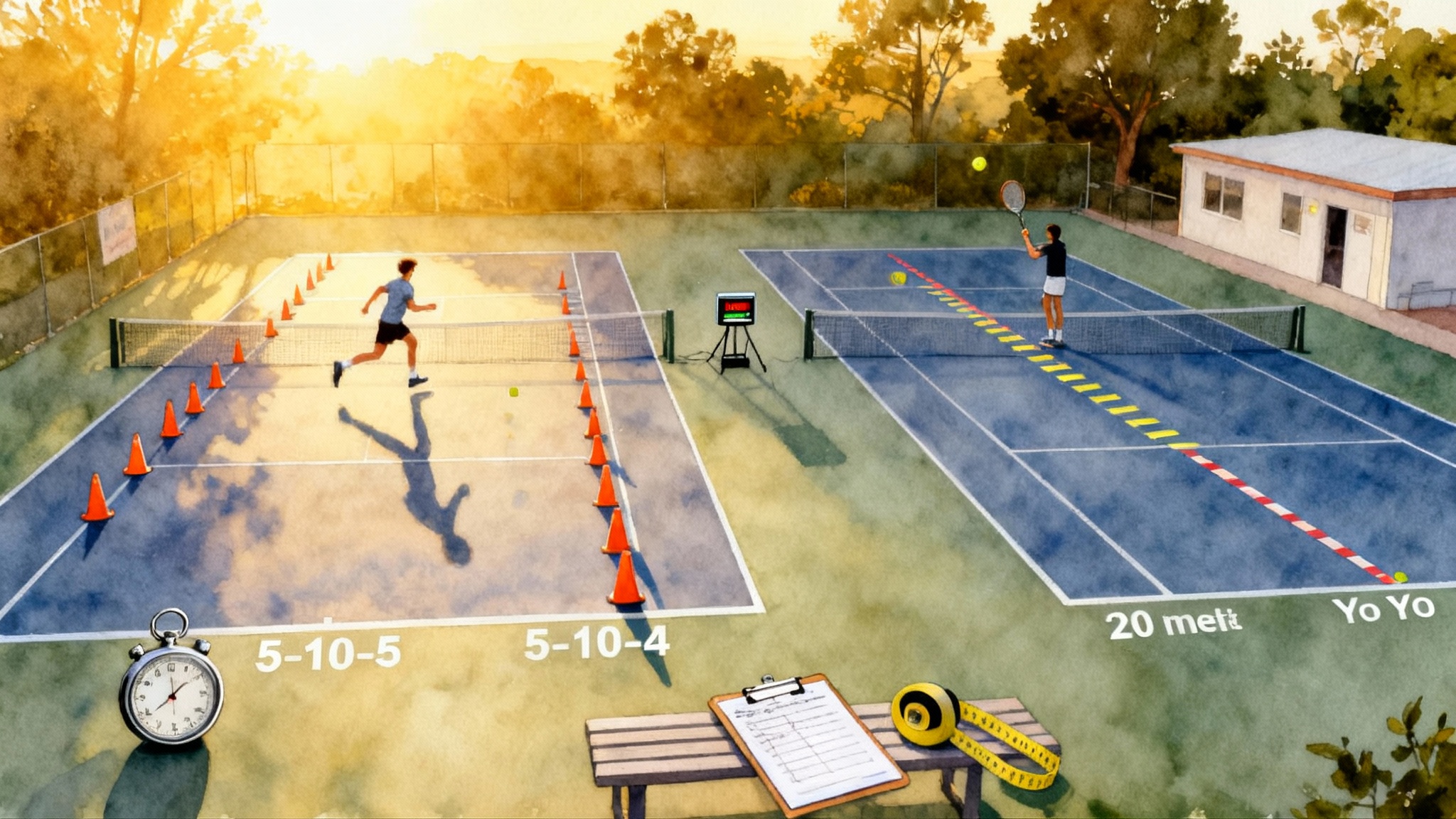
Why a preseason tennis combine works
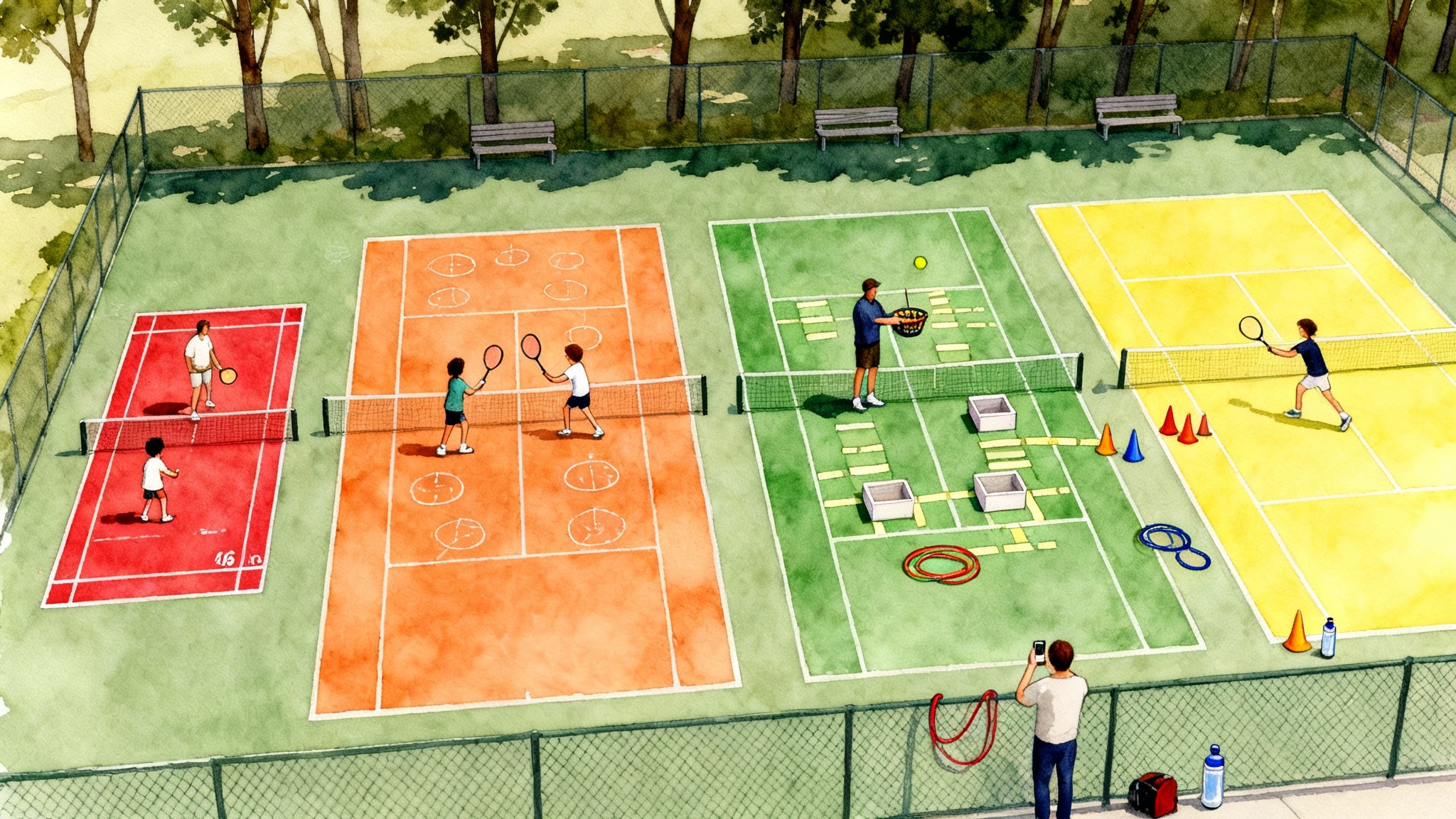
The calendar says 2026 is almost here, which means a clean slate for match fitness. A short, structured combine turns good intentions into data you can act on. You collect a few simple scores that map to how tennis is actually played, then you build an eight week plan that improves the weaknesses those scores reveal while protecting your strengths. The result is less guessing, less junk volume, and a repeatable process you can run every year in one afternoon.
This guide is written for juniors, parents, and adult competitors. You will get five baseline tests, age and level reference bands, a printed scorecard you can fill in, safe progressions, and an eight week plan that blends on court intervals with strength and conditioning. There is also a sample microcycle modeled on the practical, no fluff preseason build used at Legend Tennis Academy.
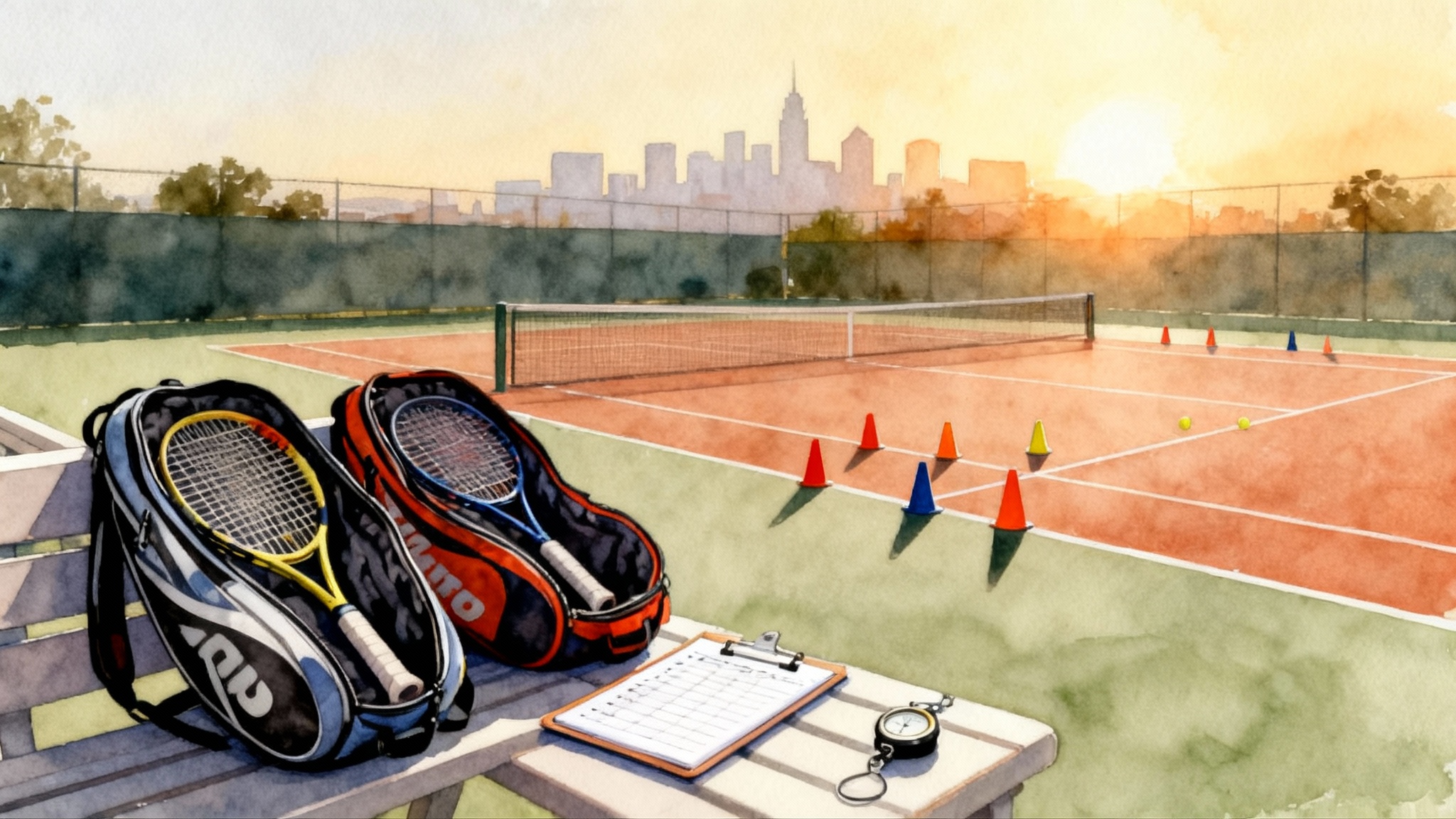
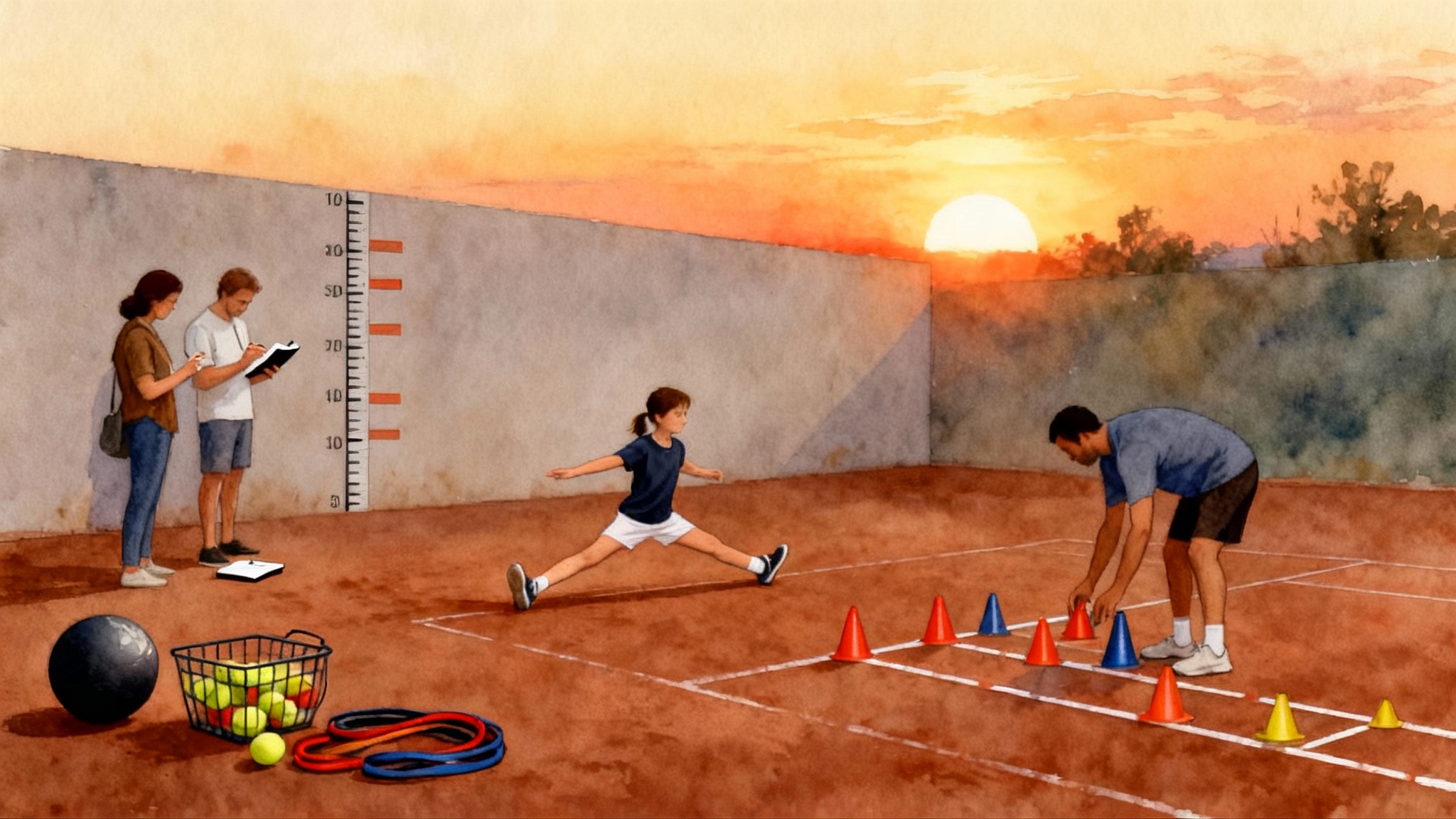
What you will need on test day
- Flat court with clear lines and at least 25 meters of run space
- Tape measure, masking tape, and four cones
- Stopwatch or timing app, and a phone with high frame rate video for jump timing
- Chalk or a washable marker for broad jump marks
- A radar pocket unit is ideal for serve speed, but a consistent baseline from the same app is fine
- Your usual racquet and match shoes
- Two to three helpers if possible, one to time and one to record
Block 90 minutes. Warm up fully. Test in this order to limit fatigue drift: jump tests, agility, serve, then the Yo Yo test last.
The five baseline tests to run
1) Yo Yo Intermittent Recovery Level 1
What it captures: repeatable tennis rally fitness and recovery between points.
Setup: Two parallel lines 20 meters apart with a 5 meter recovery zone beyond the start line. Use the standard Yo Yo Intermittent Recovery Level 1 audio track. You run 20 meters out and 20 meters back on the beeps, then walk to the recovery zone during the 10 second rest. Pace increases step by step until you cannot hit the line on time twice in a row.
Score: total distance in meters. Stop at the second miss. Record distance and perceived exertion on a zero to ten scale. Run it once.
Tips for accuracy: run this at the end of the combine, use identical shoes and surface each time, and stop if you feel dizzy or light headed.
2) 5-10-5 pro agility shuttle
What it captures: braking, direction change, and the ability to re accelerate, which maps to how you defend and counter from corners.
Setup: Tape three lines five yards apart. Start straddling the middle line with feet and hands stationary. On go, turn and sprint five yards to one side, touch the line with the near hand, sprint ten yards to the far line, touch, then finish through the middle line. Time to one decimal place if using a phone timer and to hundredths if you have gates or a beam. Take the best of two trials each direction after one practice run.
Score: best time in seconds. Record which direction was faster.
Safety notes: keep a neutral spine when you touch, do not round to the floor, and wear shoes with sidewall support.
3) Standing broad jump
What it captures: horizontal power from the hips, a simple proxy for first step pop.
Setup: Place a start line with tape. Stand with feet hip width on the line, swing arms, and jump forward as far as possible, landing on both feet under control. Mark the back heel closest to the start line. Measure from the start line to that mark. Three attempts, record the best.
Score: best distance in centimeters and meters.
Tip: this is a power test, not a dive. Land softly, stick the landing.
4) Countermovement jump RSI modified
Reactive strength index modified, often written as RSI mod, equals jump height in meters divided by time to takeoff in seconds during a countermovement jump with no arm swing. Higher scores mean you create force quickly and get off the ground fast.
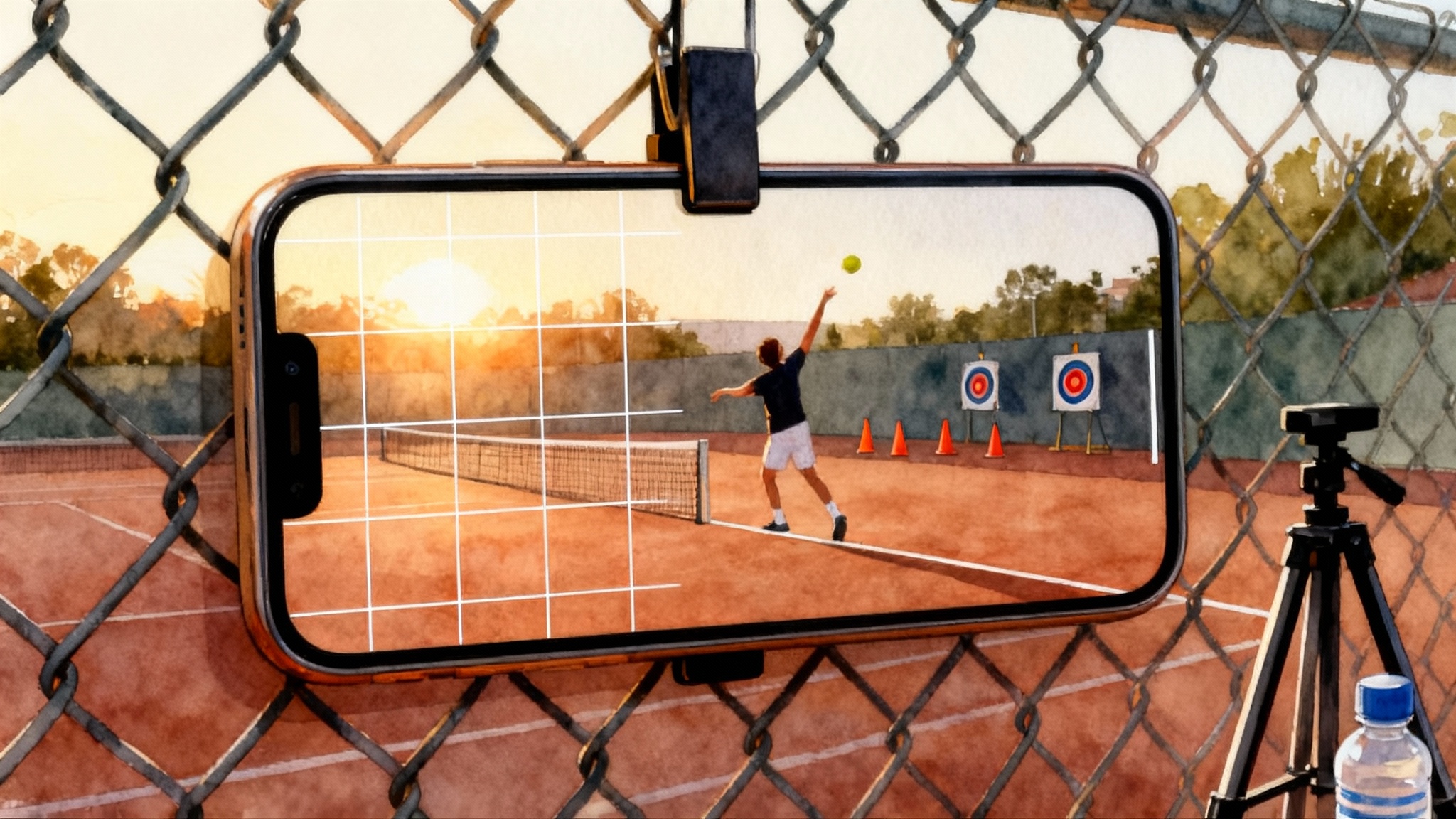
Setup without a force plate: film at high frame rate from the side. Start tall with hands on hips. Dip and jump. Use an app to identify frame of the first movement and frame of takeoff, then compute time to takeoff. Estimate jump height from flight time, or use a jump mat. Perform three trials and average them. If you are using your phone, follow the steps in our DIY tennis video analysis guide.
Score: RSI mod number. For example, if jump height is 0.35 meters and time to takeoff is 0.55 seconds, RSI mod equals 0.64.
5) Serve speed and spin outcome
What it captures: power and ball quality on the most important shot in tennis. Pure speed matters less than consistent speed at a target with spin that clears the net safely.
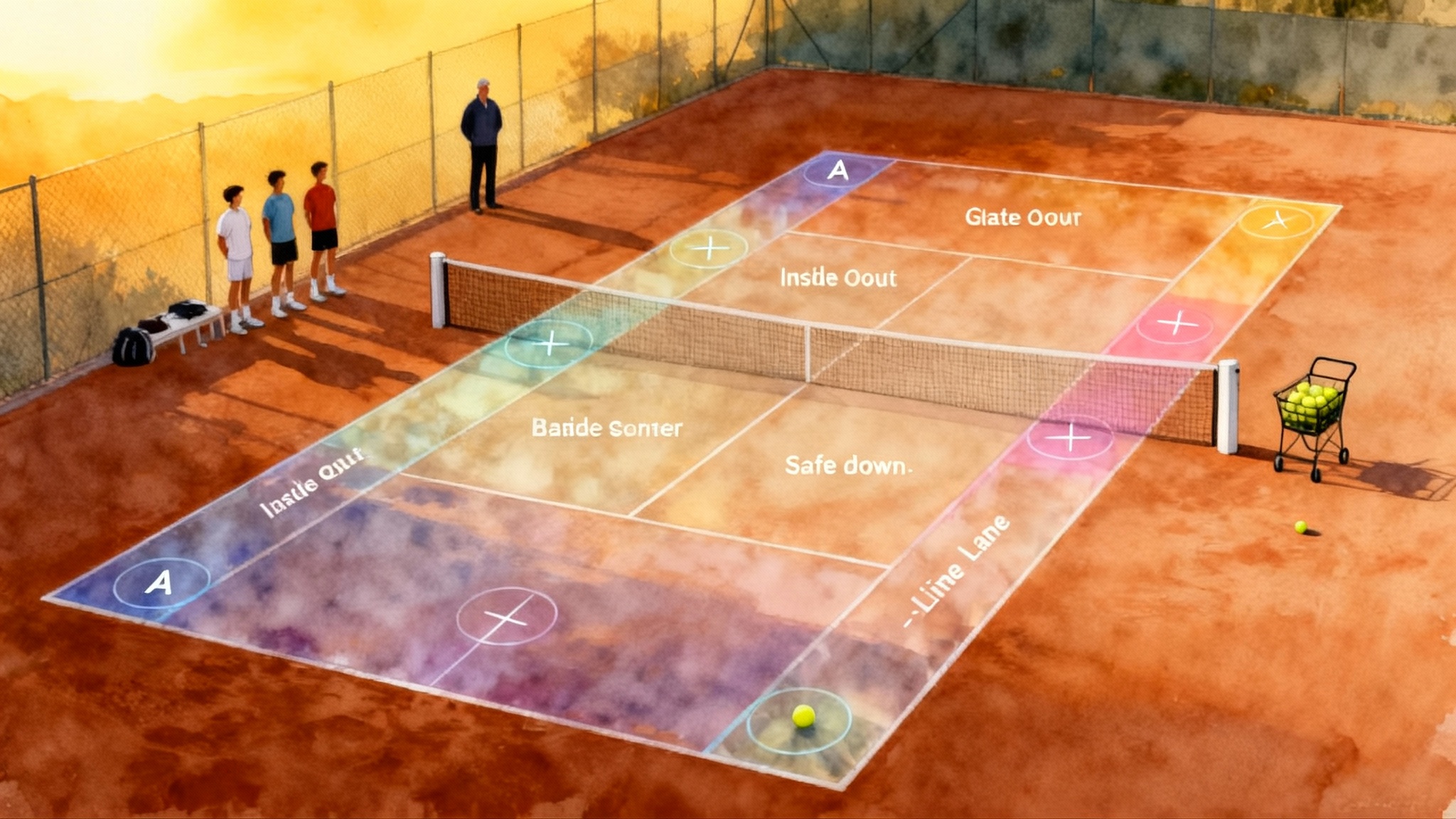
Setup: Mark the deuce box wide target and T target. Warm up to serving speed. Record ten first serves to the deuce T, then ten to the deuce wide, then repeat on the ad side. If you have a radar, take the median speed of the ten serves in each location. If you use a phone app, calibrate it once and keep the phone and camera angle identical every time you retest. If you have access to a device that estimates spin, record median spin too.
Score: median speed in miles per hour for each target, percentage in the box, and, if available, median spin in revolutions per minute. Accuracy matters. Record both.
How to read your results by age and level
These bands are practical, not perfect. Use them as a starting point and always compare against your own prior tests. If your numbers vary across categories, let the weakest category set your first training priority.
Yo Yo Intermittent Recovery Level 1 distance
- Under 14 years: under 800 meters needs work, 800 to 1200 developing, over 1200 strong
- 15 to 18 years: under 1000 meters needs work, 1000 to 1600 developing, over 1600 strong
- Adults club play: under 900 meters needs work, 900 to 1400 developing, over 1400 strong
- Adults competitive: under 1200 meters needs work, 1200 to 1800 developing, over 1800 strong
5-10-5 shuttle time
- Under 14 years: over 5.6 seconds needs work, 5.2 to 5.6 developing, under 5.2 strong
- 15 to 18 years: over 5.4 seconds needs work, 5.0 to 5.4 developing, under 5.0 strong
- Adults club play: over 5.5 seconds needs work, 5.1 to 5.5 developing, under 5.1 strong
- Adults competitive: over 5.2 seconds needs work, 4.8 to 5.2 developing, under 4.8 strong
Standing broad jump
- Under 14 years: under 1.6 meters needs work, 1.6 to 2.0 developing, over 2.0 strong
- 15 to 18 years: under 1.8 meters needs work, 1.8 to 2.2 developing, over 2.2 strong
- Adult women: under 1.7 meters needs work, 1.7 to 2.0 developing, over 2.0 strong
- Adult men: under 2.0 meters needs work, 2.0 to 2.3 developing, over 2.3 strong
Countermovement jump RSI mod
- Under 14 years: under 0.40 needs work, 0.40 to 0.55 developing, over 0.55 strong
- 15 to 18 years: under 0.45 needs work, 0.45 to 0.60 developing, over 0.60 strong
- Adults club play: under 0.45 needs work, 0.45 to 0.60 developing, over 0.60 strong
- Adults competitive: under 0.50 needs work, 0.50 to 0.65 developing, over 0.65 strong
Serve speed and accuracy
Targets below assume flat to flat plus slight topspin first serves that land in. Use the combination of speed and in box percentage as your guide.
- Under 14 years: boys 70 to 90 miles per hour developing, girls 60 to 80 developing, aim for at least 55 percent in
- 15 to 18 years: boys 85 to 105 developing, girls 75 to 95 developing, aim for at least 60 percent in
- Adult club play: men 80 to 100 developing, women 70 to 90 developing, aim for at least 60 percent in
- Adult competitive: men 100 to 120 developing, women 85 to 105 developing, aim for at least 65 percent in
If you track spin, a safe kick serve often sits between roughly 1800 and 3000 revolutions per minute for many players. If your spin is low and your in box percentage is low, place more time on serve mechanics early in the plan.
Turn scores into a clear priority
Use this quick map to choose what to emphasize first.
- Gas tank limited: Yo Yo in the needs work band while your agility and jump power are developing or strong. First priority is aerobic power and repeat sprint ability on court.
- Braking and cutting limited: 5-10-5 in needs work while Yo Yo and broad jump are developing or strong. First priority is deceleration mechanics, lateral strength, and short sprint exposure.
- Power limited: broad jump and RSI mod in needs work while Yo Yo and 5-10-5 are developing or strong. First priority is power and rate of force development.
- Serve output limited: serve speed or in box percentage lags. First priority is a technical block for serve with dedicated strength pairing.
You can have two priorities, but keep one main focus per four week block inside the eight week plan.
The 8-week speed and endurance plan
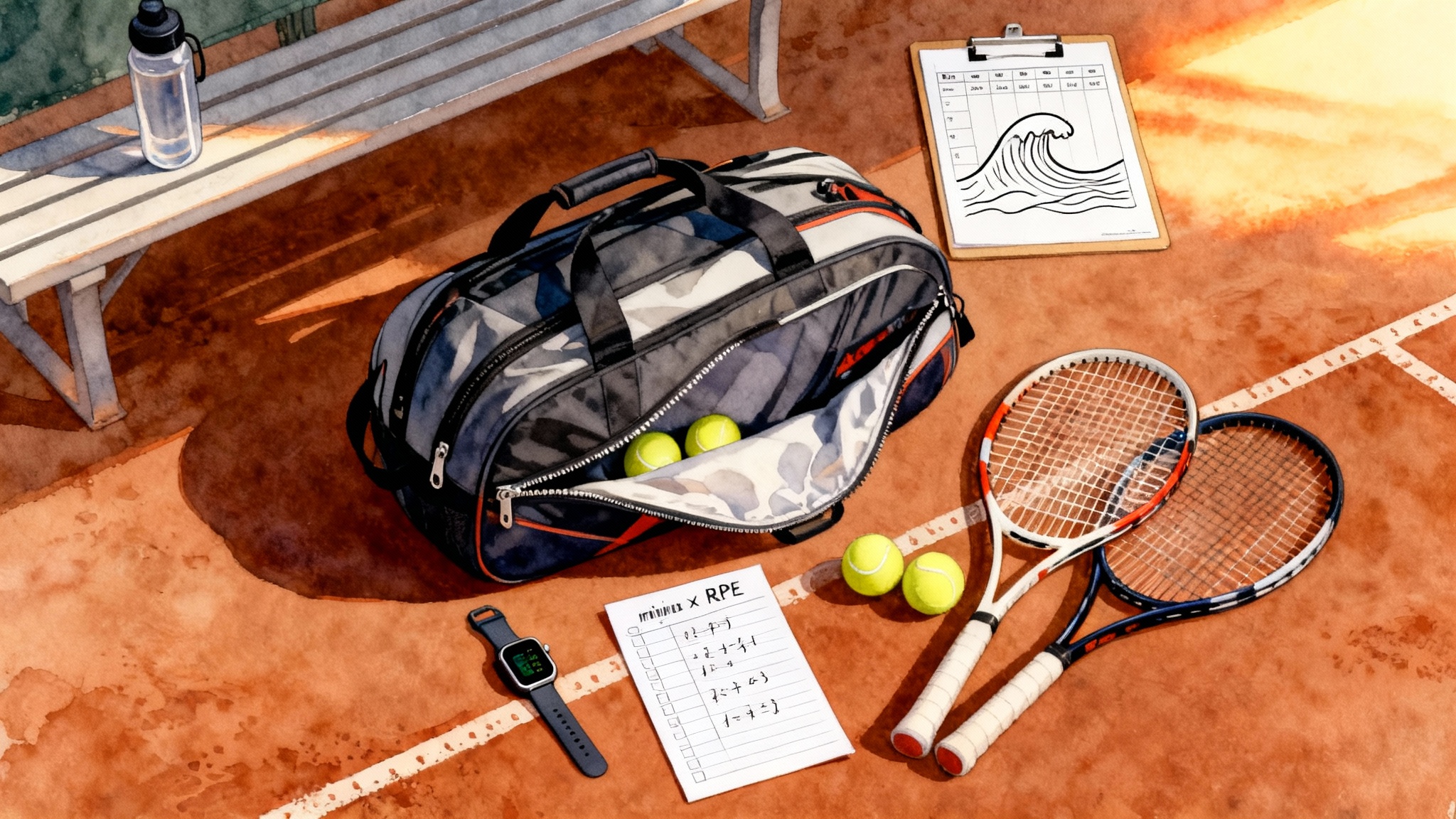
Structure the plan around two on court interval sessions and two strength and conditioning sessions per week, plus tennis hitting and a lighter day. Rate each session with perceived exertion from zero to ten to keep your weekly load in check. For a simple system, see wearables and RPE made simple.
-
Weeks 1 and 2, build the base: teach movement skills and add aerobic power without soreness spikes
- On court intervals: 8 to 12 sets of 20 seconds on, 40 seconds off, in a cross court pattern. RPE 6 to 7
- Acceleration and deceleration: 6 sets of 10 meter build outs, 6 sets of 5 meter plant and stick each leg, 3 sets of 5 split step to lateral shuffles per side
- Strength and conditioning: goblet squat, split squat, hip hinge, calf raise, plank series, plus band external rotation for shoulders. Two sets of 8 to 10
- Serve technique: 30 minutes of rhythm and ball toss practice, 30 first serves to the body target
-
Weeks 3 and 4, sharpen the change of direction
- On court intervals: 10 sets of 15 seconds on, 30 seconds off with pattern changes every set. RPE 7 to 8
- Short sprint work: 5 sets of 5 meter starts each stance, 5 sets of 10 meter sprints, 4 sets of 5-10-5 at 90 percent speed
- Strength and conditioning: add trap bar or kettlebell deadlift, step down control, lateral lunge. Three sets of 5 to 6 heavier, finish with low amplitude plyometrics such as line hops 3 by 15 seconds
- Serve power: 40 first serves to T and 40 to wide, track median speed and in box
-
Weeks 5 and 6, intensify and make it tennis specific
- On court intervals: 12 sets of point play starts, 6 seconds ball fed or served then 10 to 12 seconds rally at speed, 60 to 75 seconds rest. RPE 8
- Change of direction: 6 sets of 5-10-5 at goal pace with full rest, 6 sets of lateral bound sticks per side
- Strength and conditioning: contrast pairs such as split squat 4 by 4 heavier, paired with 4 hurdle hops. Add medicine ball rotational throws 3 by 6 per side
- Serve plus first ball: 6 rounds of 6 serves to a target, each serve followed by a fed forehand. Keep total serves under 60 for the session
-
Week 7, peak quality and drop volume
- On court intervals: 8 sets of high quality 10 second rallies with 60 to 75 seconds rest. RPE 8 to 9 but total work is lower
- Speed: 4 sets of 10 meter sprints, 4 sets of 5-10-5 at or faster than goal pace
- Strength and conditioning: two total body sessions at 70 percent of week 6 volume, keep speed on jumps high
- Serve: two sessions, 40 to 50 total serves each, maintain accuracy and rhythm
-
Week 8, taper and retest
- Early week: light hitting, mobility, and one primer session with 4 by 10 seconds fast rallies
- Mid week: full retest of all five combine elements
- Late week: easy tennis and play
Sample microcycle modeled on Legend Tennis Academy
This is a one week snapshot from the middle of the build, appropriate for week 5 or 6 if your readiness is good. Adjust volume down for younger or newer players.
-
Monday
- A. Movement prep 12 minutes: ankle rocks, hip airplanes, adductor groin series, pogo jumps 3 by 10
- B. On court intervals: 12 by point play starts at RPE 8, rest 60 to 75 seconds
- C. Serve plus first ball: 6 rounds of 6 serves, then one fed forehand to a target
-
Tuesday
- A. Strength and conditioning: trap bar deadlift 4 by 4, split squat 3 by 6 per side, lateral lunge 3 by 6 per side, calf raise 3 by 12, plank with reach 3 by 20 seconds, band external rotation 3 by 12
- B. Low amplitude plyometrics: line hops 3 by 20 seconds, lateral pogo 3 by 15 seconds per side
- C. Optional 20 minute easy bike or walk
-
Wednesday
- A. Technical hit 60 to 90 minutes, pattern work below RPE 6
- B. Flexibility 15 minutes
-
Thursday
- A. Movement prep 10 minutes
- B. Speed and agility: 5 by 10 meter sprints from split step, 6 by 5-10-5 with full rest, 6 by lateral bound stick per side
- C. Serve accuracy: 40 serves to a small cone target, log in box percentage
-
Friday
- A. Strength and conditioning contrast pairs: split squat 4 by 4 paired with hurdle hops 4 by 5, hip hinge 3 by 5 paired with medicine ball rotational throw 3 by 6 per side
- B. Shoulder care: Y T W raises 2 by 10, forearm eccentrics 2 by 12
-
Saturday
- Match play or practice set play, cap at RPE 7
-
Sunday
- Off or light mobility and a 20 minute walk
Safe progressions and guardrails
- Warm up before speed. Always. Five minutes of light movement, five minutes of dynamic mobility, five minutes of build ups with two to three short accelerations
- Progress one vector at a time. Add volume before you add intensity for the first two weeks
- Respect shin splints and Achilles whispers. If calves or shins bark, swap one running interval day for a bike or slide board day and add calf raises and tibialis raises
- Cap total serves. In training, most players do well with 80 to 120 total serves per session including warm ups. In match weeks, cut that in half
- Sleep and hydration matter. The simplest performance enhancers are an extra 45 minutes of sleep and a bottle of water at every session
Printable combine scorecards
Print this section, or copy it into a note and fill it in. Keep one card for week 1 and one for week 8.
PLAYER: ____________________  DATE: __________  AGE: ______  LEVEL:  Junior / Adult Club / Adult Competitive

1) YO YO IR1
Distance (m): ________  RPE 0-10: ___  Notes: ___________________________________

2) 5-10-5 PRO AGILITY
Best Left-to-Right (s): ________  Best Right-to-Left (s): ________  Notes: __________________________

3) STANDING BROAD JUMP
Best (m): ________  Attempts: 1) ____  2) ____  3) ____  Notes: _______________________________

4) COUNTERMOVEMENT JUMP RSI-MOD
Best RSI-mod: ________  Jump Height (m): ________  Time to Takeoff (s): ________

5) SERVE SPEED AND ACCURACY
DEUCE T: Median mph ________  In % ________
DEUCE WIDE: Median mph ________  In % ________
AD T: Median mph ________  In % ________
AD WIDE: Median mph ________  In % ________
Notes: _____________________________________________________________________________

PRIORITY FOCUS FOR THIS BLOCK:
[ ] Gas tank   [ ] Braking and cutting   [ ] Power   [ ] Serve output
Retest and apply the feedback
In week 8, repeat every test in the same order, same shoes, same surface, same time of day if possible. Look for two things. First, did your main priority improve and by how much. Second, did any other quality fall off. If your Yo Yo jumped but your 5-10-5 slowed, keep one light change of direction exposure while you push endurance next time. If your serve speed went up but accuracy fell, spend two weeks rebuilding rhythm with lower total volume.
Frequently asked adjustments
- No radar for serve speed. Track in box percentage by target and note perceived speed. You will still see progress if you are consistent
- Little space for the Yo Yo. Use a 15 meter setup and note that it is a different number. Retest on the same 15 meter layout
- Knee pain on deep squats. Swap split squat depth for a shallower range and add step downs from a small box. Seek a clinician if pain persists
- Team testing day. Run jumps first, 5-10-5 next, serve third with multiple stations, Yo Yo last. Assign one coach per station for accuracy
A final word
The beauty of a tennis combine is not the number itself, it is the feedback loop. Test, train, retest, adjust. Two cycles and you will see a clearer athlete emerge. Juniors gain confidence from objective wins. Parents can help by setting up the space and filming. Adult competitors can rein in volume and target the two or three things that win points. Use this plan to start your 2026 season with intention, and keep refining it each month. Smart effort beats blind effort every time.