Clay Season Reset 2026: 4-week plan for juniors and adults
Shift into the spring clay season with a precise 4-week plan. Build safe sliding, ankle and knee durability, and aerobic power. Add high-percentage rally patterns and smart match scheduling, plus when to add a short academy block.
 Tommy
Tommy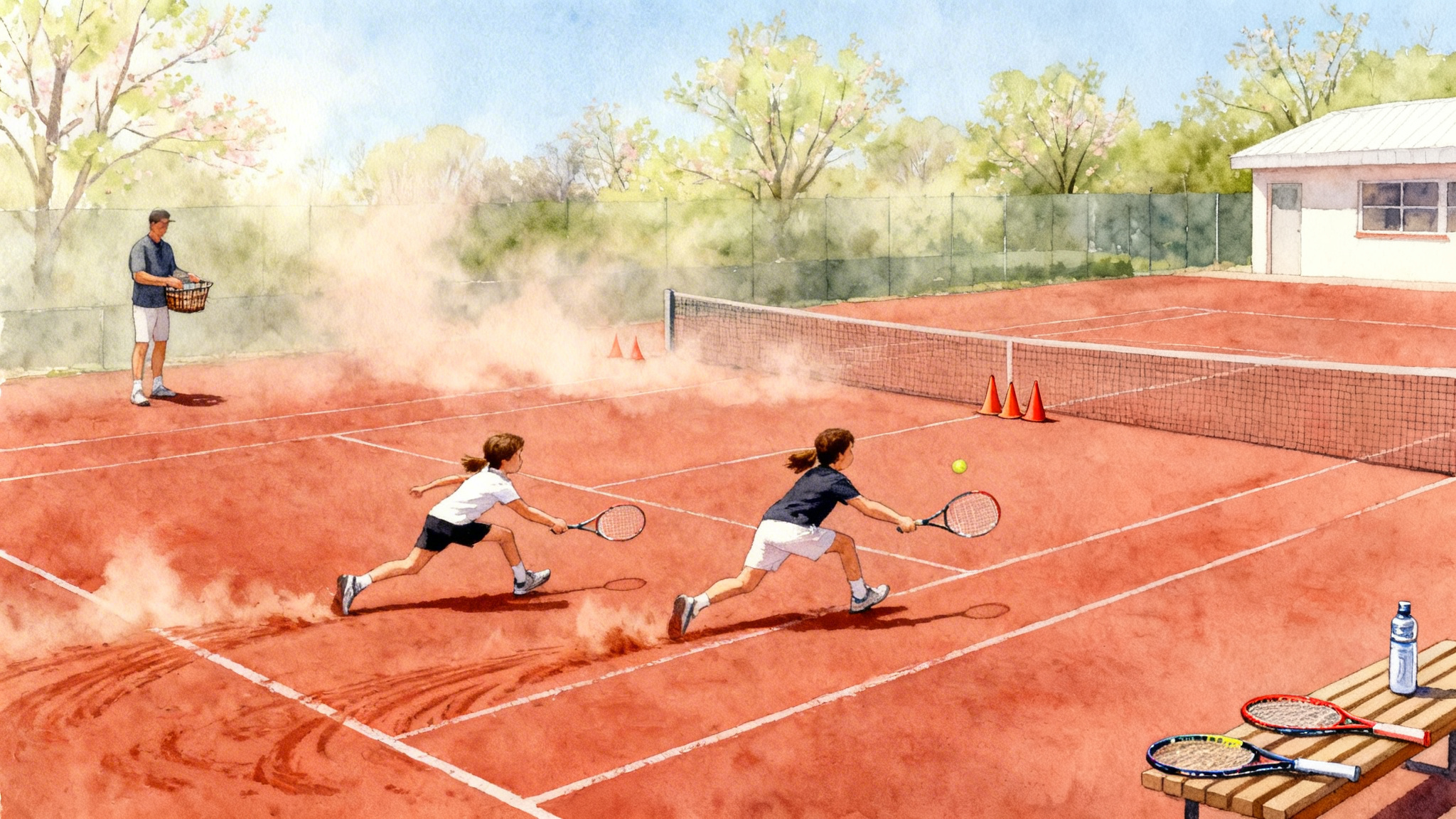
Why the 2026 clay season demands a reset
The ball bounces higher, points last longer, and footwork is more lateral on clay than on hard courts. That changes how you move, how you construct points, and how you prepare your body. If you jump straight from winter hard courts into heavy sliding and long rallies, you risk turned ankles, sore knees, and a string of tight three setters that drain your confidence.
This article gives you a simple and specific 4-week switch plan for spring 2026. It splits guidance by level for juniors and adults, lays out safe sliding progressions, gives ankle and knee prep you can do in 15 minutes a day, and maps aerobic power sessions to the way clay points actually feel. You will also get high percentage rally patterns that hold up under pressure, and a match-play schedule that ramps volume without frying your legs. Finally, you will see where a short stay at a specialist clay academy like Ljubicic Tennis Academy or Tenis Kozerki academy adds the most value.
The rules of clay you should train for
- You must create and protect depth. Height and margin win more than raw pace.
- First step out of the split and last step into contact matter most. The middle steps should glide, not fight the surface.
- Attack through patterns, not single shots. Draw short balls by changing height, spin, and direction in a planned way.
- Fitness is not just long slow distance. It is repeatable acceleration, deceleration, and lateral power for 12 to 20 shot exchanges.
How to use this 4-week plan
- Pick your level. The plan has three tracks: Foundation, Performance, and Tournament. Juniors and adults can slot into any track based on current match load and movement skill.
- Follow the week-by-week layout. Each week includes footwork and sliding, ankle and knee prep, aerobic power, rally patterns, and match-play scheduling.
- Keep two rest or restore days each week. Use light mobility and an easy hit, not total inactivity.
Levels at a glance:
- Foundation: newer to clay or returning from layoff. Goal is safe movement and reliable depth.
- Performance: club match players and junior competitors who want better patterns and fitness.
- Tournament: sectional to national level players building toward May and June events.
Safe sliding progression you will reuse every year
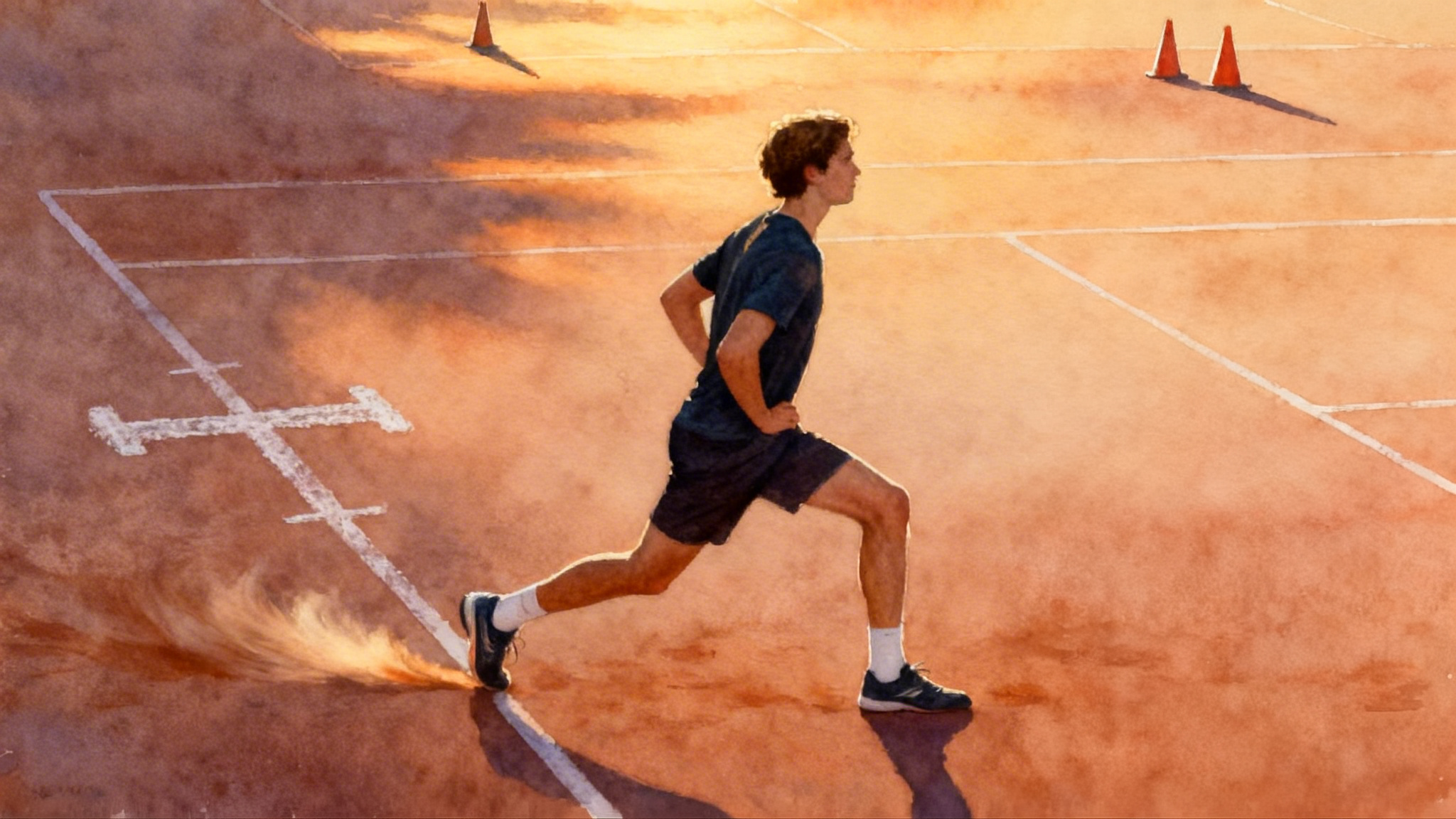
You will progress from stick steps, to controlled slide finishes, to full approach and recovery slides. If deceleration is a weakness, review our tennis deceleration training guide.
Drill A: Stick and stop
- Purpose: rehearse braking angles without a slide.
- Setup: two cones 3 meters apart on the baseline.
- Action: split, push to cone, decelerate over the last 2 steps, stop balanced, shadow swing, recover to split.
- Volume: 6 rounds of 20 seconds on, 40 seconds off.
Drill B: One-foot slide finish
- Purpose: learn a soft, late slide into contact.
- Setup: coach or partner feeds medium pace crosscourt.
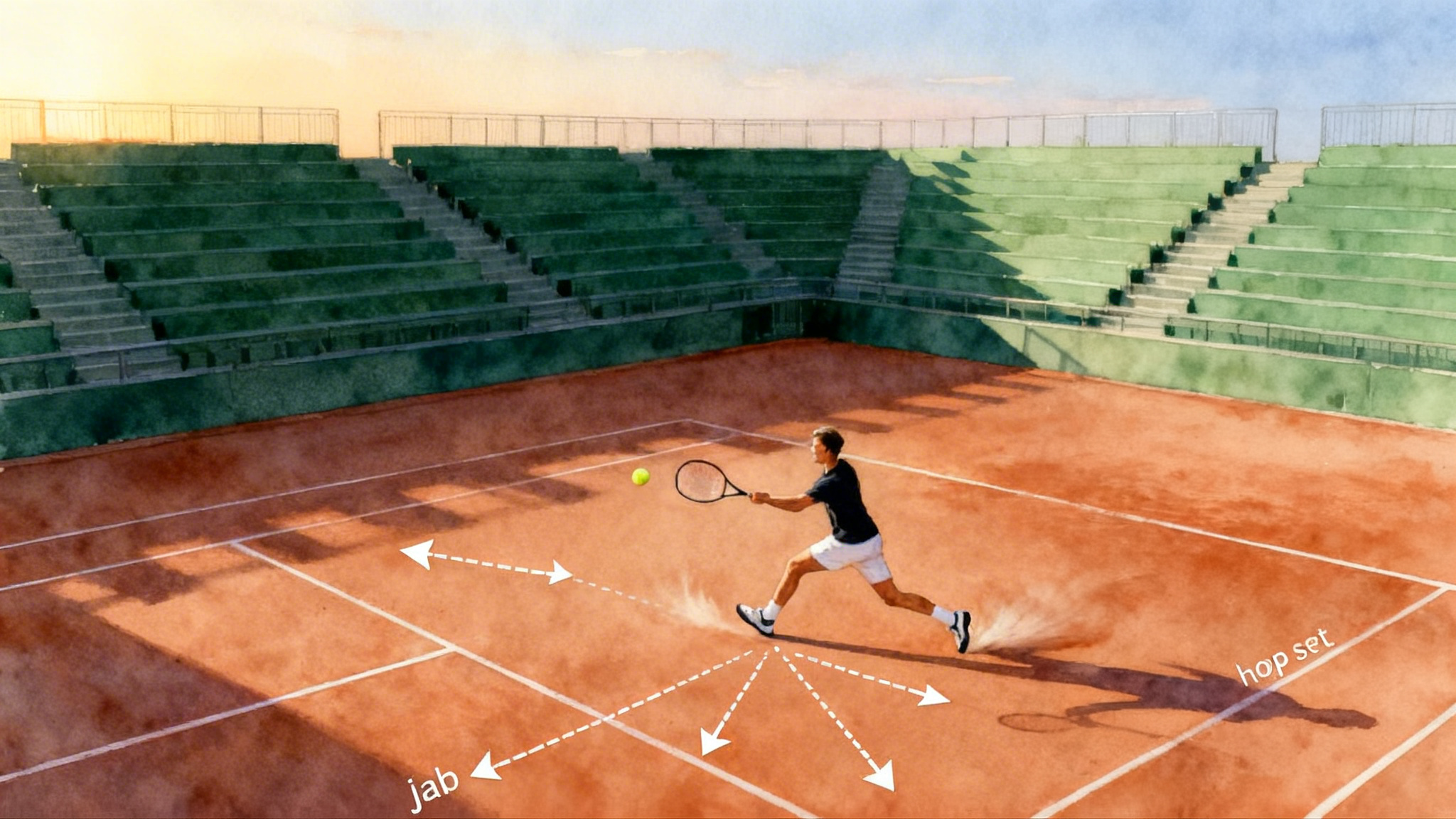
- Action: split, push, load outside leg, slide the last half step, set the base under your center, hit, recover with two small shuffle steps.
- Volume: 10 feeds per side, 3 sets, walk back recovery.
Drill C: Two-foot slide stop and recover
- Purpose: control bigger decelerations on defense.
- Setup: deep crosscourt feed followed by a shorter redirect.
- Action: slide stop on two feet to block the first ball, then push out to the short ball, slide finish, recover.
- Volume: 8 patterns per side, 2 sets, 60 seconds rest between sets.
Drill D: Approach slide and volley
- Purpose: learn to approach off a heavy ball and stabilize at net.
- Action: inside out forehand with a slide finish, close with three steps, stabilize with a split, volley to open court.
- Volume: 6 reps per side, 3 sets.
Key cues: slide late not early, keep the hitting shoulder over the front half of your base, and let the slide finish the braking. If the slide starts too early or too long you will pull off the ball.
The 15-minute ankle and knee prep that protects your spring
Do these on court before hits, three to five days per week. Add load at home two days per week.
On-court primer, 8 minutes total:
- Foot intrinsic activation: barefoot short foot holds, 2 sets of 30 seconds per foot.
- Soleus raises: bent knee calf raises on a line, slow up and slow down, 2 sets of 15 per side.
- Tibialis raises: back against a fence, lift toes toward shins, 2 sets of 15.
- Lateral pogo hops: ankle stiffness and rhythm, 3 sets of 20 contacts.
- Single leg balance with ball toss: stand on clay line, toss and catch a ball, 2 sets of 30 seconds per side.
At-home strength, 7 minutes total:
- Spanish squat or heavy band squat hold, 3 sets of 30 to 45 seconds.
- Copenhagen plank short lever, 2 sets of 20 seconds per side for groin strength.
- Hip airplane or wall supported single leg hinge, 2 sets of 6 per side.
- Peroneal band eversions, 2 sets of 15 per side.
Why it works: sliding shifts load toward the calf-ankle complex and the adductors. Strong soleus and peroneals keep the ankle quiet. Adductors protect the inside of the knee during lateral deceleration. The tibialis and foot intrinsics improve control when you edge the shoe to initiate a slide.
Aerobic power the clay way
Long slow runs build a base but do not prepare you for 18-ball exchanges and immediate repeat points. Use these blocks two to three times per week.
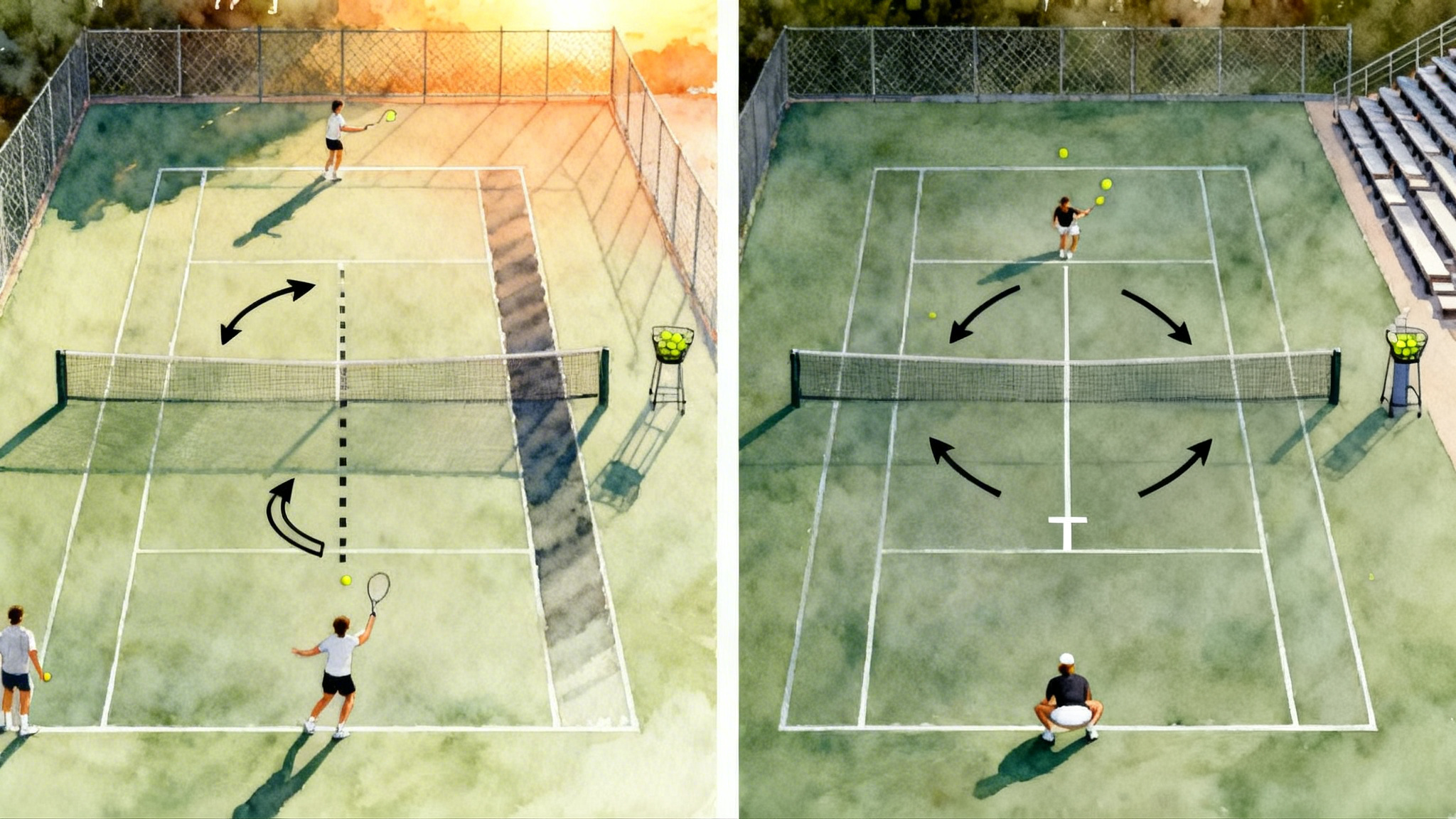
- Threshold court laps, 8 to 12 minutes: run continuous figure eights around two baseline cones and two service line cones at a pace where you can speak in short phrases. Rest 3 minutes. Do 2 rounds.
- 30-30 change of direction: 30 seconds of shuttle runs baseline to baseline with turns at service line and baseline, 30 seconds rest, 10 rounds.
- On-court fartlek, 12 minutes: alternate 45 seconds of sideline to sideline lateral shuffles with 45 seconds of light jogging around the court.
- Accel-decel repeats, 10 minutes: 5 seconds fast to a cone, 5 seconds hold balance, 15 seconds walk back, repeat 20 times.
Monitor quality with a simple check after each block: two deep breaths through the nose, exhale slowly. If you cannot settle within 60 seconds you went too hard for today.
High percentage rally patterns for clay reliability
Build a two pattern core and two pattern counterpunch. Train each with constraints so you feel the win condition of the point.
Core patterns
- Crosscourt heavy to backhand, then inside out forehand.
- Constraint: ball 1 and 2 must clear the net by at least two racket heads. Ball 3 is an inside out forehand to the open court.
- Reps: 10 sequences per side, 2 sets.
- Two crosscourt then line change.
- Constraint: do not change line unless you receive a ball that lands inside the singles sideline and service line quadrant.
- Reps: 12 sequences per side, 2 sets.
Counterpunch patterns
3) High then short: heavy topspin crosscourt to push back, then short angle to pull wide.
- Reps: 8 per side, 3 sets.
- Drop then lob after a deep exchange.
- Constraint: the drop shot must bounce near the service line T. If opponent reaches, the next ball must be a lob back behind them.
- Reps: 10 sequences total, switch roles.
Serve and return on clay
- Serve plus one: second serve kick wide to the ad court, plus one to the deuce court middle.
- Return plus one: deep return down the middle on first serves to reduce angles, then rally heavy to the weaker wing.
- Volumes: 30 second serves to each box with plus one, 20 return games starting 15-30 down to practice digging out of trouble.
The 4-week level based switch plan
Below are parallel tracks. If something feels easy, steal a drill from the track above. If something feels risky, drop to the track below for one week.
Week 1: Acclimate and protect
Foundation
- Sliding: Drill A and Drill B only, three sessions.
- Ankle and knee prep: full 15 minutes, five days.
- Aerobic power: one threshold court lap block and one 30-30 set.
- Patterns: Core pattern 1 at half pace, focus on height.
- Match schedule: one no serve set to 6 with two new balls and a goal of 20-ball rallies.
Performance
- Sliding: Drill A, B, and 10 reps of Drill C, two sessions.
- Prep: four days.
- Aerobic: two sessions, threshold and 30-30.
- Patterns: Core pattern 1 and 2, 2 sets each.
- Match schedule: one set to 6 with serve, one tie-break set to 7 starting at 2-2.
Tournament
- Sliding: Drill A to C, plus 6 reps of Drill D, two sessions.
- Prep: five days.
- Aerobic: two sessions, 30-30 and accel-decel repeats.
- Patterns: all four, one set each.
- Match schedule: two sets with serve to 6, play deciding point at deuce to manage total volume.
Week 2: Pattern quality and repeatability
Foundation
- Sliding: Drill B focus, 30 reps per side across the week.
- Prep: four days.
- Aerobic: two sessions, 30-30 and fartlek.
- Patterns: Core 1 at full pace; introduce Counterpunch 3.
- Match schedule: two set plays to 4 with coaching changeovers.
Performance
- Sliding: Drill B and C in a triangle feed pattern, two sessions.
- Prep: five days.
- Aerobic: threshold laps plus 10 round 30-30; third easy recovery jog or bike.
- Patterns: Core 1 and 2 under a 15 ball rally cap before the strike.
- Match schedule: two match days, each 1.5 sets, start the second set at 3-3.
Tournament
- Sliding: C and D, add live ball rallies to a target cone, two sessions.
- Prep: five days, add loaded single leg work at home.
- Aerobic: 12 minutes threshold, 12 minutes 30-30, separate days.
- Patterns: serve plus one inside out on second serves, return deep middle on first serves, 40 total sequences.
- Match schedule: two full matches spread across four days, plan one recovery day.
Week 3: Sharpen weapons and decision making
Foundation
- Sliding: B with light live ball, one session.
- Prep: four days.
- Aerobic: one 30-30, one accel-decel.
- Patterns: Core 2 with the line change only on true short balls.
- Match schedule: two set plays to 4, then 10 point super tie-break.
Performance
- Sliding: C in live cooperative rallies, two sessions.
- Prep: five days.
- Aerobic: two 30-30 sessions separated by 48 hours.
- Patterns: Counterpunch 3 and 4 with consequence scoring. If you miss the constraint, opponent gets 2 points.
- Match schedule: two matches to 2 sets with a match tie-break.
Tournament
- Sliding: C and D inside pattern drills.
- Prep: maintain four days, reduce volume 20 percent by feel.
- Aerobic: one threshold lap block early week, one 30-30 midweek.
- Patterns: serve plus one combinations by score. 15-0 play plus one to the sideline. 0-15 play plus one middle to reduce risk.
- Match schedule: two matches, aim for one on clay in slower conditions if possible.
Week 4: Consolidate and taper into real results
Foundation
- Sliding: B light, 15 reps per side total.
- Prep: three days, keep the calves and groin fresh.
- Aerobic: one fartlek.
- Patterns: short review of Core 1.
- Match schedule: one full match with friends or ladder play.
Performance
- Sliding: light C, 10 reps per side.
- Prep: four days.
- Aerobic: one 30-30 early, then taper.
- Patterns: 20 serve plus one sequences, 10 return plus one sequences.
- Match schedule: two matches with at least 48 hours between.
Tournament
- Sliding: micro doses only, 6 reps of D early week.
- Prep: three days of short priming sessions.
- Aerobic: one short 30-30 at 80 percent, stop if bouncy.
- Patterns: serve and return choices rehearsed under score pressure. Simulate 4-4, deuce games.
- Match schedule: one match at the start of the week, then target event or toughest practice match on the weekend.
Where a short specialist academy block adds the most value
A focused clay immersion compresses the learning curve because you get consistent court speed, dedicated sparring, and coaches who live the surface every day. Places like Ljubicic Tennis Academy and Tenis Kozerki academy are set up for exactly that. Here is how to plug a 5 to 10 day block into this roadmap.
- Best timing for Foundation and Performance tracks: end of Week 2 or start of Week 3. By then you own the basics and can absorb sliding feedback under speed.
- Best timing for Tournament track: start of Week 2 if your first key event is in mid to late April, or end of Week 3 if your first key event is in May.
- Primary objectives: one daily technical block on slide entry and exit, one daily live pattern block with clear constraints, and one daily match play block with score targets.
- What to ask for:
- Video of your outside leg slide finishes on both wings.
- A left-right recovery cadence cue that you can repeat on your own.
- Two bread and butter rally patterns that the staff sees fit your strengths.
- A pacing plan that sets the number of tough days and easy days across the week.
- Who benefits most:
- Juniors who struggle to change direction after the slide.
- Adults returning from knee irritation who need guardrails on volume.
- Tournament players who hit hard but lose shape on ball 10 to 14 of a rally.
Match-play scheduling that builds confidence, not overuse
Use these simple rules each week regardless of level.
- Progress duration first, then intensity. Add games and sets before you raise ball speed.
- Cap deciding points. On clay, deuce games can spiral. Use no ad scoring or a single deciding point per deuce to limit total decelerations.
- Track rally length, not just score. Have one player count out loud every third ball. Note the average by set.
- Target totals by week:
- Week 1: 10 to 12 games.
- Week 2: 14 to 16 games.
- Week 3: 16 to 20 games.
- Week 4: 12 to 16 games with higher quality.
- Place a recovery day after every match day. Use easy cycling or a 20 minute walk and 10 minutes of mobility.
Equipment and court habits that pay off on clay
- Shoes: use a herringbone clay outsole that releases clay and keeps traction. Replace if the pattern flattens.
- Socks: double layer or blister resistant socks for longer rallies. Pack a dry pair to change at the set break.
- Strings: lower tension 2 to 4 pounds to add shape and height without forcing swings.
- Grip and handle: overgrips get slick faster on clay. Change every session.
- Hat and hydration: higher humidity and longer rallies increase fluid loss. Use water plus electrolytes, not just water.
- Court care: sweep wide past the doubles alley and brush lines. A well groomed court gives predictable slides.
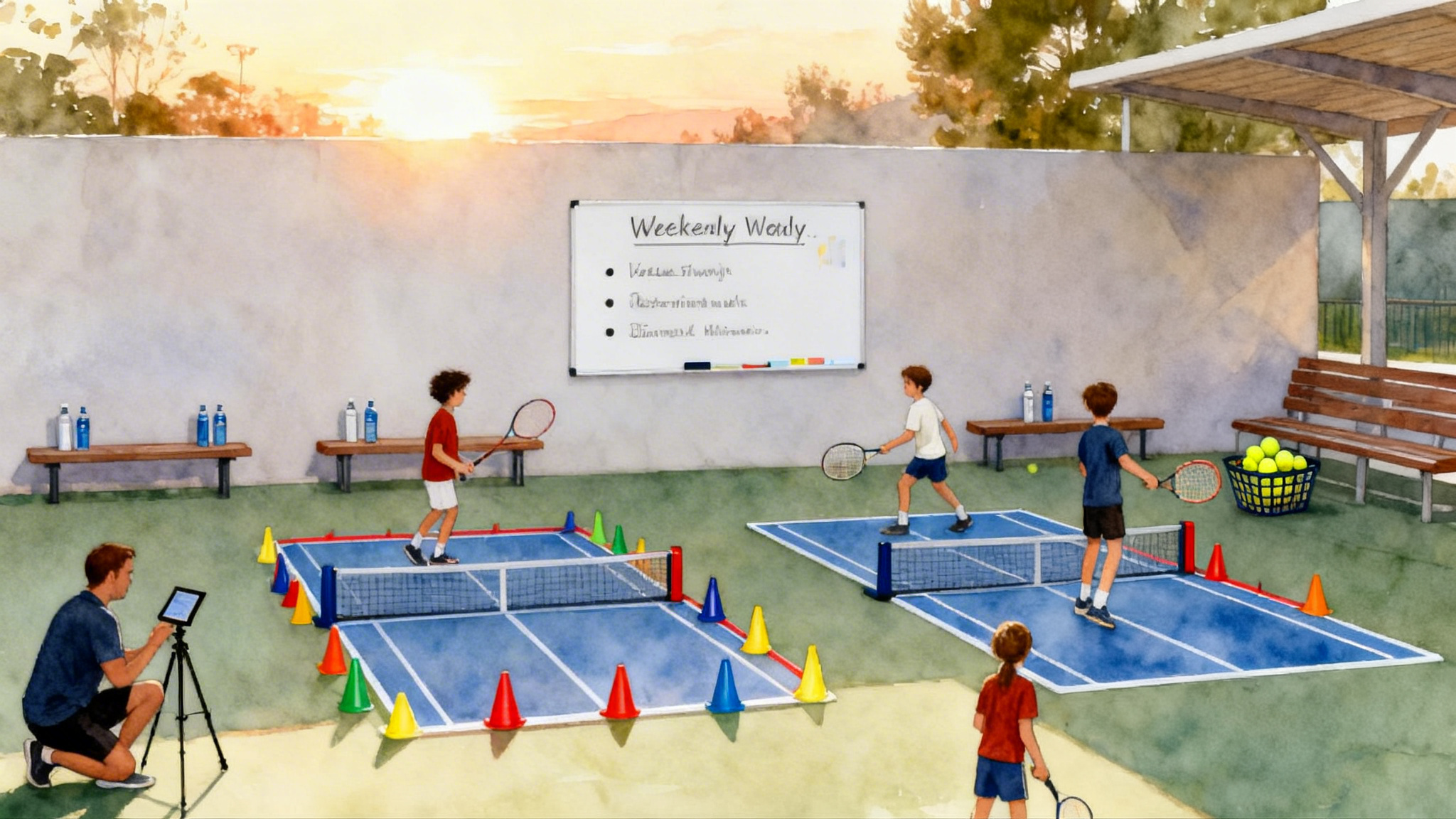
A simple way to track progress
Use a single page each week with these four lines:
- Average rally length in match play.
- Percentage of serves that land with three or more balls after the serve, which shows how often your plus one plan starts.
- Number of sliding errors where you lost balance or pulled off the shot.
- Rate of perceived exertion from 1 to 10 after aerobic sessions.
If rally length climbs across two weeks while effort stays flat, you are building the right engine. If sliding errors rise, shift one session to Drill A and B and reduce match volume for two days.
Juniors and adults: smart adjustments
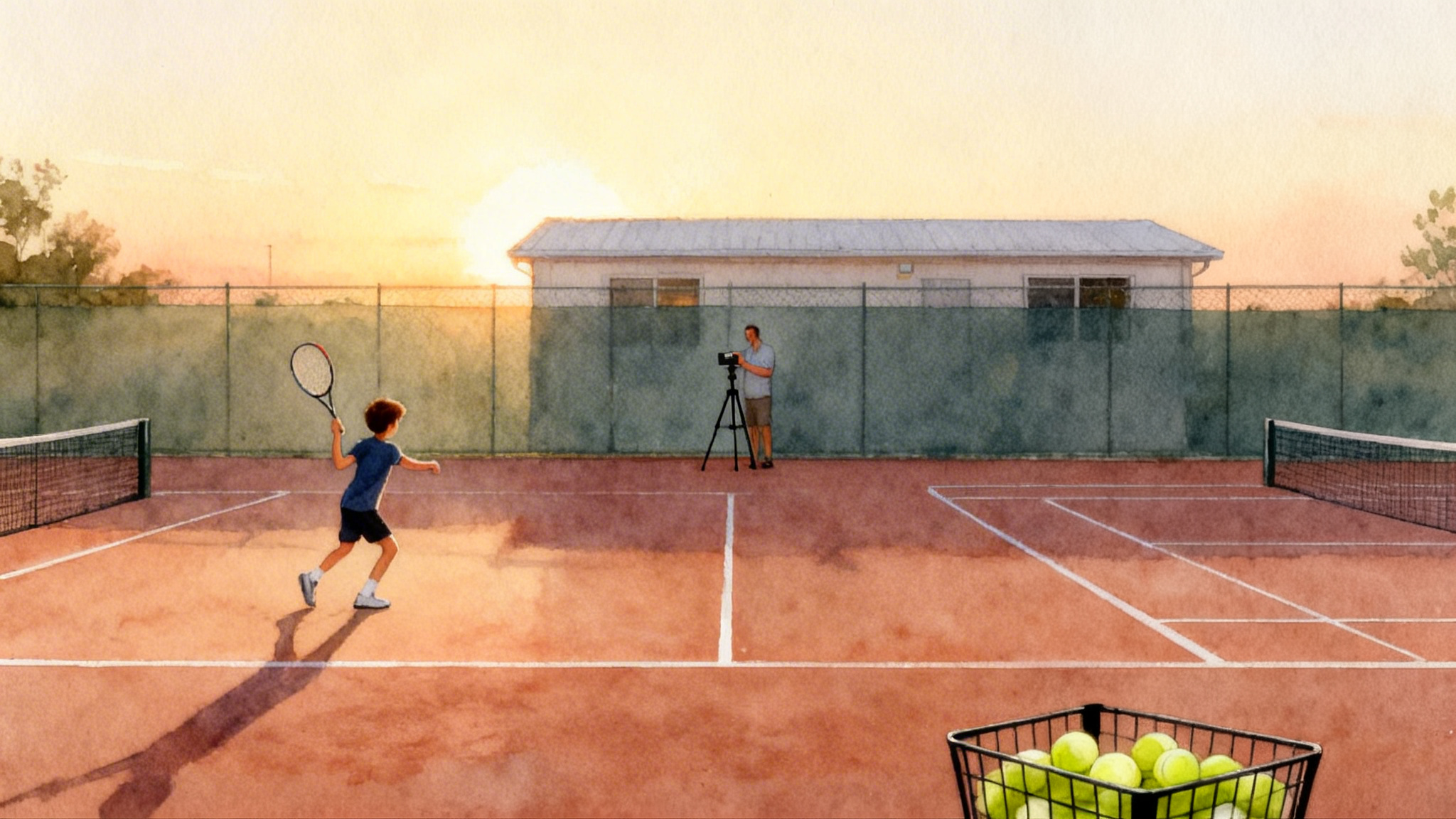
- Juniors: keep pattern talks simple. Pick one core pattern and one counterpunch for the week. Use consequence scoring so choices stick. Late growth spurts can make ankles sensitive, so protect with the full 15 minute prep. For parents filming practice, see our companion guide to smartphone tennis video setups.
- Adults: schedule around life stress. If sleep drops or work spikes, cut down volume but keep the ankle and knee prep. Consistency in the small daily work maintains confidence when you cannot add sets.
Putting it all together for spring 2026
For four weeks you will protect your ankles and knees, earn a reliable slide, and train the aerobic power that clay rewards. You will practice two core rally patterns and two counters that do not break under stress. You will schedule matches to build confidence instead of fatigue. If you add a short academy block in the middle, you multiply your reps and bring home movement cues that last the season. Come late April and May, you will not be hoping clay feels better. You will have built the footwork rhythm, the tactical patience, and the engine that make clay your most consistent surface.
The reset is not about changing who you are as a player. It is about building the habits that let clay give you more time to think, more space to work angles, and more chances to win the point twice. Start today, follow the four week plan, and let the surface bring out your best all spring.