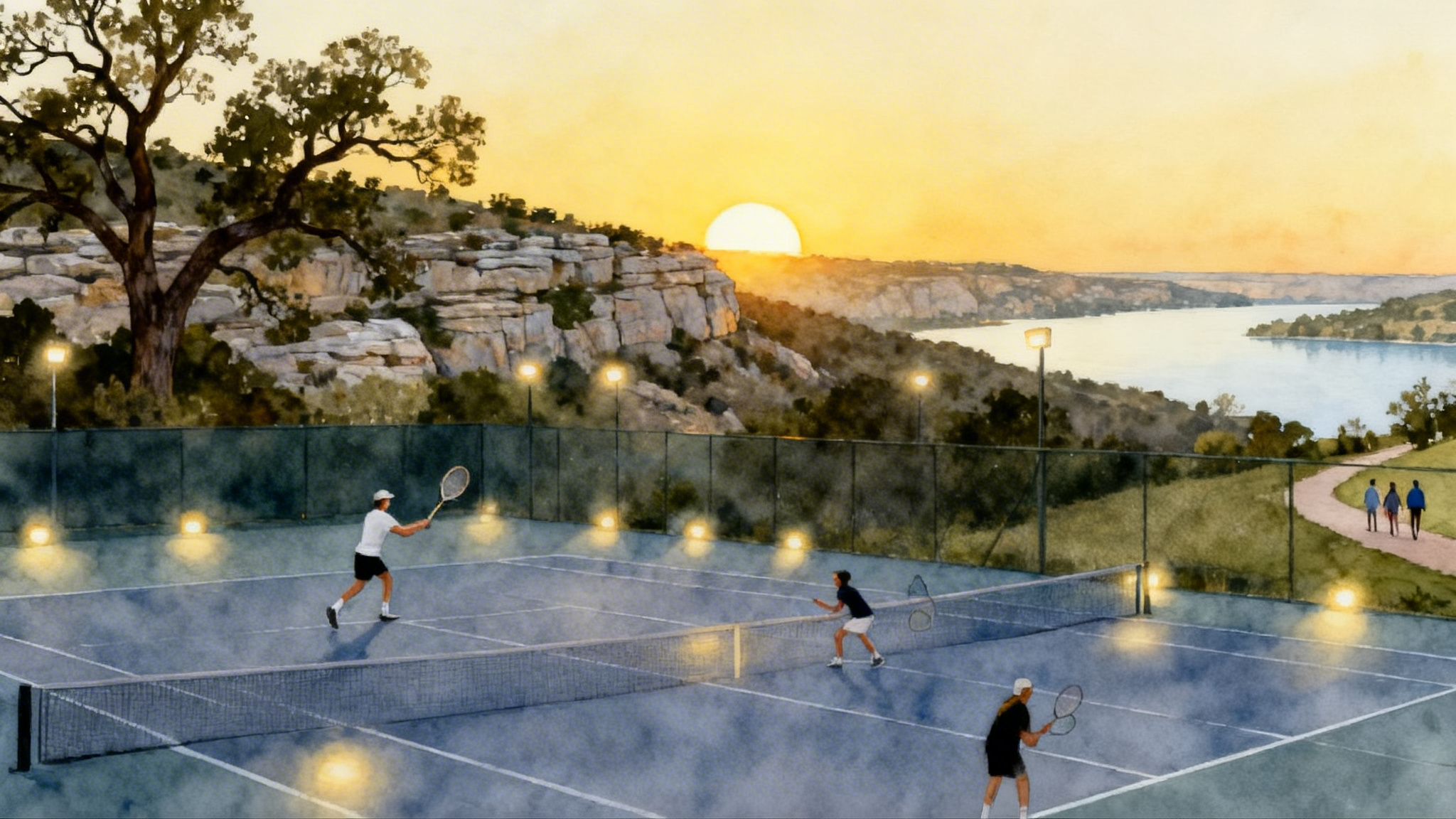
Desert Tennis Guide: Palm Springs and Scottsdale, Nov to Apr
 Tommy
Tommy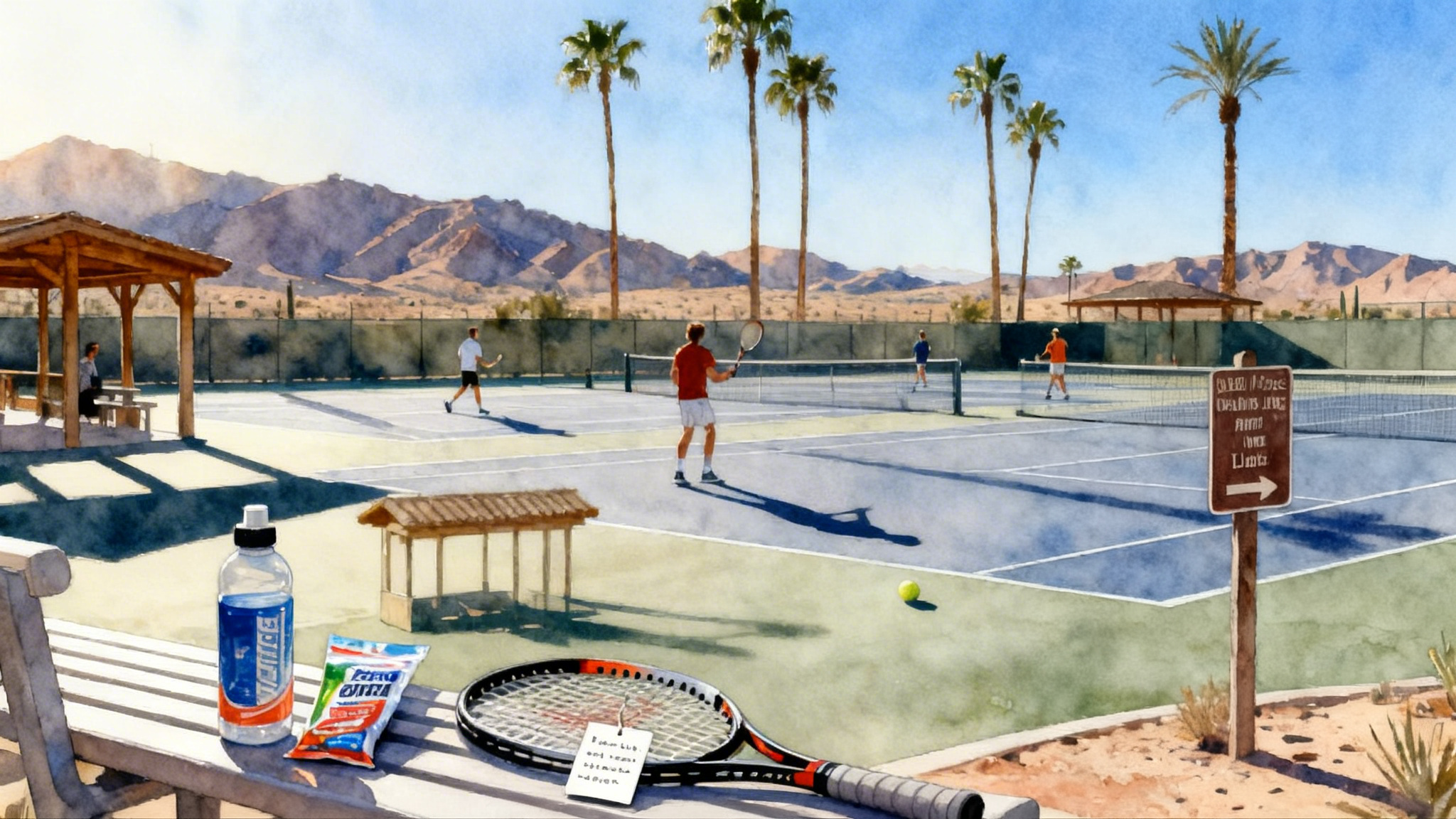
Why the desert wins from November to April
If you want a training block that actually happens rather than one that gets rained out, the American desert is your friend. From November through April, the Coachella Valley around Palm Springs and the Phoenix-Scottsdale metro offer dry air, quick-drying courts, and a low chance of rain compared with Florida or coastal Southern California. The Indian Wells event window in March also gives you a chance to watch world class tennis while you train. For 2026, the 2026 BNP Paribas Open schedule is March 1 to March 15, which affects both court access and hotel pricing. If you want a coastal backup during the same months, see San Diego tennis reliability.
This guide gives you a month-by-month reliability snapshot, specific public and resort court options, a seven day training plan, desert wind and hydration strategies, smart tweaks for strings and gear in dry air, and family add ons so your whole crew wins.
Month by month reliability vs Florida and coastal SoCal
The numbers below use the 1991 to 2020 climate normals that coaches use when planning travel blocks. In short, the desert’s rain risk is low, humidity is modest outside of the summer monsoon, and temperature swings are predictable. The low desert’s official normals from the National Weather Service show annual rainfall under ten inches for Phoenix and well under five inches for the Coachella Valley’s nearest reporting points, with most of that falling December through March. See the agency’s summary of Phoenix low desert climate normals.
To keep it practical, each month lists what you can expect for tennis hours and what to watch for. Temperatures are typical daytime highs; rain references the chance of measurable precipitation days in a typical month, rounded to easy planning ranges.
-
November
- Palm Springs and Coachella Valley: highs near 75 to 80 Fahrenheit, mornings in the 50s. Rain risk is low, often one day or less all month. Air is crisp and very playable from 8 a.m. through late afternoon.
- Scottsdale and Phoenix: highs near 75, cool mornings in the 50s. Rain is uncommon, usually about one day per month. Wind picks up some afternoons as desert breezes develop.
- Florida comparison: still the dry season, but you can see five to seven days with showers near Miami or West Palm Beach. Courts are playable, yet humidity adds fatigue and strings lose tension faster.
- Coastal Southern California comparison: comfortable highs near 70, but more gray mornings and a few light rain days. Winds off the ocean can make afternoon tennis feel cooler.
-
December
- Palm Springs area: highs in the upper 60s to low 70s, mornings in the 40s. Two to three potential rain days, often in quick bursts. Best training window is late morning to mid afternoon.
- Scottsdale: highs near 68 to 70, cool mornings in the 40s. Two or so rain days, breezy after frontal passages.
- Florida: rain chances around one day per week are common, and humidity remains high. You can still train, but drying times are slower and balls pick up moisture on gritty courts.
- Coastal SoCal: more marine layer and winter systems. Three to five potential rain days. When it is dry, conditions are excellent, but reliability is lower than the desert.
-
January
- Palm Springs area: highs around 70, the coolest month for mornings. Two to three rain days possible, with the rest dry and bright. Midday tennis is ideal.
- Scottsdale: highs near 70, crisp mornings. Two to three rain days. Wind can be gusty after fronts, then settles quickly.
- Florida: still in the dry season but six or so showery days in a typical January, often brief. Humidity remains the fatigue driver.
- Coastal SoCal: coolest period. Three to six rain days depending on pattern. When dry, temperatures are friendlier than Florida but the marine layer can linger.
-
February
- Palm Springs area: highs bounce to the mid 70s. Two to three rain days still possible. Court availability starts to tighten as pros and fans arrive early for Indian Wells.
- Scottsdale: highs in the low to mid 70s. Two to three rain days. Winds are less frequent than January.
- Florida: similar to January for shower frequency. Temperatures are great, but the hit rate for completely dry weeks is lower than the desert.
- Coastal SoCal: similar to January with slightly fewer rain days on average.
-
March
- Palm Springs area: highs near 78 to 82. One to two rain days. Indian Wells crowding is real, so book early or plan to base in Palm Desert or Rancho Mirage during the tournament weeks.
- Scottsdale: highs near 78. One to two rain days. This is prime court time across the Valley, especially in the mornings.
- Florida: the dry season persists, but you still get periodic showers and higher humidity. Afternoon thunderstorms are less common than summer yet do occur.
- Coastal SoCal: one to three rain days as the pattern transitions. Wind can be a factor.
-
April
- Palm Springs area: highs near 85 to 90, mornings in the low 60s. Zero to one rain day. Start earlier in the day, and build in more hydration and shade breaks.
- Scottsdale: highs near 85, very low rain risk. Start early to beat the afternoon sun.
- Florida: rain and humidity begin ramping up, especially late month. Afternoon convection becomes more common.
- Coastal SoCal: fewer rain days, but onshore flow makes afternoons cool and breezy.
Bottom line for reliability: from November through April, the desert averages roughly one to three days with measurable precipitation per month in midwinter and fewer on the shoulders, while Florida commonly sees around one showery day per week even in the dry season and coastal Southern California concentrates more of its few rainy days in the same winter months. If your priority is maximum playable days with fast drying courts, the desert is the statistical favorite. For a Florida-focused comparison, see our Florida vs Tenerife guide.
Where to play: public and resort courts that deliver
Coachella Valley
- Indian Wells Tennis Garden, Indian Wells: public bookings when the site is not in use for the tournament or major events. The surfaces are clean and consistent, and the setting adds motivation. Expect very limited public slots in late February and through mid March.
- Palm Desert Civic Center Park, Palm Desert: a go to public hub with multiple lighted courts, easy parking, and nearby coffee and groceries for quick refuels between sessions.
- Ruth Hardy Park, Palm Springs: classic public courts, community vibe, and mountain views. Best early mornings to avoid wind.
- La Quinta Resort and Club, La Quinta: resort guests get access to a large complex with quality instruction and match arranging. Book in advance during peak months.
- JW Marriott Desert Springs Resort, Palm Desert: guest access to well kept courts and a pool for recovery.
- Omni Rancho Las Palmas, Rancho Mirage: guest friendly program with reliable court availability.
Phoenix-Scottsdale
- Scottsdale Ranch Park and Tennis Center, Scottsdale: a big, well maintained public facility with lights and daily traffic at every level. Morning hours book quickly in winter.
- Indian School Park and Tennis Center, Scottsdale: central, social, and very active for match play and drills.
- Phoenix Tennis Center, Phoenix: large public complex with good ball bounce and plenty of match opportunities.
- Paseo Racquet Center, Glendale: busy public facility that runs league and drop in options, good for pairing visitors with locals.
- Kiwanis Recreation Center, Tempe: reliable court reservations and a family friendly park setting.
- Surprise Tennis and Racquet Complex, Surprise: a bit of a drive, but a tournament grade campus with frequent events and ample courts.
Booking tip: open your reservation window the moment it unlocks for each facility. In winter, prime 8 to 10 a.m. slots can disappear in minutes. If you miss morning bookings, aim for late afternoon and bring a warm layer for the temperature drop during sunset.
Plan around Indian Wells like a pro
Court access in the Coachella Valley tightens for roughly four weeks centered on Indian Wells. Setup and player arrivals begin in late February, the event runs March 1 to March 15 in 2026, and teardown follows. If you want to train nearby, either:
- Base in Palm Desert, Rancho Mirage, or Cathedral City and book public courts very early in the day.
- Spend tournament week training in Scottsdale, then drive or fly in for a day or two at Indian Wells. Post event, shift your base to Palm Springs for two weeks of uncrowded courts.
If you are attending matches, plan your training before gates open or on the event’s dark days. Keep in mind that traffic on Washington Street and local arterials can add 20 to 40 minutes to drive times on big days.
A seven day training and match play template
Build volume while staying fresh. Desert air accelerates dehydration even when temperatures feel comfortable. Use this load pattern for a first week, then progress by 10 to 15 percent in week two if recovery is good.
-
Day 1, Assessment and rhythm
- AM: 90 minutes of tempo rallying and serves, finishing with 20 minutes of tiebreak play.
- PM: 45 minute easy bike or walk, plus 15 minutes of mobility.
-
Day 2, Patterns and first match
- AM: 60 minutes of pattern work, 30 minutes of points starting crosscourt. Target serve plus one and return depth.
- PM: Best of three short sets, first to four games each set with no ad scoring. Note ball flight in dry air and adjust margins.
-
Day 3, Ball quality and footwork
- AM: 75 minutes of live ball crosscourt with depth gates, then 30 minutes of approach and volley.
- PM: 30 minutes of band work for shoulders and hips. Hydration focus day.
-
Day 4, Wind day
- AM: Two hour session in the windiest part of the day. Play crosswind patterns and practice higher first serve percentages. Use three ball rally tolerance with a mandatory height target over the net strap.
- PM: Recovery swim or contrast shower and light stretching.
-
Day 5, Match day
- AM: Full best of three sets with standard scoring. Pre load with two cups of water and 500 to 700 milligrams of sodium in the hour before the hit.
- PM: 20 minute walk and 10 minute legs up recovery.
-
Day 6, Serve day and short points
- AM: 60 minutes of serve and first ball patterns. Add 20 minutes of return plus two ball drills.
- PM: Optional half set to four games or rest if legs feel heavy.
-
Day 7, Off or family day
- AM: No tennis. Hike, spa, or golf. Sleep an extra hour and do 15 minutes of mobility in the afternoon.
Coaching and sparring: if you want structured progression or local match arranging, book a coach or hitting partner before you travel. Desert winters attract tennis travelers, and the best sparring calendars fill early.
Wind and hydration strategies that actually work
Wind is not a problem to avoid. It is an advantage to train. The desert’s afternoon breezes help you learn to hit through the ball and manage trajectory.
Wind playbook
- Establish a safe net height. Aim a foot higher than your normal rally ball when hitting into a headwind and drive flatter with more through contact when the wind is at your back.
- Shift targets. Crosswind from right to left means aim inside the right sideline and let the ball drift back to the center. Reverse that for left to right.
- Simplify serves. Choose a heavier kick into a headwind and a slice out wide with the wind behind you. Reduce pace about 10 percent to boost first serve percentage.
- Move first, then adjust. The wind will push your contact point. Prioritize quick first steps and recover to a slightly deeper ready position to buy time.
Hydration in dry air
- Start hydrated. Drink 16 to 20 ounces of fluid in the 90 minutes before a desert session and include 500 to 700 milligrams of sodium if you sweat salty or plan a two hour hit.
- During play. Target 12 to 20 ounces every hour in cool to mild conditions and 24 to 32 ounces per hour once daytime highs reach the 80s or above. Add 300 to 600 milligrams of sodium per hour during long sessions. Use simple carbs such as chews or half a banana every 30 to 45 minutes in matches beyond 90 minutes.
- After. Replace at least half a liter within 30 minutes, include protein and complex carbs within an hour, and add another 300 to 500 milligrams of sodium if you see salt crusts on clothing.
- Practical items. Carry two bottles to separate plain water and electrolyte mix. Pack a small towel for dry grip between points and a hat with a dark underbrim to cut glare.
Strings and gear for dry air and slightly higher ball speed
Why adjust at all
- Dry air and low humidity mean a bit less aerodynamic drag on the ball compared to a humid coastal or Florida setting. Shots can fly a touch more, and felt stays drier and fluff free. The effect is subtle at desert elevations, yet real enough that many players notice shots sailing for a day or two.
What to change
- String tension. If you are coming from sea level and humid air, consider adding 2 pounds of tension to your usual setup to regain trajectory control. If you already string tight or have arm history, split the difference and add 1 pound. Test on one frame first.
- String type. A shaped polyester or a poly main with a soft cross can help you create spin without over swinging. If you are all multifilament, try a slightly thicker gauge to keep control in the quicker conditions.
- Balls. Use new balls more often because dry felt stays lively. If your sessions run two hours, open a fresh can for match play and use the first set for warmups.
- Overgrips and hats. Dry air can paradoxically feel slippery as sweat evaporates. Rotate fresh overgrips daily and wear a hat to shade your eyes. If you blister, switch to a tackier grip for a week.
- Sunscreen and lip balm. Apply broad spectrum sunscreen 20 minutes before hitting and reapply at changeovers if you sweat heavily. Use lip balm with zinc.
Family add ons to make it a tennis travel win
Coachella Valley
- Indian Canyons and Tahquitz Canyon: short, beautiful hikes with water features in season. Great for rest days.
- Palm Springs Aerial Tramway: cooler air at the top and easy trails for all ages.
- Spa afternoon: many resorts offer day passes. Book midweek for less crowding.
- Golf: dozens of public options in Palm Desert and La Quinta. Early tee times pair well with late afternoon doubles.
Scottsdale and Phoenix
- McDowell Sonoran Preserve: wide, well marked desert trails for easy family hikes.
- Camelback Mountain and Piestewa Peak: steep climbs and big valley views if you want a workout.
- Desert Botanical Garden or OdySea Aquarium: shade friendly options on hot afternoons.
- Golf: Troon North, Papago, and many municipal courses with good twilight deals.
Logistics that smooth the week
- Airports: Palm Springs International and Phoenix Sky Harbor are both close to the courts. In season, Palm Springs has excellent small airport convenience. Sky Harbor offers more flight frequency and lower fares.
- Getting around: you will want a rental car in both regions. Bring a sunshade for the windshield. Courts and hikes spread out across the valleys.
- When to start daily: target warmups at 8 a.m. in December and January, and slide earlier toward 7 a.m. by April to beat sun and wind.
- Rest day planning: stack recovery when wind forecasts exceed 20 miles per hour or when a rare winter front brings showers.
Two ways to structure a multi week block
Option 1, One base
- Choose Scottsdale from late November through February if you want the highest odds of crisp mornings and easy court access.
- Choose Palm Springs from mid March through April when courts free up after Indian Wells and warm, dry days are nearly automatic.
Option 2, Split base
- Weeks 1 and 2: Scottsdale tennis plus a day trip to Sedona or Spring Training baseball if you are there in March.
- Weeks 3 and 4: Palm Springs training with one or two days at Indian Wells if your dates overlap, followed by hiking or a Joshua Tree day trip on your rest day. If you prefer a central Texas backup in shoulder months, consider Austin Hill Country tennis.
The payoff
Training in the desert from November to April is simple math. Your chance of a full, uninterrupted week is higher than in Florida or on the Southern California coast, the courts dry almost instantly after the occasional shower, and the pro tour drops by every March to remind you why you love the sport. Plan around the Indian Wells schedule, book your morning courts early, tweak strings by a pound or two if your shots start flying, and respect the wind and the water bottle. With those small adjustments, the desert gives you the most reliable canvas in American winter and spring tennis.