Florida vs Canary Islands: Best Winter Tennis Base 2026
 Tommy
Tommy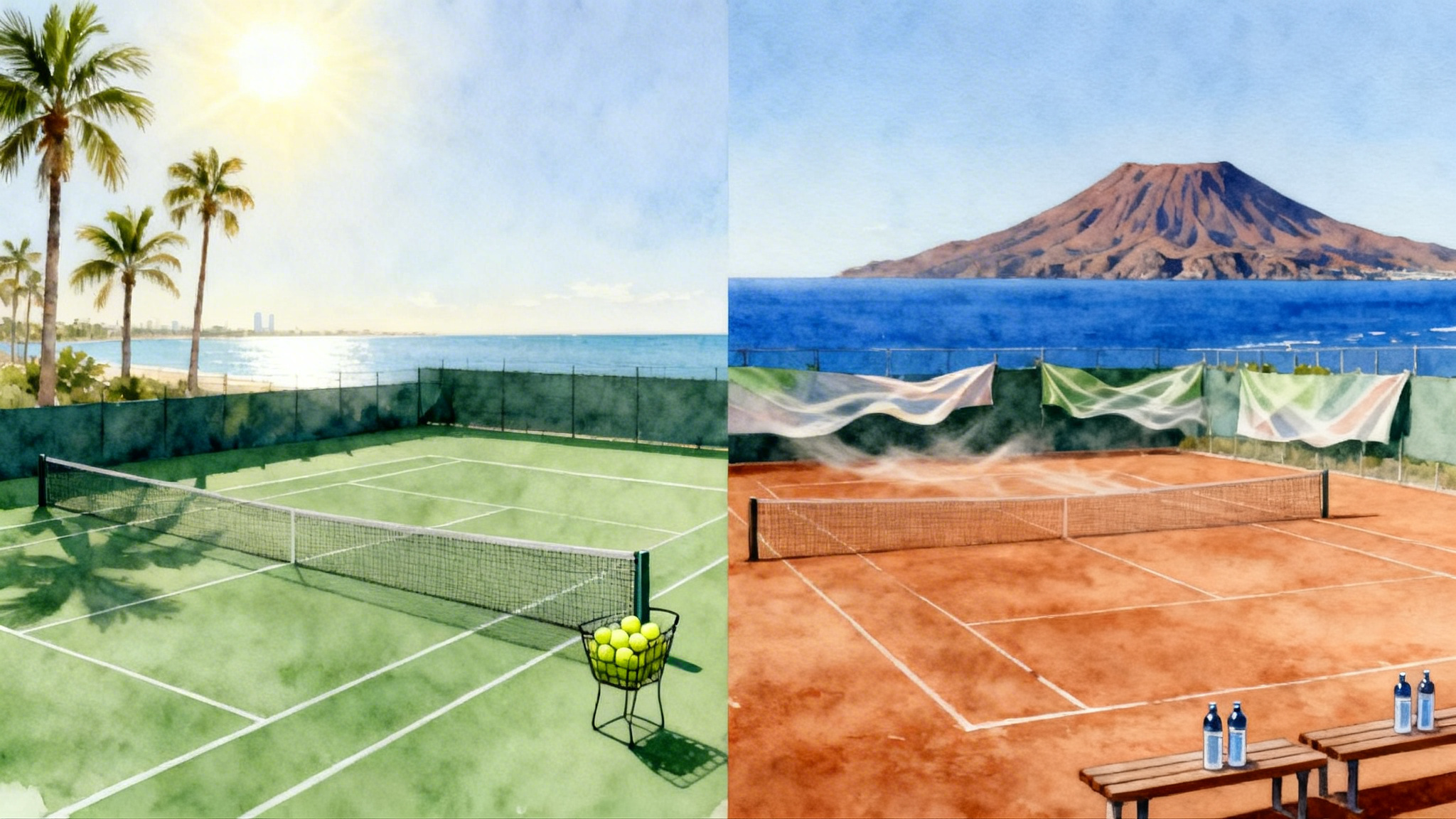
The 2026 winter base faceoff
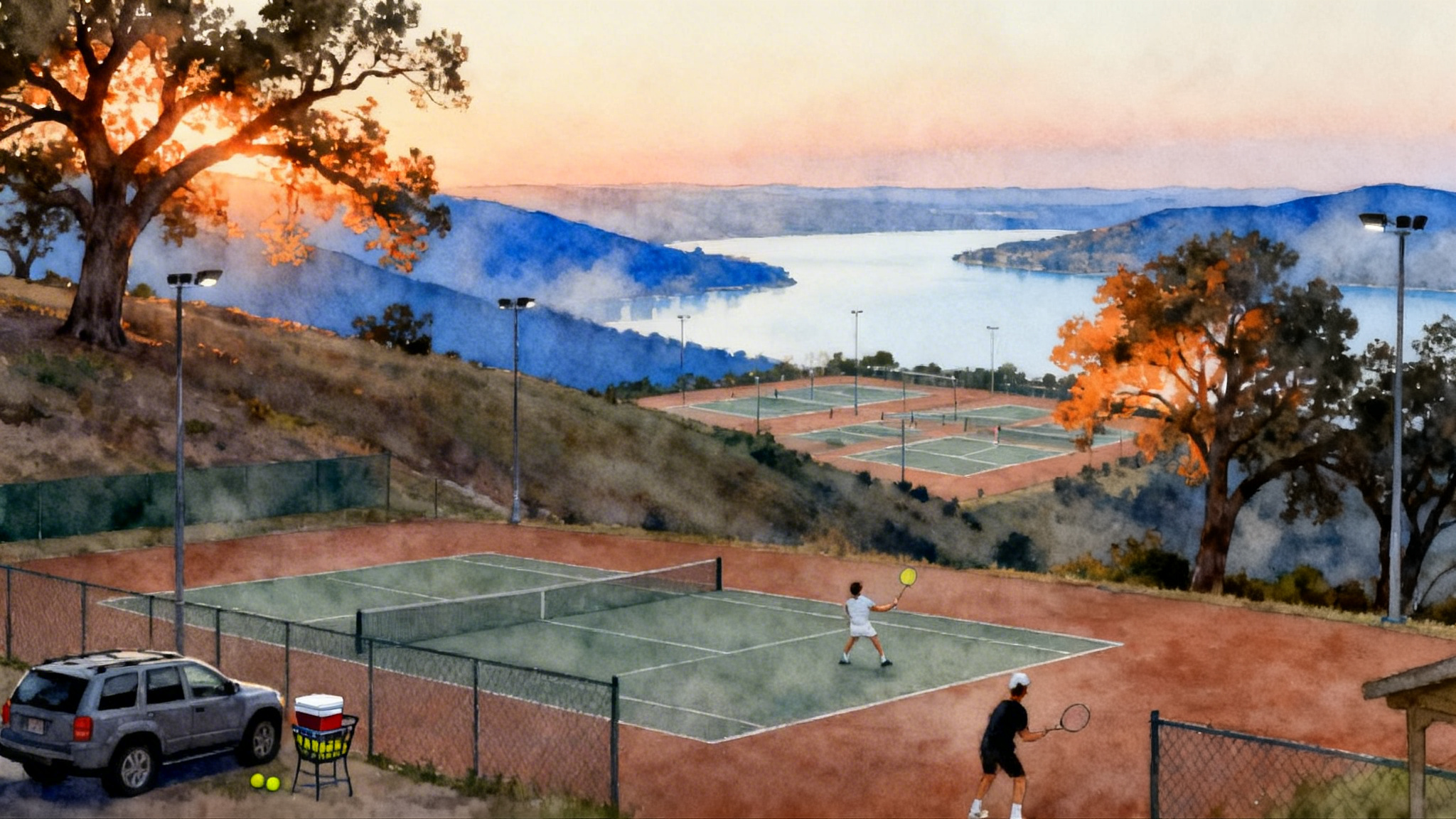
Two names crowd every coach’s shortlist when the temperatures drop: Florida and the Canary Islands. Within those, three hubs dominate bookings for players and families who want outdoor volume without climate drama: Naples and Orlando in Florida, and South Tenerife in Spain’s Canary Islands. In this guide we stack them up category by category, using concrete metrics and lived training experience, then finish with two ready-to-use seven day plans and practical decision trees for families and serious adults.
Shortcuts can be expensive in winter. Courts book out, flights go up, and one bad weather week can torpedo a block of planned volume. The win is the base that delivers consistent court time, predictable conditions, smooth logistics, and a program that actually fits your goals.
Climate reliability by month
You are chasing playable hours and predictable repetitions. Here is how the two regions behave from November through April, the core winter window.
Naples and Orlando, Florida
- November: Transition to the dry season. Highs often in the low to mid 70s Fahrenheit. Humidity drops, afternoons feel crisp. Short rain showers are possible but usually brief. Great month for volume blocks.
- December: One of the driest months. Highs in the low 70s, cool mornings. Cold fronts can bring a couple of chilly, breezy days. Orlando runs a few degrees cooler than Naples. Plan early layers for first sessions.
- January: The coolest month. Morning lows can dip into the 40s Fahrenheit in Orlando and 50s in Naples, with afternoons still hitting upper 60s to low 70s. Expect a few front-driven windy days each fortnight. Still very good training reliability.
- February: Reliable rhythm returns. Highs rebound to low and mid 70s. Rain days remain infrequent. Afternoon sea breezes in Naples are friendly rather than disruptive.
- March: Prime. Highs mid to upper 70s, low rain frequency, longer daylight. This is Florida’s most in-demand training month, so book courts and coaching early.
- April: Warming trend to low 80s. Humidity starts to climb in Orlando. Showers pick up late month, but mornings remain excellent.
Bottom line: Florida offers a classic dry-season winter with occasional cool snaps. Orlando is a touch cooler and less breezy than coastal Naples.
South Tenerife, Canary Islands
- November: Mild and stable. Highs in the low 70s Fahrenheit. The south coast sits in a rain shadow, so showers are scarce. Great for match play blocks.
- December: Consistently mild. Highs around 70. Rain is uncommon on the south coast, but if it comes it tends to be brief. Daylight is generous for two-a-day structures.
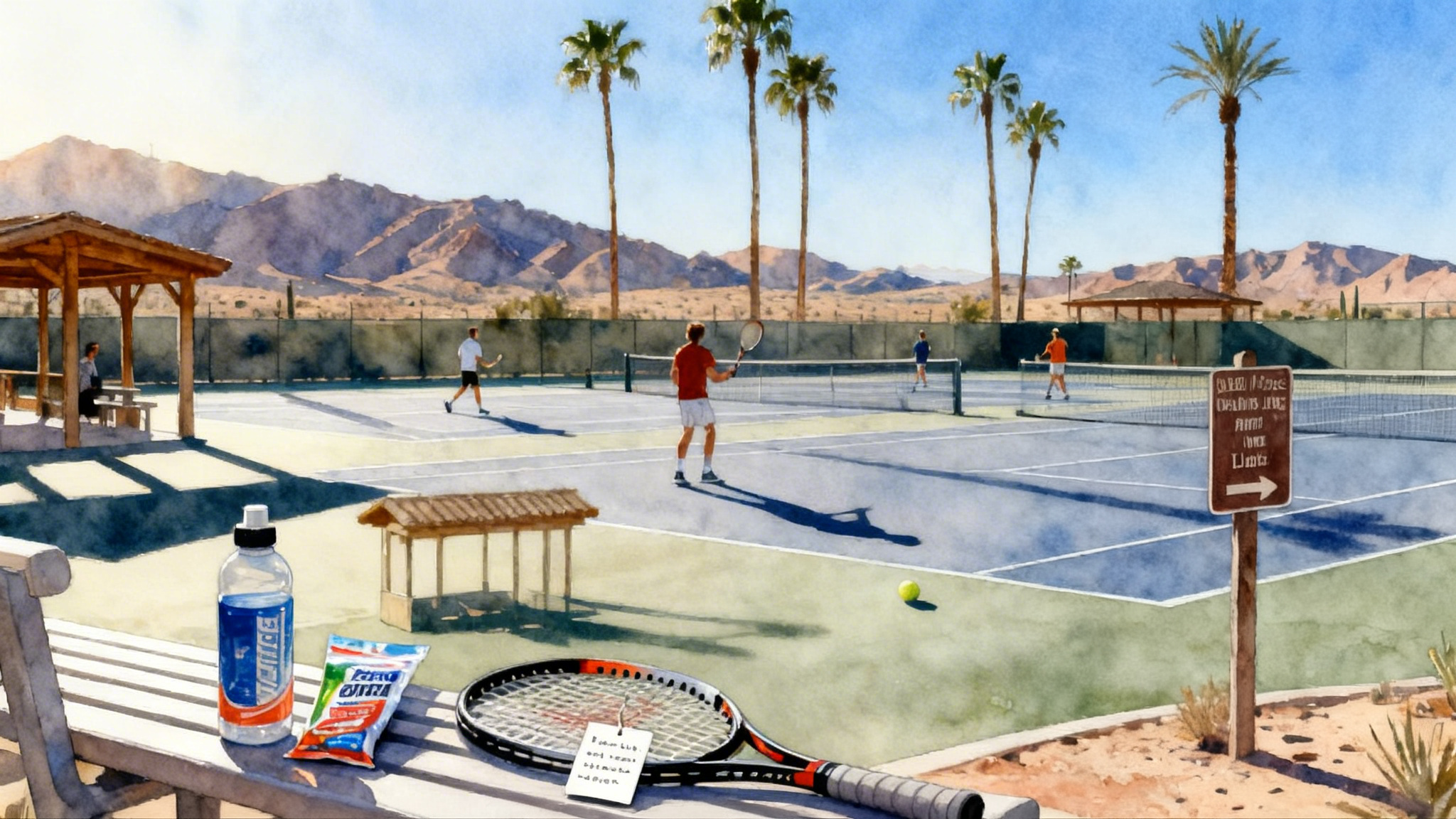
- January: Steady and playable. Highs near 68 to 70. Wind can freshen in the afternoon. Expect a few calima days each winter, when dry Saharan air brings haze and a warm feel. Courts remain usable, hydration becomes a priority.
- February: Arguably the most reliable month. Minimal rain, comfortable temperatures, regular trade winds. South-coast sites are shielded compared with the north.
- March: Warmer and still low-rain. Afternoon breezes common. Excellent for aerobic volume and clay patterns.
- April: Springlike with highs in the low to mid 70s. Very low rain frequency on the south coast. High confidence for uninterrupted training.
Bottom line: South Tenerife is built for winter tennis. The south coast’s microclimate yields an unusually low rain risk with mild temperatures and a predictable breeze.
Wind and rain: what they feel like on court
- Florida wind: In Naples, a gentle Gulf breeze most afternoons. On front days, wind can jump noticeably, especially in open complexes. Orlando is inland and more protected, so you trade a touch of morning chill for calmer ball flights.
- Tenerife wind: The northeast trade winds define the pattern. South-coast courts are often aligned and sheltered, but expect a 10 to 15 mile per hour afternoon breeze on many days. It is steady rather than gusty, which helps rhythm once you adjust.
- Rain interruptions: Florida’s winter showers are short and the sun returns quickly, but a front can wipe out a half day. In South Tenerife, rainouts on the south coast are uncommon. The more likely disruptor is a calima day that changes visibility and ball carry; most players still train.
Court surfaces, facilities, and recovery
- Naples and Orlando surfaces: Florida offers an even split of outdoor hard and green clay known as Har-Tru. Naples tilts toward clay at clubs and residential communities, while Orlando has abundant public hard courts with pockets of clay. Program hubs include Gomez Tennis Academy in Naples and Revolution Tennis Academy in Orlando, which can place you on the right surface for your goals.
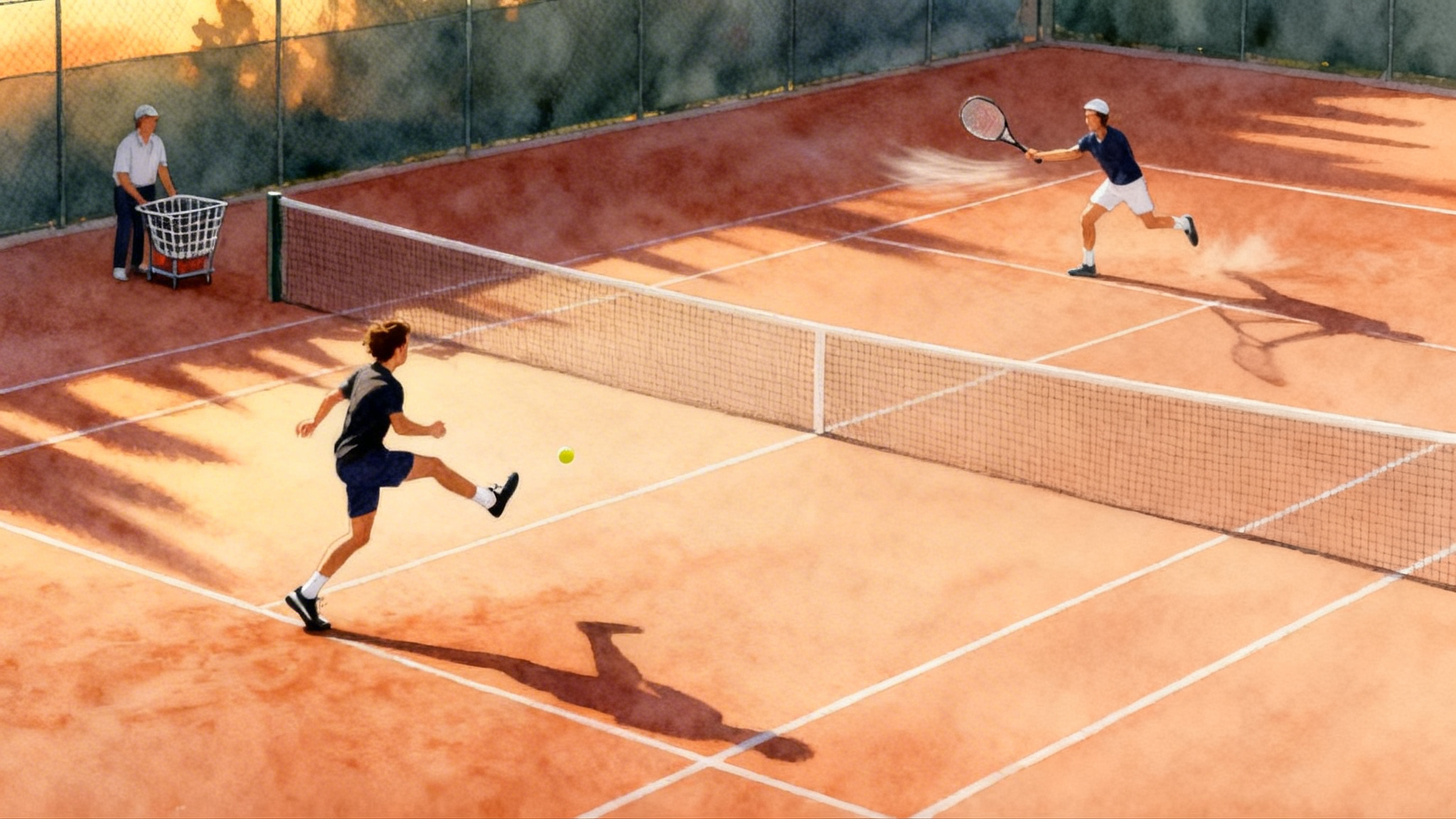
- South Tenerife surfaces: Clay dominates across the island, with hard courts at select sites. That balance favors topspin, patience, and leg conditioning. The Tenerife Tennis Academy in the south offers structured junior and adult options with match play, fitness, and access to clay volume.
- Recovery options Florida: Cold plunge and sauna at performance gyms, cryotherapy in metro Orlando, and easy pool or ocean recovery. Naples beaches are gentle with walkable sloping entries that make calf and foot flushes simple after sessions.
- Recovery options Tenerife: Ocean swims on the south coast, hotel spas with hydrotherapy circuits, and quick access to hill work in the volcanic foothills for capillary development days. Many resorts have heated pools, which helps with consistency.
Ease of flights from the United States and Europe
- United States to Florida: Direct flights are abundant to Orlando International and to Southwest Florida International near Naples. New York, Boston, Chicago, Dallas, and Atlanta all have multiple daily options in winter. This is the least friction for American families.
- United States to Tenerife: Most itineraries involve one stop through Madrid, Barcelona, or a United Kingdom hub. Total travel time from the East Coast typically runs 10 to 14 hours with the connection. Check sports baggage allowances during peak season.
- Europe to Florida: Direct options exist from major European capitals to Orlando, but frequency is lower than summer. Families often transit through Miami or Atlanta, then connect.
- Europe to Tenerife: This is where South Tenerife shines. There are many direct flights from United Kingdom, Germany, Netherlands, Scandinavia, France, Italy, and mainland Spain into Tenerife South. Weekend tournament hops are realistic.
On-the-ground costs you can plan for
The ranges below reflect typical winter 2026 quotes at mainstream venues. Always confirm with your chosen academy and hotel.
- Courts and coaching
- Florida public hard court: often free to 10 dollars per hour depending on municipality. Club Har-Tru with guest access: 25 to 40 dollars per hour. Private lesson: 80 to 140 dollars per hour common, more for senior heads of performance.
- South Tenerife clay court: 10 to 20 euros per hour at municipal or resort facilities. Private lesson: 50 to 90 euros per hour typical, rising for elite specialists.
- Accommodation per night
- Naples: 200 to 400 dollars for midrange hotels or apartment rentals during peak months. Premium beachfront commands more.
- Orlando: 120 to 250 dollars for business class hotels near sports corridors. Vacation homes offer value for teams.
- South Tenerife: 90 to 200 euros for modern aparthotels and resort apartments on the south coast. Longer stays often unlock discounts.
- Car and local transport
- Florida: 40 to 80 dollars per day for midsize rentals. Rideshare coverage is strong in Orlando and moderate in Naples outside peak hours.
- South Tenerife: 20 to 40 euros per day for compact rentals. Parking is generally manageable at coastal facilities.
- Meals and groceries
- Florida: 15 to 25 dollars per person at casual restaurants. Groceries offer savings for families cooking in.
- South Tenerife: 10 to 18 euros per person at simple eateries. Supermarkets are well priced and carry familiar brands.
Junior and adult program pathways
What matters is not just the drill sheet but the path the program opens for matches and progression.
- Florida programs
- Juniors: A deep schedule of United States Tennis Association events and Universal Tennis Rating match play across the state. High performance blocks pair well with weekend tournaments within a few hours’ drive. Spring college showcases ramp up in March and April.
- Adults: Strong ecosystem for UTR leagues, Senior Cup events, and themed weeks. Orlando’s public infrastructure lowers the barrier for extra hitting after formal sessions.
- South Tenerife programs
- Juniors: Emphasis on clay development and point construction, with tournament links into mainland Spain and select Canary Islands events. Players are placed into friendly matches and verified rating play for data-rich feedback.
- Adults: Clear technical work on clay, daily hitting, and fitness on terrain. Many resorts host social round robins that add enjoyable volume without beating up the body.
Head-to-head verdicts by category
- Climate reliability by month: Slight edge to South Tenerife for lower rain odds on the south coast. Florida is still highly reliable, with a few front days.
- Prevailing wind and rain: Tie for most players. Orlando is calmer than coastal Naples. Tenerife’s trade winds are steady and playable once you settle your trajectory.
- Court surfaces and recovery: Florida wins for easy access to both hard and Har-Tru, plus world class performance gyms in Orlando. Tenerife wins for expansive clay volume and simple ocean recovery. Call it surface-dependent.
- Ease of flights: Americans should choose Florida first for simplicity. Europeans win big with South Tenerife’s nonstop map.
- On-the-ground costs: South Tenerife is typically cheaper for accommodation, car rental, and meals. Public courts make Orlando affordable if you can secure time.
- Junior pathways: Florida’s weekend tournament density and college visibility are hard to beat December through April.
- Adult pathways: If you want clay technical work and aerobic base without chasing courts, South Tenerife is a joy. If you want hard court timing, Florida has the edge.
Sample 7-day training itineraries you can copy
These are realistic winter weeks that layer skill acquisition, match play, and recovery. Adjust volumes for age and training age.
Naples and Orlando hard-plus-clay week
- Day 1 - Arrival and calibrate: Easy 60 minute hit late afternoon on hard. Mobility and band prep in the evening. Early night.
- Day 2 - Patterns and serve day: Morning 2 hours on hard for serve plus first ball. Afternoon 90 minutes on clay for crosscourt depth and height windows. Short cold plunge and easy walk on the beach or around the lake.
- Day 3 - Live ball and fitness: Morning 2 hours live ball and pattern games. Afternoon 45 minutes strength circuit. Optional 60 minute match play under lights.
- Day 4 - Clay day and recovery: 2.5 hours on Har-Tru focusing on neutral defense and pattern length. Afternoon pool recovery and soft tissue work. Evening scouting of weekend draws if competing.
- Day 5 - Match play Friday: 2 to 3 sets of match play or a verified rating session. Video the changeover chats for review. Light mobility only after.
- Day 6 - Tournament or test set day: If entered, play the event. If not, two 75 minute test sets plus serve challenge. Afternoon sauna and stretch.
- Day 7 - Reset and audit: 90 minute light hit on preferred surface. Performance review with coach. Travel in the afternoon.
Where to base: Choose Naples if you want calmer coastal sessions and easy clay. Pick Orlando if you value extra hitters, public hard courts, and performance facilities.
South Tenerife clay-centric week
- Day 1 - Arrival and unwind: 45 minute light hit on clay to feel the bounce. Evening beach walk and hydration plan.
- Day 2 - Height and shape: Morning 2 hours focusing on rally tolerance and height over net. Afternoon 60 minutes footwork agility on court. Ocean dip recovery.
- Day 3 - Serve and return: Morning 90 minutes serve patterns. Afternoon 90 minutes return plus-one patterns. Mobility session at hotel.
- Day 4 - Live ball and hill work: Morning 2 hours live ball. Late afternoon 30 to 40 minutes hill strides in the volcanic foothills for aerobic stimulus. Early dinner.
- Day 5 - Match play block: Two 75 minute sets with different styles. Coach-guided between-sets adjustments. Light stretch after.
- Day 6 - Clay defense to offense: Morning 2 hours on transition patterns and drop shot usage. Afternoon pool recovery and nap window. Short evening hit for feel if energy permits.
- Day 7 - Audit and explore: 90 minute calibration hit. Video review with coach. Afternoon flight or island walk.
Where to base: The south corridor offers reliable weather, plentiful clay, and structured sparring partners concentrated near the main resorts.
Decision trees
Families with competitive juniors
- Is your short-term goal United States college visibility in 2026 to 2027?
- Yes: Choose Florida. Build a winter block around Orlando and Naples for hard court reps, verified rating matches, and weekend USTA events. Lock coaching three to four weeks ahead.
- No or mixed: Go to South Tenerife for clay development. Prioritize rally tolerance, point construction, and patient defense that travels to any surface.
- Do you need nonstop flights from your origin city to manage school schedules?
- From the United States: Florida wins. Use Orlando for flight choice and public court overflow.
- From Europe: South Tenerife wins with many nonstops into Tenerife South.
- Is budget the tightest constraint?
- Tight: South Tenerife tends to be cheaper on rooms, food, and cars. Book aparthotels with kitchenettes.
- Flexible: Naples and Orlando open more private-lesson density and tournament options.
- What surface should the player log most winter reps on in 2026?
- Developing patience, legs, and heavy topspin: South Tenerife clay.
- Sharpening first strike and serve speed: Florida hard, with some Har-Tru to protect joints.
Serious adult players
- Do you prefer long rallies and aerobic training over explosive first-strike tennis?
- Yes: South Tenerife. Choose a clay-heavy plan with daily ocean recovery.
- No: Florida. Split hard and Har-Tru for variety and joint care.
- Are you traveling solo and want easy drop-in hitting?
- Yes: Orlando. Public courts and big player pools make it simple.
- No or traveling with a partner: Naples or South Tenerife both work. Book academy sparring in advance.
- Is steady weather your top priority over nightlife or attractions?
- Yes: South Tenerife’s south coast is hard to beat for reliability.
- No: Florida gives you tennis plus major-league entertainment in Orlando.
The bottom line
If you live in the United States and want the fewest logistical variables, Florida is the pragmatic 2026 choice. Naples offers gentle coastal sessions and accessible clay, while Orlando gives you giant player pools, public hard courts, and sophisticated recovery rooms. If you live in Europe or you want maximal clay volume with minimalist weather risk, South Tenerife is a winter tennis machine. Its south coast microclimate, plentiful clay, and cost profile make it easy to stack quality repetitions day after day.
Pick your base by the tennis you plan to play five months from now. If your spring is hard-court heavy and college focused, build Florida blocks around Naples and Orlando with targeted match play. If your spring is clay-on-clay and you are building patience and legs, train in South Tenerife and let the island’s rhythm carry your volume. Either way, lock your coaching, confirm surfaces, and script recovery as tightly as you script drills. That is how a winter base turns into a spring performance jump.