Master the Split Step: Timing, Drills, and Match Impact
 Tommy
Tommy
The small move that unlocks big court coverage
Watch any Grand Slam broadcast and you will notice it the instant before contact on the other side. The best movers rise lightly off their heels and land on the balls of their feet just as the opponent strikes. That tiny hop is the split step. It is not decoration. It is a trigger that primes your body to accelerate in any direction while your brain locks onto the ball’s new trajectory.
Players who feel slow often do not have a speed problem. They have a timing problem. They start from flat feet, or they land the split step too early or too late. Fixing this does not require sprint work or a new shoe. It requires learning when to leave the ground, how to land, and how to connect the move to your first step and your tactical plan.
This guide breaks down the physics, the timing, and the coaching cues that help juniors and adults progress quickly. It also includes specific drills that require only cones, a partner, and a basket of balls.
What the split step actually does
Think of your lower body as a loaded spring. When you drop into a good athletic posture and hop a few centimeters, you store energy as you come down. The moment your feet touch the court, the ground pushes back. This is the ground reaction force that lets you direct energy into your first step. If you land as the ball leaves your opponent’s strings, your nervous system gets a clean data packet about the ball’s speed, spin, and direction. Land too soon and you burn the spring before you know where to go. Land too late and you are reacting after the ball is already past the critical early flight window.
The split step also aligns your head and eyes to read cues. As you unweight in the air, your head stays steady and your eyes can track the racquet path and contact point. That clean read is why even small framed players like Diego Schwartzman or David Ferrer used to get to impossible balls. They were not guessing. They were priming and reading.
The timing rule most players get wrong
A common myth says you should jump as your opponent hits. That instruction is close, but not precise enough. Your goal is to land as the opponent contacts the ball. If your opponent swings fast, you must start your hop slightly earlier. If they are late or stretched, you can delay. The size of your hop is small, often just enough to unweight the feet. The elegance of elite movers is that the split step scales with the situation. On a big return game, Novak Djokovic’s rise is barely visible, yet he still lands with perfect timing so his first step into the backhand is explosive.
A practical cue: start your lift when you see the opponent’s forward swing commit. Aim to be back on the ground at contact. If you hear the strings and you are still airborne, you were late. If you land, wait, and then hear contact, you were early.
Posture and landing mechanics
Landing sets your angle of attack. Here are the core elements:
- Feet: shoulder width or slightly wider, toes neutral to slightly out. Land on the balls of your feet, heels light but not off the ground.
- Knees and hips: soft, flexed, ready to push. Think sit into the court rather than fall forward.
- Torso: upright but athletic. Avoid collapsing the chest or sticking the hips back.
- Weight distribution: even at touchdown, then shift into the outside foot of your first move.
- Hands and racquet: in front, quiet. The racquet is your steering wheel. If it drifts behind you, your center of mass drifts too.
The instant after landing is a two stage sequence. First is the micro load in both legs. Second is the directional push, usually off the leg opposite your movement. For example, to move right, your left leg plants and pushes, while your right leg turns and reaches.
Calibrating to different situations
- Return of serve: The split step is smaller and earlier than on baseline rallies. Start your lift before the server’s contact and land as you hear the pop. If you are jumping as the ball crosses the net, you are late. A still racquet face in front of you keeps the brain quiet and the hands ready.
- Baseline rally: Time it to the opponent’s contact. If you are pushed back deep, make the hop a touch bigger to regain balance. If you are stepping inside the court to attack, keep it smaller so you can flow through the ball.
- Approaching the net: As your opponent sets to pass or lob, use a pronounced split step so you can launch laterally for a volley or rock back for an overhead.
- Doubles at the net: Mirror the opponent’s contact, not your partner’s. Your job is to intercept. Land as the ball leaves the opponent’s strings so you can track the new line quickly.
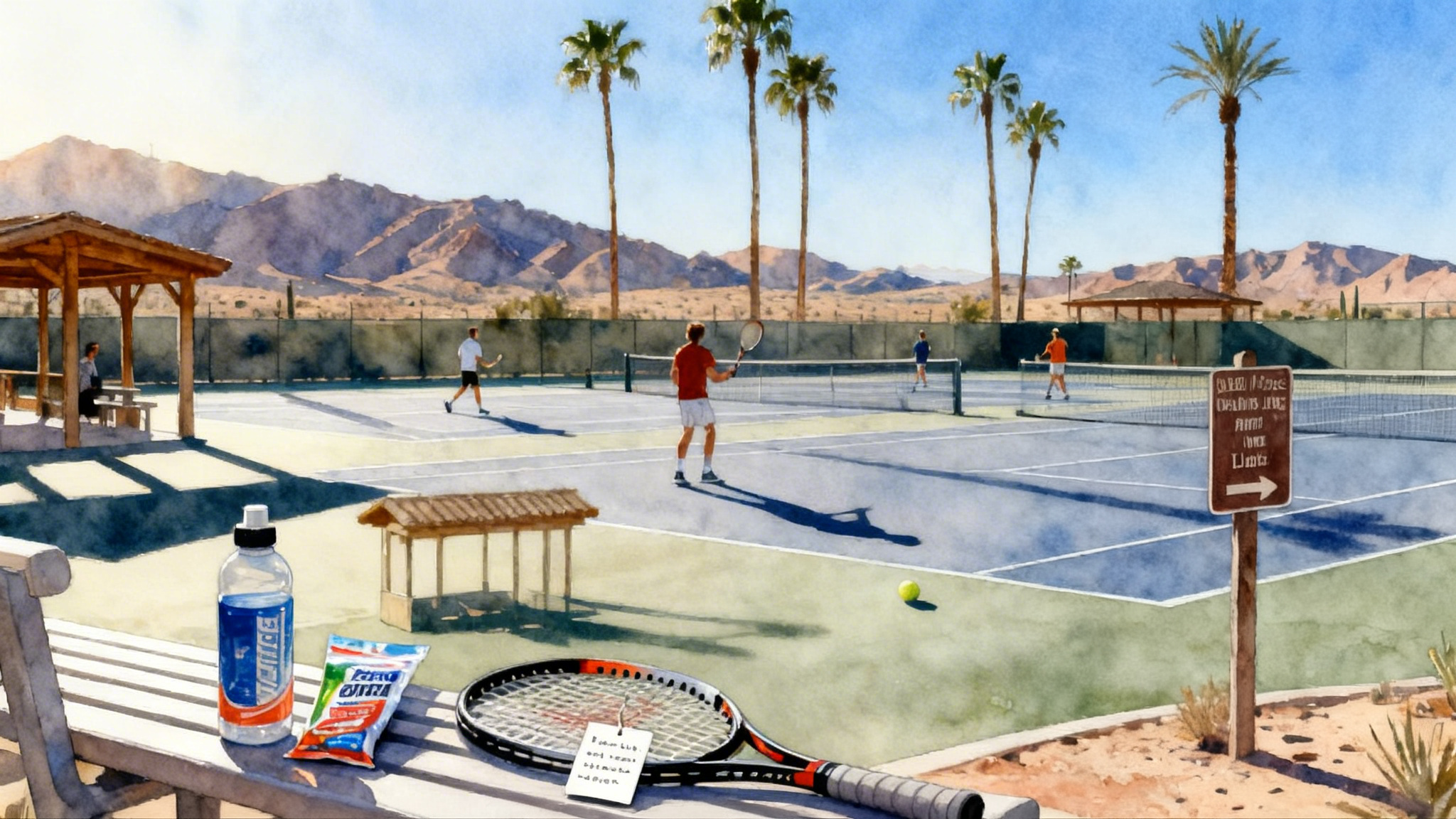
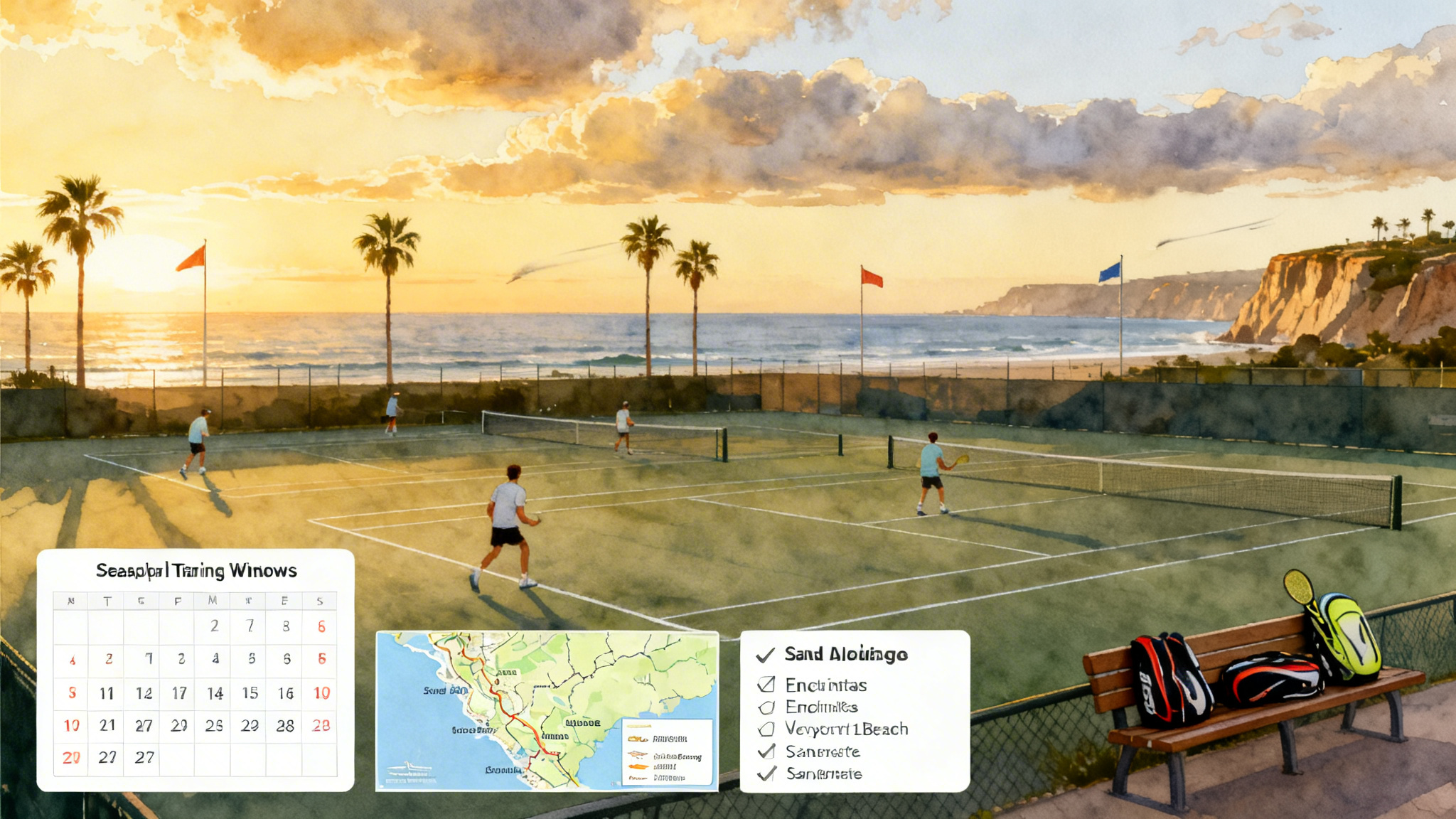
If you want a dependable hard court base to groove these reps, bookmark our guide to San Diego and Orange County. Players in Central Texas can also plan focused blocks at the Austin Hill Country tennis base.
Three mistakes that slow you down
-
Floating in the air. A floaty, high hop looks athletic but erases the timing window. Keep the hop compact. Up is for unweighting, not for airtime.
-
Landing heavy on the heels. Heels are brakes. Land on the forefoot, then let the heels kiss the court. You should feel springy, not thudding.
-
Staring at the ball only. To time correctly, watch the opponent’s body language and racquet path. A closed shoulder, a late contact, or a short backswing all predict where and how fast the ball will go.
Coaching cues that work with juniors and adults
- Sound cue: say up at him, down at hit. The words map the lift and the landing to the moment of contact.
- Height cue: coin under heel. Imagine a coin under each heel that you do not want to crush on takeoff, then you lightly press it on landing.
- Direction cue: land neutral, push outside. Land with feet even, then consciously drive off the outside foot to go where the ball demands.
If you are near Austin, structured small groups at the Legend Tennis Academy in Spicewood can help you drill these cues with video and targeted feedback.
Drills that build timing and first step speed
You do not need fancy equipment. A partner, cones, and a basket make a complete toolkit. Here are layered progressions.
- Metronome read and react
- Setup: Coach or partner stands on the opposite baseline with two colored cones to their left and right. Player stands on the service line.
- Action: Partner calls ready, begins a slow shadow swing, and points a racquet to a cone at the moment of simulated contact. Player times a split step to the forward swing and lands on hit, then explodes to the indicated cone for a quick touch.
- Focus: Land on hit, not before. Keep the hop tiny. Reset and repeat for ten reps, then switch sides.
- Ball toss split and chase
- Setup: Coach stands at the center hash near the net with a basket. Player starts just behind the baseline, centered.
- Action: Coach tosses a ball left or right with an obvious arm action. Player times the split step to the coach’s release, lands as the ball leaves the hand, then sprints to catch the bounce on the rise.
- Progression: Add underhand slice tosses to force pivot steps. Add a call of forehand or backhand to challenge decision speed.
- Serve return clock
- Setup: Server on the baseline, returner on the opposite baseline. Use first serves at 60 to 70 percent.
- Action: Returner starts their lift as the server’s tossing arm drops, lands as the ball meets the strings, and takes the first step forward into the shot.
- Feedback: If the returner feels stuck on the line, they are landing late. If their feet slap and pause before the serve arrives, they are early.
- Net approach split and seal
- Setup: Feeder at baseline, hitter starts at the service line and attacks a short ball into the corner, then moves forward.
- Action: As the feeder prepares to pass, the hitter splits, reads the pass direction, and either cuts across for a volley or rocks back for an overhead.
- Emphasis: Wider base and slightly deeper knee bend on the net split to handle lateral explosions.
- Video check with a smartphone
- Setup: Phone on a small tripod at the side fence, framing both players from waist up and down.
- Action: Record five rally points. On playback, freeze the frame at opponent contact and note whether your feet are airborne, landing, or already planted.
- Goal: Work toward landing exactly at contact in eight out of ten instances.
How to connect the split step to tactics
The split step is not just mechanics. It is the hinge between reading and deciding. You can sharpen your patterns by pairing the split with pre planned intentions.
- Neutral pattern: Land, read, and default to crosscourt unless the ball sits high and short. Your first step is lateral, and your racquet preparation is early and compact.
- Offense pattern: When you have pulled the opponent wide, plan to land slightly forward and inside the baseline. Your first step is diagonally forward, hunting for an inside out forehand or a backhand up the line.
- Defense pattern: When you are stretched, land with a slightly wider base and lower center. Your first step may be backward or strongly lateral. Your aim is height and depth to reset.
Tie the landing to your decision. Say the decision aloud in practice. Land and call cross or line to wire the pattern into your nervous system.
Equipment and surface considerations
- Shoes: Models with supportive forefoot cushioning and a stable shank help you land confidently. Brands like Asics, Nike, Adidas, Babolat, and K Swiss all offer durable outsoles for hard courts. Pick a fit that lets your toes splay on landing without sliding forward.
- Socks and insoles: A slightly thicker sock reduces in shoe slip. If you use custom insoles, ensure the forefoot flex lines up with your natural bend point.
- Surfaces: On clay, lengthen your landing and keep your center lower to manage slides. On hard courts, keep the hop small and the landing crisp. On grass, widen your base and avoid aggressive lateral pushes until you trust your footing.
How coaches can teach it fast
If you coach, build the split step into your basket rhythm. Feed with a visible forward motion of your arm so players can time the landing to the moment you release. When you do live ball drills, say hit at opponent contact for a few reps so players associate your voice with their landing. Then go silent and let them own the timing.
Use constraints. For one rally block, players cannot move their feet until they land from the split. The moment they cheat, the rally dies. Then switch and have them exaggerate the hop for three balls, then return to normal. The contrast teaches awareness.
Finally, score it. In point play, award one bonus point for every forced error that followed a well timed split and quick first step. Tracking success rewards the habit you want.
A weeklong progression plan
Day 1: Awareness
- Ten minutes of shadow timing, saying up at him, down at hit.
- Two sets of the metronome read and react drill, ten reps each side.
- Five minutes of smartphone check.
Day 2: First step
- Ball toss split and chase, three sets of eight tosses.
- Add a medicine ball hold on your chest during shadow splits to encourage posture, two sets of ten reps.
Day 3: Return focus
- Serve return clock with a partner or coach. Twenty first serves each deuce and ad sides.
- Video three returns and review.
Day 4: Rally transfer
- Live rally to fifteen balls, split timed to every opponent contact.
- Constraint round where you must say your intended direction on landing.
Day 5: Net play
- Net approach split and seal, three sets of six reps.
- Add a scoring game where a clean first volley after a timed split is worth double.
Day 6: Mixed surfaces or pace
- Practice on a slower or faster court if available. If not, have the feeder mix heavy topspin and flatter drives so you must adapt hop size and takeoff timing.
Day 7: Match rehearsal
- Full practice set. Between points, rate your split timing on a three point scale: early, on time, late. Aim for eight on time landings per game on return and six per rally game.
Troubleshooting checklist
- My legs burn after five minutes: Your hop is too big. Shrink the height by half. Focus on unweighting, not jumping.
- I keep getting wrong footed: You are landing late. Start your lift earlier by anchoring it to the opponent’s forward swing, not their contact.
- I feel stuck on the baseline: You are landing flat footed. Cue yourself to land on the balls of the feet and feel your heels kiss the court after touchdown.
- I cannot sync it on serve returns: Watch the server’s tossing arm. Begin your lift as that arm drops. This is a more reliable cue than trying to predict string contact.
Coaching case study
A sixteen year old right hander at our academy arrived with good strokes and an average win rate in three set matches. Video showed he floated his split step and landed after opponent contact, especially on returns. We reduced his hop height, anchored his timing to the server’s tossing arm, and drilled the ball toss split and chase twice a week for three weeks. We also added a rule in practice sets where he had to call his shot direction on landing. Within a month, his first step looked noticeably sharper on film. His break point conversion rose because he started returns from a balanced, forward landing rather than a mid air guess. The only stroke change was the racquet staying in front. The movement change amplified everything else.
Bringing it all together
If you change nothing else in your movement this month, change when and how you split. Land on contact. Keep the hop compact. Tie your landing to the first step and to the decision you intend to make. The rest of your footwork improves because the system has a clear start signal.
You can spend hours on bigger forehands or heavier backhands, but the split step is the switch that turns those assets into point winning patterns. It is not a trick or a trend. It is a practical way to line up your eyes, brain, and legs so they fire in the same direction at the right moment.
Conclusion
The pros are not superhuman in their first steps. They are on time. That is the gap you can close in a few weeks with focused practice. Treat the split step like the ignition key in a race car. Without it, the engine sits idle and the steering feels heavy. With it, the same machine becomes responsive, quick, and accurate. Build the habit, film it, and let your timing set the table for every other part of your game.