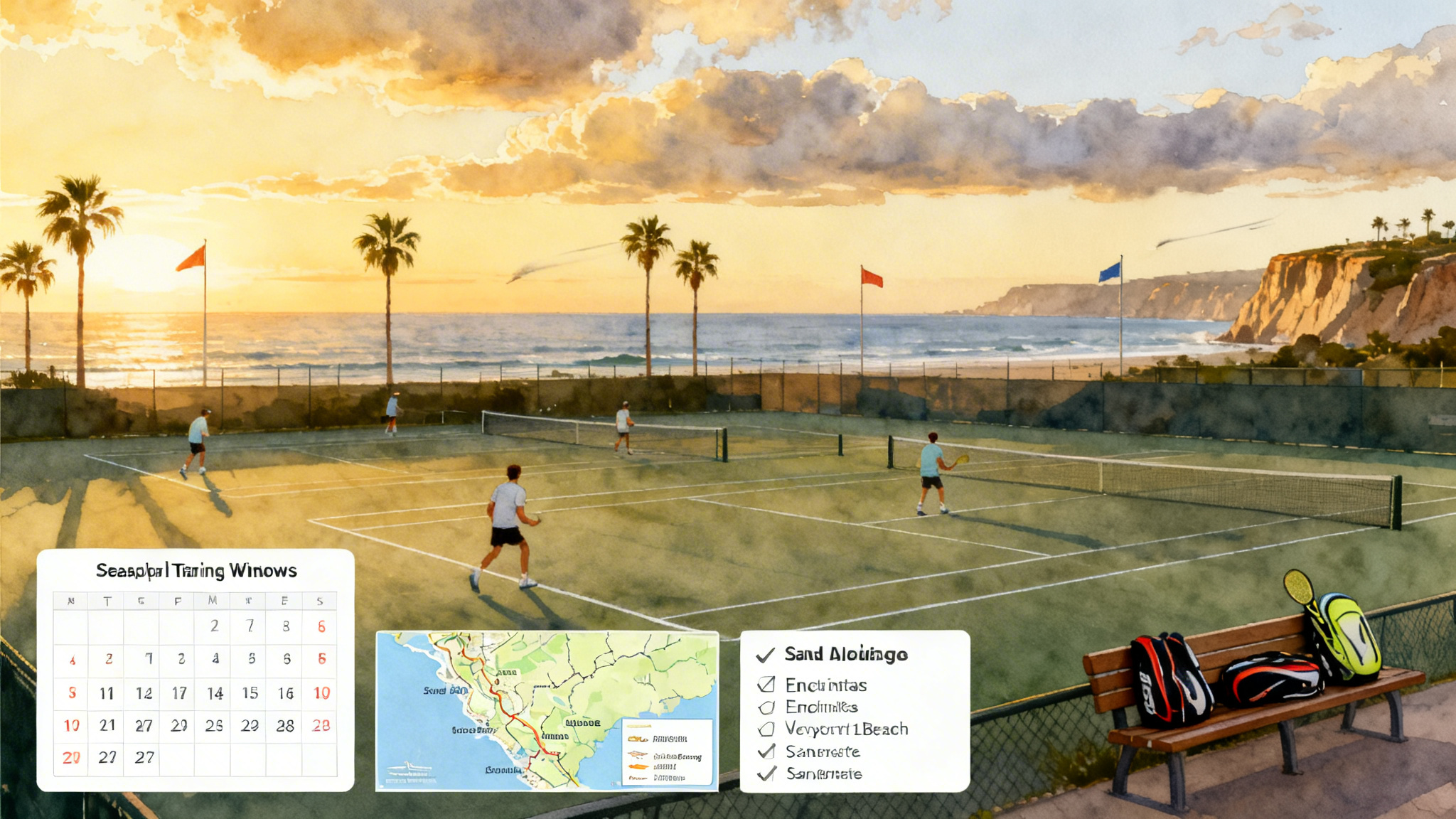
Mallorca Spring Clay: April to June Tennis Training Guide
Planning a clay-court training block in Europe? Mallorca from April to June gives you mild temps, low rain risk, and long light. Here is a data-backed climate read, a 7–10 day plan using Rafa Nadal Academy plus island clubs, and smart logistics.
 Tommy
Tommy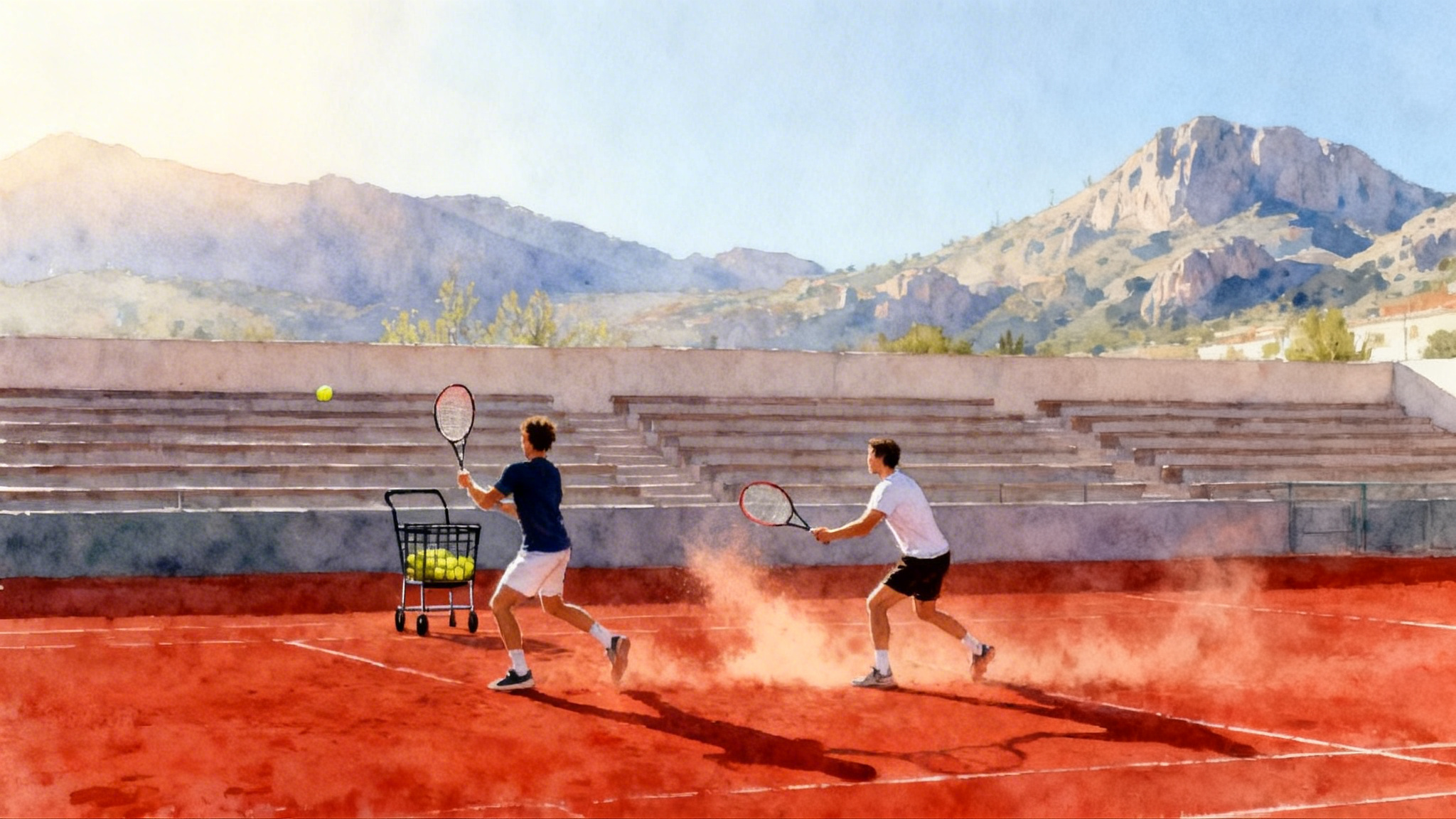
Why Mallorca’s spring clay beats the rest
Ask coaches across Europe when to tune your clay game and the same window keeps coming back: April through June in Mallorca. The island’s spring offers a practical blend of mild temperatures, low rainfall, and long daylight, with consistent morning conditions that make structured training easier. Official climate normals for Palma show average highs near 19°C (66°F) in April, 23°C (73°F) in May, and 28°C (82°F) in June, while rainy days drop as spring advances. You do not need perfect weather to have a perfect camp, but you do need predictability, and Mallorca in spring delivers it. For hard numbers, see the AEMET climate normals for Palma Airport, which mirror what coaches feel on court.
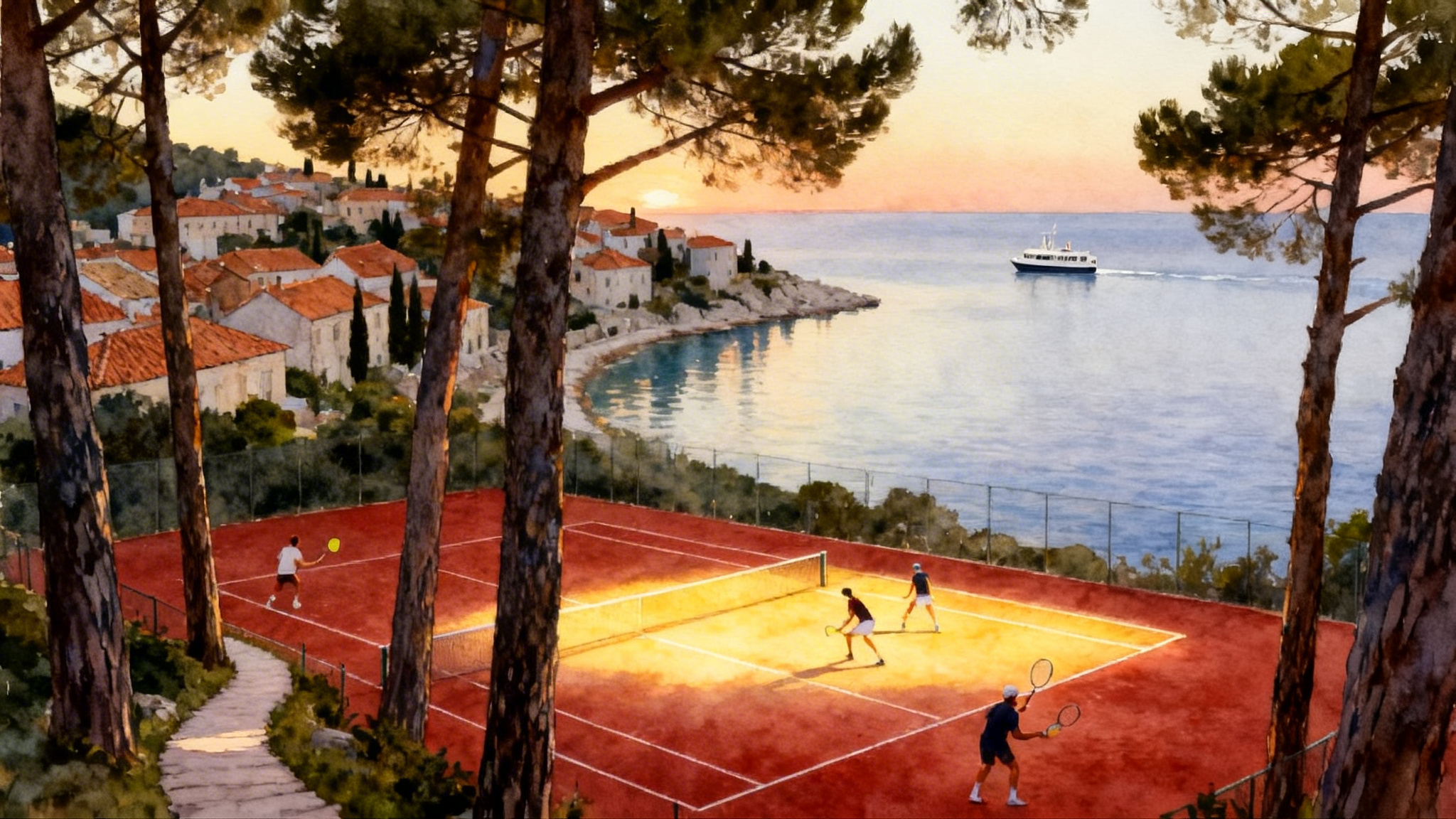
Travelers who like to compare Mediterranean options can also scan our take on French Riviera shoulder-season tennis and the island microclimate in Lošinj microclimate tennis base to decide which spring window fits best.
What the climate means for your session plan
- Temperatures: April mornings start cool (often 10 to 12°C; 50 to 54°F) which makes live-ball drills feel crisp rather than heavy. In May and early June, mornings warm to 16 to 20°C (61 to 68°F), which is comfortable for longer point play before lunch.
- Rain risk: April typically carries a few light rain days; May and June trend drier. Showers tend to be brief, so having an indoor gym or video room nearby lets you pivot to analysis without losing the day.
- Wind: A local sea breeze known as the embat often builds from early afternoon. Plan your most technical work early, then move to fitness or serve targets if the breeze picks up.
- Daylight: Sunrise is early, sunset late, which supports a two-a-day rhythm with a proper siesta block for recovery.
Court speed and ball behavior
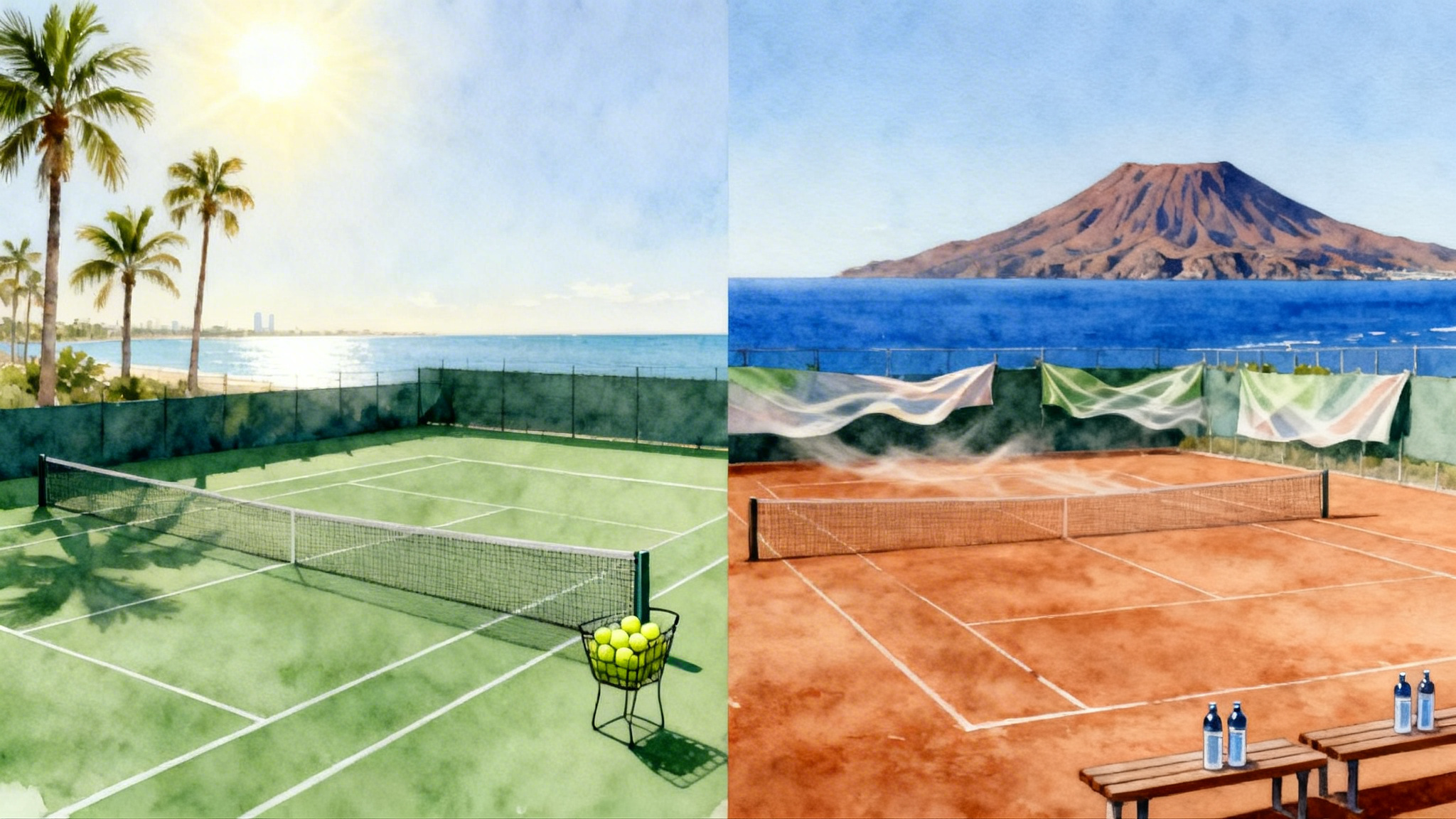
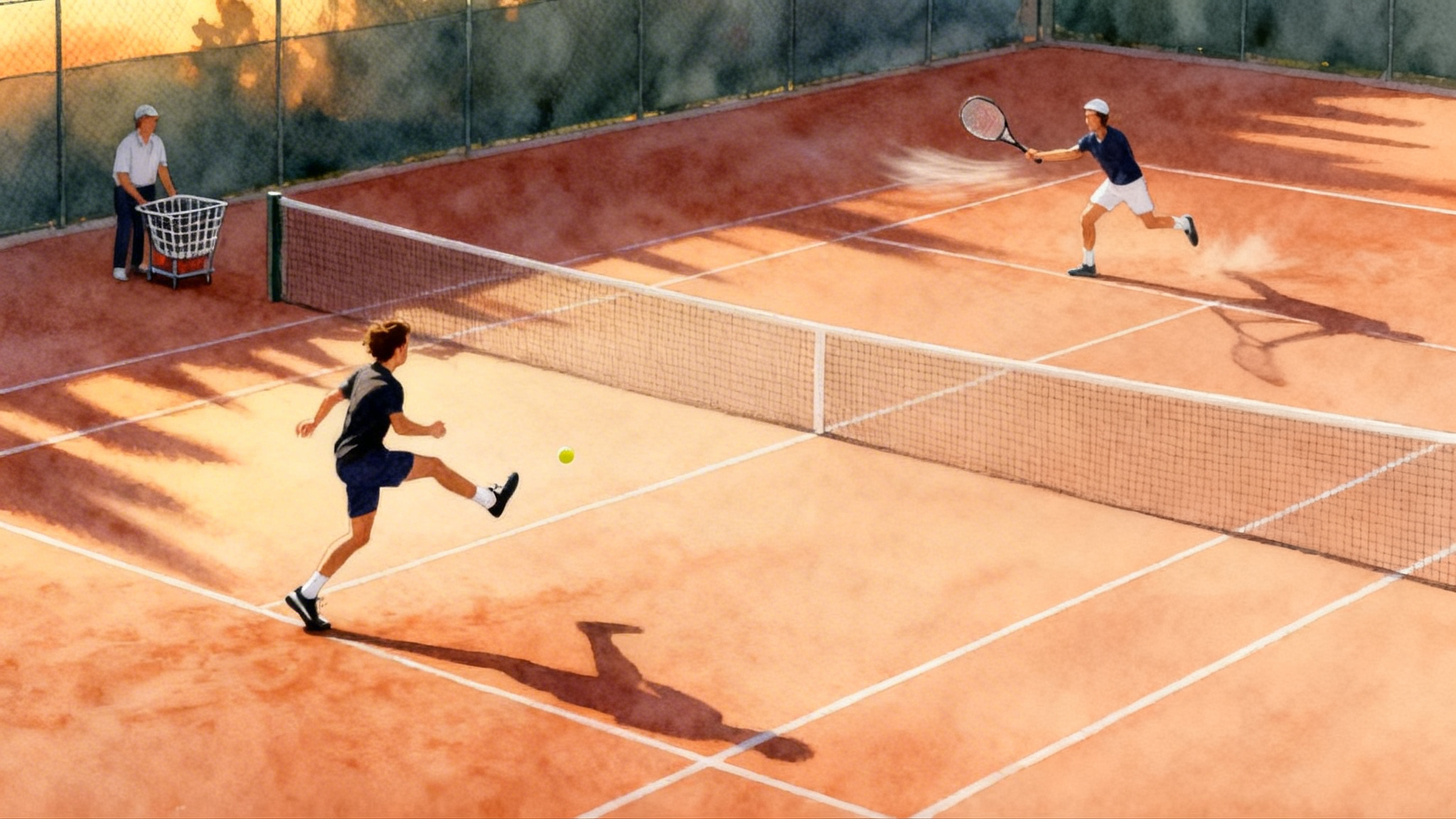
Mallorca’s spring clay courts usually start the day cooler and slightly damp from overnight watering. Balls stay lower and the bounce is honest, perfect for rebuilding footwork patterns. By mid to late afternoon, the surface dries and speeds up. Topspin takes a bigger bite and kick serves jump higher. If you are training the forehand heavy cross or the ad-court kick serve out wide, schedule those reps later in the day when the court adds a little free action.
A 7 to 10 day clay block that fits real life
The goal is to blend technical consolidation with match realism while giving your body time to adapt to clay movements. Below is a template that uses two anchors: a skills-first program in Manacor and match play at clubs closer to Palma or the north coast.
Days 1 to 3: Foundation in Manacor
- Morning: Technical session at a high-level base in Manacor. Prioritize footwork patterns specific to clay: drop-step recoveries, diagonal slides into open stance, and two-step bracing on wide balls. Build a serve plus one pattern that you can repeat under fatigue. To sharpen timing on takeoff and landing, study and apply master the split step so your first move beats the bounce.
- Midday: Video debrief. Use slow motion on forehand takeback shape and contact height. On clay, a higher contact with a more vertical windshield-wiper finish often gives safer spin without sacrificing depth.
- Afternoon: Situational point play. Start 15 to 15, then switch servers every two points. Cap at 60 to 75 minutes to keep legs fresh.
- Recovery: Contrast shower or cold plunge, then a 20 minute walk to keep calves supple.
Days 4 to 5: Transfer to match conditions
- Morning: Match play set with a local sparring partner at a Palma or north-coast club. Keep a simple scoreboard goal: win at least 60 percent of second-serve points. That single number forces smarter patterns on big points.
- Afternoon: Serve targets and return reps. Use cones for deuce T, deuce body, ad wide. Alternate 8-ball blocks with 60 seconds rest, three rounds each target.
- Recovery: Light beach swim or easy pool session. Avoid long hikes on these days; save your legs for sliding.
Day 6: Rest or active recovery
- Options: Gentle coastal walk, 30 minutes of mobility and hips, or a half day spa. If you feel sharp, hit a 45 minute technical mini-session before lunch, then switch off completely.
Days 7 to 8: Intensity with feedback
- Morning: Pattern-based drilling with score. Example: first to 11 cross-court forehand exchanges where the last ball must land deep. Loser does 10 medicine-ball rotational throws. Add a tiebreak at the end to absorb pressure and noise from other courts.
- Afternoon: Tiebreak sets or a practice match with new balls. Focus on between-point routines and clay-specific resets: wipe the line, touch the fence, and reframe the next point with one clear intention.
- Recovery: Soft tissue work and glute activation. Clay asks your hips and ankles to work harder than hard courts.
Days 9 to 10: Consolidate and test
- Day 9 morning: Serve and first forehand pattern ladders. Two ladders of 30, alternating deuce and ad side. Track depth with markers at one meter inside the baseline.
- Day 9 afternoon: Play a practice set that starts at 3 to 3. The goal is to practice closing.
- Day 10: Final hit early, review video, and write your three non-negotiables for your next tournament. Travel late afternoon or the next morning.
Tip: If you opt to centralize training, the Rafa Nadal Academy adult programs provide packaged weeks with coaching blocks, gym, and recovery facilities under one roof, which simplifies logistics.
Where to train: building a smart club mix
- Manacor base: Manacor is the center of gravity for focused training. Courts are plentiful, the vibe is serious, and facilities for gym and recovery are close. Morning calm is the big advantage here.
- Palma city clubs: If you want cafe life and easy evenings, Palma Sport and Tennis Club and similar city venues offer clay plus a social scene. Expect a little more afternoon wind inside the bay. Book sparring partners through the club desk.
- Southwest and north coast: Areas like Palmanova, Peguera, and Alcudia have solid club options with quick access to beaches. Courts can dry faster in onshore breezes, which is useful for late-day kick-serve work.
Costs vary by club. As a rough guide in spring, private coaching often ranges from 60 to 120 euros per hour depending on level and facility. Court hire may run 15 to 30 euros per hour for two players, with discounted blocks in the late morning.
Logistics from the United States, United Kingdom, and European Union
- Flights: Palma de Mallorca Airport (PMI) is the island hub. From the United States, most travelers connect in Madrid, Barcelona, or a major European hub like London or Frankfurt. From the United Kingdom and the European Union, frequent direct flights run throughout spring, with schedules expanding toward June.
- Getting to Manacor: If you plan to split time between Manacor and Palma, consider a rental car for flexibility. There is also a regular train from Palma to Manacor. For a no-car plan, train plus a short taxi hop to your courts works well.
- Bags and racquets: Airlines treat racquet bags as standard checked luggage but always confirm dimensions and weight limits. Protect frames with bubble wrap around the heads, then clothes around the handles.
- Car rental and parking: Spring is shoulder season but popular. Book cars early if your dates touch holiday weeks. In Palma, choose lodging with on-site parking; street parking in central neighborhoods is tight.
Where to stay: budget and premium choices near courts
The smart play is to pick accommodation within a 10 to 15 minute walk or drive from your primary courts. That keeps warmups and cool-downs smooth and reduces time in traffic.
-
Manacor and east coast
- Budget: Simple apartments in Manacor town or Porto Cristo. Expect 80 to 140 euros per night in spring for clean, no-frills stays with kitchens, which helps nutrition control.
- Premium: Full-service residences or upscale boutique hotels within short reach of the courts. Rates often run 180 to 350 euros per night in spring, higher for suites.
-
Palma and southwest
- Budget: Guesthouses or compact hotels in Son Armadams or Santa Catalina, a short walk from central clubs. Expect 100 to 160 euros per night depending on dates.
- Premium: Five-star bayside or old town properties with spa access. Think 250 to 500 euros per night in spring, more on holiday weekends.
Booking tip: Reserve cancellable rates, then recheck prices two to three weeks out. Spring demand can shift quickly with events and school breaks.
Recovery that reinforces your training
- Beaches near east-coast courts: Cala Anguila and Cala Romantica are close enough for a 60 to 90 minute recovery window. An 8 to 12 minute cold plunge in shoulder-deep water is free ice therapy.
- Spa strategy: Alternate heat and cold. For example, 8 minutes sauna, 60 seconds cold shower or plunge, repeat two to three times, then finish with gentle stretching. Avoid heavy deep tissue the night before intense footwork days.
- Hiking for the soul and glutes: The Serra de Tramuntana offers spectacular paths. Pick a short, rolling route on your rest day rather than steep ascents. The Deia to Cala Deia out-and-back is a classic easy option.
- Nutrition: Spring markets are full of berries, tomatoes, and local olive oil. Build post-session bowls around carbohydrates and protein in a 3 to 1 ratio. On clay blocks, legs love rice and potatoes more than salads alone.
Pitfalls to avoid
- Easter and spring holidays: Semana Santa and school breaks move each year and can land in late March or April. Expect fuller flights and pricier rooms. Lock in lodging and cars early if your dates touch those weeks.
- Afternoon sea breeze: The embat often lifts after lunch, which can push tosses around and make high balls sail. Schedule technical work and match play for mornings, serves and returns later.
- Event weekends: Late April often brings the Mallorca 312 cycling sportive and May often hosts triathlon events around Alcudia. These do not stop tennis, but they do squeeze hotel and car supply in certain areas. If your dates overlap, book early or base in another part of the island.
- Heat creep in June: By mid to late June, afternoons can feel toasty. Slide your schedule to 8:00 to 11:00 for the main hit, then 17:30 to 19:30 for targets and tiebreaks.
- Clay gear surprises: Clay stains socks and shoes. Pack a dedicated pair of clay shoes, two pairs of socks per day, and an extra overgrip per session. A small towel for hands and a spare shirt per hit keeps grip pressure consistent.
- Court care: Always sweep the court and brush lines after play unless staff do it for you. Ask before watering; many clubs have a set schedule.
A sample daily timetable that works
- 07:00 Light breakfast with easy carbs and coffee or tea
- 07:40 Arrive at courts, 10 minute dynamic warmup and band work
- 08:00 to 10:00 Technical block with drills tied to one theme, for example backhand height control and depth
- 10:00 to 10:20 Smooth cooldown walk, water, protein and carbs
- 12:00 to 13:00 Video review or gym strength, focus on posterior chain and core anti-rotation
- 13:30 to 15:30 Lunch and siesta, feet up
- 16:30 to 17:00 Serve warmup and footwork ladders
- 17:00 to 18:30 Match play or tiebreaks, switch sides every four games to train in breeze from both ends
- 19:30 Dinner with lean protein, vegetables, and a starch, hydrate well
- 21:30 Gentle stretch and lights out
Budgeting your block
For a nine day plan, typical midrange costs for two players sharing in spring might look like this:
- Coaching and court time: 1,000 to 1,800 euros total depending on private hours and club mix
- Accommodation: 1,000 to 2,200 euros total for a quality apartment or midrange hotel
- Transport: 250 to 500 euros for a compact rental car and fuel, or less if using train plus taxis
- Food: 400 to 700 euros cooking some meals, eating out once daily
- Extras and recovery: 150 to 400 euros for spa sessions, massages, and small gear
Your actuals will hinge on coaching intensity and lodging class. The range above is a planning tool so you can lock dates and coaches with confidence.
Putting it all together
- Choose your climate window: If you want cool and calm mornings, pick April. If you want warmer ball and beach afternoons, pick late May to early June.
- Lock your anchor: Decide whether to base in Manacor or split with Palma. Both models work; Manacor leans higher focus, Palma leans lifestyle.
- Book early if you overlap holidays or events: Check your dates against Easter week and major sporting weekends.
- Write goals you can count: Examples include 65 percent first serve percentage in matches, 60 percent second-serve points won, and fewer than three unforced errors per game on return.
The final word
Spring in Mallorca rewards players who plan with the same clarity they bring to a big point. Pick mornings for precision, use the breeze to challenge your serve and high forehand, and carve a week that blends Manacor discipline with island variety. Do that from April to June and you stack the odds in favor of real clay gains that last into summer tournaments and beyond.