Portugal’s Year-Round Tennis Triangle: Lisbon, Algarve, Madeira
Train smarter across Portugal’s Atlantic microclimates. Use spring winds in Cascais, log dry winter hours in the Algarve, and rely on Madeira’s 12 month mildness. Includes itineraries, surfaces, budgets, and best months to go.
 Tommy
Tommy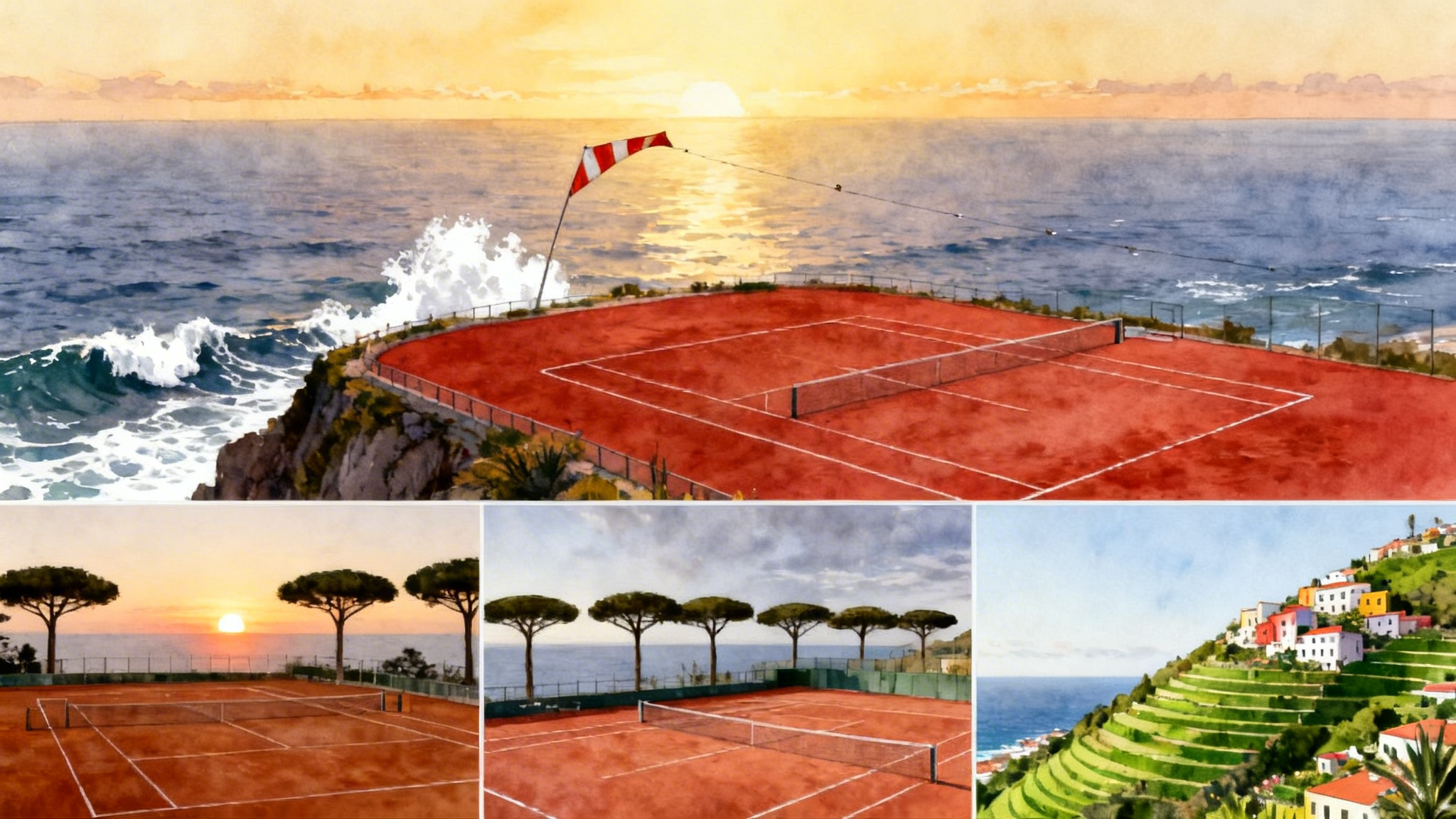
A climate-smart map for your next tennis block
Portugal is small on a map and huge in tennis variety. Within a two hour flight of each other you get three training zones that play like different chapters of the season. Lisbon and Cascais harden your timing against ocean wind in spring. The Algarve lets you bank sunny winter hours when much of Europe is under cloud. Madeira offers year round baseline reliability, a floating court in the Atlantic. The secret is not magic weather. It is microclimate. Portugal’s coast bends, mountains rise, and prevailing winds split conditions into usable patterns you can plan around. To ground this guide in reality rather than folklore, start with the official climate normals for Portugal. Use them to align your training blocks with the months that match your goals.
This article breaks down when to go, how to structure a week, what surfaces you will find, expected budgets, and how to connect the triangle without wasting rest days on transfers. For a complementary case study in microclimates, see our Lošinj microclimate tennis guide.
Lisbon and Cascais: build timing in honest wind
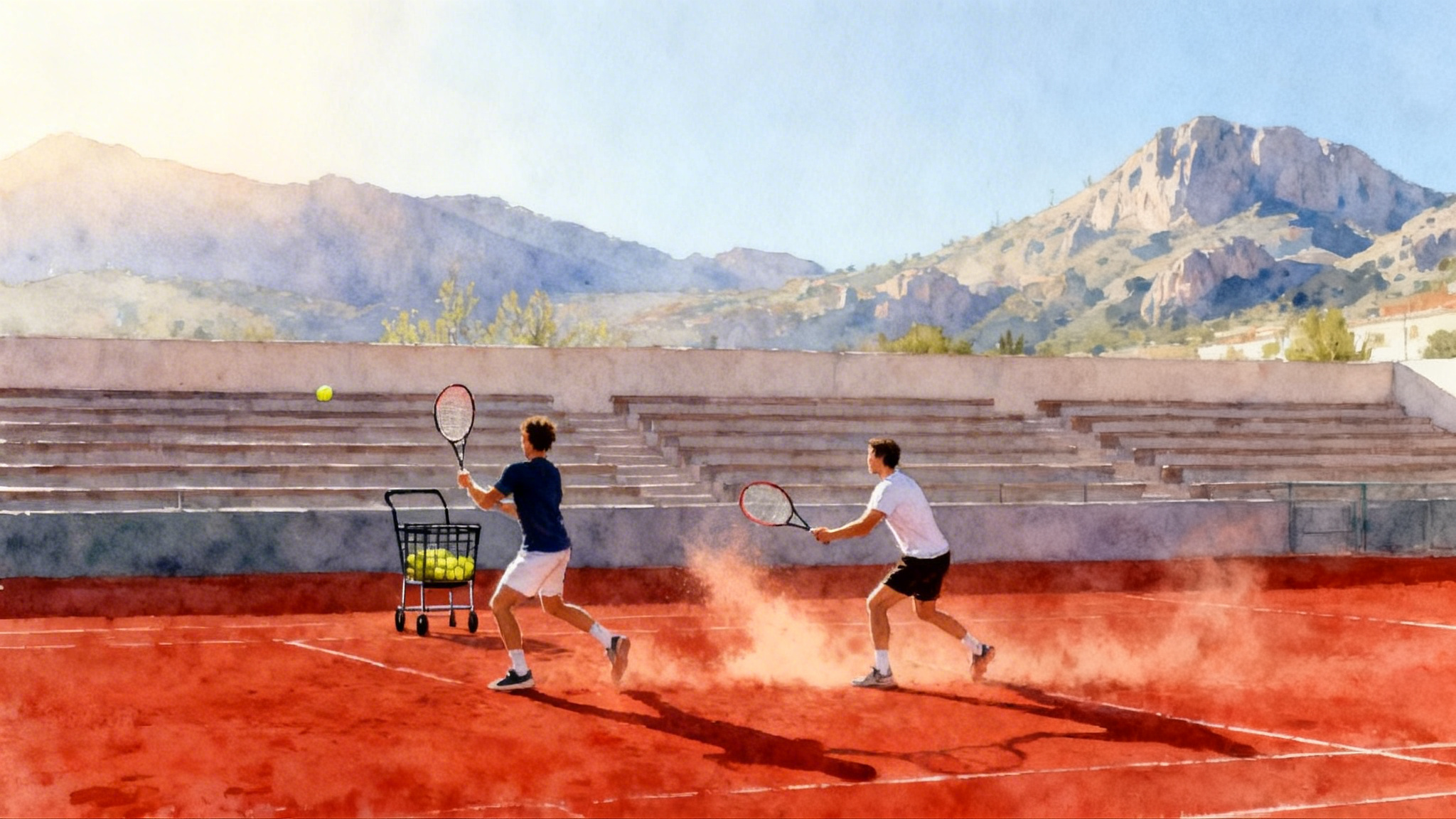
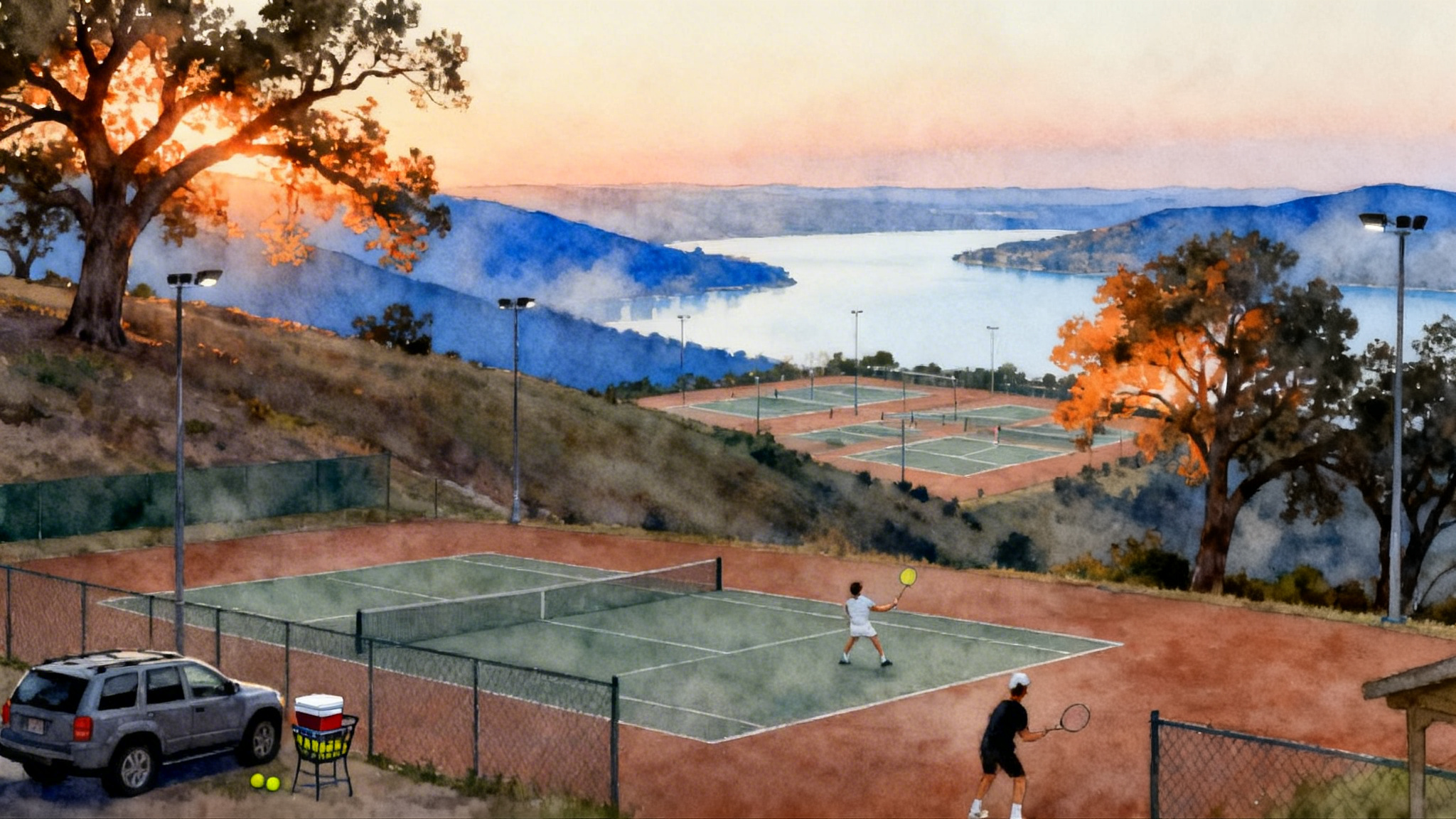
If you see a windsock near Guincho Beach pointing straight and firm, you are in the right kind of trouble for tennis development. Spring in Cascais and the Lisbon coastline brings steady northerlies and onshore breezes that turn standard drills into precision work. The ball stalls, lifts, and skids. You must shape your spin and use height properly. You must learn to defend with footwork, not just racket flash. These are not annoyances. They are features.
- Ideal months: March to early June for wind sharpening; September to October for calmer air and warm courts.
- Temperature band: roughly 14 to 24 degrees Celsius from spring into early summer, warm enough for long sets without heat stress.
- Rain pattern: light to moderate in March and April, trending drier by May and June. Early mornings are often smoother before the breeze builds.
Surfaces and settings
- Clay: widespread in Estoril, Carcavelos, Oeiras, and Sintra. Clay plus a crosswind is a graduate course in margin and shape.
- Acrylic hard: common in Lisbon clubs and universities, good for serve reps when the wind eases.
- Bubbles and covered courts: limited but present around Lisbon proper. Keep a backup slot for days when gusts exceed your tolerance for technical work.
Notable clubs
Jamor National Sports Center in Oeiras, Clube de Ténis do Estoril, and several municipal complexes along the Cascais line regularly host visiting players. If you time your trip for late April you can also soak in the clay season vibe at the ATP Estoril Open profile.
Training focus that fits Cascais
- Topspin height management: targets set above the net strap to seven or eight feet, crosscourt, then down the line, keeping a loose wrist to feel the wind load.
- Contact point discipline: rally with a constraint that the ball must clear the service line airspace by at least a racket length. This creates margin against gusts.
- Serve against wind: 20 minutes serving into the wind, aiming for kick that lands deep in the box; then 10 minutes with the wind at your back, practicing slider wide on the deuce side.
- Transitional footwork: approach-and-recover ladders where you finish each approach with an extra recovery shuffle to counter sudden stalls.
For timing under pressure, study the fundamentals in our Master the split step timing.
Seven day Cascais spring plan
- Day 1: Arrival looseners. Fifty minute rally block on clay with height targets. Evening beach walk to reset travel legs.
- Day 2: Wind school. Two by forty minute rally segments into and with the wind. Serve and return games only in the afternoon.
- Day 3: Patterns. Crosscourt heavy spin, inside out forehand sequences, plus overheads in wind. Optional gym pull session.
- Day 4: Match play right after sunrise when air is calmer; afternoon mobility and stringing.
- Day 5: Repeat Day 2 at higher tempo with live ball feeders. Add short court feel in the gustiest window.
- Day 6: Set play on hard courts to feel speed contrast. Practice second serves into the wind under score pressure.
- Day 7: Tie the bow with a two hour practice match; test your ability to adjust trajectories when the breeze shifts.
Algarve: winter sun and long, dry practice days
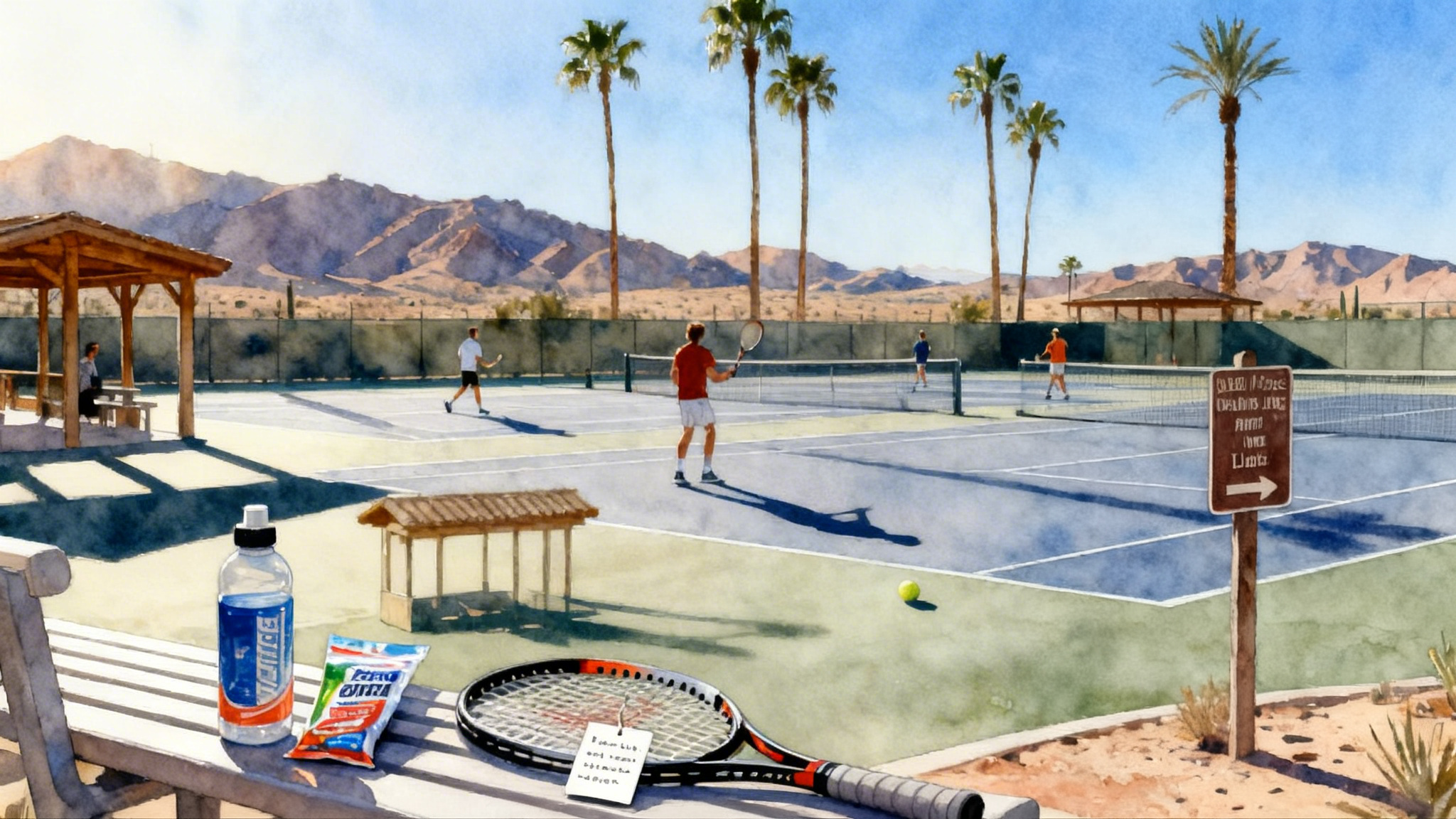
While northern Europe tracks storms, the Algarve quietly offers six and sometimes seven playable days out of seven in mid winter. The light is bright, the air is clean, and the mercury settles into the teens and low twenties Celsius, which is perfect for volume without heat drain.
Where to base
- Central Algarve triangle: Vilamoura, Quinta do Lago, and Vale do Lobo. Dense cluster of clay and hard courts, fitness studios, and physio.
- Western Algarve: Lagos and Portimão for a slightly wilder coastline and fewer crowds, with friendly municipal complexes.
- Eastern Algarve: Tavira and Vila Real de Santo António for value and quick access to Spain if you want cross border match play.
Surfaces you will find
- Clay: prevalent in resort academies and private clubs, kept in playable shape even in January.
- Acrylic hard: common in municipal centers, a cost saver for weekday morning blocks.
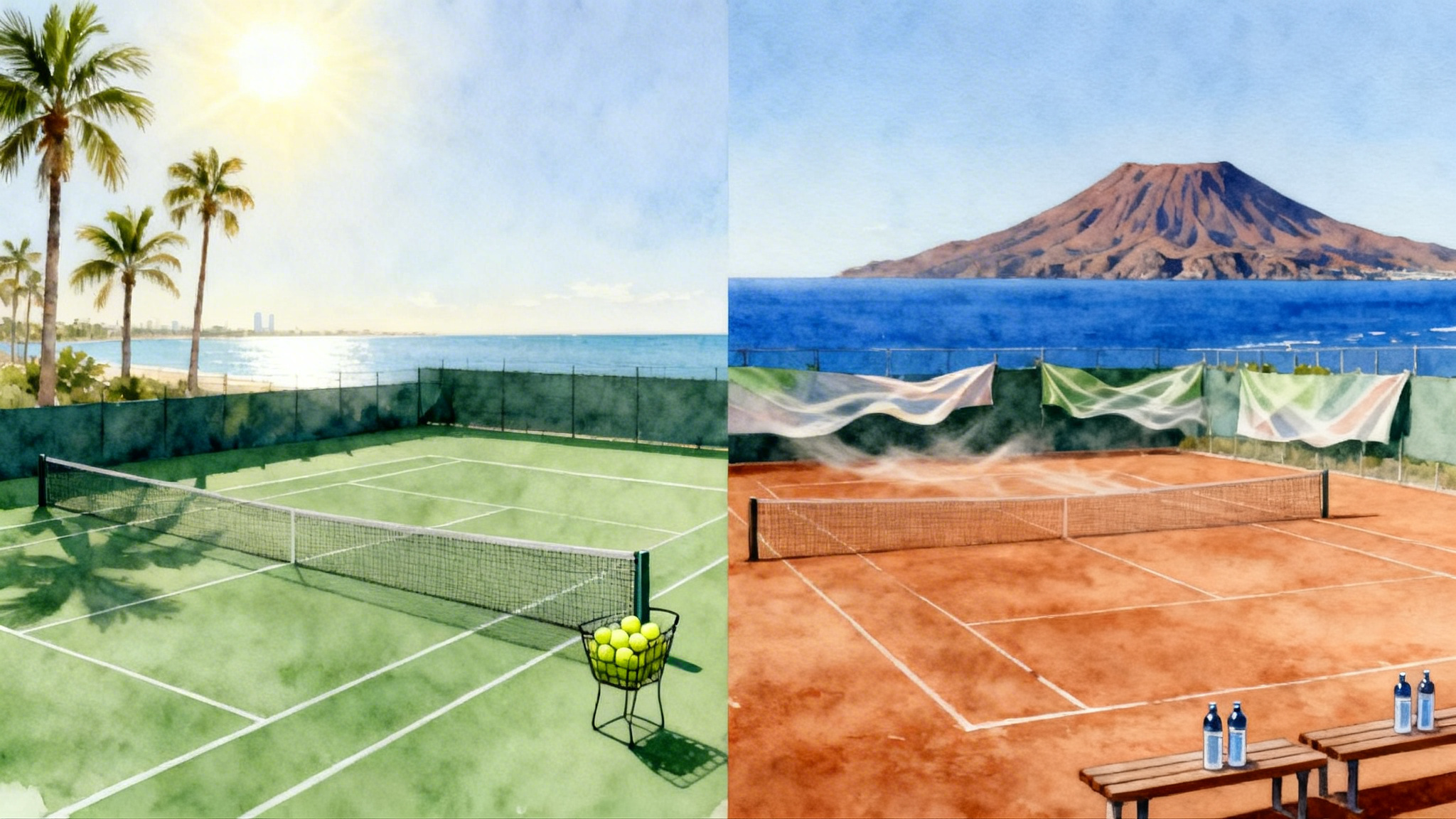
- Synthetic grass: pops up in resort settings. It is not a high performance surface but it can be handy for lighter days and doubles.
Weather window
- Best for dry hours: late November through March. Expect some rain events, but the ratio of sun to cloud is favorable, and showers clear quickly. Plan early sessions and leave late afternoons as flex time.
To benchmark other winter choices, compare our Florida vs Canary Islands winter base.
Ten day Algarve winter block
- Day 1: Intro and baseline assessment on hard. Light serve volume and shoulder care.
- Day 2: Clay day. Forehand heaviness and backhand stability. Evening mobility.
- Day 3: Doubles patterns on synthetic grass to reduce joint load. Net first instincts.
- Day 4: Hard court pace. Return depth drills. Gym power session focused on posterior chain.
- Day 5: Match play set, then second serve resilience ladders. Afternoon coastal walk.
- Day 6: Recovery. Pool work, band routine, 45 minute feel hit only.
- Day 7: Clay endurance. Four by twenty minute rally blocks, last block to targets under light score.
- Day 8: Point building. Serve plus one, plus inside out run patterns.
- Day 9: Test day. Two set match with charting. Note first ball percentage and rally tolerance.
- Day 10: Taper. Touch, drop shots, short court, and fun mixed doubles.
Strings and balls in winter
- Strings: drop polyester tension by two to three kilograms to maintain pocketing in cool morning air.
- Balls: in drier cool air, choose a slightly heavier felt to avoid flyers. Switch cans mid session if wind dries balls quickly.
Madeira: the island of dependable mild
Madeira sits in the Atlantic on a climate cushion. Winters are gentle, summers rarely scorch, and rain usually comes in passing showers that leave soon. Funchal, the capital, is your natural base with multiple municipal courts and clubs within a short taxi ride. The island’s volcanic ridges create micro pockets: a court five minutes uphill might be a degree or two cooler and slightly breezier than one near the marina. Use this to your advantage.
Why Madeira suits twelve month training
- Temperatures: generally 17 to 25 degrees Celsius most of the year at sea level.
- Rain pattern: the wettest stretch is autumn into early winter, but showers are short and often highly localized. Book two courts in different neighborhoods when possible and decide morning of.
- Surfaces: a mix of hard and clay, with scenic backdrops that make long drills feel lighter.
Seven day Madeira reliability plan
- Day 1: Orientation hit in Funchal late afternoon. Easy patterns, no score.
- Day 2: Morning fundamentals. Afternoon footwork ladders along the seaside promenade.
- Day 3: Serve plus first volley on hard. Evening light hike to loosen hips.
- Day 4: Clay control day. Build patience with 10 ball rally goals and depth cones.
- Day 5: Mixed session. One hour of returns, then doubles poaching.
- Day 6: Recovery swim or open water snorkel when conditions allow. Short shadow swings only.
- Day 7: Test match by the marina. Sunset stretch.
When to go for minimal rain and ideal temperatures
You are not chasing perfection. You are stacking odds.
- Cascais and Lisbon: driest and most stable from May through September. For wind-hardened training, target March to early June when breezes are common but temperatures are friendly. For minimal wind, book early morning slots and shoulder months like late September.
- Algarve: late November to March for winter sun with playable temperatures. February often blends stable weather with quieter resorts. April to June is nearly bone dry and warm if you prefer shoulder season heat without summer crowds.
- Madeira: you can train year round. For the least rain, late spring through summer is a solid bet. If you visit in October or November, double book courts across neighborhoods and keep mornings flexible to dodge passing showers.
Surfaces and facility notes by region
Lisbon and Cascais
- Clay is king for serious drilling. Many clubs maintain red clay through spring.
- Hard courts in the city help with serve and return speed. Book them for your test days.
- Covered options exist in limited numbers; reserve early if your plan cannot tolerate high wind days.
Algarve
- Clay in resort academies gives you European spring conditions during winter months.
- Municipal hard courts are budget friendly and often available at off peak hours.
- Some resorts have synthetic grass; use it for doubles days and joint friendly sessions.
Madeira
- Good spread of hard and clay in Funchal. Courts sit near sea level and slightly uphill; the small micro shifts help you match the day’s goal to the venue.
Budget ranges you can actually plan around
These are planning ranges for two players sharing costs. Local variations exist, especially during school holidays.
- Courts per hour: 8 to 25 euros on municipal or member clubs; 20 to 40 euros in resort settings during peak periods.
- Private coach: 35 to 80 euros per hour depending on credentials and language. Group clinics: 20 to 40 euros per person per session.
- Stringing: 15 to 25 euros labor, plus 10 to 25 euros for a polyester string set if you do not bring your own.
- Balls: 4 to 6 euros per can. Assume one to two cans per singles session in wind.
- Accommodation per night, double occupancy: 60 to 120 euros for value hotels or apartments; 120 to 220 euros for midlevel resort or boutique; 220 to 450 euros for five star or luxury apartments near courts.
- Food per person per day: 20 to 40 euros self catered; 35 to 70 euros if you mix restaurants with groceries.
- Transfers: Lisbon to Cascais commuter train is inexpensive; car rentals range from 25 to 60 euros per day off season. Interisland flights to Madeira vary but plan 60 to 150 euros one way when booked early.
As a rough translation at common exchange rates, multiply euros by about 1.05 to estimate in United States dollars. Always check current rates when you book.
Ways to keep costs controlled
- Book court blocks in off peak morning slots. You get calmer air plus lower rates in many municipal facilities.
- Split private lessons with a hitting partner. The coach can alternate feeds and live ball, and you both get quality touches.
- Use municipal gyms or outdoor fitness parks for strength work a few days per week.
Sample triangle itineraries
Ten days that connect all three zones efficiently
- Day 1 to 3 Lisbon and Cascais: wind school, clay plus height targets, serve into the breeze.
- Day 4: travel afternoon to Algarve by train plus rental car, or direct car in about three hours. Light evening hit.
- Day 5 to 7 Algarve: volume block. Two a day practices with one lighter doubles session.
- Day 8: morning flight Lisbon to Madeira. Afternoon short hit in Funchal.
- Day 9 to 10 Madeira: test matches and touch work, then recovery day with ocean swim.
Seven days split between Cascais and Algarve
- Day 1 to 4 Cascais: build spin, learn height, live with crosswind.
- Day 5: travel early to Algarve. Afternoon technical serve session.
- Day 6 to 7 Algarve: match play and return work in calmer air.
Practical logistics that save training hours
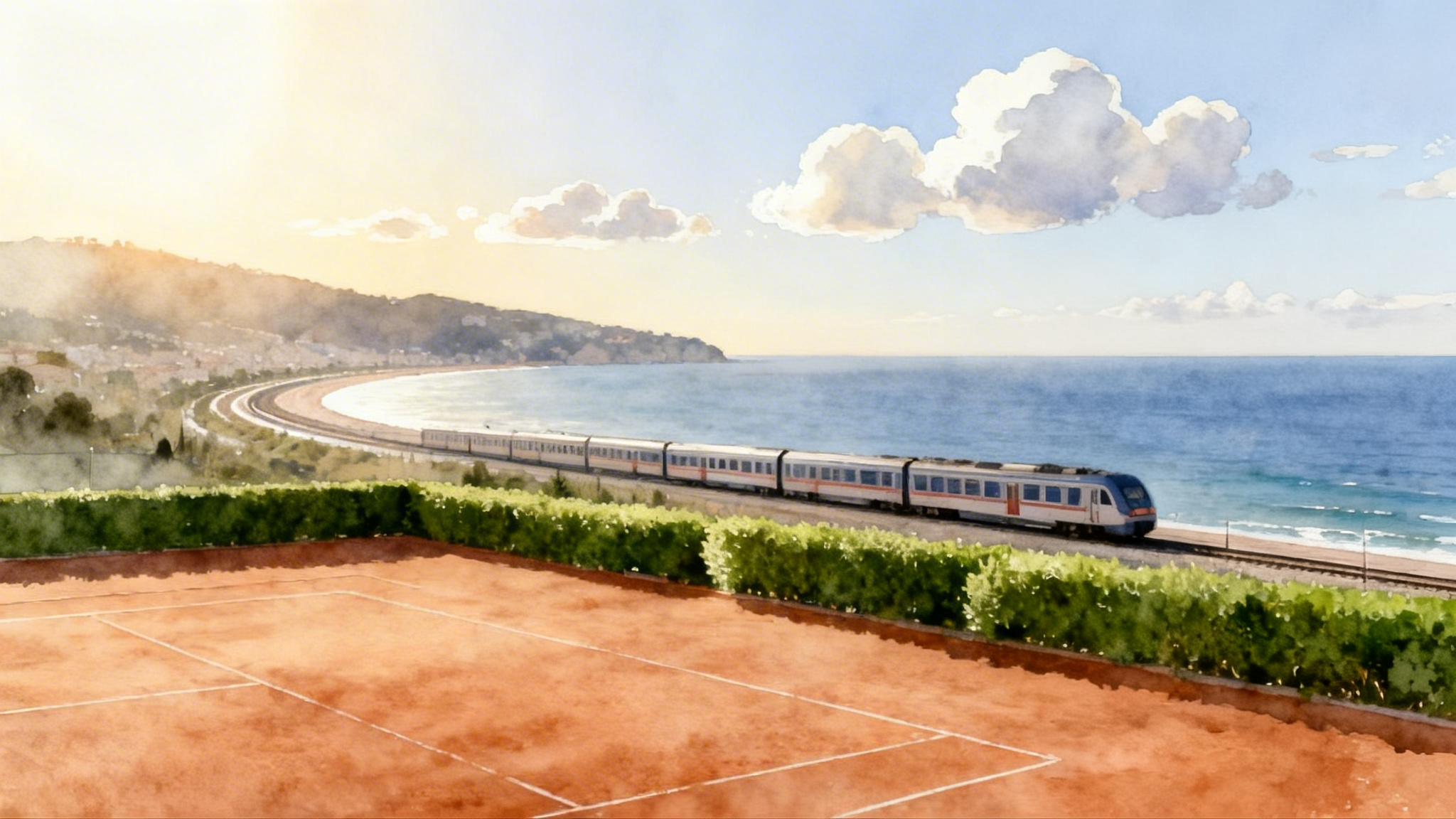
- Getting to Cascais from Lisbon: commuter rail from Cais do Sodré to Cascais is frequent and scenic. Budget about forty minutes platform to platform. For dawn sessions, a rental car gives flexibility.
- Lisbon to Algarve: driving the A2 is roughly two and a half to three hours from Lisbon to central Algarve. Trains connect Lisbon to Faro and beyond; add a short taxi to your club.
- Lisbon to Madeira: direct flights from Lisbon to Funchal are about one hour and forty five minutes. Book midday departures to avoid losing morning court time.
- Booking strategy: hold two courts on your heavy drill days if the forecast is volatile. Cancel the backup by the facility’s cut off window.
How to turn weather into a training tool
Think of Portugal as three laboratories that sharpen different skills.
- Cascais and Lisbon train your feel for the ball. You learn to hit up and over, not just through. You learn to move your feet to the ball rather than waiting for a perfect bounce. This pays off in away matches where conditions are less than perfect.
- The Algarve lets you increase volume and polish patterns. You can schedule three hour blocks, recover, and repeat, because heat and humidity usually stay within a range that humans like.
- Madeira gives you a metronome. Set work, rest, and test days without worrying about season. It is the place where your plan survives contact with the real world.
A closing rally
Portugal’s triangle is not a postcard idea. It is a scheduling lever. Use Cascais in spring to make your ball heavy and your ego lighter. Use the Algarve in winter to do the work others postpone. Use Madeira anytime to keep your plan on track when life and weather try to interfere. Pick your month, match the microclimate to your goal, and book courts before you pack. The payoff is not just more hours. It is better hours, stacked in the right order.