Tokyo Tennis 2026: Winter to Spring Courts, Blossoms, Academies
Plan a January to April tennis trip to Tokyo with climate-smart tips, public court booking know-how, Setagaya and central stay advice, and precision sessions at Seijo and Shi Shi. Includes sample 3–5 day itineraries.
 Tommy
Tommy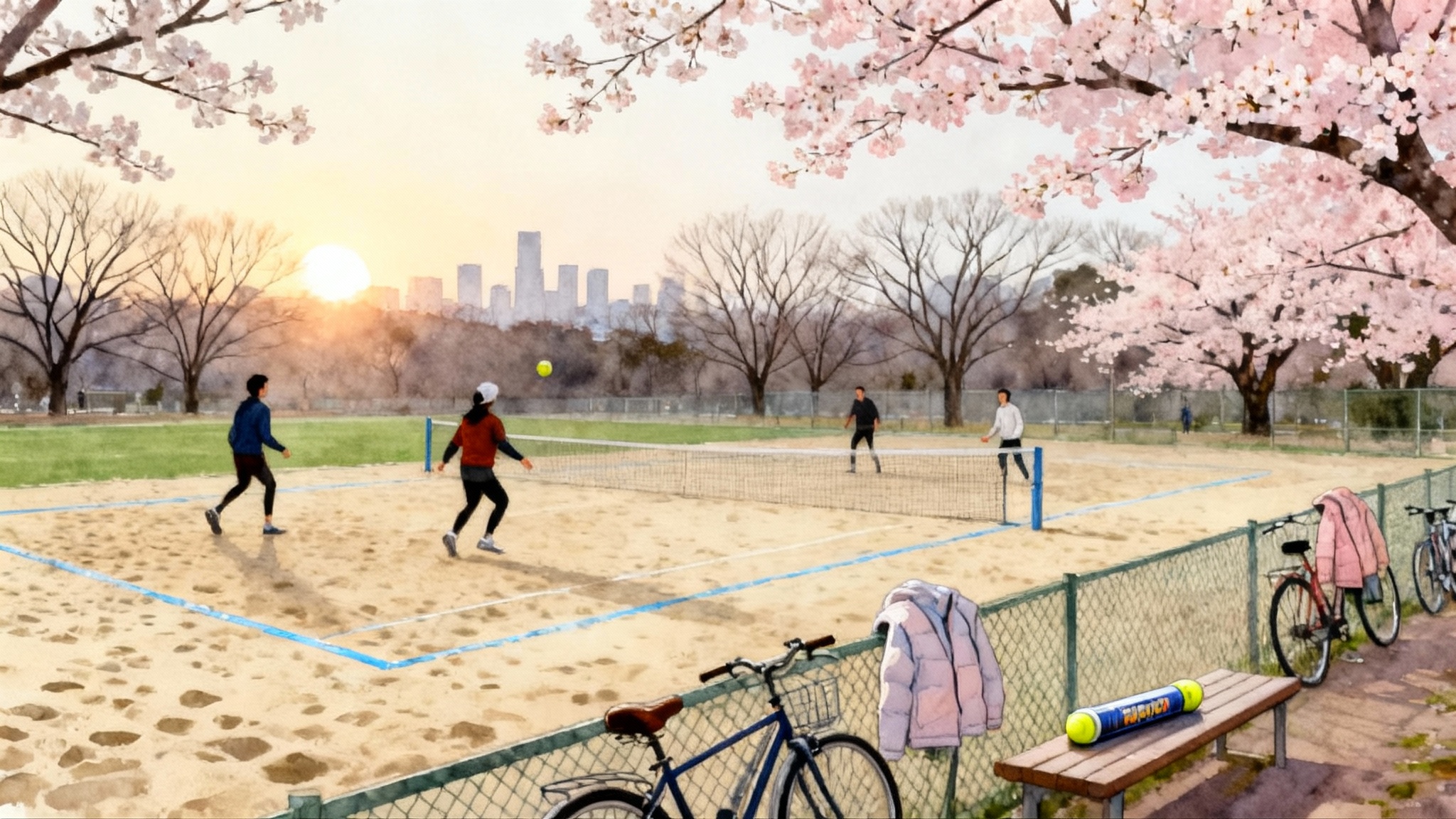
Why January to April is a sweet spot for tennis in Tokyo
Tokyo’s winter eases into spring with dry, bright days that are ideal for rhythm work on court. From January to early March, you will get crisp air, strong sun, and fewer rainy interruptions than in the June rainy season. By late March and early April, cherry blossoms arrive and the city turns into a pastel backdrop for doubles and drills.
For planning, average daytime highs move from about 10 degrees Celsius in January to about 19 degrees Celsius in April, with lows climbing from near 1 to about 10. Sunshine hours are generous in winter, and rainfall is relatively modest until spring ramps up. These are long‑term normals published by the Japan Meteorological Agency, which are a reliable baseline for what you should expect in 2026 even as individual weeks vary. See the agency’s climatological tables for Tokyo’s monthly highs, lows, and sunshine hours for January through April, via the JMA climate normals for Tokyo.
What this means for your game:
- January and February reward footwork tuning and serve mechanics. The air is dry; grips stay tacky longer; balls feel a touch crisper off the strings.
- March demands layered clothing and flexible scheduling. You will get a few more wet days, so keep an indoor backup on your list.
- Early April delivers mild temperatures and visual motivation. Expect more players targeting blossom weekends, so book coaching and courts earlier than in winter.
If you want a warm‑weather fallback for the same season, compare conditions with our Tenerife winter tennis guide.
Pack for performance, not just for weather
- Layers you can peel: a light thermal top under a breathable long‑sleeve, then a wind shell, so you can transition from warmup to points.
- Two pairs of shoes if you plan to mix surfaces. Tokyo public courts are often sand‑filled artificial grass (called omni), plus pockets of hard and clay. Omni shoes with shallow tread help prevent slipping.
- Sun protection for winter sun: a cap, sunglasses, and high SPF. January skies look gentle; ultraviolet exposure is still real.
- Extra grips and a small towel. Dry winter air can rough up hands and over‑dry overgrips; spring brings intermittent drizzle.
- A compact hand warmer for changeovers in January. Small comforts keep decision quality high late in sets.
How to book public courts without confusion
Tokyo has two main pathways to play: public courts managed by wards and metropolitan parks, and private clubs or schools that rent courts by the hour. The puzzle is that many public systems are designed first for residents and groups, often using a lottery for peak slots weeks in advance.
Here is the practical playbook for visiting players:
-
Use Setagaya’s English portal when staying in the southwest. Setagaya Ward is tennis‑rich and publishes English guidance for its public system, including Keyaki Net, the group registration platform. It shows facility lists, time blocks, and fees. If you will be in Setagaya for several days and can meet the identification steps, this is the most transparent public entry point. Start with the Setagaya Keyaki Net guide.
-
Ask the facility directly for guest‑rate phone bookings. Some multi‑sport centers in Setagaya and neighboring wards offer two‑hour blocks at a guest rate if you reserve by phone, even without a local group registration. Availability is best on weekdays and late evenings. If one center is full, ask staff which nearby courts often have day‑of cancellations.
-
Use courts in larger parks when you are flexible. Facilities such as Komazawa Olympic Park in Setagaya, Ariake Tennis Park in Koto Ward, and Hikarigaoka Park in Nerima mix lottery slots with late‑release inventory. Check again the day prior and morning of play; cherry blossom weekends fill first, but weekday early slots often open up.
-
Join a social session. Tokyo has active, English‑friendly groups that book public courts and run two‑hour hits at a shared per‑player fee. Ask your hotel concierge or coaching contact to point you to a current group that matches your level. This is the quickest way to ensure balls, a court, and new partners.
-
Use your academy as your booking helper. Both Seijo Tennis Academy overview and Shi Shi Tennis Academy profile will guide visiting students on court arrangements if you are unsure about the systems.
Typical public fees and formats:
- Time blocks are usually two hours, with day and night slots. Night lighting carries a small surcharge where available.
- Omni surface is common. Hard courts and a few red clay courts exist; clay closes in wet conditions.
- Price guidance for a two‑hour court ranges roughly from ¥1,300 to ¥3,500 for public facilities, higher at private centers. Guest rates by phone can be higher than web‑member rates.
Etiquette that matters in Tokyo:
- Arrive ten minutes early and check in where required; return nets and benches exactly as found.
- Keep coach voice volume in check on shared court banks. Japanese players value quiet between points.
- Cover tattoos in pools, spas, and some clubhouses. Policies vary; a simple rashguard or sports tape avoids friction.
Where to stay for easy commutes
You can split your time between Setagaya, which gives you fast access to Seijo, and a central hub for citywide exploring. Pick your base according to where you will train.
Anchor in Setagaya if coaching at Seijo Tennis Academy:
- Seijogakuen‑mae on the Odakyu Odawara Line puts you within a short ride of Seijo Tennis Academy and the quieter residential courts nearby. From Shinjuku to Seijogakuen‑mae on the Odakyu rapid service takes about 16 to 20 minutes. From Shibuya, ride the Keio Inokashira Line to Shimokitazawa and transfer to the Odakyu; total travel time is about 25 minutes.
- Sangenjaya and Yoga on the Tokyu Den‑en‑toshi Line are excellent lifestyle bases with coffee, bakeries, and quick rail links. Shibuya to Sangenjaya is about 7 minutes; Shibuya to Yoga is about 15 minutes.
- Futako‑Tamagawa has riverside running paths for cross‑training and department stores with full‑line sporting goods. It is also Den‑en‑toshi Line, so your transit to central Tokyo is simple.
Base in a central hub if you want maximum variety of courts and culture between sessions:
- Shibuya works for late dinners and easy rail branching in all directions. It pairs well with Shi Shi’s citywide lesson model.
- Shinjuku gives you the Odakyu Line to Seijo and multiple lines elsewhere for sightseeing. Hotel stock is deep; you can usually find last‑minute availability in winter.
- Tokyo Station and Otemachi favor business travelers and an express link to airports. Travel times to Setagaya are longer but predictable.
Hotel selection tips:
- Choose properties within five minutes of a station to reduce winter wind exposure and save steps before early sessions.
- Ask about on‑site coin laundry or same‑day service. Fewer outfits in your bag means easier moves between courts.
- Confirm fitness rooms open early. January sunrises are slow; an indoor warmup before a cold start reduces injury risk.
Precision sessions at Seijo and Shi Shi
Seijo Tennis Academy overview, in Setagaya’s Seijo neighborhood near Seijogakuen‑mae Station, has a strong junior pedigree and a steady stream of competitive adults. The pros are comfortable with visiting players and can arrange private or small‑group work focused on footwork economy, point patterns, and match play. Sessions at Seijo pair naturally with public court time at nearby parks, so you can double up with a coached morning and a self‑drill in the afternoon.
Shi Shi Tennis Academy profile operates primarily through private and semi‑private sessions around Tokyo, with coaching in English or Japanese, and an emphasis on precision mechanics and decision‑making. Expect clear technical language and feedback loops that suit advanced players and ambitious improvers. Clients usually book the court; if you are visiting, the academy can help identify a convenient location and secure a slot when you are unsure of the local systems.
How to fit both into one trip:
- Book a ninety‑minute diagnostic lesson on day one. Capture slow‑motion video and agree on two technical themes and one tactical theme for the week.
- Alternate technical and competitive days. Use academy days for mechanics and supervised point play; on public‑court days, rehearse those exact patterns against a hitting partner.
- Plan one match‑play session near the end of the itinerary and ask a coach to chart ten to fifteen key points. You will take home a simple blueprint and a small set of purposeful drills rather than a long list of vague tips.
Cherry blossom sessions: timing and spots
Blossoms usually emerge in Tokyo sometime between the last week of March and the first week of April, with full bloom often about a week after the first open flowers. For tennis travelers, that means:
- Reserve courts near parks with blossoms, then cool down under the trees. Komazawa Olympic Park is a favorite in Setagaya. Inokashira Park and Koganei Park are good for day trips, and the Meguro River banks are ideal for an evening walk after play.
- Target early morning starts. You will beat both the wind and the crowds, and courts are easier to secure.
- Keep a rainy‑day Plan B. Spring showers pop up; identify an indoor gym or a multi‑sport center with rentable indoor time on your non‑academy day.
Three ready‑to‑use itineraries
Below are templates you can paste directly into your calendar. Adjust meals, courts, and coaching to taste.
3‑day winter tune‑up (January or February)
Day 1
- Morning: Arrive and check in near Seijogakuen‑mae or Sangenjaya. Light park jog and mobility work.
- Afternoon: Ninety‑minute diagnostic at Seijo Tennis Academy. Agree on one swing change and one movement cue.
- Evening: Hot bowl dinner near the station. Early night.
Day 2
- Morning: Public court two‑hour slot at Komazawa Olympic Park or Setagaya General Athletic Field. Groove serves and first‑ball patterns from the diagnostic.
- Lunch: Bakery stop and coffee; winter air is dehydrating, so double your water intake.
- Afternoon: Museum visit or bookshop crawl around Shibuya or Shimokitazawa. Keep steps modest.
- Evening: Nabe or ramen; protein and salt help you recover in dry air.
Day 3
- Morning: Semi‑private session with Shi Shi Tennis Academy focused on decision‑making in neutral rallies.
- Afternoon: Short match set with a local hitting partner. Capture ten points on video.
- Evening: Onsen‑style bath if your hotel offers it. Pack and prep your home practice list.
4‑day cherry blossom micro‑camp (late March)
Day 1
- Morning: Check in around Shibuya or Futako‑Tamagawa. Walk the river path to loosen up.
- Afternoon: Shi Shi Tennis Academy private session on forehand height management and return patterns.
- Evening: Yakitori alley or tempura counter; keep the meal light.
Day 2
- Dawn: Two‑hour court at Inokashira or a Setagaya facility. Drills on serve plus two and crosscourt defense.
- Late morning: Coffee and blossom viewing in the park.
- Afternoon: Culture window at a museum or garden. Light stretch.
- Evening: Early bed; temperatures can swing in March and sleep protects your immune system.
Day 3
- Morning: Seijo Tennis Academy session, then optional video review over tea. Confirm any grip or stance adjustments.
- Afternoon: Free hit on a public court if available, or a relaxed urban walk under blossoms along the Meguro River.
- Evening: Soba dinner. Hydrate.
Day 4
- Morning: Match‑play set with a local group. Apply the week’s cues and track first‑serve percentage and unforced errors.
- Afternoon: Pack and leave time for a slow blossom stroll. Flight the next day.
5‑day spring build (early April)
Day 1
- Arrival and light spin class or jog. Grocery run for breakfast supplies and electrolytes.
Day 2
- Morning: Seijo Tennis Academy private lesson on footwork economy and backhand shape.
- Afternoon: Two‑hour court to rehearse exactly the same patterns. End with twenty minutes of serve targets.
Day 3
- Morning: Recovery and sightseeing. No heavy legs today.
- Late afternoon: Shi Shi Tennis Academy semi‑private session on situational point patterns.
Day 4
- Morning: Public court hit with a local social group. Score a best‑of‑three short set format.
- Afternoon: Strength and mobility at the hotel gym or a neighborhood fitness club.
Day 5
- Morning: Final academy session as an assessment. Leave with three drills, one video clip, and a four‑week plan.
- Afternoon: Picnic under blossoms if timing aligns. Pack.
Getting around without friction
- Airports: Haneda is the closest airport for most visitors to central Tokyo. If you land at Narita, factor in ninety minutes to two hours to reach Setagaya by train.
- Transit cards: Buy a reloadable transit card such as Suica or Pasmo. These work across nearly all trains and buses and save time at gates.
- Lines to know: Odakyu Odawara Line for Seijogakuen‑mae and Seijo. Tokyu Den‑en‑toshi Line for Sangenjaya, Yoga, and Futako‑Tamagawa. Keio Inokashira Line for hops between Shibuya and Shimokitazawa for Odakyu transfers. Japan Rail lines serve longer cross‑city moves.
- Travel times: Plan twenty to thirty minutes between Shibuya and most Setagaya bases and about twenty minutes between Shinjuku and Seijogakuen‑mae.
Budget snapshot for a four‑day trip
- Private coaching: ¥12,000 to ¥20,000 per hour depending on coach profile and court location. Semi‑private reduces the per‑player cost.
- Public court: ¥1,300 to ¥3,500 per two hours, plus lighting where applicable.
- Private club rental: ¥4,000 to ¥10,000 per two hours depending on day and membership status.
- Balls: ¥800 to ¥1,200 for a new can of four.
- Transit: ¥200 to ¥400 per metro or suburban train ride in the city.
A note on cancellations: In spring, if drizzle arrives mid‑session, hard courts can be playable after a short break while omni courts may remain slick. Have a few on‑court footwork drills ready and use a towel to keep hitting hands dry while you wait out clouds.
Quick checklist before you book
- Choose your base: Setagaya for fast Seijo access or a central hub for broader exploring.
- Lock your first coaching slot; let the academy advise where to hold it based on your base.
- Put a public court on hold for self‑drills the next day. Use the Keyaki Net page to understand blocks and timing or call a multi‑sport center for guest slots.
- Build one rest half‑day for museums or a garden. Fresh feet hit cleaner balls.
- If you are targeting blossoms, aim for late March to early April, and secure early morning courts.
The bottom line
Tokyo between January and April is a tennis laboratory with changing but manageable conditions. Dry winter air helps you engrain mechanics. Mild spring weather rewards longer point play. If you secure a simple mix of academy sessions and public court time, choose a base near the Odakyu or Den‑en‑toshi lines, and schedule one cherry blossom morning, you will leave with a clearer game and a sharper eye for patterns. The secret is not a perfect forecast. It is a precise plan, executed calmly, with two or three measurable habits you can carry home and keep for the rest of your season.