Tenerife Winter Tennis Guide: Microclimates, Courts, Trips
From November to April, Tenerife offers the most reliable winter tennis in Europe. Learn how the island’s microclimates work, where to base yourself, how to pair boutique coaching with resort stays, and how to plan flights and budgets.
 Tommy
Tommy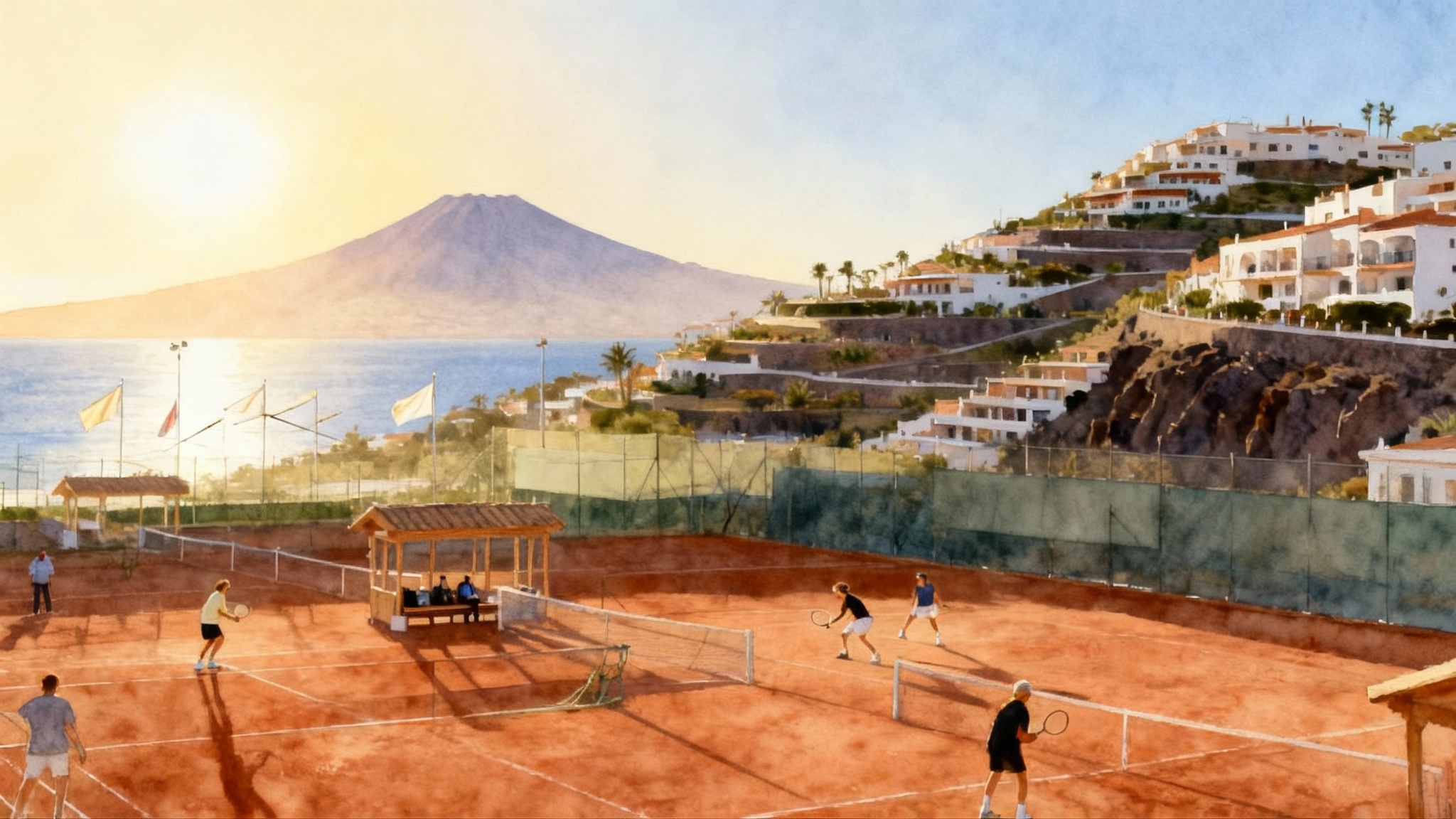
Why Tenerife becomes Europe’s winter baseline
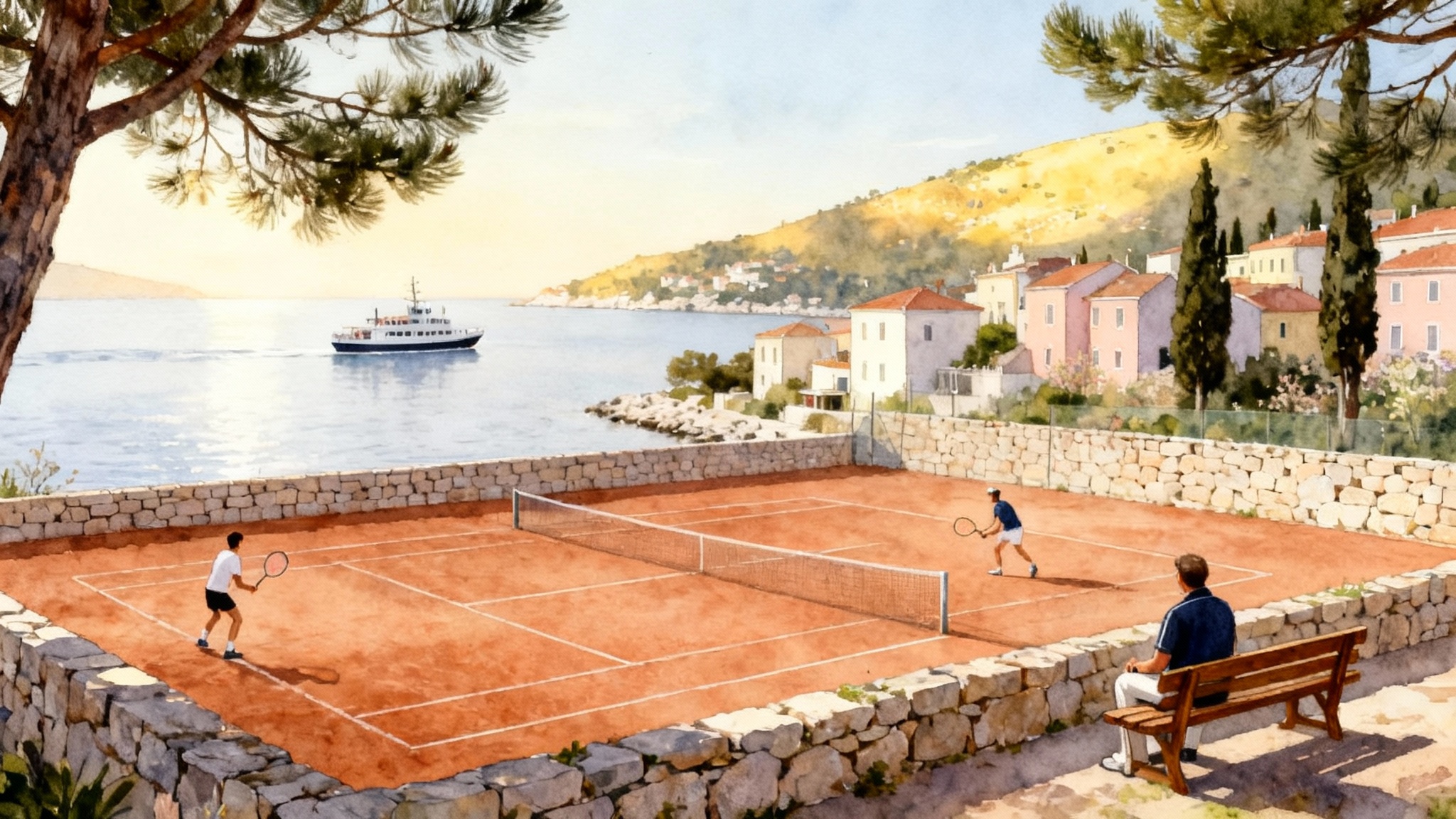
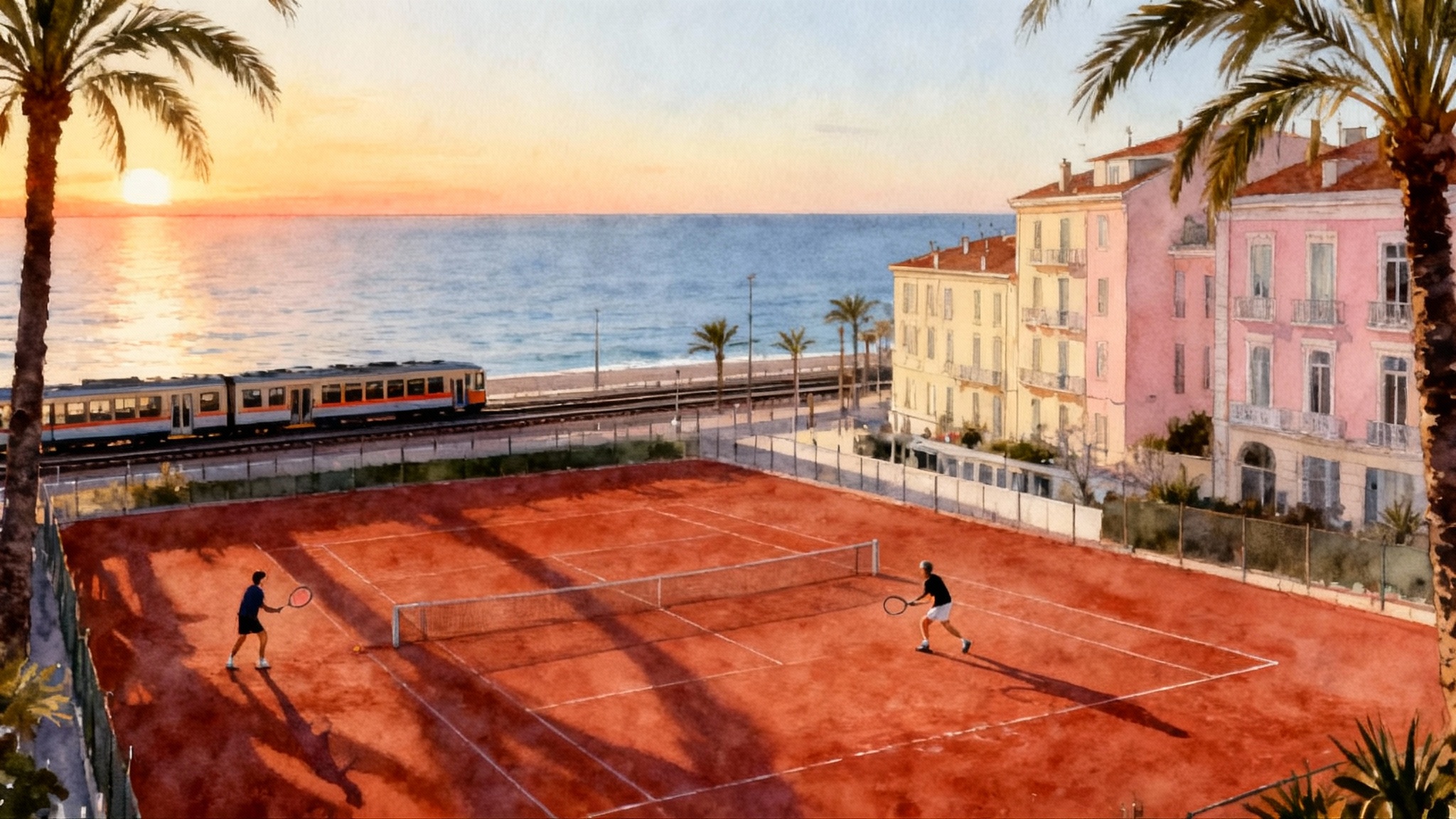
If you want uninterrupted court time between November and April, Tenerife is hard to beat. The island’s southern coast stacks dry air, steady temperatures, and a protective mountain wall that turns winter into a string of playable mornings. For players who have lost weeks to rain in Barcelona, wind in the Algarve, or cold snaps in Central Europe, Tenerife feels like turning on stadium lights after a dim training month.
This guide is climate first. We explain why the south stays drier, how the trade winds behave, and how to choose neighborhoods that stay playable when other areas cloud over. Then we map where to book courts, how to blend boutique coaching blocks at Tenerife Tennis Academy with a resort base, and how to plan itineraries, budgets, and flights from the United States and the European Union. Finally, we compare Tenerife to Florida and mainland Spain so you can pick the right winter setup.
The science that keeps your sessions on schedule
South island rain shadow
Mount Teide rises above 3,700 meters and sits roughly in the island’s center. Moisture arrives on the prevailing northeasterly trade winds and sheds much of its load on the north and the high interior. By the time air pours over the ridge to the southwest, it is drier and warmer. Picture a stadium roof that channels showers away from your baseline. That rain shadow is why places like Costa Adeje and Los Cristianos often log far fewer winter rain hours than the north coast.
Trade winds you can plan around
The trades are your tempo setter. In winter they tend to be gentle in the early morning, pick up late morning to mid afternoon, then ease again as evening approaches. Schedule technical work and serve mechanics in the morning. Put fitness or point play that benefits from a little resistance in the early afternoon. Courts with surrounding walls or hedges help on breezier days; so do slightly elevated sites that get smoother laminar flow instead of gusty turbulence.
Temperature bands that favor consistency
On the south coast in winter, daytime highs usually sit in the low to mid 20s Celsius, with nights in the mid teens. Even when a cooler air mass arrives, departures are modest, which means private lessons and match play rarely need to be canceled. Up north, where clouds sometimes linger, expect a couple of degrees cooler and more frequent drizzle. If your week depends on guaranteed sessions, the south wins on probability.
Where to base yourself for reliable court time
Three neighborhoods consistently deliver a strong balance of weather, access, and tennis infrastructure.
Costa Adeje
- Best for: players who want upscale resorts, polished facilities, and a long list of four and five star hotels with on site or nearby courts.
- Why it works: orientation to the southwest makes the most of the rain shadow; many courts are tucked into terraces and resorts with wind screening.
- Feel: modern promenade, sheltered coves, easy beach recovery walks, quick access to arterial roads for day trips.
Los Cristianos
- Best for: families and doubles groups who want a friendly town with walkable cafes and ferry harbor energy.
- Why it works: natural shelter from surrounding hills; an active local tennis scene and multiple clubs within a short drive.
- Feel: lively but not chaotic, good value accommodations, early opening bakeries that fit morning training blocks.
Chayofa
- Best for: players who prioritize training over nightlife and want a quiet base close to coaching.
- Why it works: slightly inland and elevated for cooler evenings, usually less tourist traffic, quick hops to both Los Cristianos and Costa Adeje.
- Feel: residential and calm, with villas and small hotels; perfect for focused weeks with early lights out.
Pro tip: pick your airport carefully. Tenerife South Airport, known locally as TFS, sits near the southern resorts and minimizes transfer time. Tenerife North Airport mainly serves the northern half and inter island connections. If your base is Costa Adeje, Los Cristianos, or Chayofa, choose TFS whenever possible.
Courts and surfaces: what to expect
- Surface mix: the south is predominantly hard courts. Clay exists but is less common than on mainland Spain. If you need clay, request it explicitly when you book.
- Indoor options: true indoor courts are scarce, which puts a premium on the island’s climate reliability. Most clubs have windbreaks, hedges, and court orientation that reduces cross breeze.
- Court access: resort courts are often bookable by the hour for non guests. Independent clubs offer day passes and weekly packages. Prime morning slots go first, especially during winter school holidays.
Boutique coaching at Tenerife Tennis Academy
Tenerife is ideal for focused skill blocks because the weather rarely steals a day. Use that to structure your coaching like you would a training camp.
- Private lessons: target 2 to 4 sessions across the week to tackle one theme per session. Example themes: second serve pace and height, forehand contact height in wind, first volley depth.
- Small group clinics: for doubles groups or families, blend 90 minute clinics that cover patterns, then finish with live ball and serve plus return games.
- Video and match play: ask for filming on day one and day four to compare checkpoints. Schedule two match play slots with on court coaching feedback to apply technical changes under pressure.
You can view sample programs and reserve slots on the Tenerife Tennis Academy page. Specify your base neighborhood so court bookings and transport are aligned with your schedule.
Two 7 day itineraries
Itinerary A: Performance adult week
- Sunday arrival
- Land at TFS, 20 to 30 minute transfer to Costa Adeje or Chayofa. Light hit to loosen up, 45 minutes. Early dinner. Hydrate.
- Monday
- 08:00 private lesson, serve targets with wind awareness. 30 minute mobility. 16:00 match play set with local sparring partner.
- Tuesday
- 08:30 small group clinic, forehand and first step. Beach walk recovery. 17:00 strength session at hotel gym, 45 minutes.
- Wednesday
- 08:00 private lesson, transition patterns, two ball approach drill. Free afternoon for Masca or coastal hike.
- Thursday
- 09:00 live ball group session. 15:00 optional open water swim or easy cycle on the promenade.
- Friday
- 08:00 match play with coaching, two sets. 12:30 video review. Evening treat meal.
- Saturday
- 09:00 fun doubles, serve plus poach games. Pack, short swim. Late checkout if available.
- Sunday departure
Itinerary B: Balanced family week
- Sunday arrival in Los Cristianos, check in near the harbor.
- Monday
- 09:00 parent lesson while kids attend red or orange ball clinic. Afternoon ferry to La Gomera lookouts, back by dinner.
- Tuesday
- 08:30 family court hour, cooperative rally goals. Afternoon beach time. Mini golf in the evening.
- Wednesday
- 09:00 adult group clinic, pattern building. Kids do multi sport hour. Afternoon pool nap window.
- Thursday
- Rest morning. Late afternoon doubles mixer, social format.
- Friday
- 09:00 private lesson focused on returns. Kids match play hour. Sunset walk.
- Saturday
- 10:00 fun family games and serve challenge. Free afternoon.
- Sunday departure
Sample budgets for a seven night stay
All numbers are ballpark and vary by season and how early you book. Prices are per person unless noted.
Conservative player, shared room in mid range hotel
- Flights
- From European Union hubs: 150 to 350 euros roundtrip if booked early on low cost carriers.
- From the United States East Coast: 650 to 950 dollars roundtrip with one connection.
- Accommodation
- 45 to 70 euros per night in a shared twin room or apartment split. Seven nights: 315 to 490 euros.
- Court time and coaching
- Court rental: 12 to 18 euros per hour, three sessions: 36 to 54 euros.
- Small group clinics: 30 to 45 euros per 90 minutes, three sessions: 90 to 135 euros.
- Optional single private lesson: 70 to 90 euros.
- Local transport
- Airport transfer each way: 25 to 40 euros if shared. Occasional taxis: 30 to 60 euros total.
- Food
- Groceries and casual meals: 120 to 180 euros for the week.
- Total range
- European Union traveler: roughly 780 to 1,000 euros.
- United States traveler: roughly 1,050 to 1,350 dollars.
Comfort player, four star resort near courts
- Flights
- European Union: 250 to 500 euros roundtrip.
- United States East or Central: 750 to 1,100 dollars roundtrip.
- Accommodation
- 120 to 200 euros per night. Seven nights: 840 to 1,400 euros.
- Court time and coaching
- Court rental: 45 to 70 euros total for three morning sessions.
- Two private lessons: 150 to 180 euros. One group clinic: 35 to 50 euros.
- Local transport
- Private airport transfer return: 70 to 120 euros. Occasional taxis: 60 to 90 euros.
- Food
- Resort breakfasts plus dinners out: 220 to 350 euros.
- Total range
- European Union traveler: about 1,400 to 2,200 euros.
- United States traveler: about 1,600 to 2,500 dollars.
Performance block, coaching focused
- Flights
- European Union: 300 to 600 euros.
- United States: 900 to 1,300 dollars, one connection.
- Accommodation
- 150 to 250 euros per night near Costa Adeje or Chayofa. Seven nights: 1,050 to 1,750 euros.
- Court time and coaching
- Five private lessons: 350 to 450 euros.
- Two match play sessions with a high level sparring partner and coaching feedback: 140 to 200 euros.
- Video analysis package: 60 to 100 euros.
- Local transport
- Car rental: 25 to 40 euros per day including basic coverage. Fuel and parking: 60 to 90 euros.
- Food
- Balanced restaurants and groceries: 250 to 400 euros.
- Total range
- European Union traveler: 2,100 to 3,300 euros.
- United States traveler: 2,400 to 3,800 dollars.
Flight and connection playbook
From the United States
- Routing strategy: plan on one connection in Europe. Common gateways are Madrid, Barcelona, London, Lisbon, and Dublin. Choose itineraries that arrive to Tenerife South Airport for quicker resort transfers.
- Connection buffer: aim for at least 90 minutes when connecting to a low cost carrier on a separate ticket, or book a single ticket itinerary so your bags are protected and checked through.
- Seat and bag tactics: low cost carriers charge for carry ons and seat selection. Pay for priority boarding if you travel with a racquet bag that meets overhead rules. If you bring multiple frames, consider a 23 kilogram checked bag to avoid gate stress.
- Jet lag plan: schedule your first lesson for the second morning, not the first. Use light hitting on arrival day to reset movement without overloading your serve shoulder.
From the European Union and United Kingdom
- Carriers: frequent winter service from London, Manchester, Dublin, Frankfurt, Amsterdam, Paris, Madrid, and Barcelona into TFS. Secondary cities often get Saturday frequencies that suit weeklong stays.
- Timing: early morning arrivals let you use day one. If your resort offers late checkout, book a late return flight and add a final morning hit.
- Families: look for packages that include transfers and breakfast. They simplify early court slots and reduce last minute taxi calls.
Tenerife versus Florida and mainland Spain
Tenerife vs Florida
- Reliability: Tenerife’s south coast delivers more winter days with light rain and playable wind than most Florida cities during the same months. Florida’s winter is warm but more prone to frontal systems that bring gusts and showers for a day or two. If you must lock in ten hours of coaching in a single week, Tenerife gives you a better weather hedge. For a Florida deep dive, see our Orlando Tennis Hub 2026 guide.
- Travel time: for European Union players, Tenerife avoids transatlantic flights and keeps time zones manageable. For United States players on the East Coast, Florida wins on travel time and domestic simplicity. Prefer dry desert air in the American Southwest instead of Atlantic weather patterns? Compare our Desert Winter Tennis 2026 guide.
- Facilities: Florida has an unmatched density of public court parks and academies, which is great for tournament hopping. Tenerife has fewer venues but pairs courts with beaches and hiking that make families happy.
Tenerife vs mainland Spain
- Climate: Barcelona, Valencia, and Mallorca see cooler air and more frequent rain in winter. Marbella and the Costa del Sol are milder but still have more weather volatility than south Tenerife. If you want ten sessions with minimal cancellations, Tenerife is safer from November through April.
- Surfaces and tournaments: mainland Spain wins for red clay availability and a dense local tournament calendar. If you need clay reps ahead of spring events, Malaga or Murcia can make sense in late March and April. If you want a sunny reset and focused technical block earlier in winter, Tenerife leads.
Practical checklist to make your week work
- Book TFS if you are staying in Costa Adeje, Los Cristianos, or Chayofa. It cuts transfers and reduces tired hours.
- Target morning court slots for cleaner wind and steadier ball. Use afternoons for fitness, mobility, or point play.
- Ask specifically for clay if you need it. Most south coast courts are hard.
- Bring a light jacket for evening strolls. Mornings are mild; nights can feel cooler near the water.
- Pack two sets of strings and a grip kit. Coastal air and sun will age strings quicker than a winter indoor block at home.
- Reserve coaching before flights. Winter weeks sell out and morning prime time disappears first.
- If you rent a car, request underground or shaded parking to protect gear from midday sun.
The bottom line
Tenerife’s winter advantage is not an accident. A tall mountain knocks rain to the north. The trade winds set a daily rhythm you can plan around. The south coast keeps the ball bouncing when other European destinations juggle showers and cold snaps. Choose your base wisely, structure a smart coaching block, and pair it with a resort stay that keeps families relaxed. Do that, and your winter week stops being weather roulette and turns into progress you can measure on the first day back home.