Krasnoyarsk to Villeneuve-Loubet: Andreeva’s WTA 1000 leap
Mirra Andreeva’s rise from Siberia to the French Riviera shows how the right academy, coach, and daily environment can accelerate a teen into a serial Women’s Tennis Association 1000 winner. Here is what changed and how you can apply it.
 Tommy
Tommy
A teen who chose the right place at the right time
On paper, Mirra Andreeva’s 2025 looked like a fairy tale. In February she stormed through Dubai to become the youngest Women’s Tennis Association 1000 champion since the tier was created, a week that vaulted her into the top 10 and rewrote age records. That sentence is easier to write than it is to live, so let’s anchor it to the official record: she was crowned Dubai champion and the youngest at that level, as reported by the tour’s own recap, see the Dubai title recap.
A month later at Indian Wells she rallied from a set down to defeat world number one Aryna Sabalenka. That sealed back‑to‑back Women’s Tennis Association 1000 trophies and a 12‑match win streak against elite fields, confirmed in the tour’s Indian Wells title report.
Tennis stories often treat success like lightning. This one reads more like engineering. The breakthrough was not one thing. It was a sequence of deliberate choices: a move from Elite Tennis Center in Cannes to All In Academy in Villeneuve‑Loubet in 2024, a coaching partnership with Conchita Martínez that began in 2024 and deepened through 2025, and a rebuild of the daily environment around fitness, mental tools, and clear tactical identity. What follows is the anatomy of those choices and the practical lessons for families weighing an academy switch for a rising junior.
Roots: from Siberia’s chill to the Mediterranean’s grind
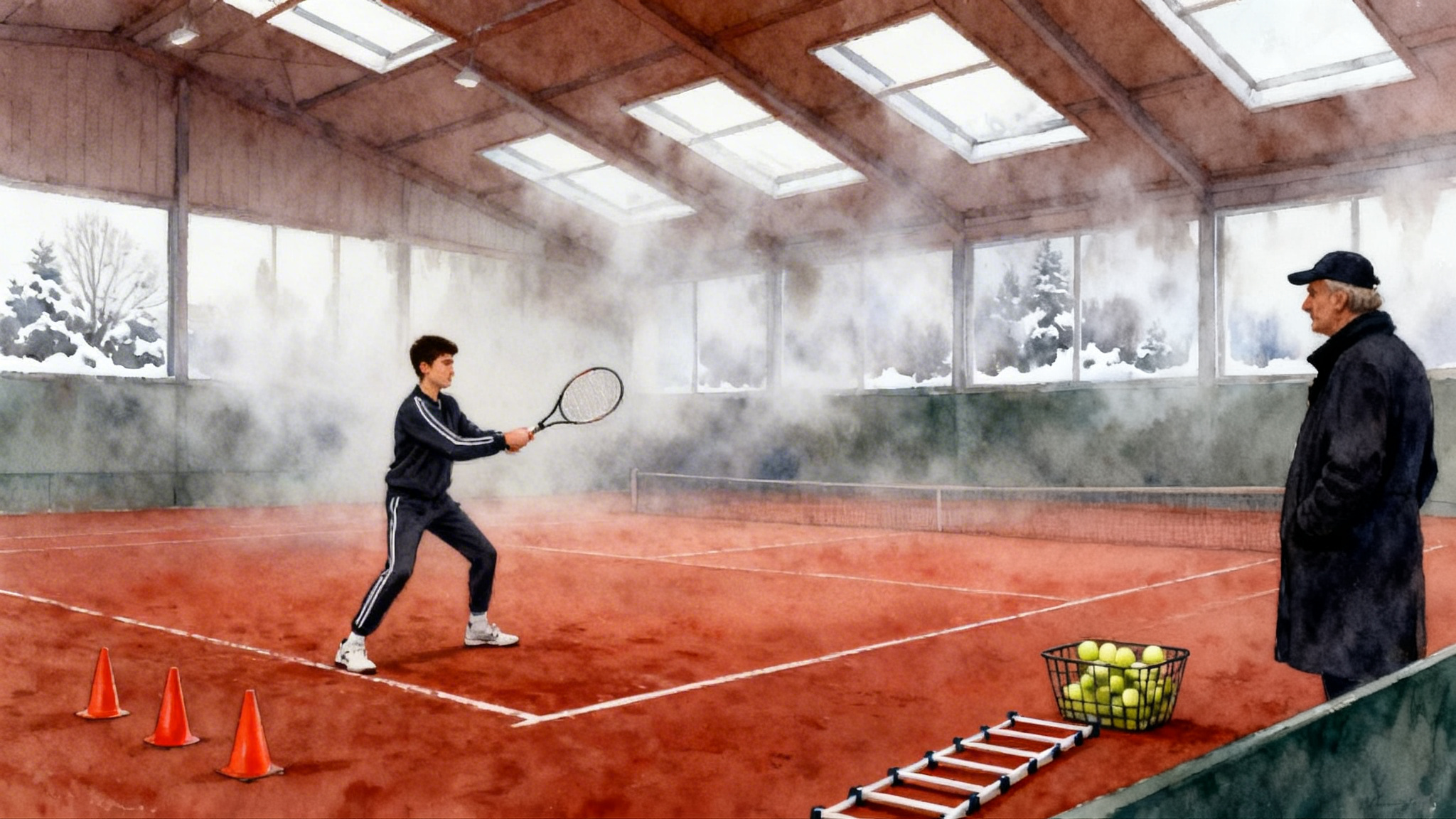
Mirra’s tennis began in Krasnoyarsk, a Siberian city where winter is long and indoor courts are a necessity rather than a luxury. The family soon pivoted toward better training weather and competition density. By her mid‑teens she was based on the Côte d’Azur, training at Elite Tennis Center in Cannes. That center is known for a no‑nonsense, professional rhythm: high ball quality, heavy rally tempo, and a disciplined mix of volume and variability. For more context on that environment, see how the Cannes setup shaped a top pro in our piece on Medvedev: Elite Tennis Center’s model.
The switch from Siberia’s short court time to Mediterranean year‑round play mattered. More days outside meant more repetitions of footwork patterns in wind and sun, which builds the small stabilizers in ankles and hips that indoor hours cannot touch. It sounds simple, but the climate upgrade multiplied her live‑ball reps at the age when coordination is still plastic.
At Elite Tennis Center, she also absorbed a cultural cue: players are expected to solve problems on court. That early bias toward autonomy explains why, even as a teenager, she could read servers early, vary height on the backhand, and survive longer exchanges against heavier hitters without panic.
The 2024 reset: All In Academy and a new daily cadence
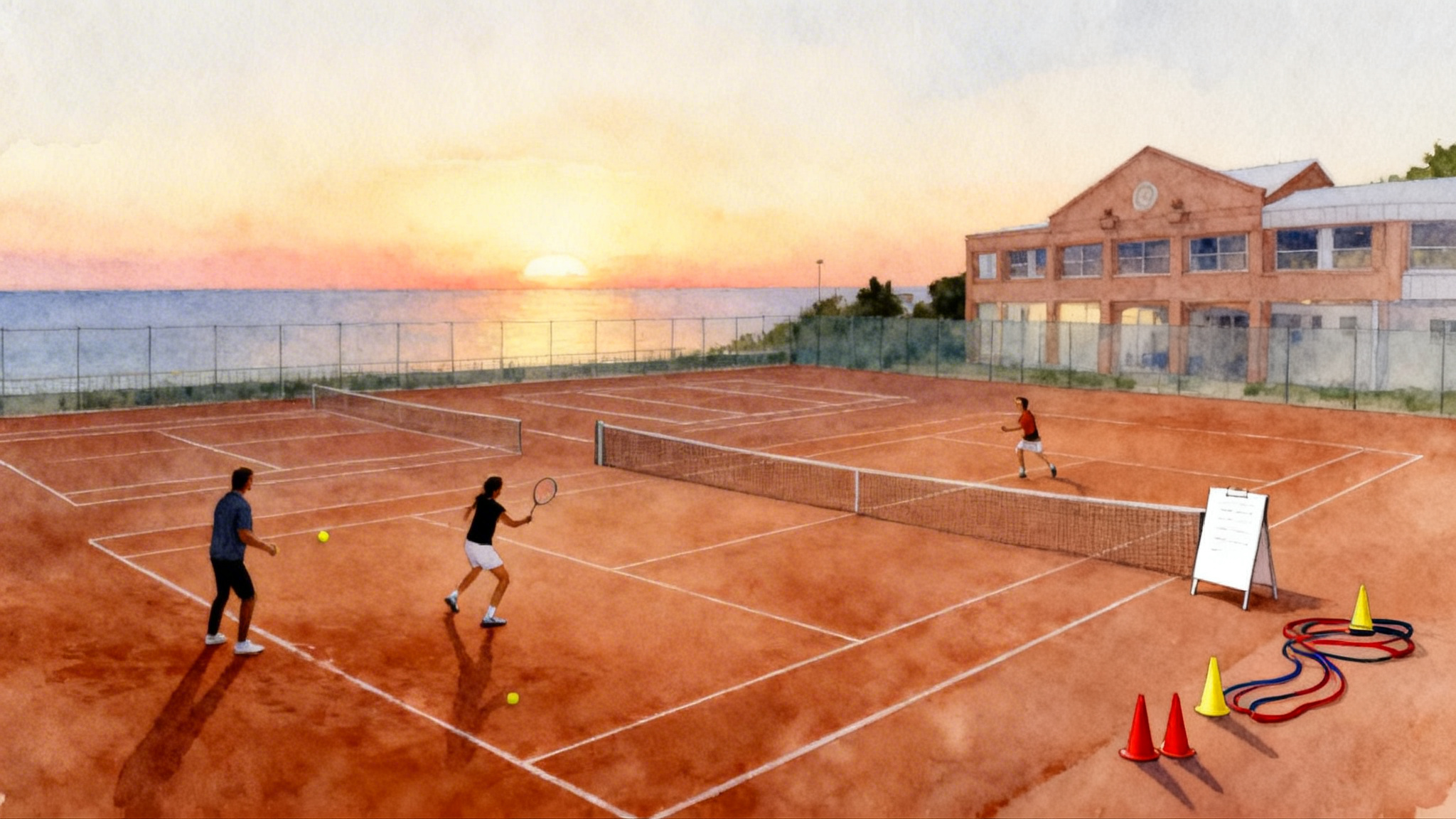
After her first big tour swings, the family made a second, sharper decision: move from Cannes to All In Academy in Villeneuve‑Loubet, ten kilometers from Nice. On the surface, the geography barely changed. In practice, the day changed a lot. If you are new to the program Mirra chose, explore All In Academy in Villeneuve‑Loubet.
What the move offered:
- Deeper women’s sparring. The Riviera is a magnet for pros during swing transitions. All In’s player list on any given week meant Mirra could find pace without flying. For a teen, that saves energy and lets coaches dose stress instead of chasing it on the road.
- One campus for tennis, fitness, treatment, and school. When everything is close, time between sessions compresses. Recovery windows get cleaner. For a junior balancing studies, removing transit friction is performance gold.
- A different coaching cadence. Elite Tennis Center is built to challenge with volume and competitive standards. All In leans into tailored microcycles and the small‑group feel. For Mirra at 16 to 17, that meant her days began to look like a pro’s week rather than a junior’s week: targeted quality, then get off the court.
Families sometimes imagine an academy as a single philosophy. In reality, it is a daily logistics engine. This move optimized logistics. Less time in a car. More controlled stress. More predictable strength and conditioning.
Conchita Martínez: a coach who matched the moment
Coaching is chemistry multiplied by timing. In 2024 Mirra began working with Conchita Martínez, a former Wimbledon champion who had already succeeded as a professional coach with Garbiñe Muguruza and Karolína Plíšková. The fit was visible right away. Martínez brought credibility and practical know‑how, but also a tone that clicked with a bright, candid, sometimes hard‑on‑herself teenager.
Three themes defined their first year together:
- A simpler game model under pressure. The pair distilled Mirra’s identity into a short list she could execute on tough points. See the ball early. Drive the backhand flat through the middle to take time. Use the forehand to change direction once per rally, not three times. If Sabalenka or Rybakina dragged rallies into a red zone, reset with height rather than gambling on a bailout winner.
- The courage to move forward. Martínez nudged Mirra to finish more points at the net. The idea was not serve and volley. It was to treat short balls as obligations, not invitations. That change paid off in Dubai and again at Indian Wells, where the forehand approach into the open court became a quiet signature.
- A lighter mind. From press conferences to changeovers, Mirra sounded and looked more matter‑of‑fact. The goal was not to mute her personality. It was to make her routines repeatable: planned breath, one cue word, then physical reset. On heavy points in Indian Wells, you could see her do it, like a swimmer resetting goggles before the next lap.
Fitness and mental support: building an engine that lasts
Any teenager can play a breathtaking set. The question is month after month. Mirra’s team invested in two engines in 2024 and 2025: physical robustness and mental calibration.
Physical work focused on three blocks:
- Movement economy. Lateral shuffles and cross‑over steps are not enough at tour tempo. Her trainers taught her to combine small hip turns with ballistic first steps so she could create space without drifting. That reduced the number of late contacts on the forehand and turned defense into neutral more often.
- Force and elasticity. Instead of chasing weight‑room numbers, they built repeatable power through medicine ball throws, trap‑bar deadlifts at moderate loads, and extensive jump‑landing sequences. The goal was to keep vertical stiffness under control, which protects knees and fuels quicker recoveries between points.
- Repeat sprint ability. Dubai and Indian Wells reward long rallies in dry air. The team layered court‑specific intervals into practice: 20 to 30 seconds at competitive heart rate, then a controlled 25 seconds to simulate the shot clock. The effect showed when she was still changing direction crisply late in third sets.
Mental support followed the same principle: simple tools, used daily. A short pre‑serve script. A single phrase to trigger height or depth when she drifted into short‑ball errors. Session debriefs that separated emotion from information. Juniors often feel that a sports psychologist is for crisis. Mirra’s season showed the opposite. It is a gym for the brain, and the reps are short.
Tactical tweaks that traveled from practice to trophies
Everyone saw the winners on highlight reels. The quiet changes happened between the lines:
- Return position math. Against the biggest servers, she often began one step deeper but looked to step in on second serves. That gave her a clearer ball view without surrendering the chance to drive, which prevented scoreboards from snowballing when she missed early returns.
- Serve patterns with a purpose. First serves out wide to open the court let her hit the next forehand heavy into the opposite corner. When opponents started leaning, she used the serve at the body to freeze their hips. The goal was not aces. It was predictable plus‑one territory.
- Height as a weapon. Instead of trying to win every exchange on a rope, she raised the average trajectory after three or four strikes when a rally stalled. That change bought time to recover court and invited short replies that she could attack.
- Front‑foot forehand. Her contact point crept farther in front on the forehand so she could change direction with less wrist roll. The ball flew flatter, which is why her crosscourt forehand pulled defenders off the court more reliably.
You could see the sum of these in Dubai. In the semifinal she came from 1‑3 down in the third by nudging return positions, then punishing short replies with approach forehands. In the final, the serve patterns created a steady first strike even when her first‑serve percentage dipped. Indian Wells added a sterner test. Aryna Sabalenka blasted through the first set. Mirra’s adjustment in set two was not heroic. It was specific: a slightly earlier forehand contact and more disciplined depth on neutral balls. The rest will live in the results archive and in the tour’s own words, but the mechanics were learned on weekday courts.
Why the academy switch mattered exactly when it did
Parents often ask whether the academy is the secret. It is not the secret. It is the context. Mirra switched when three signals aligned:
-
She had outgrown her previous day. The junior‑heavy structure that helped at 15 was starting to cap the quality she could find each Tuesday.
-
The new academy could guarantee specific inputs. Not just courts and a gym, but enough high‑pace female hits and a staff willing to co‑design periodization with her coach rather than run a fixed template.
-
The school fit could support higher training density. A teen who finishes assignments by mid‑afternoon can get to treatment and lights out on time. That is a performance edge hiding in plain sight.
These are the same signals you should track for your player. If two of the three are not true where you are, test another setup before the next season. For another example of environment driving progress, compare pathway design and federation support in [Rybakina’s blueprint for growth](/blog/from-sp spartak-to-kazakhstan-rybakinas-blueprint-for-growth).
A practical playbook for families considering a switch
Here is a clear, step‑by‑step checklist you can actually use.
- Define the job to be done
- List the three bottlenecks that limit improvement this month. Examples: no consistent high‑pace sparring partners, weak match coaching on travel weeks, school load that pushes sleep past midnight.
- Rank them by impact and by how solvable they are. If the top issue is not fixable inside your current academy in 60 days, you likely need to move or to build a hybrid plan.
- Run a trial, not a leap
- Schedule a two‑week test block at the prospective academy. Bring your current coach if possible. Watch how the staff plans microcycles, how they integrate fitness, and whether they welcome your coach’s input without ego.
- Ask for three examples of players with similar profiles who improved key metrics after six months. The best academies track this. If they do not, consider that a data point.
- Structure the support team
- Appoint one tactical lead. This is usually the primary coach. Everyone else contributes through that lens. A strength coach designs sessions that serve the tactical plan. A psychologist builds routines that fit the playing identity. One voice at a time avoids mixed messages.
- Define meeting rhythms. Weekly 20‑minute huddles with coach, fitness lead, and family. Monthly 45‑minute reviews with simple charts: match load, first‑serve percentage, break‑point conversion, perceived exertion, sleep hours.
- Manage relocation and schooling
- Choose curriculum before you choose address. International Baccalaureate and French curricula can work well for bilingual students. Online options suit heavy travel, but require adult enforcement of routine. Ask the academy which partner schools adapt schedules for morning or split sessions.
- Use a 30‑60‑90 plan. First 30 days: settle housing and school, cap tournament load, do not chase points. Next 60: build consistent training weeks, log all soreness, adjust strength work before you add tournaments. After 90: reassess travel, decide which coach travels where, and set one measurable goal per surface.
- Budget for the invisible line items. Treatment, last‑minute travel, and extra racquets for string pattern experiments can double your initial estimate. Build a 20 percent buffer, then track real costs monthly so there are no surprises.
- Keep the human stuff in view
- Culture matters. If your player leaves sessions smiling and talking about problems they solved, you are in the right place. If they leave silent and tense most days, you are paying for compliance, not development.
What Mirra’s case implies for coaches and academies
- Meet the player’s development age, not their calendar age. At 17, Mirra already processed information like a veteran. That justified a more collaborative style and richer tactical layers than many juniors can handle.
- Design weeks backward from the next match stress. Indian Wells’ dry air and slow hard courts punish late contact. Building repeat‑sprint ability and depth control into February practices was not a coincidence; it was a plan.
- Show your work. Families today are savvy. When Martínez and the All In staff explained what they were changing, and why, everyone could buy in. The result was calm on the road because the plan was transparent at home.
Bringing it together
From Krasnoyarsk’s winter courts to Villeneuve‑Loubet’s pine‑ringed campus, Mirra Andreeva’s leap was built on context, not magic. She and her family picked a daily environment that multiplied high‑quality reps. She paired that with a coach who could simplify under pressure and nudge her toward front‑foot tennis without erasing her creativity. The fitness and mental tools made that style durable across two long weeks in Dubai and Indian Wells. That is how teenagers turn highlight runs into a season.
If you are guiding a talented junior, borrow the same questions. What, exactly, needs to change in our day. Who will own the message. Where can we find a campus that lets training, school, and recovery click into one rhythm. The answers are not glamorous, but they travel well. They are the kind of answers that win you matches in March after choices you made in September. And they are the kind of answers that turn a promising player into a contender, one well‑designed day at a time.