From Beijing to Barcelona: How Spanish Clay Forged Zheng Qinwen
Zheng Qinwen’s rise traces a clear line from Carlos Rodriguez’s fundamentals-first program in Beijing to heavy clay blocks in Barcelona with Pere Riba. Here is the real pathway, and the specific decisions parents and coaches can copy.
 Tommy
Tommy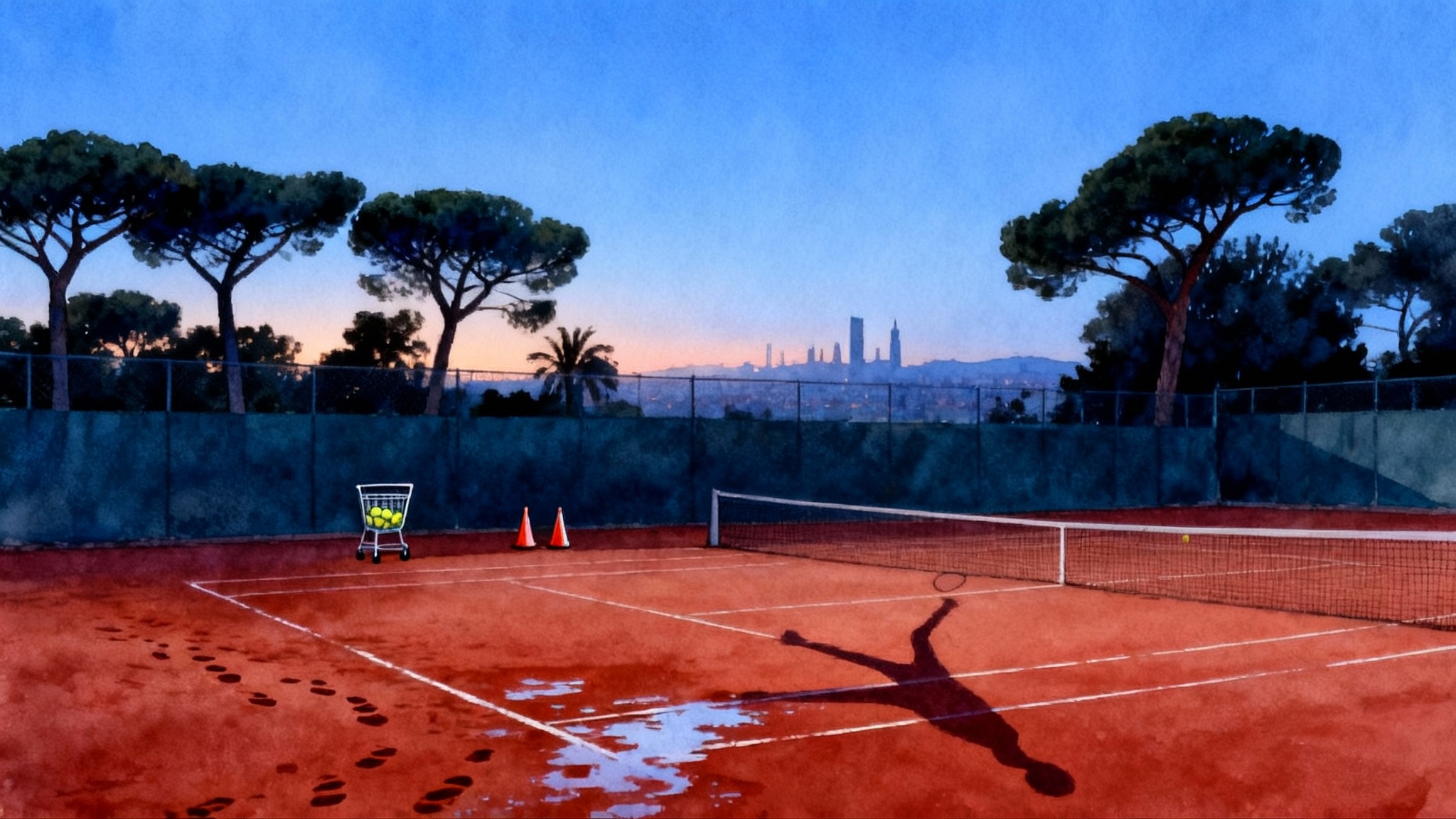
The line on the map that explains a leap in level
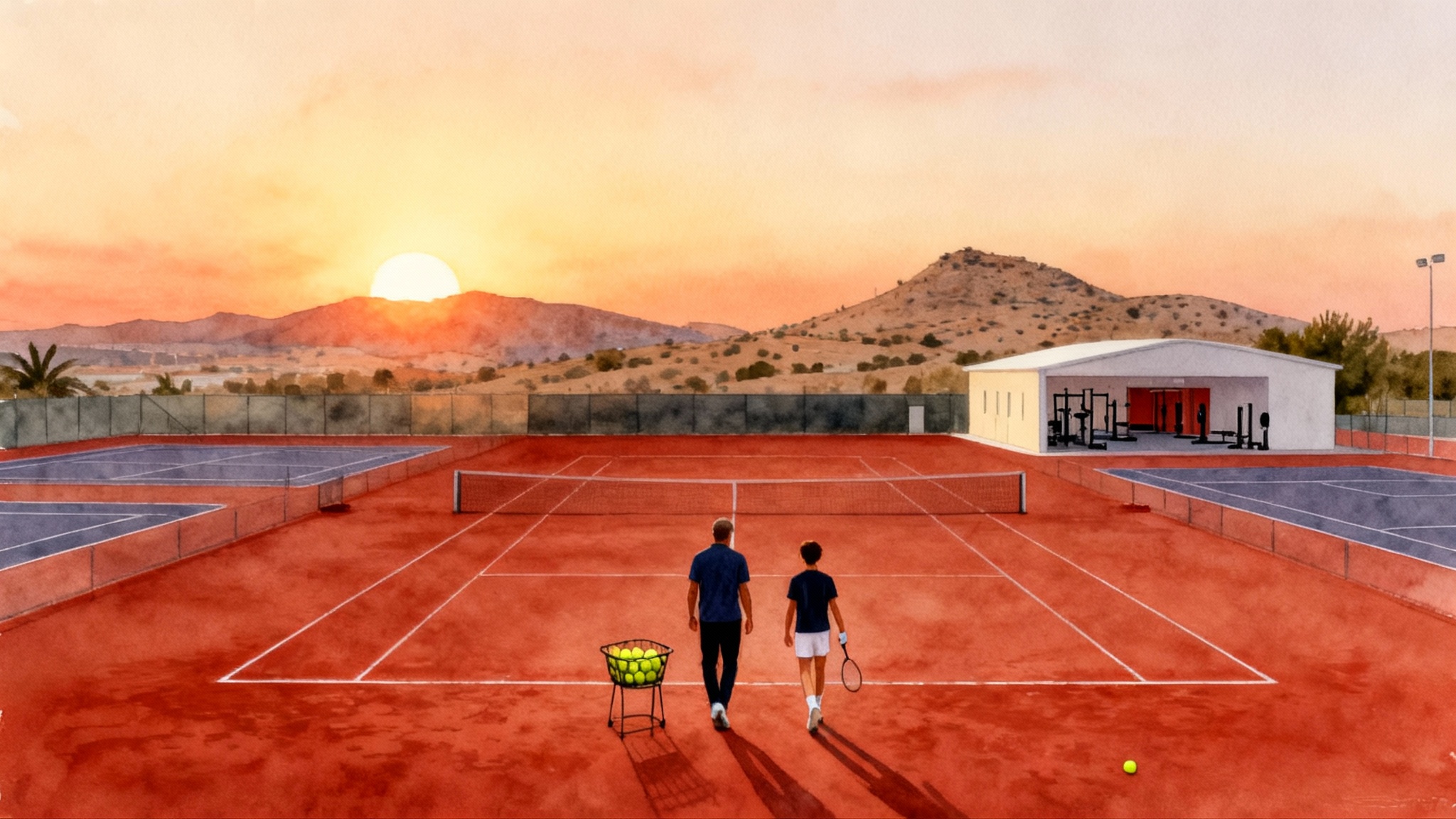
Draw a line from Beijing to Barcelona and you will trace the logic behind Zheng Qinwen's rapid rise from junior promise to a top-tier professional by 2024 and 2025. In Beijing, she learned the language of clean strokes, balanced footwork, and repeatable patterns under a disciplined academy structure associated with Carlos Rodriguez, the architect behind Li Na's late-career surge. In Barcelona, she translated those fundamentals into wins through long training blocks on slow clay, a surface that teaches patience, point construction, and emotional control. Guided by Spanish coach Pere Riba, Zheng used that environment to blend power with restraint, then climbed quickly as her competition schedule was staged with intention. When injury briefly sidelined Riba, she added Dante Bottini as a complementary voice, a measured adjustment rather than a reset, because the process was already robust. The pathway matters as much as the player.
Early in 2024, Zheng reunited with Riba, reaffirming Barcelona as her base and putting structure around her next jump. That decision framed the year and shows parents and coaches what to prioritize when a talented junior approaches the threshold of the pro game: a clear daily model, a surface that sharpens decision making, and a schedule that adds stress in layers rather than all at once. Riba's return was not a romantic subplot, it was a systems decision that restored continuity in a program already built for long-term gains. See the official note in the WTA reunion announcement.
For more examples of environment shaping champions, compare how Ferrero built Alcaraz and the Rafa Nadal Academy blueprint.
Beijing: the academy blueprint, built on first principles
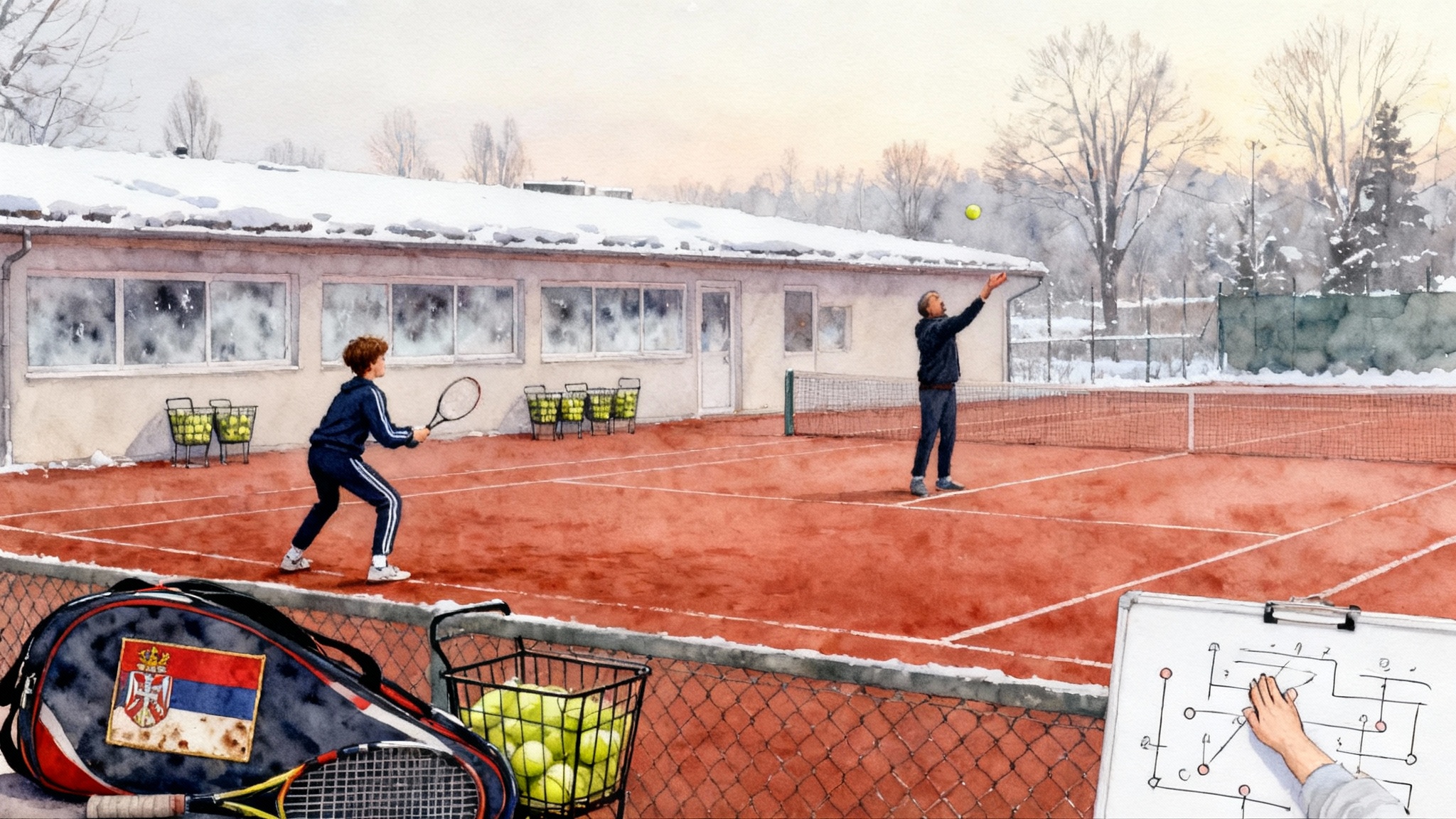
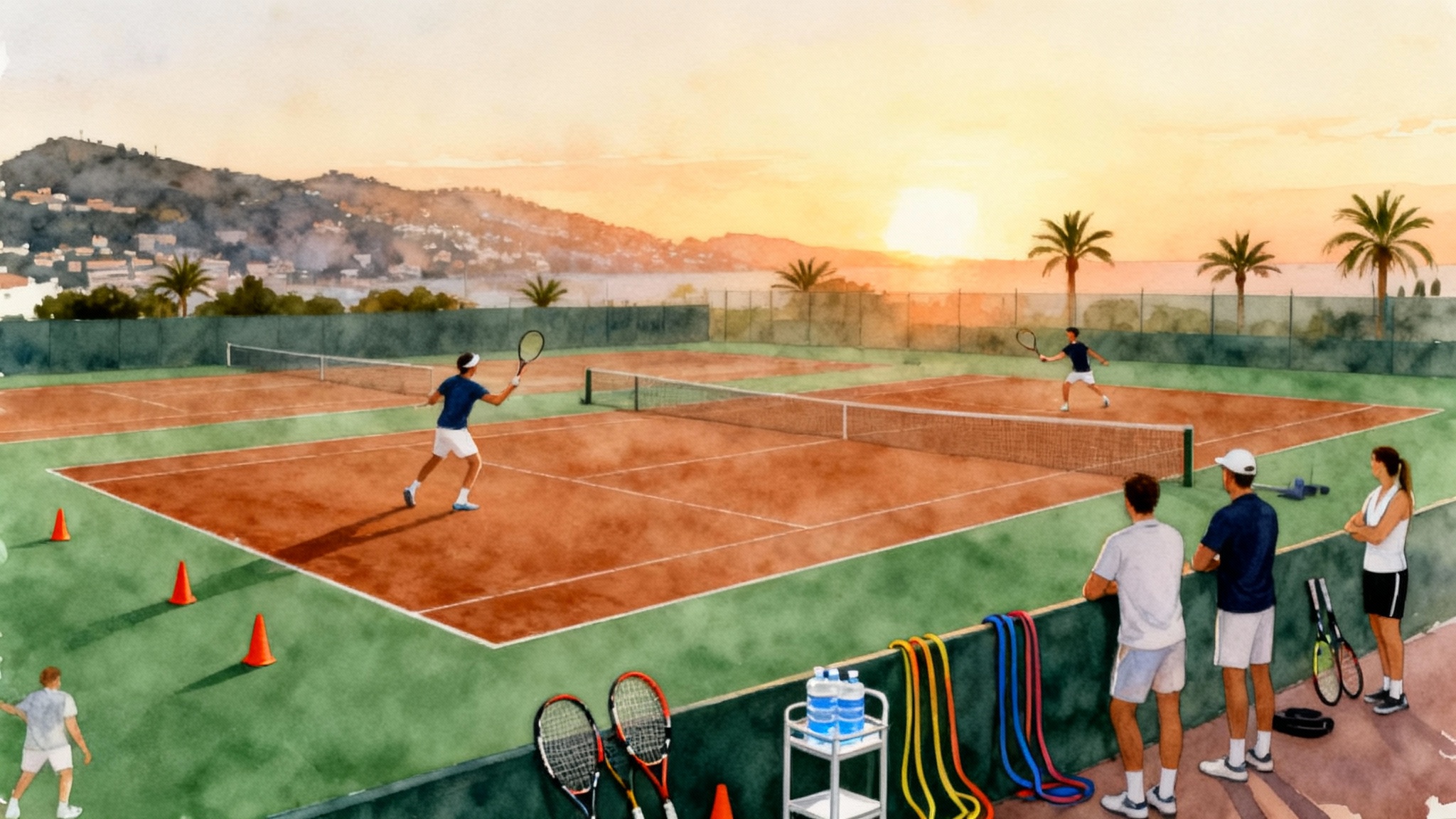
Before Barcelona's red clay shaped Zheng's patience, Beijing shaped her habits. Think of an academy as a well-run kitchen. The recipes are the drills, the ingredients are the athlete's physical tools, and the head coach is the lead chef who controls portion sizes and heat. In Rodriguez's program, the emphasis is on controllable building blocks: grips set early, footwork patterns repeated until they are automatic, and rally tolerance built through volume. The result is a player who does not need to search for strokes under pressure, because the technique has already been rehearsed thousands of times.
What does fundamentals-first look like in practice?
- A daily technical block, often 30 to 45 minutes, that isolates one theme. Example: closed-stance forehand balance, with the goal of landing inside the baseline after contact without falling offline.
- Pattern repetition that mimics match geometry. Example: two forehands crosscourt at 80 percent pace, then one forehand up the line to a cone, recover, repeat. The metric is not winners, the metric is how often contact is clean and feet are set.
- Fitness that supports stroke reliability. Example: short skip rope sets between point-play drills to keep heart rate up while maintaining stroke form under fatigue.
Parents often ask if this kind of repetition risks making a player robotic. The opposite happens when the coaching is intentional. Repetition reduces anxiety by making the most important actions automatic. Creativity shows up later, once the base is stable.
Barcelona: why Spanish clay multiplies good habits
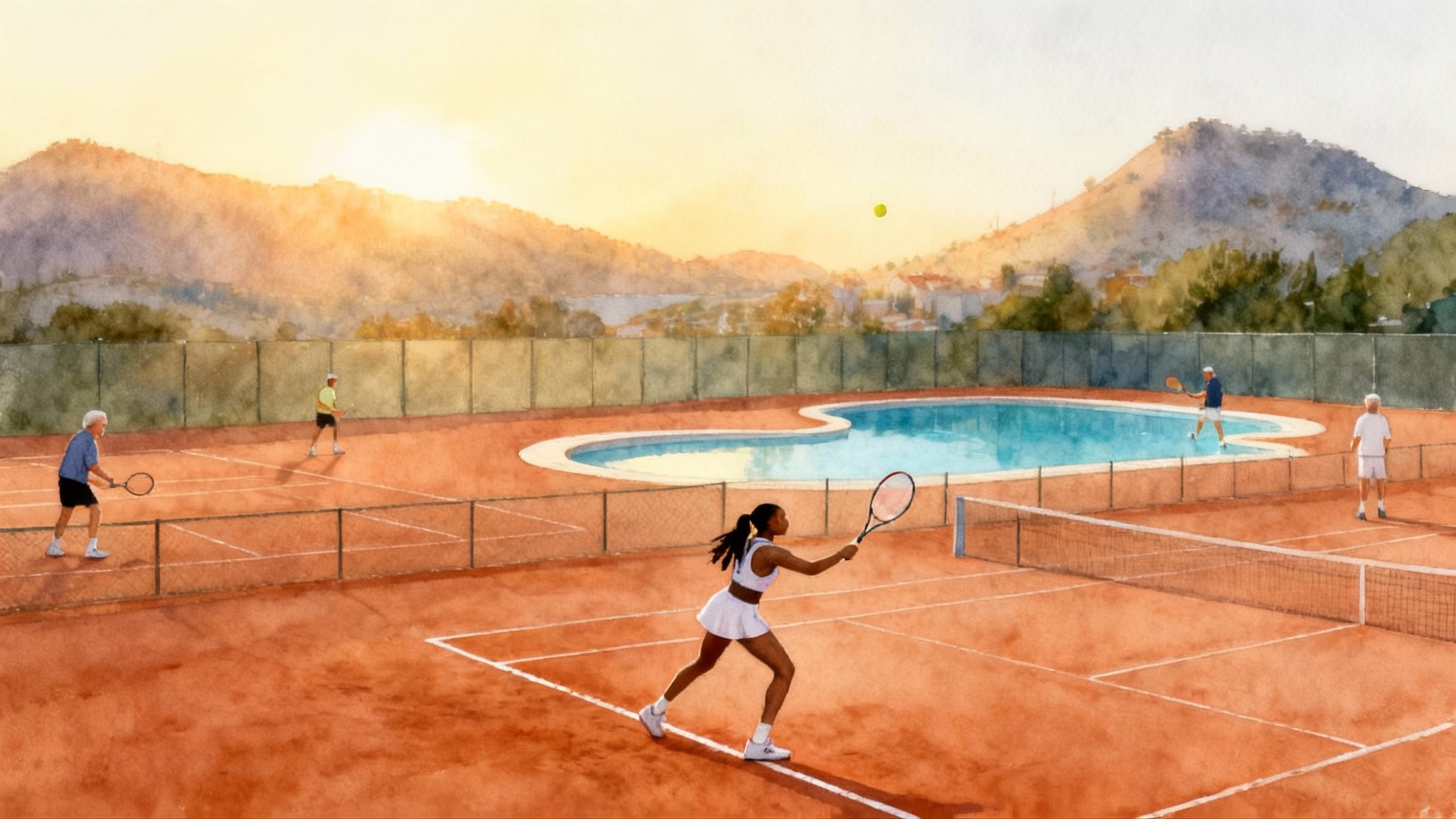
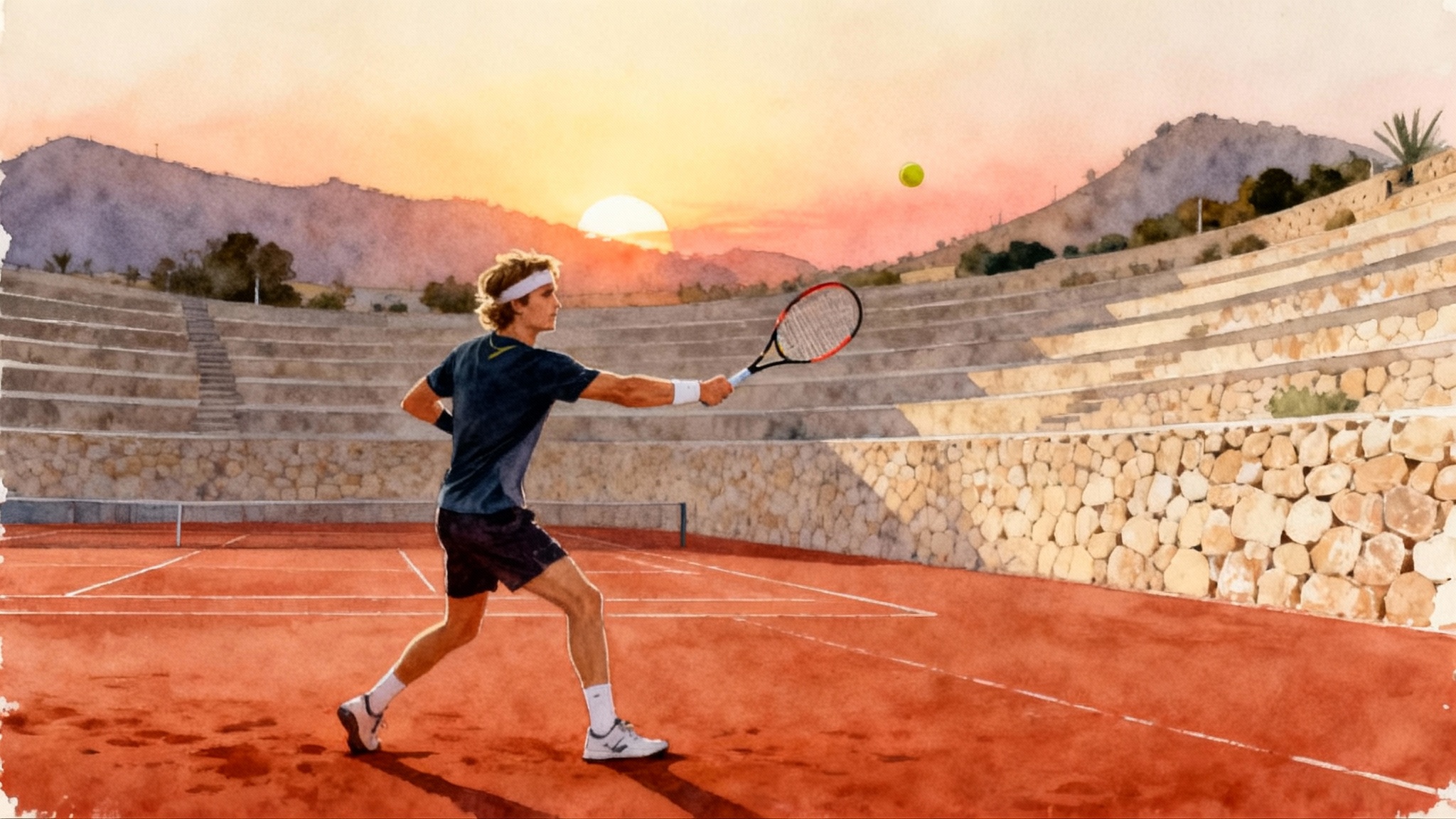
If Beijing supplies the grammar of the game, Barcelona supplies the paragraphs. Spanish clay changes the incentives inside a rally. The court is slower, the bounce is higher, and the opponent has more time to respond. Impulsive shot-making gets punished. Point construction, depth control, and patience get rewarded. This suits a powerful player like Zheng, because the surface forces her to earn the short ball and teaches when to add pace and when to add shape.
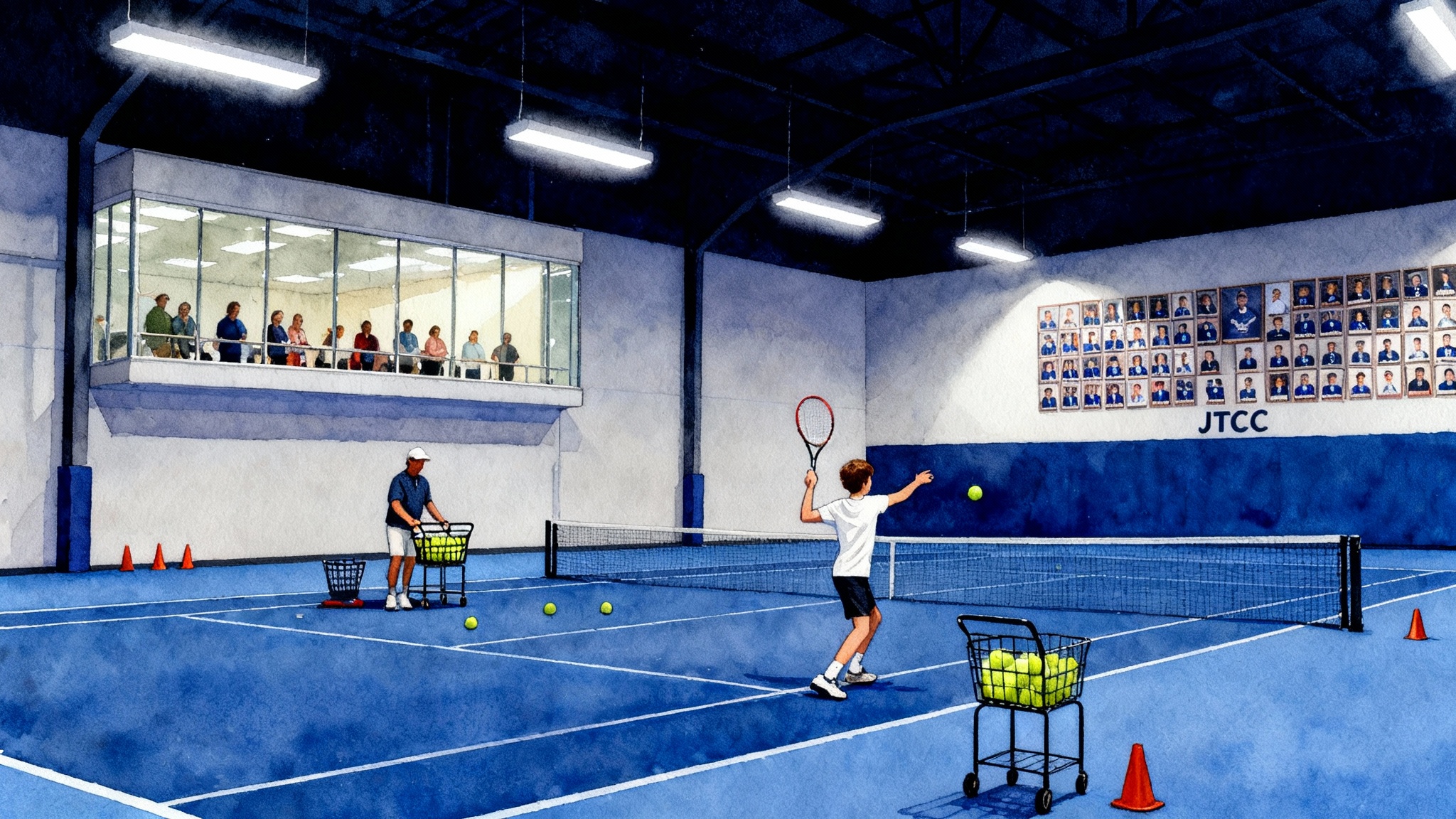
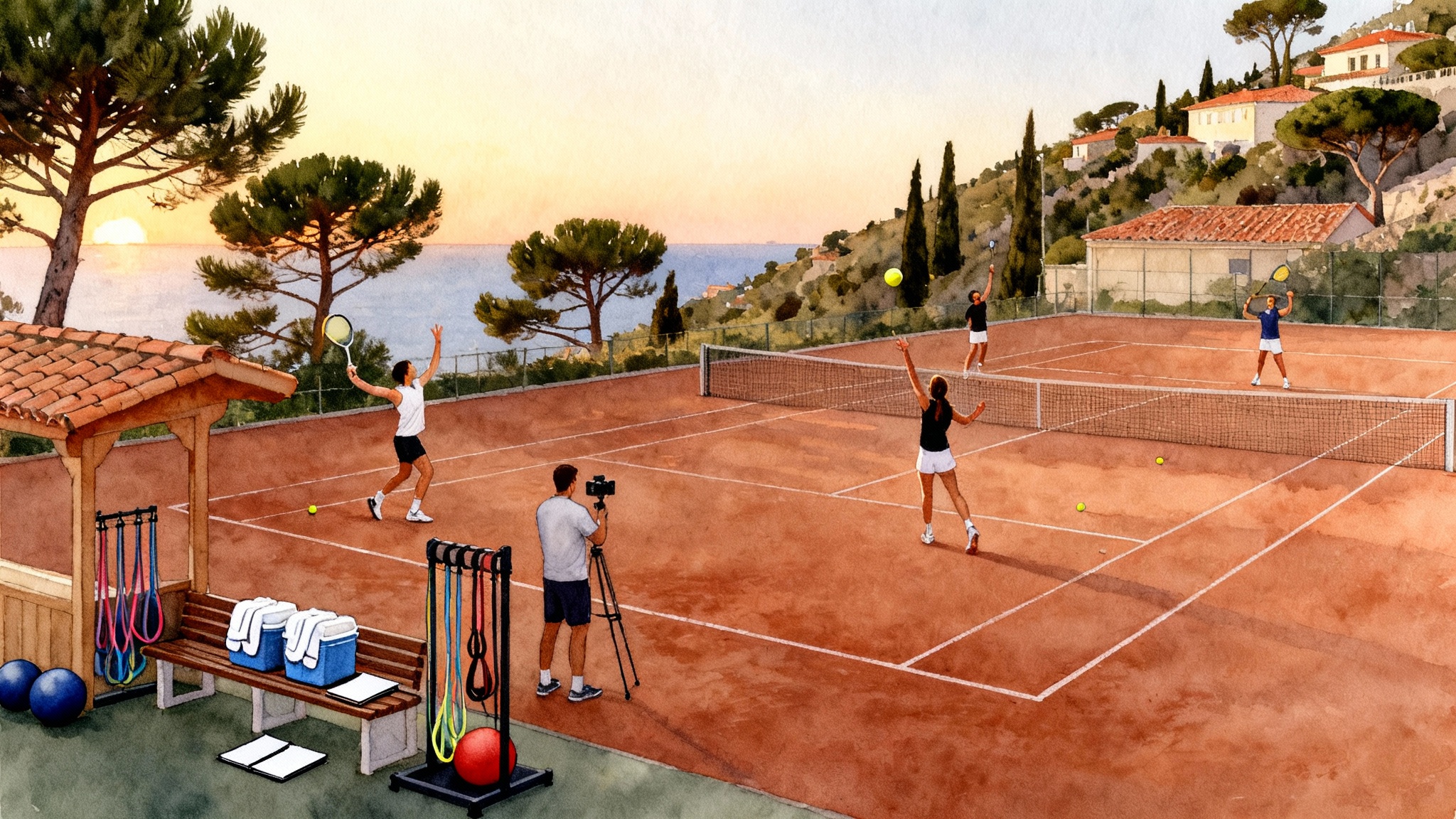
The Spanish model uses long, coherent training blocks. A typical block might run three to six weeks on clay, with the first half dominated by volume and constraints, and the second half by specific point patterns and serve plus one combinations. You see the method across Barcelona's club ecosystem, from suburban facilities to pro training bases. A Tennis.com feature at Els Gorchs captures that environment on rain-soaked winter days, when the session still starts on time and the work gets done indoors or on slower courts if needed. That adaptability is the point.
On clay, Zheng's power turns from a blunt instrument into a scalpel. Heavy topspin to the backhand corner pulls a defender off the doubles alley, the next ball is a higher percentage change of direction. The lesson for parents and juniors is not to chase highlight shots, but to train the situations that create easy offense.
For a contrasting example of power shaped by structure, see how Mouratoglou accelerated Gauff.
The staged schedule: adding stress in layers
Technique and environment are only two legs of the stool. The third is planning. A schedule can either expose a player too quickly or grow competitive capacity in stages. Zheng's team leaned into progression. Early events with winnable matches build confidence and match play fitness. Next, entries into higher-tier draws test that base against better opposition. Finally, targeted runs at major events convert all of the above into ranking points, experience, and belief. The principle is simple: the level of stress rises, but capacity rises first.
How do you know the schedule is staged correctly?
- Breakers, not breakdowns. A player should feel stretched by a tougher event, but still able to recover within a week and resume normal training volume.
- Two-week signals. Results should stabilize or slightly improve across a two-week swing in similar conditions, for example two clay events in Europe, which indicates that learning is sticking rather than luck deciding outcomes.
- Data that fits the story. First serve percentage, return depth, and break points saved should be trending in the same direction as the win-loss record. If not, either the schedule is too hard or the training is not targeting the right problems.
What changed in 2024 and 2025
The outputs started matching the inputs. A Grand Slam final in January 2024 proved the ceiling had moved. Months later, a breakthrough Olympic campaign on Paris clay confirmed that the training model travels and that game style and surface were in sync. When circumstances forced brief staff adjustments, the method stayed the same and the voice on court adapted. That is how a professional team acts when the underlying process is sound.
You do not need a national federation to orchestrate this, and you do not need to uproot a family without a plan. You need aligned decisions at the right moments. Here is how to copy the ones that mattered.
Decision 1: when to relocate abroad
Relocation is not a badge of honor, it is a tool to solve a specific problem. Move when the local environment can no longer provide enough high-quality repetitions or enough varied sparring to stress your player in the right ways.
Practical triggers:
- Training density. At least four hitters equal or slightly better than your player are available most days. If not, consider a seasonal move.
- Surface access. If the player relies on first-strike patterns and lacks patience or depth control, a three to six week annual clay block is a strong corrective. If clay is rare where you live, relocate for that block.
- Tournament ladder. If your player is winning 65 to 70 percent of matches at a given tier but cannot access the tier above without costly travel, a temporary base near a cluster of events reduces travel stress and increases learning per dollar.
Action plan for parents:
- Start with a seasonal base, not a permanent move. Aim for one long block per year on the target surface, for example four to six weeks in Spain between April and June.
- Build a test budget, then measure return. Track match wins, physical markers like heart rate recovery and session volume, and simple technical goals like two more deep balls per rally by the end of the block.
- Keep school and family routines intact by treating the block like a study abroad term, with clear start and end dates.
Decision 2: coach-led academy or federation pathway
There is no single correct route. Federations can provide funding, medical coverage, and a team environment. Coach-led academies offer continuity, customization, and the freedom to choose surfaces and schedules. Zheng's story illustrates the strengths of a coach-led model that still plugs into national events when useful.
Use this decision tree:
- If your player needs individualized technical change, choose a coach-led academy where the head coach writes and revises the plan and sees the athlete at least five days a week.
- If your player already has stable technique but lacks match opportunities and a support net, use federation access to travel safely through a full calendar, especially in the 14 to 18 age range.
- If cost is decisive, hybridize. Train at a local base with a trusted private coach, then buy three to four short intensive blocks at a larger academy each year to access different sparring and surfaces.
Interview questions that reveal quality:
- Who is the daily decision maker for my child's plan, and how often does that person see her play matches, not just drills?
- How will you measure progress over 12 weeks, and what changes if we do not hit those targets by week six?
- Which surfaces will we emphasize this quarter and why? What match patterns are we targeting that those surfaces will teach?
Decision 3: blend power with patience through surface-specific training
Power is useful only when a player can choose when to use it. Clay courts train that choice. You can recreate the same learning on hard courts by adding constraints, but there is no substitute for a long clay block when a player needs better rally design.
A 12-week, Spanish-style plan you can adapt:
Weeks 1 to 3, build the base
- Volume: 14 to 16 hours on court per week, two weights sessions, two mobility sessions.
- Constraints: play crosscourt to a gate for ten-ball points, win by depth not by winners. Serve plus one must land deep middle before any change of direction is allowed.
- Metrics: rally length target of eight balls minimum in pattern drills, ten clean backhands down the line in a row before leaving the court.
Weeks 4 to 6, add weapons without losing shape
- Volume: 12 to 14 hours on court, three specific serve sessions.
- Patterns: inside-out forehand after a deep crosscourt neutral ball, followed by a higher ball to the backhand corner. Add one transition drill per session, approach only off a ball that lands beyond the service line and within the singles sideline.
- Metrics: first serve percentage above 60 percent in practice sets, forehand unforced errors below one per game in constrained play.
Weeks 7 to 9, simulate tournaments
- Volume: two match-play days per week with full scoring, one day of defensive drills, one day of serve and return blocks.
- Constraints: every second game begins at 0-30 to train scoreboard pressure. Between sets, do three minutes of band work and a short visualization protocol to reset.
- Metrics: break points converted above 40 percent in practice matches, average return contact point one step inside the baseline on second serves.
Weeks 10 to 12, taper and travel
- Volume: 9 to 11 hours, emphasize recovery and sharpness, not new learning.
- Patterns: execute only the two or three point patterns the player does best, rehearse them in short, high-focus sets to four games.
- Metrics: micro-goals for the first tournament week, for example two successful net plays per set, plus a mental reset routine after every lost deuce point.
The competition plan: a ladder, not a leap
- Build a match budget. Decide how many competitive weeks you can afford, then protect training weeks around them. Quality practice on the target surface between events is where growth happens.
- Cluster events by surface and level. Two to three events in the same region reduces travel fatigue and increases the chance that small adjustments show up on the scoreboard.
- Write exit rules. If the player loses two first rounds in a row without meeting even one internal performance target, drop a level for one week to rebuild confidence, then climb back.
Mistakes to avoid
- Chasing quick points on slow courts. Clay punishes impatience. Teach the first short ball rule: if the ball lands short and central, hit heavy to the open corner first, only come forward if the next ball floats.
- Changing too many variables at once. New coach, new base, and new schedule in the same month turns data into noise. Stagger the changes so you can attribute improvement correctly.
- Treating relocation as the goal. The goal is a better daily environment, not a new address. If a club at home can create a clay-like learning context with constraints and longer points, do it before buying plane tickets.
A parent's one-page checklist
- Purpose of the next block in one sentence, for example, increase rally tolerance on clay while keeping first strike options.
- Three measurable targets, one technical, one tactical, one physical. Example: backhand contact point six inches farther in front, 65 percent first serves in, depth past the service line on 60 percent of neutral balls.
- Two match patterns to own, written on a notecard. Example: heavy forehand cross, forehand up the line, step in and finish to the open court. Or backhand cross to backhand, inside-in forehand, recover to center.
- A schedule that respects recovery, no more than two heavy tournament weeks back to back without a minimum five-day training reset.
- A review date on the calendar, sit down with the coach to decide what to keep, what to change, and whether another clay block is the right next step.
Why this pathway travels
Beijing gave Zheng technical reliability. Barcelona gave her patience and point structure. The schedule added pressure in layers until the big stages felt familiar. When success arrived, the team resisted the impulse to overhaul. Even when Riba stepped away briefly, the philosophy stayed constant and a temporary coach fit into the existing frame. That is the real lesson for ambitious families. You do not need a famous name to make good decisions. You need a daily plan, a surface that teaches the right skills, and a calendar that lets learning stick.
In other words, power is only half the story. The other half is the training context that tells a powerful player when to wait, when to build, and when to strike. Draw that line from Beijing to Barcelona, then ask where your own line should go next. If you keep the structure simple, the metrics honest, and the surface purposeful, the results will follow.