From Kopaonik to Munich: How Niki Pilic Forged Djokovic
A mentor-focused look at Novak Djokovic’s formative years at Niki Pilic’s Oberschleißheim academy. We map the path from Serbia, unpack the regimen that shaped his return and patience, and share practical guidance for parents.
 Tommy
Tommy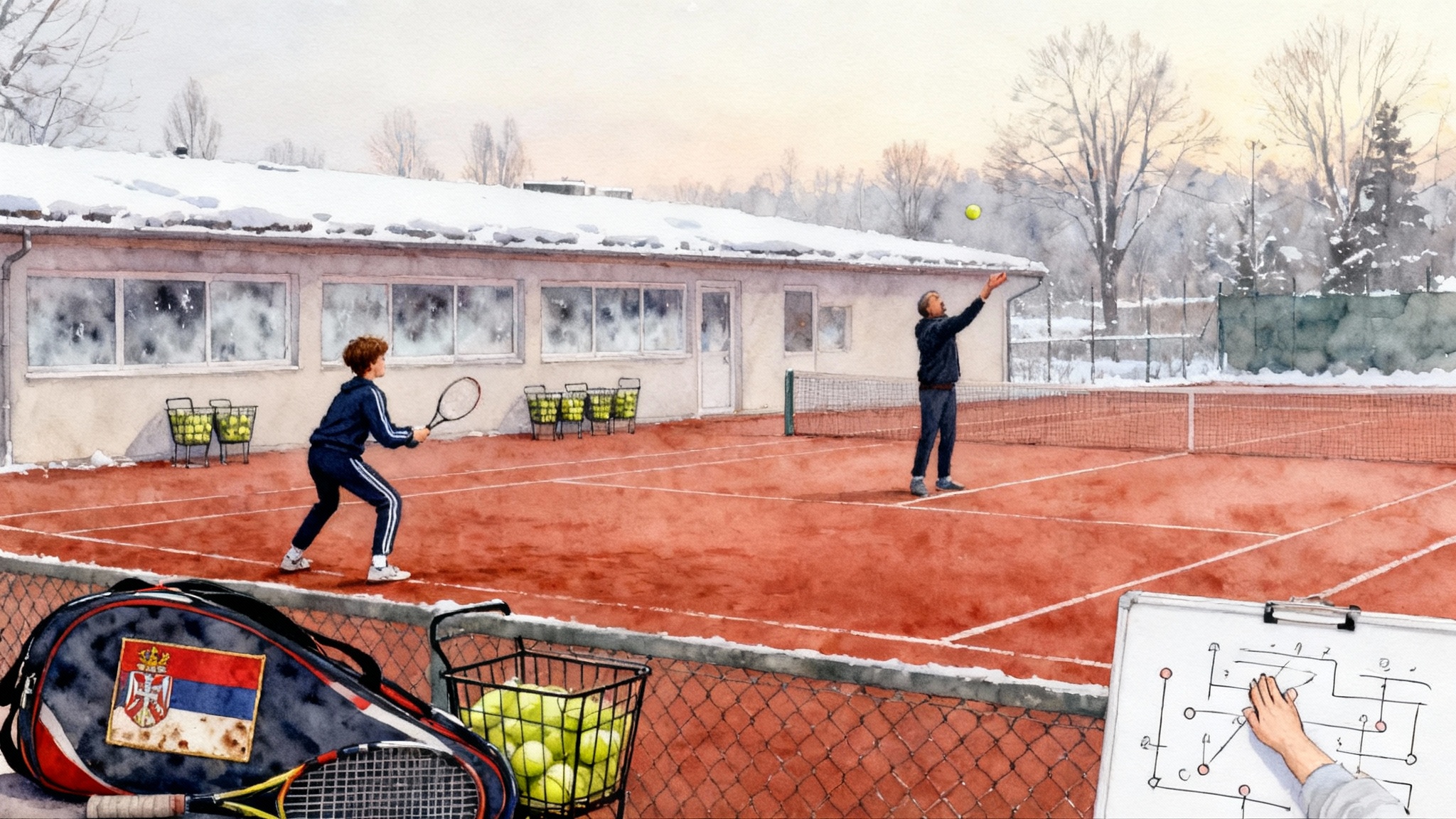
The mentor behind the machine
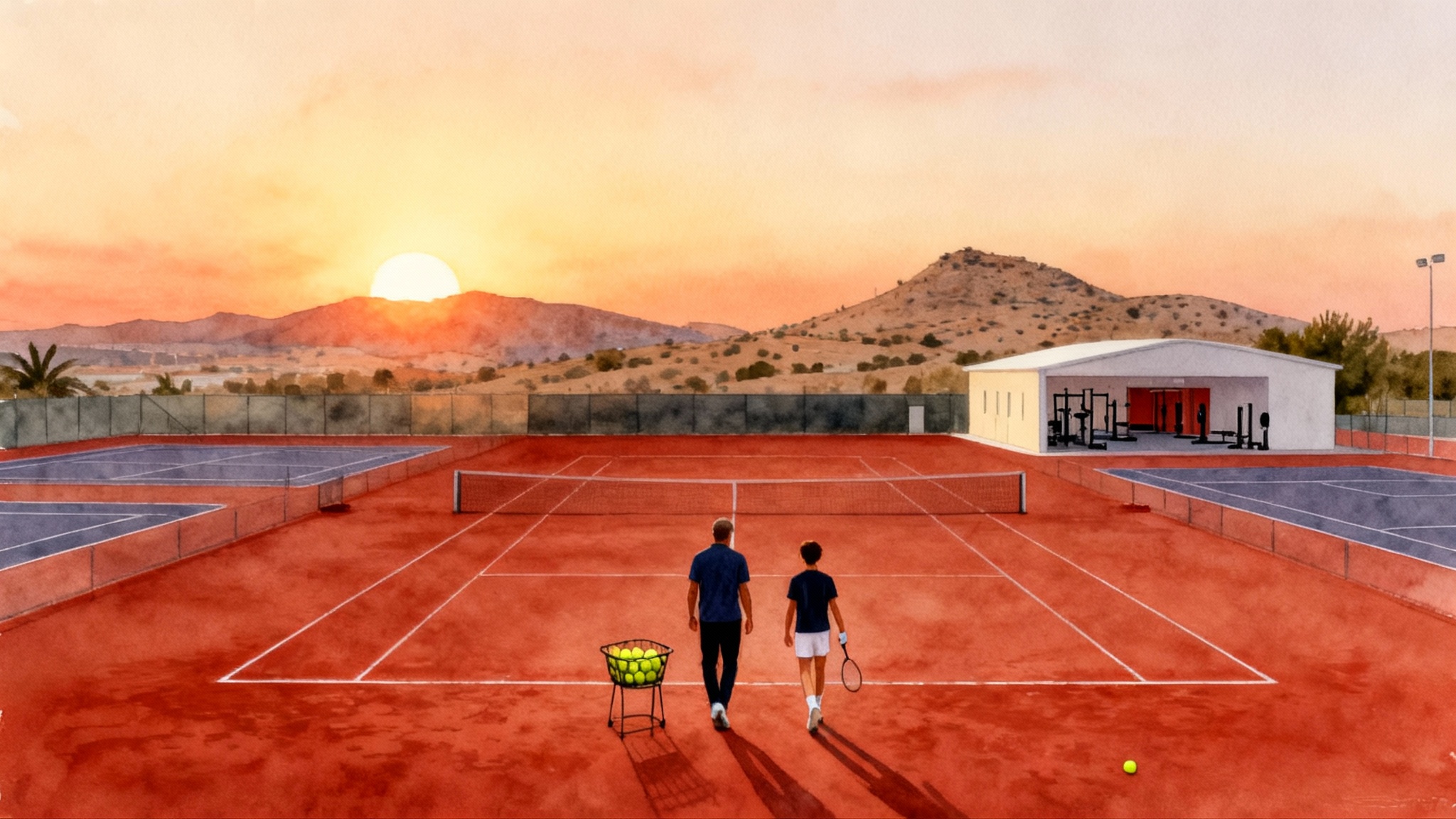
Tributes in 2025 highlighted the enduring influence of Niki Pilic, a coach whose quiet standards shaped more champions than many nations can claim. Among them is Novak Djokovic. Before the polished champion, there was a boy from Kopaonik who entered an environment in Oberschleißheim just north of Munich that prized discipline, repetition, and real match pressure. For background, see this concise Niki Pilic career overview and the setting of Oberschleißheim near Munich.
This is the story of how that environment forged his return game, flexibility, and tactical patience. It is also a practical guide for parents and coaches deciding when to change environments, how to structure training blocks, and what to look for in a development-focused academy.
The road from Serbia to Oberschleißheim
Djokovic’s early talent was nurtured in Serbia, where local coaches instilled fundamentals and a love for the game. As his level rose in the late 1990s, the family faced a familiar decision: stay home and piece together competition, or move to a place with structured standards, deeper practice groups, and dependable tournament access.
They chose a pragmatic middle path. Two to three month blocks in Germany, then a return to Serbia to reconnect with family, continue schoolwork, and reset. That cadence balanced immersion with recovery and spread the financial load. Housing meant modest apartments or shared rooms near the academy. Schooling fit around tennis with assignments carried between countries and a family calendar that kept both grades and match results pointed in the right direction.
What defined the Pilic environment
Pilic’s academy rested on three pillars that appeared in almost every session:
- Practical discipline. Players arrived early, warmed up together, and respected the clock. Courts were tidy. Rackets were strung on schedule. Feedback was direct, short, and specific. The best sessions looked almost boring because habits were consistent.
- Purposeful repetition. Blocks were built for one outcome at a time: return depth above the service line, crosscourt backhand at shoulder height, serve body targets that jammed right-handers. A typical technical block lasted 18 to 25 minutes, repeated two or three times with micro-breaks to keep quality high.
- Everyday match play. Most days ended with a scoring segment: short sets, tiebreak clusters, pressure games starting at 30 all, or returning drills that began at break point down. Technique mattered only if it held under score.
For a young Djokovic, the environment did two things at once. It sanded away rough edges from a fast, elastic mover and taught him to win points slowly when patience was required.
How the return became a weapon
The return is a chain, not a single link. Pilic’s groups trained each link, then tested them under pace:
- The read. Players stood on the hash mark while a partner or coach served at half speed. The goal was to call the serve type at the toss, not at contact. Stillness created early information.
- The first step. Many juniors step forward too soon and get jammed. The academy drilled a delayed split step landing as the server struck the ball. Can you land at contact, then break left or right with weight under control?
- The contact. Short takeback, long follow-through. Meet the ball in front without reaching. A simple cue: keep the chest quiet and drive through the logo.
- The target. Deep middle first. Corners only if the server missed the spot. Heavy balls near the baseline removed the server’s time.
These parts were assembled with escalating formats: two minutes of shadow swings, eight minutes of fed serves to one location, ten minutes of live serves with strict scoring. If a return landed short, the next point started at love fifteen to mirror scoreboard pain.
Why did this work for Djokovic? He already had elastic movement and a compact backhand. The academy layered in earlier reads, a quieter set position, and confidence to hit big targets without fear of appearing conservative. Over time, depth and repeatability beat flash.
Flexibility that survives five sets
Djokovic’s flexibility became a signature because mobility was treated like a craft, not an afterthought.
- Dynamic first. Sessions opened with skips, lateral shuffles, and low-carriage bear crawls to keep hips level and preload defensive ranges.
- Positional holds. After hitting, players spent six to eight minutes in controlled holds. Think of a runner’s lunge with the back knee hovering and the front foot heavy. The cue was patience. If you can breathe in the position, you can play out of it.
- Elastic drills. Defensive slides ended with a planted outside foot and a bat-through finish to teach the legs to absorb shock. As players improved, coaches tossed extra balls to the same corner to train repeated pushes under fatigue.
Flexible positions only matter if you can swing and recover from them, so every mobility segment ended with a shot.
Tactical patience taught by the scoreboard
Pilic’s match-play blocks framed patience as active, not passive. A few constraint games delivered the lesson:
- Twenty-ball tolerance. Players hit twenty crosscourt balls before changing direction. Early misses conceded the point. Two things happened: players stopped flirting with lines and learned that steady pressure breaks an opponent mentally before strings break.
- Short advantage start. Points began with the returner leading 15 love. The returner built the point rather than rushing a hero forehand. A small cushion taught that a smart point is worth more than a loud one.
- Counterpunch ladder. One player could only win by absorbing, resetting deep middle, then attacking the next short ball. This created a bridge from survival to offense, the same bridge Djokovic crossed repeatedly on tour.
These games sharpened choices: when to take space, when to float deep, when to change direction inside the baseline.
The hard choices at home
Between roughly ages twelve and sixteen, two to three month German blocks set a professional pattern. The family managed three recurring decisions:
- Leave home in seasons, not forever. Putting a return date on the calendar reduced the emotional cost and sharpened focus inside each block.
- School as a second lane. Coursework traveled. Teachers adjusted deadlines. A weekly study hour kept stress low so training quality stayed high.
- Finance without fantasies. Savings mattered. Tournaments were clustered to reduce travel. Partial sponsor or federation help entered at times, but the budget still set the calendar.
What parents can copy from the Pilic model
You do not need to live in Germany to apply these lessons. You need structure and honest measurement.
- When to change environments. Move if your child lacks peers within one USTA age group above or below, if match exposure falls under eight competitive sets per week, or if feedback has become generic. A new place should offer a deeper player pool, cause-and-effect coaching, and a schedule you can sustain for six months.
- How to structure blocks. Think in six-week mesocycles. Weeks one to four build volume and quality. Week five simulates tournaments with reduced volume and more pressure sets. Week six is recovery and a skills audit. Within each week, run three technical mornings, two tactical afternoons, and four match-play windows of 60 to 90 minutes.
- Return-game microcycle. Two focused return blocks per week. Block A targets deep middle on both wings. Block B targets body returns and high backhands. Each block: three minutes shadow work, eight minutes fed serves, ten minutes live serves with penalties for short returns, then five minutes of written cues.
- Flexibility that transfers. Treat mobility as a vital sign. Ten minutes before play, six minutes after. Focus on hips, ankles, and thoracic spine. If your child is gasping, the hold is too deep; if chatting easily, push one centimeter further.
- Tactical patience training. Two constraint games per week. Twenty-ball tolerance on Tuesday. Counterpunch ladder on Friday. Keep score and record when a player changes direction. The goal is not to avoid risk but to take risk from a strong position.
For contrast and further models, compare how other academies operationalize pressure and process in how Mouratoglou accelerated Gauff and how the Piatti Center forged Jannik Sinner.
Choosing a development-focused academy
Many academies sell promise. You want a place that sells process. A checklist drawn from what worked in Oberschleißheim:
- Coach to player ratio. No more than 1:4 in technical blocks. Match play can stretch to 1:6 if peer quality is high.
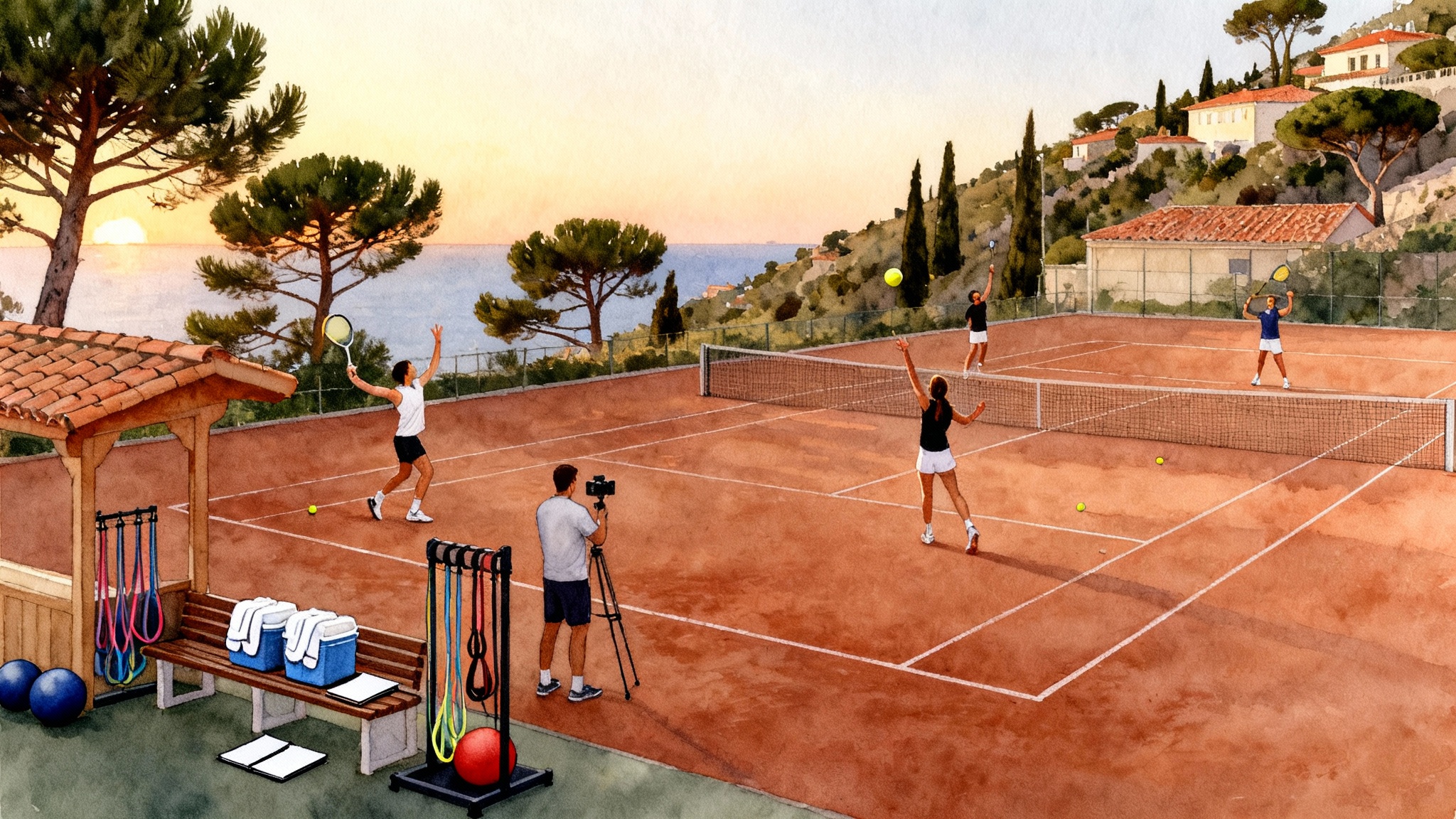
- Video that measures. Two front angles for groundstrokes, one slow-motion angle for serves, and three written cues a player can repeat tomorrow. If review turns into a highlight reel, you are paying for a memory, not a tool.
- Match play every day. At least 45 minutes of scored work, even on technical days. Have a rain plan with indoor time or competitive points in smaller spaces.
- Feedback culture. Coaches correct in short sentences. Players repeat the instruction in their own words. If a program blames players as a group, find another place.
- Tournament pathway. Map four to six events in eight to ten weeks. Cluster events to reduce costs. Include a preparation week and a debrief day.
- Wellness standards. Written expectations for sleep, hydration, and injury prevention visible on site.
If you are Germany-based and want a compact, high-touch option, explore the ToBe Tennis Academy in Germany.
A sample week you can adopt tomorrow
Monday
- Morning: Technical. Backhand crosscourt block. Three sets of 20 minutes with two-minute breaks. Finish with five minutes of body-serve targets.
- Afternoon: Match play. Two tiebreaks to seven starting at 3–3. One set to four games, ads in. Five-minute notes review.
Tuesday
- Morning: Mobility circuit. Lateral shuffles, low-carriage lunges, rotational holds. Serve rhythm with a metronome for repeatable tempo.
- Afternoon: Tactical patience. Twenty-ball tolerance. Finish with six minutes of sprints beginning from a defensive slide.
Wednesday
- Morning: Return Block A. Deep middle targets from both sides with a penalty for short returns.
- Afternoon: Light hit and study hour. Clear academic stress midweek.
Thursday
- Morning: Forehand inside-out build. Pattern play forcing three crosscourts before a change.
- Afternoon: Match-play ladder. Start with the returner at 15 love. Two short sets.
Friday
- Morning: Return Block B. Body returns and high backhands. Ten minutes vs a similar-age server, then ten vs a stronger server.
- Afternoon: Counterpunch ladder. Defense to offense points only. Finish with flexibility holds.
Saturday
- Tournament simulation. Warm up, then one set to six games with a new opponent. Debrief in writing.
Sunday
- Rest and review. Stretch 15 minutes. Read notes. Choose one technical cue and one tactical cue for next week. Simplicity beats volume.
Budget, travel, and the human part
Money shapes options but does not decide outcomes.
- Lodging. Host families, shared apartments, or academy housing reduce cost. Proximity to courts saves time and transport.
- Travel. Cluster tournaments geographically. Four events within a three-hour drive beat four flight-dependent trips.
- Coaching. Pay for the hours that move the needle: technical mornings and scored afternoons. Skip optional extras unless they solve a real need.
- Scholarships and support. Ask directly and bring a simple player résumé with recent results and coach contacts.
- Mental health. Plan family calls. Write a weekly note to grandparents. Success at fifteen is fragile if the home thread snaps.
What endures from Pilic’s way
Strip away banners and biographies and you find a craftsperson’s truth. Pilic built environments where good choices were trained daily. Repetition blocks created reliable swings. Match-play habits created reliable decisions. The culture created reliable people who showed up on time and competed with respect.
For Novak Djokovic, that mix hardened qualities we now take for granted: an early read on the toss, a return that lands deep more often than not, hips that find angles under pressure, and a patience that squeezes the air from a rally without a headline shot.
Parents and coaches can carry this forward. Make your calendar an ally through blocks that last long enough to matter. Measure what you do instead of praising how it felt. Choose places that put the scoreboard into daily training. Keep school in view and family close enough to hear.
The best way to honor a mentor like Pilic is not with a speech but with an environment that teaches a young player to make one more good choice today, then repeat it tomorrow.