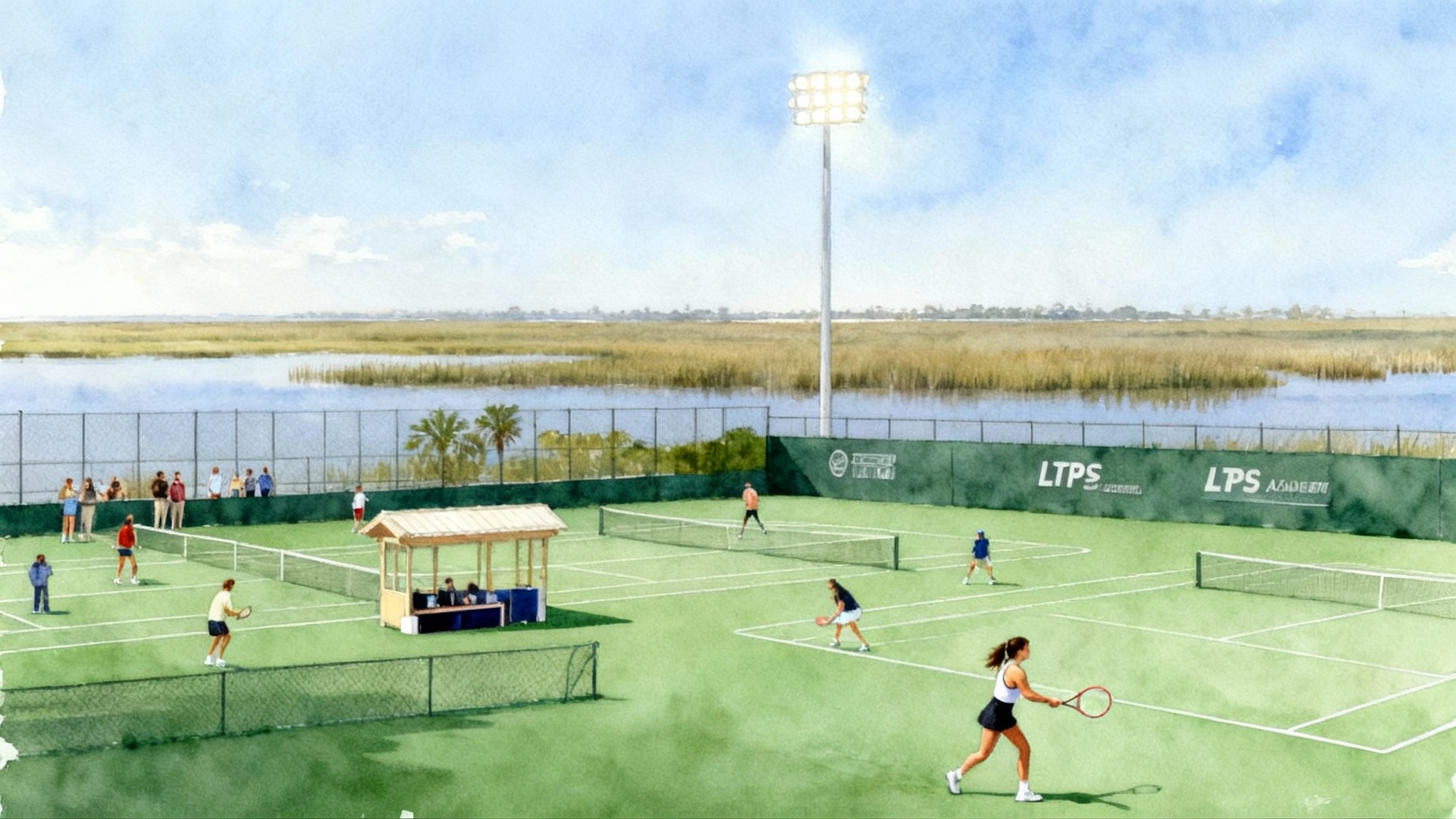
How JTCC Powered Frances Tiafoe’s Rise to Arthur Ashe
 Tommy
Tommy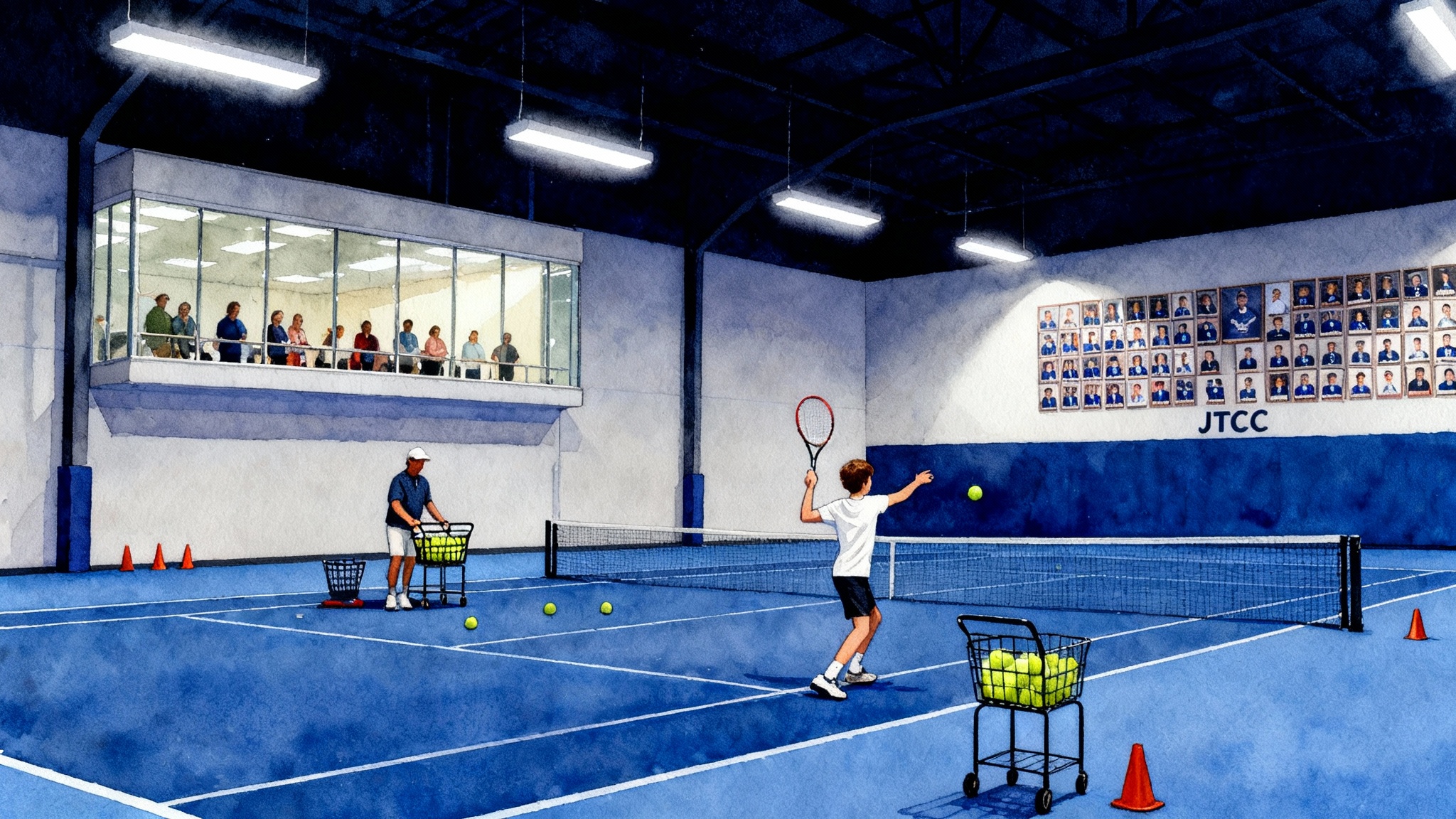
From a small office in College Park to Arthur Ashe at night
If you watched Frances Tiafoe light up Arthur Ashe Stadium, you saw charisma and power. What you did not see were the countless quiet evenings at the Junior Tennis Champions Center in College Park, Maryland, where his father worked maintenance and where a shy kid turned repetition into a weapon. JTCC gave Tiafoe a developmental edge that sounds simple on paper but is hard to deliver in real life: extended daily court access, stable mentorship, and timely support from the United States Tennis Association’s player pathway. Those inputs compounded into junior breakthroughs like the Orange Bowl title at 15 and, later, a first ATP Tour trophy in Delray Beach, a US Open semifinal in 2022, and a career high of world No. 10 in 2023, milestones documented on his ATP Tour biography.
This is a nuts-and-bolts look at how JTCC built that runway and how parents can adapt the approach: where to find scholarships, how to assemble a tournament ladder from local juniors to Challengers to the ATP Tour, and when to add national training blocks or bring in a new coach. For parallels on academy-built breakthroughs, see how JC Ferrero built Carlos Alcaraz and how Piatti Tennis Center forged Jannik Sinner.
What JTCC actually did differently
1) Extended on-site court time
Most juniors get two hours on court after school. Tiafoe often had the opposite experience. Because his family life and the center were connected, he could be around the courts before and after regular programming. That shift matters for three reasons:
- Volume without burnout: instead of three long sessions a week, he could stack short, frequent blocks across six to seven days. Think 75 to 90 minutes of drilling in the late afternoon, plus 45 minutes of serves or hand-fed footwork at off-peak times. The total weekly load adds up, but the sessions remain mentally fresh.
- Situational reps: more off-hour court time meant more set-play rehearsals. Crosscourt forehand patterns, plus serve plus first ball, plus a finishing ball. That repetition builds an automatic response under match stress.
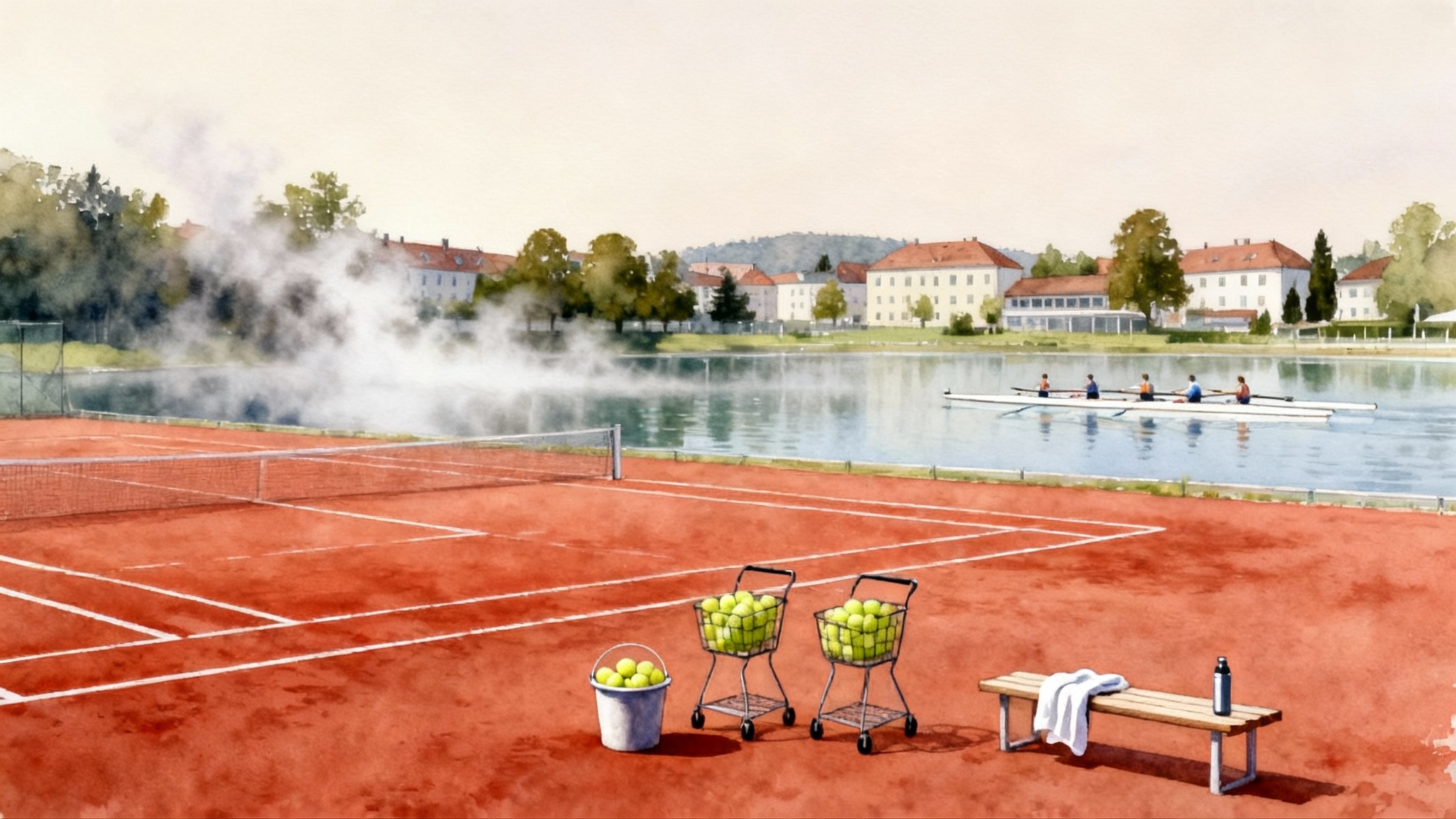
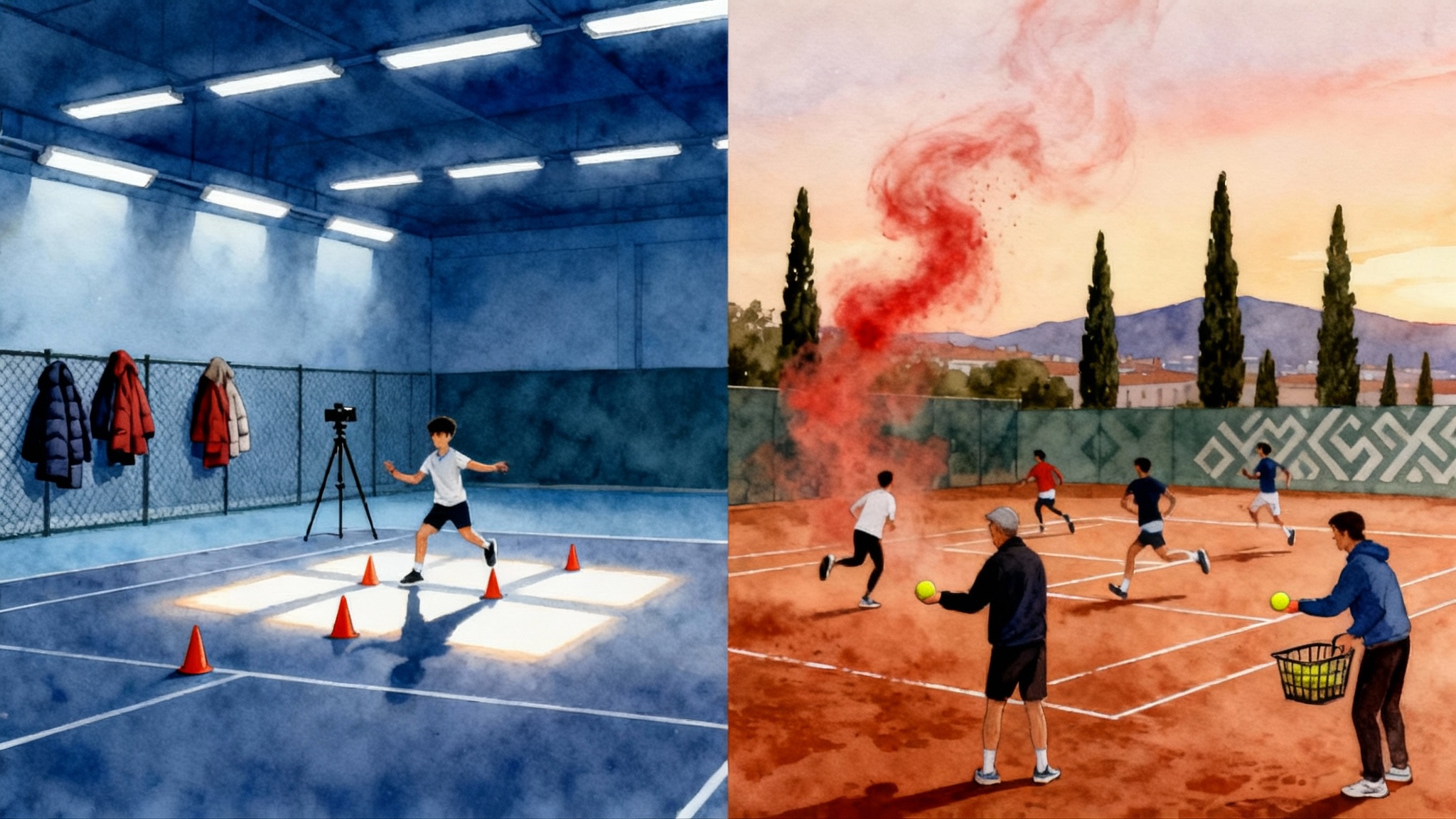
- Surfaces and spacing: JTCC’s mix of indoor hard courts and clay allowed alternating load. Heavy movement days on clay, faster decision days indoors. Alternating surfaces is a simple way to train footwork variety while managing impact.
Practical takeaway: parents do not need a key to a club office. They need consistent access. If your center is crowded after school, ask about first-hour-of-the-day slots or late-evening serve windows. Two extra 45-minute off-peak blocks each week are often available if you ask the front desk and a coach at the same time.
2) Stable mentorship and a clear voice
From age eight, Tiafoe worked primarily with one coach for years, then added voices in a planned way. Continuity allowed three compounding gains:
- A shared technical language. When a player and coach name the same things the same way, feedback gets shorter and more precise. That makes before-match tune-ups far more effective.
- Fewer resets. Frequent coach changes introduce a new diagnostic phase every time. JTCC kept the base stable, then added specialists when the time was right for spins, patterns, or physical testing.
- Honest baselines. Long-term mentors know the player’s true average, not the highlight reel. That makes tournament scheduling more rational and reduces the spiral of entering the wrong events.
Practical takeaway: if your player keeps switching coaches, do a 90-day trial with one lead coach and put everything in writing. One sentence goals, two focus mechanics, one match-play priority. Specialists can visit, but the lead coach should translate their input into the same shared language.
3) Regional Training Center resources at the right time
JTCC was designated a United States Tennis Association Regional Training Center early in its life, which meant alignment with national camps, fitness screening, and coach education. For a player like Tiafoe, that created windows to test himself against the best in his age group while staying anchored at home. The key is not the label. It is how the label is used:
- Timing matters. National training hits hardest when the player is confident locally and needs sharper friction, not when the player is overwhelmed and under-sleeping.
- Keep the home base accountable. After a camp, the lead coach should convert testing results into three weekly habits. For example, if the overhead reach or acceleration is flagged, plan two short acceleration blocks per week and 50 overheads after practice on Tuesday and Thursday.
- Compete near the camp window. Use the camp as a standard-setting moment, then enter a tournament within two to three weeks to measure transfer.
Practical takeaway: ask your academy when regional or national camps are scheduled. Plan one school-friendly week where training density is high, sleep is protected, and there is a local event soon after.
The tournament ladder, made practical
The United States junior calendar can feel like alphabet soup. Here is a clear outline of how families can climb without guessing. Abbreviations are spelled out the first time they appear.
- Step 1: Local juniors and sectionals. Win consistently at your section level. For many players, that means United States Tennis Association Level 6 or Level 5 events. Target a 65 to 70 percent win rate over 20 to 30 matches across six months.
- Step 2: National showcase events. Add one to two national Level 2 or Level 1 events per semester, such as the Easter Bowl or Clay Courts, if your ranking supports direct entry or if you can qualify. The goal is not a trophy. The goal is tape. Film every point to evaluate how your patterns hold under pressure.
- Step 3: International Tennis Federation juniors. ITF juniors create an international rating and a wider peer group. Start with lower grade events where you can win two to three rounds. When your player reaches the second week of multiple ITF events, you are ready to increase international travel.
- Step 4: ITF World Tennis Tour pros. These are entry-level professional events at the M15 and M25 levels. The goal is to earn professional points while still mixing in juniors or college as appropriate.
- Step 5: ATP Challenger Tour. This is the real apprenticeship. Expect a year or two where you go deep some weeks and lose early others. Use the losses to refine serve patterns, return depth, and first-forehand decisions.
- Step 6: ATP Tour events. Wild cards and qualifying draws provide first looks. Converting those into main-draw wins is the bridge to a real ranking.
How Tiafoe’s path fits the model
- Junior mastery: Orange Bowl champion at 15, followed by a national title the next spring, and a climb to world No. 2 in the International Tennis Federation junior rankings.
- Early pro wins: Challenger results provided ranking momentum while he learned how to close long three setters.
- Tour breakthroughs: first ATP title at Delray Beach at 20, then a US Open semifinal in 2022 and a career-high top 10 in 2023.
Parent checklist to build your ladder
- Commit to 20 to 30 matches in six months at the right level. Do not chase badges. Chase volume and film.
- Review film on Monday nights with one theme. For example, first-ball forehand height or second-serve direction.
- If the player wins locally with margin for two straight cycles, add one national event. If the player is losing deuce games consistently, stay local and add targeted reps instead.
When to add national training blocks or a new coach
The moment to add either is not based on boredom. It is based on data and readiness.
Add a national training block when:
- Your player dominates local competition and needs faster ball to stretch decision speed.
- The player’s physical metrics suggest readiness for more load. For example, a consistent ability to hold sprint mechanics for 15 seconds and repeat after 45 seconds rest, and a shoulder care routine completed without pain.
- There is a clear coach-led plan to convert camp feedback into weekly habits.
Consider a new coach when:
- There is a six-month plateau in the basics that matter most. Serve percentage is stuck, first-forehand depth is not improving, or return contact is consistently late. Plateaus happen, but if the plan to address them has not produced progress after three months of real work, a fresh voice may help.
- Communication is unclear. If a player cannot repeat the top two priorities before a match in a simple sentence, the message is not getting through.
- The schedule is chaotic. If the player is ricocheting between levels every month, the coach is not protecting development.
Process for a coaching change that protects the player
- Do a 30-day clarity phase. Ask the current coach for a written three-bullet plan and agree on two objective checkpoints.
- If the change still feels necessary, run a four-week overlap in which the new coach observes two sessions and one tournament before taking over. The outgoing coach shares drill libraries and match notes so the player does not restart at zero.
Scholarships and NJTL-style programs parents can access
JTCC’s success sits on a broader ecosystem of access programs that families can tap into. National Junior Tennis and Learning, supported by the United States Tennis Association Foundation, is a network of nonprofit chapters that provide free or low-cost tennis with education support in hundreds of communities. You can use the USTA Foundation site to find an NJTL chapter near you or to learn how chapters allocate grants and scholarships. One strong example is the Milwaukee Tennis and Education Foundation, which turns public-park courts into a real pathway.
How to prepare for a scholarship conversation
- Academic readiness: bring the latest report card and a brief teacher note if possible. Programs invest where school habits support training.
- Schedule reality: list transportation options and family constraints. Many chapters will help coordinate carpools if they know the true picture.
- Video reel: a two-minute clip of serves, a 10-ball forehand sequence, and 10 points of match play tells far more than a bio. Keep the camera behind the baseline.
- Service back to the program: ask how your family can volunteer. The best-run chapters value parents who help.
Why this matters now
In 2024, JTCC was named National Junior Tennis and Learning Chapter of the Year. That recognition underlines something every parent should know. High performance and high access can coexist when the system is intentional about time, mentors, and resources.
The JTCC rhythm parents can copy this month
You do not need 32 courts to benefit from JTCC’s model. You need rhythm.
- Daily micro-sessions: aim for five to six touches per week, even if two are only 30 to 45 minutes. Pattern play on Tuesday, serve targets on Thursday, match play on the weekend.
- Cross-surface habit: if you only have hard courts, add a once-a-week footwork session on a grass field or hill sprints to mimic traction changes.
- Film and feedback: record one set per week. On Monday, pick one priority with your coach. On Friday, test it during a practice set.
- Protect sleep: more touches only help if the player sleeps. Set a hard cutoff for screens and schedule the earliest practice day after the latest school day.
Case-study touchpoints from Tiafoe’s journey
- Ages 8 to 12: a home at the courts. Court time feels normal, not special. The ball cart is a friend, not a chore. Technical base forms under one voice.
- Ages 13 to 15: breakout years. Wins pile up, including a historic international junior title at 15. The player starts to believe in the plan because the player sees proof.
- Ages 16 to 18: pro apprenticeship. Futures and Challengers teach how to suffer in three sets and still make good decisions. There are losses, but the patterns hold.
- Early twenties: first ATP title, first deep Grand Slam run, then a climb into the top 10. The same fundamentals are still there, only executed at speed.
Each phase kept the base stable and added stress in planned ways. That is the thread parents can pull.
Common pitfalls and how JTCC avoided them
- Over-traveling too early: JTCC did not chase a new country every month. It staged international steps after dominance at home. Parents can audit their calendar by counting red-eye flights. If you have more flights than practice blocks, flip the ratio.
- Coach carousel: long-term rapport made feedback faster. If you are on your third coach in a year, pause and define the one-year plan before you change again.
- Chasing level instead of skills: the ladder looks orderly, but matches are still decided by patterns. If the second serve and first forehand are not improving, another Level 1 entry will not fix it.
Build your plan in 90 days
- Days 1 to 30: lock the weekly rhythm. Five touches. Two are 45-minute micro sessions. One match-play set with film. One physical session that respects age and growth.
- Days 31 to 60: pick two tournaments that match current level and one stretch event. Book refundable travel, set performance goals in process terms like first-serve percentage or return depth.
- Days 61 to 90: run a mini-camp at home. Three days with two shorter sessions per day, sleep first, screens last. Invite a peer who challenges your player. End the week with a competitive set and a simple debrief.
The real lesson from College Park
Great programs do not rely on magic. JTCC leveraged more hours in the building, one clear coaching voice, and timely windows into national training. That combination turned a promising kid into a top professional who could walk into Arthur Ashe Stadium and expect to belong. Parents can borrow the same playbook. Secure consistent court access. Protect a stable mentor. Use national resources with a plan. Build a ladder that fits the player you have, not the player you hope to have. When you add those pieces together and keep stacking ordinary days, the extraordinary stops feeling out of reach and starts feeling like the next logical step.