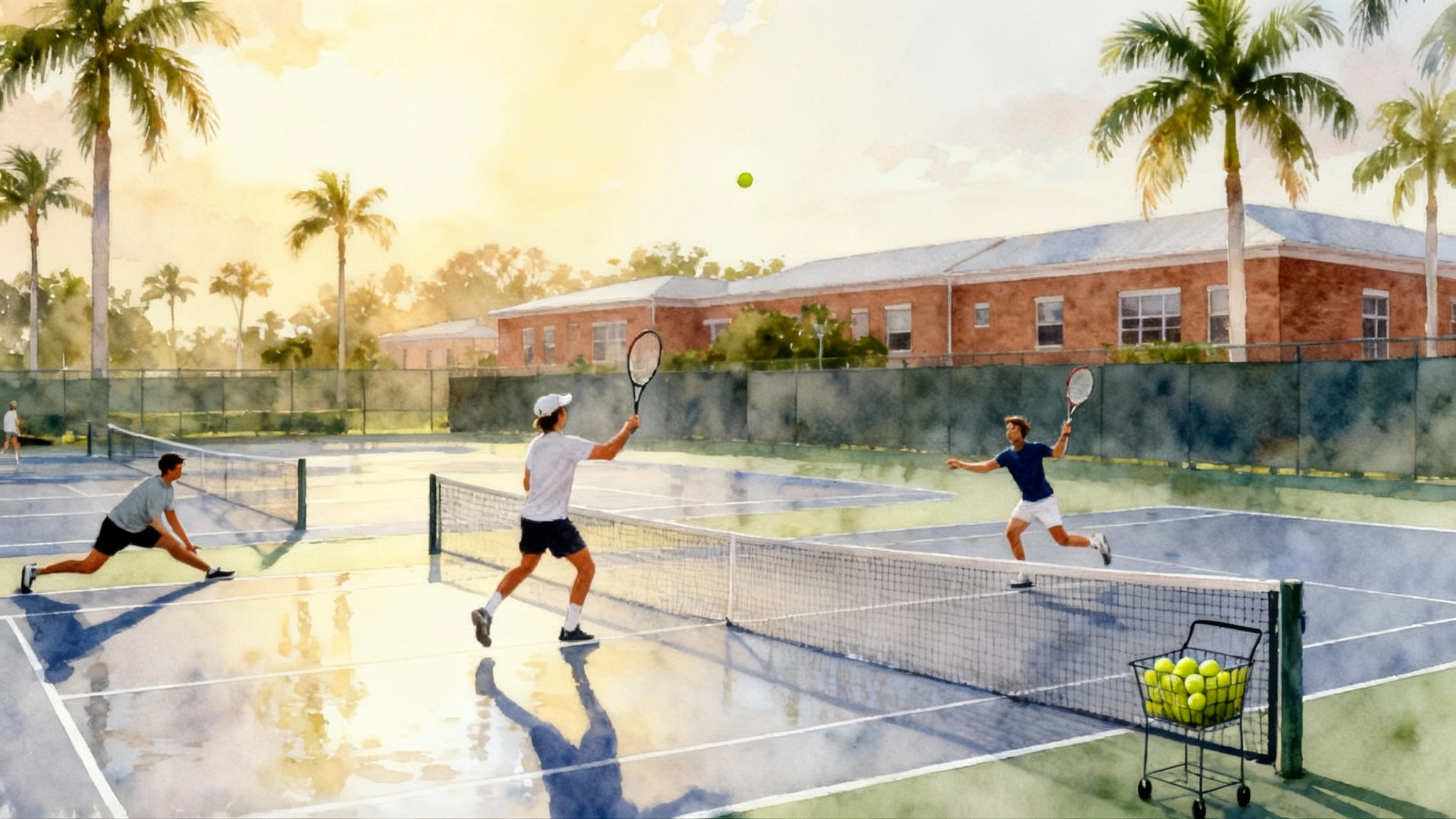
From Oslo to Mallorca: How Rafa Nadal Academy Built Ruud's Top-10 Rise
Casper Ruud left Oslo to base in Manacor at the Rafa Nadal Academy. With family support, smart scheduling, and relentless practice, he turned junior promise into a top-10 career. Here is the blueprint others can copy.
 Tommy
Tommy
The choice that changed a career
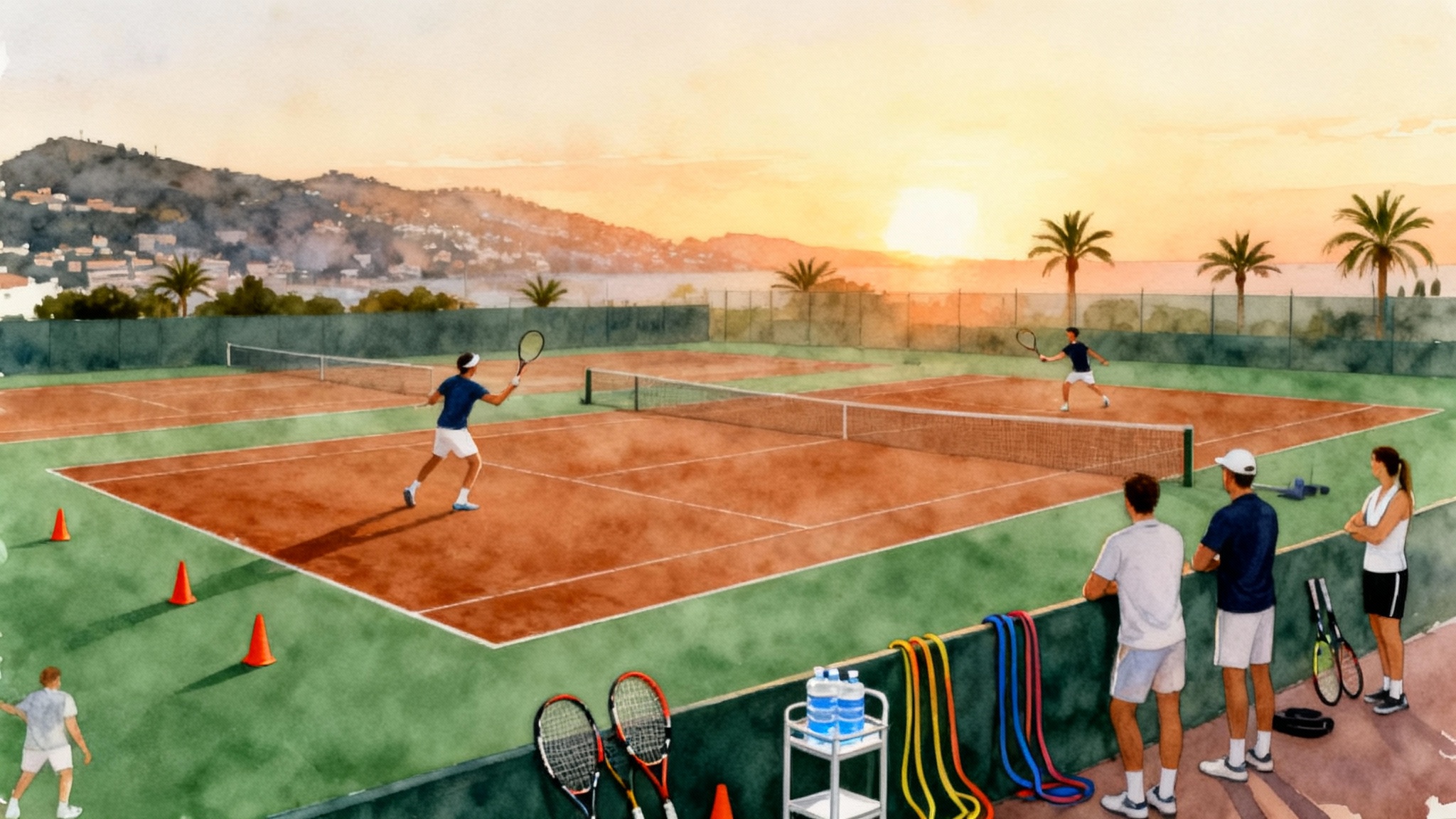
Casper Ruud did not chase a magic forehand or a secret fitness drill. He chose a place. When he accepted an invitation to train in Manacor at the Rafa Nadal Academy, he and his family were not buying a quick fix. They were buying an environment. That decision, and the discipline to live inside it, shaped everything that followed: his preseason blocks, his practice partners, the way he scheduled the Challenger circuit, and the seatbelt-tight intensity that soon carried him into the world’s top 10. You can see the result in his title count and ranking progression on the Casper Ruud ATP profile. Similar environment-first ramps appear in how JC Ferrero built Carlos Alcaraz.
This is the story of a move from Oslo to Mallorca that reset a trajectory without rewriting the player. It is also a practical guide for parents and aspiring players who want to turn a good junior into a reliable professional.
Why Manacor, and why then
Timing matters. Ruud and his father, Christian, had already built a strong technical base. The forehand was heavy, the backhand compact, the movement honest. What they needed was a professional rhythm and a daily bar that sat just out of reach. Manacor offered that at exactly the right phase: post-junior, pre-breakthrough.
They chose to relocate when three things were true:
- They believed in the technique they already had. The goal was consistency and robustness, not a rebuild.
- They were ready to live by a schedule that puts training before comfort. Mallorca meant leaving home, language, and routine.
- They wanted daily proof of what world class feels like, not just a few days of inspiration at a camp. That meant months on-site, including full preseasons.
For families, this is a key lesson: change the environment when you trust the core game and you need standards you cannot manufacture at home. Make the move after a coaching change only if the new coaching team agrees the goal is to apply, not to replace, most of the technique.
The preseason blocks that built an engine
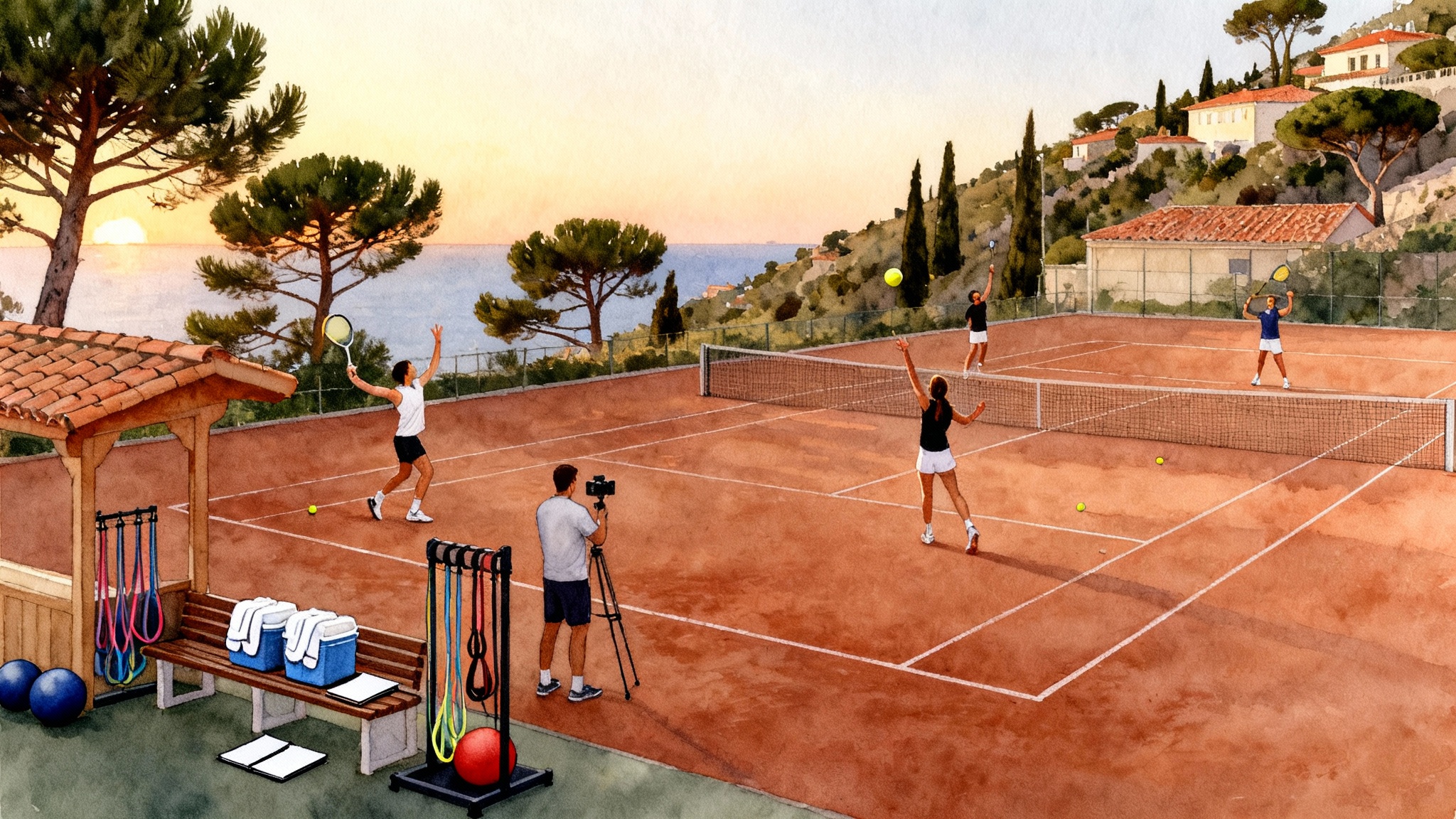
At Manacor, preseason is not a brochure. It is a clock with no snooze button. A typical six-to-eight week block for a player like Ruud included:
- Morning court sessions focused on pattern foundations: serve plus first forehand, cross-court forehand patterns that open the down-the-line backhand, and neutral ball tolerance measured in rally length and depth targets.
- Midday gym with strength built on movement integrity. Think rear-foot elevated split squats, scapular control, and rotational power that marries the legs to the core. Volume rises first, then intensity, then speed.
- Late afternoon court with point construction. Situational games begin at 30-all, return plus two, or neutral ball to forced transition. Scoreboard pressure is part of the drill.
- Recovery is scheduled, not hoped for. Mobility, contrast showers, nutrition windows, and sleep routines become part of the player’s job description.
The metric that matters is not today’s absolute best. It is how many days you can reproduce 90 percent of your best without a drop in quality. Ruud turned that into a competitive advantage. When matches stretched long, his patterns and legs looked the same in hour three as they did in hour one.
Practice partners who raise the floor
The headlines are obvious. Hitting with Rafael Nadal is a masterclass in intensity. But the daily gains come from the depth of the partner bench. On any given week, Manacor offers a mix of elite juniors, hungry pros pushing for top 100, and veterans who know how to test a specific pattern on demand.
- Need to solve heavy lefty cross-court forehands? There is a lefty with a live ball.
- Want the first-serve return to stop leaking short in the ad court? There is a server who will pound that spot for 30 minutes.
- Working on backhand defense that does not drift central? There is a coach feeding live at uncomfortable pace while a sparring partner crowds the middle third.
For a young pro, this density of relevant practice partners is gold. Ruud’s sessions often featured point play that looked like a Challenger final. That repeated stimulus trained his body and his decision making to operate at a standard he wanted to inhabit, not just visit.
From clay certainty to hard-court threat
Ruud’s identity was built on clay. The Academy helped him translate it to hard courts without losing his roots. That translation came from three practical shifts:
-
Contact height and strike zone. On clay, a meter of safety and high net clearance protects patterns. On hard, the same arc can sit up. Ruud learned to take more balls on the rise, flattening selectively off the forehand when the ball climbed into his strike window.
-
Court position after serve and return. Instead of drifting back into rally height, he trained to hold the baseline after the first neutral ball. The rule of thumb became: win depth with the first shot, then step in on the second.
-
Backhand as a directional switch. On clay, the backhand could be a durable wall. On hard, it had to win geography. The short backhand up the line that steals the opponent’s forehand corner became a set play.
He did not need a new game. He needed a hard-court dialect spoken with the same grammar. That is the difference between a rebuild and a translation.
Challenger to ATP: scheduling that compounds
Manacor refined not only how Ruud trained but when he competed. The schedule looked like a staircase, not a trampoline. It mirrors how Piatti Tennis Center forged Jannik Sinner.
- Build confidence and points with targeted Challengers, especially in regions and weeks that match surface preferences and travel logic.
- Graduate to ATP 250s with realistic winning chances, then add 500s and Masters when the body and ranking can handle the load.
- Protect preseason and micro-recovery windows. Do not chase a short-term ranking jump at the expense of long-term readiness.
For parents and players, the principle is simple. Stop thinking in single weeks. Think in blocks that last four to eight weeks, where training density and match density are planned together. If the player’s readiness score dips, the schedule must flex before the body breaks or the confidence frays.
Inside the Academy ecosystem
What separates a branded academy from a productive one is the ecosystem. Facilities mean little unless the services talk to each other. In Manacor, the loop is tight: coaches, physical trainers, physios, and performance analysts exchange information in plain language. A coach notices the forehand contact drifting late on day three. The gym lead checks whether hip rotation fatigues faster on the left side. The physio adjusts soft tissue work that afternoon. The next morning the on-court drill biases earlier preparation on inside-out forehands. That loop repeats until the pattern stabilizes.
Add to that environmental advantages:
- Reliable weather. Fewer cancellations mean more planned reps completed.
- Court access. Multiple surfaces are available to choreograph transitions from clay to hard and back again.
- Regular match play. The Academy can structure internal sets and scoring blocks that simulate the stress of qualifying rounds.
Parents often ask if the name matters. The name matters only if it buys you a process. In this case it does. The Academy publishes programs and resources through the official Rafa Nadal Academy by Movistar, but the decisive factor is how the staff turns those resources into your player’s day.
What Ruud kept, and what he changed
The temptation in a new environment is to chase novelty. Ruud did not. He kept his core identity:
- Forehand as a field position weapon that pins the opponent cross court before switching line.
- Rally tolerance that invites errors without bleeding court position.
- Serve locations that open forehand first balls rather than chase outright aces.
He changed the following:
- He raised average ball depth by a half meter and reduced short middle balls under stress.
- He shortened the forehand takeback slightly on quicker courts and worked more on first-step explosiveness to take balls early.
- He upgraded return height and depth against big first serves so that points started neutral more often.
These are not reinvent-the-wheel changes. They are context upgrades that a new environment made urgent and enforceable.
Translating the journey into action
Here are concrete takeaways that families and players can use.
1) Time the move after a coaching change, not before
If you are considering a relocation to a major academy, first settle your core coaching voice. The new coach and the academy need to be aligned on goals. Write a two-page document that lists the player’s strengths, non-negotiables, and three technical priorities with simple, observable measures. Bring that document to the Academy so day one begins with continuity, not confusion.
2) Choose environment over a technique overhaul
Audit the daily environment using three questions:
- Who will your player hit with Monday through Friday, and at what standard?
- How are gym, physio, and court sessions sequenced so that the body shows up ready for the key practice of the day?
- How will progress be measured each week with two or three metrics the player understands?
If those answers are clear, the odds of meaningful improvement rise without a wholesale technical rebuild.
3) Build preseason blocks the way pros do
Use a six-week template you can adapt:
- Week 1 to 2: volume and movement quality. Two court sessions of 75 minutes at 75 percent pace. Gym emphasis on control and symmetry. Serve mechanics filmed from two angles.
- Week 3 to 4: intensity and decision speed. Point-based drills under score pressure. Gym transitions to power with medicine ball throws and sprint mechanics. Practice sets twice per week.
- Week 5 to 6: specificity. Simulated match week with back-to-back practice matches, one rest day, then a mini tournament over three days.
Schedule one full rest day per week and a half day midweek. If the player wakes with a readiness score below baseline for two days in a row, trade the afternoon court for mobility and film review.
4) Use the Challenger-to-ATP staircase
- Identify three Challenger events where the player can reach the latter rounds based on surface, travel, and entry lists.
- After a points bump, target an ATP 250 where qualifying is realistic or a main draw wildcard has a chance to become two matches. Do not add a 500 until the body has already proven it can play four matches in seven days.
- Reassess every eight weeks with a simple ledger: matches won, first-serve points won percentage, break points created per return game, and unforced errors on neutral balls. Let the data, not emotion, upgrade the schedule.
5) Leverage the academy ecosystem
Ask for a named performance lead who owns the weekly plan. Make that person accountable for coordinating court, gym, and recovery. Insist on:
- A written weekly schedule delivered by Sunday night.
- A 20-minute debrief each Friday with two clips of video that show one success and one correction.
- A match play calendar with at least two competitive set days per week during training blocks.
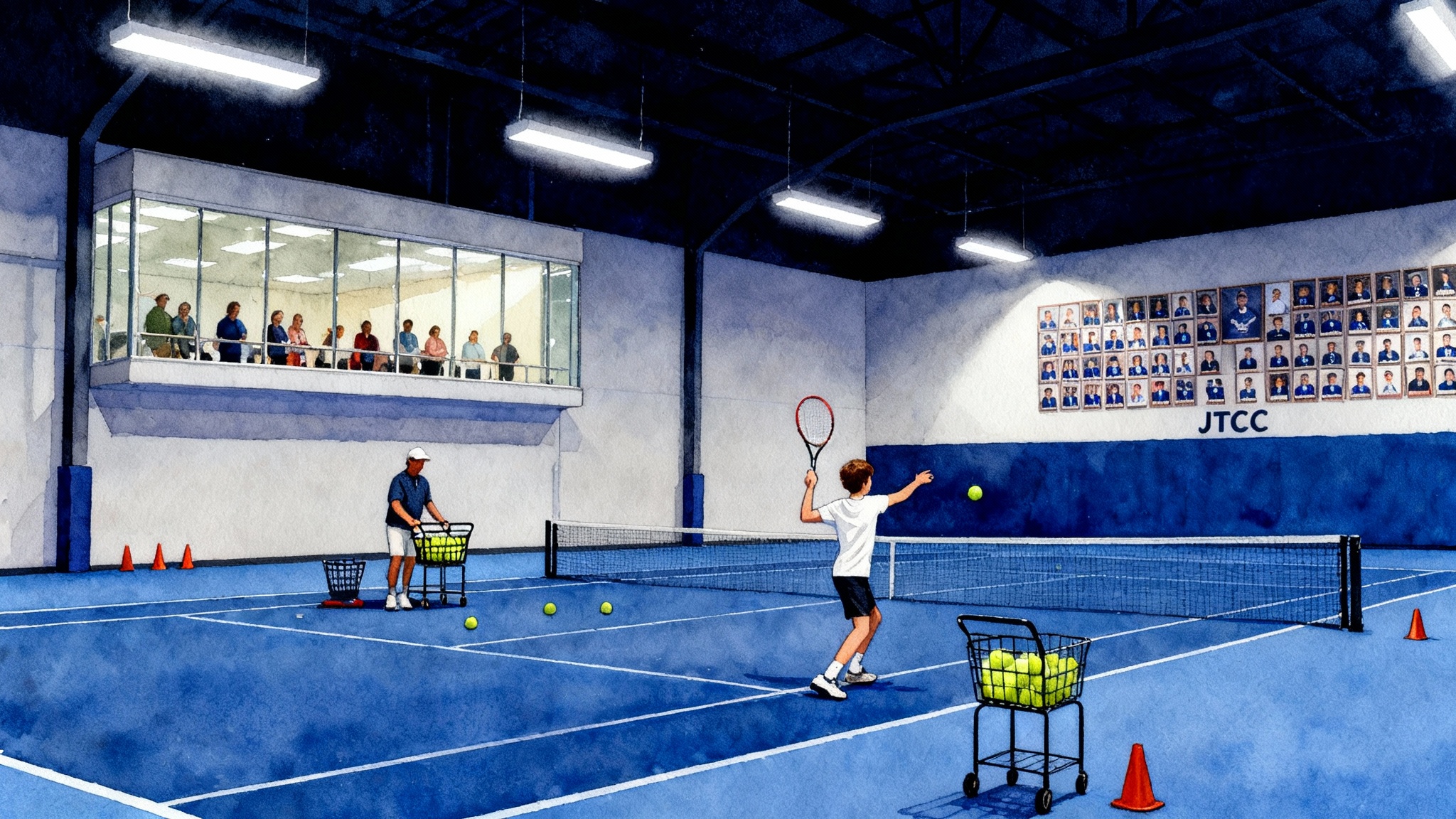
If travel is planned, ask the Academy to connect you with local hitting partners, physio recommendations, and stringing support at the event site. These introductions are often the hidden value that saves weeks of guesswork. For a US example of infrastructure plus community, study how JTCC powered Frances Tiafoe.
6) Translate clay strengths to hard courts
Run a three-part progression across two weeks:
- Baseline hold: start rallies with a deep cross-court forehand at 80 percent pace and step in on ball two. Measure how often you keep the rally neutral or better after the second shot.
- Directional switch: hit five forehands cross court, then one backhand up the line. Repeat until the up-the-line backhand lands past the service line eight of ten times.
- On-the-rise timing: feed mid-height balls and require contact in front of the lead hip. Use lower net clearance and target the front half of the baseline quadrant.
Track the outcomes. Improvement should show up in shorter average rally length on won points, not only in feel.
7) Parents: build support without running the program
Ruud’s move worked because support and autonomy coexisted. Parents can copy that by:
- Controlling logistics. Housing, transport, and meals are predictable. The player focuses on training.
- Setting process goals, not outcome ultimatums. The rule is to make the next practice on time, with the correct energy, and with clear focus. The ranking follows.
- Keeping the team small. Fewer voices mean less friction. Use specialists when needed but maintain one chain of command.
A simple planning checklist
Use this quick checklist before you commit to an academy relocation:
- Do we agree on the player’s top three strengths and top three needs, written in one page or less?
- Can the academy name three practice partners at the correct level for the next eight weeks?
- Is there a single person who coordinates court, gym, and recovery, and do we have their weekly template in writing?
- What is the first eight-week schedule of training, match play, and tournaments, including one rest week or recovery block?
- How will we measure improvement in depth, direction change, serve plus one, and return plus one?
If you cannot answer these questions, delay the move. When you can, act quickly.
What this means for the next generation
Ruud’s path shows that consistency is not a personality trait. It is a product of structure. By choosing Manacor at the right time, leaning into the Academy ecosystem, and climbing the schedule staircase one step at a time, he converted junior promise into senior reliability. You do not need his forehand to copy that. You need his ability to live inside a demanding daily standard and to let small, honest improvements compound.
For players and parents, the message is practical and hopeful. Invest in the place and the process. Protect preseason blocks. Choose partners who challenge your patterns. Translate your strengths across surfaces with specific drills. Use data to climb from Challengers to ATP events without skipping rungs. And when the environment does its quiet work, stay patient. The big results often look sudden from the outside. From the inside, they feel like the only logical outcome of a thousand good days in a row.