Growth-Spurt Tennis 2026: Peak Height Velocity Playbook
A practical guide for parents and coaches to spot peak height velocity and adjust training so juniors ages 10 to 16 keep improving without overuse setbacks. Includes traffic-light load rules, 20-minute growth-proof S and C, footwork and technique fixes, and an 8-week plan.
 Tommy
Tommy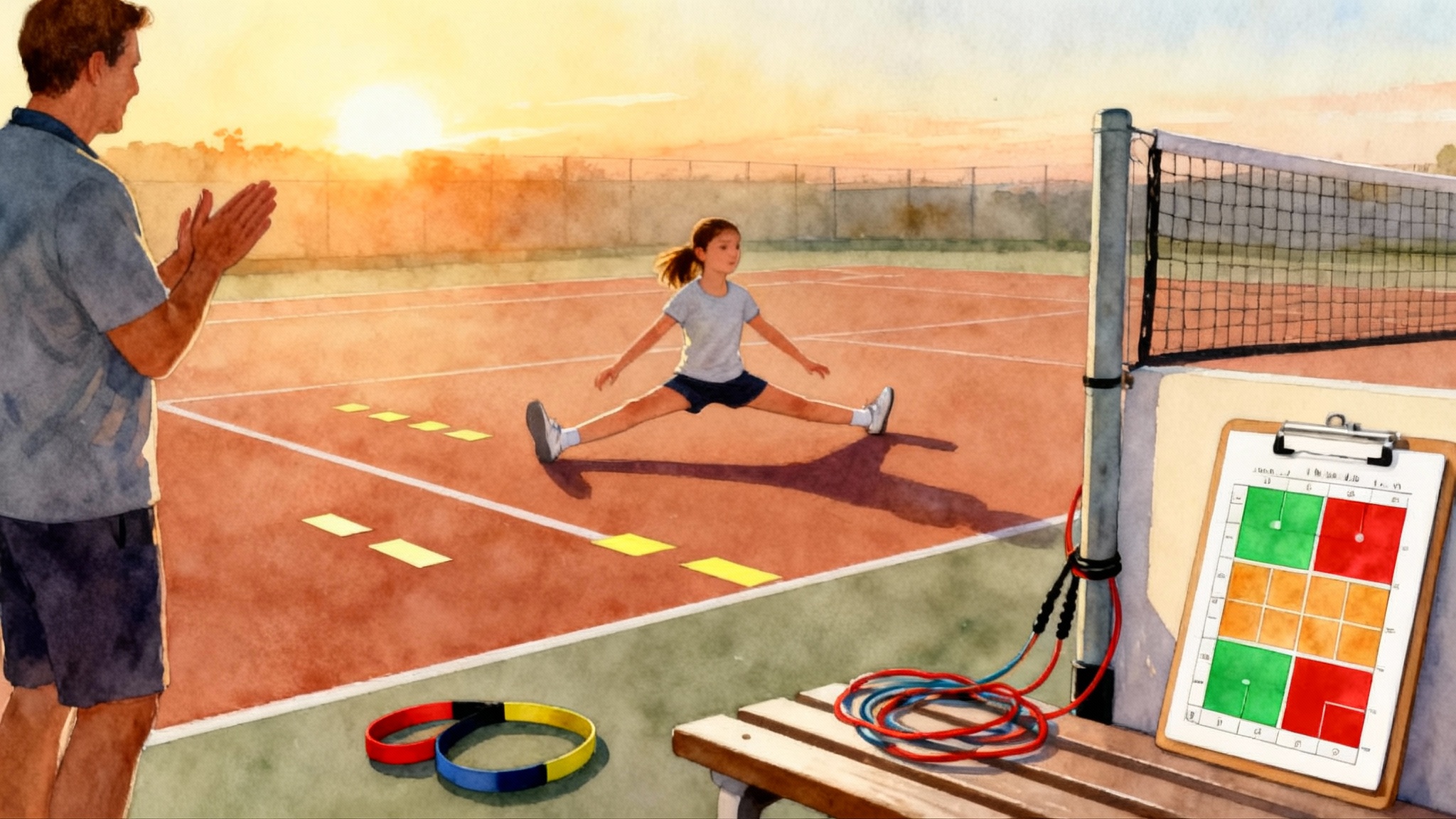
Why growth spurts reshape tennis
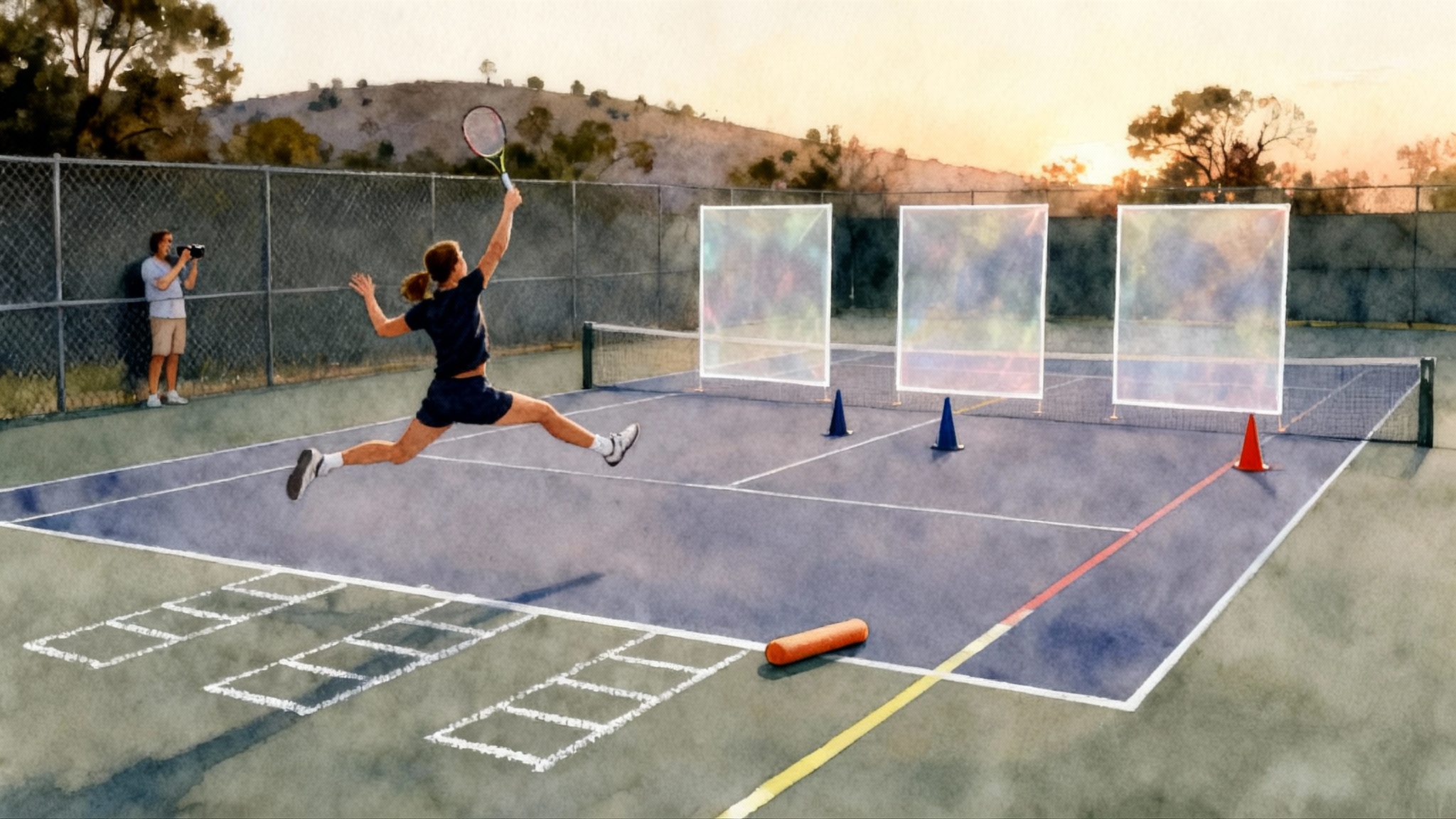
If you work with players between 10 and 16, you already know the feeling. One month they are floating to the ball, the next their timing looks half a beat late and forehands are sailing long. Growth spurts change levers, balance, and how force travels through the body. That is not a slump. It is a moving target. The goal in 2026 is simple and precise. Spot peak height velocity early, adjust loads before niggles turn into injuries, and give players small, targeted drills that stabilize footwork and contact while limbs are getting longer.
This guide gives you a step by step field framework. You will learn how to track peak height velocity, apply traffic light rules for training, run a twice weekly twenty minute growth proof strength and conditioning routine, correct footwork timing, make technique tweaks that preserve consistency, and sequence an eight week microcycle. There are checklists for parents, red flag symptoms, and a case study of a sports science led academy that treats growth as a performance phase.
Spotting peak height velocity at home
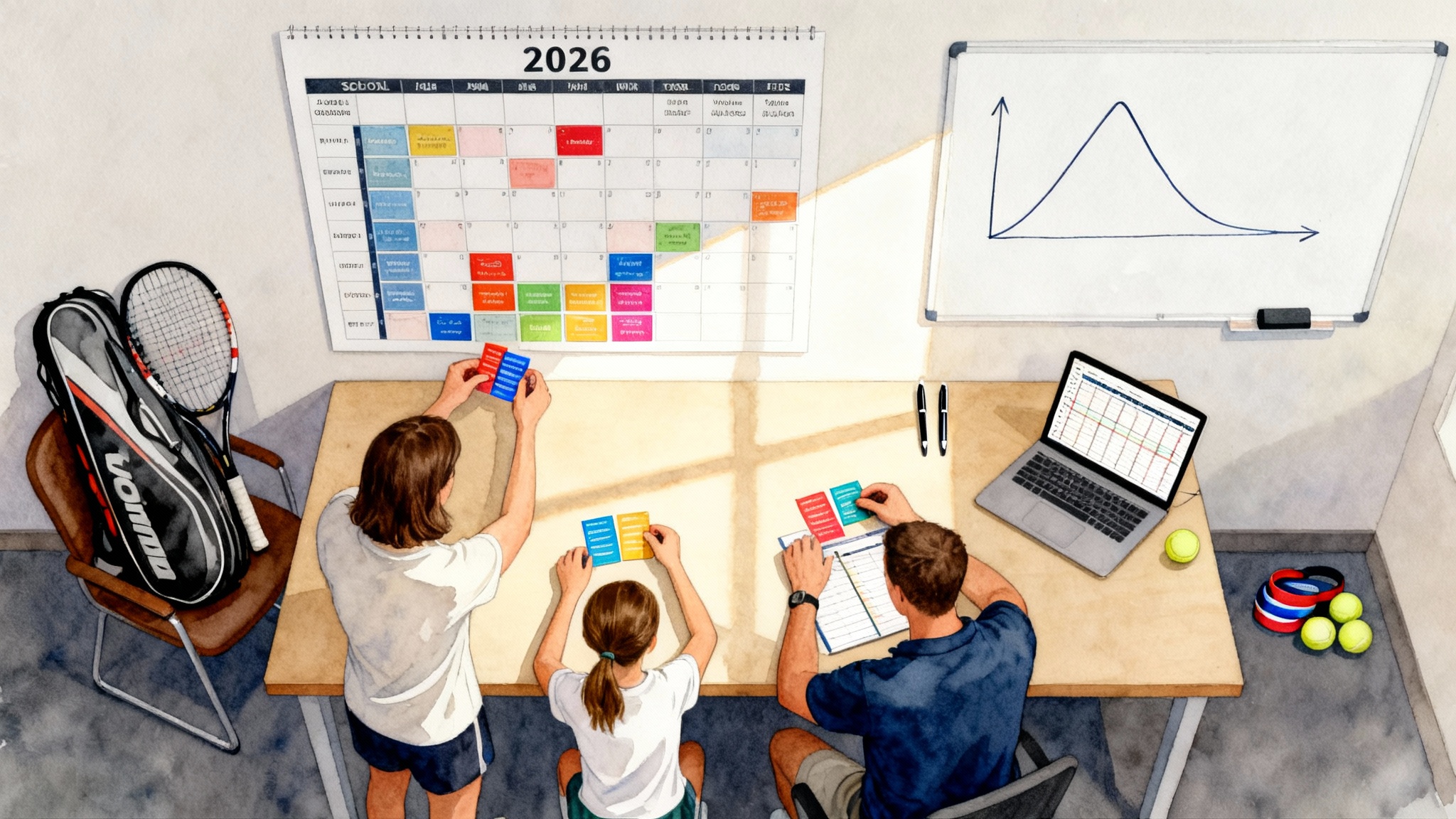
Peak height velocity, often shortened to PHV, is the period when a junior grows at the fastest rate in stature. The easiest way to anticipate it is to measure height weekly and watch for a sustained spike in growth rate. A more formal way uses predictive equations from the Mirwald maturity offset equations. You do not need a laboratory to benefit from that concept. You need a tape measure, a wall, and three minutes a week.
Practical setup
- Choose one day and time each week. Morning before breakfast works well.
- Measure barefoot height against a flat wall. Record to the nearest millimeter if possible.
- Optional but helpful. Record sitting height on a hard chair and body mass. Consistency is more important than precision.
What to look for
- A rise of at least 6 to 8 centimeters per year pace is common in the months leading up to peak height velocity. That is roughly 1.5 centimeters in a month. If you see this pace sustained for 6 to 8 weeks, you are likely approaching or entering the peak window.
- Rapid shoe size changes, sleeves suddenly short, or routine steps feeling heavy are supporting signs.
- Keep a simple chart. Date, height, weekly change. When the slope rises, you shift the training rules from green to amber.
Key idea: Growth changes the distance between joints and shifts the moment arms at the shoulder, hip, knee, and ankle. Players will feel different, not weak. Aim to preserve coordination while tissues adapt.
Traffic light load rules that prevent overuse
The traffic light system gives you a shared language. Use these rules daily. Parents, players, and coaches should agree to follow the highest caution level reported by anyone.
Green: full training allowed
- Growth rate under 1 centimeter in the past month
- No pain during or after hitting
- Rating of perceived exertion from the last practice at or under 6 of 10
- Countermovement jump or simple vertical jump is within 5 percent of the normal baseline
- Sleep quality good and no morning stiffness beyond a few minutes
Amber: adjust within session and across the week
- Growth rate at or above 1.5 centimeters in the past month, or the player reports awkwardness with timing and balance
- Soreness during or after hitting at 3 to 5 of 10 for more than 24 hours
- Vertical jump down 5 to 10 percent versus baseline, or repeated late contacts on routine balls
- One tender area such as the front of the knee, heel, or lower back that eases with warm up but returns later in the day
Action in amber
- Keep all rallies and live points under 80 percent of normal volume
- Replace high volume open stance forehands and repetitive serves with constrained drills and feeds
- Keep serves to 40 total balls in the session, with 70 percent first serve effort. For specific ranges by age and level, review the serve volume blueprint 2026.
- Maintain the twenty minute growth proof strength and conditioning after a shorter on court session
Red: protect and refer
- Pain 6 of 10 or higher, night pain that wakes the player, or a limp
- Jump drop over 10 percent from baseline, or back pain with extension
- Swelling at the knee or heel, persistent bone tenderness, or loss of grip strength from wrist or elbow pain
Action in red
- Tennis is replaced by pain free movement and isometrics until a clinician clears progress
- Book a qualified physical therapist or sports physician to examine the player within 48 to 72 hours
Tip for coaches: Post the traffic light card at your courts. When you ask for the color at check in, you are modeling that health data drives the plan.
The 20 minute growth proof strength and conditioning plan
Strength and conditioning, often shortened to S and C, needs to be short, predictable, and repeatable. Twice each week is enough to maintain tendon health and joint control when growth is fast. This routine is equipment light and court friendly. Progress by adding seconds or light load rather than chasing fatigue.
Session A, 20 minutes
- Breath and brace, 2 minutes. Half kneeling, hands on ribs, five slow nasal breaths, exhale and feel ribs down. Then five hollow body holds for 10 seconds, 10 seconds rest.
- Calf tendon isometrics, 3 minutes. Double leg straight knee calf raise holds on a step, 30 seconds hold, 30 seconds rest, three sets. Progress to single leg if pain free.
- Patellar protection, 3 minutes. Wall sits at 60 degrees knee bend, 30 seconds hold, 30 seconds rest, three sets.
- Hip anchors, 4 minutes. Mini band lateral walks, 2 sets of 10 steps each way. Then single leg glute bridge, 2 sets of 8 per side with 2 second hold at the top.
- Anti rotation core, 3 minutes. Tall kneeling Pallof press with a band, 3 sets of 8 per side with a smooth 2 second hold out front.
- Landing mechanics, 5 minutes. Snap downs to stick, 3 sets of 5. Then low pogo jumps, 3 sets of 15 seconds. Emphasize quiet landings under the hips.
Session B, 20 minutes
- Mobility primer, 3 minutes. Eight hip airplanes per side using the fence for balance. Ten thoracic spine rotations in half kneeling per side.
- Hamstring care, 3 minutes. Isometric Nordic lean from a tall kneeling position, hold a slight forward lean for 15 seconds, 15 seconds rest, four repeats. Keep it pain free.
- Foot strength, 3 minutes. Short foot drill, 3 sets of 20 seconds per foot. Then 10 slow toe raises, 3 second up and 3 second down.
- Single leg control, 5 minutes. Rear foot elevated split squat bodyweight, 2 sets of 6 per side at a smooth tempo. Stop 2 reps short of fatigue.
- Shoulder rhythm, 3 minutes. Scapular wall slides, 2 sets of 8. Then 2 sets of 10 external rotations with a light band, elbow by side.
- Coordination finisher, 3 minutes. Skipping rope or line hops, 3 rounds of 30 seconds on, 30 seconds off.
Rules for both sessions
- Stop any exercise that produces sharp pain at or above 4 of 10
- Keep nasal breathing for a calm finish, players should leave feeling springy not drained
- During amber weeks, do only Session A or B once, not both. In red weeks, run isometrics and gentle mobility only if pain free
Footwork timing fixes after rapid limb changes
Longer legs and arms change stride length and the time it takes to get the racket to the ball. Instead of telling a player to just move more, recalibrate their rhythm with simple constraints.
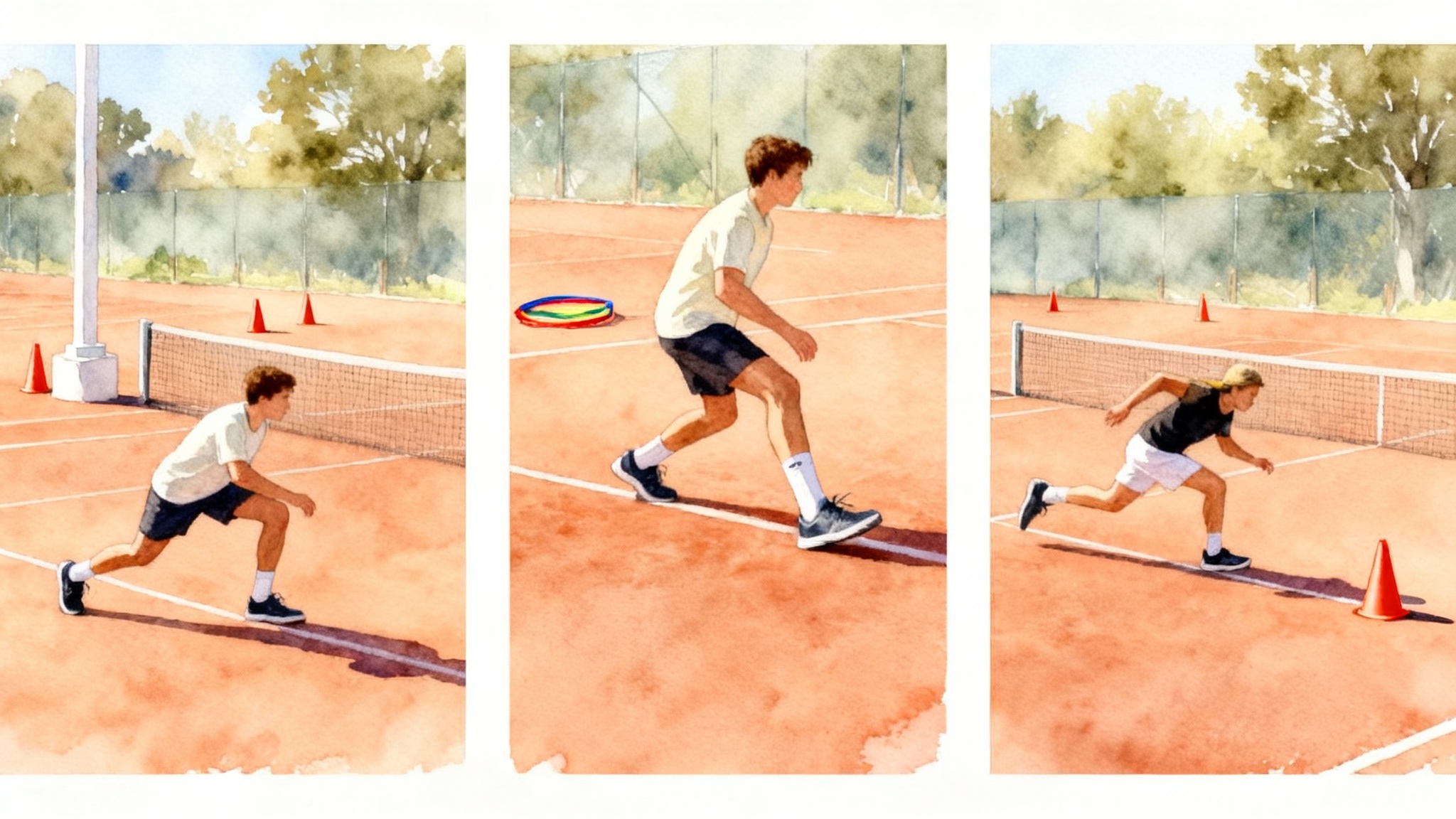
- Split step metronome. Use a metronome or a coach clap. Player split steps on the sound, lands as the hitter hits. Start at 60 beats per minute and adjust by feel. Two sets of 60 seconds.
- Three small steps rule. For the first hit after the serve return or after a wide feed, the player must take at least three distinct prep steps before the final plant. This forces shorter, quicker actions rather than one long lunge.
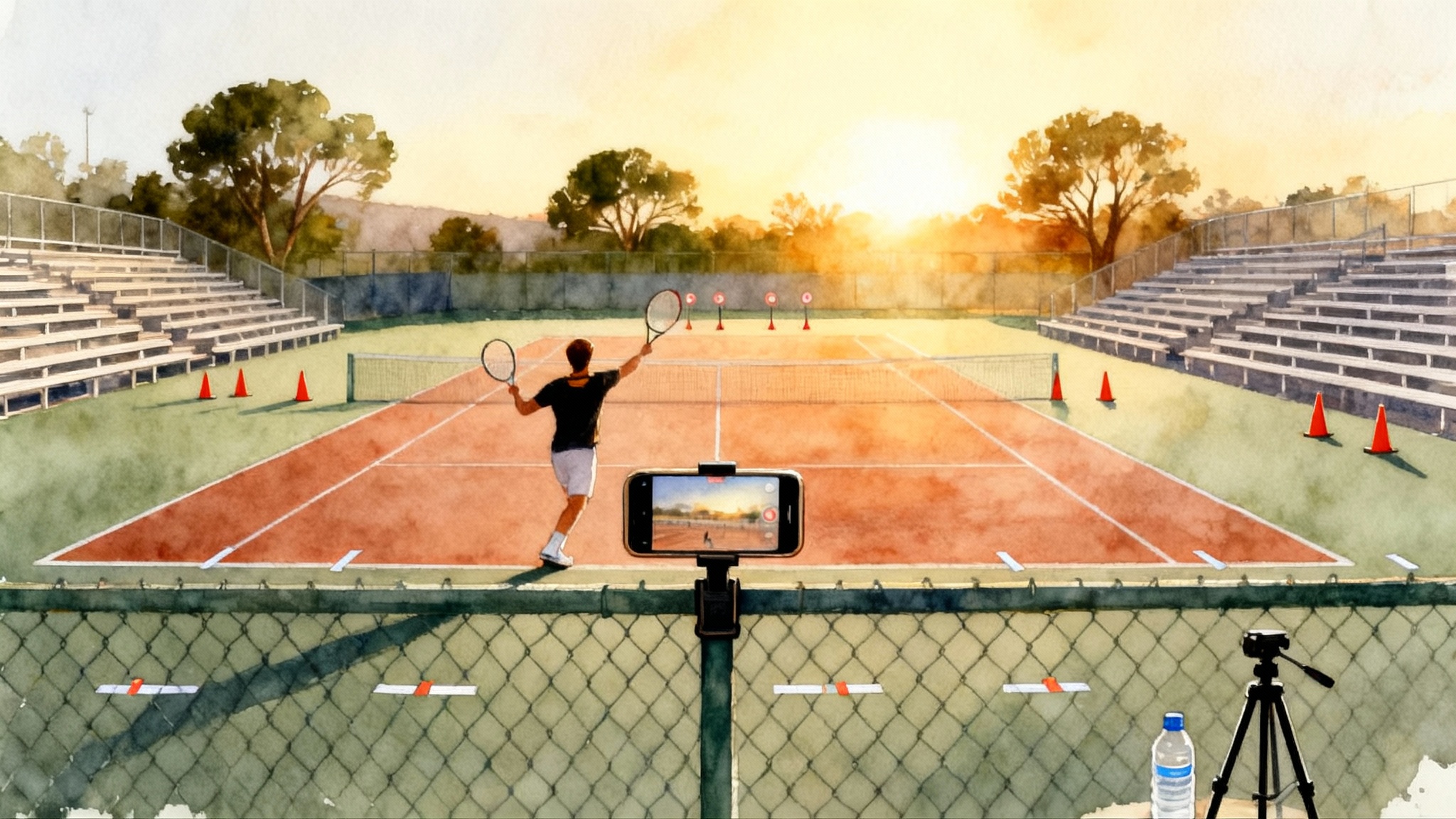
- Shadow swings with a floor mark. Place a tape line where contact should happen in front of the lead hip for forehands and just forward of the front knee for backhands. Ten slow shadows, then ten with a soft feed.
- Recovery math. After a wide ball, require a crossover plus two shuffles before the split step. Call the pattern aloud. Crossover, shuffle, shuffle, split. It is simple and it cleans up ball watching.
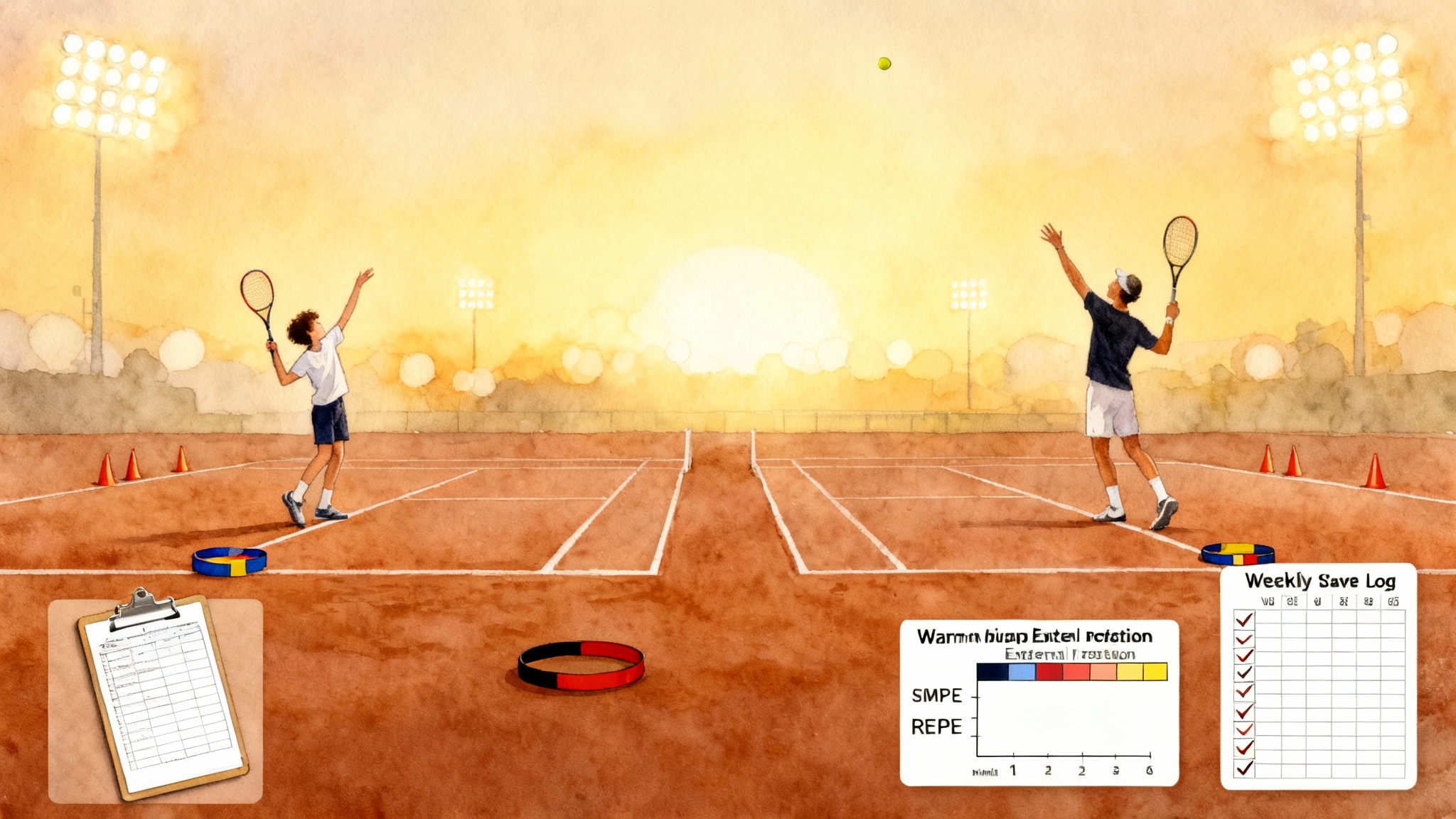
- Serve rhythm reset. Use a cadence. Toss, up, hit. Players who grew fast often rush the toss. The spoken cadence slows down the loading and restores ball strike height.
Technique tweaks that preserve consistency
Growth does not require a wholesale change in style. Make one or two small, temporary adjustments that keep contact predictable.
Forehand
- Shift the stance one shoe length more closed for two weeks if balls are flying. This shortens the swing arc and moves contact slightly earlier.
- Nudge the grip slightly toward a more conservative position if the player drifted too extreme during the growth phase. For example, a strong semi western can soften half a bevel toward eastern to lower the contact point by a few centimeters.
Backhand
- Two handers. Slide the top hand one finger width toward the middle of the handle to reduce excessive wrist flexion that often appears when the forearm grows fast.
- One handers. Emphasize a higher preparation and a firmer front side. Add ten backhands per session that start with the shoulder already turned.
Serve
- Lower the toss by 10 to 15 centimeters for two weeks while the new shoulder and trunk timing settles. The target is a toss that peaks just a hand above full reach.
- Check the grip. Many juniors drift toward an eastern forehand on serve during growth because it feels easier. Guide them back to a true continental for safe long term shoulder mechanics. For equipment choices that support this, see the racquet setup blueprint 2026.
Volleys
- Use a firmer wrist set and shorter punch. Two sets of 12 block volleys per side off a coach feed help relearn the new reach.
Strings and racket
- If mishits spike during a growth phase, consider dropping string tension by 2 to 3 kilograms to enlarge the comfort window. Do not change rackets during a peak height velocity month unless a coach is certain the current frame is clearly too light or too head heavy.
The coach’s eight week microcycle
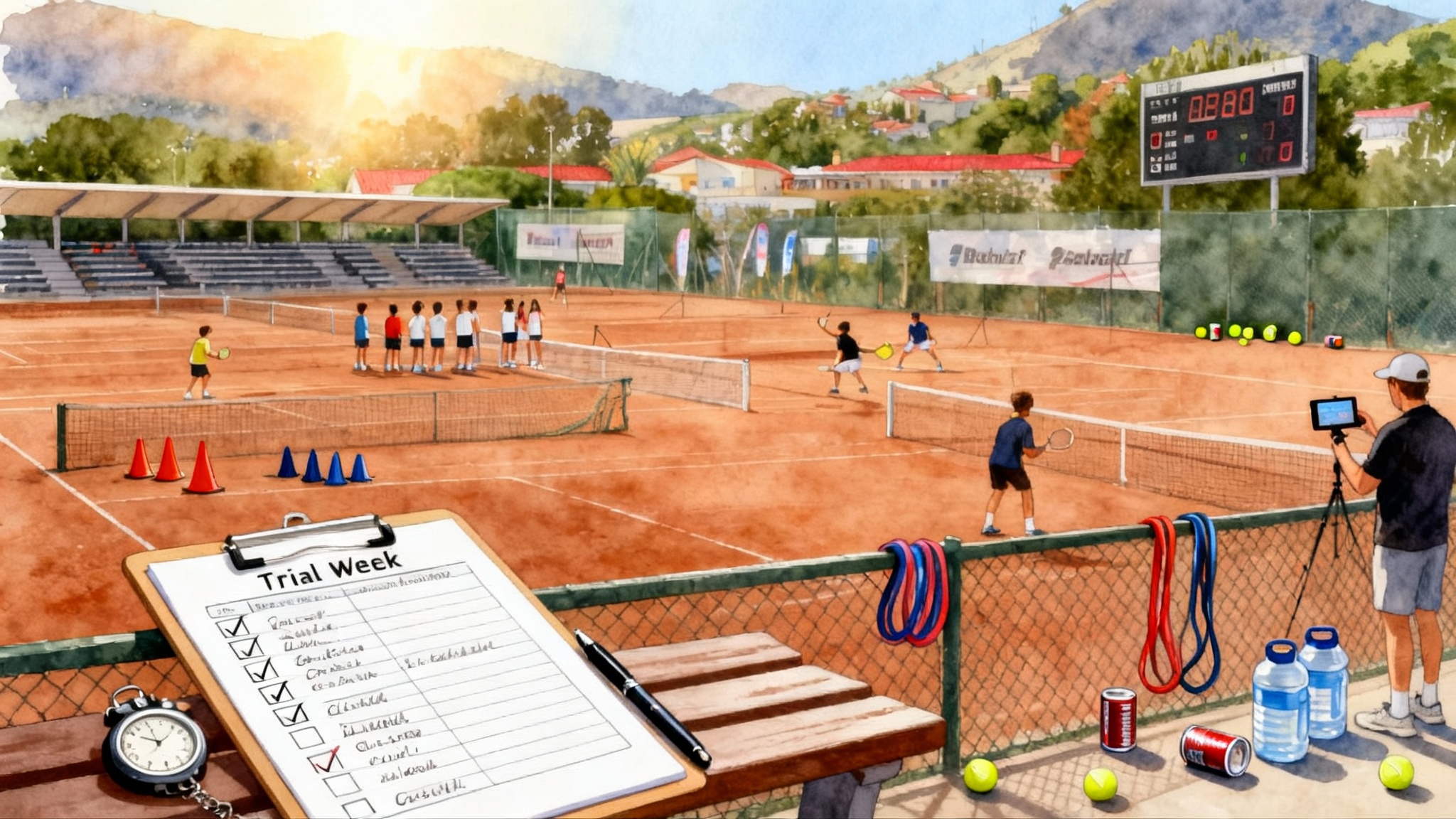
This template assumes one peak height velocity window is either approaching or underway. It is designed to keep skill quality high while lowering the risk of tendon and bone stress. Use the traffic light rules to gate each session.
Global rules
- Minimum one full rest day each week
- Every session starts with a two minute check in and ends with a two minute check out
- If a day turns amber mid session, switch to feeds and constraints and cut volume by 20 to 40 percent
Weeks 1 to 4. Stabilize and protect
- Tennis frequency. Four sessions per week of 75 to 90 minutes, with one of them skills only at low intensity
- Strength and conditioning. Once per week Session A only
- Focus. Contact point, serve rhythm, and movement quality. Limit serves to 40 balls per session, returns to 30 balls
- Drill anchors. Three small steps rule, shadow swings with floor marks, and recovery math patterning
- Conditioning. Replace hard running with low amplitude jump rope and shadow footwork ladders
Weeks 5 to 8. Reload and stretch the court
- Tennis frequency. Five sessions per week, two at 90 minutes with live points, three at 60 to 75 minutes with heavier feeding and patterns
- Strength and conditioning. Twice per week, Sessions A and B
- Focus. Extend rally tolerance and rebuild serve count toward 60 to 80 total balls in green weeks
- Drill anchors. Add directional patterns with targets, two ball combinations off the serve or return, and short court point starts
- Conditioning. Small sided court games, two sets of eight minutes, heart rate conversational
Weekly structure example
- Monday. On court patterns 75 minutes, Session A 20 minutes
- Tuesday. Skills only 60 minutes, serves capped at 40
- Wednesday. Rest or recovery mobility
- Thursday. Live points 90 minutes, Session B 20 minutes
- Friday. On court feeding 60 minutes
- Saturday. Mixed match play 90 minutes in green weeks, or skills and patterns 60 minutes in amber weeks
- Sunday. Rest
Parent checklists
Daily one minute check
- How did you sleep and how do your legs feel when you first stand up
- Any pain right now at rest or with simple steps
- What color are you today on the traffic light. Green, amber, or red
Weekly five minute check
- Height change versus last week and shoe fit
- Any pain that sticks around for more than a day
- Mood and school stress. More irritability or fatigue than normal can point to overload
- Quick jump test. Two sets of five countermovement jumps. Does it look springy or do landings sound heavy
School, travel, and tournament plan
- During amber weeks, avoid back to back match days without a lighter day in between
- On travel days, swap heavy training for mobility and the twenty minute Session A
- Pack a mini band and a light loop band. They handle most of the work you need
Red flags and when to see a clinician
Consult a physical therapist, sports doctor, or pediatric specialist if you see any of the following.
- Knee pain at the front or bump below the kneecap that worsens with running or jumping and does not settle after 48 hours. This pattern fits common growth related conditions such as apophysitis.
- Heel pain with swelling at the back of the heel that makes walking uncomfortable, especially in the morning.
- Persistent low back pain with extension, especially in serve motion or overheads.
- Night pain, pain at rest, or pain that spikes above 6 of 10.
- A limp, repeated ankle sprains, or a sense of giving way at the knee.
- Any acute pop or immediate swelling. Stop and seek evaluation.
While waiting for the appointment, switch to pain free isometrics and easy mobility. Do not push through sharp pain during growth. Tissues are adapting and need time at a lower load.
Case study. A sports science approach in action
Many top academies now treat growth as a performance phase rather than an interruption. For example, our RoundGlass Tennis Academy profile shows a holistic, data informed program that integrates coaching with strength and conditioning and medical support.
Composite scenario
- Player. Age 14, right handed, two hand backhand. Height has increased 2.5 centimeters in six weeks. Parent reports shoe size up by one full size.
- Baseline. Vertical jump average 30 centimeters, first serve count 60 per practice day, no pain.
- Week 1. Traffic light turns amber after the height review. Serve count drops to 40, live points replaced by more feeding. Twenty minute Session A added twice a week.
- Week 2. Forehand control drifts long. Coach shifts stance one shoe length more closed, uses shadow swings with floor marks for contact, and runs the three small steps rule on every wide ball.
- Week 3. Player reports heel soreness after long school day. The session starts with calf isometrics and short rope skipping. All sprints become short shuttles with longer rests. Post session pain settles within a day, so the rules stay amber rather than red.
- Week 4. Jump test is down 7 percent. Serve toss lowered slightly and live points are capped at ten minutes total. Two days off court with mobility and isometrics only.
- Week 5. Height slope flattens. Jump test returns to baseline. Traffic light moves to green. Serve count increases to 60 and directional patterns return with targets.
- Week 6 to 8. Player completes the reload block. Two match play sessions come back in green weeks. By the end, control is stable and there is no heel pain. The player did not miss a tournament, but volumes were adjusted to the body’s status.
Why it works
- The plan assumes variability. Loads go up or down based on color, not the calendar
- The twenty minute routine keeps anchors strong and tendons calm
- Footwork and contact rules are simple, fast to coach, and measurable
Bringing it all together
Growth spurts are not a detour. They are when the future player is being built. Parents and coaches who can spot peak height velocity and adapt on court habits protect the player and protect their love of the game. Use your tape measure and your ears. Ask for the color at check in, trim volume in amber, and protect without panic in red. Layer the twenty minute routine into the week. Keep footwork rhythm and contact simple and specific. Adjust grips and stance by small amounts for short periods. Run the eight week plan with discipline. The payoff is a player who moves well in a longer frame, serves with safe mechanics, and keeps improving while peers are yo yoing.
If you want help turning this framework into your court plan, share a week of height data, recent serve counts, and your player’s biggest timing complaint. With that, you can tailor the traffic light rules and progress the drills one clean step at a time.