Tennis Recovery 2026: Sleep, Hydration, and Travel Routines
A practical, science-backed playbook for tournament weekends and heavy training blocks. Learn fueling and sodium targets by match length and heat, smart in-match cooling, a 0-30-90 recovery window, jet lag fixes, and a parent sideline plan.
 Tommy
Tommy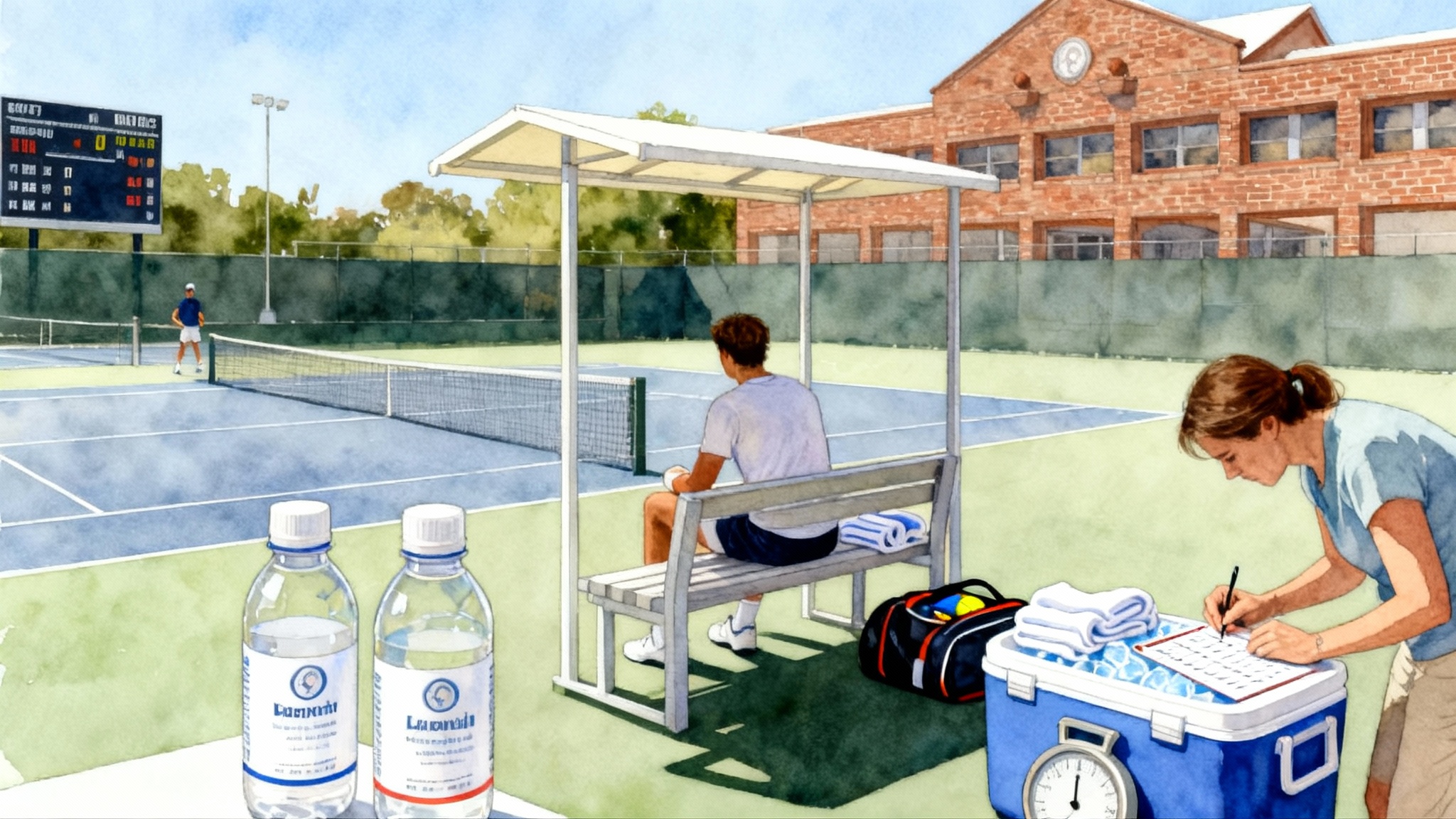
Why a recovery playbook matters in 2026
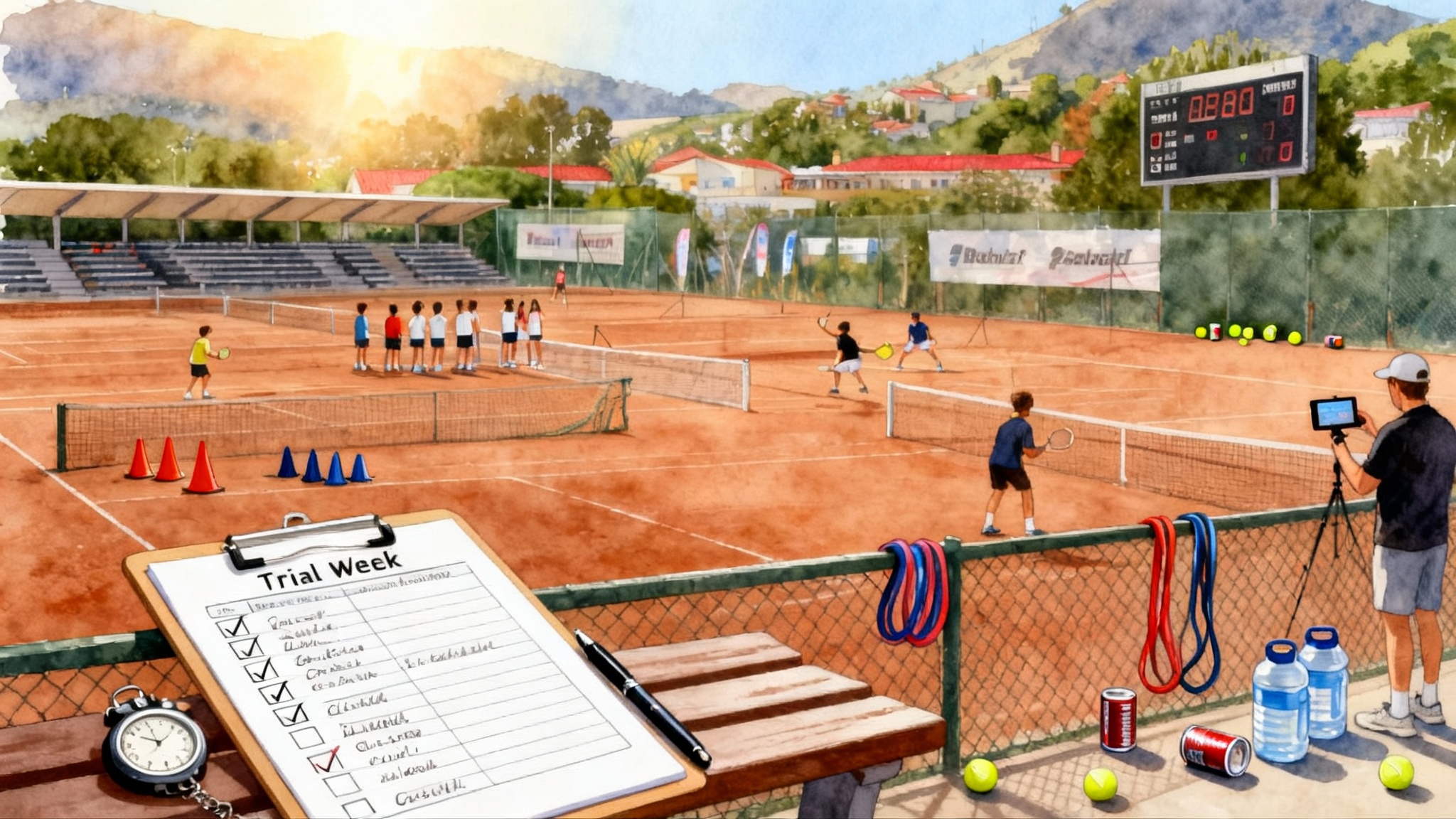
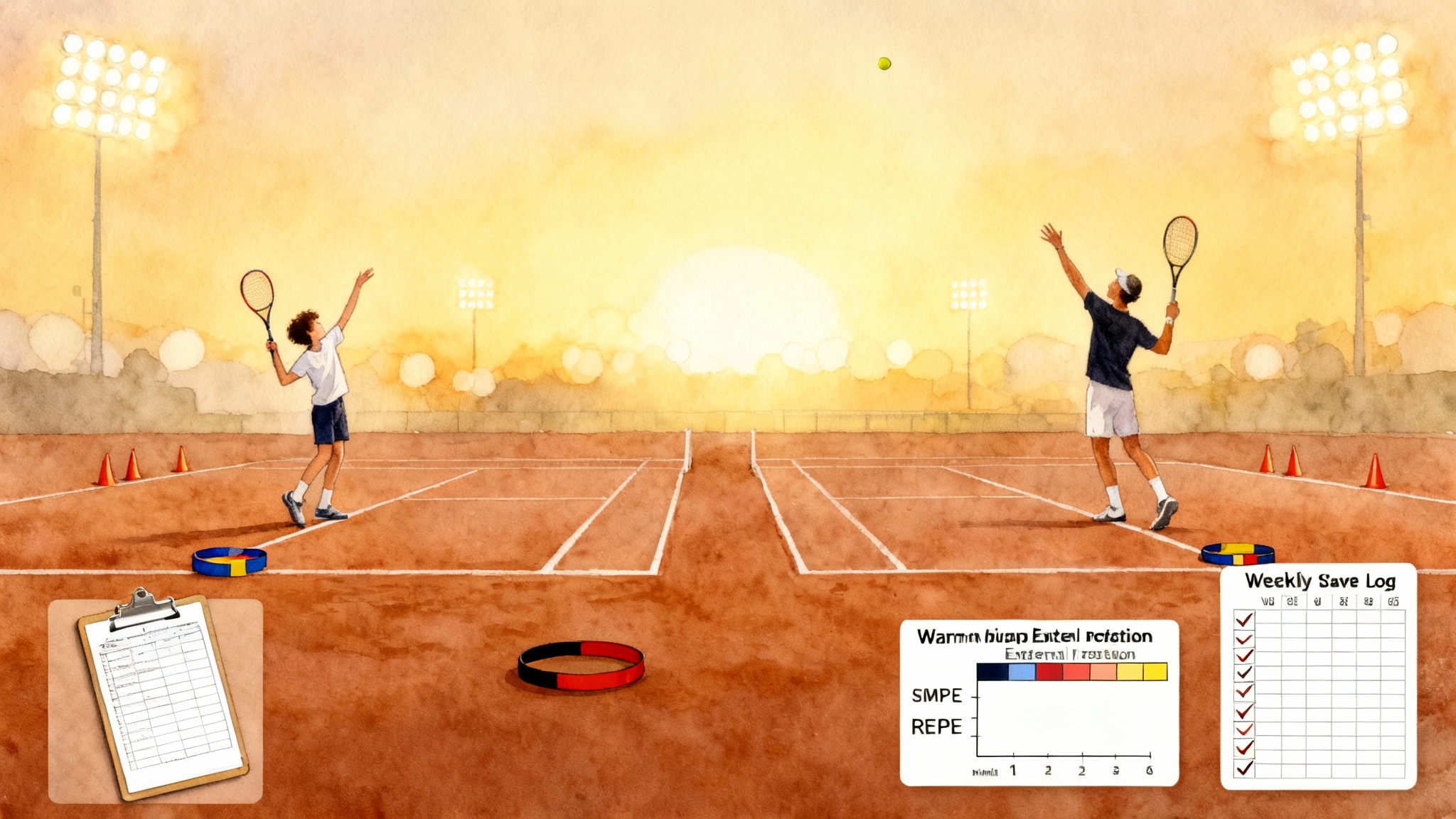
Tournament weekends compress stress. You stack multiple matches, practice hits, travel, homework, and social time into a short window. Recovery is not a luxury, it is the system that lets your training show up when it counts. This guide gives juniors, parents, and adult competitors a simple and specific plan you can print, follow, and adjust. You will find sodium targets by match length and heat, in‑match hydration and cooling, a 0‑30‑90 minute post‑match window, a cramp‑risk checklist, jet lag strategies, growth‑spurt considerations, and a clear sideline role plan for parents. For complementary planning on training loads, see the Serve Volume Blueprint 2026, and if you are comparing programs, use our trial‑week academy checklist.
The match timeline at a glance
Think of recovery as a relay. Each stage hands the baton to the next.
- Before match: arrive fed, hydrated, and cool, with sodium on board and equipment ready.
- During match: sip to plan, top up sodium, cool your core and skin, adjust for heat and match length.
- After match: 0‑30‑90 minute window to rehydrate, refuel, and reset for the next round.
The details below turn that outline into action.
Pre‑match fueling and sodium targets
Pre‑match nutrition sets the floor for your energy and fluid balance. Use body weight to scale your plan.
2 to 4 hours before first ball
- Fluids: 5 to 7 milliliters per kilogram of body mass. A 60 kilogram junior would drink about 300 to 420 milliliters. If urine remains dark after 90 minutes, add another 3 to 5 milliliters per kilogram.
- Carbohydrate: 1 to 4 grams per kilogram, chosen based on gut comfort and timing. If you are 2 hours out, target about 2 grams per kilogram. If only 60 minutes remain, aim for 1 gram per kilogram with low fiber foods.
- Protein: 20 to 30 grams to stabilize appetite and support muscle repair.
- Fat and fiber: keep modest to protect the stomach in warm conditions.
Food ideas
- 2 to 3 hours out: rice bowl with grilled chicken and mango, or pasta with olive oil and parmesan, plus a banana.
- 60 to 90 minutes out: yogurt with honey and granola, toast with jam, or a ripe banana and a small whey or soy shake.
Sodium priming based on heat and match length
Sweat sodium losses vary widely. The plan below suits most players who do not have a measured sweat test. Use it as a starting point and refine with body mass changes and how you feel.
- Cool day under 75 degrees Fahrenheit, match under 60 minutes: 200 to 400 milligrams sodium in the hour before first ball.
- Mild to warm day 75 to 85 degrees, match 60 to 120 minutes: 400 to 600 milligrams sodium in the hour before first ball.
- Hot day above 85 degrees or humidity above 60 percent, or match likely over 120 minutes: 600 to 1,000 milligrams sodium in the 60 minutes before first ball, split across a sports drink and a small salt capsule if tolerated.
Practical sources
- Sports drinks and powders typically offer 200 to 700 milligrams per liter. Check the label.
- Electrolyte tablets often provide 250 to 350 milligrams per tablet.
- Salty snacks help but are slow to dissolve and can upset a nervous stomach, so pair them with fluids.
Note on products: Gatorade, Powerade, Nuun, Skratch Labs, Precision Hydration, and similar products can all work if you match sodium to your needs and your gut tolerates them. Choose taste you like, because you are more likely to drink enough during heat.
In‑match hydration and cooling strategies
Two goals drive in‑match strategy. Keep blood volume stable so the heart does not have to work harder than needed, and keep core and skin temperatures in check so your decision making stays sharp in long rallies.
Estimate your sweat rate quickly
Weigh before warm up and after the match without clothes or with the same dry clothes if possible. Each kilogram of mass lost equals about one liter of sweat. Add the volume you drank during the match to estimate total sweat loss. If you lost 1.0 kilogram and drank 0.75 liters, your sweat rate was about 1.75 liters over the match.
What to drink per changeover
- Cool day under 75 degrees: 100 to 150 milliliters per changeover. Water is fine, alternate with a sports drink every other changeover for matches over 60 minutes.
- Warm day 75 to 85 degrees: 150 to 250 milliliters per changeover. Aim for 200 to 400 milligrams sodium per 30 to 45 minutes.
- Hot day above 85 degrees or humid: 250 milliliters per changeover. Aim for 400 to 600 milligrams sodium per 30 to 45 minutes. If you struggle to drink that volume, concentrate sodium in smaller sips and add ice where available.
Carbohydrate during the match
- Matches under 60 minutes: a few sips of sports drink or a small bite of a soft bar is plenty.
- Matches 60 to 120 minutes: 30 grams carbohydrate per hour through drink or chews.
- Matches over 120 minutes: 30 to 60 grams per hour if gut tolerated. Combine drink and chews for comfort.
Cooling tactics that actually help
- Shade every changeover when possible. Even 60 seconds lowers skin temperature.
- Ice towels across the back of the neck and forearms between games.
- Sip ice slurry when available. Part liquid and part ice can cool faster than room temperature water.
- Rinse mouth with cold water before a return game if your stomach is tight. A cool mouth can feel refreshing and may help you keep sipping through the set.
- Keep sunscreen and sweat off your grip. A dry, confident grip reduces forearm tension, which indirectly helps with cramp control late in the third set.
The 0‑30‑90 minute post‑match window
Treat post match like a flight crew turnaround. The goal is to leave the court better than you arrived for the next launch.
Minute 0 to 10: decompress and cool
- Sit or lie with legs up for two minutes in shade.
- Heart rate breath work: inhale 4 seconds, exhale 6 seconds for ten cycles.
- If heat stressed, place ice towel on the neck and forearms.
Minute 10 to 30: rehydrate and refuel
- Fluids: drink 1.0 to 1.5 liters per kilogram of body mass lost within 2 to 4 hours. If you lost 1.0 kilogram, target 1.0 to 1.5 liters total. Spread it out so your gut can absorb it.
- Sodium: include 500 to 1,000 milligrams in this window on hot days, 300 to 500 milligrams on cool days.
- Carbohydrate: 1.0 to 1.2 grams per kilogram in the first hour after the match if another match is the same day. If the next match is tomorrow, you can slow this to normal meals across the afternoon.
- Protein: 20 to 40 grams with at least 2 grams of leucine for muscle repair.
Quick meal ideas
- Chocolate milk and a turkey wrap with pretzels.
- Rice, eggs, avocado, and salsa with a sports drink.
- For plant‑based athletes: tofu rice bowl with soy sauce, edamame, and orange juice.
Minute 30 to 90: reset the body
- Gentle 10 minute spin on a bike or walk to circulate fluid, then light mobility for hips, calves, and thoracic spine.
- Cold shower or cool bath for 5 to 8 minutes if you felt overheated. If you tend to feel stiff in the cold, choose a lukewarm shower and short mobility instead.
- Compression socks for 2 hours if you have a second match.
- Review your hydration log and plan adjustments for the next match.
Cramp‑risk checklist
Print this and put it in your bag. If three or more items are checked, adopt the higher sodium and cooling plan for the day and consider a small salt capsule in warm ups if you tolerate it.
- History of cramping in the last 6 months
- Match expected over 120 minutes
- Heat above 85 degrees or humidity above 60 percent
- You see white salt rings on your hat or shirt after practice
- Body mass drops more than 2 percent in a typical match
- Poor sleep the night before
- Recent illness, especially fever, vomiting, or diarrhea
- Two training days in a row that were much harder than your normal week
- Low sodium intake in meals, you rarely salt food
- New shoes or a tighter string job increasing calf or forearm fatigue
If cramps start, prioritize cooling and sodium with fluid. Use gentle stretching during changeovers, not long aggressive holds. A small salty drink can help if your stomach is calm.
Jet lag and time‑zone adaptation
Travel is part of tennis. You can shape your body clock before you fly.
Eastbound flights, you need to advance your body clock
- Three to four days before departure, shift bedtime and wake time earlier by 30 minutes per day. For juniors, 15 to 30 minutes is more realistic.
- Morning daylight on arrival, sunglasses late afternoon. Light is a steering wheel for your internal clock.
- Caffeine earlier in the day for the first two days. Avoid caffeine after local lunch.
- Melatonin can help adults. Typical adult doses range from 0.5 to 3 milligrams taken 30 to 60 minutes before the new local bedtime for 2 to 3 nights. Juniors should use melatonin only with guidance from a pediatrician.
Westbound flights, you need to delay your body clock
- Shift bedtime and wake time later by 30 to 60 minutes for 2 to 3 days before the flight.
- Seek bright light in the evening on arrival, use sunglasses in the early morning if you must be out.
- Short 20 minute nap on day one if needed, finish before 2 p.m. local time.
Hydration and cabin strategy
- Start your flight well hydrated. Cabins are dry, you will lose water through breathing.
- Drink a cup of water or electrolyte drink every hour you are awake on long haul segments.
- Avoid alcohol in flight. It fragments sleep and dehydrates you.
- Walk the aisle every 90 minutes for five minutes to move fluid and reduce stiffness.
Growth‑spurt considerations for juniors
A growth spurt changes the biomechanics and the heat response of a junior athlete.
- Taller lever arms change timing. Expect coordination hiccups and be patient with footwork. Support on‑court speed with deceleration and first step power.
- Bones lengthen before tendons adapt. Patellar tendon and heel growth plates can become sore with large load spikes. Use a rating of perceived exertion scale from 1 to 10 and keep weekly training load changes under 15 percent when possible.
- Heat tolerance can dip during rapid growth because surface area and mass change. Use the warm weather sodium plan and add an extra cooling towel on changeovers.
- Sleep needs increase. Most teens thrive with 8.5 to 10 hours. Protect a non negotiable sleep window during tournament weeks by setting a fixed lights out time and removing screens from the room 60 minutes before bed.
Parent sideline role plan
Parents can make or break a recovery plan without saying a word. Set roles so the player can focus.
- Hydration manager: tracks bottles, volumes, and sodium. Prepares two bottles every match, one with water and one electrolyte, and writes the sodium content on tape.
- Shade and cooling captain: sets up shade, pre chills towels in a small cooler with ice, and replaces towels at changeovers.
- Logistics lead: confirms match times, court availability, and meal windows so the player can eat on schedule.
- Data note keeper: records pre and post body mass, cramp risk checks, and bathroom breaks.
- Language guardrail: commit to neutral sideline language. Use one phrase only, for example, you got this, and let the coach handle tactical feedback.
Printable checklists
Match day bag
- 2 bottles labeled, one water, one electrolyte
- 2 to 3 energy options, soft chews or bars that sit well
- 2 chilled towels in a zipper bag, small cooler with ice if allowed
- Cap, sunscreen, sunglasses
- Scale reading written down or saved in phone
- Spare grip and wristbands
- Salt capsules or tablets if used in practice already
- Simple first aid: blister kit, tape, bandage
Post match 0‑30‑90 kit
- Recovery drink or milk and a salty snack
- Compression socks
- Change of dry shirt and socks
- Mobility band or mini band
- Printed 0‑30‑90 plan
Travel prep
- Flight and hotel times written in both home and destination time zones
- Sleep shift plan, 30 minutes per day for 3 days
- Electrolyte tablets and empty bottle for airport security
- Eye mask and earplugs
- Confirmed grocery stop near hotel
A simple decision tree for hydration and sodium
Follow the prompts to adjust your plan without second guessing.
- What is the forecast at first ball?
- If under 75 degrees, go to step 2.
- If 75 to 85 degrees, use medium plan. Pre match sodium 400 to 600 milligrams. 150 to 250 milliliters per changeover. Go to step 3.
- If over 85 degrees or humid, use high plan. Pre match sodium 600 to 1,000 milligrams. 250 milliliters per changeover. Go to step 3.
- Match likely under or over 60 minutes?
- Under 60 minutes, pre match sodium 200 to 400 milligrams. Drink 100 to 150 milliliters per changeover.
- Over 60 minutes, pre match sodium 400 to 600 milligrams. Drink 150 to 200 milliliters per changeover.
- Did you lose more than 2 percent body mass last match or see salt rings on your hat?
- Yes, move up one level of sodium, for example from 400 to 600 milligrams per hour to 600 to 800 milligrams per hour.
- No, stay with the current plan and reassess post match.
- Stomach tight or sloshy mid set?
- Switch to smaller sips more often. Prioritize sodium in concentrated form and rinse mouth between points. Add ice slurries if available.
How we individualize loads and recovery
Players win tournaments in different climates on different surfaces. Clay demands more time on court and longer points. Hard courts load the legs and back differently. Indoors can be dry and cold. We build recovery plans that match this reality.
- Climate profile: we maintain two baselines, a cool weather and a hot weather hydration plan. We retest body mass change, perceived effort, and urine color at the start of each seasonal block.
- Surface profile: clay weeks get more carbohydrate during practice and a higher sodium floor because sets can stretch. Hard court weeks get extra calf and trunk care and a tighter 0‑30‑90 routine. Grass weeks include more balance and landing drills and a focus on lower profile shoes to reduce ankle roll risk.
- Age profile: juniors in growth spurts get shorter, more frequent fueling breaks, an earlier curfew, and extra mobility around knees and heels. Adult competitors with travel heavy jobs get travel kits and sleep shift schedules locked in one week out.
- Load dashboard: we ask for a simple daily rating of perceived exertion from 1 to 10 and minutes trained. We chart weekly load and keep increases to 10 to 15 percent. If your sleep drops below 7 hours for adults or 8.5 for teens, we cut load and lean into the 0‑30‑90 plan.
- Sweat and sodium: when possible we run a field sweat test during a typical hard practice. You can perform a basic version with a scale and a towel. We then calibrate your bottle labels so you know exactly how much sodium and carbohydrate you are getting per hour.
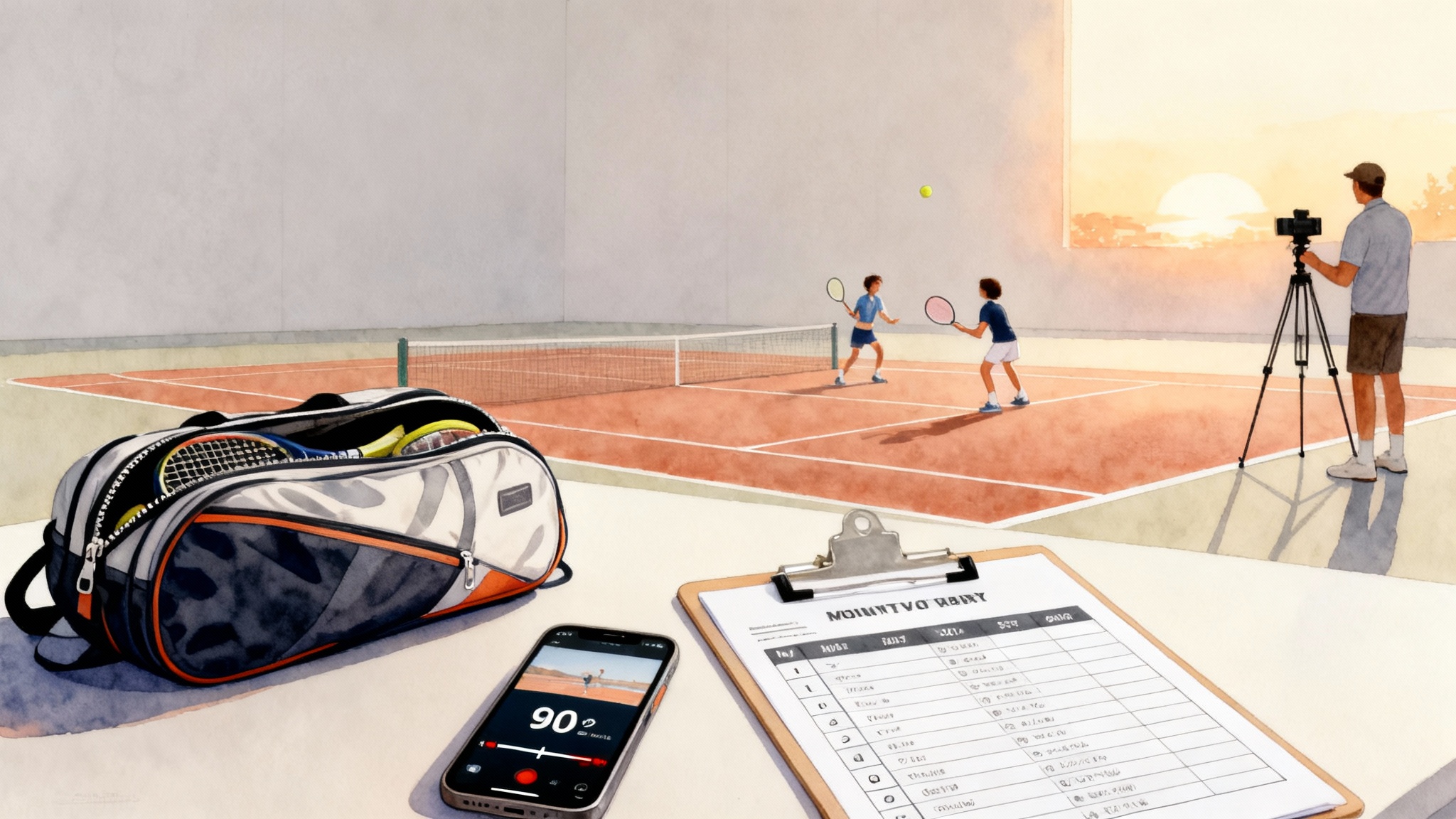
For broader performance planning that pairs well with this guide, review our smartphone video analysis checks.
Safety notes
- If you have kidney, heart, or blood pressure conditions, or you take medications that affect fluid balance, talk with your medical professional before using high sodium strategies.
- Juniors should not use melatonin or salt capsules without pediatric guidance. Start every strategy in practice first, not on tournament day.
A concrete example: two matches in summer heat
Player A, a 70 kilogram adult, expects two 90 minute matches at 2 p.m. and 6 p.m. in 88 degrees with humidity. Pre match at noon, they drink 500 milliliters of electrolyte with 700 milligrams sodium and eat a rice bowl with chicken and fruit. During match one, they target 250 milliliters at each changeover, about 1.5 liters per match, with 500 milligrams sodium per 45 minutes and 30 grams carbohydrate per hour through a drink and chews. Post match, they weighed 69.2 kilograms, so they lost 0.8 kilograms. Over the next 2 hours they drink 1.0 liter with 600 milligrams sodium, eat 70 to 80 grams carbohydrate and 25 grams protein, spin lightly, and cool down. They start match two with similar volumes, then finish the day with a calm meal and eight hours of sleep. Day two, they wake up without heavy legs because they executed the 0‑30‑90 window.
Your next step
You do not need perfect data to reap big gains. A scale, a pen, and a clear plan will move the needle this weekend. Print the checklists, label your bottles, and run the decision tree before warm up. If you want a precise plan that matches your age, climate, and surface, book our in house recovery session with your coach and staff. Your future self in the third set will thank you.