Junior Tennis 2026: Smart Calendar for School, UTR, WTN
Build a 10 to 12 month junior season without burnout. Learn how to pick the right USTA, UTR, and ITF J30–J100 events, set match targets, balance training and competition, and add doubles with intent.
 Tommy
Tommy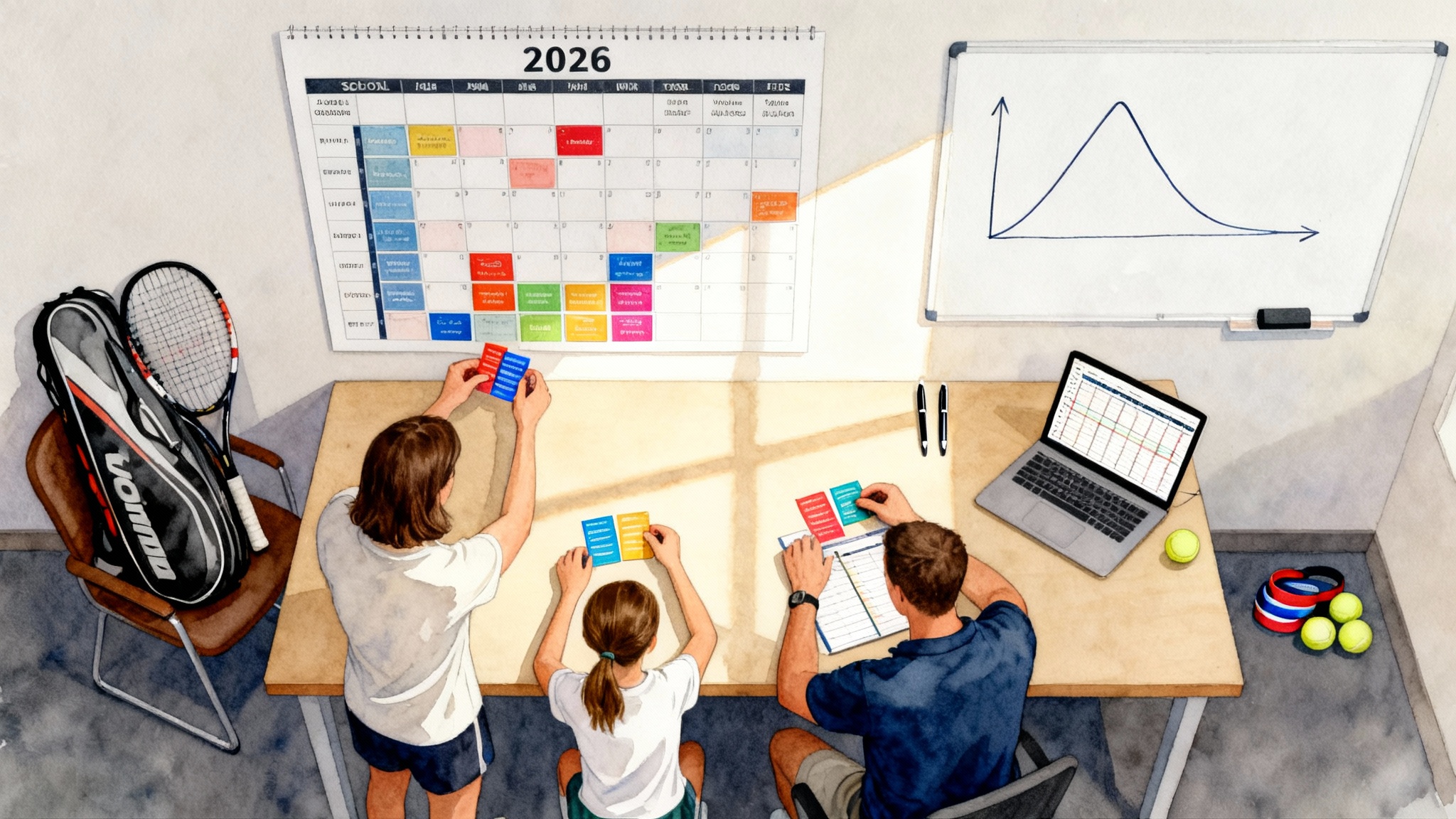
Why a smart calendar beats playing everything
A junior season that is built, not guessed, does three things at once: it keeps a player healthy, moves ratings in the right direction, and fits around school and family life. In 2026 most juniors in the United States juggle school from late August through early June, with breaks in March or April, and again in late November and late December. A smart calendar treats those dates as hard edges, then slots tournaments and training blocks so that the player is ready for the right matches at the right time.
This guide is a parent and player roadmap for a 10 to 12 month season. We cover how to translate goals into match-count targets, how to choose the right tournament tier across United States Tennis Association events, Universal Tennis Rating events, and International Tennis Federation junior tournaments, how to balance training and competition weeks, and where doubles fits in. We include age-banded sample calendars, a post-event review checklist, and planning templates you can use at home.
The ladder: USTA, UTR, and ITF explained
- USTA means United States Tennis Association. Junior tournaments are organized into levels, with higher levels offering stronger fields and more ranking value.
- UTR means Universal Tennis Rating. UTR events are often flighted by rating, which makes it easier to find close matches week to week.
- WTN means World Tennis Number. This is a global scale similar in spirit to UTR, used by many federations and events.
- ITF means International Tennis Federation. ITF junior events run from J30 to J500. For most American juniors starting to travel, J30 to J100 is the relevant band. See the official pathway in the ITF junior tour overview.
Early in the season decide which ladder you will climb first. For players aged 10 to 15, local USTA levels and UTR events provide the most frequent and affordable match play. Players with stronger ratings at 14 to 18 can test one or two ITF J30 or J60 events once their weekly training load and school calendar allow for travel.
Start with goals, then set match-count targets
Begin with outcome and process goals.
Examples:
- Outcome: improve UTR by 0.6 points by October; enter first ITF J30 by June.
- Process: average 9 hours of on-court training per week during school months; strength train twice per week; complete a post-event review within 48 hours of each tournament.
Translate goals into matches per year. As a rule of thumb, aim for a singles match count that supports skill consolidation without overuse. Add doubles for specific skills and competitive reps.
Suggested annual singles match targets, including team matches, by age band:
- Ages 10 to 12: 35 to 45 singles matches; 15 to 25 doubles matches.
- Ages 13 to 15: 45 to 60 singles matches; 20 to 30 doubles matches.
- Ages 16 to 18: 55 to 70 singles matches; 20 to 35 doubles matches.
These bands assume a 10 to 12 month season with built-in rest weeks and two light training weeks around final exams in late May or early June, and around mid December. If a player competes in high school tennis, count those team matches in the totals.
Training vs. competition rhythm
Use a simple rhythm that respects school load:
- Base school months: two training weeks for every one competition week. The competition week can include a Friday to Sunday event; build in a light day on Monday.
- Summer months: two competition weeks for every one or two training weeks, depending on travel and recovery.
- Pre-peak block: three to four weeks of progressive training, then a tune-up event, then a tapering week into the target tournament. Pair this with practical sleep and travel routines.
Protect learning weeks. During training weeks, schedule three on-court technical sessions, two pattern or point-construction sessions, one match play session, and two strength or movement sessions. In competition weeks, reduce volume by about 20 to 30 percent and keep strength work neural and light.
Doubles with intent
Doubles is not filler. It is a laboratory for returns, first volleys, transition footwork, and pressure routines. Add doubles to:
- Increase match reps without the same physical load as a second singles draw.
- Practice set plays like first-serve plus two, I-formation communication, and poach triggers.
- Sharpen the stretch week before a target singles event with 3 to 4 doubles matches in a compact format. For deeper tactics, see our formations and doubles plan.
How Legend Tennis Academy plans evaluation and peaks
Legend Tennis Academy profile has a season framework that parents can copy at home. The structure has four building blocks:
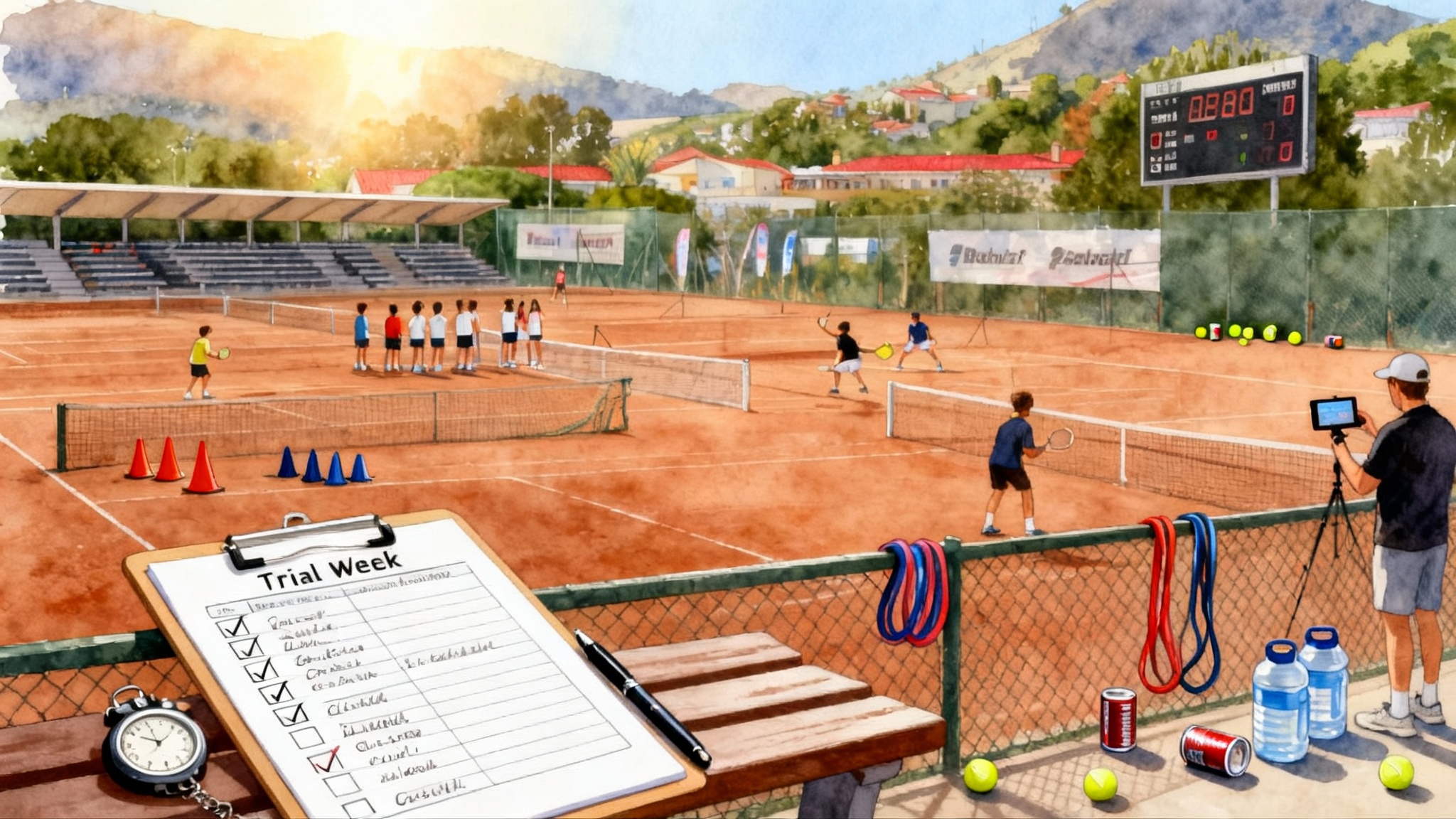
- Evaluation block, 10 to 14 days
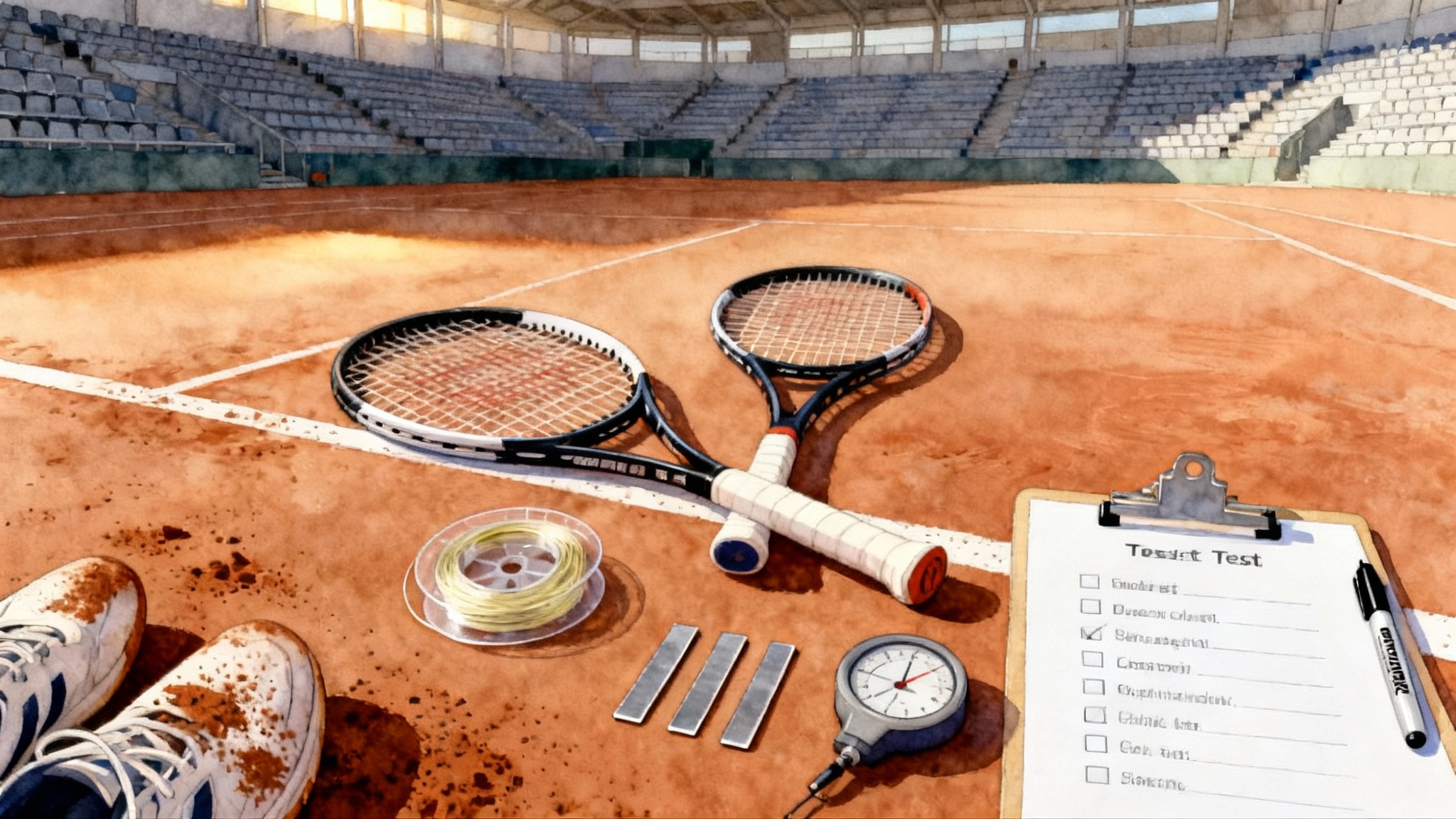
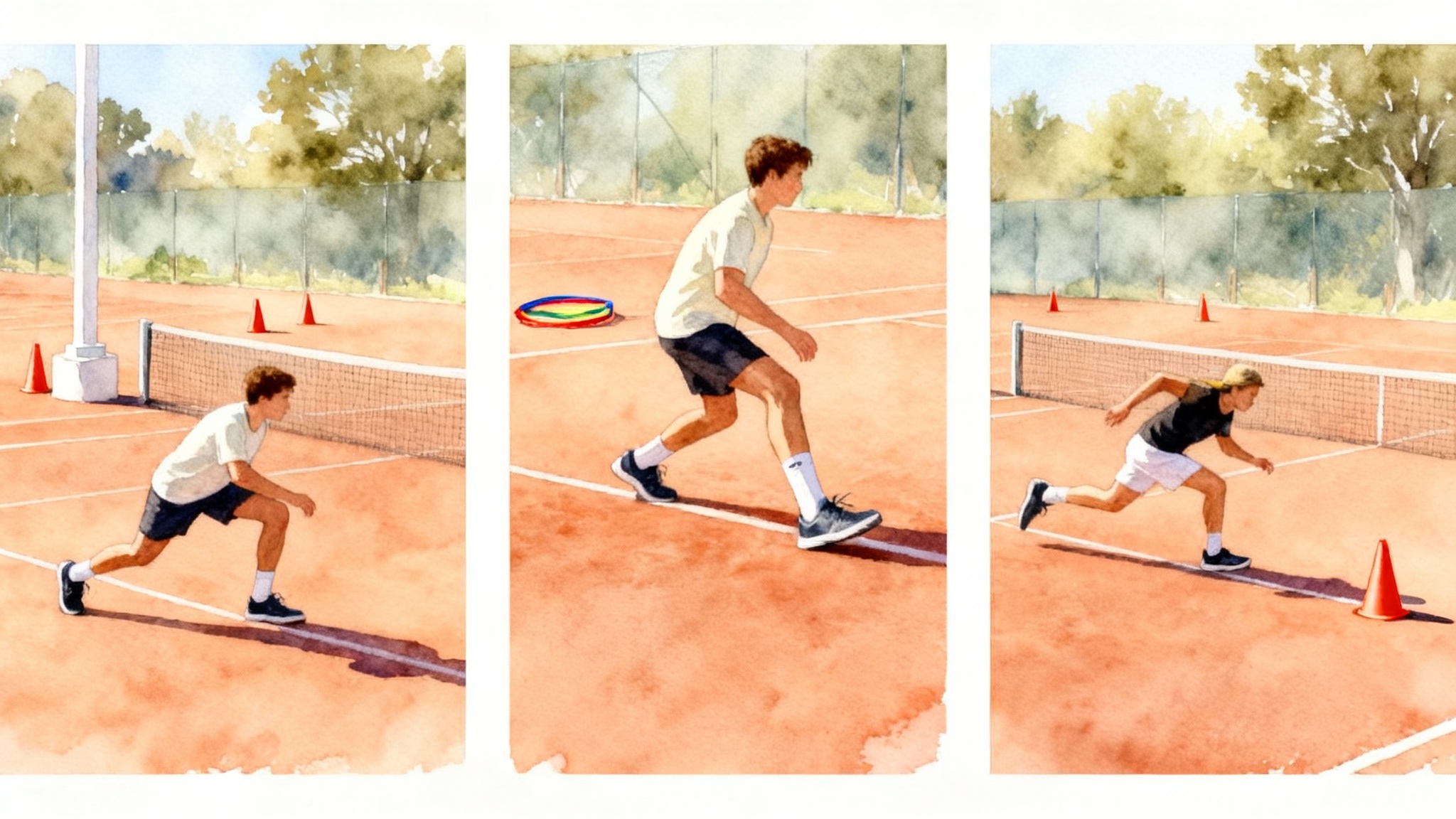
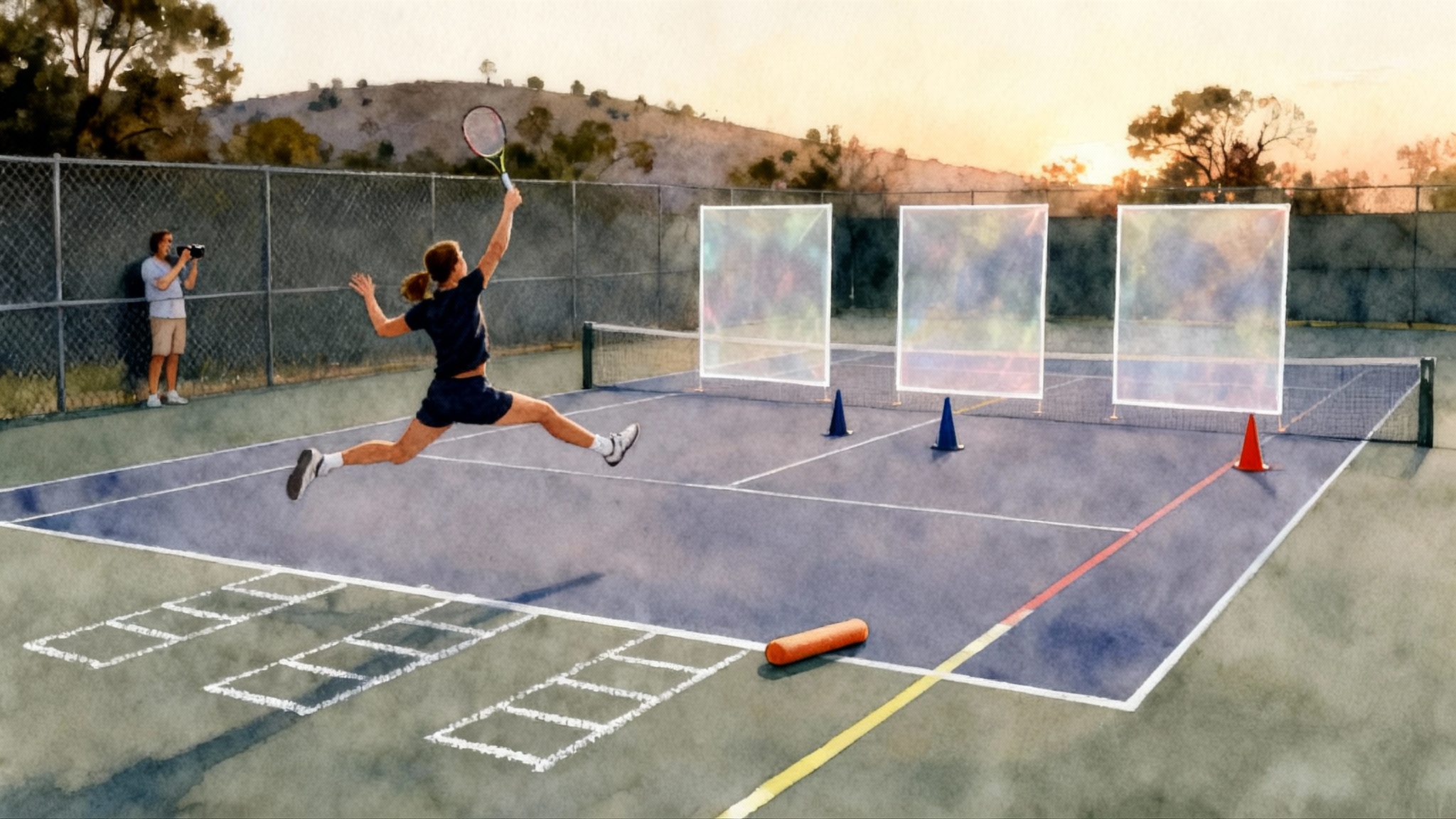
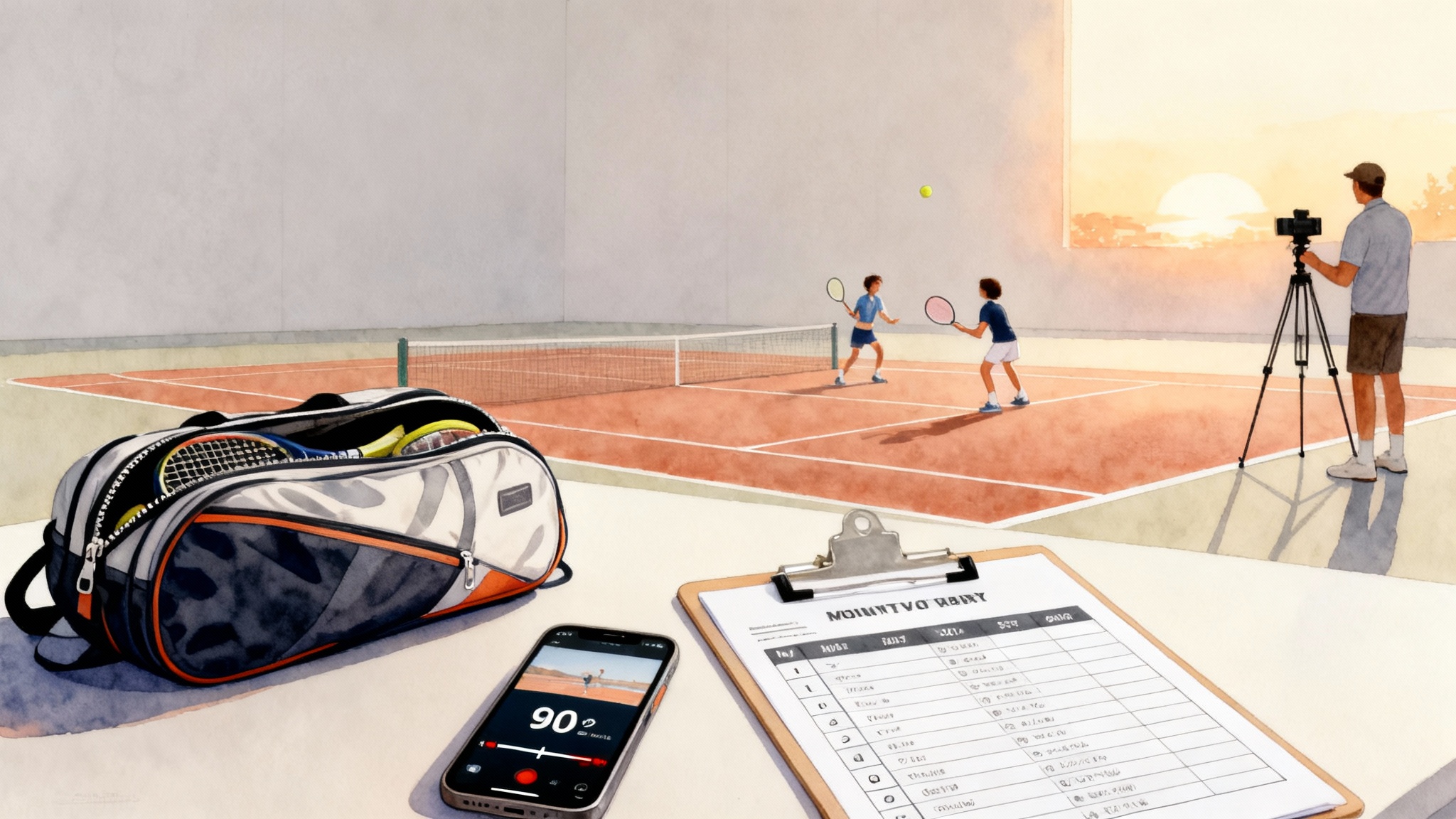
- Day 1 to 3: technical filming from two angles; ball machine baselines; serve and return tests; speed and movement screens.
- Day 4 to 7: controlled patterns and measured live ball; competitive games to seven with scoring constraints.
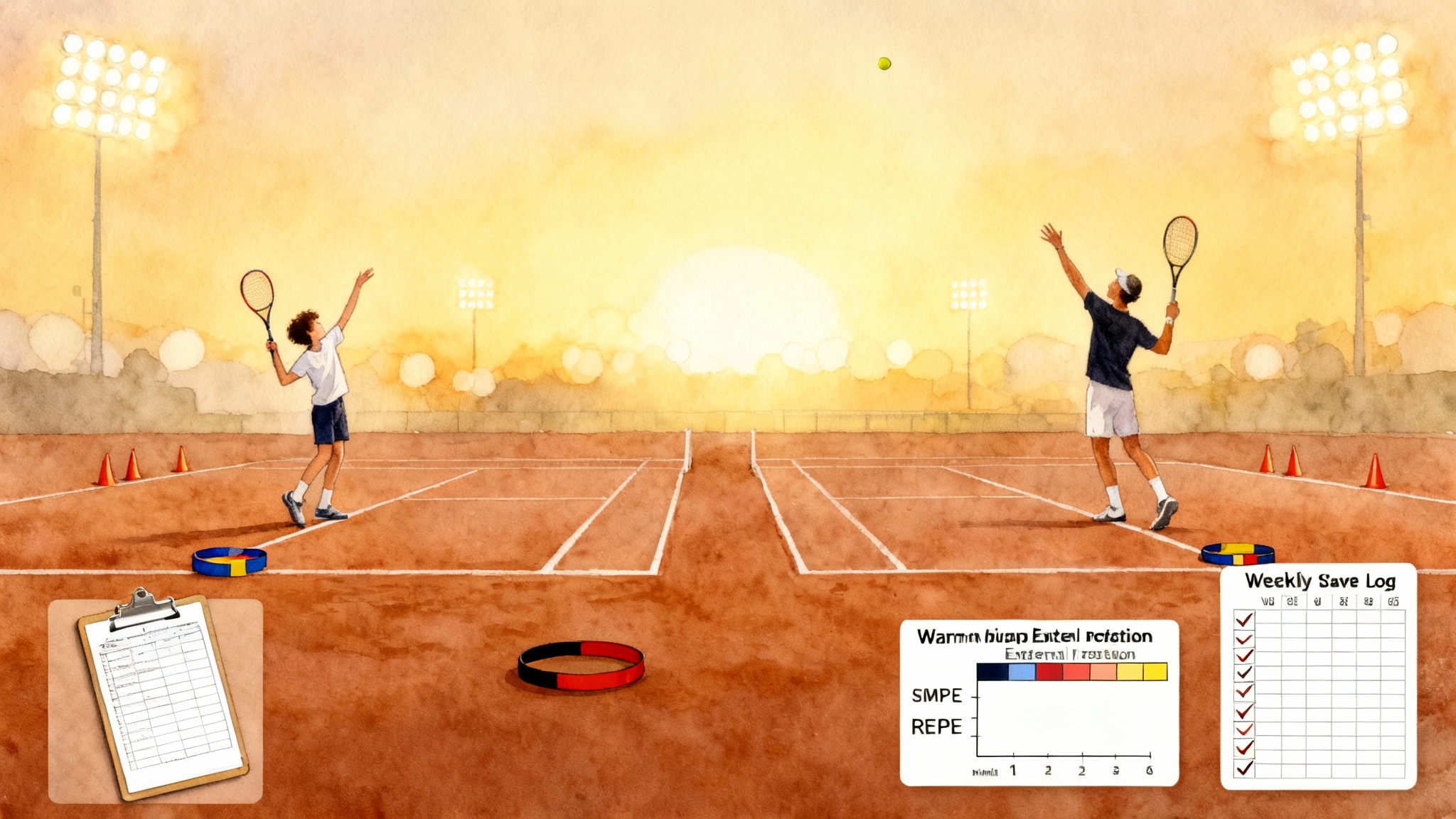
- Day 8 to 10: sparring sets with defined themes; mental skills snapshot using a pre-match routine checklist and a between-points routine score.
- Build block, 3 to 5 weeks
- Weekly theme progression: accuracy and height control; depth and spin tolerance; serve plus one patterns; returns by location; transition and volley quality.
- Physical: strength twice per week, movement twice per week, mobility daily.
- Competition wave, 2 to 3 weeks
- One rated UTR event or USTA Level 5 to 6, followed by a rest week with one exhibition set and one doubles night; then a stretch event against slightly stronger fields.
- Peaking phase, 10 to 12 days
- Reduce volume, protect sleep, and increase quality. Tactical walk-throughs replace heavy drilling. Two days out: serve, returns, first four balls. One day out: 45 minutes, finish with tie-breaker games.
Legend blocks repeat three to four times per year, with a longer summer wave that may include an ITF J30 or J60 if ratings and school timing fit.
Age-banded sample calendars for 2026
The dates below assume a United States school year from late August 2025 to early June 2026, with spring break in March or early April, and summer from June through August. Adjust by your district’s exact calendar.
Ages 10 to 12: build skill and joy
- January to February 2026: evaluation block in early January; two training-heavy weeks; one local USTA Level 6 or 7 on the last weekend of January; first weekend of February off; mid February UTR flighted event to secure three to four matches; last week of February training with one practice match.
- March 2026: spring break window. Choose one USTA Level 6 with both singles and doubles. Keep the following week light with two technical sessions and fun doubles night.
- April to May 2026: two cycles of two training weeks plus one competition weekend. Favor nearby UTR events for predictable match counts.
- June 2026: school finishes. One evaluation tune-up week, then back-to-back weekends of local competition, one with doubles.
- July 2026: one week off for family travel; then a three-week wave with a USTA Level 5 if appropriate, plus a UTR event.
- August 2026: light month as school returns. One friendly UTR event early in the month, then training focus.
- September to November 2026: two more cycles of training plus competition. Finish with a low-stakes doubles-heavy weekend in early November.
- December 2026: two weeks easy. One informal family doubles tournament and technical filming for the next evaluation block.
Targets: 35 to 45 singles matches; 15 to 25 doubles. Keep each competition day under two singles matches when possible. Use orange or green ball only if developmental stage requires it; otherwise commit to full yellow ball.
Ages 13 to 15: ratings momentum and first travel tests
- January 2026: evaluation block, then UTR event mid month, then a USTA Level 5 at month end. Anchor school study before midterms.
- February to March 2026: two-week build, one competition week, two-week build, one competition week. During spring break, add a doubles-focused weekend to boost reps.
- April to May 2026: one stretch event against slightly stronger fields. Consider a Level 4 if your UTR and WTN are in range to secure competitive matches in the main draw. If not, stay patient and stack wins at Level 5.
- June 2026: end-of-year exams early June. Training light that week, then a post-exam evaluation. If ratings and travel budget allow, consider one ITF J30 test in late June. Confirm entry deadlines two to three weeks before and travel with a practice partner.
- July 2026: summer wave with two tournaments and one rest week in the middle. Include at least one event with doubles and one with verified match reporting for rating accuracy.
- August 2026: deload in the first half; second half short build into a local competition before school starts.
- September to November 2026: two cycles of build and compete. If playing high school tennis, count those matches and reduce external tournaments.
- December 2026: taper, film, reflect, and plan the next season.
Targets: 45 to 60 singles matches; 20 to 30 doubles. If match quality drops due to repeated blowouts, prioritize flighted UTR events to restore 60 to 40 or 40 to 60 match odds.
Ages 16 to 18: purpose-driven selection and peak windows
- January 2026: evaluation with college-recruiting video updates. One tough UTR event to assess readiness. Add a USTA Level 3 or 4 only if it fits academics.
- February to March 2026: build with two targeted weekends. Include a doubles event to refine returns and first volleys. Keep load rational around school testing.
- April to early May 2026: choose either an ITF J60 attempt or a strong USTA Level 2, not both. Use a two-week taper and protect sleep. If you play high school season in the spring, anchor peaking to the state championships.
- Late May to June 2026: finals weeks are light. Immediately after exams, run a short evaluation and then a two to three week competition wave. If ratings fit, consider an ITF J100 only after consistent success at J60 or equivalent fields.
- July 2026: two selective tournaments with one rest week, plus one showcase or camp weekend. Keep a cap on total travel days to prevent mental fatigue.
- August 2026: pre-college push or senior-year reset. One local warm-up the weekend before school starts, then back to training.
- September to November 2026: build plus compete cycles. If chasing college looks, schedule events with reliable video or verified results. End with a doubles-focused weekend for finishing skills.
- December 2026: taper, recover, and document the year.
Targets: 55 to 70 singles matches; 20 to 35 doubles. Quality over volume. Drop out of draws if injury risk rises. If match odds are below 30 percent repeatedly, schedule confidence weeks with safer fields.
Use ratings to choose the right events
Ratings are tools, not goals. Use a band approach:
- Confidence week: opponents within plus or minus 0.3 UTR and equivalent WTN band. Goal is to practice patterns under pressure and collect quality wins.
- Stretch week: opponents from plus 0.4 to plus 0.8 UTR range. Goal is to learn while staying competitive.
- Recalibration week: after two tough tournaments, step into a flight where you can win two to three matches.
Verify how your player’s rating is calculated and updated. UTR has clear guidance on verified versus unverified results; review the UTR rating explained guide and choose events that report verified matches when possible.
The post-event review checklist
Complete this within 48 hours while details are fresh. Keep the review short and direct.
Performance
- Scorelines by set and opponent rating range. Note whether losses were under seven games won or above.
- First four-ball quality: first serve percentage, double faults, plus-one success, return depth on ball one.
- Break point conversion and protection rate.
Tactics
- Serve patterns by deuce and ad courts. Was the location plan executed at least 70 percent of the time?
- Return location plan by server tendency. Did we change height and shape under pressure?
- Short ball conversion rate. Count any short ball inside the baseline.
Physical
- Total time on court per day and per match; heart-rate or perceived exertion notes.
- Movement pain or tightness. If anything exceeds a 3 out of 10 pain scale, flag it.
Mental
- Pre-point routine completion. Did the player breathe, decide, and commit before each point?
- Between-points reset. Was the player able to park the last point and refocus?
- Body language consistency score.
What to change next week
- One technical emphasis.
- One tactical cue.
- One mental skill habit.
- One physical priority.
Attach two video clips: one where the plan worked, one where it broke. Add a three-sentence summary that the player, parent, and coach all sign off on.
Planning templates and a simple monthly ritual
Ritual beats chaos. On the last Sunday of each month, do a 30 minute calendar check:
- Confirm next month’s school exams, travel, and family commitments.
- Choose two training weeks, one competition week, and one flexible week. In summer, you may choose two competition weeks.
- Pre-book physio or recovery sessions for competition Mondays.
- Decide if the next event is a confidence or stretch week.
Create an editable season planner, a post-event review sheet, and a monthly ritual checklist so everyone stays aligned.
Common mistakes and practical fixes
- Overplaying to chase points: if recovery markers and schoolwork sag, cut the next event and stack a training week with one match play day.
- Entering fields that are too strong repeatedly: insert a confidence week to reset patterns and rebuild rating momentum.
- Ignoring doubles: schedule one doubles weekend per month during competition phases. Focus on returns and first volleys.
- No taper before peaks: reduce volume by 30 percent in the final week and protect sleep. Use short, crisp sessions.
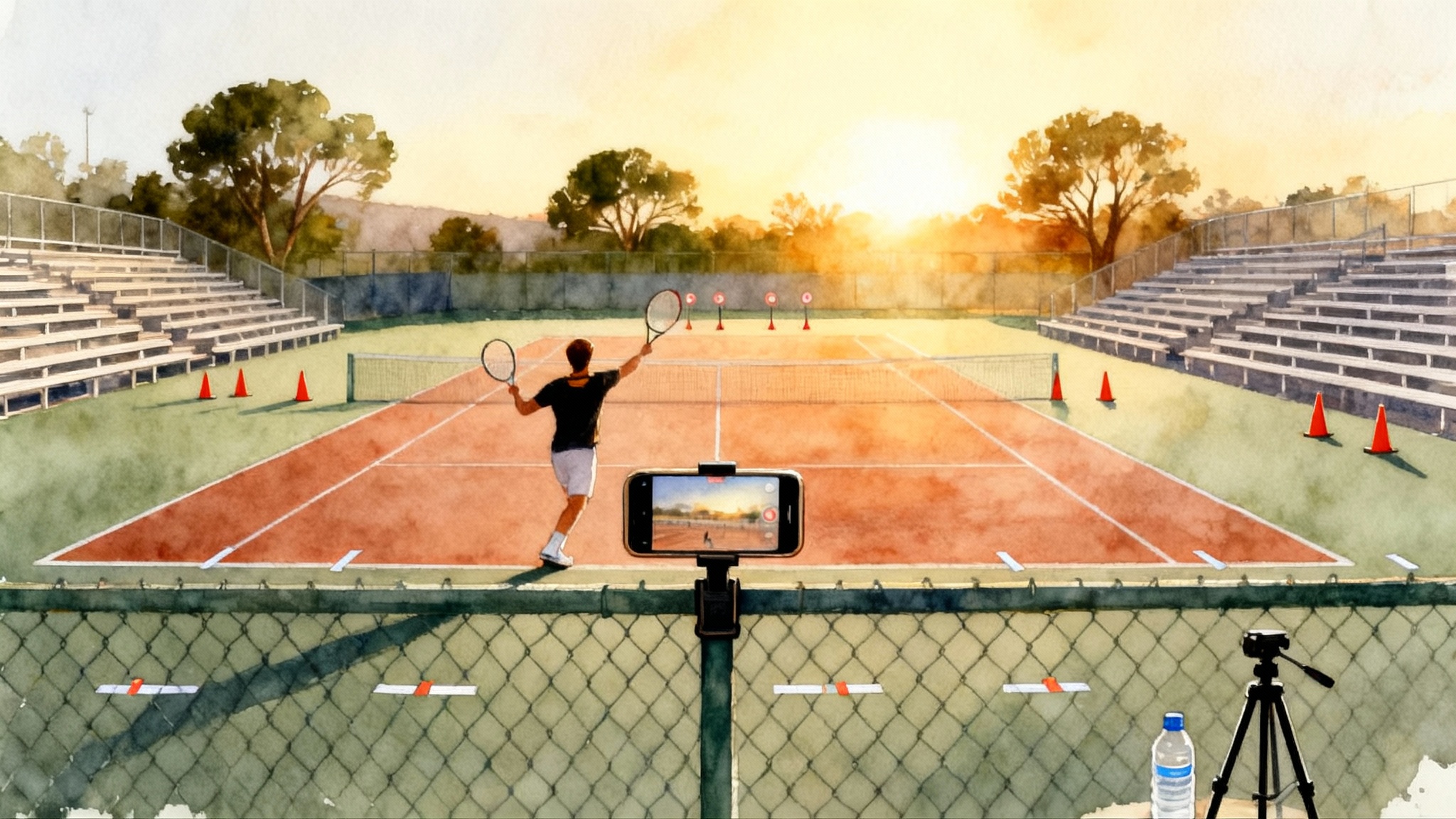
- No video or metrics: film from behind the court with a tripod and collect first-serve percentage, return depth, and break points.
Put it together with Legend Tennis Academy
If you want help turning this into a personal plan, book a 60 minute season-planning session with our coaching staff. We will run a short evaluation, define your rating bands for confidence and stretch weeks, place events around your school calendar, and build a realistic doubles plan.
A final word
The 2026 junior year is a long runway, not a sprint. Start with honest evaluation, set clear match-count targets, and let school dates shape your calendar rather than fight it. Choose events where the player gets the right kind of stress: some wins for belief, some tough matches for growth, and plenty of doubles for skills that pay off in singles. If you plan the month, review each event, and protect recovery, ratings will follow the work. The calendar becomes a tool for progress and a record of small, smart decisions that add up by December.