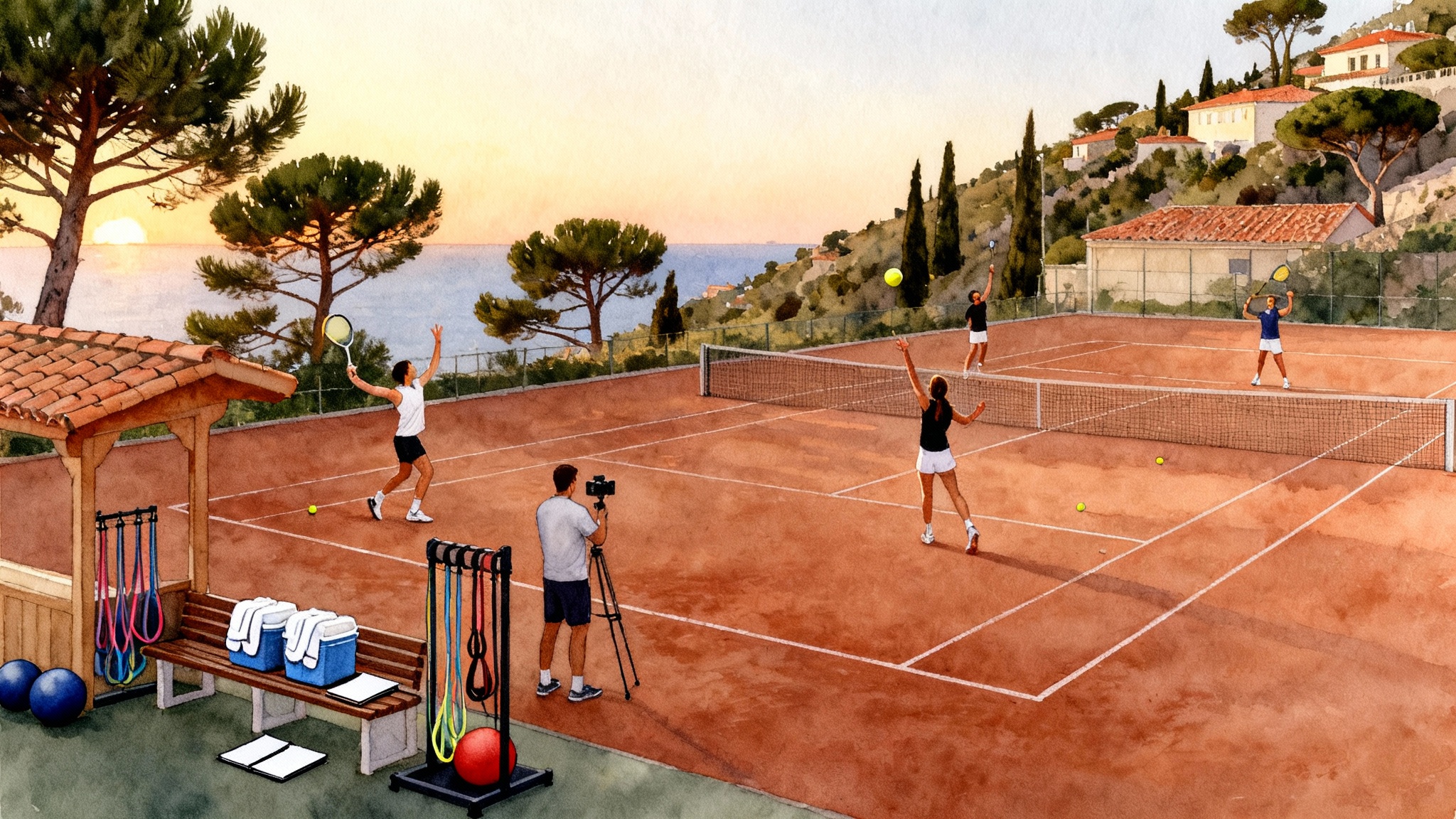
How Piatti’s Bordighera Academy Built Jannik Sinner’s No. 1
From South Tyrol’s ski gates to Bordighera’s red clay, Jannik Sinner’s path ran through a boutique school of detail at the Piatti Tennis Center. Here is how its habits fueled his 2024 breakthrough and climb to World No. 1.
 Tommy
Tommy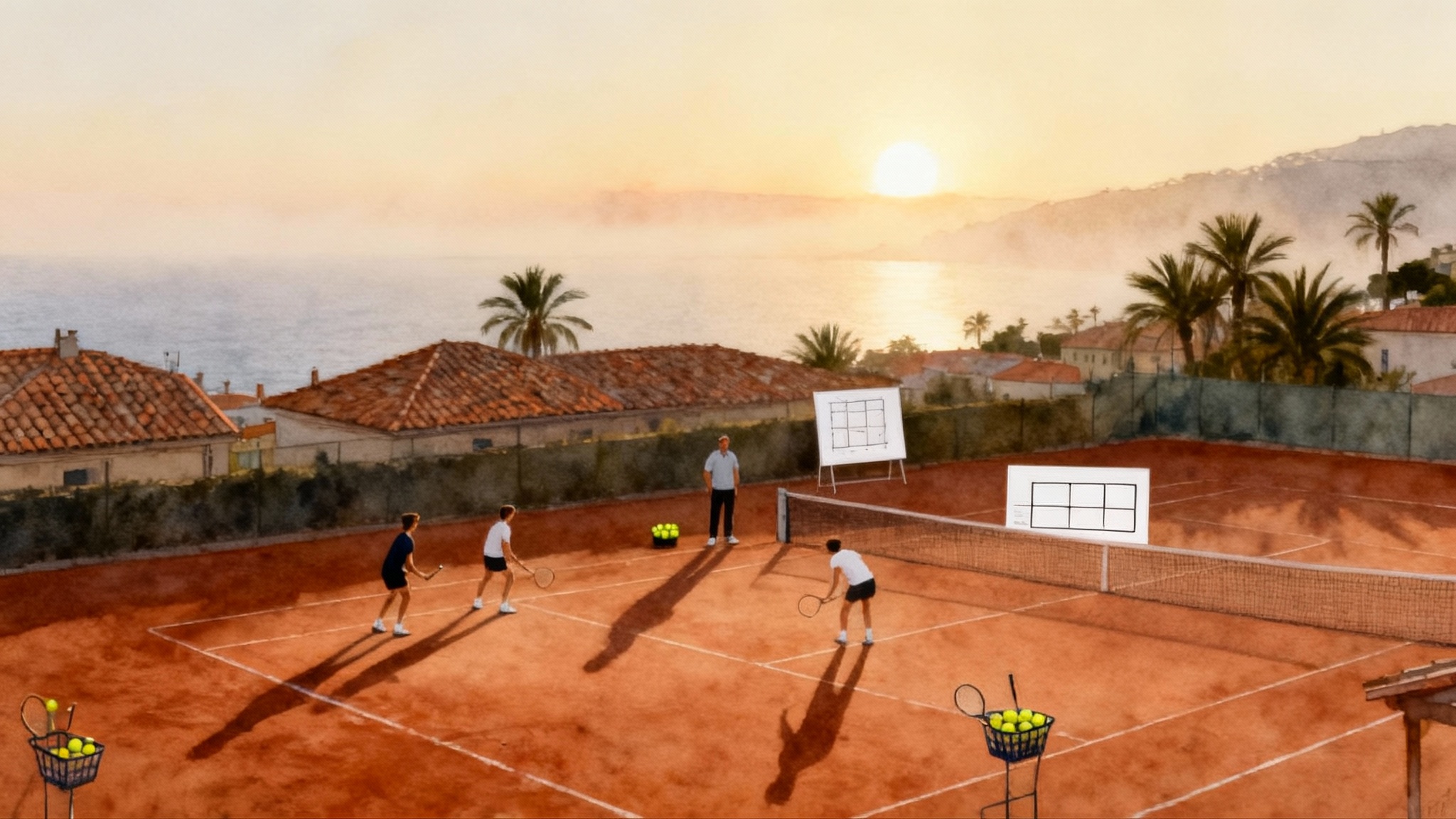
From the Dolomites to the Riviera
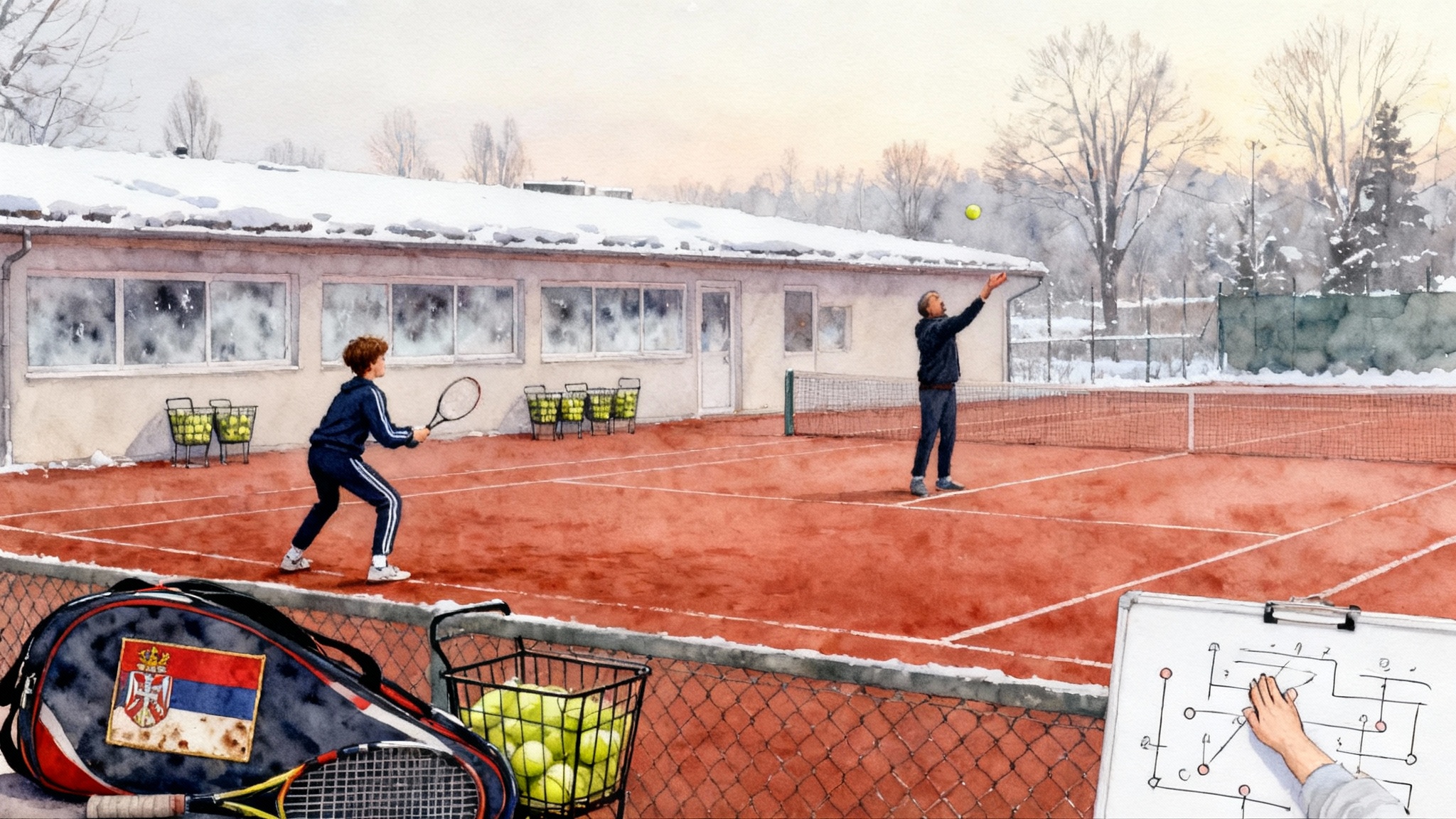
Jannik Sinner grew up in South Tyrol, a German-speaking corner of northern Italy where winter sports are a way of life. As a boy he raced down icy slopes with the balance and nerve of a future champion. By his early teens, however, a clear pattern emerged. The skills that made him a fast learner on skis were showing up on a tennis court: early reading of the environment, clean timing under speed, and a love of repetition. That pattern prompted a life-changing move. Around age thirteen, Sinner left his alpine home and re-rooted in Liguria at the Piatti Tennis Center in Bordighera, a boutique training base led by renowned coach Riccardo Piatti.
The decision proved pivotal. In January 2024 Sinner captured the Australian Open title after a five-set comeback against Daniil Medvedev, a result that announced a new standard for Italian tennis and confirmed the effectiveness of his developmental path. Sinner’s five-set victory in Melbourne put the world on notice. For context on his opponent’s pathway, see Elite Tennis Center forged Medvedev.
Six months later, on June 10, 2024, he rose to World No. 1 in the Association of Tennis Professionals rankings, the first Italian man to achieve the top spot. The climb reflected a long arc of habits shaped in Bordighera and refined on tour. ATP confirmed his ascent to No. 1 after Roland Garros.
This article traces the shift from elite junior skiing to full-time tennis, explains what makes a boutique academy like Piatti’s distinct, and ends with practical guidance for families: when to relocate, how to choose between a boutique and a mega-campus, how to handle academics and boarding, and how to transition from an academy base to a pro-tour team.
Why a former ski racer thrived in tennis
Ski racing and high-level tennis seem worlds apart, yet they share a core skill: split-second recognition. A skier reads snow texture, gate angles, and terrain changes while moving at speed. A tennis player reads incoming spin, height, pace, and depth before the ball crosses the net. Sinner’s skiing background built a nervous system that reacted early, kept balance over a moving base, and absorbed force efficiently. On a tennis court that looked like:
- Early split step, so the body is loaded at the exact moment of opponent contact
- Compact set of the racquet head, which reduced decision time
- Downhill acceleration into contact, similar to falling down the hill into a ski turn
These instincts do not replace technical coaching, but they make technical work stick. The Piatti center recognized that fit quickly.
Why Bordighera, why boutique
Bordighera sits on the Italian Riviera, with mild weather that allows nearly year-round outdoor training. The Piatti Tennis Center is intentionally small. Few courts, short lines, hands-on coaching, and a culture where the lead coach is present on your court rather than across a campus.
Boutique means there is nowhere to hide. Players rotate through short, precise blocks. Coaches measure quality by the ball, not by the hour. The atmosphere is calm but intense. Sinner arrived as a lean teen with an economy of motion and an appetite for work. The center built on those assets with habits that grow under repetition.
Habit 1: Early ball recognition
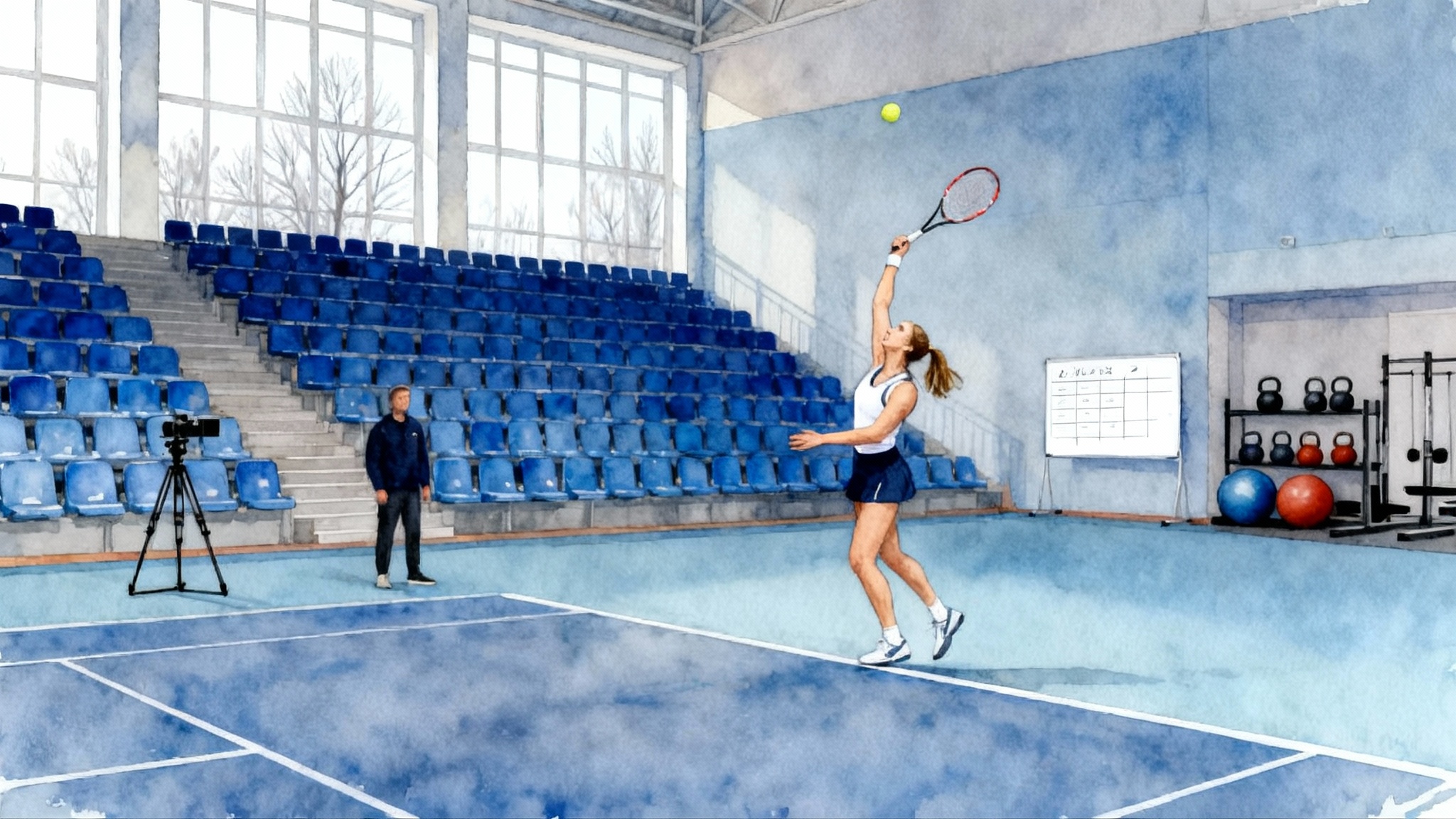
Early recognition is a skill you can train. At Piatti’s, the ball is not hit until the eyes have done their job. A typical drill starts without a ball: the coach varies arm speed, racquet face angle, and toss height. The player calls out the expected height and spin before contact. Only then do the feeds begin.
The point is to lock in a map of the opponent’s contact. Sinner learned to read cues before the ball left the strings, which gave him a head start on footwork. When he meets pace from a first-strike player, he is not late because he saw the story beforehand. This underpins his clean timing off both wings.
Practical takeaway for coaches: schedule five minutes per session of no-ball reading. Stand on the opposite baseline, mime different swing shapes, and have the player shout “high and heavy” or “low and flat” before you feed. Keep score. Make the brain accountable.
Habit 2: Compact timing and contact mechanics
Compact does not mean defensive. It means you cut the travel distance of the racquet on the backswing, you turn the shoulders early, and you move the body to the ball rather than dragging the arm toward contact. Sinner’s forehand and backhand show the same principle: short preparation, explosive hit through a stable base.
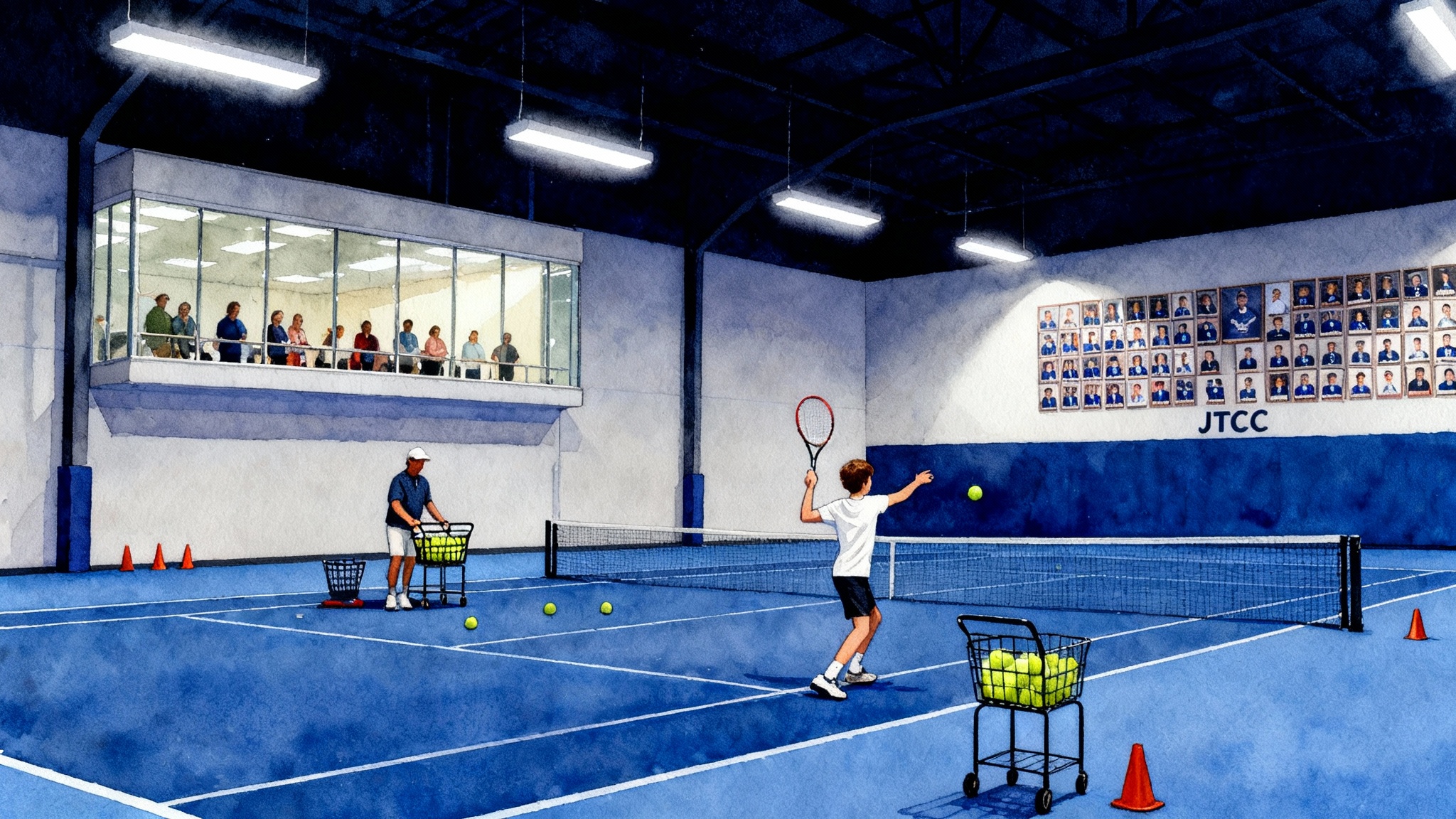
Piatti’s staff cleans this up with constraints. If a player loops too long, they shrink the loop by placing foam noodles behind the hitting shoulder. If contact floats, they mark a strike zone with cones and forbid contact outside it. The goal is not a perfect textbook shape, it is repeatability under speed.
In match play this shows up as reliable acceleration even when rushed. Sinner’s backhand return is a great example. He does not swing big. He turns, sets, and drives with the legs. The stroke is short, the ball is weighty, and the opponent feels immediate pressure.
Habit 3: High-repetition drilling without noise
High repetition can become empty if it is not organized. At Piatti’s, volume is paired with clarity. One session might be 20 minutes of crosscourt forehands at shoulder height, 20 minutes of backhand redirects line, and 20 minutes of inside-out forehand patterns with a finishing volley.
The coach only changes one variable at a time. Height stays constant while direction changes. Or direction stays constant while height changes. This isolates a single adaptation loop so the brain learns fast. Sinner’s ball after these blocks looks simple: same height, same speed, same depth. That sameness is a weapon because it narrows the opponent’s options.
Importantly, repetition comes with recovery. Sets are short, heart rate is monitored by feel and by timing, and water breaks are planned. High quality is hard to sustain if oxygen debt piles up. The center protects technique by managing fatigue.
Habit 4: Small-group coaching, big feedback
Piatti’s boutique model keeps groups small. Two to four players share a court, and someone is always watching closely. Feedback is immediate and specific: “Your split was late by a half step,” or “The contact is two palms too deep.”
Video is used sparingly and purposefully. Clips are short and refer to one cue at a time. If timing is the week’s theme, a player might only watch the moment between the split step and the first move. Players are not asked to digest a messy montage. They are asked to fix one habit.
Small groups also build peer pressure. When two players of similar level trade 20-ball crosscourts into a narrow channel, you feel the standard rise. The court becomes a laboratory where small wins stack up.
How these habits translated into Melbourne 2024
The 2024 Australian Open final offered a clean window into Sinner’s training. Down two sets to Daniil Medvedev, he did not chase miracles. He trusted simple reads and compact swings. He tightened contact location, raised his average rally ball by a few inches, and kept his legs organized under pressure. The match turned not on a frenzy of winners but on relentless control of the middle third of the court.
Against Novak Djokovic in the semifinal, the same themes mattered. Early recognition allowed Sinner to take the ball on the rise without over-swinging. Compact timing held up in the tightest moments, which kept rallies neutral and gave him first look at attackable balls. For a deeper look at Novak’s development, see how Niki Pilic forged Djokovic. The habits that were tedious on Tuesday in Bordighera were decisive on Saturday in Melbourne.
After Bordighera: evolving from academy to pro team
Sinner eventually left the Piatti center to form a new team led by Simone Vagnozzi, later joined by Darren Cahill, a coach known for building clear tactical plans. That transition did not erase what came before. It extended it. The base of early recognition, compact timing, and high-repetition clarity made him a great student for any new idea. When you switch teams at the right time, the goal is not to reinvent your identity. The goal is to add layers.
Families sometimes worry that leaving an academy betrays loyalty. In reality, good academies prepare players to leave. The job of a boutique center is to give athletes a durable foundation and the professionalism to thrive in a traveling team. Sinner is the template.
What families can learn: a decision framework
Relocation and academy choice are major commitments. Here is a simple framework that borrows from the Sinner story but applies broadly.
1) When to relocate
Ask three questions:
- Performance signal: Is the player consistently the best in a 200-mile radius for their age, or progressing faster than local peers over the last 12 months? If yes, local sparring may be limiting.
- Practice signal: Can you build a weekly plan at home with 12 to 16 hours of purposeful court time, two strength sessions, and two match-play blocks? If not, infrastructure may be lacking.
- Readiness signal: Is the family prepared for a two-year commitment with checkpoints every six months, including academic planning and budget transparency? If not, wait.
If two of the three signals are green, explore relocation. If only one is green, improve the home setup first and reassess in three months.
2) Boutique academy vs mega-campus
Each model has strengths. Here is how to choose.
-
Boutique academy
- Look for a head coach who is present on court and caps groups at four players.
- Expect daily technical themes, a visible weekly plan, and measurable targets like depth boxes and height windows.
- Choose this if your player learns best from immediate feedback, structured blocks, and repetition.
-
Mega-campus
- Look for breadth: multiple age groups, diverse sparring partners, fitness staff, and on-site events.
- Expect more independence and a wider social environment.
- Choose this if your player thrives in variety, needs many match styles each week, and can self-advocate to get court time. For a case study in a large-campus environment, read how Mouratoglou accelerated Gauff.
Red flags in either model: schedule drift, unclear daily theme, absent lead coach, or a culture that accepts sloppy ball quality.
3) Academics and boarding without compromise
You can protect school while chasing tennis.
- Pick an accredited online program that provides transcripts your local district will accept. Confirm transfer policies in writing before moving.
- Appoint an academic point person who is not the tennis coach. This person monitors workload, communicates with teachers, and schedules exam windows around tournaments.
- Keep a weekly study anchor. For example, two evenings with 90-minute focused blocks, plus a Sunday catch-up. Build this into the tennis plan so it is not optional.
- For boarding, request a housing tour and ask who enforces bedtime, meals, and study hall. Structure makes or breaks the first six months away from home.
4) Transitioning from academy base to a pro-tour team
A clean transition has four parts:
- Roles and responsibilities: define who does what. One lead coach for tactics, one for technique if needed, one strength coach, and a physio. Fewer voices, clearer messages.
- Tournament planning: build the calendar in 12-week blocks with recovery windows and training weeks. Avoid chasing points without purpose.
- Daily language: carry over two or three anchors from the academy. For instance, “split on contact,” “hit inside the cones,” “finish with two steps through the court.” Consistency calms nerves on big stages.
- Feedback loop: after each event, run a 20-minute debrief. What cues worked under pressure, what broke down, what will we practice on Tuesday. Keep notes. Repeat.
Training ideas you can use this week
Here are starter drills inspired by Bordighera habits that any serious junior can adopt.
- Recognition ladder: coach mimics five different swing shapes before feeds. Player calls height and spin, then hits a neutral ball to deep middle. Ten reps per shape.
- Compact contact alley: place two cones two racket-lengths inside the baseline. All forehands must contact inside this zone for five minutes. Reset if you drift.
- Depth box: tape a three-by-three meter square in the last third of the court. Rally crosscourt forehands with the goal that eight of ten land in the box. Progress to backhand redirects line with the same target.
- Small-group baseline race: two players, one basket. After every ten-ball rally, the non-feeding player sprints to the service line and back. The other player counts how many balls cleared the service line with safe height. Compete to beat yesterday’s count.
How to audit an academy visit
Before you sign, spend one full day on site. Use this checklist.
- Watch three sessions. Note if the day has a theme. Ask a random coach to explain that theme.
- Count touches per minute. Good programs rarely let players stand still.
- Look for constraint tools: cones, lines, targets, and clear feedback language. If you only see open hitting, skill acquisition will be slower.
- Observe a small-group session. Is the lead coach engaged, or is the assistant running the court while the head coach sits on a phone?
- Ask for a sample week plan that is specific to your player, not a generic flyer.
If the academy encourages you to shadow, asks you questions about the player’s learning style, and can describe how a habit will be trained over the next month, you are in the right place.
The bigger picture: culture matters
What is most striking about Sinner is the absence of drama in his tennis. There is no flailing for highlight shots under pressure. That is culture. Culture is the set of invisible rules that govern how practice is done. At Piatti’s, the rules prized early reads, compact swings, and endless quality touches. The player who lives in that environment absorbs quiet confidence.
Families often look for magic facilities. The real differentiator is the daily standard. If the academy says a high ball to the backhand must clear the net by one shoulder height and land in the last third, the player will learn to do that. If the academy accepts any ball that somehow lands in, the player will practice chaos. Sinner’s rise is a case study in choosing standards over spectacle.
Conclusion: from mountain edges to baseline edges
Sinner’s move from South Tyrol to Bordighera was not a bet on celebrity. It was a bet on habits. Early ball recognition let him see rallies before they unfolded. Compact timing made his swings hold up under speed. High-repetition drilling and small-group coaching turned those ideas into muscle memory. The result was a resilient game that produced a first major title in Melbourne and the World No. 1 ranking on June 10, 2024.
For families, the path is clear. Relocate when performance, practice, and readiness signals align. Choose a boutique academy if your player needs tight feedback and a mega-campus if they need variety and volume. Protect school with planning and accountability. Then, when the time comes, evolve into a touring team without losing the simple training language that built the base.
The journey from ski gates to service boxes shows that greatness often grows in small rooms with clear rules. If you pick the room wisely and honor the rules daily, the ceiling rises quickly. That is the lesson from Bordighera, and it travels well beyond the Italian Riviera.
For another perspective on elite development arcs, compare with how Niki Pilic forged Djokovic and Elite Tennis Center forged Medvedev.