Indoor-to-Outdoor 2026: Spin, Footwork, Wind Management
Make the shift from winter indoor courts to confident spring outdoor play in 21 days. Recalibrate ball height and depth, retime your split step, shape second serves in wind and sun, fine tune strings and shoes, and follow ready-made checklists.
 Tommy
Tommy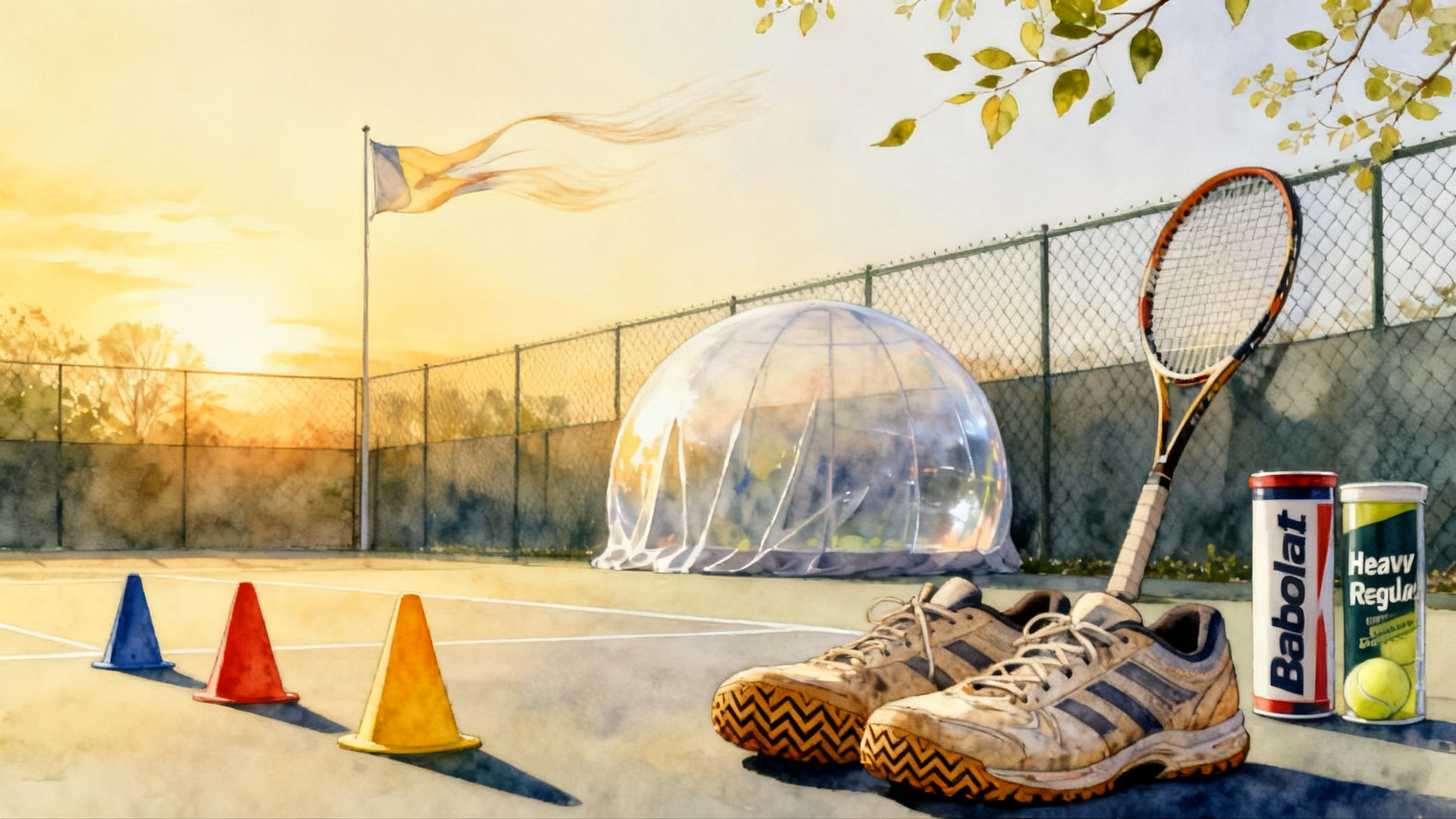
Why the first outdoor hit feels strange
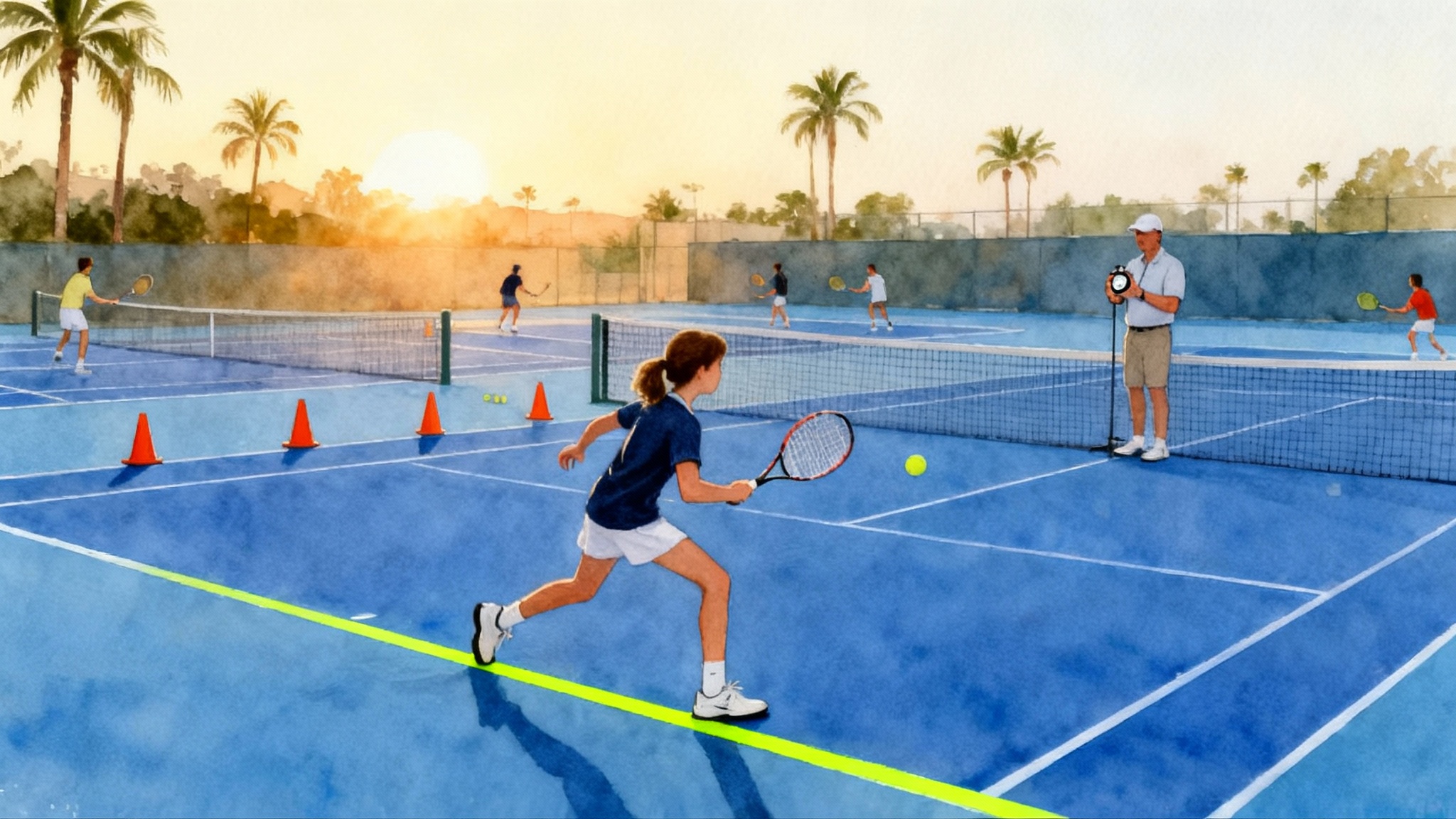
The first outdoor rally after months indoors can feel like switching from a treadmill to a forest trail. The ball floats longer in wind, courts bite differently, and the sun reintroduces timing errors you forgot you had. None of this is random. Outdoor surfaces vary in friction and energy return, wind changes ball aerodynamics, and humidity affects the felt. The International Tennis Federation’s ITF court pace classification explains why timing on a cushioned indoor hard may not transfer to a gritty municipal hard or a damp spring clay court.
This article gives you a 21‑day plan to bridge that gap. It is built for three groups: juniors and parents planning sessions together, and adult league players who need match readiness on a schedule. You will recalibrate ball height and depth, retime your split step and recovery for gritty hard and clay, reshape a second serve that works in wind and sun, and make smart tweaks to strings, tension, and shoe tread.
The 21‑day transition plan
You will train five days per week for three weeks, with two light recovery days that still include feel and serve work. Each day has one technical target, one physical or footwork target, and one tactical or mental note. If you can only manage three days per week, do the odd‑numbered sessions first; they are the highest leverage.
What you need
- Six cones or water bottles
- Painter’s tape or chalk to mark depth lanes
- A can of regular duty balls and a can of heavy duty balls
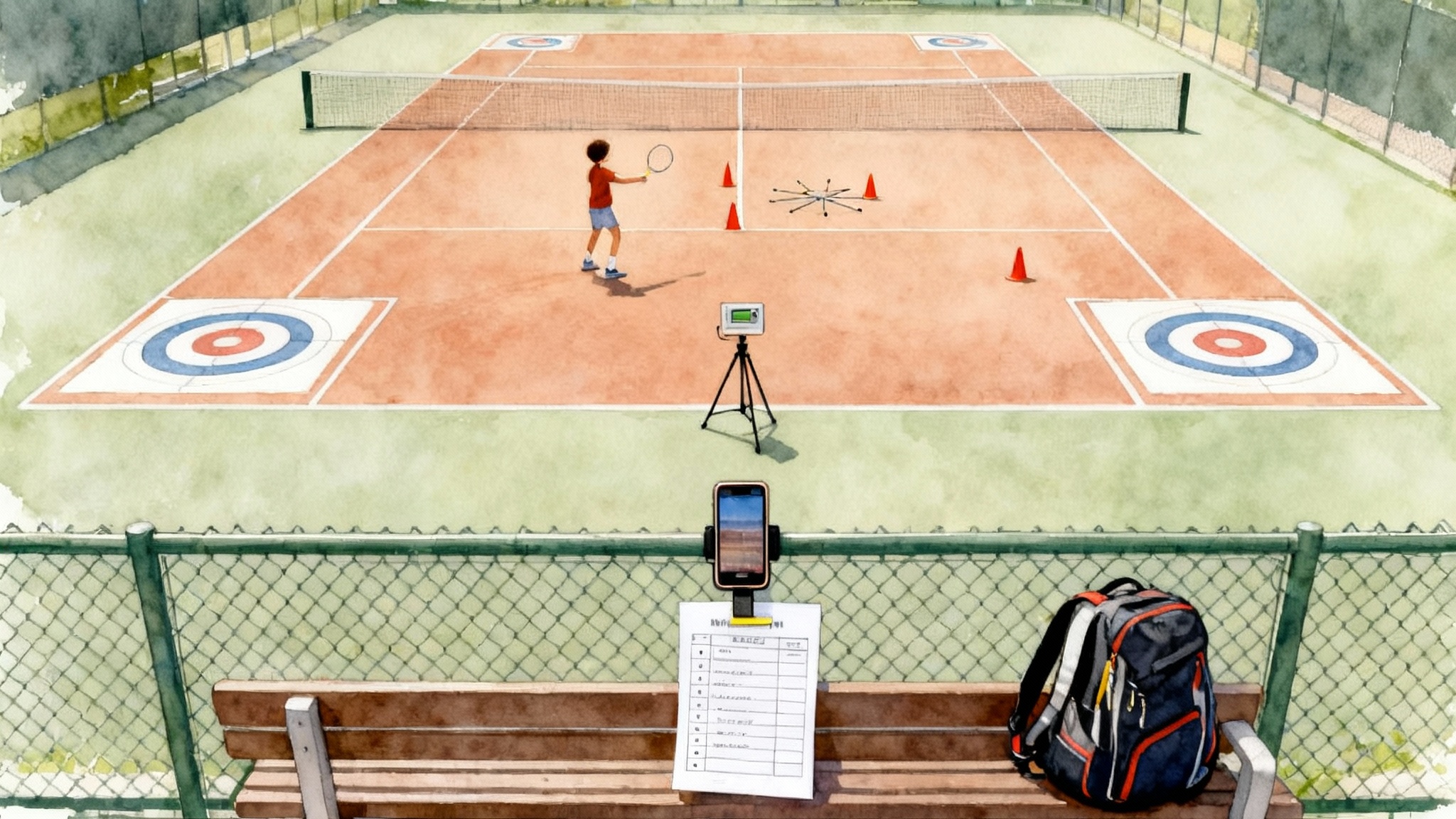
- Your phone for slow‑motion at 120 frames per second
- Optional: a portable wind meter or simply the flag at the fence
Days 1–3: Recalibrate arc, speed, and depth
Goal: replace the flat indoor drive with an outdoor arc that lands deep without sailing long.
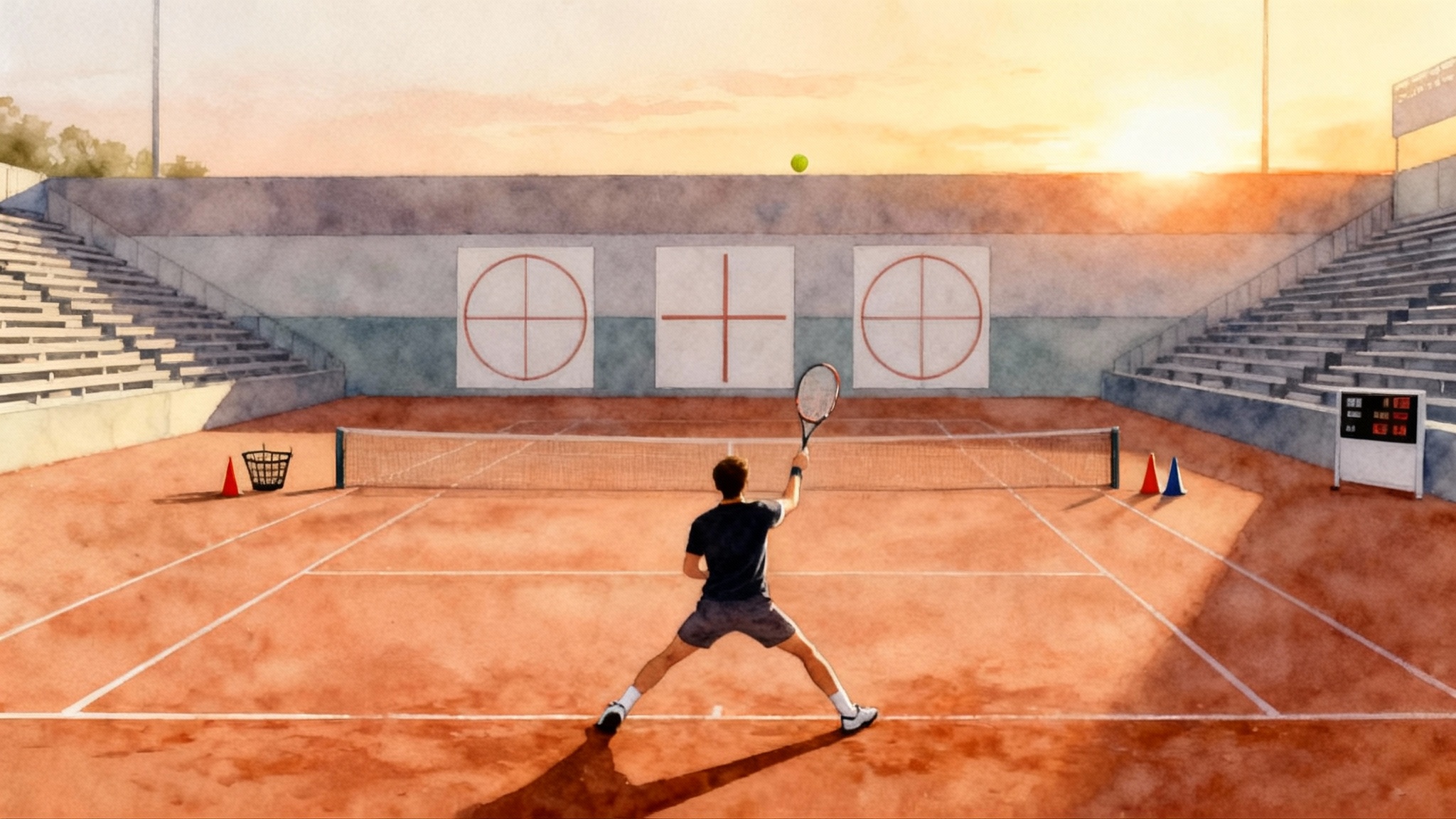
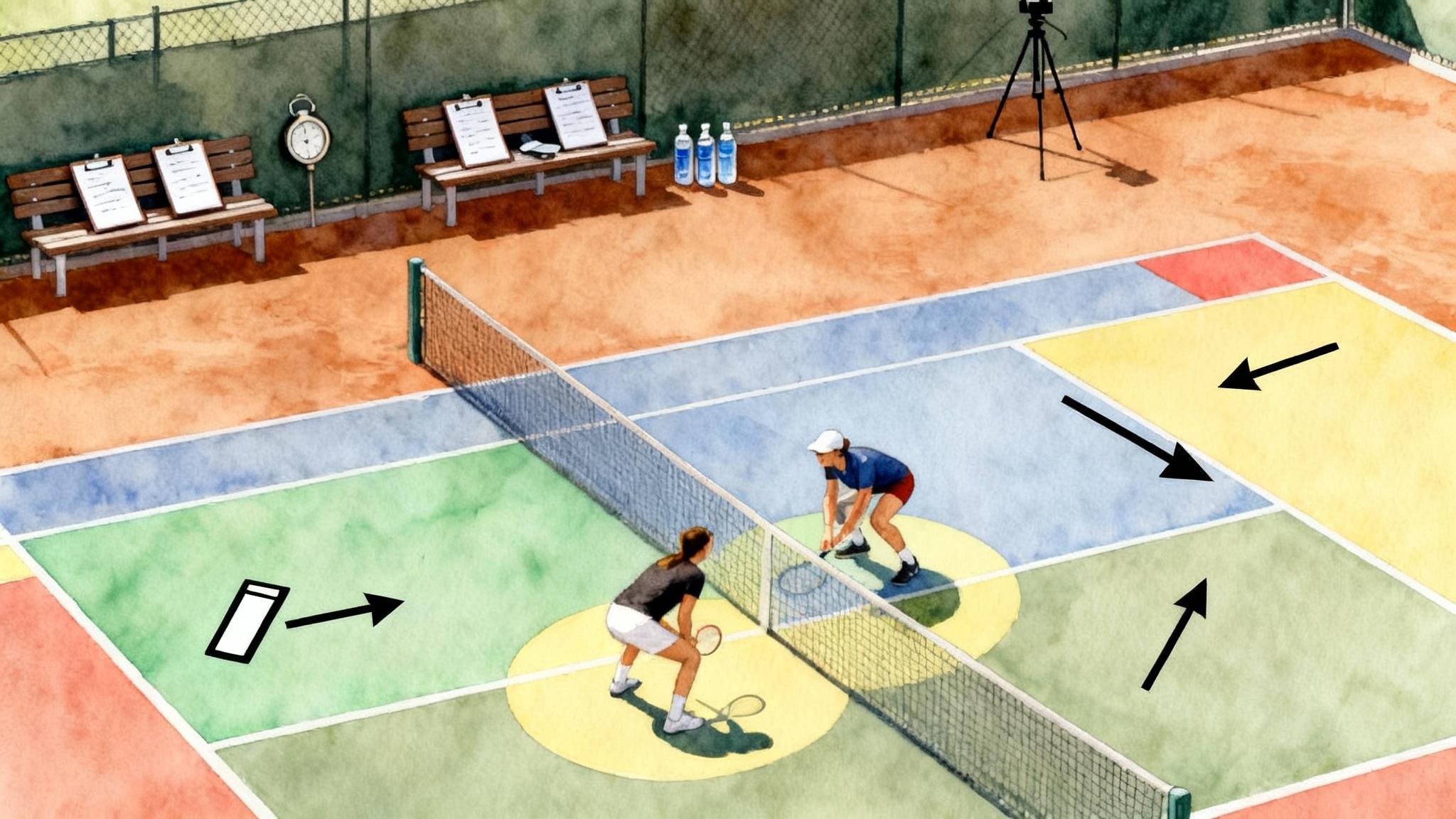
- Drill: Three‑lane baseline. Mark a short lane from the service line to two feet past it, a medium lane from there to the last four feet of the court, and a deep lane that covers the final four feet before the baseline. Rally crosscourt only, then down the line only. Target 70 percent of balls in the medium lane, 20 percent deep, 10 percent short on purpose to bring your opponent forward.
- Spin tune: Use semi‑western or strong eastern on forehand and a firmer wrist on backhand. Aim to clear the net by the height of your hitting partner’s shoulder. If you clip the tape more than twice in a rally, increase your net clearance by a ball width.
- Ball choice: Alternate cans each set. Heavy duty balls ride wind differently and hold up on gritty courts. Notice how your arc changes and adjust your swing path, not just your power.
Parent cue for juniors: film four backhands and four forehands each day from the side view. Capture contact point and apex height. Adults can self‑check: if apex is too close to the net, lift your left elbow on the forehand to exaggerate the upward path.
Days 4–7: Split step timing and gritty recovery
Goal: lock in a split step that lands just before the opponent strikes, then recover with efficient first steps.
- Timing drill: Stand at the baseline and face a feeder. Hop smaller than you think, land soft on the balls of your feet the instant before the feeder hits. Count aloud: “one” on your takeoff, “two” at your landing as the ball leaves your opponent’s strings. Your body should feel springy, not floaty.
- Gritty hard adjustment: Expect micro‑slips. Keep steps shorter, widen your base one shoe width, and use a low center of gravity on change of direction. Recovery steps should be quick doubles rather than long strides.
- Clay adjustment: Practice controlled slide into a two‑step stop. Start in service boxes, progress to baseline diagonals. Slide with the outside foot, plant the inside foot as you swing, then push off the inside foot to recover. Start at 50 percent speed to build confidence.
- Patterning: Run two patterns daily. Pattern A: crosscourt forehand, runaround forehand inside out, recover. Pattern B: backhand crosscourt, backhand down the line, recover. Twelve balls per pattern, three sets.
Physical anchor: five minutes of rope skipping to engrain the quick landing rhythm of the split step.
Days 8–10: Serve and return in wind and sun
Goal: own a second serve you can trust in any wind, and a return plan that does not fold under glare.
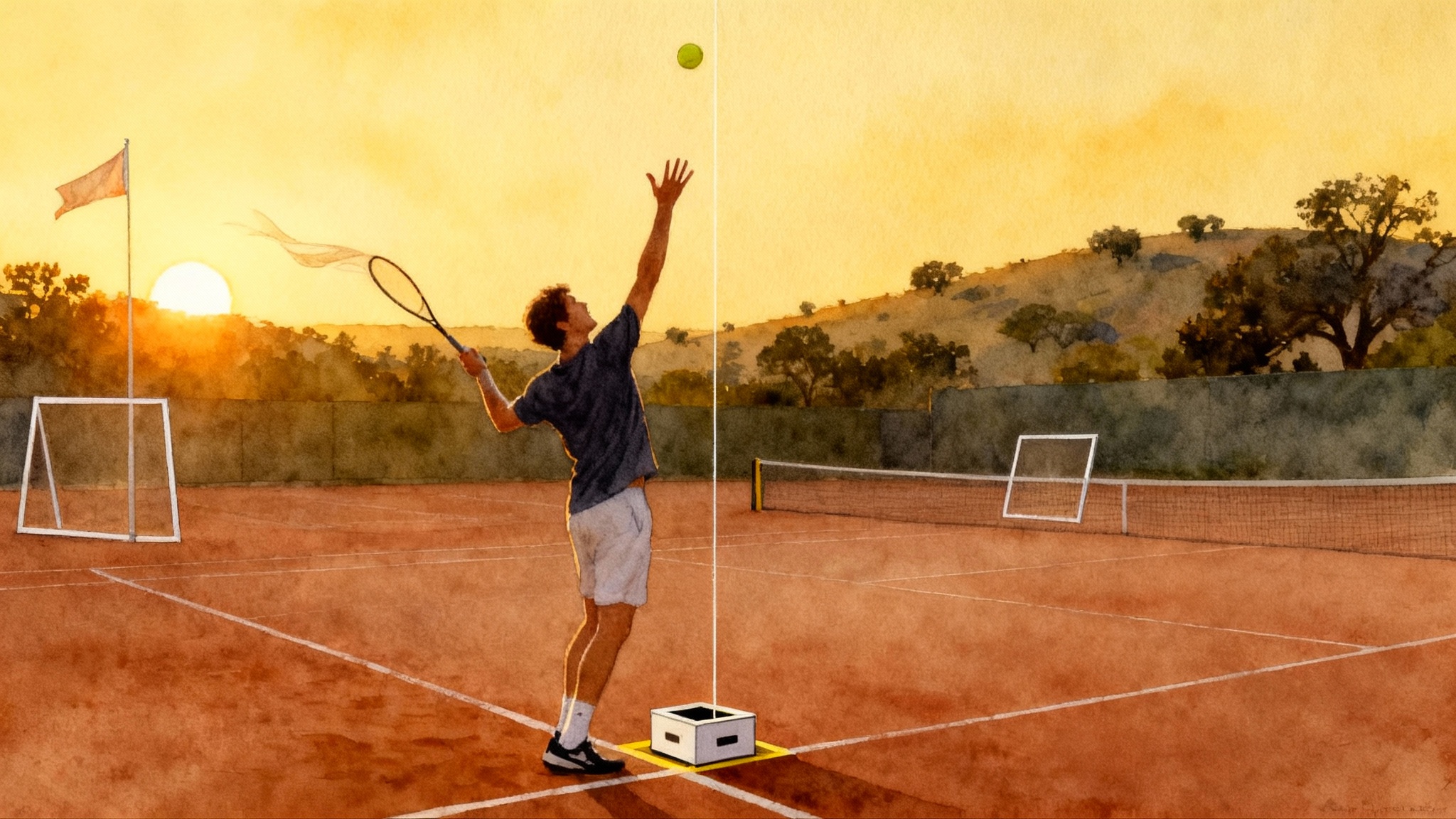
- Into the wind: Add shape. Try a kick serve with a higher toss slightly over your back shoulder and a pronounced brush from 7 to 1 o’clock. Aim a foot above your indoor target net height. The wind will hold the ball up, so commit to spin and height. If your toss drifts, tune it with the Serve Toss Consistency Blueprint.
- With the wind at your back: Keep the toss modestly forward and lower your net clearance. A slice second serve that moves sideways is often safer than a loopy kick that can sail. Aim body or T, then let wind drift it toward the sideline.
- Crosswind: Toss to the windward side of your head and serve toward the upwind corner. Let the wind finish the curve.
- Sun: If the sun sits in your toss, rotate your stance five degrees more closed and toss slightly left of your indoor norm to keep sightlines clean. Practice a no‑look routine: eyes track the ball late without staring at the sun.
- Returns: Choke up on the grip, move up a half step, and block with short swings. Treat the first return game as recon to learn wind lanes. For patterns and cues, study the Return of Serve Blueprint.
For deeper guidance, the United States Tennis Association’s USTA tips for playing in wind are a useful complement to your on‑court reps.
Days 11–14: Footwork endurance and surface comfort
Goal: build the legs for outdoor points that last longer and start farther behind the baseline.
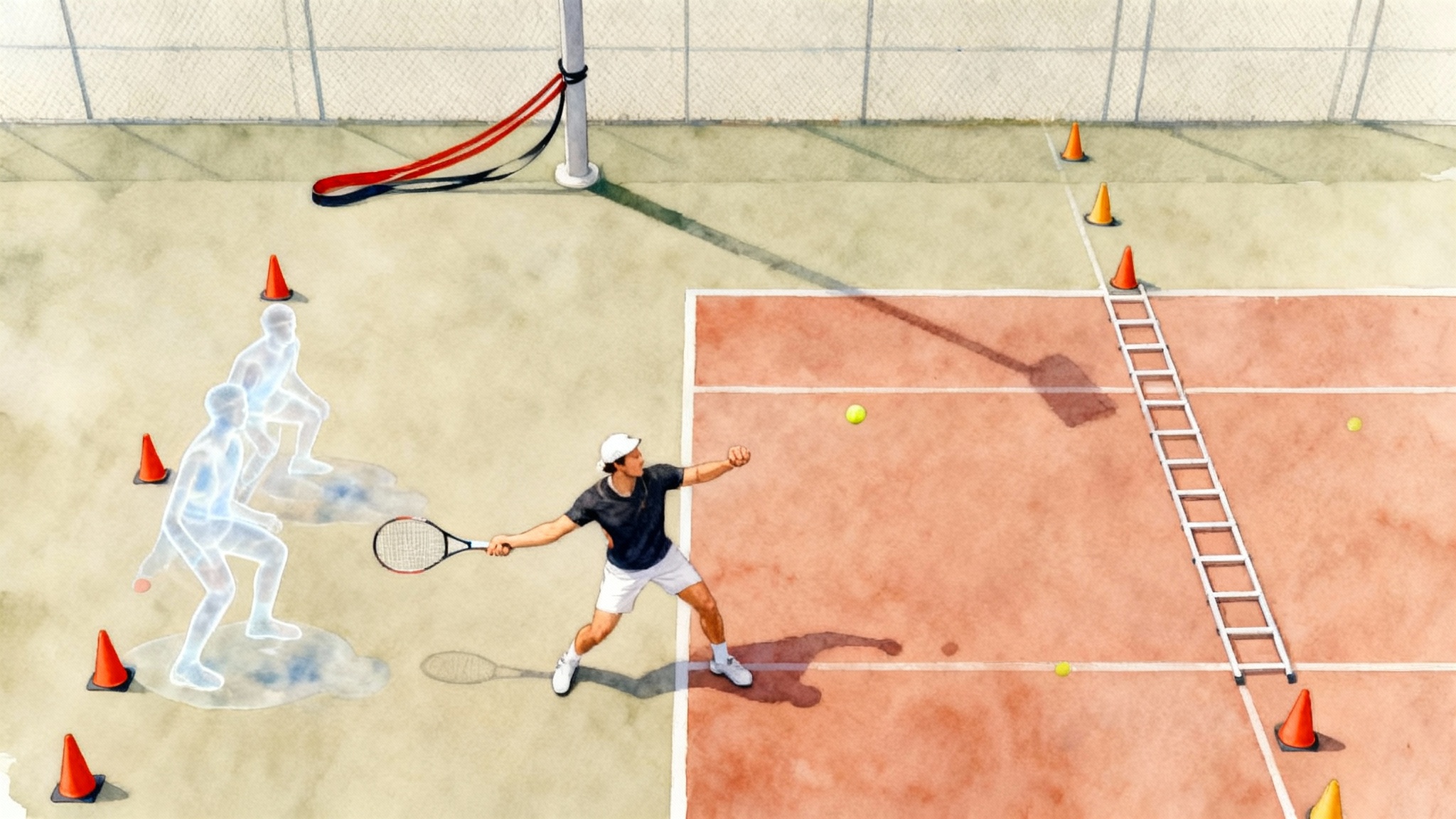
- Perimeter rally: Place cones three feet behind the baseline and play points where your first contact must be outside the cones. This forces higher net clearance and deeper recovery.
- 30‑ball ladder: Hit 10 crosscourt, 10 down the line, 10 alternating, all with split‑step on every opponent contact. If your split goes late twice in a set, reset the count. Quality over speed.
- Clay sliders: Three progressions. 1) Slide to a stop without hitting. 2) Slide with a shadow swing. 3) Slide and hit a slow fed ball. Keep hands calm to avoid over‑rotating.
- Gritty hard recoveries: Two quick crossover steps, then two short adjustment steps. Film feet only and check if your first step after contact is immediate and directional.
Days 15–18: Strings, tension, and shoe tread
Goal: match your gear to outdoor demands without a full equipment overhaul.
- Tension tweak: If you played multis or gut at 55 pounds indoors, try 52 to 53 for outdoor height and dwell time. If you used a firm polyester at 48, try 45 to 46 to add arc without losing control. Think in three percent steps rather than big swings.
- String type: Shaped polyester like Solinco Hyper‑G or Head Lynx Tour can help bite a new ball in wind; softer poly or a hybrid with Wilson NXT or Babolat Xcel can protect the arm during the higher‑volume spring ramp. Juniors who swing fast may stay in poly; adults with desk jobs can consider a hybrid to reduce shock.
- Racquet grommets and dampeners: Inspect grommets for sharp edges that can notch strings faster in gritty dust. A simple rubber dampener reduces ping but does not change string bed power; choose by feel, not myth.
- Shoe tread: Indoor shoes often have flatter outsoles. For gritty outdoor hard, look for pronounced herringbone with good edge definition; brands describe outsole type in product copy. For clay, full herringbone helps with controlled sliding and clay release. Replace shoes when the ball of the foot area loses definition; that is your braking zone.
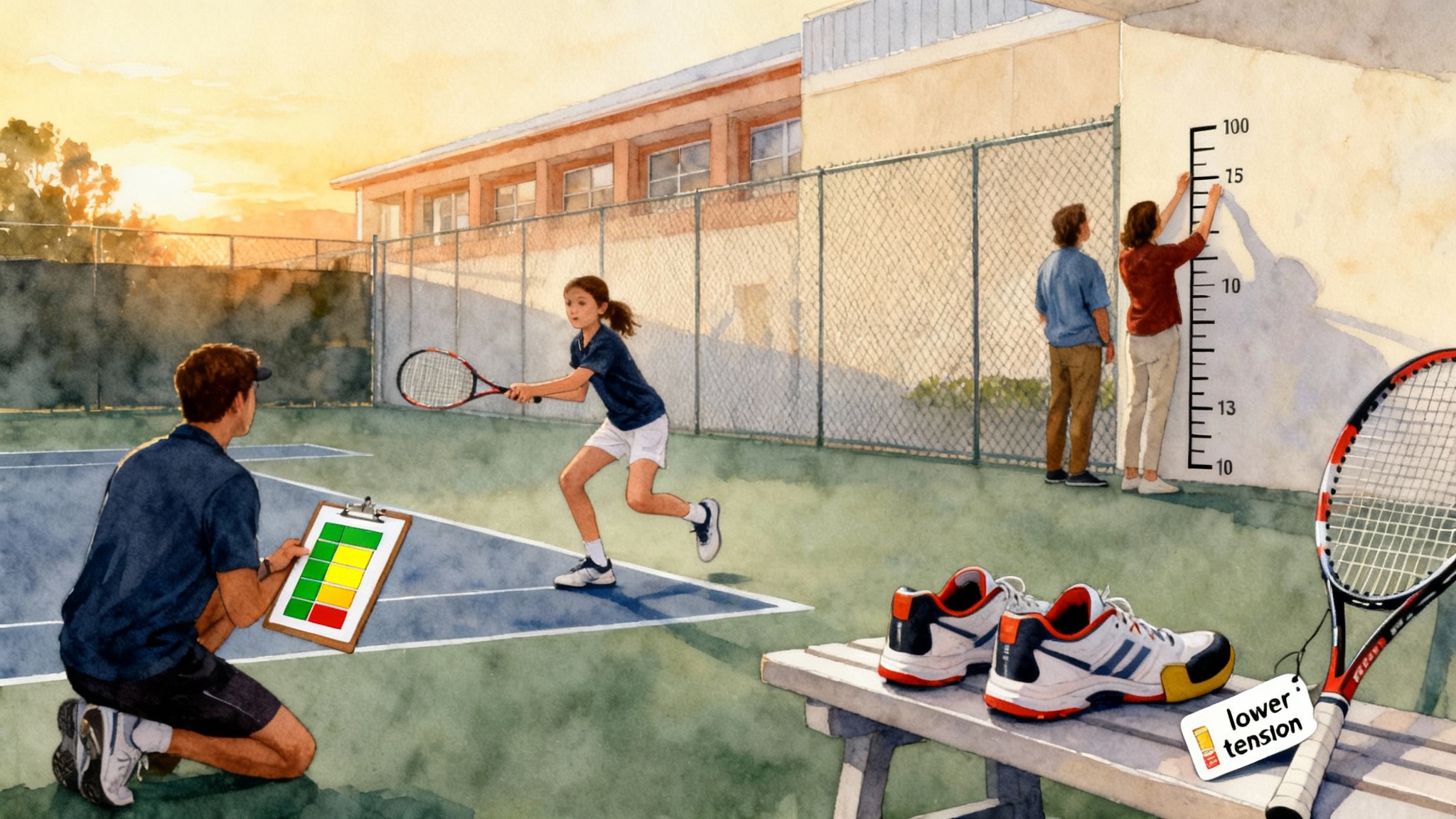
Parent checklist: take a photo of the outsole new, then compare at Day 30 to decide on rotation. Adults: write the string and tension on your frame with a fine marker after restringing so you can track performance.
Days 19–21: Match simulation and confidence
Goal: test skills under pressure and lock in pre‑match routines for league play and junior events.
- Serve plus one: Play points that start with a serve to your least comfortable box, then a predetermined first ball to the safe lane you marked earlier. Keep a simple tally: serves in, plus‑one errors, plus‑one winners.
- Wind lanes: Before play, toss a handful of grass or a bit of clay dust. Identify two lanes: up the line that holds the ball up, and crosscourt that accelerates it. On big points, target the lane that gives you more net and court margin.
- Sun plan: On courts with a difficult deuce‑court sun, practice the body serve and jam returns to reduce sky tracking. Returners can step back and use a higher backswing finish to find the ball later.
- Pressure ladder: First to 11 points. Your serve only, second serves only, must clear the net two ball heights. Miss two in a row and you start over. Build trust in your shape.
Recalibrating ball height, speed, and depth: the concrete numbers
Outdoor errors often come from keeping indoor height and depth targets. Set quantifiable goals so you can adjust by the numbers.
- Net clearance: aim for a fist and a half over the net strap on drives; two fists on heavy crosscourt rally balls. If you miss long twice in a row, reduce your target by half a fist.
- Apex: on neutral rallies, your ball’s highest point should be over or slightly past your service line. If your apex is before the service line, you are driving too flat into wind.
- Depth lanes: over a 10‑ball rally, 6 balls medium, 3 deep, 1 short by design. Use those short balls to change rhythm, not by accident.
- Speed choice: pair your slowest footwork day with faster, lower clearance hitting to stress timing; pair your toughest movement day with higher arc to raise margin.
Split step timing and recovery on gritty hard and clay
The split step is the outdoor thermostat that warms up every other movement. Right after the opponent begins the forward move to the ball, you leave the ground. You land as or just before their strings contact the ball. The landing compresses your ankles and hips like springs so your first step is decisive.
- Common indoor hangover: a big, floaty split that lands late because indoor lighting and pace compress the read‑react window. Fix it outdoors by making the split smaller and more frequent.
- Recovery template on gritty hard: two quick crossovers, plant, then two small adjustment steps into your stance. The gritty surface taxes calves more, so cap volume the first week.
- Recovery template on clay: slide on the outside foot for wide balls, then recover by pushing off the inside foot so you do not keep sliding past your line.
Cue for juniors: “land to launch.” Cue for adults: “short hop, then go.” Parents can call out “two” at opponent impact to anchor the rhythm.
Second‑serve shapes that stand up to wind and sun
Outdoors you need shapes, not just speeds. Think of your second serve like a paper airplane that turns and lifts instead of a rock you throw straight.
- Kick serve: great into the wind and crosswind to your backhand corner. Higher toss, more upward brush, target higher net clearance. The bounce should climb shoulder high.
- Slice serve: great with the wind at your back or into a crosswind that pushes the ball off the court. Toss slightly to the right for right‑handers, carve around the ball, and target body or T to gain cliff‑edge movement late.
- Topspin‑slice: a blend that adds safety while keeping skid. Useful when the sun is brutal and you want a more predictable apex.
Returners: on windy days, delete the big backswings. Use a continental grip, block, and find court. Give yourself permission to play a neutral rally instead of an early winner.
Smart gear tweaks without a gear spiral
You do not need a new racquet. You need to control arc and landing depth.
- Strings: if you felt under‑control indoors, lean softer or slightly lower tension outdoors for spin and dwell time. If you sailed balls long outside, go up two pounds on the mains only to gain a firmer bed without sacrificing cross feel.
- Frequency: restring poly every 12 to 15 hours of play in spring since dust eats tension. Multis and gut can go longer but watch for fray.
- Vibration and comfort: spring volume rises. If your elbow complains, swap to a hybrid or add a thin overgrip to up the handle size by a hair and reduce squeeze force.
Parent and adult league checklists
Session‑planning checklist for parents and juniors
- Objective: pick one per day: height and depth, split step, serve shapes, or recovery patterns.
- Film: 60 seconds from the side for height and depth; 60 seconds from the back for spacing and recovery.
- Countables: record net clearance misses, split‑step lateness, first‑serve percentage, and double faults by wind direction.
- Gear check: note ball type, string tension, and shoe choice. Match notes to feelings so you can adjust.
- Wind map: walk the fence; note flags or trees. Mark two wind lanes on a scrap of paper.
- Debrief in the car: what one thing felt easier outdoors today, what one thing needs a drill tomorrow. Keep this to 90 seconds so it stays positive and actionable.
Match‑readiness checklist for adult league players
- Pre‑match 24 hours: decide on string setup and shoe pair; pack heavy duty balls for warm‑up.
- Arrival: feel the wind for two minutes before you hit. Decide your first serve patterns by end change.
- Warm‑up: hit five high‑arc rally balls that clear the net by two fists to lock in margin, then two lower drives to test comfort. Serve three kick, three slice, record what lands easier.
- In‑match rules: in wind, add one ball of height to any winner attempt. On big points, aim heavy crosscourt to the safe lane before you change direction.
- Debrief: write three lines in your phone. What the wind gave you, what the surface took away, and the one adjustment that won you points.
Academy Spotlight: Legend Tennis Academy’s covered‑to‑outdoor pathway
In late winter, Legend Tennis Academy outdoor pathway helps players feel the shift before spring leagues begin. They start in the covered structure with a height and depth audit, then move to the adjacent outdoor banks as temperatures allow.
Here is how the pathway works:
- Week 1 indoors: a 30‑minute assessment that measures net clearance on rally balls, second‑serve spin rate by feel and video, and split‑step timing. Players receive a one‑page plan with lane targets and serve shapes.
- Week 2 mixed: half session covered, half session outdoors. Cones mark depth lanes outside. Coaches script serve and return in wind. Players test a three percent tension adjustment on a secondary frame or a demo.
- Week 3 outdoors: full sessions on gritty hard or clay with footwork emphasis. Players practice recovery templates, wind lanes, and pressure ladders.
Legend’s coaches encourage families to bring both indoor and outdoor shoes to Day 1 and to tag string setups with painter’s tape on the throat of the frame for quick swaps. Juniors leave with a pocket‑size checklist and a parent debrief card.
Ready to measure your own baseline before spring hits? Book a 30‑minute evaluation session with Legend and leave with your first three practice plans. Not near a Legend location yet? Download our 21‑day transition planner to guide your sessions and track tension, shoes, and wind notes.
Putting it together: three sample sessions
Below are three plug‑and‑play sessions you can run any week of the plan.
-
Session A: Height and depth plus serve shapes
- Warm‑up: rope skip 3 minutes; shadow swings 2 minutes
- Drill 1: three‑lane baseline, 10 minutes crosscourt, 10 minutes down the line
- Drill 2: high‑arc points to the big crosscourt only, first to 7
- Serve block: 20 kick serves into wind, 20 slice with wind, video 6 of them
- Cooldown: film review, log tension feel
-
Session B: Split step and recovery on gritty hard
- Warm‑up: split timing with feeder, 5 minutes
- Drill 1: crossover recoveries, 3 sets of 12 balls each side
- Drill 2: perimeter rally behind baseline cones, 12 minutes
- Points: serve plus one to safe lane only, first to 9
- Cooldown: calf stretches, outsole check
-
Session C: Clay comfort and long rallies
- Warm‑up: three slide progressions in service boxes
- Drill 1: crosscourt rally to deep lane only, 8 minutes per side
- Drill 2: short‑angled pattern to pull and recover, 3 sets of 8 balls
- Points: return games starting two steps behind baseline, play to 11
- Cooldown: brush clay from tread, note traction
Troubleshooting: common outdoor misses and fixes
- Sailing long with wind at your back: lower net clearance by half a fist, aim to the safe lane, and choose slice or topspin‑slice over kick until you feel the ball.
- Short into wind: add one ball of net clearance and more upward brush. Use heavy duty balls if available for a truer strike.
- Late split step: adopt the count method. Say “one” on your hop, “two” as the opponent hits. Shrink the hop until you can make the “two” on time.
- Foot slips on gritty hard: widen stance, shorten steps, and refresh shoes. If you see dust kick on your first step, you are pushing too hard from a narrow base.
- Clay over‑slide: finish with the inside foot anchored as you swing, then push off it. If your follow‑through keeps carrying you, your hips are still rotating after contact; finish higher and sooner.
Your outdoor spring, solved
Spring tennis rewards patience, shape, and sturdy legs. Indoors you learned to drive through a consistent ball; outdoors you must learn to shape a changing one. Spend 21 days on the specifics that matter: a higher arc that still lands deep, a split step that lands on time, serve shapes that fight wind and sun, and gear that supports your plan. Juniors with parents who track two or three numbers per session improve faster because they fix causes instead of chasing symptoms. Adult leaguers who script serve plus one and return plus one find free points even on blustery Tuesdays.
If you want an outside set of eyes, schedule a spring evaluation session with Legend before your first league match or junior event. Show up with your current string and tension, your best and oldest pair of shoes, and your 21‑day log. We will turn indoor rhythm into outdoor confidence and give you ready‑to‑use drills for your next three practices.