UTR vs WTN in 2026: Smarter Schedules for Juniors and Adults
Confused by Universal Tennis Rating and ITF World Tennis Number? This 2026 guide shows juniors, parents, and adult players how to plan competition without rating chasing, with sample calendars, match targets, and clear checkpoints.
 Tommy
Tommy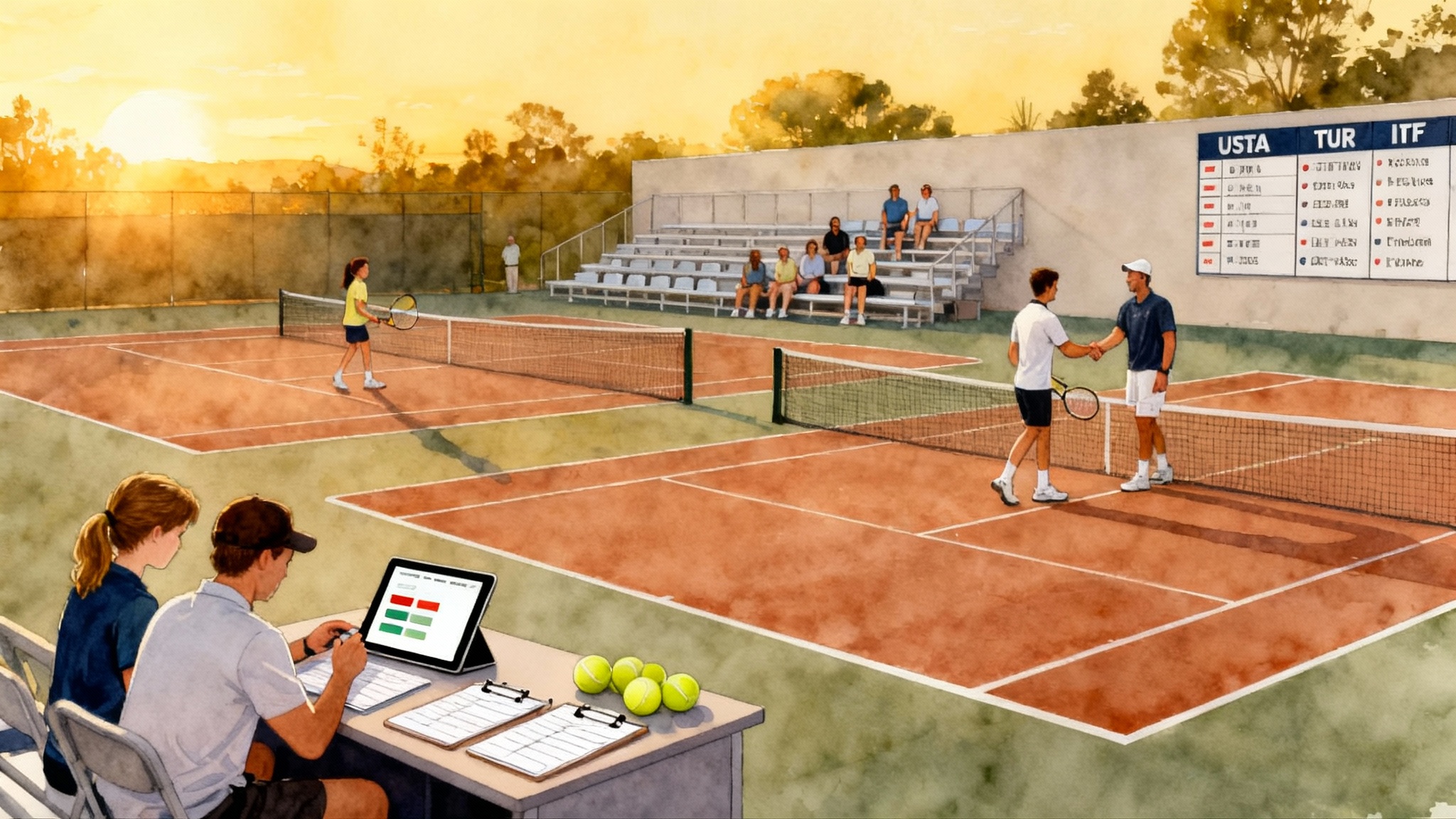
UTR vs WTN, decoded
Two global systems now shape how players plan competition. Universal Tennis Rating, often called UTR, and the International Tennis Federation World Tennis Number, called WTN, both estimate your current match strength using who you play, what the score is, and how recent the matches are. The details differ, but the planning consequences are similar. For an official overview of how UTR processes results, read the UTR methodology overview.
WTN is the International Tennis Federation’s global scale, used by many national federations and posted on player profiles around the world. It runs from larger numbers for beginners to smaller numbers for elite players. You can find the core description on the ITF World Tennis Number explainer.
Here is the simple, practical takeaway. Both ratings respond most to verified matches against appropriately strong opponents, recent results carry more weight than old ones, and tight scorelines matter. If you lose 7–6, 7–6 to a stronger opponent, that can help more than beating a much weaker player 6–0, 6–0.
The planning mindset, not rating chasing
Rating chasing happens when players pick events to inflate a number rather than to accelerate skill. That backfires because both systems are designed to detect opponent quality, scoreline, and recency. You cannot hack them for long. What you can do is schedule for learning gains that produce durable rating movement as a side effect.
Use these three principles when building a schedule:
- Calibrate your baseline. Use your current UTR or WTN to choose opponents within two competitive tiers, close enough for six to eight genuine contests per month. The goal is frequent competitive pressure at the edge of your ability, not comfort-zone wins.
- Mix formats. Play a blend of tournaments, verified league or match days, and practice sets under match conditions. Variety exposes weaknesses sooner, which improves faster. For weekly structure ideas, see build your tennis week microcycles.
- Measure learning, not only rating. Track serve plus one pattern success, first serve percentage in pressure games, break point conversion, and rally length outcomes. Ratings will follow if these indicators trend the right way. For return metrics that matter, use our return of serve mastery playbook.
What actually moves UTR and WTN
- Opponent quality: wins over stronger players move the needle more than wins over weaker players, and close losses to stronger players can help.
- Scorelines: 6–4, 6–4 against a peer may help more than 6–0, 6–0 against an overmatched opponent.
- Recency: a match last weekend counts more than one from six months ago, so steady, verified play is more effective than sporadic hot streaks.
- Verified status: events that report directly to the systems have priority. When in doubt, ask the organizer whether results are submitted to UTR, WTN, or both.
Monthly verified match targets
Think in months. A month is long enough to include a tournament plus match days, and short enough to adjust quickly.
- Developing juniors, ages 11 to 14: 6 to 8 verified matches per month in-season, 4 to 6 off-season.
- Competitive juniors, ages 15 to 18: 8 to 12 verified matches per month in-season, 6 to 8 off-season.
- Adult players returning or upgrading: 4 to 8 verified matches per month depending on training volume and injury history.
That does not mean one giant weekend and nothing else. It means building a rhythm that your body and mind can sustain. If a single tournament gives you four matches, add two verified match-play days to stabilize recency and opponent mix.
Event types in the United States, and how to use them
- United States Tennis Association tournaments: juniors can enter Level 7 up to Level 1 events, adults have Open and age divisions. Many USTA events report into WTN and can appear as verified results for UTR depending on the sanction. Use these to face a known standard and to learn two-match days that mimic college and tour formats.
- Universal Tennis verified events: UTR-branded tournaments, verified leagues, and flex matches that organizers submit through the Universal Tennis platform. These are useful for finding competitive peers quickly and for sustaining recency when your calendar is tight.
- International Tennis Federation junior and pro events: ITF World Tennis Tour Juniors and entry-level professional events for players who are ready for regional and international opposition. These are critical for those targeting college recruitment with global context or exploring professional pathways.
- High school or college dual-style match days: when they are verified, these replicate the pressure of team tennis, decisive doubles points, and quick adjustments between singles and doubles. They are great for building toughness and tempo management.
Rating bands and planning, without cross-walking
You do not need to convert between UTR and WTN to plan well. Pick the scale you actively track and use bands. Below are sample bands with concrete calendars. If you follow UTR, use the UTR bands. If you follow WTN, use the WTN bands. The schedules are parallel in spirit.
Junior planning by UTR bands
-
UTR 1.0 to 3.0
- Goal: learn to hold serve once per set and to start rallies on neutral terms.
- Monthly targets: 6 verified matches, at least 3 against players within this band and 3 against the next band.
- Sample month: Week 1, UTR verified match day, two short-format matches. Week 2, USTA Level 7 singles, aim for two matches. Week 3, lesson blocks on serve plus one, then one practice set under match rules. Week 4, UTR verified match day, two matches.
- Checkpoint to level up: you can reliably keep two out of three returns in play and are losing no more than three games per set to peers in the band above you.
-
UTR 3.1 to 5.0
- Goal: stabilize first serve percentage at 55 percent plus and win at least half of second serve points with patterns.
- Monthly targets: 8 to 10 verified matches with two events that require back to back days.
- Sample month: Week 1, USTA Level 6 tournament, two to three matches. Week 2, UTR verified league night, two matches. Week 3, practice match against a player one band up. Week 4, USTA Level 6 or 5 tournament.
- Checkpoint to level up: you split sets or push to tiebreaks against the next band at least half the time and hold serve four times per match on average.
-
UTR 5.1 to 7.5
- Goal: add a dependable weapon, such as a heavy forehand into backhand, or a slice serve pattern on the ad side.
- Monthly targets: 8 to 12 verified matches with one draw that includes seeded players.
- Sample month: Week 1, USTA Level 5 tournament. Week 2, UTR verified match day with one match against a peer and one versus the next band. Week 3, fitness and doubles emphasis, play two verified doubles matches. Week 4, USTA Level 4 tournament.
- Checkpoint to level up: you win at least one match per tournament against seeded opponents at this level and you close sets 6–4 or better when serving at 4–4.
-
UTR 7.6 to 9.5 and beyond
- Goal: translate weapons into wins against counterpunchers and first-strikers, and manage three matches in two days without performance drop.
- Monthly targets: 10 to 12 verified matches including at least one ITF junior entry if logistically feasible.
- Sample month: Week 1, USTA Level 3 or 2, travel-ready. Week 2, UTR verified match night, one match versus a known counterpuncher. Week 3, ITF J30 or strong sectional tournament. Week 4, recovery, then one verified match and one targeted doubles session.
- Checkpoint to level up: you consistently beat peers in the middle of this band, your losses to the next band are within one break per set, and you hold at least 70 percent of service games.
Junior planning by WTN bands
-
WTN 38 to 30
- Goal: establish consistent serve and return routines, avoid double faults in clusters.
- Targets: 6 verified matches per month, two match days and one beginner tournament.
- Sample month: Week 1, club match day, two short matches. Week 2, USTA beginner draw. Week 3, verified match play with scoring focus. Week 4, light tournament or two matches.
- Level-up checkpoint: most sets versus peers end 6–4 or better, even if you lose to the next band.
-
WTN 29 to 24
- Goal: win neutral-ball exchanges to three shots or more and create one short-serve pattern per side.
- Targets: 8 to 10 verified matches, two consecutive-day events.
- Sample month: Week 1, USTA intermediate event. Week 2, verified league, two matches. Week 3, practice match versus next band. Week 4, intermediate event or travel event.
- Level-up checkpoint: against the next band you reach 4–4 each set at least half the time.
-
WTN 23 to 18
- Goal: finish points at the net at least four times per set, or build a reliable rally tolerance plan against big hitters.
- Targets: 8 to 12 verified matches, one draw with seeded opposition.
- Sample month: Week 1, sectional event. Week 2, match day with a peer and a stretch opponent. Week 3, doubles emphasis with two verified doubles matches. Week 4, sectional or national event.
- Level-up checkpoint: break serve in at least one of the first three return games of a set in most matches at this band.
-
WTN 17 and better
- Goal: prepare for national travel standards, back to back high-intensity days, and tactical scouting.
- Targets: 10 to 12 verified matches with one ITF junior event if appropriate.
- Sample month: Week 1, national or strong sectional tournament. Week 2, verified match night, high-tension set play. Week 3, ITF junior stop or elite sectional event. Week 4, recovery and a targeted match.
- Level-up checkpoint: consistent set wins over core peers and competitive margins versus known national standouts.
Adult planning by UTR bands
-
UTR 1.0 to 3.5
- Goal: rebuild patterns and shape the ball under pressure, not just rally.
- Targets: 4 to 6 verified matches per month.
- Sample month: two UTR verified league nights with two matches each, plus one local Open singles draw where at least one result is verified.
- Checkpoint: you are holding serve at least three times per match and most sets finish 6–4 or better against peers.
-
UTR 3.6 to 6.0
- Goal: add a serve pattern and a return plus one pattern that works regardless of opponent style.
- Targets: 6 to 8 verified matches per month.
- Sample month: Week 1, USTA Open or age-division tournament. Week 2, verified league, two matches. Week 3, practice set against a stronger player. Week 4, tournament or two-match weekend.
- Checkpoint: you split sets against the band above you at least 40 percent of the time and convert 50 percent of break points versus peers.
-
UTR 6.1 and up
- Goal: manage physical load, protect the shoulder and back, and sharpen decision speed in the first four shots.
- Targets: 6 to 10 verified matches per month with careful periodization.
- Sample month: Week 1, Open or prize-money event. Week 2, verified match day with one stretch opponent. Week 3, doubles event for reps at the net. Week 4, strong Open or travel event.
- Checkpoint: at least one quality win per month over a known benchmark opponent, and set margins within one break versus the next band.
Adult planning by WTN bands
-
WTN 38 to 28
- Goal: consistent contact point and footwork patterns under match pressure.
- Targets: 4 to 6 verified matches per month.
- Sample month: two verified league nights and one local Open draw that reports results.
- Level-up checkpoint: your set losses to peers sit at 6–4 or better, or you earn tiebreaks against the next band.
-
WTN 27 to 21
- Goal: develop two point-start plays on serve and two on return.
- Targets: 6 to 8 verified matches per month.
- Sample month: Week 1, USTA Open event. Week 2, verified match evening, two matches. Week 3, practice match versus a stronger opponent. Week 4, Open doubles or singles.
- Level-up checkpoint: you are holding at least 65 percent of service games and breaking once per set against peers.
-
WTN 20 and better
- Goal: efficient recovery between events and advanced scouting of common opponent patterns.
- Targets: 8 to 10 verified matches per month, periodized.
- Sample month: Week 1, prize-money or high-level Open. Week 2, verified match play, one peer, one stretch. Week 3, travel event if feasible. Week 4, lighter week with a single high-quality match.
- Level-up checkpoint: you keep margins within one break per set against the band above and bank at least one quality win each month.
Checkpoints that trigger a level change
Use checkpoints to decide when to scale up event difficulty, not just when the number ticks upward.
- You regularly reach 4–4 first against peers, even in losses. This means your patterns start well.
- You average at least one break per set against peers. You are creating pressure on return.
- You convert more than half of deciding points or tiebreaks in a month. You can close.
- Your losses to seeded players are within one break per set. You can now handle the next bracket.
When two of these four are true across a month, enter one event in the next tier while keeping the rest in your current band.
A scheduling template you can print
- Every month, pick one anchor event. That could be a USTA Level 6 tournament, a UTR verified tournament, or an ITF junior entry if appropriate.
- Add two verified match-play days. Each should offer two matches if possible, one peer, one stretch.
- Add one to two high-intensity practice sets under tournament rules, with new balls, a court booking, and a scoreboard app for accountability. If your league can verify these, great, if not, keep using them for learning metrics.
- Track four match metrics. First serve percentage, return in play percentage on first serves, break point conversion, and errors in the first four shots. Share these with your coach and pick one to improve next month.
Sidebar: how an academy builds verified match play
See the Legend Tennis Academy weekly rhythm that turns training into rating movement without rating chasing.
- Monday, scouting and planning. Players set one pattern goal for the week, such as ad-side slice serve to backhand plus crosscourt forehand. Coaches assign video clips and tactical cards.
- Wednesday, ladder night. Players are grouped by recent form within rating bands. Two short matches with no-ad scoring, both verified when the draw is sanctioned. Scores are uploaded the same evening so recency is alive.
- Friday, set-play clinic. Serve and return patterns are drilled, then one full set to standard rules that counts as a verified result in specific weeks.
- Weekend, tournament or in-house verified event. The academy alternates UTR verified tournaments with USTA sanctioned match days, so most players get four to six verified results every two weeks.
- Monday review, metrics and next steps. Coaches measure your four key indicators and update each player’s next event recommendation. Players trending positively are offered a travel slot for a higher-tier event, while others add a targeted practice match.
This structure points two ways. For college-bound players, the academy emphasizes dual-match simulations, doubles skills, and a steady stream of verified singles results that recruiters can trust. For those sampling professional qualifiers, coaches add back to back match stresses, heat preparation, and surface variety. The point is not to chase a single number, it is to stack verified, recent, competitive matches that make any number more accurate and more attractive to selectors.
Common pitfalls and how to fix them
- Overloading one weekend. Cramming five matches into two days and then nothing for three weeks will not help recency. Fix it by adding two smaller verified sessions in the following two weeks.
- Avoiding peers to protect a rating. The algorithms notice one-sided scores. Fix it by scheduling two peers and one stretch opponent every match day.
- Ignoring doubles. Doubles sharpens returns, volleys, and transition choices. Fix it by adding two verified doubles matches per month, especially for college-bound players.
- Skipping recovery. Fatigue turns into poor scorelines which both systems read negatively. Fix it by blocking 48 hours of light activity after a heavy weekend.
Putting it all together
Pick your scale, UTR or WTN, choose the band that fits today, then build a month that blends an anchor event with two verified match days and targeted practice sets. Track four simple performance metrics and use checkpoints to decide when to level up. If you work inside a structure like the one above, you will feel your game firm up first, and then your number will follow. That is the right order in 2026. Plan for learning, make verified play a habit, and let your rating become a reliable reflection of the player you are becoming.