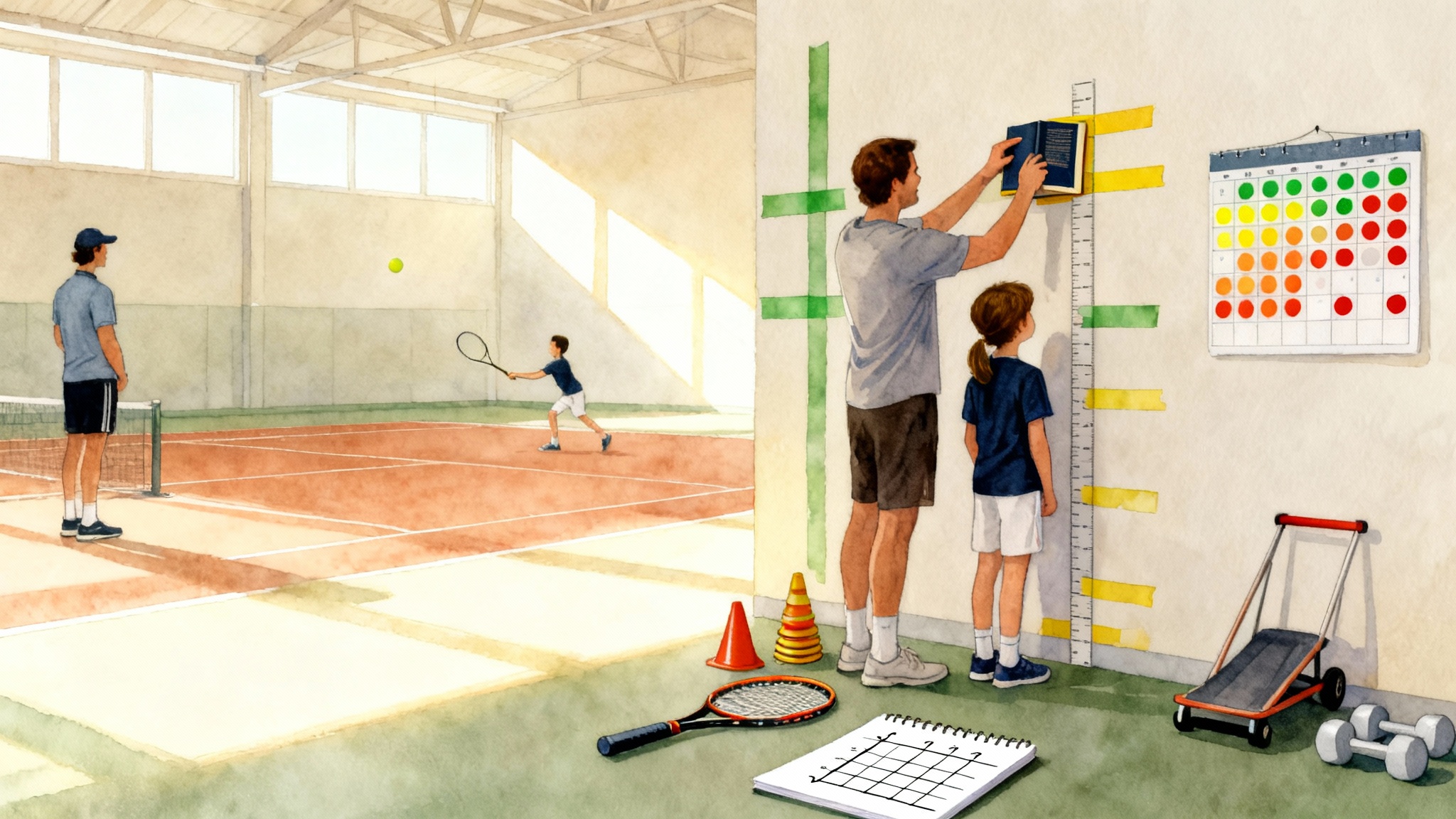
Forehand Contact Point Blueprint: Spacing, Timing, and Drills
A practical, level by level guide to diagnose late versus jammed forehands, measure your strike zone, and fix spacing with simple footwork cues, mobility screens, and three scalable drills for juniors, parents, and adults.
 Tommy
Tommy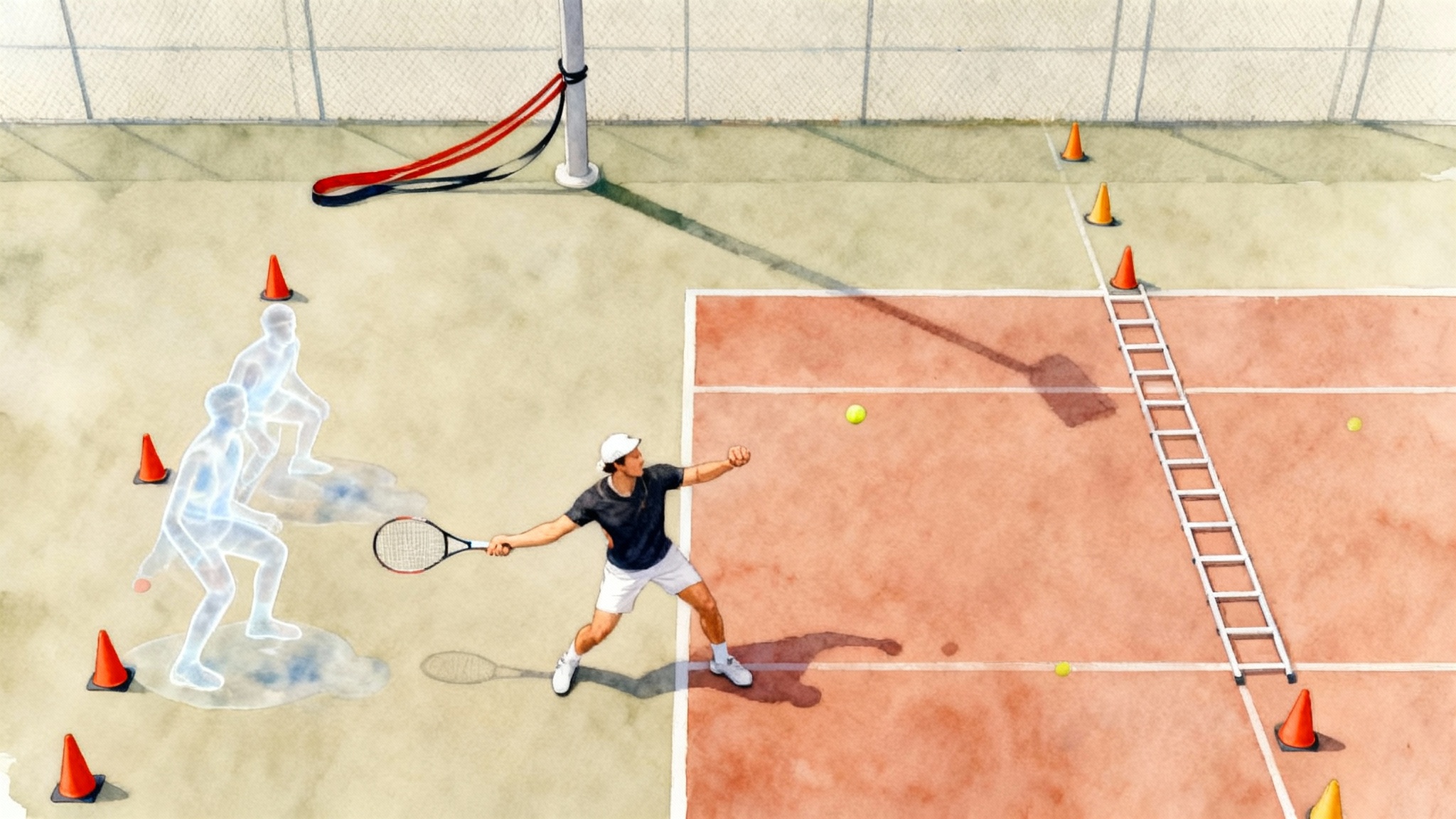
Why the contact point decides your forehand
If your grip, backswing, and finish are the bookends, the contact point is the sentence that makes the story make sense. On almost every quality forehand, contact happens slightly in front of the lead hip with the strings square to the launch direction and the body organized to keep space between the hands and the torso. When that window shifts even a palm’s length, the ball tells on you. Shots sail, die in the net, or feel cramped and powerless.
This blueprint gives you a simple way to diagnose problems, measure your personal strike zone, and build spacing you can trust under pressure. It includes quick screens for hip and shoulder mobility, three on court drills you can scale in minutes, at home wall and band work parents can run, checkpoints for adults returning to play, and a short section on what college coaches actually evaluate in forehand shape and contact. There is also a spotlight on training contact discipline across hard and Har Tru courts.
Late vs jammed: know the difference in two rallies
Late and jammed are cousins, not twins. Fixing the wrong one wastes weeks.
-
Signs you are late
- Contact drifts behind the front hip. The ball often leaves to the left for right handed players even when you aim crosscourt.
- You feel rushed by pace. Your chest stays closed and your follow through stalls next to your ribs.
- Mishits appear on the outside half of the frame because the ball has already passed your ideal slot.
- Common causes: late read on incoming ball, slow first step, overlong backswing, hesitation on high bounce.
-
Signs you are jammed
- You are at the correct time but too close to the ball. Elbow tucks into your side, shoulder pinches, and you cannot extend.
- The ball pops up or floats without drive. Inside out control is hard because you cannot shape around the outside of the ball.
- Mishits appear on the inside half of the frame. Your strings feel crowded.
- Common causes: drifting into the bounce, not creating lateral space, inside foot crowding, misjudging spin and bounce height.
-
Two rally tests
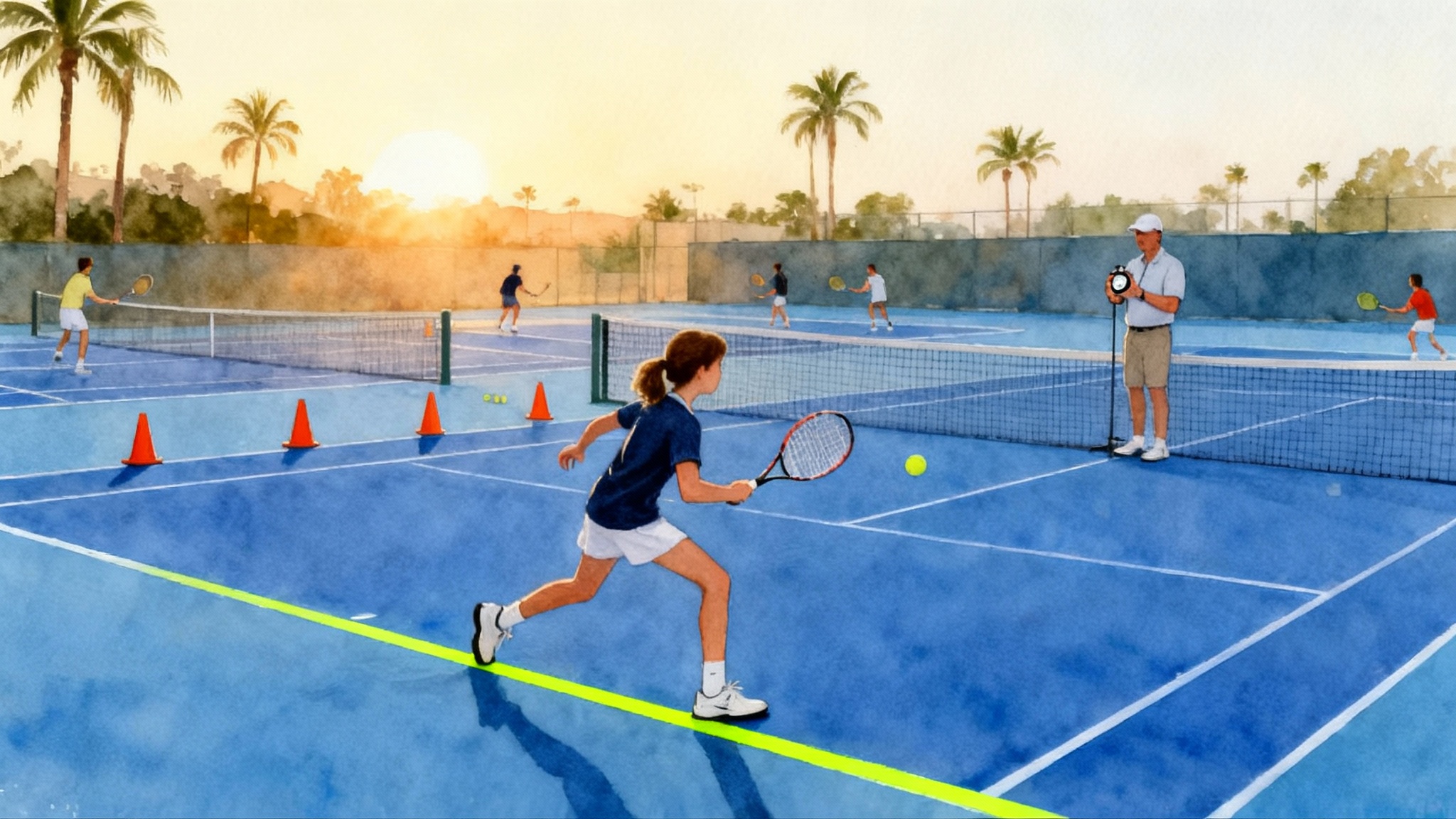
- The traffic cone test: Place a cone two feet in front of your front hip at set up. If you repeatedly contact behind it, you are late. If you knock it over with your hand or hip, you are jammed.
- The shadow freeze: Split step, turn, and stop at the moment you would contact. If your hand is more than one fist away from your torso, spacing is healthy. If your hand can touch your shirt without moving your elbow, you are jammed.
Measure your strike zone
Everyone has a personal strike window that changes with grip, height, and ball height. Measure it so your practice targets are not guesswork.
-
Tools
- Three flat cones or tape squares
- A measuring tape
- A dry erase marker for the strings
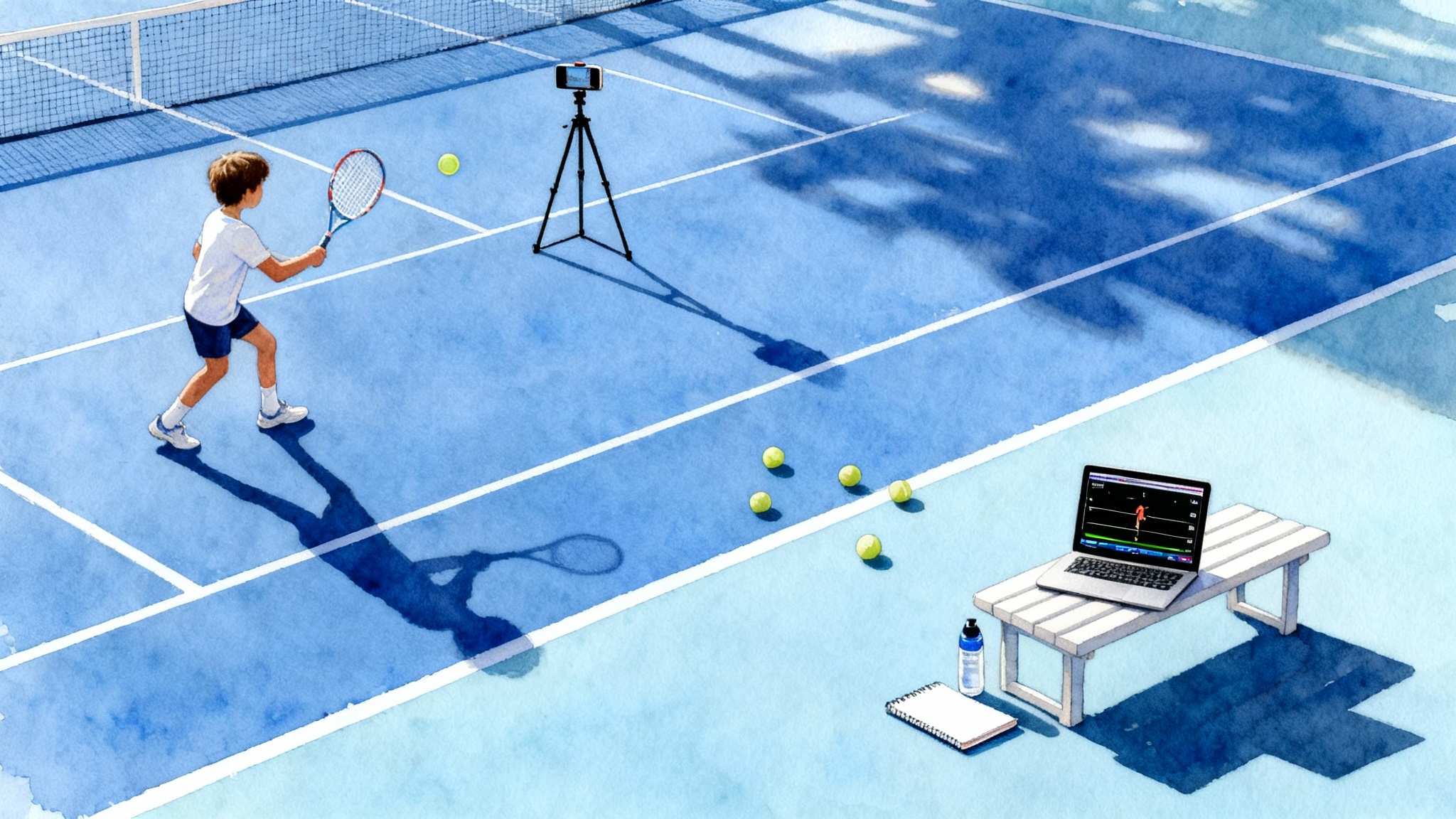
- A phone for slow motion video at 120 frames per second if possible
-
Step by step
- Find neutral height. Toss and catch a ball at your belly button height with your non hitting hand. That is your reference for medium. Do the same at knee height for low and shoulder height for high.
- Mark forward distance. Set up in forehand stance. With a friend, place a cone where your strings would meet the ball for a comfortable drive at medium height. Measure the distance from your front hip to the cone. For most adults this is roughly one to one and a half forearms in front. For junior red ball players it is closer to one forearm.
- Mark lateral space. From your belly button, measure outward to where your hand sits at contact. One fist of space between the handle and your body is the minimum. Two fists gives you room to accelerate and shape the ball.
- Repeat for low and high. Expect the high contact to move slightly more forward, and the low contact to sit a touch closer but never behind your hip.
- Video three contacts at each height. Freeze the frame when the ball compresses. Draw a line from your chest to your hand and another from your hip to the ball. Keep these clips. This becomes your calibration library.
-
What the string bed tells you
- If ball fuzz collects on the inside third of the strings, you are often jammed.
- If it collects on the outside third, you are often late.
- Aim for even wear slightly above the center to reflect topspin contact with lift.
Fix spacing with three universal footwork cues
You do not need a new footwork system to fix spacing. You need three cues you can apply on any ball.
-
Cue 1: Outside foot first
- On the first step after your split, move the outside foot toward the bounce line. This creates the rail you will move along and prevents drifting into the ball.
-
Cue 2: Create a lane for the hands
- Imagine a water bottle strapped under your armpit on the hitting side. Make room for it at contact. If the bottle would be crushed, you are jammed. If you can slide a glove through that lane, spacing is real.
-
Cue 3: Adjust with two small steps, not one lunge
- The last two steps before contact are light and quick. Say out loud: split, load, pop pop. The double adjustment protects spacing on tricky bounces.
-
Wide, deep, and short
- Wide ball: outside foot runs first, then crossover, then pop pop adjustment to hold the lane.
- Deep ball: drop step with the outside foot, then small shuffle back, then pop pop forward to keep contact in front.
- Short ball: small stutter steps early to avoid getting jammed by closing distance too fast.
For more movement control that protects spacing, read how to stop and cut efficiently.
Quick hip and shoulder mobility screens
Tennis players do not need circus flexibility. They need just enough hip rotation and shoulder range to create spacing without pain. Try these two minute screens.
-
Hip internal rotation screen
- Sit on a chair with knees at ninety degrees and feet flat. Keeping your chest tall, drop your right knee inward without lifting the foot. Repeat left.
- Pass standard: you can move the knee inward at least a hand width without the pelvis twisting.
- If you fail: spend sixty seconds per side on seated hip rotations and half kneeling hip flexor stretches. Better hip motion makes it easier to open space on inside out forehands.
-
Shoulder external rotation screen
- Stand with your back against a wall. Upper arms at shoulder height, elbows at ninety degrees. Try to touch the back of your hands to the wall without arching your back.
- Pass standard: both hands can tap the wall with ribs down.
- If you fail: perform three sets of ten banded external rotations and wall slides. Better shoulder motion reduces the urge to jam the elbow against the ribs at contact.
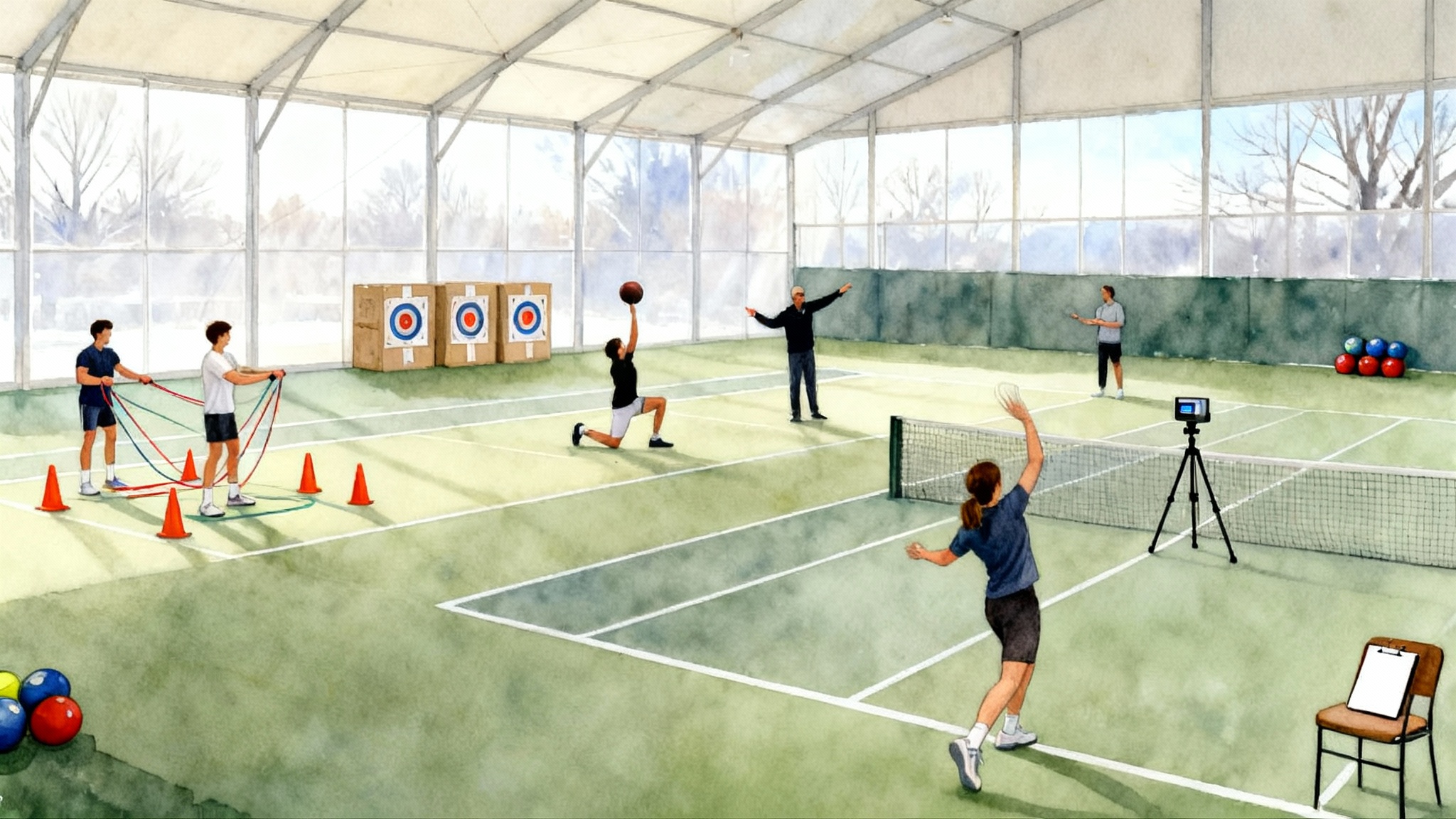
Three scalable on court drills
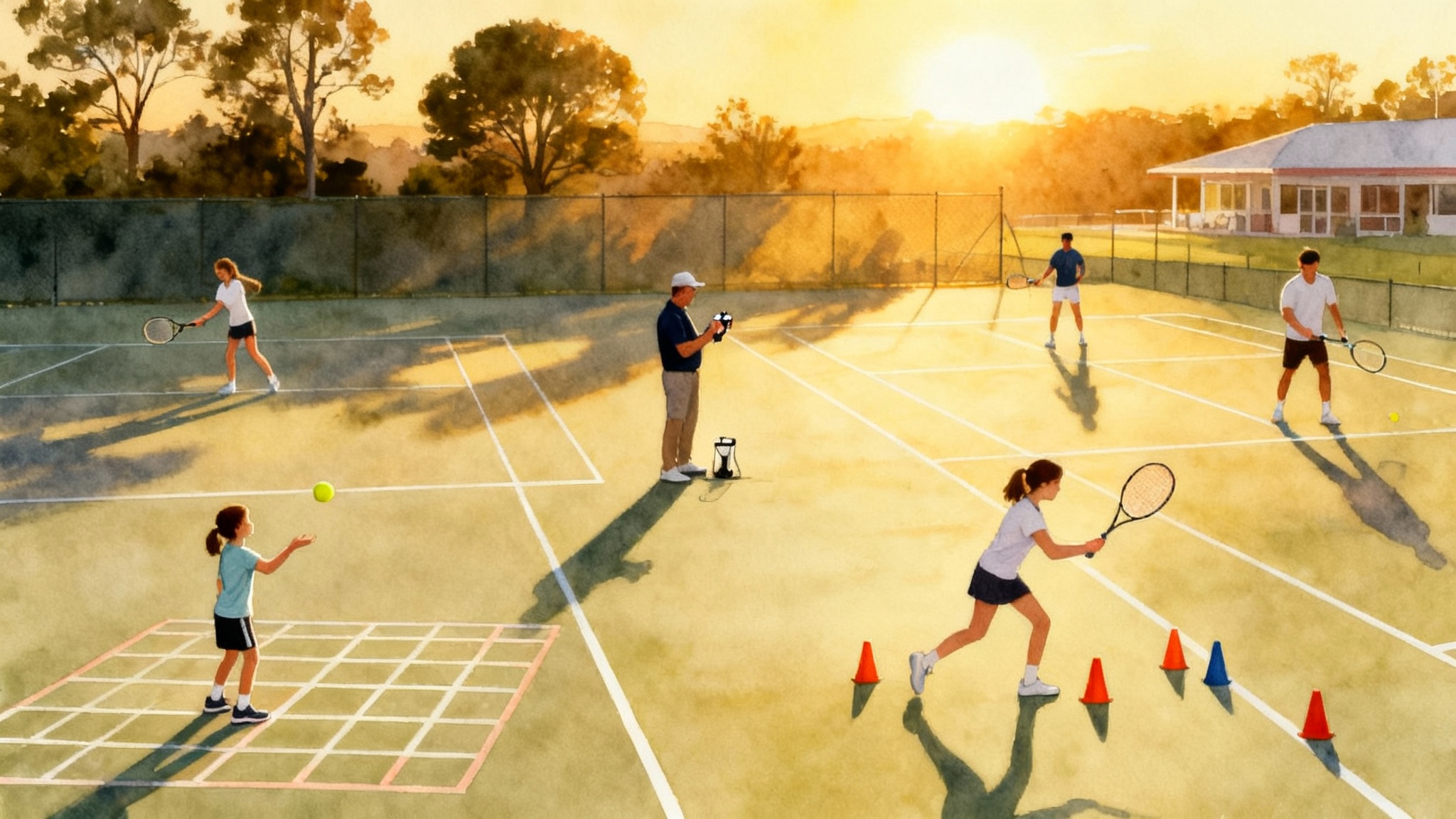
Each drill includes targets, scoring, and simple ways to make it easier or harder. Use low compression balls for juniors when appropriate.
Drill 1: The Contact Ladder
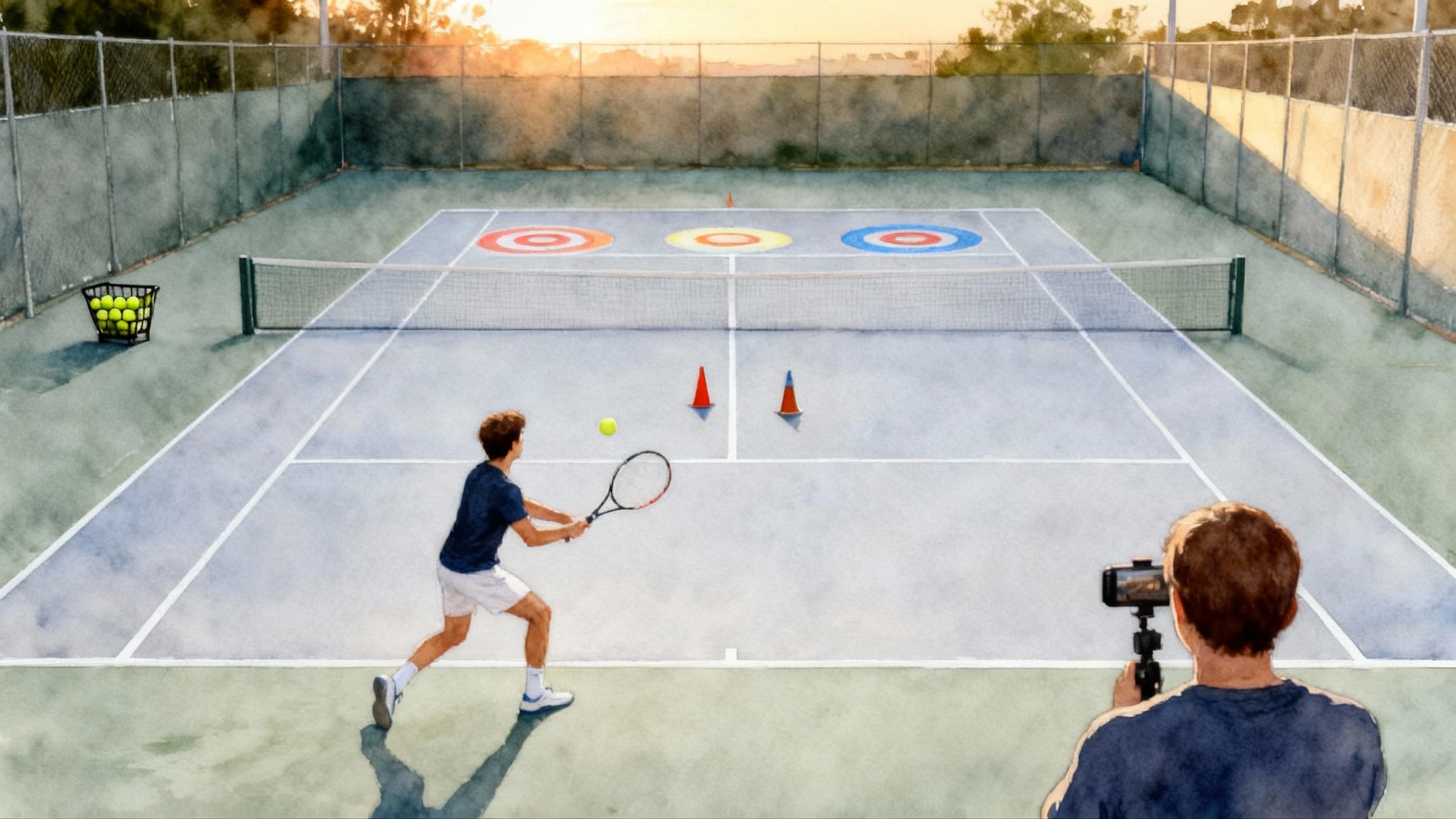
- Setup: Place three cones on your contact line for low, medium, and high. Feed or self rally. Hit five balls to each cone height, then climb the ladder low to high and back down.
- Target: Ball leaves the strings from the correct spot relative to your hip. Call out the height as you hit to lock focus.
- Scoring: Ten out of fifteen clean contacts at your personal marks is a pass.
- Scale up: Move the ladder one shoe forward to train earlier contact for pace. Add a coach call that forces late adjustments.
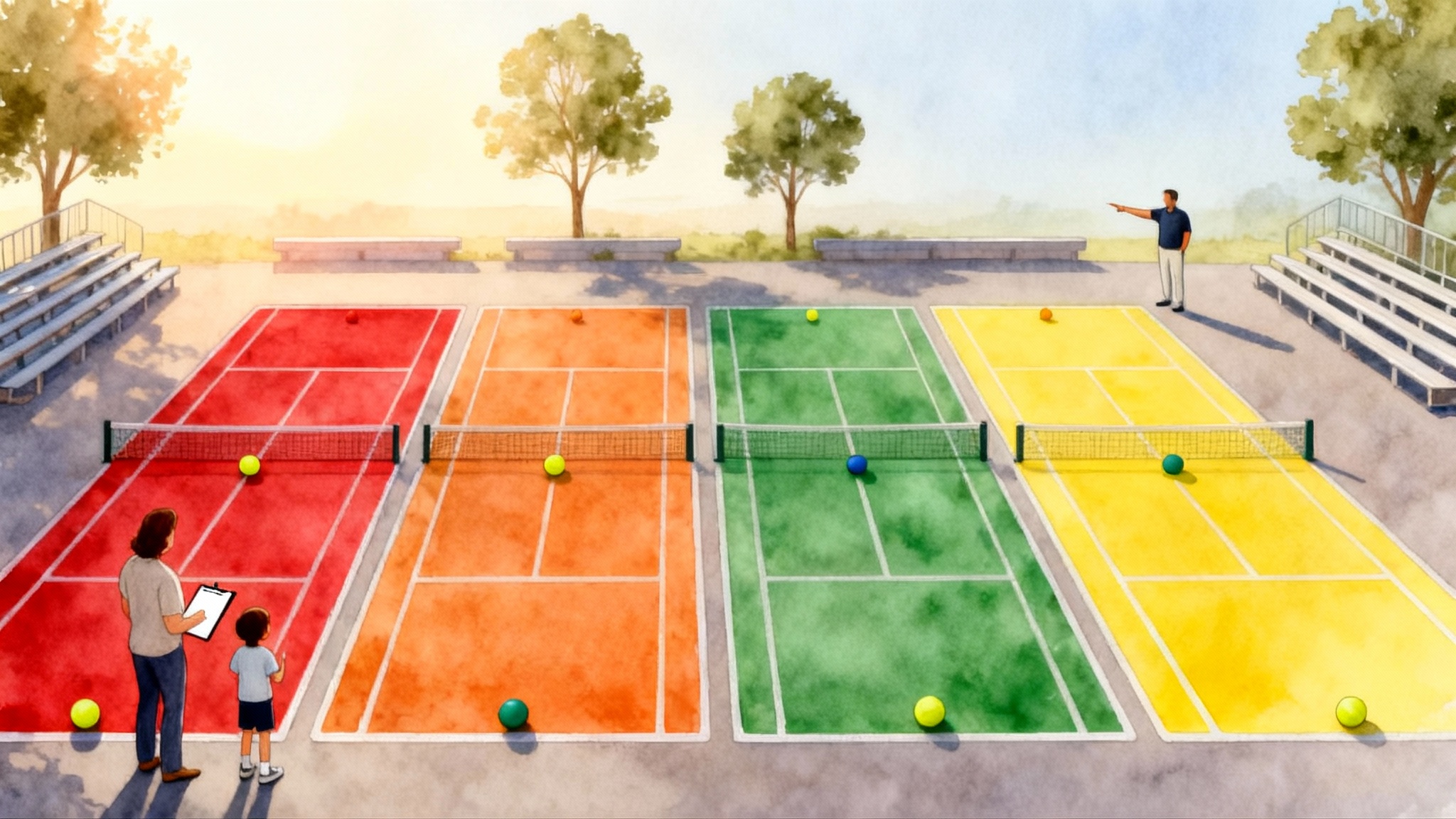
- Scale down: Use red or orange balls, and allow a catch and drop between hits.
Drill 2: Tempo Windows
- Setup: A partner or coach claps at a steady three count after the bounce. Count one on bounce, two on racquet drop, three on contact.
- Target: Arrive on three with the lane open. If you are late, you will rush on two. If you are jammed, you will hit on two and a half.
- Scoring: Three rounds of eight balls. You need six or more perfect threes per round.
- Scale up: Randomize depth and spin. Mix in one short ball per four.
- Scale down: Allow four count timing for juniors to learn rhythm.
Drill 3: The Strike Zone Box
- Setup: Tape or chalk a rectangle on the court starting one forearm in front of your lead hip and two fists wide from your torso. That is your box.
- Target: Every forehand must be struck with the ball inside the box. Start with gentle feeds, then rally.
- Scoring: First to twenty in box wins. If you hit outside the box, your opponent gets two points.
- Scale up: Shrink the box by a hand width or add movement before each swing.
- Scale down: Keep the box but let the coach hand feed from mid court.
At home wall and band work parents can run
Parents want simple recipes that do not require a basket and a coach. Here is a fifteen minute routine that builds spacing and timing.
-
Minute 0 to 3: Wall taps with lane
- Stand one step from a smooth wall. Hold a racket. Without a ball, place your non hitting hand on your ribs to feel space. Tap the wall with your strings where your medium cone would be. Ten taps with lane open, then switch height.
-
Minute 3 to 6: One bounce strikes
- Use a red or orange ball. Drop, bounce, and strike the wall so the ball returns on one bounce. Focus on staying one fist from your torso.
-
Minute 6 to 10: Banded external rotation and reach
- Attach a light resistance band to a door. Perform two sets of twelve reps of external rotations, then ten slow reaches that mimic contact length.
-
Minute 10 to 15: Contact freeze video
- Record ten repetitions. Pause each at contact. Check hand distance from torso and ball position relative to the front hip. Save the best example as your template.
Checkpoints for adults returning to play
If you are back after months or years, do not start with pace. Start with checkpoints you can feel and measure.
-
Equipment sanity check
- Strings fresh in the last three months. A tension you can accelerate through. If your elbow is sensitive, try a softer string and a slightly lower tension.
-
Warm up with aim
- Ten shadow swings to your strike box. Ten drop hits with the ball landing past the service line. Five mini crosscourts to feel spacing.
-
Contact metrics for week one
- Eight of ten contacts at medium height are in front of the lead hip by at least one forearm.
- You can pause after contact with the butt cap pointed at the back fence and your hitting shoulder comfortably away from your chin.
- On slow motion, your hand does not brush your shirt at contact.
-
A simple stress test
- Rally to twenty crosscourt balls while keeping your lane. If you break the lane twice, reset the count. When you pass, add pace or depth.
For weekly planning that locks in progress, see build your tennis week.
What college coaches evaluate in forehand shape and contact
College coaches are not looking for pretty. They are looking for repeatable ball quality under pressure. Here is what they watch.
-
Contact discipline in traffic
- Can you keep contact in front when rushed, stretched, or pulled inside the baseline.
-
Strike window control across heights
- High and heavy, midline drive, and low skid. The ability to hold spacing across three heights matters more than a perfect swing picture.
-
Change of direction from the outside of the ball
- Inside out and inside in from the same preparation without jamming. This shows footwork choices and lane awareness.
-
Spin axis and launch window
- Measured indirectly by ball flight. A consistent spin axis shows consistent strings at contact.
-
Recovery habits
- After contact, do you recover with balance, or do you leak steps because spacing was tight.
-
Video honesty
- Coaches like players who bring clean, simple video that shows the ball bouncing, not just contact close ups. Include a few freeze frames that reveal the box and the hip relative to the ball.
If recruiting is on your horizon, read our college tennis recruiting guide.
Spotlight: training contact on hard and Har Tru
Hard courts and Har Tru give you different feedback. Hard courts skid and reward earlier contact and compact spacing at medium height. Har Tru grips and lifts, which rewards patience in the drop and a slightly more forward contact on higher bounces.
A representative session template that programs on both surfaces use to teach contact discipline looks like this.
-
Warm up on Har Tru
- Ten minutes of Tempo Windows with the count slowed on high bounces. Emphasize outside foot first and pop pop steps.
- Strike Zone Box with the forward edge moved one hand farther out to account for lift.
-
Transition to hard courts
- Contact Ladder set one shoe closer to the body to prevent overreaching on skids.
- Add a depth call every third ball to simulate lower, faster bounces.
If you visit an academy with both surfaces, ask the coaching staff to show you how they shift the cones and the counts between surfaces so you can feel the difference in your lane and timing.
Common mistakes and quick fixes
-
Mistake: Chasing the ball with your chest
- Fix: Keep the logo of your shirt facing the side fence through contact. This preserves the lane.
-
Mistake: Planting the inside foot into the ball
- Fix: Move the outside foot first to create lateral space, then use pop pop steps.
-
Mistake: Reaching for high balls with a stiff arm
- Fix: Allow the shoulder to elevate slightly and lift the contact one hand forward. Use topspin to bring the ball down.
-
Mistake: Hovering on the heels
- Fix: Listen for light feet. If you cannot hear pop pop, exaggerate the hop before contact.
Practice plans by level
-
Junior beginner, 30 minutes
- Wall taps with lane, two minutes.
- One bounce strikes, six minutes.
- Contact Ladder with red or orange balls, ten minutes.
- Tempo Windows with a coach clap, eight minutes.
- Celebrate with a five rally challenge inside the Strike Zone Box.
-
Competitive junior, 60 minutes
- Mobility screens, four minutes.
- Crosscourt rally to twenty while holding the lane, eight minutes.
- Tempo Windows with random height feeds, twelve minutes.
- Strike Zone Box with pattern play: two crosscourt, one down the line, fifteen minutes.
- Serve plus one with a contact box target, fifteen minutes.
- Two minute cool down and notes with video stills.
-
Adult returner, 45 minutes
- Slow shadow swings to the box, three minutes.
- Drop hit and freeze at contact, seven minutes.
- Contact Ladder at medium height, ten minutes.
- Mini tennis crosscourt with pop pop, eight minutes.
- Full court rally to twenty with one depth call every five balls, ten minutes.
- Save two still frames that show your best spacing.
The coaching checklist you can carry in your pocket
- Can I see daylight between your handle and your shirt at contact.
- Is the ball at least one forearm in front of your lead hip at medium height.
- Do I hear pop pop on the last two steps.
- Does the ball flight show consistent shape with spin that matches your intention.
- Can you reproduce all of the above when I feed one short, one deep, one wide, then repeat.
Conclusion: build a lane you can trust
Great forehands are not born from perfect slow motion positions. They are built from a trusted lane that places the ball in front of the hip, keeps space between the hands and the body, and repeats under stress. Diagnose whether you are late or jammed, measure your strike zone, and carry the three universal cues into every rally. Use the drills to harden your spacing, run the at home routine to keep your body prepared, and track honest video so your contact gets cleaner across months, not only minutes. When the ball is your teacher and your lane is consistent, your forehand shape starts to look like it belongs on the court you want to play on.