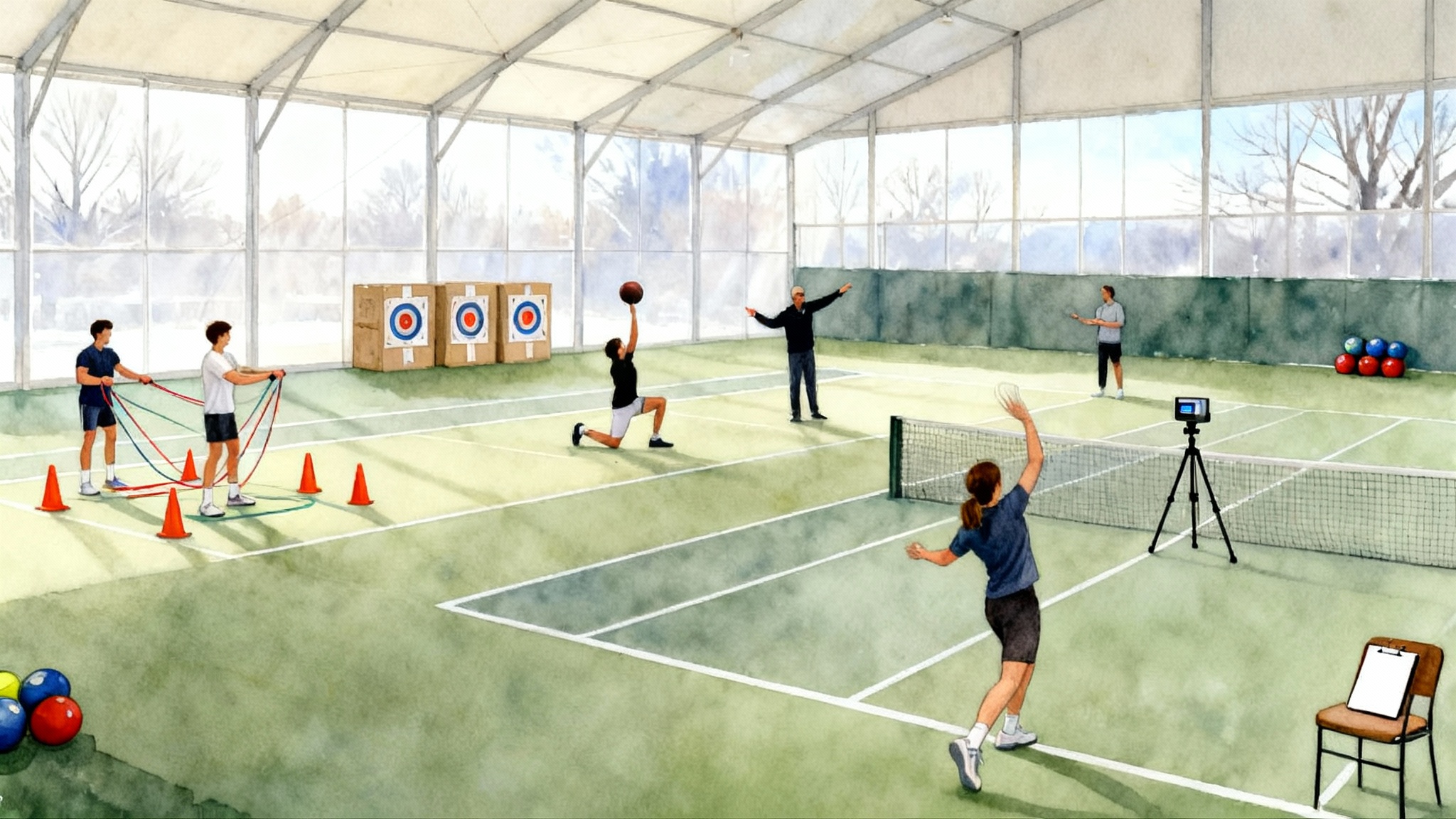
Growth-Spurt Tennis Guide: Safe Training Loads Ages 11 to 16
A practical parents’ playbook for the growth-spurt years. Track peak height velocity at home, set age-appropriate court and strength caps, spot overuse red flags, tweak shoes and strings, and sync match schedules with your academy.
 Tommy
Tommy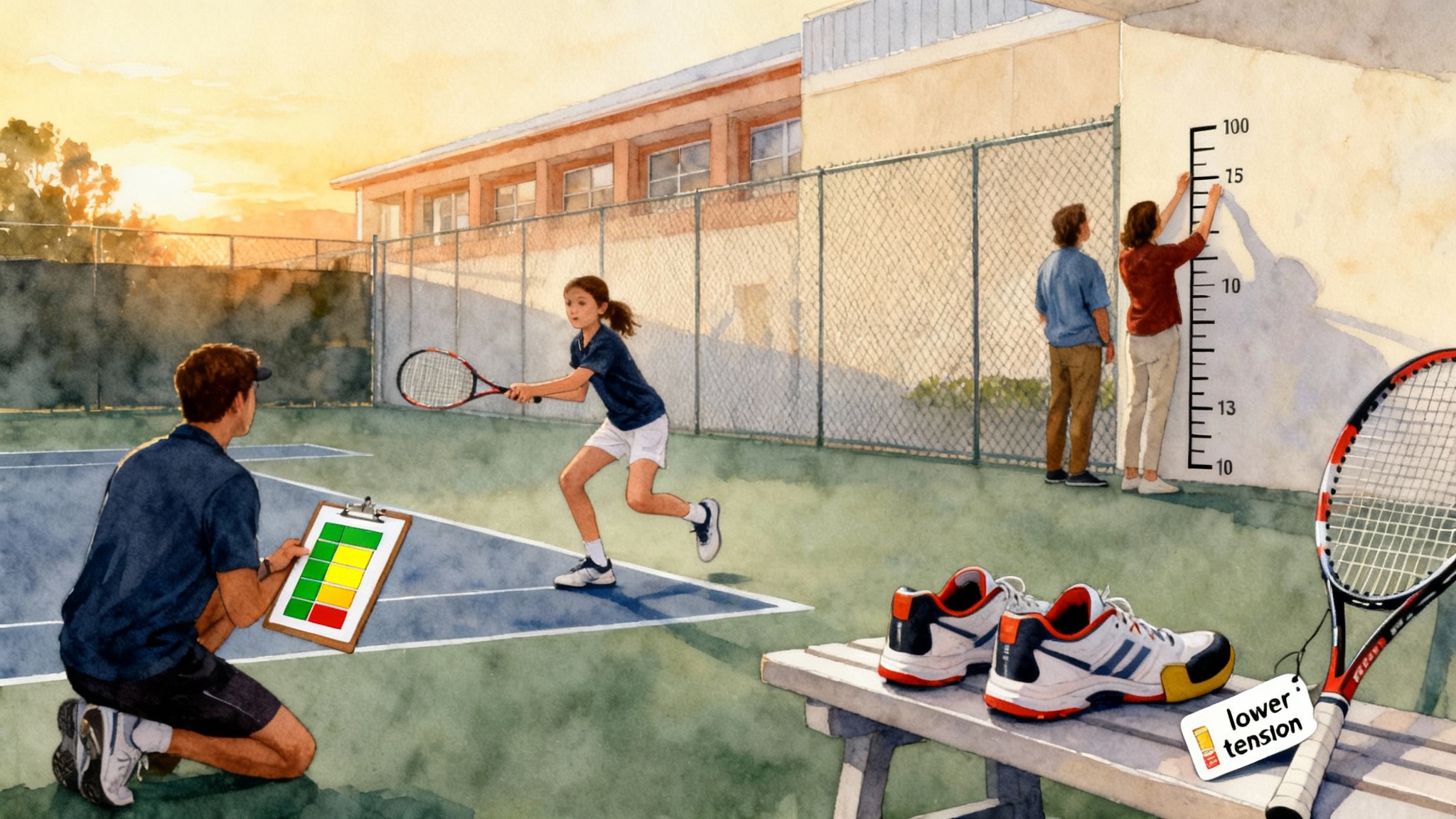
Why growth spurts change the rules
If your player is between 11 and 16, you are entering the most biologically uneven years in tennis. During a growth spurt, bones lengthen faster than muscles and tendons adapt. That timing gap can alter balance, mechanics, and joint loading. A serve that felt smooth in April can feel jerky in August because limb lengths and lever arms have literally changed. The body is remodeling while the athlete tries to perform. Your job is to guide the changes so development continues without unnecessary injury risk.
Coaches call the fastest stretch of height gain peak height velocity. You do not need a lab to manage it. You need a tape measure, a plan, and clear communication between parents, coaches, and the academy.
Track growth at home with a two-minute routine
You can detect meaningful changes with a simple weekly system.
- Pick one wall and one time of day, ideally morning before shoes. Hair down, heels and upper back against the wall, eyes level. Use a hardcover book to mark the top of the head, then measure to the floor.
- Log height to the nearest millimeter or one eighth of an inch. Keep the same unit every time.
- Update once per week. If you miss a week, do not double up. Just continue the routine.
- Calculate a rolling four-week velocity. Subtract height today from height four weeks ago, then divide by four to get average change per week.
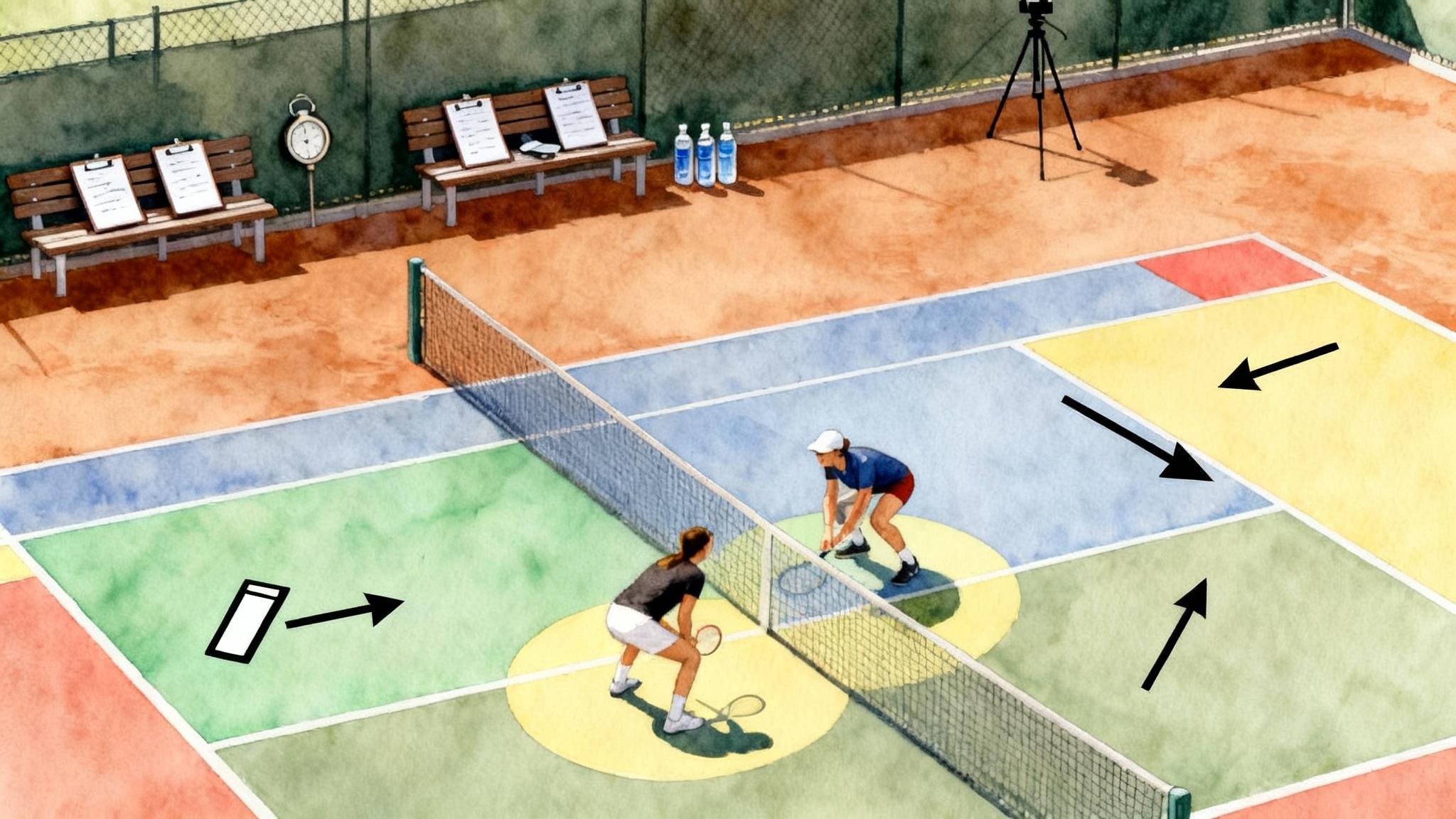
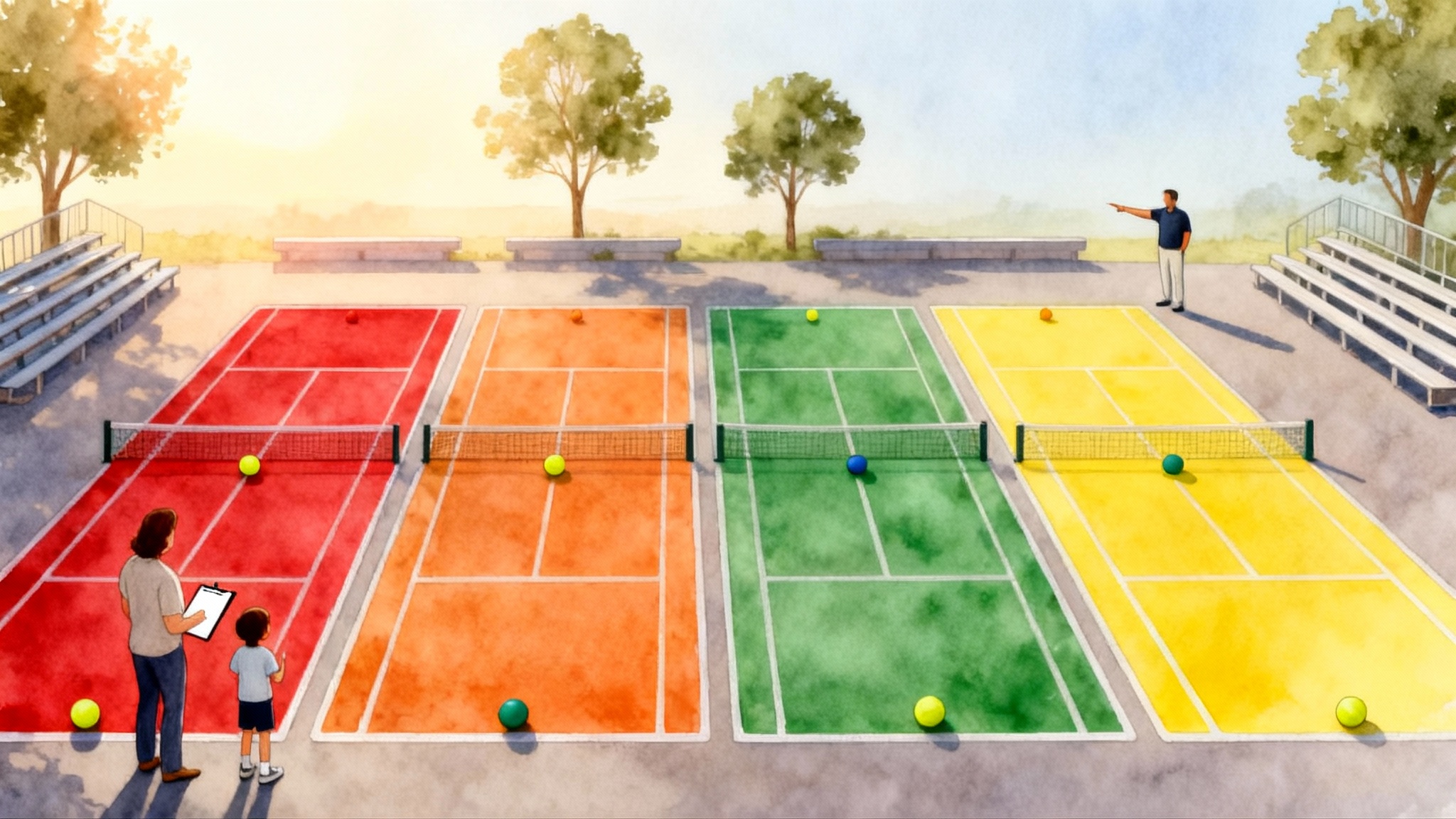
Use this simple traffic light to trigger training decisions:
- Green: less than 0.2 inches per week, or less than 0.5 centimeters per week. Train as planned.
- Yellow: 0.2 to 0.6 inches per week, or 0.5 to 1.5 centimeters per week. Reduce jumping and serving volume 15 to 20 percent and increase landing and calf strength.
- Red: above 0.6 inches per week, or above 1.5 centimeters per week. Reduce total court load 25 to 35 percent, cap match count, and prioritize strength and movement quality.
You will notice that arms and feet often feel awkward during Yellow and Red phases. That is normal. The goal is not to stop training. The goal is to keep training safe and purposeful.
Volume caps by age and stage
Every player is different, but caps prevent accidental overreach. These ranges assume a school term week and an already training junior. If your athlete is newer to tennis or is in a tournament block, adjust down or up with your coach.
Ages 11 to 12
- Court hours: 6 to 8 per week in Green. During Yellow or Red, reduce to 4 to 6.
- Matches: 1 to 2 per week in Green. In Yellow or Red, 1 match, or match play only if pain free next day.
- Serves: up to 120 total serves per week, including practice and matches. In Yellow or Red, cap at 80 to 100 and avoid repeated basket serves.
- Strength and conditioning: 2 sessions of 20 to 30 minutes focused on technique, landing, calf, and trunk.
Ages 13 to 14
- Court hours: 8 to 10 per week in Green. During Yellow or Red, reduce by 20 to 30 percent.
- Matches: 2 to 3 per week in Green. In Yellow or Red, 1 to 2, spaced 48 hours apart.
- Serves: up to 160 per week in Green. In Yellow or Red, 110 to 130, prioritize quality over volume.
- Strength and conditioning: 2 to 3 sessions of 30 to 40 minutes, with landing, calf, trunk, and controlled strength patterns.
Ages 15 to 16
- Court hours: 10 to 12 per week in Green. During Yellow or Red, reduce by 25 to 35 percent.
- Matches: 3 to 4 per week in Green. In Yellow or Red, 2 to 3, with at least one rest day between match days.
- Serves: up to 200 per week in Green. In Yellow or Red, 140 to 160. Skip high volume basket serve blocks.
- Strength and conditioning: 3 sessions of 35 to 45 minutes, progress strength cautiously while keeping landing, calf, and trunk as foundations.
These are ceilings, not targets. If your player is learning a new grip or movement pattern, total volume often needs to be lower while quality goes up. A good academy will be comfortable saying no to an extra match when the dashboard is Yellow or Red.
Strength that protects growing bodies: landing, calves, and trunk
Landing quality is the hinge between power and joint stress. Calves and trunk are the shock absorbers. Make these the nonnegotiables during growth spurts. For deeper technique and stopping mechanics, see tennis deceleration and cuts.
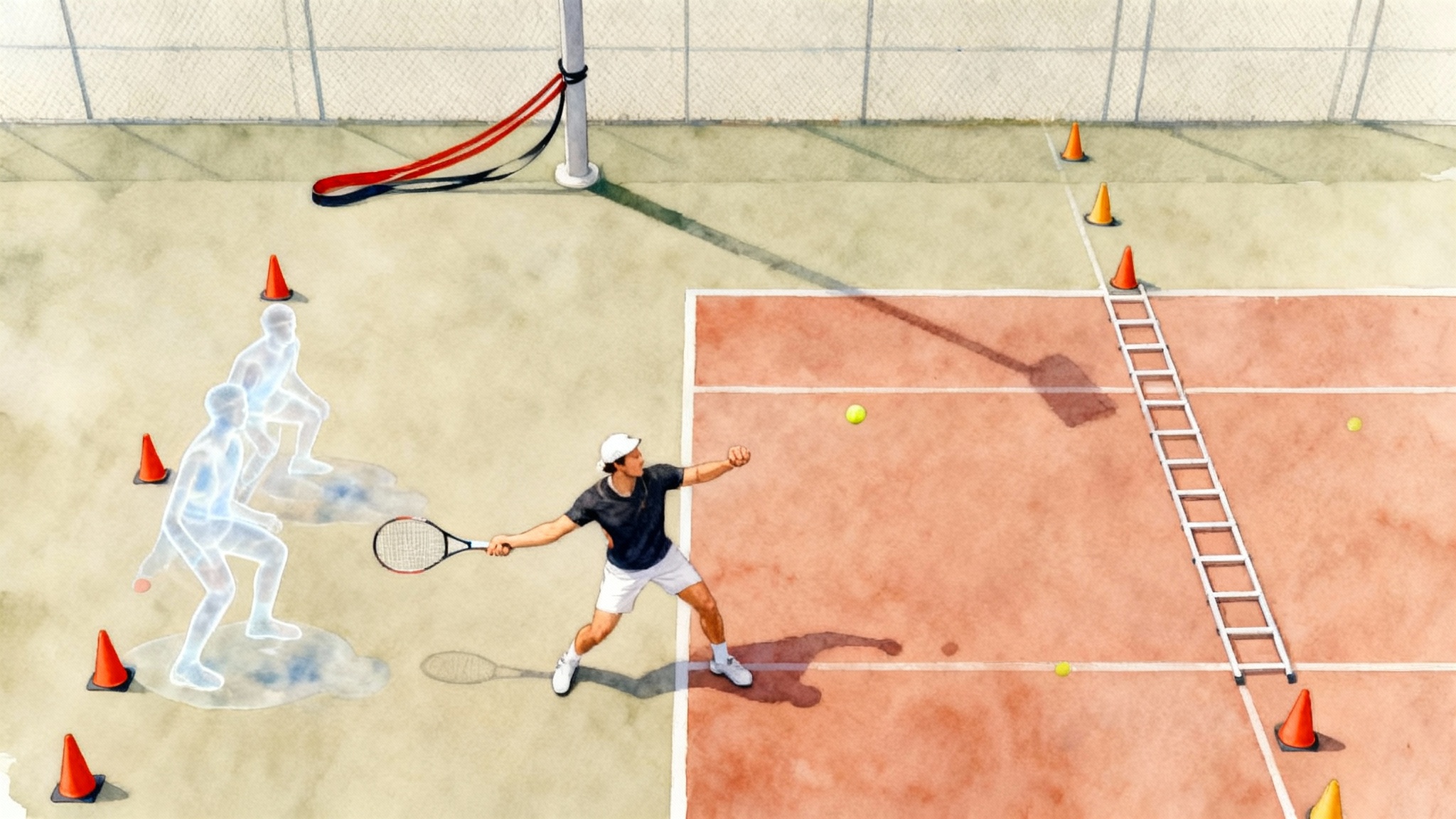
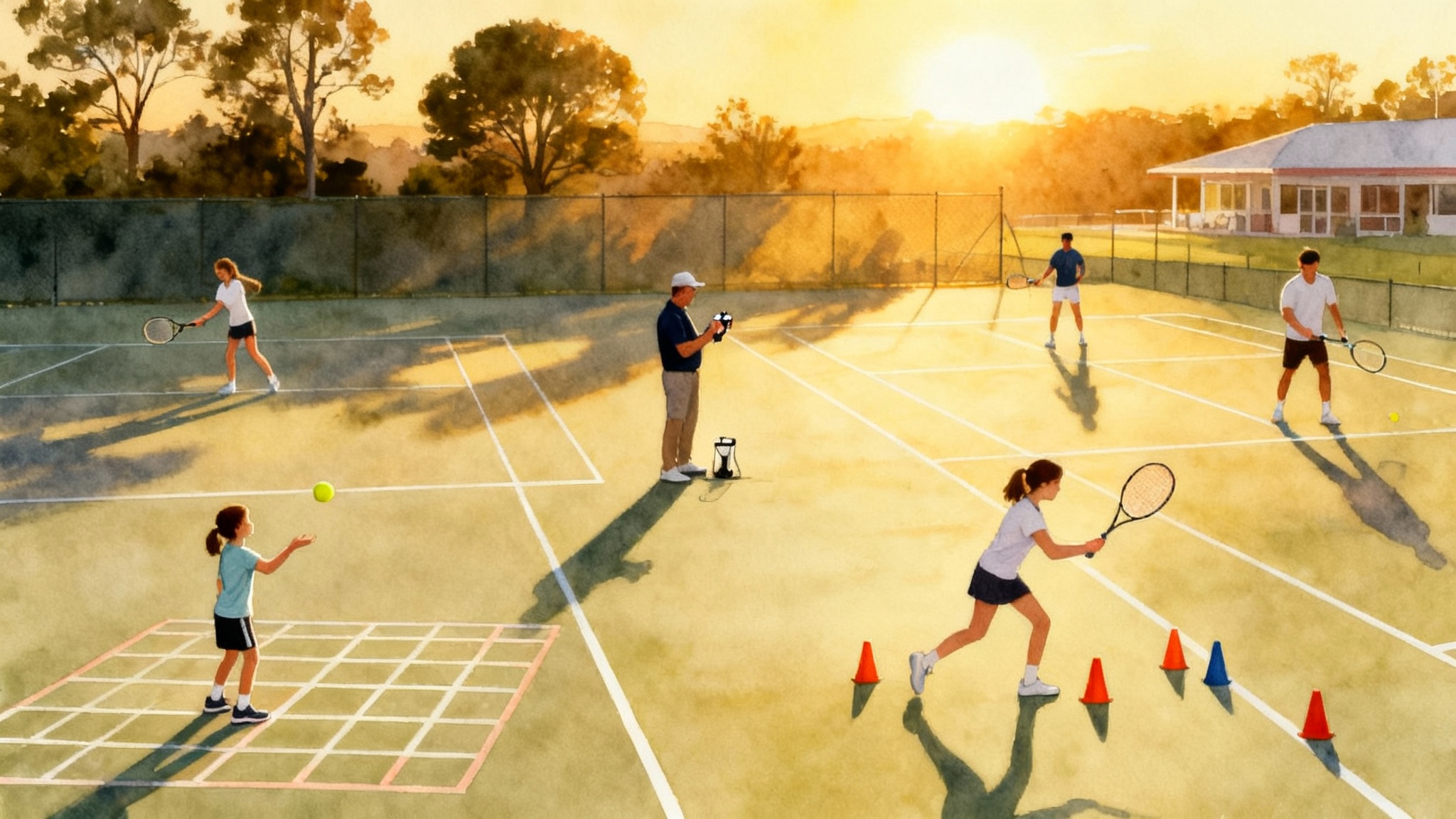
Landing skills, 2 to 3 times per week
- Snapdowns to stick, 3 sets of 5. Start tall on tiptoes, drop to an athletic stance, pause for 2 seconds. Quiet feet, knees track over toes.
- Single leg step off to stick, 3 sets of 3 per side. Step from a 6 to 8 inch platform, land softly and still, then stand tall.
- Lateral hop to stick, 3 sets of 3 per side. Small distance, perfect control.
Calf strength and stiffness, 3 to 4 times per week
- Straight leg calf raises, 3 sets of 10 to 15. Pause at the top.
- Bent knee calf raises for soleus, 3 sets of 12 to 20. Slow down phase, 2 seconds.
- Tiptoe walks, 2 sets of 20 yards. Heels high, posture tall.
Trunk control, 3 times per week
- Dead bug with exhale, 3 sets of 6 per side.
- Side plank, 3 sets of 20 to 40 seconds per side.
- Suitcase carry, 3 sets of 20 to 30 yards per side. Keep ribs down, walk slow.
Progress the simplest movement first. The moment form slips, reduce height, speed, or load. During Red weeks, landing and calves become the main event, not an add on.
Overuse red flags you must not ignore
Growing athletes can feel normal muscle soreness. The red flags below are not normal. If one appears, pause impact work and serving and speak with your coach or a qualified clinician.
Sever’s disease, heel pain at the back of the heel
- What it looks like: tender squeeze of the heel, pain with running or after a match, sometimes limping at home.
- Why it happens: the growth plate at the heel is irritated by running and repeated jumping during a growth phase.
- What to do now: reduce impact, add a gel heel cup inside the tennis shoes, double down on calf and soleus strength, and ease back to full load when pain is gone with jogging and hopping.
Osgood Schlatter disease, pain at the front of the shin where the patellar tendon attaches
- What it looks like: a bump that gets tender below the kneecap, pain with jumping and deep knee bends.
- Why it happens: the tendon pulls on a growing bone attachment site that is not yet ready for high load.
- What to do now: avoid deep squat jumps and repeated sprints, keep landing drills shallow, use isometric holds for the quadriceps like wall sits, and return to full volume after pain clears during stairs and light skipping.
Lumbar stress reaction, lower back pain with extension
- What it looks like: pain that sharpens when arching the back, especially on serves or overheads. The single leg back bend test may reproduce pain.
- Why it happens: repeated hyperextension and rotation during a growth window can overload the small joints and bone in the lower back.
- What to do now: stop serving, stop overhead medicine ball throws, and get evaluated by a sports medicine professional. Do not train through back pain that spikes with extension.
Act fast. The sooner you modify load, the quicker athletes settle back to pain free tennis.
Shoes and string tweaks that reduce stress
Small equipment changes can reduce the load on growing tissues.
Shoes
- Cushioning matters. Choose a tennis shoe with a stable heel counter and good midsole cushioning. If heel pain is present, add a removable heel cup.
- Replace when midsole compression lines are obvious or traction fades. Many juniors need new shoes every 3 to 4 months of steady play.
- Lacing fixes slippage. Use a runner’s loop at the top eyelets to lock the heel without cranking the forefoot too tight.
Strings and tension
- If the player uses a stiff polyester string, consider a softer hybrid with multifilament in the crosses during Yellow or Red weeks.
- Lower tension 2 to 4 pounds to increase dwell time and reduce shock.
- A softer setup rewards clean contact. It also nudges players to swing smoothly rather than fight the stringbed.
Racquet fit
- Recheck grip size as the hand grows. A grip that is too small invites extra forearm tension and elbow irritation.
- If the racquet feels head heavy after a growth spurt, review balance with the coach before making big changes. Do not chase power with hasty lead tape experiments.
Coordinate match schedules with your academy
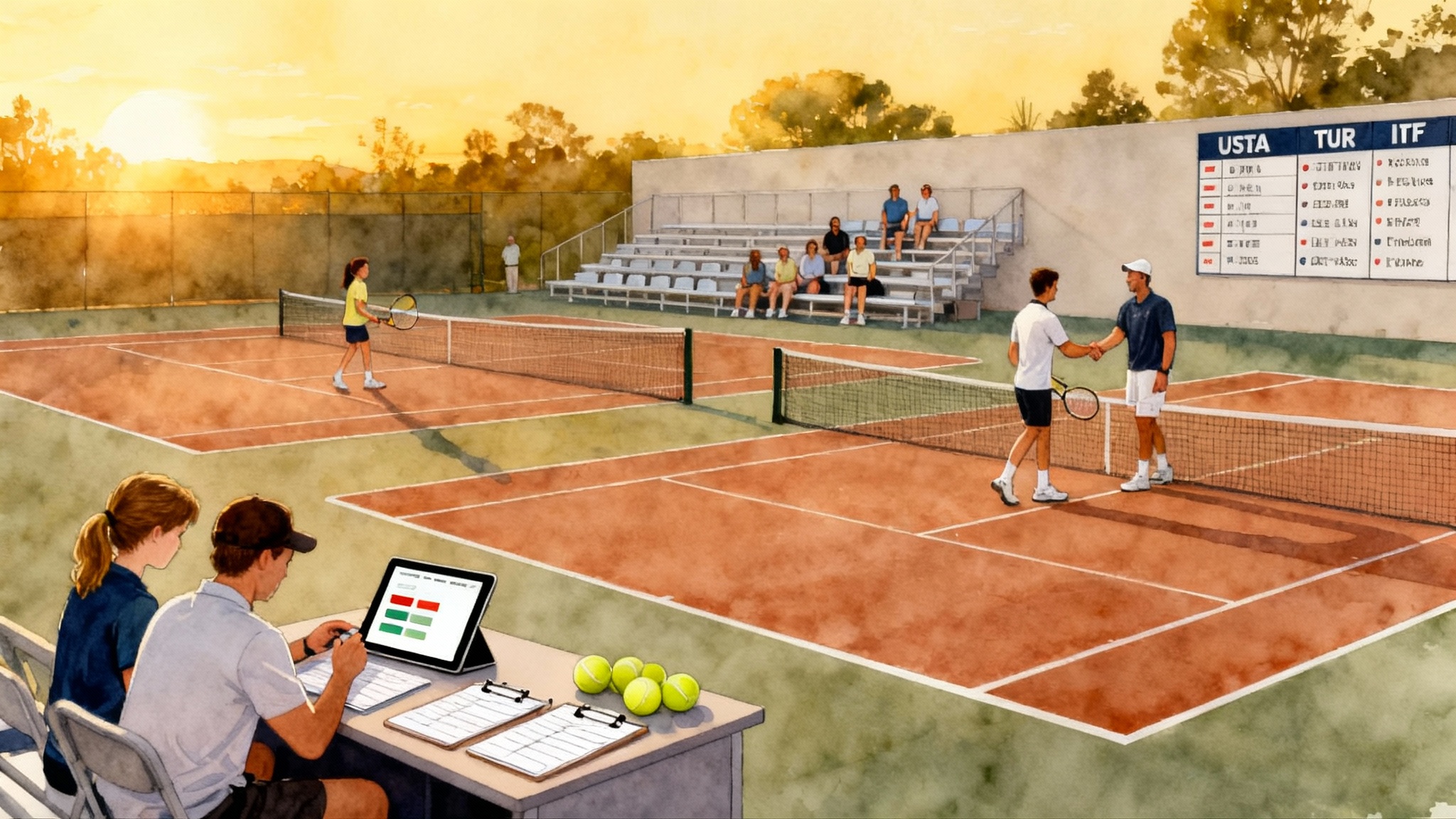
Growth-aware planning is a team sport. For structuring practice and recovery inside a week, see the build your tennis week guide.
- Share your height log weekly. A photo of the notebook works. Keep it simple.
- Ask your coach to color code the next week in your plan: Green for normal, Yellow for reduced jumping and serving, Red for reduced overall load.
- Avoid back to back tournament weekends during Red weeks. Plan travel for events that matter most and protect the days between with sleep and food routines.
- Expect the plan to change midweek. If heel, knee, or back soreness appears, the match count drops. That is not a setback. It is intelligent development.
Email template you can copy and send Sunday night:
Subject: Growth update and plan for the week
Hello Coach,
Height this week: 157.4 cm, up 0.7 cm from four weeks ago. Our traffic light is Yellow. No pain reported. Left calf still fatigued the day after matches.
We propose: remove basket serve block on Tuesday, cap serves at 120 for the week, keep two strength sessions with landing, and play one match on Saturday.
Please advise if you want any changes.
Thank you,
Parent name
Spotlight: Gomez Tennis Academy’s growth communication blueprint
Many top programs have converged on a clear, low friction rhythm for growth monitoring. The blueprint below, inspired by practices used at elite development academies such as the Gomez Tennis Academy profile, is simple enough for any family to adopt with their coaches.
Weekly rhythm
- Monday morning: parents log height, flag Green, Yellow, or Red using the traffic light. The academy receives the update by 10 a.m.
- Monday noon: head coach updates each athlete’s microcycle. Yellow triggers a 20 percent reduction in jumping and serving, Red triggers a 25 to 35 percent overall volume reduction with match caps.
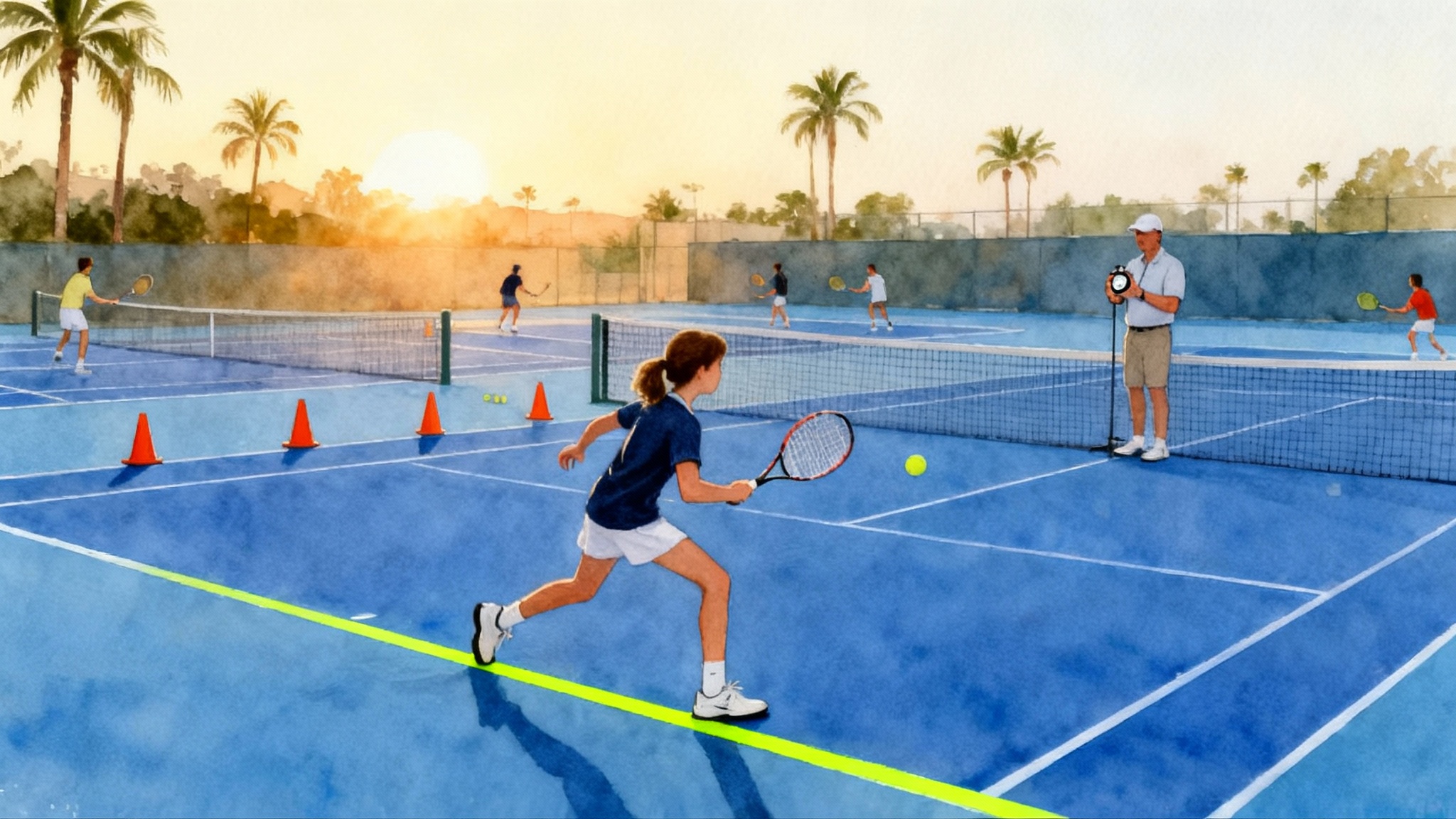
- Tuesday to Friday: group warm up includes landing and calf primers. Coaches note form quality during stick landings. Any pain reported by players leads to instant on court substitutions where high impact drills are swapped for low impact technical repetitions.
- Friday: quick message thread with three questions. How is heel or knee or back? Total serves this week? Next week traffic light?
Objective checks, 1 to 2 times per month
- Standing long jump, three attempts. If distance drops 10 percent from normal, coaches investigate fatigue or recent growth.
- Single leg calf raise test to a metronome, goal 25 per side with quality. If one side lags by more than five reps, add unilateral calf work.
Communication lanes
- Parents have one primary lane, not five. Usually a single weekly message thread or shared sheet that the academy monitors.
- Coaches reply with a simple adjustment list for the coming week. Serve cap, match limit, main focus, and any extra recovery.
Why this works
- The system keeps everyone looking at the same signal. It is hard to overreact when the dashboard is Green and hard to ignore risk when it is Red.
- It turns growth into a shared project. Players learn to notice sensations and speak up early.
Use this blueprint as written if your academy does not already have one. If it does, your home measurements give the staff a reliable signal to refine their plan.
Checklists for parents and players
Parent weekly checklist
- Measure height at the same time and place, once per week.
- Update the traffic light and send it to the coach.
- Confirm court hours and match count fit Green, Yellow, or Red caps.
- Pack the basics: two pairs of socks, gel heel cups if needed, and a soft string setup during high growth weeks.
- Ask your player to rate heel, knee, and back on a 0 to 10 scale. Write the numbers down.
Player pre session checklist
- Can I land softly and stick? If not, reduce jump height and refocus on control.
- Are my calves tired or cramping? Tell the coach before the session.
- Does my back hurt when I arch? Serving volume must drop to zero until cleared.
- Did I sleep at least eight hours? If not, power drills become technical drills.
Coach match week checklist
- Confirm the traffic light and set the week’s serve cap.
- Swap high impact conditioning for trunk and calf strength during Red weeks.
- Review strings and tension for comfort. Lower 2 to 4 pounds during Red.
- Protect the day after matches. Light technical session, no jumps.
A four week adjustment plan during a Red phase
This plan assumes the player was training 8 to 10 hours per week and is now in a Red period. The percentages are guidelines. Pain trumps the plan.
Week 1, settle and organize
- Court: 6 to 7 hours, mostly technical drills, footwork patterns without repeated jumps, and point construction games that avoid serve overload.
- Serves: 80 to 100 across the week, split into short quality blocks, none on back to back days.
- Strength and conditioning: 3 sessions, 30 minutes each. Landing, calf, trunk. No barbell lifts. Add light sled drags or marches for general strength.
- Recovery: shoes with heel cups if heel sore, soft string setup, early bedtimes to bank sleep.
Week 2, build control and rhythm
- Court: 6 to 8 hours, add controlled open stance forehands and approach footwork, still no repetitive jump training.
- Serves: 90 to 110, maintain nonconsecutive days, focus on rhythm and tall body alignment.
- Strength and conditioning: 3 sessions, 35 minutes. Slightly increase calf volume, add paused split squats and band anti rotation presses.
- Check: heel or knee or back pain must stay at 0 to 2 out of 10 during and after sessions.
Week 3, reintroduce speed without chaos
- Court: 7 to 9 hours, layer in reactive drills with small hops and quick decelerations. Keep sets short.
- Serves: 110 to 130 if pain free. Include second serve shape work to keep intensity moderate.
- Strength and conditioning: 3 sessions, 35 to 40 minutes. Add low box jumps to stick, 2 sets of 3, and prowler pushes for general work.
- Test: standing long jump. If within 5 percent of baseline and soreness stays low, progress.
Week 4, bridge to normal training
- Court: 8 to 10 hours if all green. Allow one heavier practice day with normal point play.
- Serves: 130 to 150, still avoiding basket marathons.
- Strength and conditioning: 3 sessions, 40 minutes. Keep landing practice, do not drop it just because speed has returned.
- Decision: if the weekly height change returns to Yellow or Green and pain is zero, move back to the normal microcycle next week. If not, repeat Week 3.
Frequently asked quick hits
- Can my 12 year old lift weights during a growth spurt? Yes, but only with controlled patterns, light loads, and perfect technique. The priority is landing control, calf strength, and trunk stability.
- Should we pull out of tournaments as soon as growth speeds up? Not always. Use the traffic light to guide volume. Keep key events and remove filler matches.
- Does a stiffer string create injuries? Equipment is one piece of the load puzzle. Softer string and lower tension reduce shock. The bigger win is managing serving and jumping volume and improving landing quality.
- How do we know if pain is serious? Pain that spikes during running, jumping, or back extension is a stop sign. Hold impact, talk to your coach, and see a clinician.
- What is the best sign we are on track? The player’s mood and movement quality are steady, soreness clears overnight, and your volume fits the traffic light.
The takeaway
Growth spurts are not a storm to hide from. They are a current you can read. Measure height weekly, color code the plan, keep volume under clear caps, and make landing, calf, and trunk strength your anchors. Watch for heel, knee, and back red flags and adjust shoes and strings when growth picks up. Coordinate the schedule with your academy using a simple rhythm like the Gomez blueprint. Do these small things well and your player will exit the growth window taller, stronger, and ready to turn new levers into real tennis skill.