College-Ready Doubles Fast-Track: Roles, Formations, Plans
 Tommy
Tommy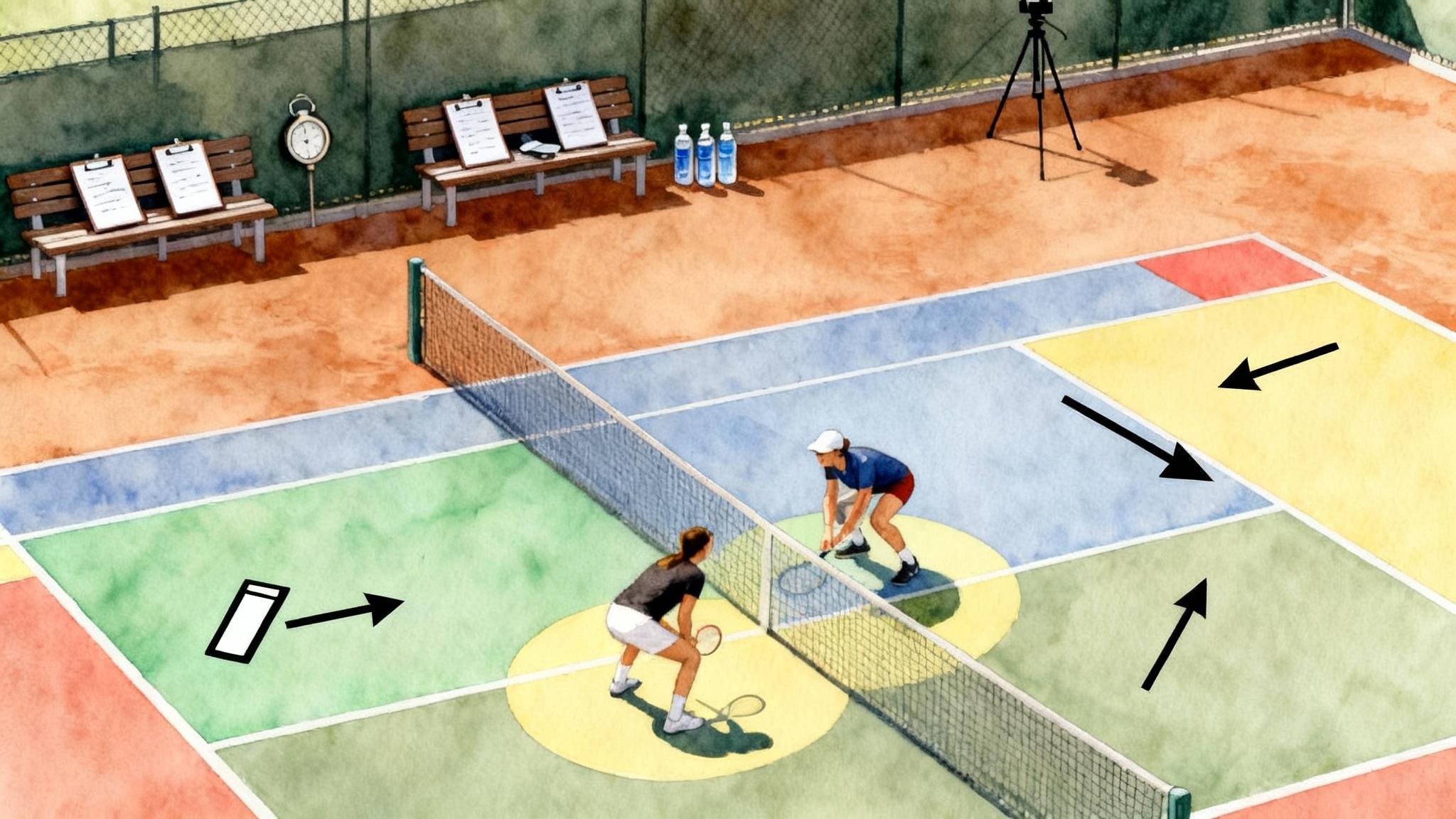
The real reason doubles gets you recruited
Singles shows raw skill. Doubles shows whether that skill fits a team. College coaches look for pairs that can hold serve under pressure, apply smart formations, and communicate clearly. The good news is that you can build those habits in 8 to 12 weeks with focused roles, shared language, and measurable practice.
This blueprint gives you a clear path. It covers how to pick pairs, how to map serve and return targets, how to use poach, Australian formation, and I-formation, and how to set weekly drills that produce the exact stats coaches value. You will also see how Legend Tennis Academy builds doubles blocks and showcases so that coaches can evaluate the right things quickly.
Pair selection: build a complementary two-person team
A doubles team is not two good players standing side by side. It is a set of complementary strengths that cover the court and the scoreboard. Use this simple selection framework.
- Playing hands
- Right-hander with left-hander is helpful because forehands can cover the middle on both sides.
- Two right-handers or two left-handers can still excel if one player is eager at the net and the other locks down the baseline.
- Primary role preference
- Net-first player: quick first step, confident volley, willing to poach.
- Baseline-first player: reliable crosscourt rally ball, heavy high and deep return, strong lob when squeezed.
- Serve and return profile
- First serve percentage target: at least 60 percent in. Second serve that sits up less than once every four points. If one player has more pace and the other more accuracy, balance the service order to maximize early holds.
- Return depth: one player should land a consistent deep crosscourt return. The other should be skilled at changing direction on second serves.
- Movement and reach
- Wingspan and read at the net matter more than sprint speed. Pick the player who can move first, not just run fast.
- Temperament and talk
- One player should lead the formation and signaling. One should be the stabilizer who resets the tempo after errors. Choose at least one player who naturally talks between points.
Score each candidate partner from 1 to 5 on these five categories. Favor pairs with a combined score of 20 or more and where the categories are complementary, not identical. If two pairs tie, pick the pair that is more comfortable at the net. Doubles rewards net courage.
Shared roles and middle-ball priorities
Clarity wins under pressure. Establish these default roles and call-outs before your first practice.
- Server: owns the first ball, sets the plan with a target and a signal. Must recover to cover the next ball through the middle.
- Server’s partner at net: primary hunter. First move is forward and across. Owns the space in front of their body and one step to the middle.
- Returner: aims heavy and high crosscourt on first serves. On second serves, attack through the hip of the net player or change direction when the server’s partner cheats.
- Returner’s partner at net: pinches toward the middle when the return is deep. Stays wide when the return is short. Calls early when the middle ball is theirs.
Middle-ball priority rules
- If the ball is in front of you at net, it is yours unless called off by your partner. Move forward and cut it.
- If you and your partner reach the middle at the same time, forehand has priority when contact points are equal.
- If you are behind the service line, lob first when the net player is set. Drive only when you can hit above net height.
- The server or returner who just hit must say “mine” or “yours” on any ball that splits the pair. Speaking early prevents two-hesitation mistakes.
Your signaling menu for poach, fake, stay, and I-formation
Keep the menu small so you can execute it at speed. Use hand signals behind the back from the net player to the server.
- Closed fist: stay. Server hits to the called target, net player holds position and looks to take any middle ball.
- Open hand: poach. Net player moves across the middle as the serve crosses the net. Server covers the vacated line.
- Two fingers: fake. Net player shows poach, then snaps back to the line. Useful after a successful poach to hold respect.
- Thumb pointed in: I-formation. Net player crouches on the center line. Server stands near the middle to remove angles. A second signal tells the post-serve move left or right.
Call the serve target verbally so there is no confusion. Say “body,” “wide,” or “middle T.” The server repeats the target out loud. The net player flashes the movement signal and calls “set.” Keep the same routine on every point so your tempo stays steady.
Serve target maps that protect your partner
Think in zones, not guesswork. Build a simple map for deuce court and ad court.
Deuce court
- First serve base plan: 50 percent to the body, 30 percent down the middle T, 20 percent wide. Body serves reduce the returner’s swing and make your net partner dangerous.
- Second serve base plan: 60 percent down the middle T to shrink angles, 40 percent body. Only go wide when your partner plans to poach.
Ad court
- First serve base plan: 40 percent to the body, 40 percent down the middle T, 20 percent wide. The ad side returner often protects the backhand. Down the middle draws a blocked return that sits up for your partner.
- Second serve base plan: same as deuce court. The goal is a neutral or floating ball so the net player can attack.
Pressure calls
- Break point up: middle T or body, then poach. Make the returner hit to the smaller part of the court.
- Game point down: body serve plus fake. Many returners over-aim, leading to a miss.
Track two numbers every set: first serve percentage, and unreturned serve rate created by either serve quality or successful poach. Aim for first serves above 60 percent and unreturned serves at or above 30 percent.
Return target maps that set up your partner
Deuce court
- First serve: heavy crosscourt toward the baseline corner. Height above the net is your friend. Your partner pinches to take the next ball.
- Second serve: drive body-through to the server’s hip or change line if the net player leans hard. Say “drive” or “line” to your partner before the point.
Ad court
- First serve: same heavy crosscourt. If the server is left-handed into your backhand, add height and depth rather than pace.
- Second serve: attack through the middle to handcuff the server and create a poach lane for your partner.
For deeper return patterns and progressions, see our return of serve mastery playbook.
Track two numbers: return in-play percentage above 80 percent, and depth percentage where the ball lands beyond the service line above 60 percent. On second serves, add a change-direction win rate target of 50 percent or better.
Communication scripts that reduce doubt
Pre-serve huddle, five seconds
- Server: “Ad side, body, first. If miss, middle second.”
- Net partner: “Poach on first. If they pinch, I fake on second.”
- Both: fist tap, “Set.”
Pre-return huddle, five seconds
- Returner: “First serve high crosscourt. If second, I drive through hip.”
- Net partner: “I pinch if deep. If short, I hold the line.”
- Both: fist tap, “Set.”
Between-point reset
- Two sentences only: what worked or the next micro-adjustment. “Body worked, repeat.” or “They slid early, fake next.”
Changeover review
- Confirm tendencies, check targets, confirm one formation to feature in the next two games. Keep notes on the towel or water bottle label.
The 8 to 12 week plan with measurable goals
You can complete this in 8 weeks. If you have the time and want deeper habits, expand to 12 weeks by repeating the same blocks with additional constraints.
Weeks 1 to 2: foundation and language
- Objectives: shared signals, middle-ball rules, target maps, and stat tracking.
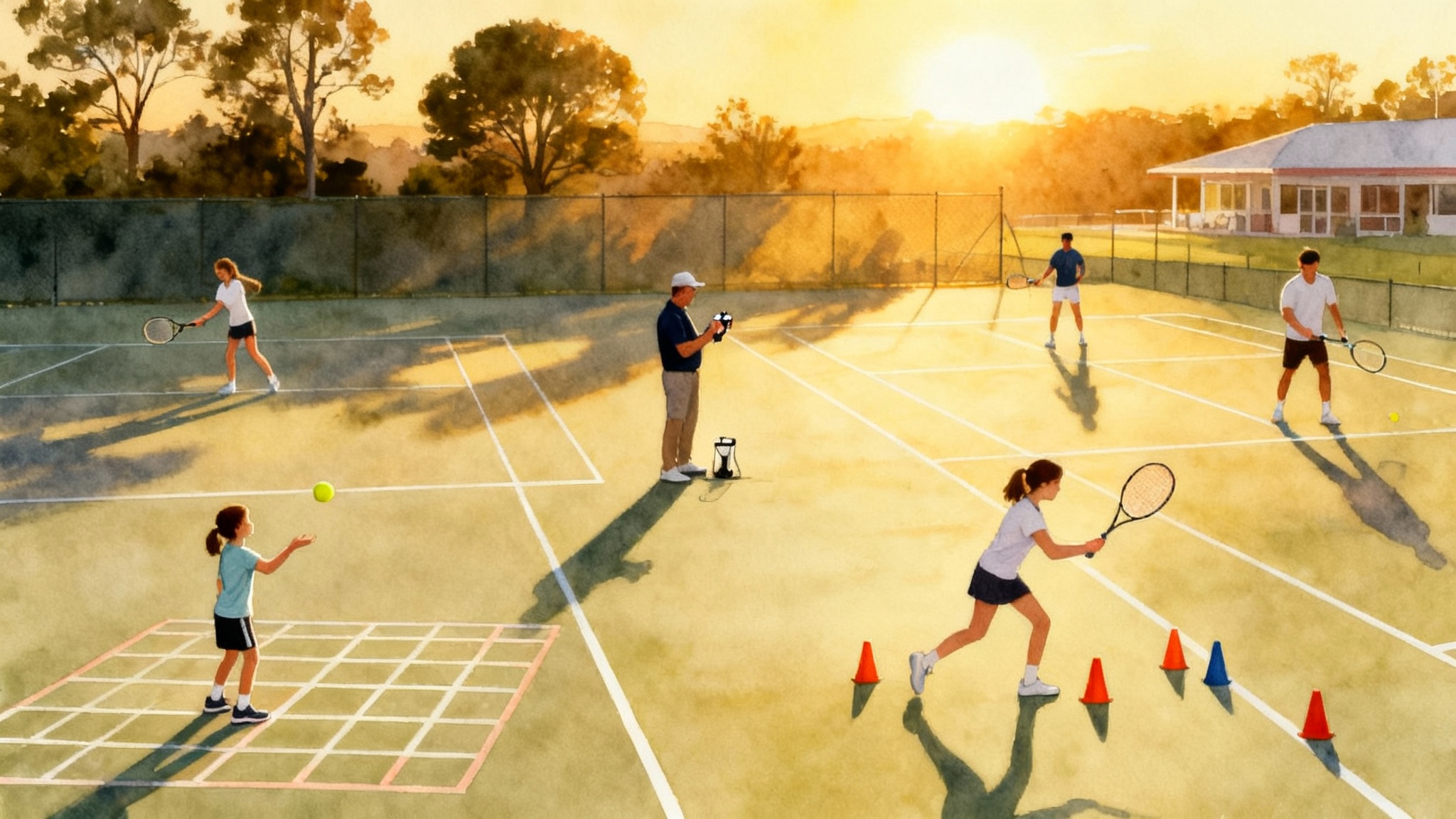
- Drill 1, traffic light middle: cooperative crosscourt rally of four balls, then the fifth ball is fed into the middle. Net player must take any ball at or above net height. Ten reps per side.
- Drill 2, serve plus first volley: server hits to body or middle only, net player hunts the first floating ball. Score to ten points. Track first serve percentage and unreturned serve rate.
- Drill 3, return depth ladder: returner must land beyond service line five times in a row before changing sides. If miss, drop to the previous number.
- Goal metrics: first serve 60 percent, return in play 80 percent, at least one successful poach per service game.
Weeks 3 to 4: formations and first-strike patterns
- Objectives: Australian formation, I-formation, live poach decisions.
- Drill 1, Australian pattern: server stands near the alley and serves down the middle. Net player calls stay, poach, or fake. Play two-out-of-three point mini games. Track poach attempt rate to reach 25 percent or higher.
- Drill 2, I-formation lanes: net player crouches on center line. Server hits middle only. Net player shows left or right. Returner must guess. Rotate roles. Goal is 55 percent point win rate when using I-formation.
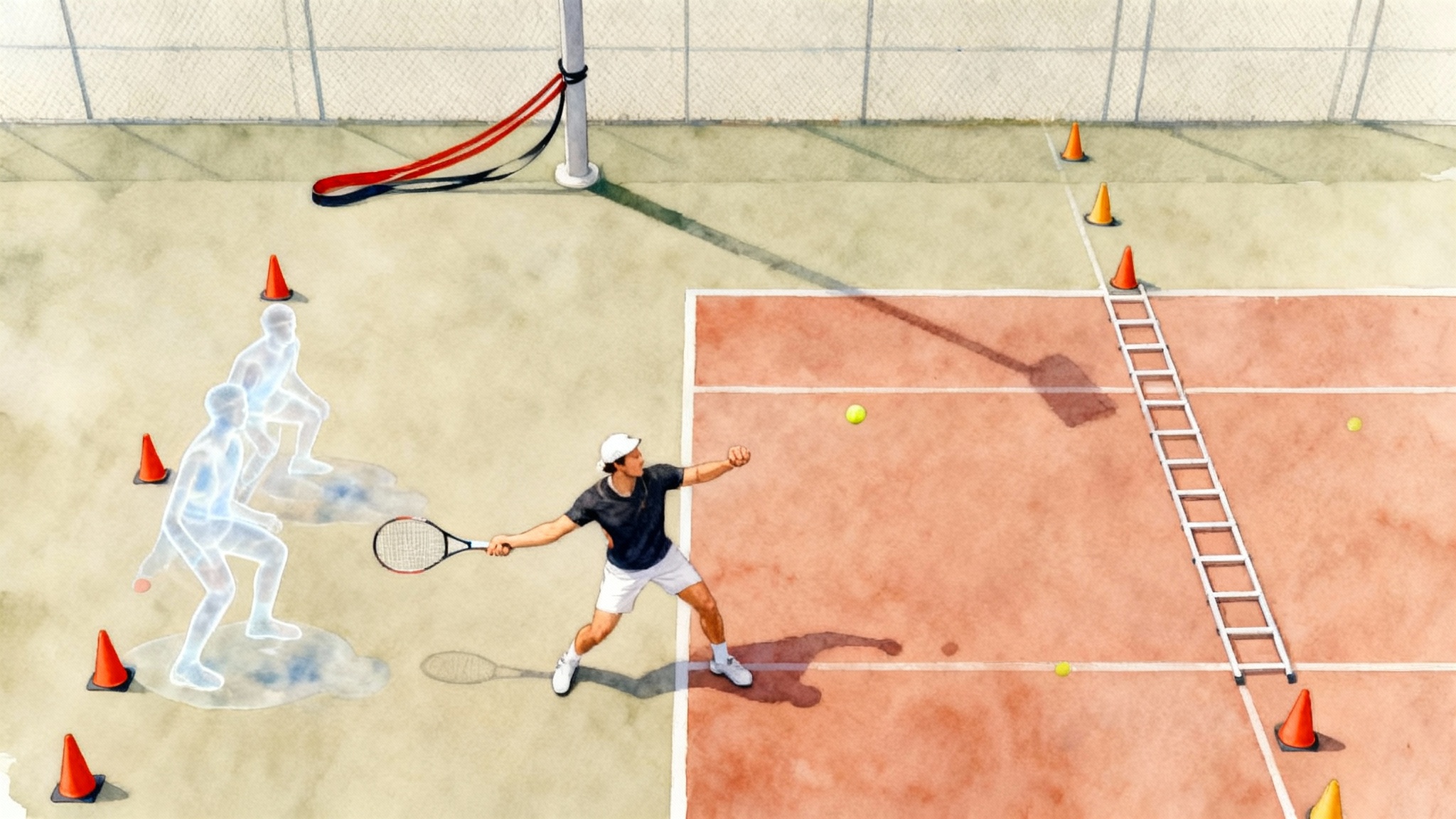
- Drill 3, poach timing ladder: coach or partner feeds to the returner. Net player poaches at contact, at bounce, or on a delay. Find the best timing against each returner.
- Goal metrics: poach success 55 percent, double-fault rate under 5 percent, return depth over 60 percent.
Weeks 5 to 6: pressure building and conversion
- Objectives: break-point patterns, defensive lobs, transition footwork.
- Drill 1, big point builder: play only at 30-all, game point, and break point. Server must call target and net move before each point. Record hold rate aiming for 80 percent or more in practice sets.
- Drill 2, squeeze and lob: both pairs start at the service line. Feed to one baseline player who must pass or lob. Rotations force quick decisions. Net pair practices overhead recovery after a lob.
- Drill 3, second-serve attack: simulated second serves only. Returner must change direction at least one of every three points. Track win rate on those change-line returns and aim for at least 50 percent.
- Goal metrics: break conversion at 35 percent or higher, overhead error rate under one per set.
Weeks 7 to 8: match-play with tight feedback loops
- Objectives: replicate match flow and coach-style review.
- Drill 1, two-set practice match with side goals: pair must hit at least five planned poaches per set, use I-formation twice per service game, and review at changeovers with the scripts.
- Drill 2, third-shot stretch: in each return game the returner’s partner must pinch on any deep return. Chart how often this creates a volley touch within the next two balls. Target 60 percent.
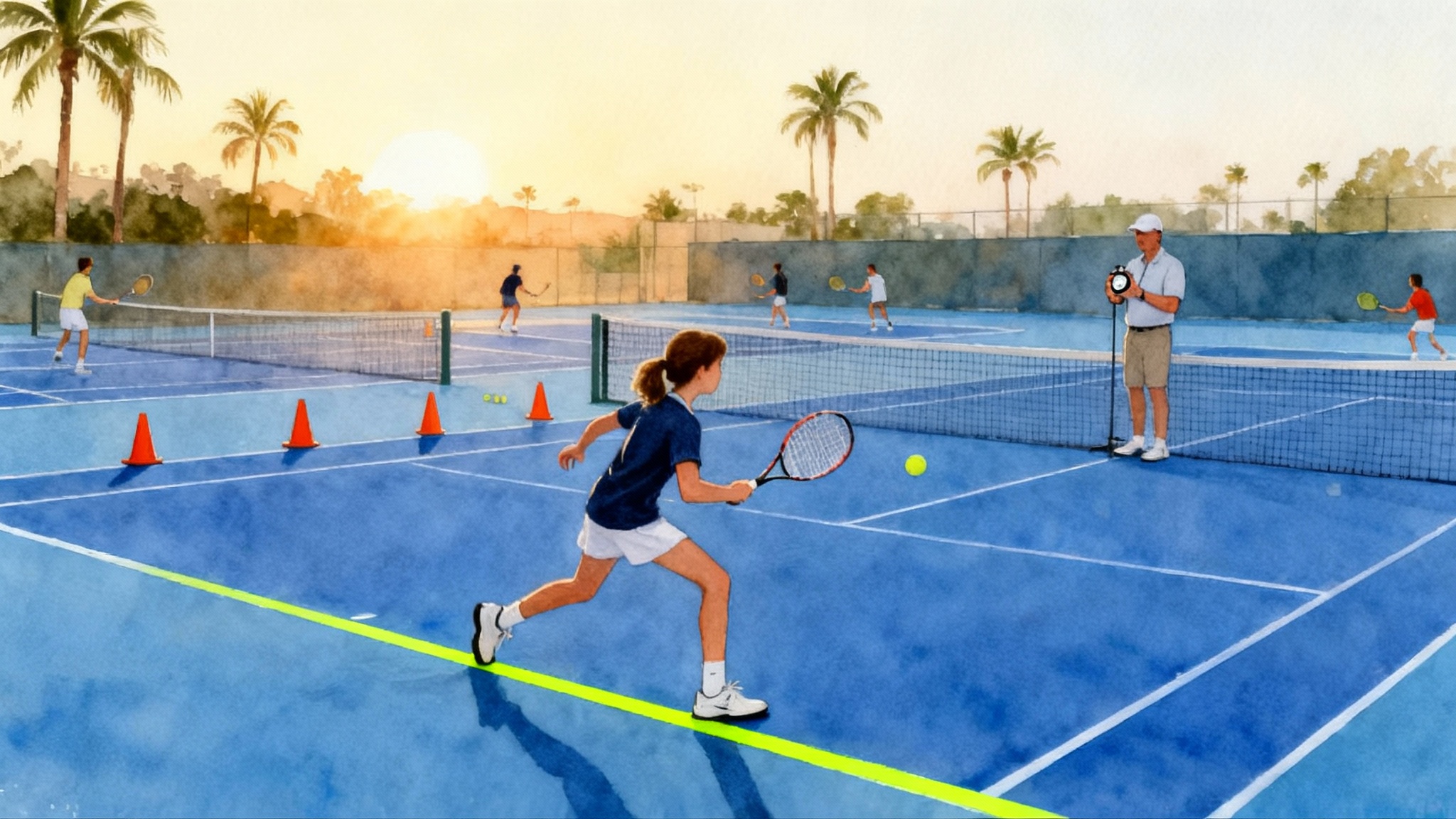
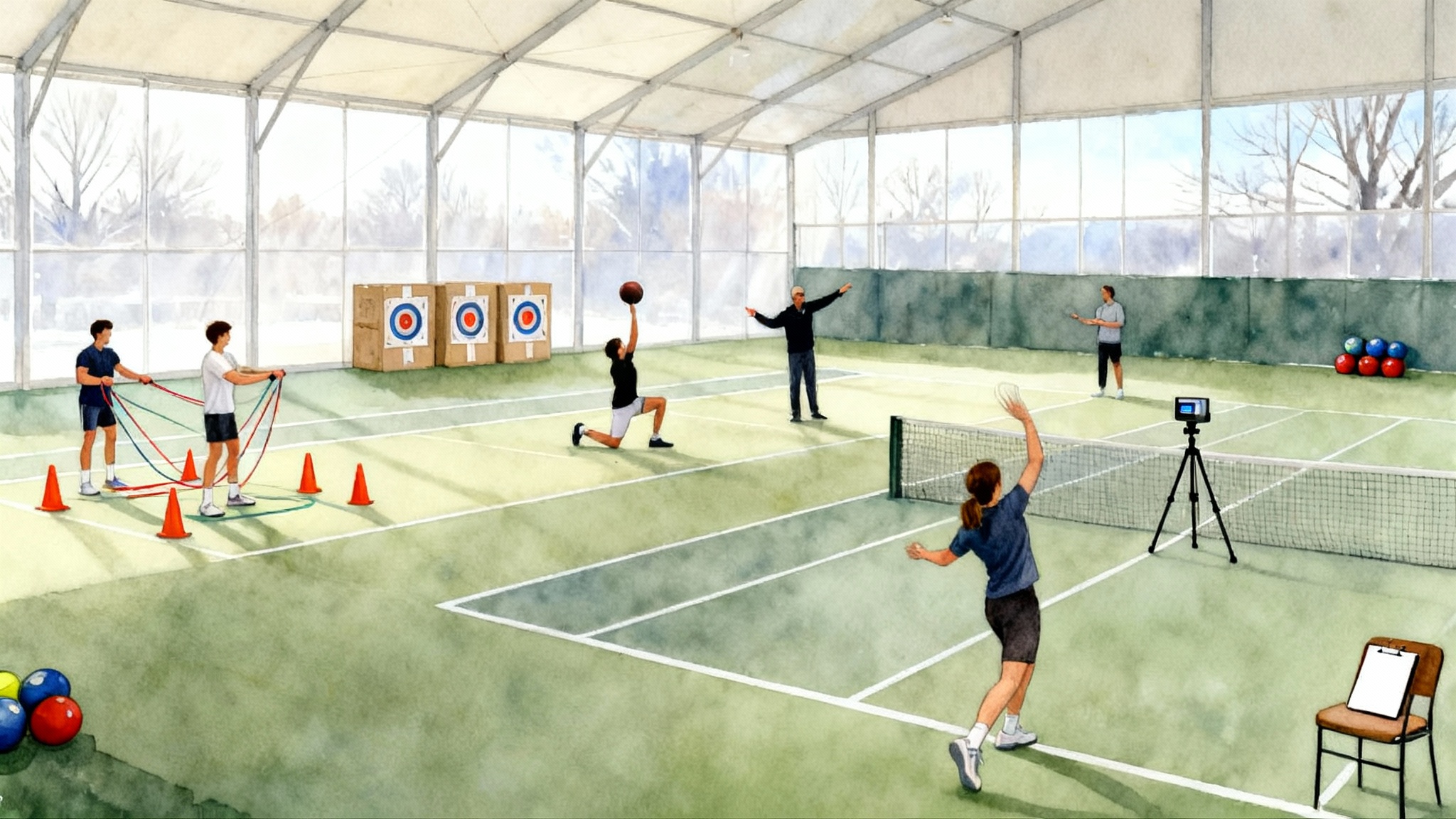
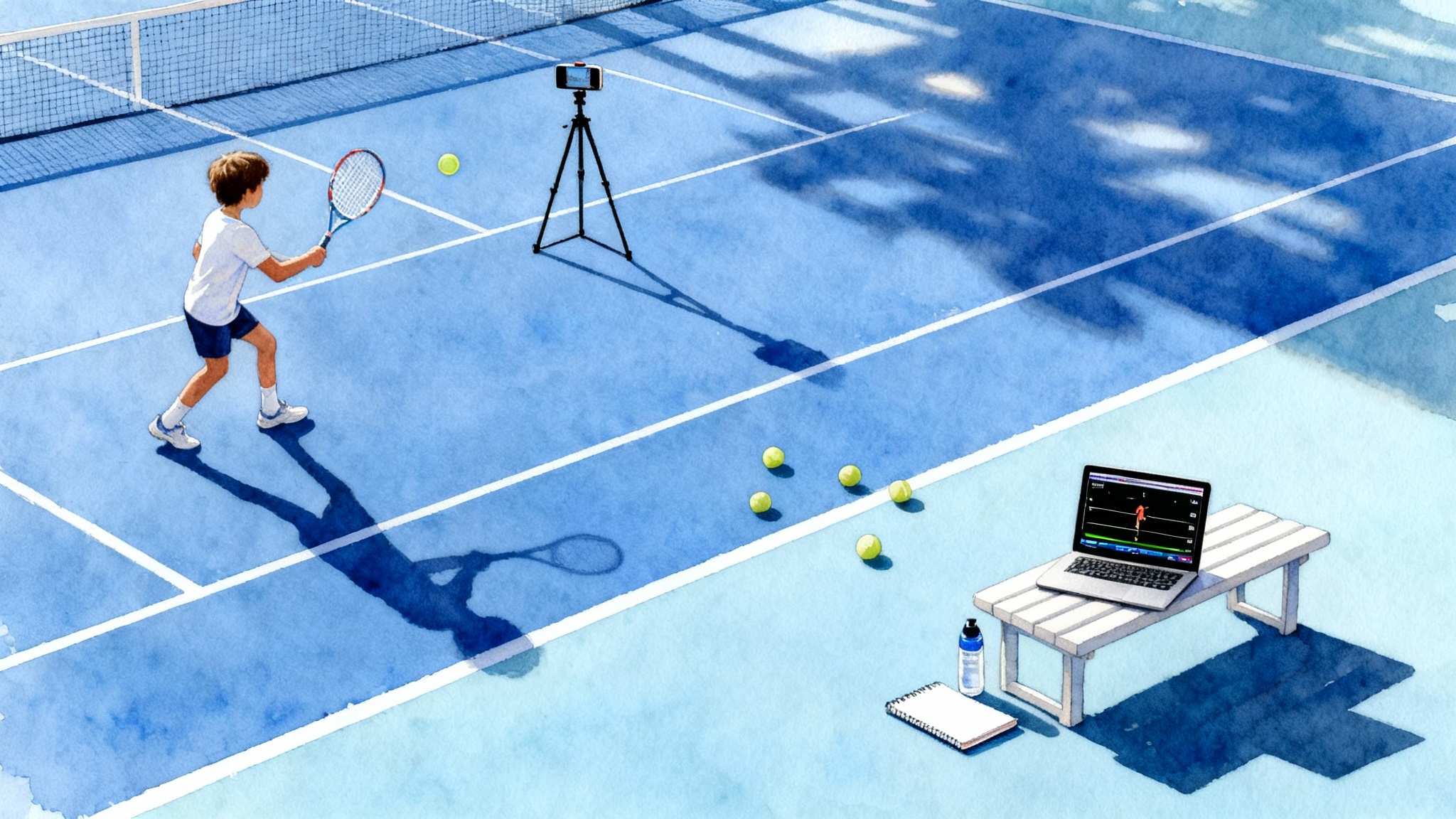
- Video and stats: film from a back-corner tripod. Chart first-serve percentage, unreturned serves, return in-play percentage, poach attempt rate, poach conversion, and break conversion, plus three short clips that prove those numbers.
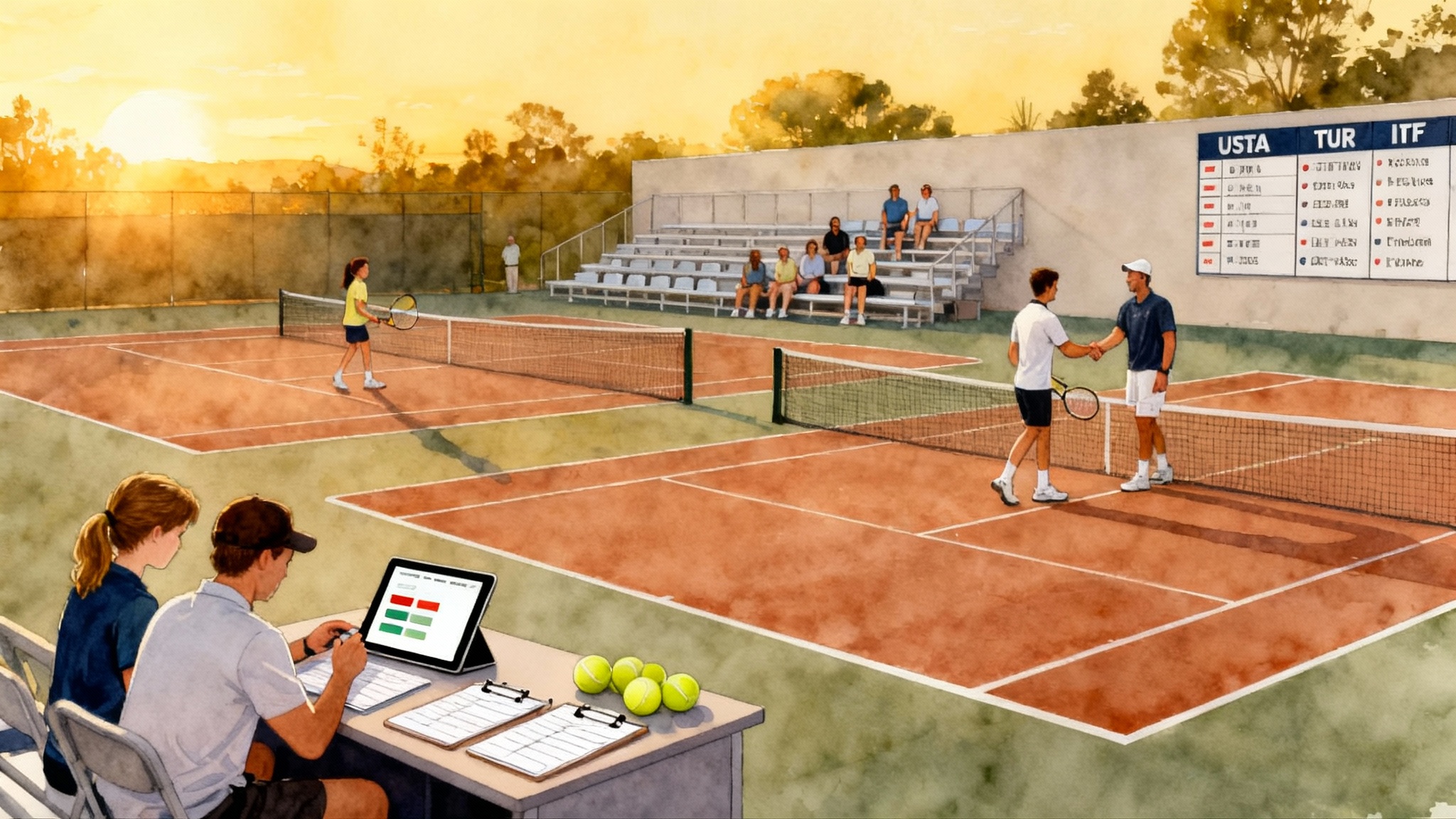
- Showcase format runs two rounds of short pro sets so that each pair plays on both deuce and ad sides with service games in both roles. Coaches see whether the pair can hold serve, make a plan, and adjust.
- Legend invites local college programs to join courtside and to meet pairs after the round. Players present their one page summary and speak for sixty seconds about their strongest formation and when they call it under pressure. If you are preparing emails and video for coaches, use our college recruiting calls guide to package doubles clips and stats.
At-home reps for juniors and a path for adult players
If you are a junior with a partner
- Dry-run the signals in the driveway for five minutes daily. One partner calls serve target and hand signal. The other repeats it out loud. Speed is the goal.
- Watch film together once a week and tally poach attempts and conversions. Pause and describe the read that triggered the move.
If you are a parent
- Keep the same three numbers after each practice or match and write them on a simple index card: first serve percentage, return in play percentage, and poach attempt rate. Ask one question only, such as what was the trigger for your best poach.
If you are an adult player in league
- The same structure works with two practices per week. Keep the drill menu short and repeat the same signals. Adult pairs often improve fastest by refining the pre-serve script and by increasing poach attempts to 25 percent.
Your doubles key performance indicators and how to track them
You cannot improve what you do not measure. Start with these six numbers and write them in a small notebook at every changeover.
- First serve percentage: count balls in versus total first serves. Target 60 percent or higher.
- Unreturned serve rate: count serves that do not come back, including forced errors from poaches. Target 30 percent or higher.
- Return in play percentage: target 80 percent or higher. Against big servers, value height and depth over pace.
- Return depth percentage: count returns landing beyond the service line. Target 60 percent or higher.
- Poach attempt rate: attempts divided by return points against your serve. Target 25 percent or higher.
- Poach conversion rate: winning the point on a planned poach. Target 55 percent or higher.
Add two situational numbers once a week
- Hold rate in practice sets: aim for 80 percent or more.
- Break conversion: aim for 35 percent or more, built on return depth and a planned formation on big points.
Troubleshooting guide
Problem: the returner keeps ripping line behind your poach.
- Solution: change to body serves and use the fake signal every other point. Make the returner prove two line winners in a row before you poach again.
Problem: too many high lobs beat your net player.
- Solution: server recovers down the middle to take overheads. Net player starts one step deeper and moves only after the bounce.
Problem: cluttered signals cause double faults.
- Solution: reduce to two choices for one set, body stay or middle poach. Build rhythm before adding back the full menu.
Problem: partners argue about the middle ball.
- Solution: adopt the two rules for one set. If in front at net, take it. If both arrive together, forehand takes it. Report how many clean decisions you made when you review.
Problem: you win early in the set, then get solved.
- Solution: build a three-point rotation. First game, body serve plus poach. Second game, middle serve plus fake. Third game, Australian formation with middle serves. Repeat the cycle and track which one holds best.
Putting it all together
College-ready doubles is not a mystery. It is a short list of roles, a short list of signals, and a short list of numbers you repeat every week. Pick a partner whose strengths cover your gaps. Map your serve and return targets so your net player can hunt. Use clear signals for stay, poach, fake, and I-formation. Practice in short, live-ball blocks that mirror the points you need to win in real matches. Track six numbers, then review one clip that proves them.
If you follow the eight week plan, you will sound like a team and you will play like a team. If you extend to twelve weeks, you will make those decisions automatic under stress. That is what college coaches want to see when they watch doubles first on match day. They want pairs who can plan, call, and execute. With this blueprint, you can become that pair and you can prove it.