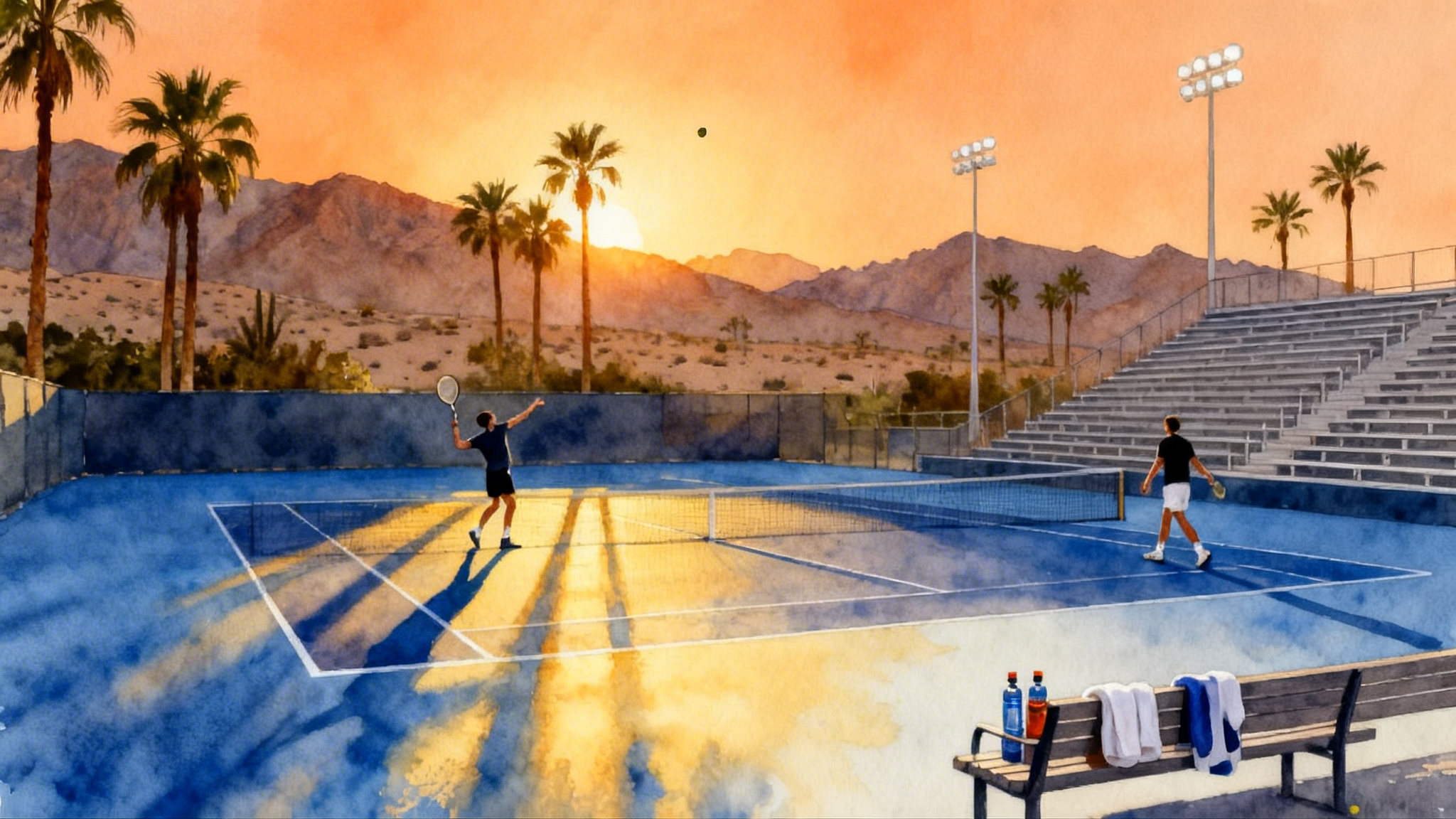
Manila Dry-Season Tennis: Train with Philippine Tennis Academy
Use Metro Manila’s dry Amihan season from November to April as a reliable tennis base. Train in Alabang with Philippine Tennis Academy, add UTR match play, plan budgets and lodging, and slot in Cebu or Palawan weekends.
 Tommy
Tommy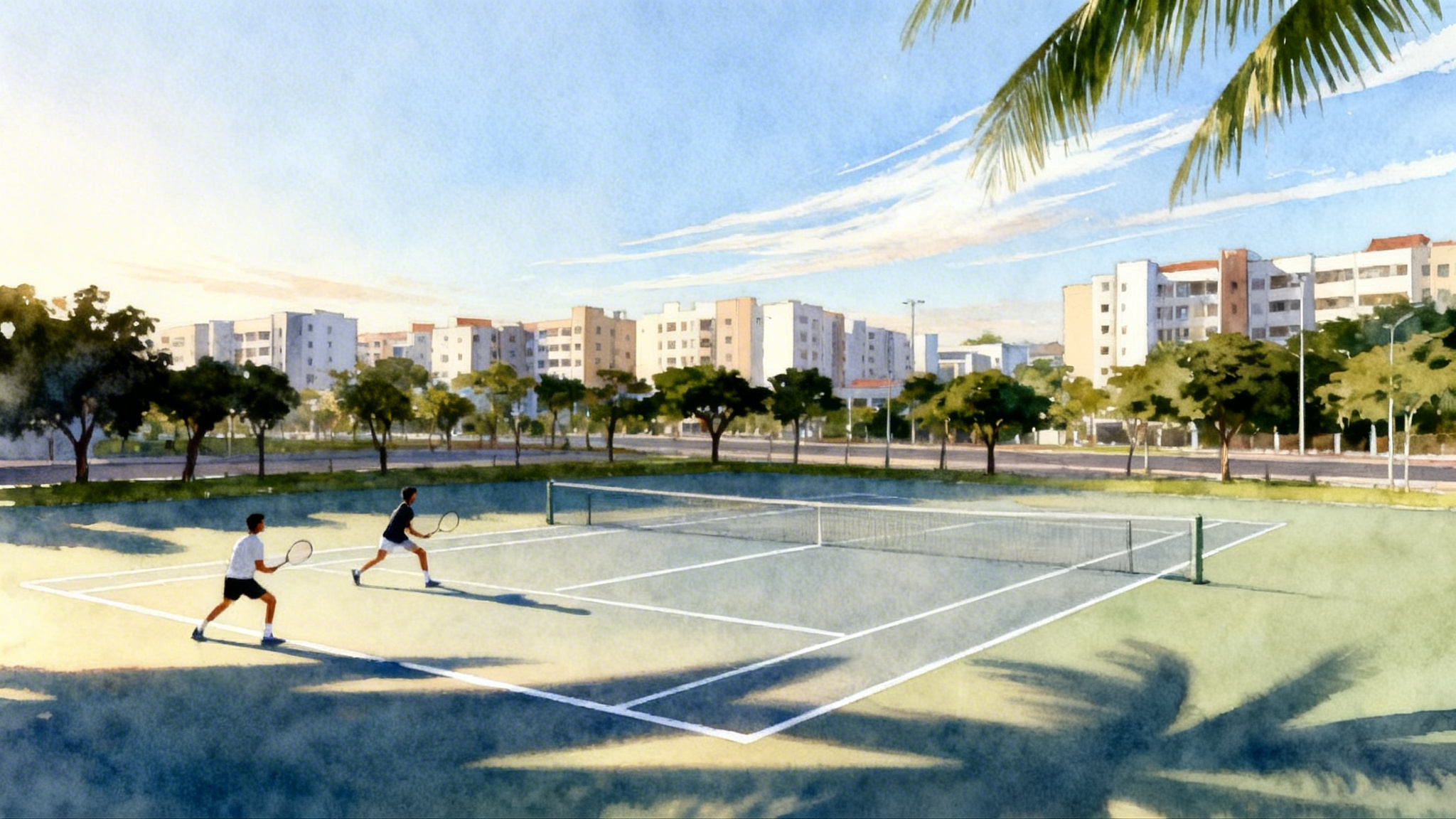
Why Manila’s Amihan window is a serious training asset
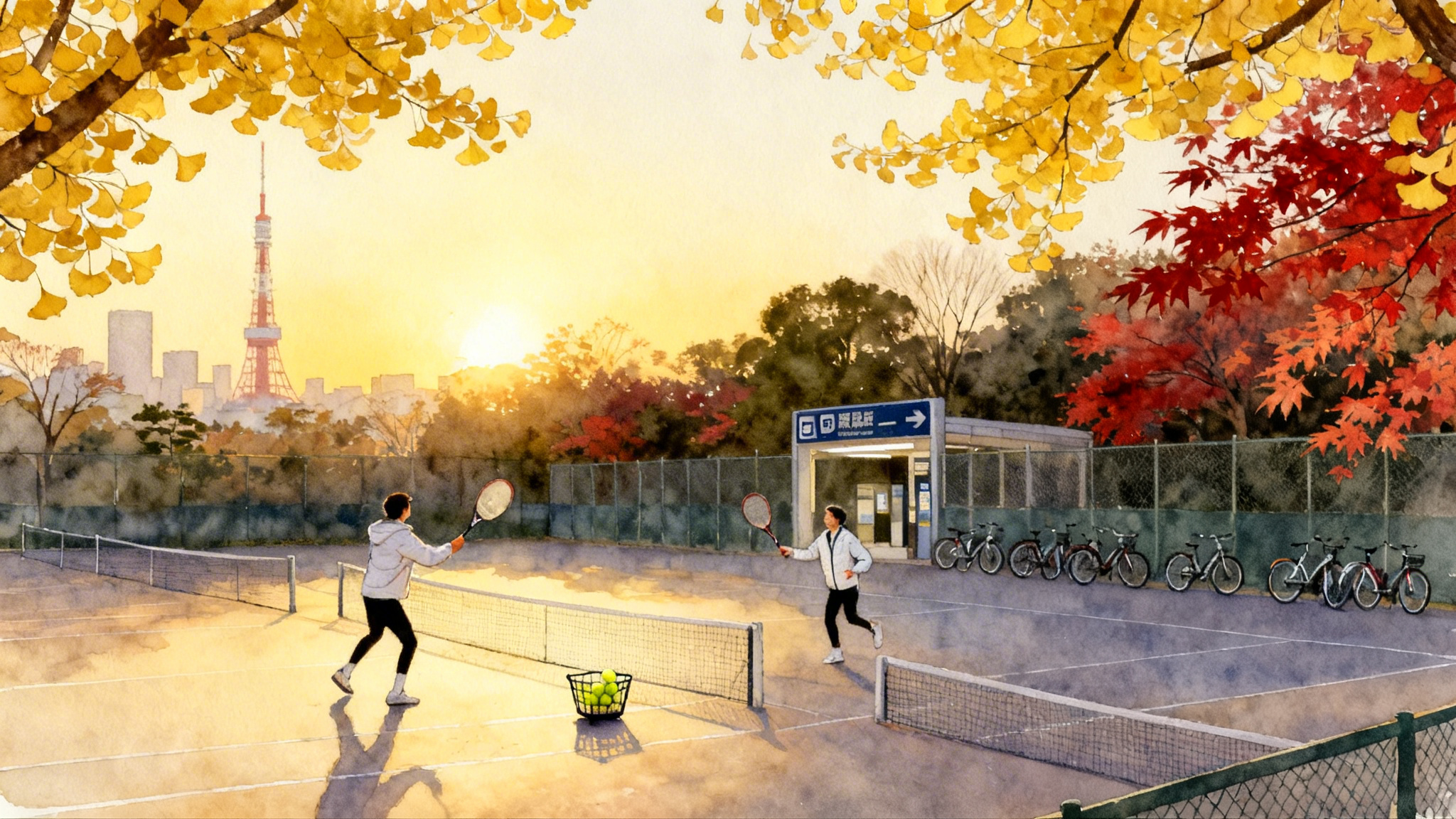
If you plan your tennis around weather the way marathoners plan around altitude, Metro Manila’s Amihan season is your friend. From November to April, northeast trade winds push in cooler, drier air. In practical tennis terms, that means more playable afternoons, fewer rain-outs, and a steadier weekly rhythm than Manila’s wetter months. Morning sessions can start crisp, evenings run breezy, and even mid-days feel manageable if you build the right hydration and shade routine.
For players mapping a year-round circuit, this window dovetails cleanly with other bases. Use Manila when the Philippines is at its clearest and least storm-prone, then rotate to a different hub once humidity spikes and the southwest monsoon returns. If you prefer a United States option in late winter, consider Desert Swing training in the Southwest.
Your anchor: Philippine Tennis Academy in Alabang
Plant your flag in the south of Metro Manila, where traffic is calmer and facilities cluster close. Philippine Tennis Academy in Alabang operates in a planned district of Muntinlupa known for tree-lined neighborhoods, business parks, and convenient access to expressways. The practical upside is simple: you spend more time on court and less time in gridlock.
Sessions are built around reliable hard courts with lights, so you can stack doubles after sunset or finish a second-ball feeding block without racing darkness. Academy staff can help tune workloads for heat and recovery, and can point you toward local match play when you want pressure reps.
Climate timing at a glance
- Best months: November to April
- Sweet spot: January to March for the most consistent dry days
- Typical daily highs: mid 80s to low 90s Fahrenheit, roughly 29 to 33 Celsius
- Rain risk: lower than the rest of the year, but bring a light shell for occasional squalls
- Air: breezier in the afternoons, which helps courts cool faster
Why this matters for tennis:
- You can book double days with confidence. The chance of a late-afternoon rainout drops, so you can plan a 7 a.m. technical session plus a 5 p.m. live-ball block without constant rescheduling.
- Surfaces dry quickly. If it rains, the mix of wind and sun usually turns courts playable again in short order.
- Evening league or ladder matches become a reliable weekly fixture rather than a weather gamble.
Two sample training blocks
Below are templates you can plug into academy sessions. Adjust volume based on training age, recent match load, and acclimation status.
A 7-day Manila microcycle
-
Day 1, Arrival and primer
- Morning or midday: arrive, hydrate aggressively, 30-minute mobility circuit, 20-minute easy bike or walk
- Evening: 60-minute hitting at 60 to 70 percent effort, serves and first ball patterns
- Off-court: check strings and grips, buy electrolytes, set up local ride-hailing app
-
Day 2, Technique under light heat
- Morning: 90 minutes technical work, forehand height control and neutral ball depth
- Evening: 60 minutes basket serves and returns, finish with 20 minutes points to 7
- Gym: 30 minutes posterior-chain strength, 2 sets each, leave reps in reserve
-
Day 3, Live-ball and court movement
- Morning: 60 minutes rhythm hitting, 30 minutes live-ball crosscourt, 20 minutes approach and volley
- Evening: match tiebreak sets, play two first-to-10 with new balls
- Recovery: cold shower, 10 minutes legs up, early lights out
-
Day 4, Aerobic plus skill
- Morning: 75 minutes continuous rally at talk-test pace, footwork ladders between drills
- Midday: optional film review with coach, target three mechanical cues
- Evening: off or 30-minute serve-only maintenance
-
Day 5, Competitive rehearsal
- Morning: 30 minutes warm-up, best-of-three short sets
- Evening: doubles patterns and returns, 60 minutes, touch volleys and I-formation reps
- Gym: light upper body, 25 minutes, finish with scapular stability
-
Day 6, Specific endurance
- Morning: 90 minutes on-court conditioning sets, two-on-one, 3-minute work, 90-second rest, repeat six times
- Evening: 20 minutes serves, 10 minutes slice backhand height control
-
Day 7, Deload and explore
- Morning: 45-minute light hit or complete rest
- Afternoon: recovery swim
- Evening: review goals, string rackets, plan next microcycle
A 14-day performance block
Week 1 anchors technique and base fitness. Week 2 adds match play.
-
Days 1 to 3: skill and base
- Two-a-days with 90 minutes technique in the morning and 60 minutes serves and first balls in the evening. Add one 30-minute steady-state cardio block each day.
-
Day 4: tactical day
- Morning patterns: crosscourt to down-the-line change-ups, backhand first-strike choices
- Evening: 90-minute situational games, scoreboard on court, pressure reps
-
Day 5: match rehearsal
- Full pre-match routine, two sets to 6. Use a new can for each set. Focus not on outcomes but on between-point timing and breath work.
-
Day 6: strength and short hit
- Gym 45 minutes total body, moderate loads, explosive intent
- Evening 45-minute feel hit only, stop before fatigue creeps in
-
Day 7: island micro-break or full rest
- Half day off-court. Walk, swim, or explore a local café. Early sleep.
-
Days 8 to 10: intensity wave
- Morning: live-ball and approach patterns, 90 minutes
- Evening: two match tiebreaks or one full set with a fresh partner
- One day within this window should be a red-line conditioning session of 60 to 75 minutes
-
Day 11: technical reset
- High quality, low volume. Focus on a single stroke flaw, heavy video feedback.
-
Day 12: competition day
- Enter a local UTR match or arrange a ladder match through the academy. Pre-hydrate and carry salt tabs.
-
Day 13: light hit and mobility
- 45 minutes strokes, 30 minutes mobility and soft tissue
-
Day 14: evaluation
- Fitness test set, track serve speeds if radar is available, revise training cues, schedule next block
Match play through UTR and local ladders
Pressure points are the bridge between practice and results. In Manila you can find Universal Tennis Rating events or flex leagues throughout the dry season. Use the official event finder at the Universal Tennis events finder to search Metro Manila or Muntinlupa, filter by level, and message hosts for stand-by lists if draws look full.
Practical steps:
- Search by neighborhood as well as by city. Try Alabang, Muntinlupa, Las Piñas, and Parañaque.
- Bring a government identification card to check in and arrive 30 minutes early in case previous matches end sooner than expected.
- If draws are light during holiday weeks, ask the academy to arrange verified match play on site. You still get pressure reps with proper scoring and new balls.
Where to stay and how to commute
Base yourself near the courts. In Alabang you have three convenient lodging zones that keep commute stress low.
-
Filinvest City core
- Walkable blocks, cafés, and business hotels. Ideal if you want daytime coffee shops and short Grab rides to practice.
-
Alabang Town Center and Madrigal area
- Residential pockets with serviced apartments and quick food options. Easy to layer a grocery run between sessions.
-
West Alabang villages
- Quieter streets, often larger units for groups or families. Ride-hailing still quick, but plan an extra five minutes at rush hour.
Commute notes:
- Ride-hailing is the default. Intra-Alabang rides typically run short and predictable. Share your location with your coach on day one so no one waits on the wrong gate.
- Morning sessions: book for 20 minutes earlier on weekdays to buffer school drop-off traffic.
- Evening sessions: after 7 p.m., roads usually thin out, which helps if you schedule doubles under lights.
Budget ranges to plan with confidence
Prices fluctuate by season and currency. Use these as planning ballparks and confirm final quotes with the academy and providers.
-
Coaching and court time
- Private lesson per hour: 30 to 60 United States dollars, depending on coach seniority and slot
- Semi-private or small group per hour: 20 to 40 United States dollars per player
- Court fee per hour where applicable: 300 to 1,000 Philippine pesos; some packages bundle court time
-
Match play
- UTR event entry: 15 to 40 United States dollars depending on format and balls
-
Lodging per night in Alabang
- Budget: 30 to 55 United States dollars for clean studios or guesthouses
- Midrange: 60 to 110 United States dollars for business hotels or serviced apartments
- Upscale: 120 to 220 United States dollars with full amenities and pools
-
Local transport
- Intra-Alabang Grab ride: typically a few dollars each way; peak surges modest
- Airport to Alabang: plan a larger fare, and add time buffers for evening arrivals
-
Food
- Local eateries: 3 to 6 United States dollars for a balanced plate
- Café meals: 5 to 10 United States dollars
- Groceries for a week: 35 to 70 United States dollars if you self-cater breakfast and snacks
-
Recovery and extras
- Gym day pass: 5 to 12 United States dollars where available
- Massage: 12 to 25 United States dollars for 60 minutes at neighborhood spots; more at hotels
A realistic weekly spend for a solo player who books six lessons, rents courts twice, plays one UTR event, stays midrange, and eats a mix of local and café meals lands around 550 to 900 United States dollars. Shared lodging or small-group sessions can bring that down meaningfully.
Heat acclimation that actually works
Playing well in Manila is not about being tough. It is about being methodical.
-
Build a seven-day ramp
- Days 1 to 3: 70 percent of normal volume, longer rests, finish before 9 a.m. or start after 5 p.m.
- Days 4 to 7: add 10 to 15 percent volume every other day, keep one short hit or full rest day.
-
Start hydrated, stay salted
- Drink 500 to 700 milliliters with electrolytes upon waking. For sessions over 75 minutes, aim for 500 milliliters every 25 to 30 minutes, and include sodium so absorption keeps up with sweat loss.
-
Protect grip and feet
- Rotate two towels on court. Double-wrap overgrips if your hands run wet. Use moisture-wicking socks and switch pairs for the evening hit.
-
Use shade actively
- Between drills, rest under a canopy or building shadow. Temperature on court can fall several degrees in shade, which preserves brain sharpness late in sets.
-
Sleep like it is a session
- Keep the room at a consistent cool setting, block morning light, and keep a glass of water by the bed. Sleep debt magnifies heat strain and poor decisions on big points.
-
Watch for early warning signs
- If you stop sweating or feel chills in heat, shut it down and cool off. No gains are worth a heat injury.
Weekend add-ons: Cebu or Palawan
Short island breaks help you reset between blocks and keep training fresh. Plan them across Saturday to Monday, with a light hit Friday and a short maintenance hit Monday evening.
-
Cebu
- Fly into Mactan-Cebu International. You get beaches, island-hopping, and clear-water swims. For a 48-hour reset, keep transfers short. Stay near Mactan to maximize time in the water and minimize mainland traffic. Book a Sunday afternoon snorkeling tour and a light beach run to keep legs awake.
-
Palawan
- For the simplest logistics, fly to Puerto Princesa then connect by van to beach towns. If you want postcard-level lagoons on a tight clock, fly directly to El Nido when schedules suit your dates. Keep expectations realistic: one island-hopping day and one leisure morning beat cramming three tours into 36 hours.
Pack light and keep a recovery bias. Your goal is to return to Manila Sunday night feeling relaxed, with glycogen topped off and skin protected for the coming week. Use hotel gyms or a 20-minute bodyweight routine to maintain rhythm without fatigue.
Compare timing: Manila vs Bangkok vs Bali
-
Manila
- November to April is the dependable window, with January to March the most consistent. The city’s wind pattern and lower rain frequency during this period favor two-a-day planning without daily weather roulette.
-
Bangkok
- Drier and more comfortable from November to February, then heat rises fast in March and April. If you already lock Manila for January to April, use Bangkok earlier in the cycle, such as November or early December, to reduce overlap and avoid the year’s hottest Bangkok stretch.
-
Bali
- Best tennis weather typically runs from May to September. That pairs neatly with Manila. Build a calendar where Manila covers your late-year and first-quarter outdoor base, then pivot to year-round South Tenerife tennis. This gives you a near-year-round outdoor pathway without stacking two wet seasons back to back.
The takeaway is not just where, but when. Slot Manila’s dry season as your first-quarter engine, use Bangkok to open the winter if you like urban tempo, and let Tenerife take over mid-year. You reduce weather risk and keep novelty high, which supports motivation over long training arcs.
A practical booking checklist
-
Six to eight weeks out
- Reserve your Alabang lodging with a flexible cancellation policy in case you extend.
- Coordinate with the academy for session times, and specify whether you want technique-heavy blocks or match-prep blocks.
-
Four weeks out
- Order reels of your preferred string and overgrips to avoid last-minute switches.
- Check upcoming UTR draws and set an alert for event openings.
-
Two weeks out
- Confirm airport transfers to Alabang with buffer time. Arrange racket maintenance support if you plan heavy hitting.
-
Week of travel
- Pack salt tabs, a light long-sleeve sun shirt, a second pair of shoes, and two towels.
- Hydrate two days before wheels up and aim for the earliest possible training slot on arrival day.
Common pitfalls and how to avoid them
-
Overstuffing day one
- Instead of a two-hour grinder, hit 60 minutes and sleep. You will gain more across the week.
-
Ignoring the sun clock
- In Manila, late afternoons can still sizzle. Book live-ball after 5 p.m., and move your gym to late morning in air-conditioned space.
-
Letting commute eat recovery
- Pick lodging within a short ride of the courts. A 10-minute daily ride saves an hour compared with cross-city commutes and hands you time for mobility and prep.
-
Treating match play as a surprise
- Schedule a UTR draw inside the 14-day block on day 12. Build the preceding 72 hours for freshness.
The smart conclusion
Great training blocks are not just about volume. They are about placing the right work in the right environment at the right time. Manila’s Amihan season gives you a stable climate window, and Alabang’s setup with Philippine Tennis Academy turns that window into day-to-day reliability. Add a couple of pressure matches, keep a tight grip on sleep and salt, and use a short island reset to keep the mind clear. Do that from November to April and you will step into the rest of your season sharper, steadier, and more resilient than last year.