From Moscow to Cannes: Inside the Academy that Shaped Medvedev
At 18, Daniil Medvedev left Moscow for Cannes and a tight-knit program led by Jean-René Lisnard and Gilles Cervara. Here is how a small, focused setup refined his movement, mindset, and tactics, and what families can copy when choosing an academy, a coach, and a pivot.
 Tommy
Tommy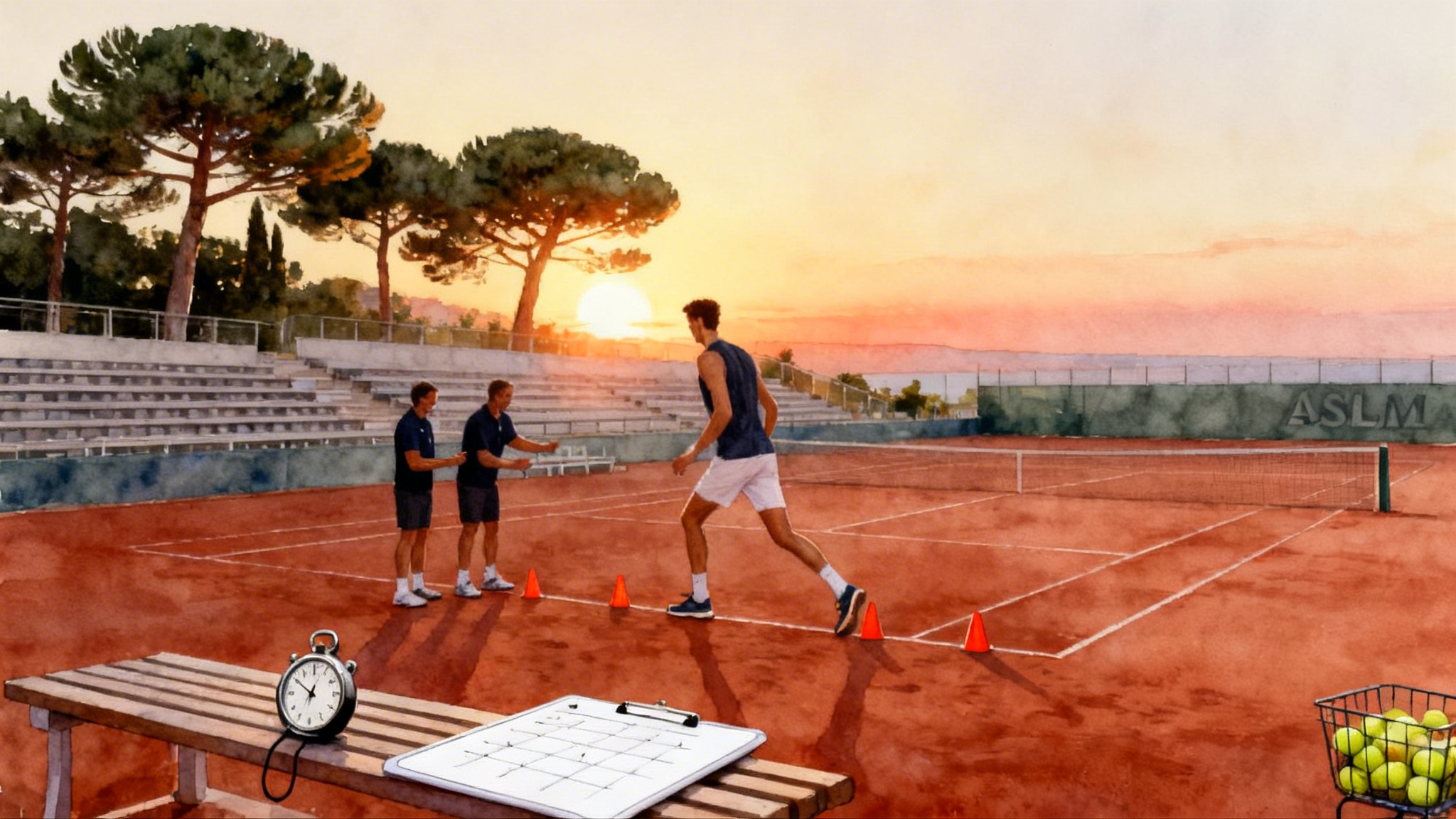
A one-way ticket at 18
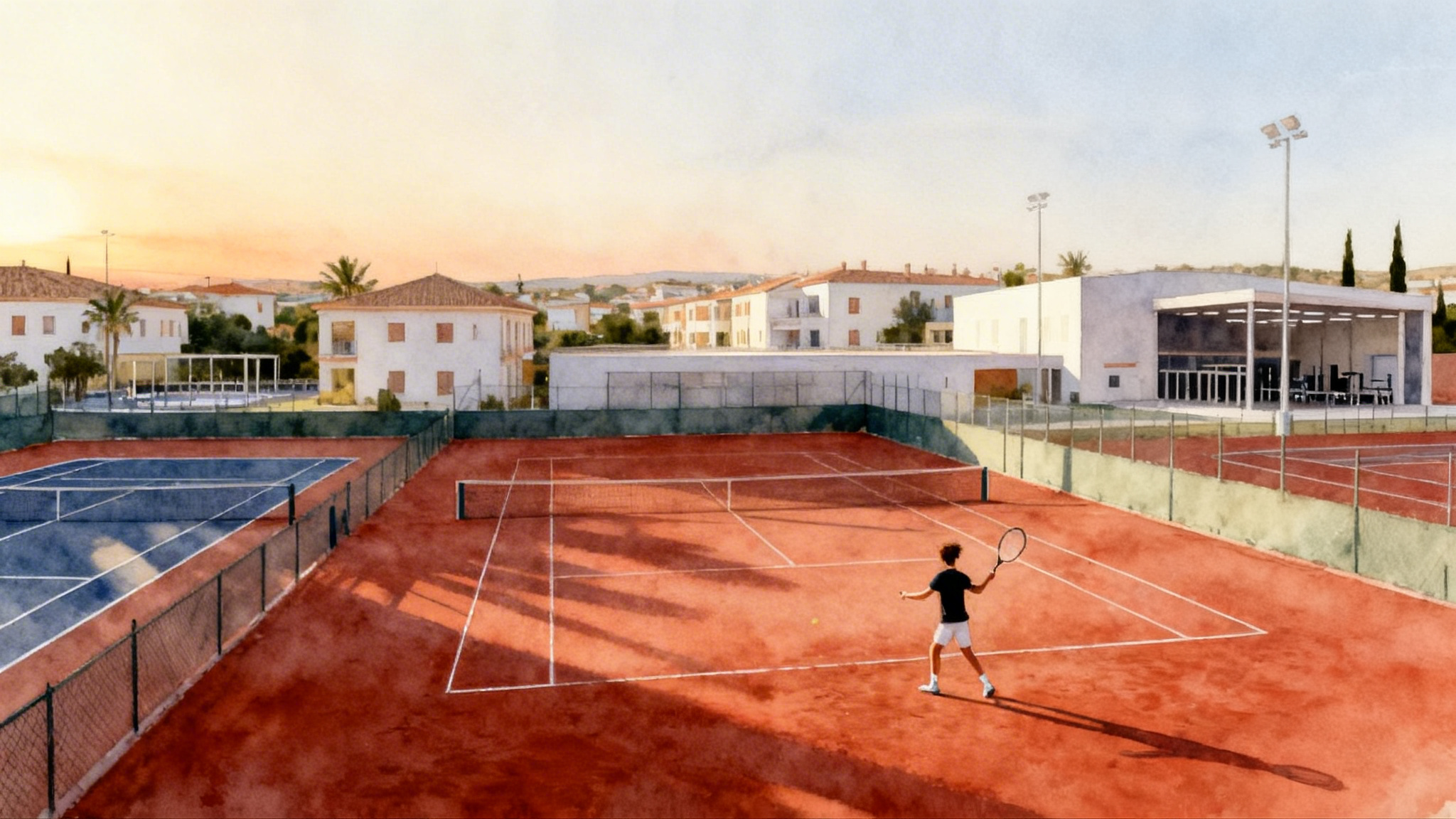
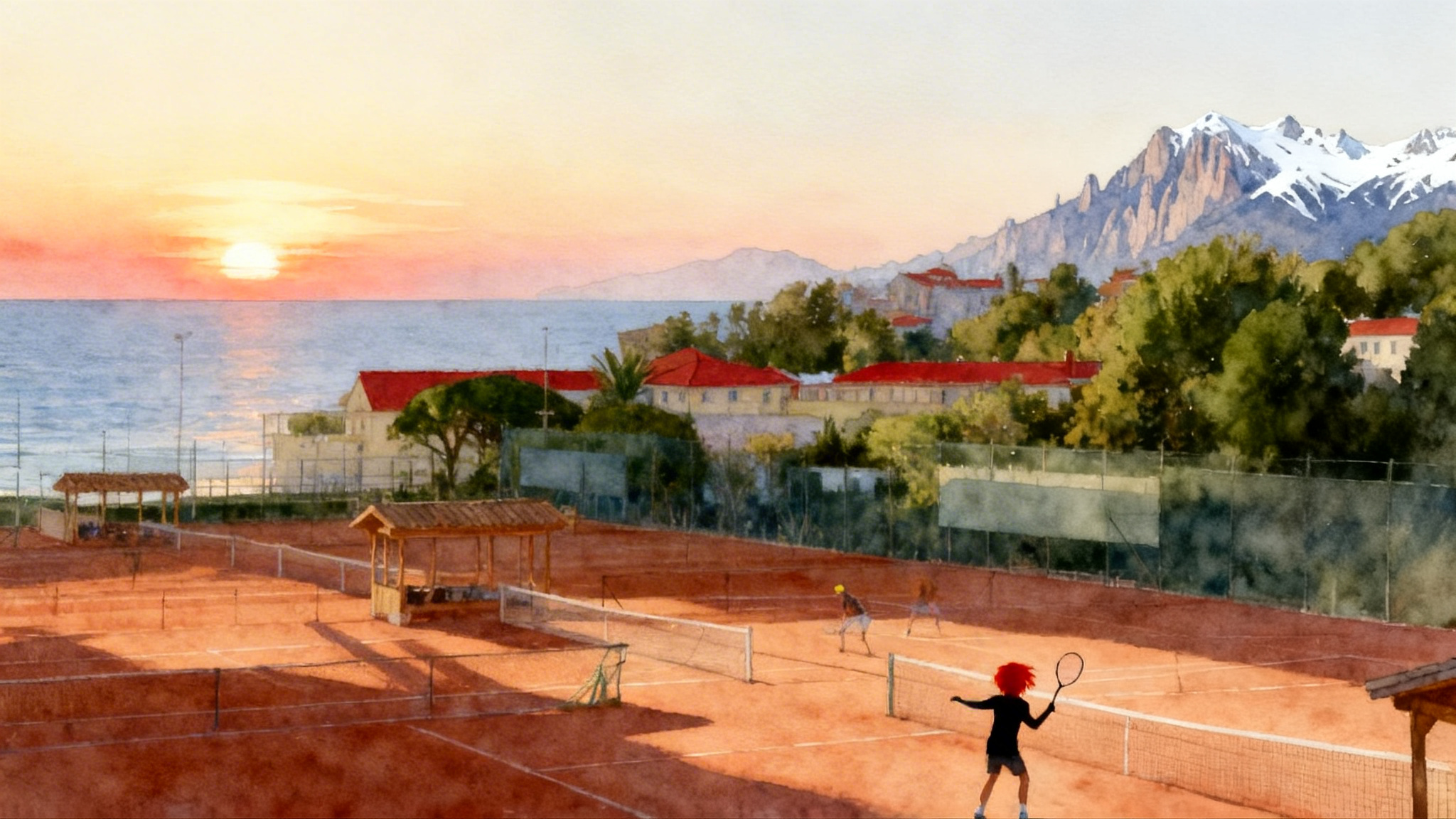
In June 2014, an 18-year-old Daniil Medvedev arrived on the French Riviera with a clear goal. He was not searching for a glamorous brand or a giant campus. He was looking for a daily environment small enough to notice every foot placement, every recovery step, and every decision he made under pressure. Cannes gave him that. The Elite Tennis Center, run by former professional Jean-René Lisnard with coach Gilles Cervara at the heart of the high-performance project, offered something powerful and simple: a tightly controlled practice room that ran like a lab.
The idea was not to change who Medvedev was. It was to organize him. He already possessed the raw traits that later defined him, the elastic movement, the hunger to problem solve, the stubborn willingness to play one more ball. What the Cannes team did was turn those traits into a system.
What Cannes built: small room, big mirrors
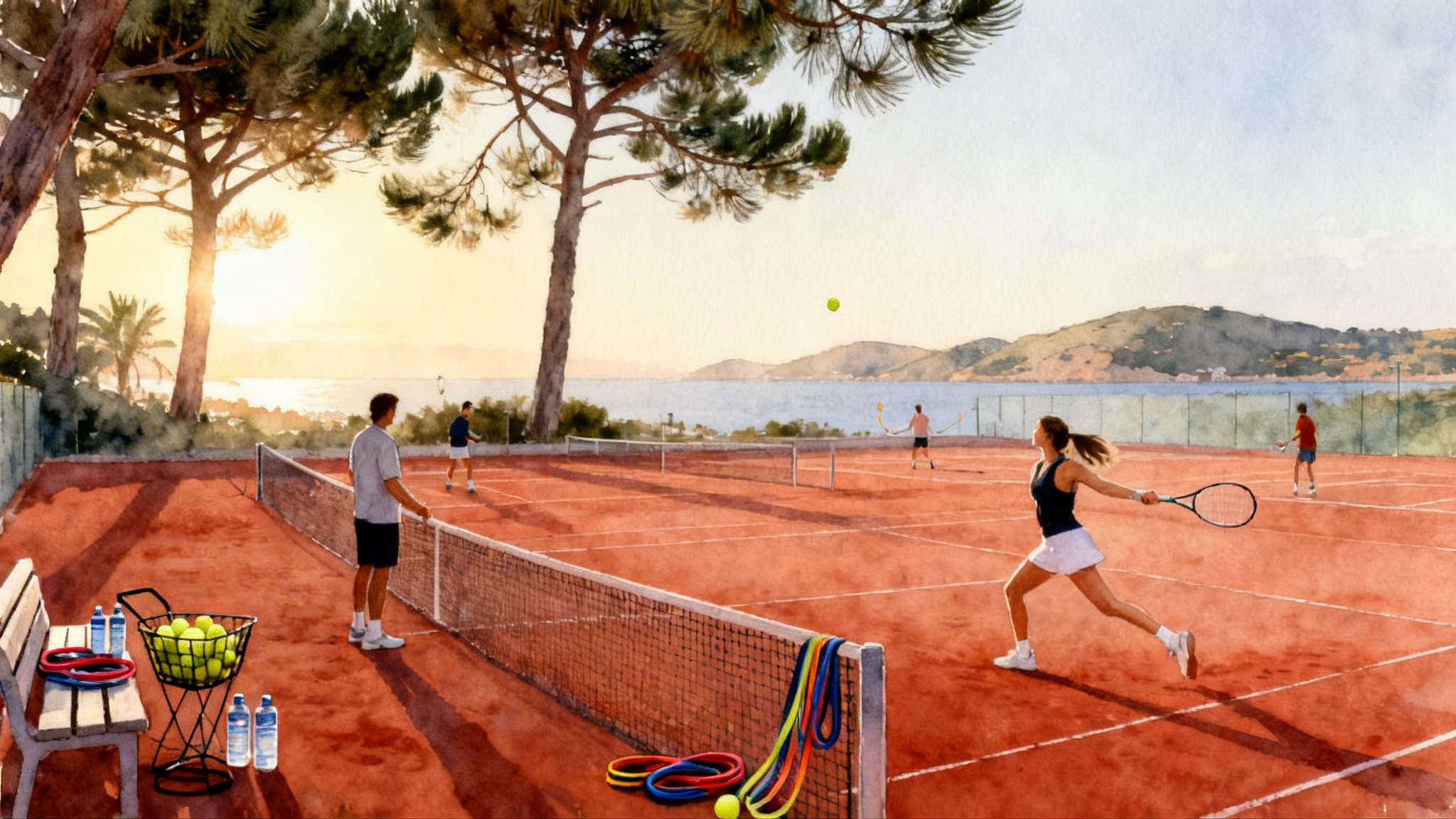
Elite Tennis Center operated like a boutique workshop. Sessions were planned to the minute, video was used as an honest mirror, and the staff moved like a pit crew. The advantage of a smaller setup is ruthless attention to detail. When the roster is lean, no player can hide in the crowd. That fits athletes like Medvedev who respond to precision more than spectacle. Similar small-room precision shows up in How JTCC shaped Tiafoe.
A typical training day matched the rhythm of competition. Warm up on court with a checklist of activation steps. Technical block focused on one theme, often footwork patterns. Situation drills where score, hand signals, and constraints force quick decisions. Conditioning that reflects match demands, not just generic sprints. Recovery with purpose, including breath work, mobility, and short debriefs that set the next day’s intent.
Two things stood out in Cannes. First, the staff paired technical work with tactical intent. A tweak to the return swing was never separate from the serve it might face or the first ball that would follow. Second, they put movement at the center of everything. For a comparable boutique-to-tour journey, see Dimitrov’s academy path.
Movement first, always
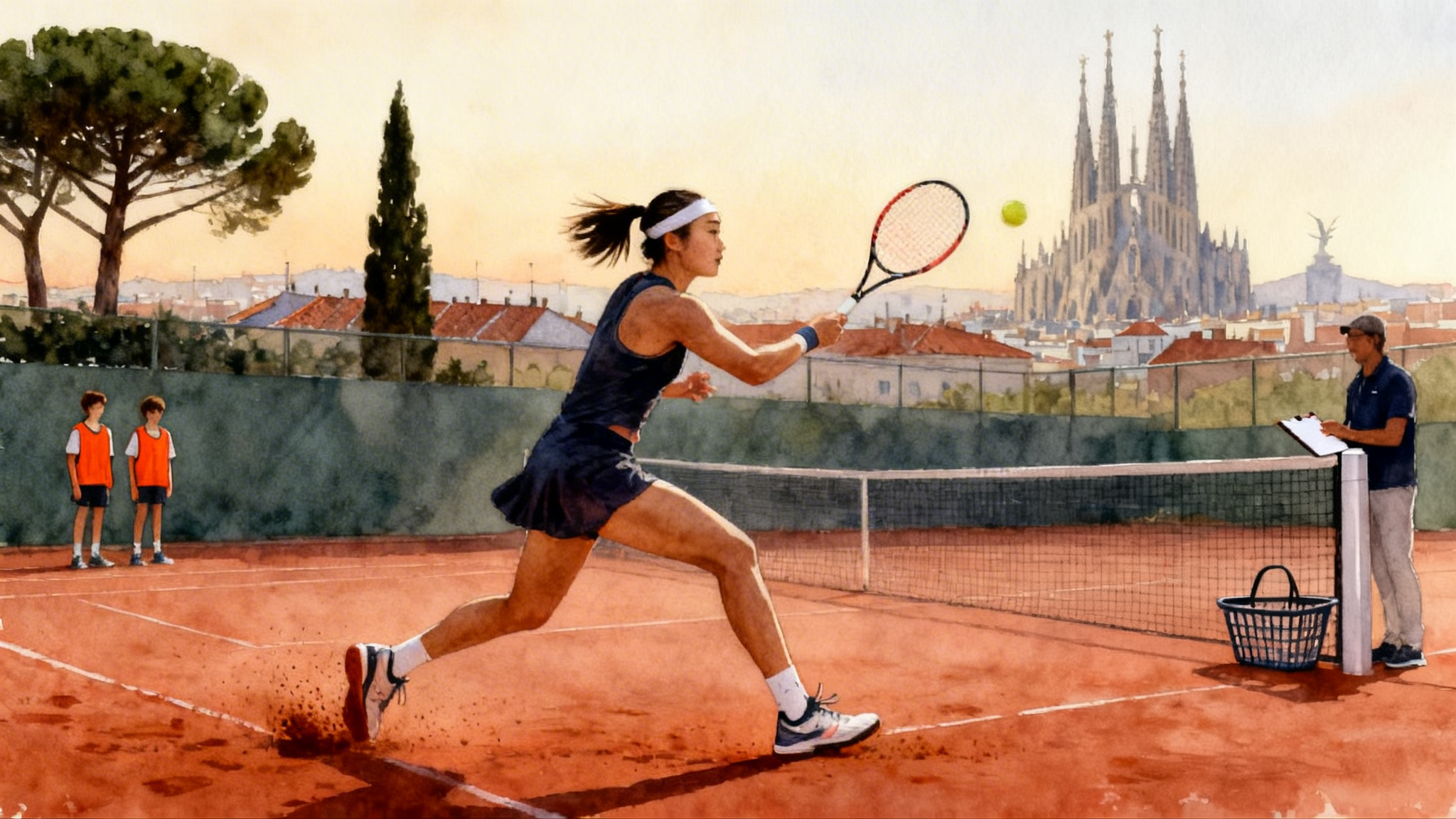
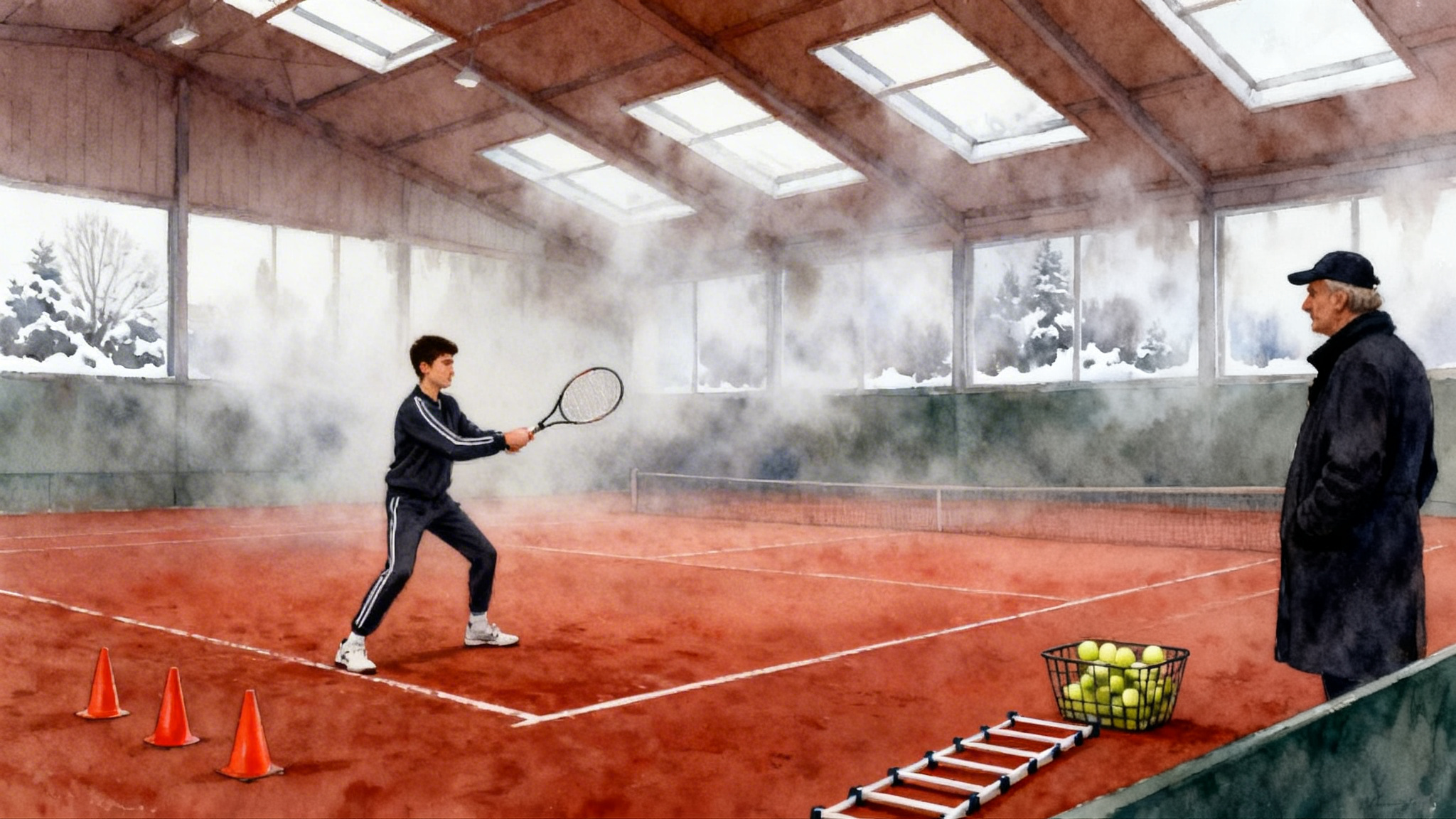
If you watched early Medvedev sessions there, the court looked like a track and a chessboard combined. Cones and lines marked recovery lanes. Trainers cued split-step timing, sometimes by voice, sometimes with a clap from the sideline. They drilled the first two steps out of the split, then the last two steps into contact, since those bookends decide balance.
Concrete examples that showed up in his matches later:
- Deep court return stance with an immediate inside-out recovery path, so he could defend big serves yet still cover the sharp angle on the next ball.
- Open-stance backhand with a late hip turn, which let him absorb pace while staying ready to change direction down the line.
- The two-step reset after a stretched forehand, a tiny pause that let him read the opponent before he chose to counter or neutralize.
Nothing was random. If the day’s theme was “neutral ball patience,” the staff would add a rule, no winner attempts until shot number eight, then a free attack. If the theme was “take time away,” they would shorten recoveries, start rallies from inside the baseline, or add a point bonus for any down-the-line strike that changed the pattern.
A mindset that fits the body
A body that moves like rubber needs a mind that plays like water. In Cannes they treated mindset as a set of habits, not as mood. They created specific rituals that matched Medvedev’s game identity:
- Decision windows. Coaches would call out colors or numbers in the middle of a rally to cue a pre-selected response, for example, red meant play cross, blue meant change line. This trained him to commit under noise.
- Short, frequent feedback. Instead of long speeches, coaches would offer a single action point between drills, for example, “split sooner,” “aim middle,” “back up half step.” Fewer words, more signal.
- Score physics. Practice points started at awkward scores like 30 all or 15 30, then coaches tracked serve patterns and return depth. The player learned to manage pressure as a math problem.
A tactical identity that makes opponents uncomfortable
Tennis tactics become powerful when they fit the physics of your movement. Medvedev’s identity hardened in Cannes around three pillars.
- Take time away with depth, not only speed. He learned to send heavy, flat balls deep through the middle third, a safe target that still squeezes the court. Opponents lose angles and get pushed back without an obvious short ball to attack.
- Change direction less often, but with violence. By holding the crosscourt pattern a few beats longer, he forces the opponent to lean, then he snaps down the line. The change is rare, so it hurts more.
- Return from far back, then sprint forward to steal the next ball. The return itself is the bait. The surprise is the second shot, struck early from inside the baseline.
The result was a game that looked odd until you tried to beat it. The ball kept coming, the geometry kept narrowing, and any rush to finish a point against him felt like walking into a trap.
Choosing a captain: why Medvedev committed to Gilles Cervara in 2017
For the first stretch in France, Medvedev worked inside a shared structure. But by 2017 he needed one voice to set priorities and own the plan. Later that year he made Gilles Cervara his full-time coach. The logic was clear. Cervara knew the system in Cannes, he helped design the day-to-day drills, and he had the temperament to manage a cerebral competitor. The results confirmed the fit. In 2019 Cervara was recognized by his peers as ATP Coach of the Year in 2019.
The commitment to a lead coach changed the way the team worked. A single decision-maker clarified three things that any family can copy.
- Decision rights. Who calls the schedule, the practice themes, and the final match plan. No confusion, no committees.
- Seamless feedback loop. The coach who assigns drills also owns the match review and the next day’s plan. Nothing gets lost in translation.
- Accountability. When the player and the coach both know who owns what, egos shrink and work speeds up.
2020: following the coach out of the academy
Great academies are launchpads, not permanent homes. By late 2020, Medvedev and Cervara chose to step outside the academy structure and run a tighter, autonomous setup, often basing training blocks at Mouratoglou Academy while keeping their own staff cadence. For broader Riviera context, see the Mouratoglou and Gauff pathway. Physical coach Eric Hernandez later described the arc from Cannes in 2014, to Cervara’s full-time role in 2017, to the independent model at the end of 2020 in Eric Hernandez on Medvedev’s timeline.
Why did this pivot work for Medvedev?
- The playing style was mature enough to carry between venues. The team no longer needed the daily guardrails of an academy to maintain standards.
- The staff roles were already stable. The same eyes watched the same details, only the backdrop changed.
- Tournament travel and scheduling gained flexibility. Independent operations let the team shape training blocks around surfaces and events without fitting into a broader academy calendar.
For families, the lesson is not that everyone should leave academies. It is to define what the academy is for. If the goal is to build a foundation, then use the structure. If the goal later becomes optimization for a known style, a smaller, mobile unit may serve better.
What families can copy, step by step
This story is not only about an elite champion. It is a case study in how to use a training environment at the right time, then commit to a coach, then pivot when the plan demands it. Here are practical takeaways.
1) Relocating for an academy
Relocation is a project. Treat it like one.
Checklist to complete before you move:
- Define the goal in writing. Examples: build a clay-court base for two years, raise serve speed by 10 percent, add physical robustness before an International Tennis Federation junior schedule. Goals should be measurable and time bound.
- Audit the daily plan. Request a sample weekly schedule that includes court themes, strength work, mental skills, and recovery. Look for alignment with your goals, not for glossy facilities.
- Verify coach-to-player ratios. Small numbers mean more touches and faster feedback. Ask for the cap on players per court in your child’s band.
- Ask for hard data. How does the academy track progress. Examples: serve location charts, return depth heatmaps, movement tests, match statistics by situation.
- Outline the school pathway. Options include local schools, international programs, or accredited online formats. Make sure practice windows align with school hours.
- Plan the first 90 days. Agree on a trial period with a midpoint review. Put the criteria on paper, such as attendance, health markers, and specific skill targets.
- Set an exit plan. Decide what would trigger a change, for example a three month plateau in agreed key performance indicators or a mismatch with the lead coach.
Financial and legal basics to prepare:
- Budget for coaching, court time, fitness, physio, and travel separately. Bundled prices often hide the true cost of tournaments.
- Sort visas, health insurance, and guardianship requirements early. Delays here kill momentum more than bad backhands.
- Choose housing within walking distance of the training base. Commutes eat recovery and create late arrivals.
2) Committing to a lead coach
A lead coach is not a title. It is a contract of clarity. Here is how to make it work.
- Write the performance plan. Include target events, style priorities, and measurable checkpoints. Examples: first serve percentage to 64 percent by August, return depth average beyond the service line on second serves, backhand down-the-line attempt rate up to twice per game when ahead in the score.
- Run weekly one-on-ones. Fifteen minutes every Friday for player and coach only. What improved, what stalled, what changes next week. Keep a shared log.
- Decide who owns what. One person sets daily practice. One collects and analyzes match data. One handles fitness. If a role overlaps, define the tiebreak rule.
- Protect the relationship. Parents and secondary coaches should route technical feedback through the lead coach unless there is a health or safety issue.
- Benchmark openly. Once a quarter, scrimmage against known opponents and grade performance versus past versions, not only against the opponent’s level.
What if you are unsure the coach is “the one.” Use a two month project. Pick one high-impact theme, for example, first four shots on serve games. Give the coach full control over that theme, then review match data. If you see measurable progress and the athlete enjoys the work, commit. If not, you have learned without blowing up the entire structure.
3) Knowing when to pivot
A pivot is not a confession of failure. It is a sign that your system is alive. Use data and behavior to guide the call.
Key performance indicators that justify change:
- Serve effectiveness. Track serve plus one success rate, not only aces. If it erodes over a season despite targeted work, the plan may be wrong.
- Return impact. Measure second-serve return depth and points won. If depth numbers fall and the player backs up without a plan, rethink the approach.
- Movement economy. Repeat simple court sprints with a racket in hand and full split steps. If times get slower through a block, the physical plan or recovery is off.
- Pressure outcomes. Chart break points created and saved across surfaces. If pressure numbers stall while general stats improve, something in the match-play practice is missing.
Behavioral signs that matter:
- The athlete stops asking questions. Curiosity is fuel. Silence signals disengagement.
- Good days look the same as bad days. A flatline can be worse than a slump. It often means the practice themes are not specific enough to create spikes.
- The team stops arguing productively. Good programs debate drills and plans, then unify. If there is no debate or only conflict, change is due.
Pivot options to consider, ranked from light to heavy:
- Change the environment but keep the coach. Short training blocks at a different club can reset energy without breaking trust.
- Keep the environment but bring in a specialist for a defined window, for example a serve consultant for six weeks.
- Reduce the tournament load for a month and run a themed training block, for example all hard-court movement or clay-court patterns.
- Follow your lead coach to a new base if the relationship is the engine of progress and the new base fits the plan.
- Rebuild the staff and select a new lead coach if the core identity and results have stalled for more than one season.
Why this model worked for Medvedev
Cannes did not try to squeeze him into a template. The coaches saw what was already there and built a framework around it.
- A long contact zone on both wings and a deep return stance became strategic weapons once paired with clear recovery lanes and disciplined footwork.
- A taste for problem solving hardened into match craft when practice sessions simulated weird scores and surprise patterns.
- A body that loved to stretch turned into pressure on the opponent when depth targets and rare, violent line changes were drilled on purpose.
Then, when the time came, he chose a captain and simplified the chain of command. Finally, he kept the core and changed the setting in 2020, following the coach while protecting the identity that Cannes had helped him clarify.
The last word
Relocation is not magic. Academies are not shortcuts. Coaches are not wizards. Progress comes from a clear identity, a small room that reflects it back to you, and the courage to change the room when the project outgrows the walls. Medvedev’s road from Moscow to Cannes shows how to do it. Build the system, choose the captain, and if the destination changes, move the ship while keeping the crew.