Serve Development 2026: Safe Power and Spin by Age Level
Build a serve that lasts. A clear, level‑based guide for juniors, college‑bound, and adult league players, with mobility and prehab, toss and contact checkpoints, flat‑slice‑kick progressions, weekly workload caps, and 12‑week plans.
 Tommy
Tommy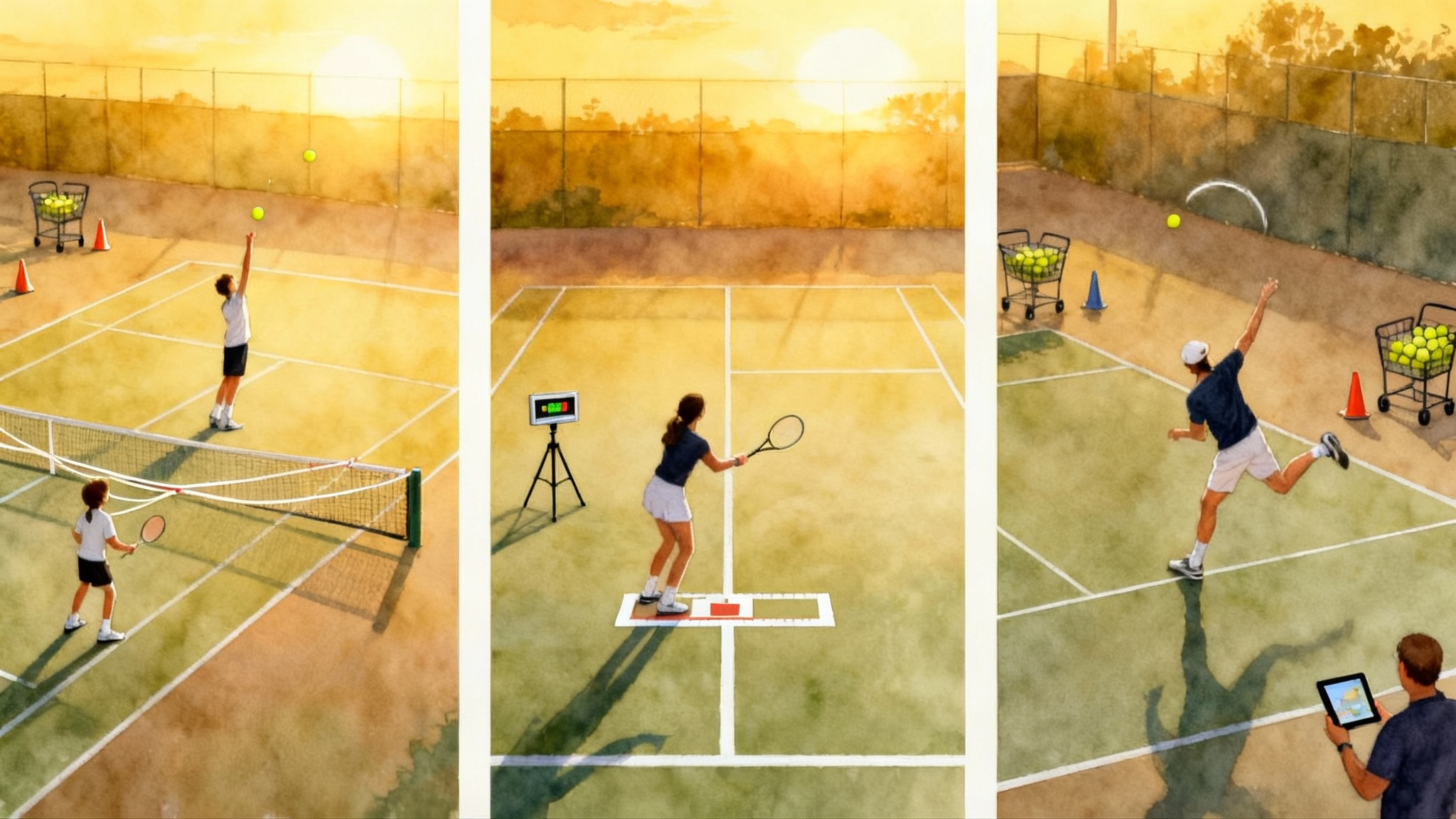
Why a level-based, age-specific serve plan matters in 2026
A great serve should feel repeatable on your best day and your tired day. It should scale safely from first ball of practice to tiebreak pressure. That is the goal of a level-based approach. We match what the body can do at a given age and training age with the right progressions. Then we measure with simple benchmarks so gains are visible and sustainable.
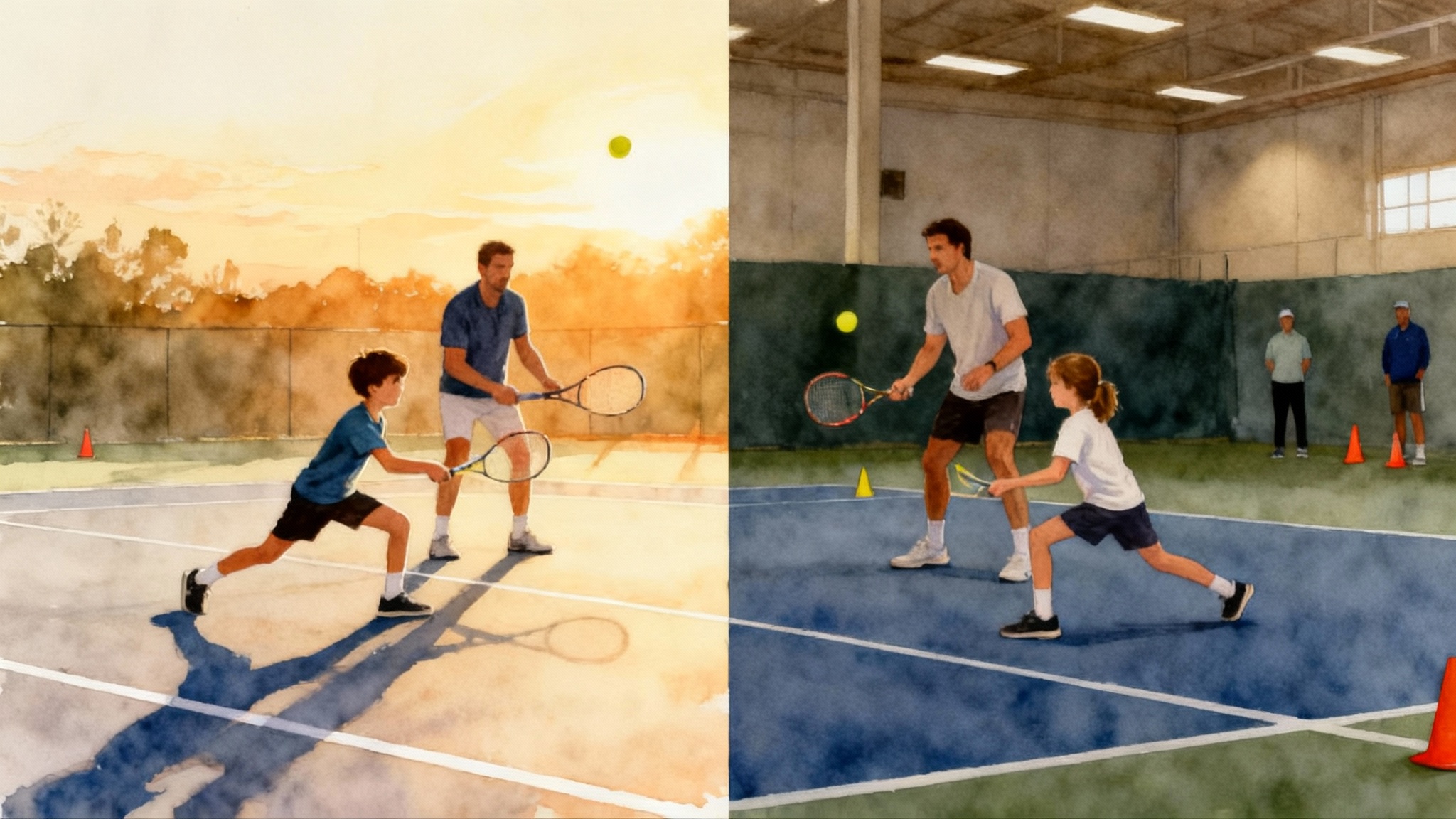
This guide is split into three groups: Under 12, Under 16 and college-bound, and adult league players. Each group gets mobility and prehab, contact and toss checkpoints, spin progressions, workload caps, benchmarks, and a 12-week plan. We finish with a sample Serve Lab session at Legend Tennis Academy that shows how to accelerate changes using targets and a radar gun.
The safety lens: mobility and prehab that protect the shoulder and elbow
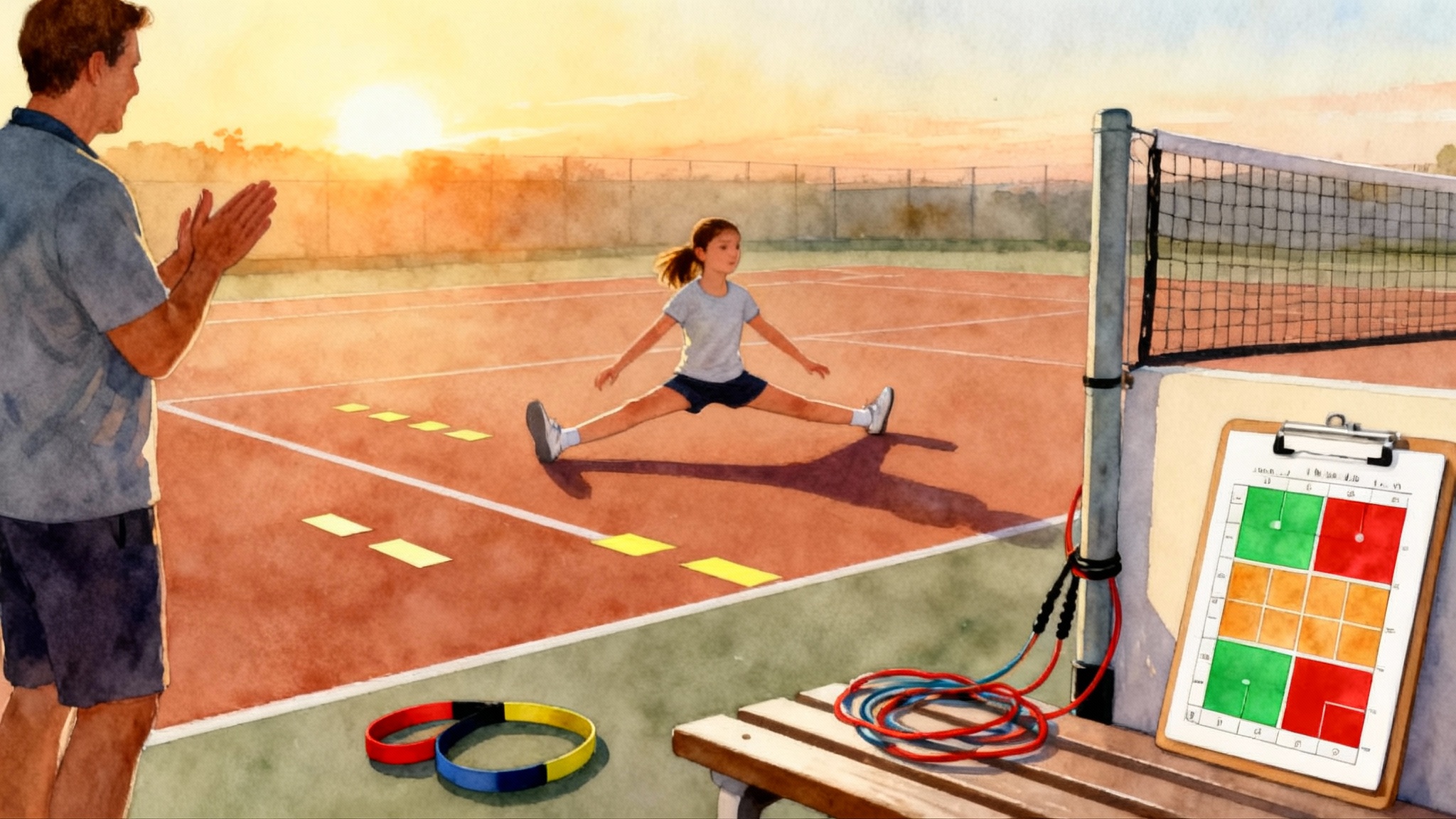
The serve asks the shoulder to externally rotate, then rapidly internally rotate while the elbow extends and the wrist whips. Safe power starts long before the toss. Build a 10 to 12 minute prehab block before every session.
Recommended prehab circuit
- Scapular control: 2 sets of 12 wall slides, 2 sets of 12 prone Y-T-W on a bench. Cue the athlete to keep ribs down and neck long.
- Rotator cuff: 2 sets of 12 external rotation at 90 degrees abduction with a light band, 2 sets of 12 internal rotation at 90 degrees. Move slowly on the way back.
- Forearm and elbow: 2 sets of 12 wrist pronation and supination with a hammer or small dumbbell, 2 sets of 12 eccentric wrist extension.
- Thoracic mobility: 8 slow open-books per side, then 30 seconds of quadruped thread-the-needle per side.
- Hips and ankles: 8 per side split squat iso hold for 15 seconds at the bottom, then 10 controlled ankle rocks with the knee tracking over the third toe.
Self-tests that gate progress
- Shoulder external rotation test: standing 90-90 position against a wall, forearm vertical. Can you touch the wall behind you with the back of your hand without arching your lower back or flaring ribs? If not, stay on lighter serves and focus on mobility.
- Scapular upward rotation test: arms overhead to ears without rib flare. If ribs pop up or lower back arches, address thoracic and core control before chasing more speed.
- Elbow soreness rule: zero pain during or after. If you feel soreness local to the medial elbow within 24 hours, cut total serves by 30 percent for the week and increase forearm strength work.
Equipment that helps
- A basic Pocket Radar speed gun lets you track speed without a big setup. Systems like TrackMan and Playsight add spin and bounce data if your facility has them.
- Balls matter. Use new or matched-bounce practice balls for benchmark sessions so your numbers are comparable week to week.
Contact and toss checkpoints that make the serve buildable
- Toss window: for a right-hander, the ideal window is slightly in front of the lead toe and just inside the hitting shoulder on a flat serve. Slice toss lives a ball’s width to the right. Kick toss lives a ball’s width to the left and a bit farther back. Left-handers mirror this.
- Eye-to-contact sequence: eyes up to the ball, chin tall, then rotate from the ground up. If the head dives early, contact drops and power leaks.
- Racket drop and elbow: think of the elbow drawing a small circle as the racket drops behind you. Do not force a deep drop. Let the drop happen from relaxation, not from yanking the shoulder.
- Pronation cue: feel the strings “show the sky” during the drop, then “face the target” after contact. This organizes natural forearm rotation without overthinking.
Common misses and quick fixes
- Ball drifting right for a right-hander: likely the toss is too far right or shoulders are opening early. Place a cone just inside the baseline in front of your lead toe. Toss to the cone, then hit.
- Nets on second serve: likely the toss is too far forward for kick. Shift the toss one ball left and an inch back. Aim to send the ball up and over a head-high elastic cord across the net.
- Long misses on flat: likely hitting too high on the ball without vertical axis control. Add a tiny slice feel on contact. It lowers the launch and brings the ball down.
Flat, slice, and kick progressions that work for every level
Grip note: all players should build comfort in a continental grip. If coming from an eastern forehand grip, change gradually with shadow swings and short-court serves.
Progression template
- Shadow pattern: dry swing for 8 reps. Focus on toss arm straight up, delay of racket arm, smooth drop, and full reach.
- Short-box serves: serve from the service line to the opposite box for 10 balls. Emphasize upward swing path and relaxed hand.
- Three-quarter court: step back halfway between the service line and baseline for 10 balls. Keep the same height and shape.
- Full court targets: 20 balls with simple aims. Deuce T and wide for flat and slice. Ad T and wide for kick.
- Pressure set: 10 serves to one target with a make goal. If you miss the goal, return to three-quarter court for 5 balls and retry.
Spin cues
- Flat: cue a taller reach and the sound of a clean pop. Ball should travel on a lower arc and land deep in the box.
- Slice: picture brushing the outside of the ball from one to seven on a clock face for a right-hander. The bounce should skid and bend.
- Kick: picture brushing from seven to one on a clock face for a right-hander. The bounce should rise and arc to the backhand side for most opponents.
Weekly workload caps that protect progress
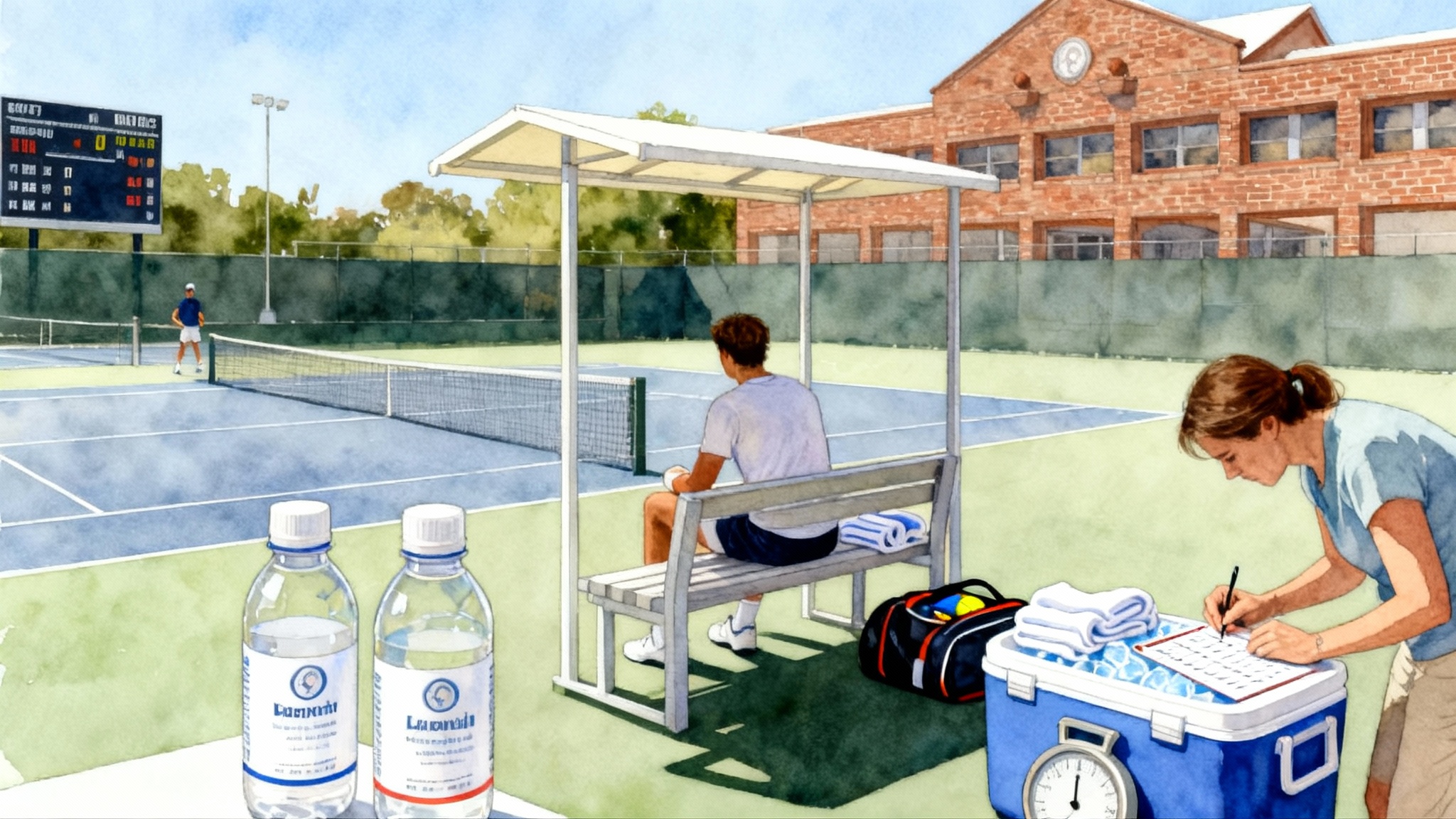
Use total serve counts, not just buckets. Total includes first and second serves in drills and points. Pair volume control with tennis recovery routines to protect shoulders and energy.
- Under 12: cap at 40 serves per session, 3 sessions per week, 10 extra on match day. Weekly total cap 130. Rest at least 48 hours after the heaviest day.
- Under 16 and college-bound: cap at 60 to 80 per session based on season, 3 to 4 sessions per week. Weekly total cap 220 during build, 160 during taper. Insert a deload week every fourth week at 60 percent volume.
- Adult league players: cap at 50 to 70 per session, 2 to 3 sessions per week. Weekly total cap 160. Add one mobility-only day between heavy days.
Quality ratios
- First to second serve ratio in practice: 2 to 1 for juniors, 1 to 1 for college-bound, 3 to 2 for adult league players who need second serve confidence.
- Cluster work: serve in sets of 5 to 8, rest 60 to 90 seconds, then repeat. Quality stays high and tissues recover.
Simple benchmarks that anyone can track
Radar speed targets are guides, not ceilings. Use them to see if technique changes are paying off.
Under 12 benchmarks
- Flat speed: 55 to 75 miles per hour. Stronger preteens may touch high 70s briefly.
- Slice speed: 50 to 65 miles per hour with clear side bend in flight.
- Kick speed: 45 to 60 miles per hour with a bounce that rises above hip height.
- Accuracy: 5 of 10 to the deuce T from full court using a one-by-one meter target. Repeat in the ad court.
- Toss repeatability: 7 of 10 tosses land in a two-ball circle when you let them drop without swinging.
Under 16 and college-bound benchmarks
- Flat speed: 75 to 100 miles per hour for most high school players, 95 to 115 for collegiate hopefuls. Consistency matters more than peak.
- Slice speed: 70 to 95 miles per hour with distinct curve.
- Kick speed: 65 to 85 miles per hour with shoulder-high bounce for the receiver.
- Accuracy: 7 of 10 to each of the four primary targets, T and wide on both sides, using a one-by-one meter target.
- Second serve pressure set: 8 of 10 kick serves landed to the ad T at match tempo.
Adult league benchmarks
- Flat speed: 75 to 95 miles per hour for National Tennis Rating Program players (see USTA NTRP levels overview), 90 to 110 for level 4.0 to 4.5.
- Slice speed: 70 to 90 miles per hour with late bend into the body or sideline.
- Kick speed: 60 to 80 miles per hour with a bounce that climbs to the chest when struck to the backhand side.
- Accuracy: 6 of 10 to each primary target, 8 of 10 on your best target.
- Double fault guardrail: no more than 2 misses in any 10-ball second serve set.
The 12-week plans
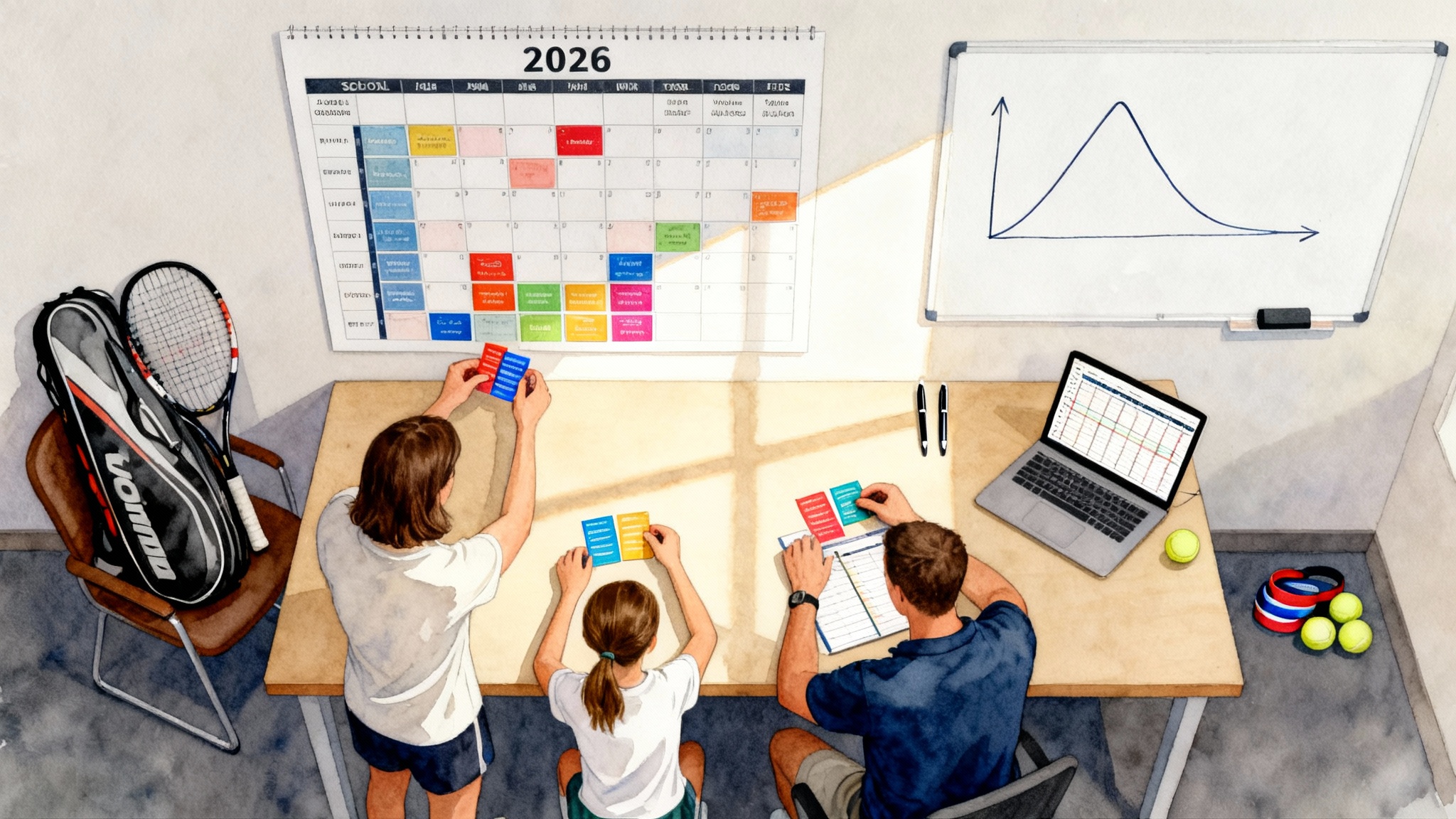
All plans use three phases: Foundation in weeks 1 to 4, Build in weeks 5 to 8, Sharpen in weeks 9 to 12. The final week includes a two-day taper before a match or test.
Under 12 plan
Foundation weeks 1 to 4
- Sessions per week: 3. Serves per session: 30 to 40.
- Focus: continental grip comfort, toss window, upward swing path. Use short-box and three-quarter court. Finish with 10 full court serves.
- Prehab: full circuit. Teach names and reasons for each drill.
- Benchmark end of week 4: 5 of 10 to deuce T, flat speed average up by 3 miles per hour from week 1.
Build weeks 5 to 8
- Sessions per week: 3 to 4. Serves per session: 40.
- Focus: add slice. Keep 60 percent flat, 40 percent slice. Start kick mechanics with shadow and short-box only.
- Games: best of five pressure sets to T, then to wide. If the goal is missed, return to three-quarter court.
- Benchmark end of week 8: first slice makes show clear curve and skid. 5 of 10 to ad wide on slice.
Sharpen weeks 9 to 12
- Sessions per week: 3. Serves per session: 30 to 35. Slight taper in week 12.
- Focus: introduce kick at three-quarter court, then 10 full court reps. Keep volume modest. Practice first-second sequencing.
- Match application: call serve locations before each point in practice matches.
- Benchmark end of week 12: 45 to 60 miles per hour kick with hip-high bounce. 6 of 10 to ad T on second serve.
Under 16 and college-bound plan
Foundation weeks 1 to 4
- Sessions per week: 3 to 4. Serves per session: 50 to 60.
- Focus: deepen racket drop through relaxation, not force. Refine toss windows for all three serves.
- Prehab: full circuit plus additional thoracic work, 2 extra sets of external rotation at 90 degrees.
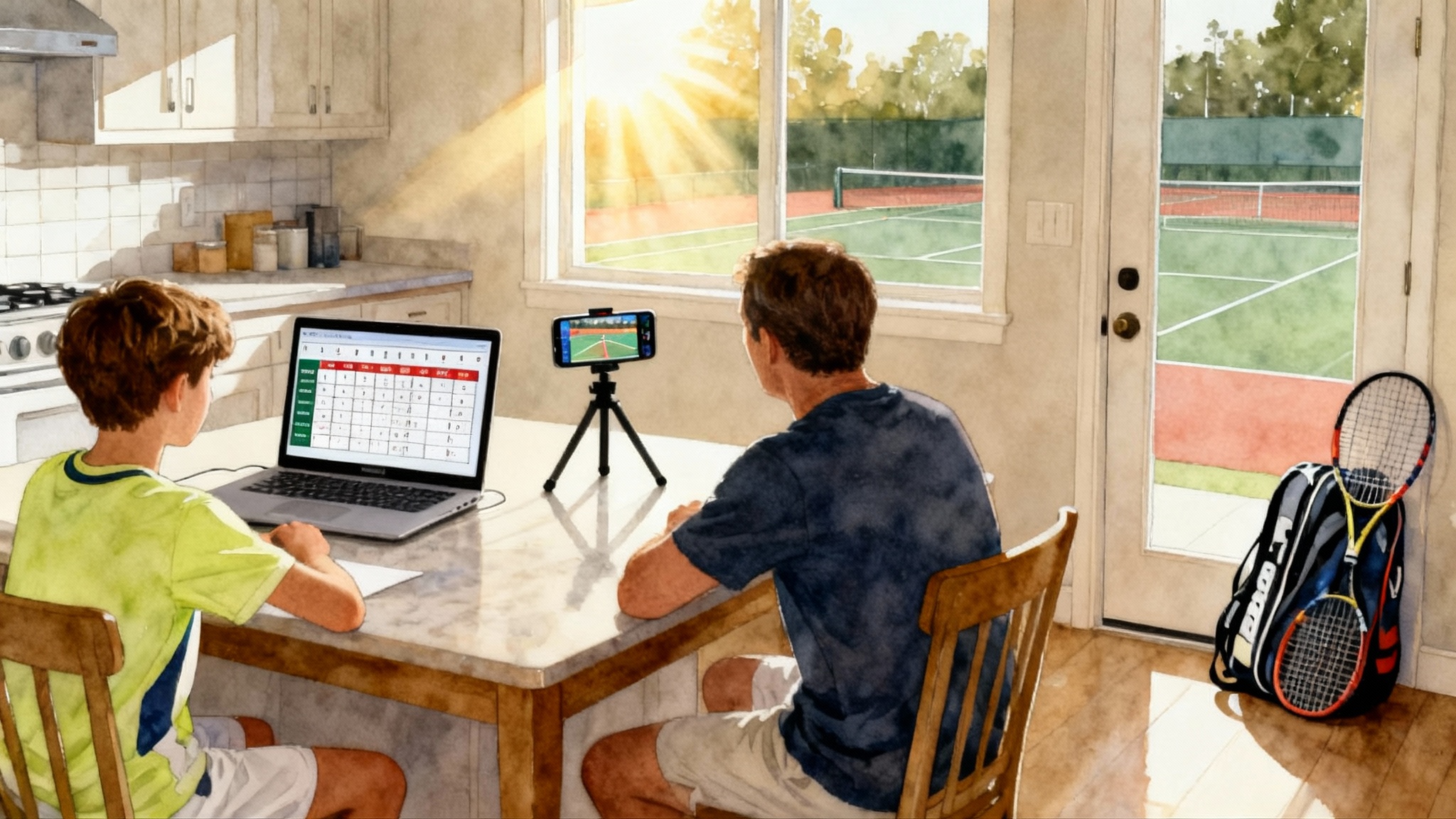
- Video: two angles per week. Back view for toss and spin axis, side view for timing. Use slow motion and see our smartphone video analysis guide.
- Benchmark end of week 4: flat average up 3 to 5 miles per hour with same or better accuracy. Second serve bounce consistently above hip height.
Build weeks 5 to 8
- Sessions per week: 4. Serves per session: 60 to 80. Deload in week 8 at 60 percent volume.
- Focus: advanced slice to both corners. Kick from ad side to T and wide with intent. Add serve plus one patterns.
- Speed clusters: 3 clusters of 8 flat serves to T aiming for 90 percent of peak speed. Rest 90 seconds between clusters.
- Benchmark end of week 8: 7 of 10 to each target on second serve at match tempo.
Sharpen weeks 9 to 12
- Sessions per week: 3 to 4. Serves per session: 50 to 60. Taper in week 12.
- Focus: pattern clarity. Two go-to first serve locations and one bailout second serve that holds under pressure.
- Pressure ladders: start at 5 in a row to a called target. Each miss resets the count. Cap at 15 attempts.
- Benchmark end of week 12: stable match-day speeds within 95 percent of practice peak, double faults under 5 percent across a set.
Adult league plan
Foundation weeks 1 to 4
- Sessions per week: 2 to 3. Serves per session: 50 to 60.
- Focus: shoulder-friendly rhythm. Eliminate excess muscle tension early in the motion. Build a dependable slice second serve.
- Prehab: full circuit, plus 10 minutes of hip mobility on off days.
- Benchmark end of week 4: 6 of 10 to deuce T and ad wide on slice. Double faults under 15 percent in practice sets.
Build weeks 5 to 8
- Sessions per week: 3. Serves per session: 60 to 70. Deload in week 8.
- Focus: flat first serve to two targets, slice second serve accuracy, early kick exploration if shoulders are healthy.
- Pattern work: serve plus a cross-court forehand to open space.
- Benchmark end of week 8: flat average speed up 3 miles per hour with same accuracy. Second serve pass count of 7 in a row to chosen target.
Sharpen weeks 9 to 12
- Sessions per week: 2 to 3. Serves per session: 50 to 60. Taper before league matches.
- Focus: match rehearsal. Call serve location and first ball pattern. Keep a simple stat: first serve percentage and points won behind serve.
- Benchmark end of week 12: first serve percentage 60 percent or better, second serve holds shape and depth under scoreboard pressure.
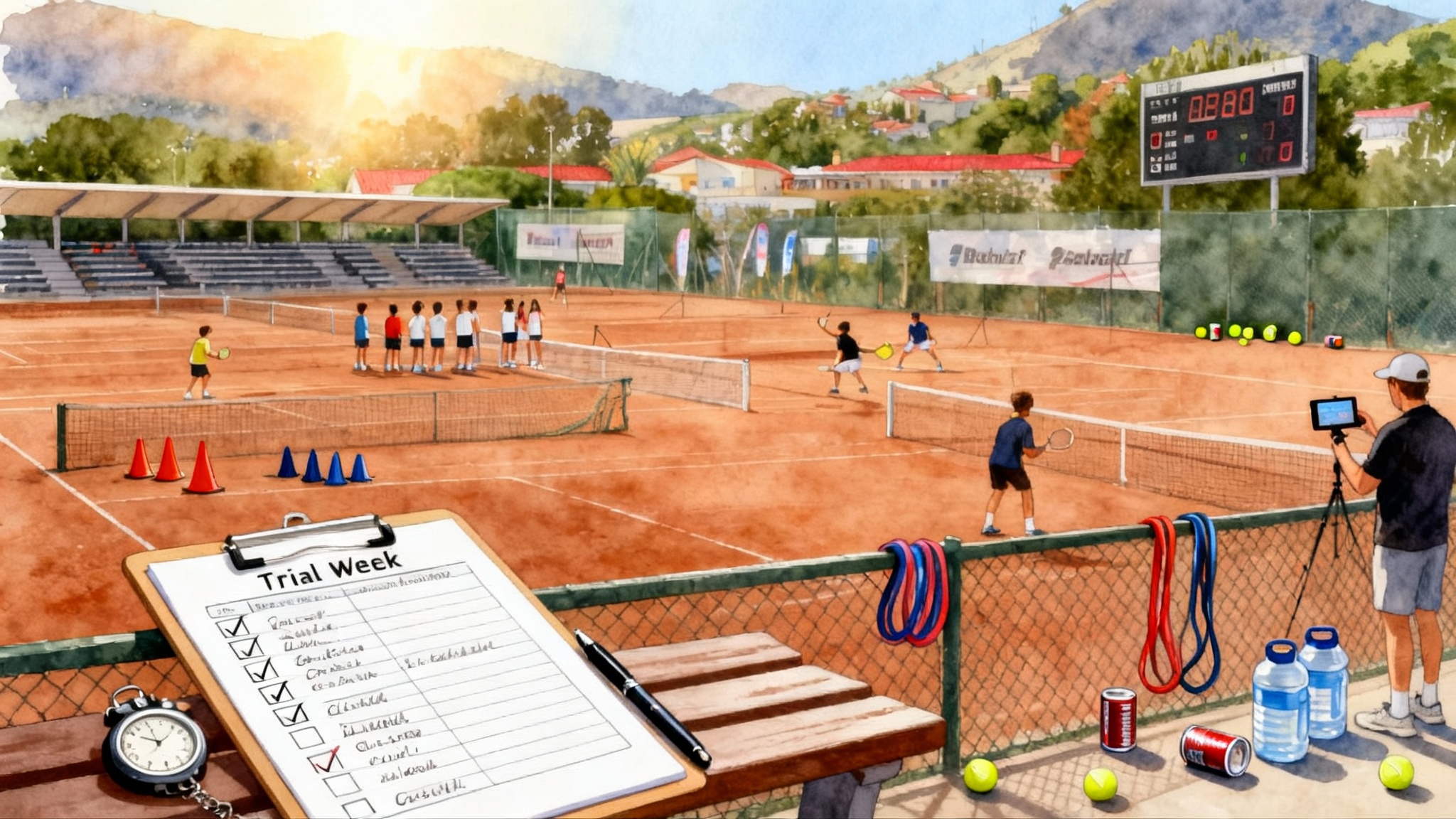
A sample Serve Lab session at Legend Tennis Academy
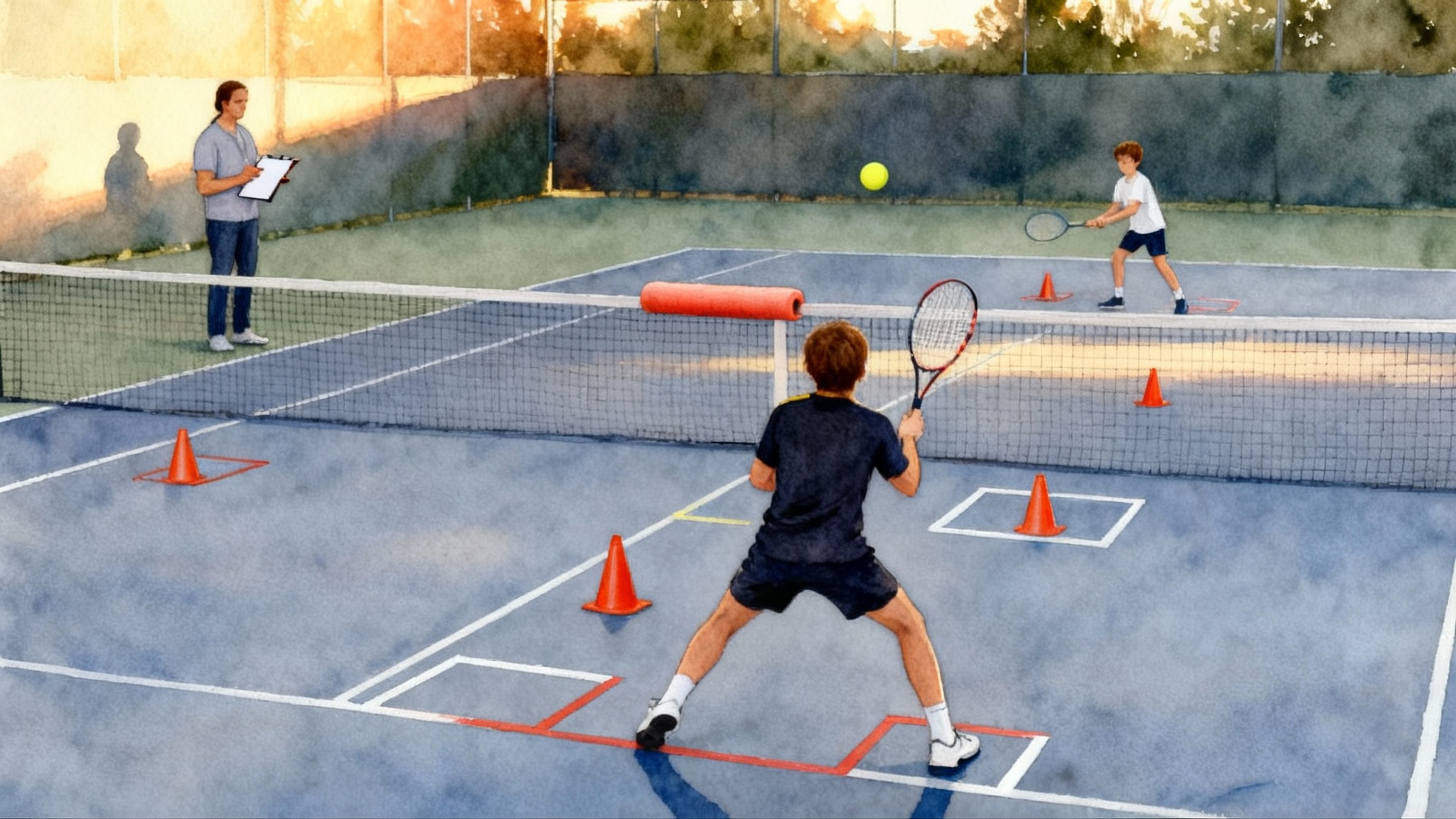
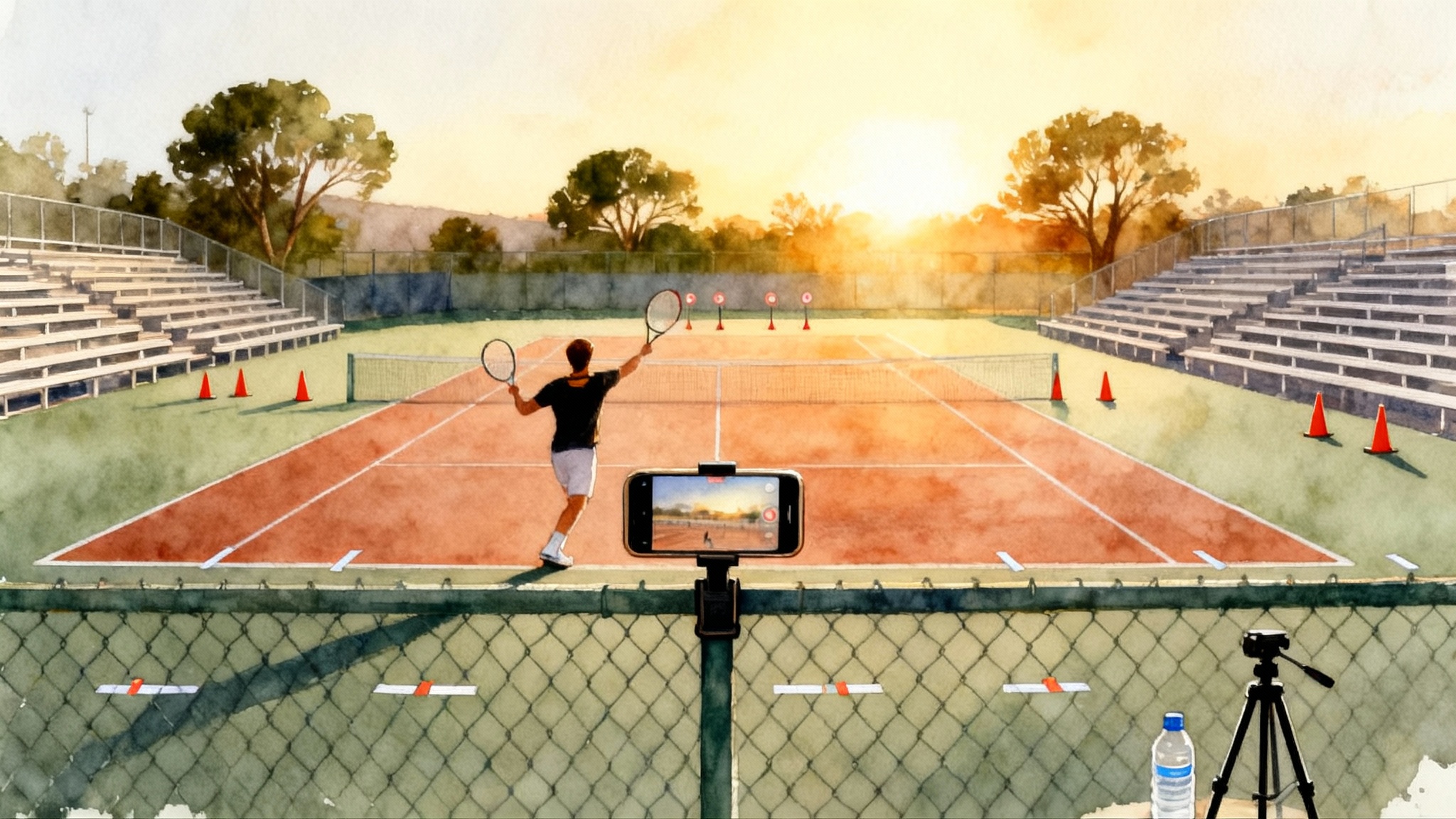
Session length: 60 minutes. Goal: correct toss drift and add kick shape without overloading the shoulder. Tools: two one-by-one meter targets, a radar gun on a tripod five meters behind the baseline at center, a camera at the back fence.
Warm up, 10 minutes
- Prehab circuit abbreviated: 1 set each of wall slides, Y-T-W, external and internal rotation at 90 degrees, wrist pronation and supination. Finish with 6 open-books per side.
- Rhythm shadows: 8 smooth shadow serves focusing on late racket drop and tall reach.
Block 1, 15 minutes: toss correction
- Cone toss drill: place a cone one shoe length inside the lead toe. Toss and catch 10 times. Toss should land within a two-ball circle around the cone.
- Half-serve drill: from three-quarter court, 12 balls to the deuce T aiming for a neutral toss, not too far right.
- Data: if the radar reads plus two to three miles per hour after the toss change, lock it in before moving on.
Block 2, 20 minutes: introduce kick shape
- Elastic cord drill: attach a safe elastic cord across the net at shoulder height of the receiver. Goal is to clear the cord with arc.
- Clock cue: brush seven to one on a right-hander. Start with 10 short-box serves, then 10 three-quarter court.
- Full court set: 10 kick serves to ad T at 70 percent effort. Rest 60 seconds after each set of 5.
- Data: aim for 60 to 70 percent of flat serve speed with a visible high bounce. Do not chase speed yet.
Block 3, 10 minutes: pressure and pattern
- Ladder: make 4 kick serves in a row to ad T. If you miss, reset to zero. Cap attempts at 12.
- Serve plus one: call a kick to ad T, then a forehand to the open deuce side. Repeat 6 times.
Wrap up, 5 minutes
- Video review: side and back angles. Confirm toss window and spin axis.
- Homework: 5 minutes of toss practice daily, 2 prehab circuits before the next session, and a 20-ball kick set with rest between clusters.
Expected outcome
- Toss variability narrows within the session. Kick shape becomes reliable at slower speed. A two to three mile per hour gain on flat from better contact height is common without any extra stress.
Troubleshooting guide by symptom
- Sore front of shoulder after practice: reduce volume by 30 percent for one week, add isometric external rotation holds at 90 degrees three times per week, and ensure toss is not drifting too far forward.
- Elbow ache at the bump on the inner side: cut slice volume and increase forearm pronation and supination strength. Check that the hand is not snapping early. Keep the wrist neutral through contact.
- Ball flies long on flat: aim to send the ball through the back of the court tape, not the back fence. Add a small slice feel to lower the launch. Reduce effort by 10 percent and regain shape.
- Kick dies short: move the toss one ball left for a right-hander and one inch back. Brush up longer before rotating the trunk.
How to choose targets and read data
- Targets: tape or rubber squares one by one meter at deuce T, deuce wide, ad T, ad wide. Start by owning one target per serve type.
- Radar placement: center behind the baseline, slightly above net height if possible. Measure 3 ball averages, not single peaks.
- Good data rules: only compare like with like. Do not compare short-box numbers to full court. Use similar balls and conditions.
Putting it together
The serve you want in 2026 is not just fast. It is organized, measurable, and kind to your joints. Prehab builds a shoulder that can handle the load. Toss and contact checkpoints remove the guesswork. Flat, slice, and kick progressions add layers without confusion. Workload caps keep your plan trainable week after week. Benchmarks give you proof that the work is paying off.
Start with your group’s 12-week plan. Bring a radar gun if you have one and a couple of targets. If you can, book a Serve Lab at a facility like Legend Tennis Academy or ask your coach to run one. The combination of precise targets, controlled volume, and timely feedback builds a serve that shows up under pressure. That is safe power. That is useful spin. And that is how juniors, college-bound competitors, and adult league players can all build a serve that lasts.