Winning Doubles in 2026: Formations, Signals, and 4-Week Plans
A practical, all-levels blueprint for doubles in 2026. Learn two-up vs one-up positioning, I-formation, Australian setups, simple hand signals, and poach or fake triggers, plus a 4-week plan and printable checklists.
 Tommy
Tommy
Why doubles is a fast track to winning more matches
Doubles rewards clarity. Two players who know where to stand, what ball they want, and how they will move together can beat a pair with stronger strokes but messy teamwork. The good news is that teamwork is learnable. With a few core formations, a simple hand-signal system, and four weeks of targeted practice, juniors, parents, and adults can jump a full league level or flip tight school matches.
Think of your team as a small sports car. Singles handles like a long bus that needs room to turn; doubles cuts and pivots through tight angles. Your job is to take more centerline balls, set predictable patterns, and make the net player your striker.
This guide gives you an age-appropriate plan across four weeks, printable checklists, and an academy spotlight with drills you can run this week.
The four core formations you will use in 2026
You do not need ten formations. You need four you can execute under pressure. Each section explains where to stand, what to look for, and a short drill.
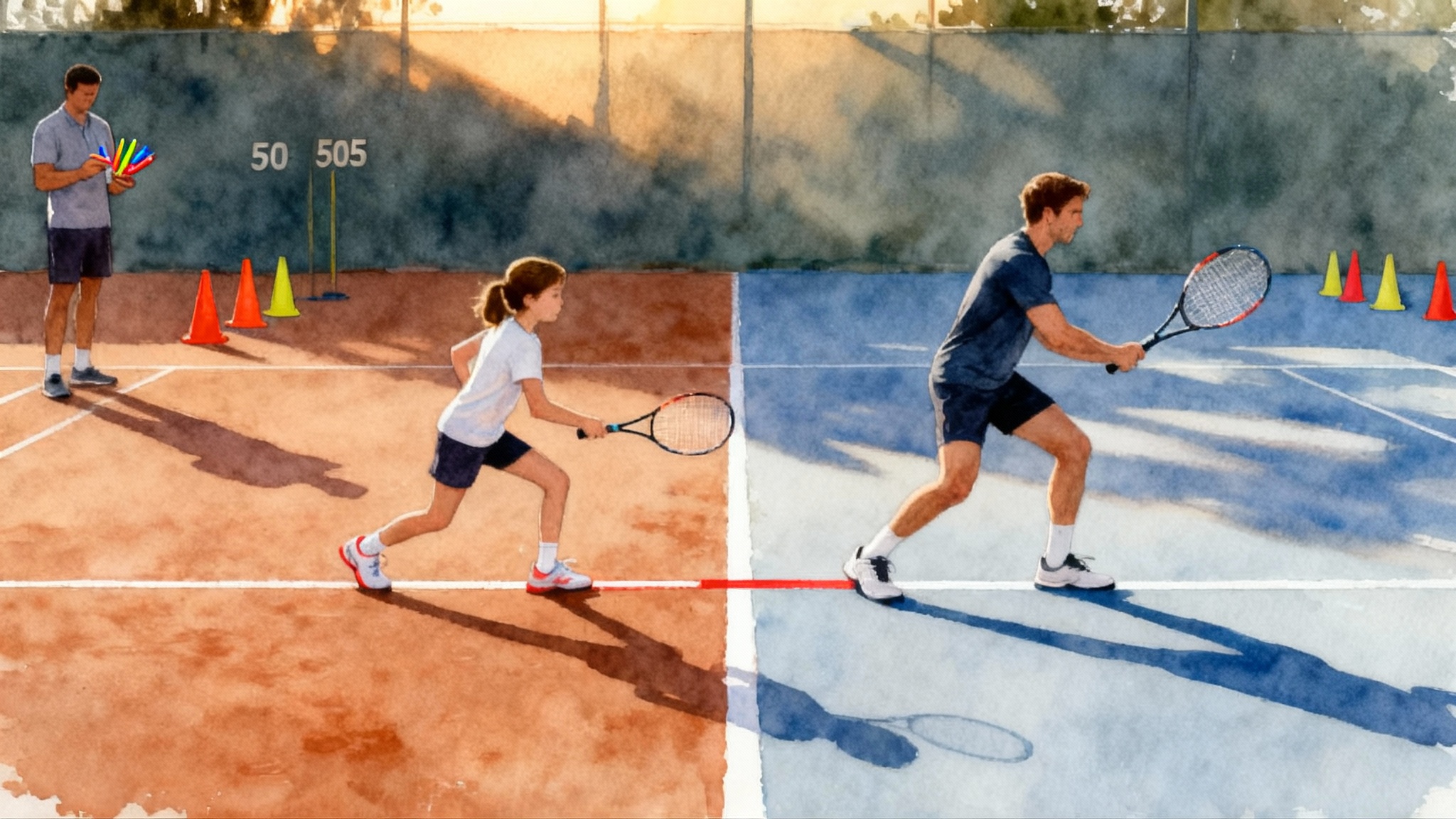
Two-up versus one-up one-back
-
What it is
- Two-up: both partners at the net. Best for finishing points quickly, pressuring second serves, and smothering soft returns.
- One-up one-back: server stays back while partner starts at the net. Best for heavy servers, first-serve points, or on quick courts where the serve sets up a forehand.
-
When to choose
- Use two-up when the serve or return is neutral or better and when opponents float the ball. It turns volleys into high-percentage finishes.
- Use one-up one-back when the serve is a weapon or when the returner crushes pace at your feet. The back player buys time and sets up a controlled approach.
-
Common mistakes
- Two-up: drifting too close to the tramlines and leaving a lane down the middle.
- One-up one-back: the baseline player refuses to move forward after a weak reply and the net player becomes a spectator.
-
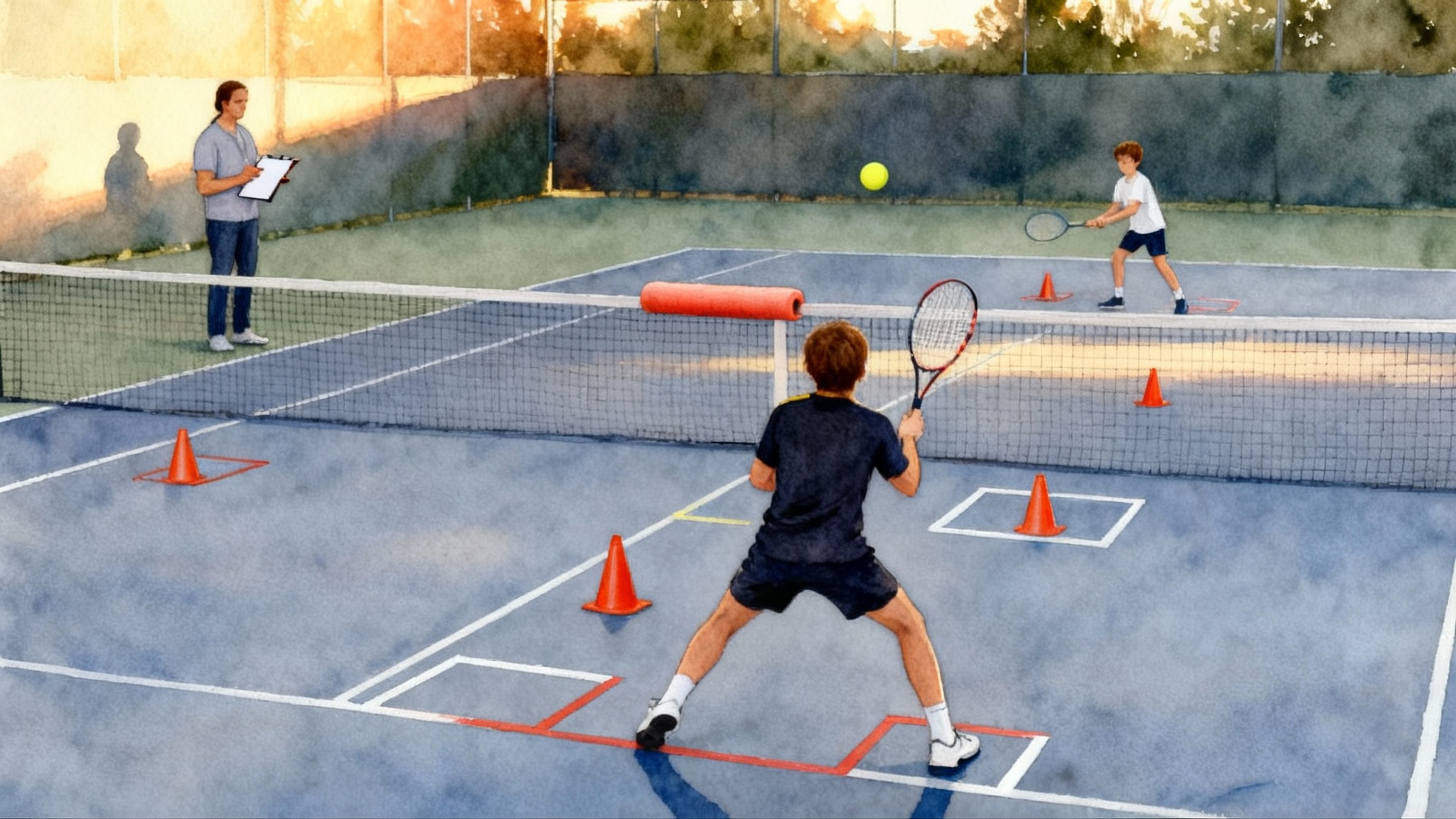
Quick drill: Middle First
Feed a neutral ball crosscourt. The rule is simple: first team to hit a clean ball through the middle wins the rally. Emphasize closing the net and taking the center seam.
I-formation
-
What it is
Net player crouches near the center service line; server stands close to the center mark and serves from a narrow lane. The net player breaks left or right after the serve; the server covers the opposite lane. -
When to choose
Returner is reading your standard poaches. You want to hide lanes and force indecision. Works best with a reliable serve to the body or T. -
Common mistakes
Not leaving early enough. The net player should move decisively on the rising bounce of the return, not after the ball crosses the net. -
Quick drill: Shadow Breaks
Without balls, rehearse serve toss, net player signal, and first three steps. Add a fed return later. Time the break to the server’s contact, not to a guess.
Australian formation
-
What it is
Both server and net player start on the same side of the court, leaving the returner a huge crosscourt angle but closing the down-the-line lane. -
When to choose
Opponent has a favorite crosscourt return you want to take away. You force them to change shape to a down-the-line or inside-out reply. -
Common mistakes
Leaving the alley unguarded on the first ball. The server must sprint to cover the open half immediately after contact. -
Quick drill: Sidewall Sprints
Place a cone two steps off the center mark toward the open half. After serve contact, the server sprints to the cone and splits as the return crosses the net. Repeat for twelve serves per side.
The universal rule inside every formation
Your team must own the middle. Imagine a beam of light up the center strap. If both of you stand outside that light for more than a beat, you will lose the rally to a seam ball. Formations are just starting positions; winning comes from closing to the middle on anything neutral.
A simple hand-signal system you can learn in ten minutes
Signals remove confusion and speed decisions. Use the server’s partner to signal behind the back while the returner looks away. The server confirms with a quick “yep.” Then play.
-
Three net-player signals
- Closed fist means stay. Guard your lane.
- Index finger across means poach. Cross hard after the serve.
- Wiggle fingers means fake. Start the cross then snap back to your lane.
-
Three server targets
- Thumb to the ground means body serve.
- Thumb left means serve wide on ad side or deuce side accordingly.
- Thumb right means serve T on ad side or deuce side accordingly.
-
One return signal
- Tap thigh to call a lob return. Teammate takes a step back and covers the smash.
-
Triggers that make the poach high percentage
- Jammed returner body serve.
- Backhand return on the stretch.
- Contact below net height.
- Late split step from the returner.
If you want a visual on when poaching works best, review when to poach at net. One high-quality example beats a dozen vague reminders. If your timing needs work, review our split-step timing blueprint.
Communication scripts that keep you aligned
Use this between-point script. Keep it under ten seconds.
- Call the target and signal: “Body, you go.”
- Name the first ball: “If it sits, I close middle.”
- Confirm the out ball: “Lob over me and I switch.”
On the changeover, one sentence each:
- What is working right now.
- One adjustment for the next two games.
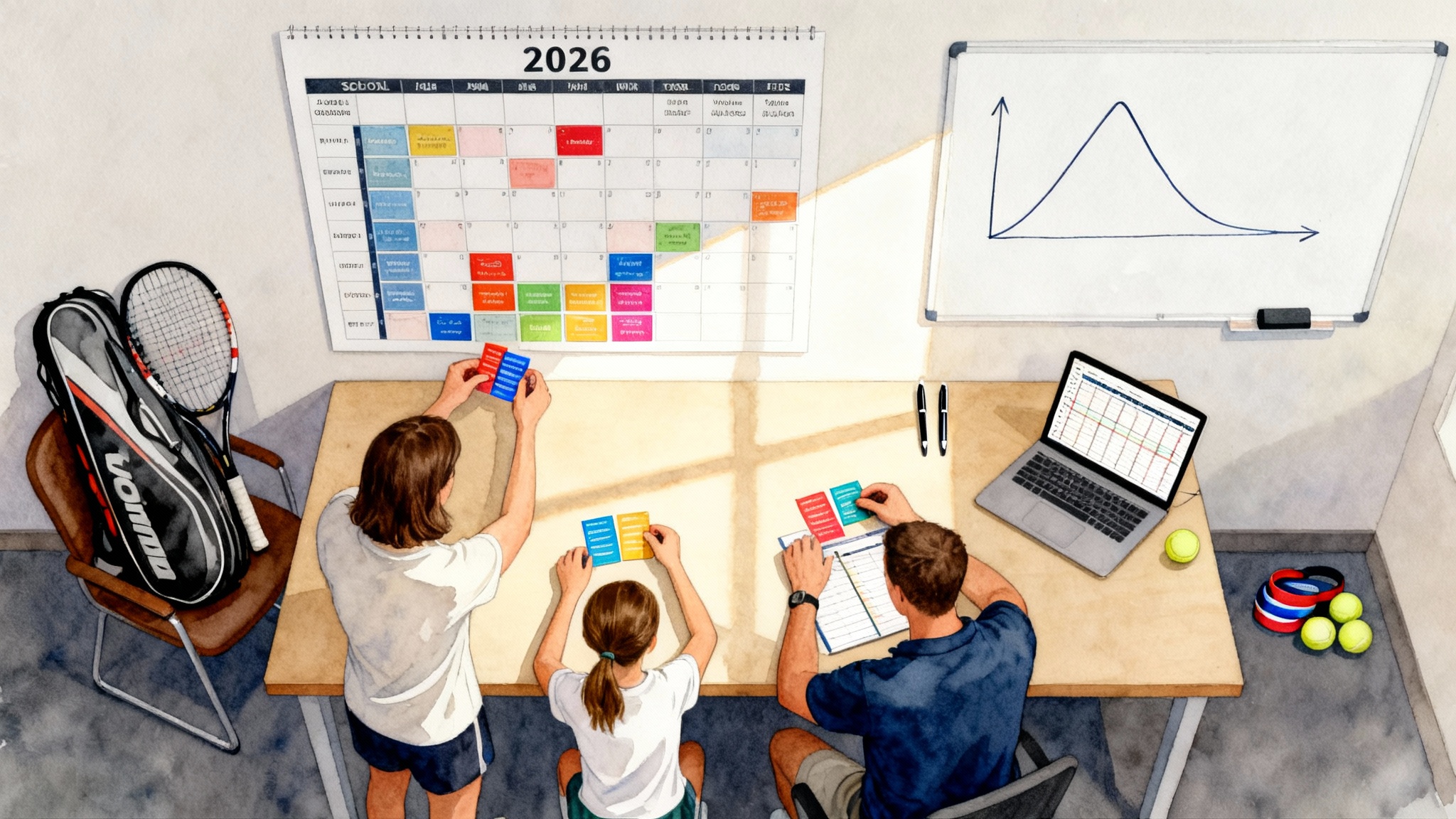
The 4-week, age-appropriate practice plan
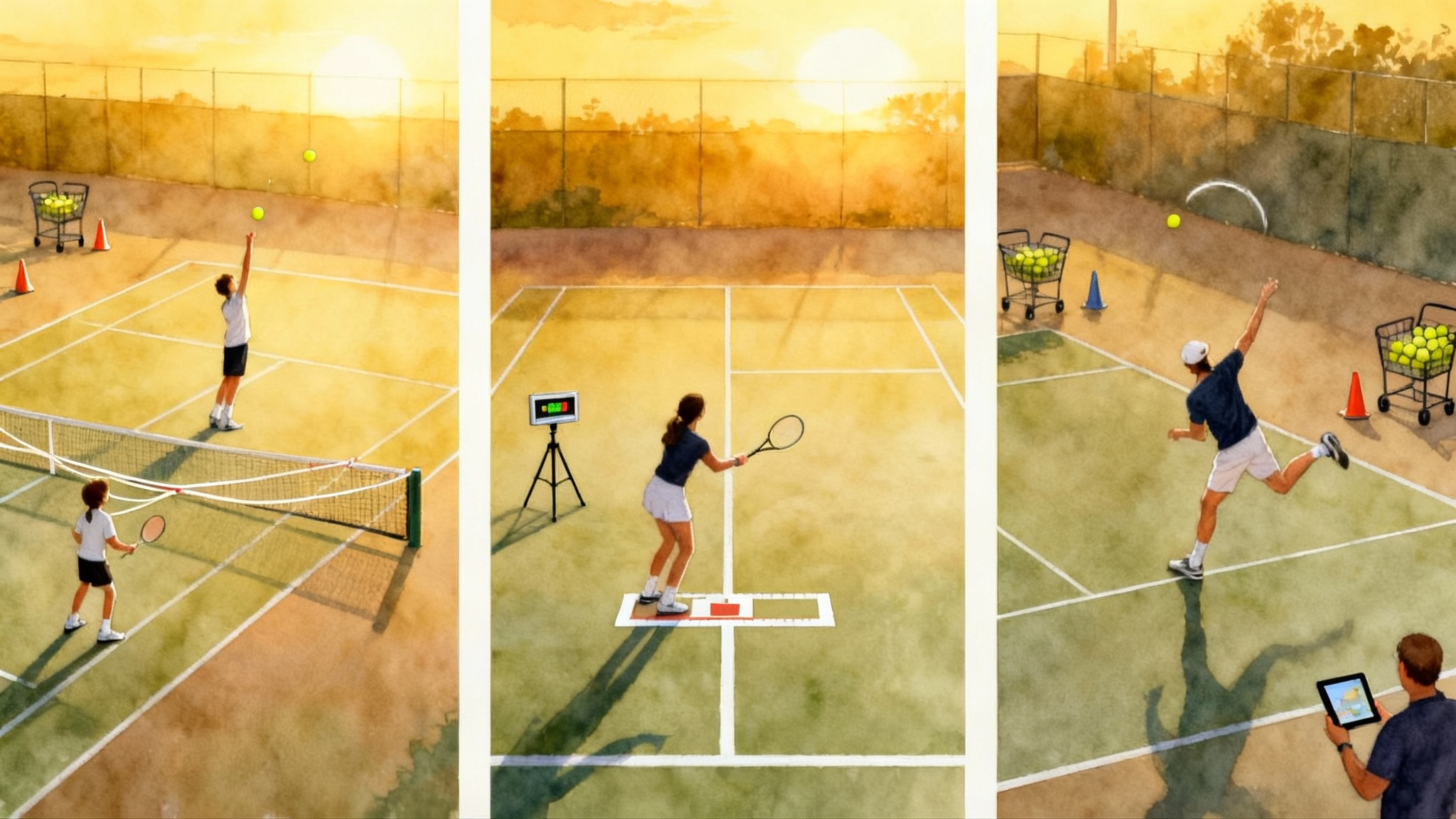
Each week includes a theme, three focused sessions, and match-play targets. Juniors get shorter blocks and more games. Parents get time-efficient blocks. Adult teams get league-ready pressure sets. Use a ball cart, four cones, throw-down lines, and a notepad.
Week 1: Build the base and learn signals
- Theme: Start positions, middle ownership, and a shared language.
- Outcome: Everyone can run two-up and one-up one-back and can signal stay, poach, fake.
Juniors
- Warm-up 10 minutes: mini tennis; volley to volley; approach and close.
- Block A 15 minutes: Middle First game. Score to 11. Emphasize split step at opponent contact.
- Block B 15 minutes: Hand-signal walk-through. No balls, then fed returns. Rotate roles every five reps.
- Game 10 minutes: Two-up freeze. Team must close inside the center strap before hitting any volley.
- Homework: Draw your team’s three favorite serve plus one patterns.
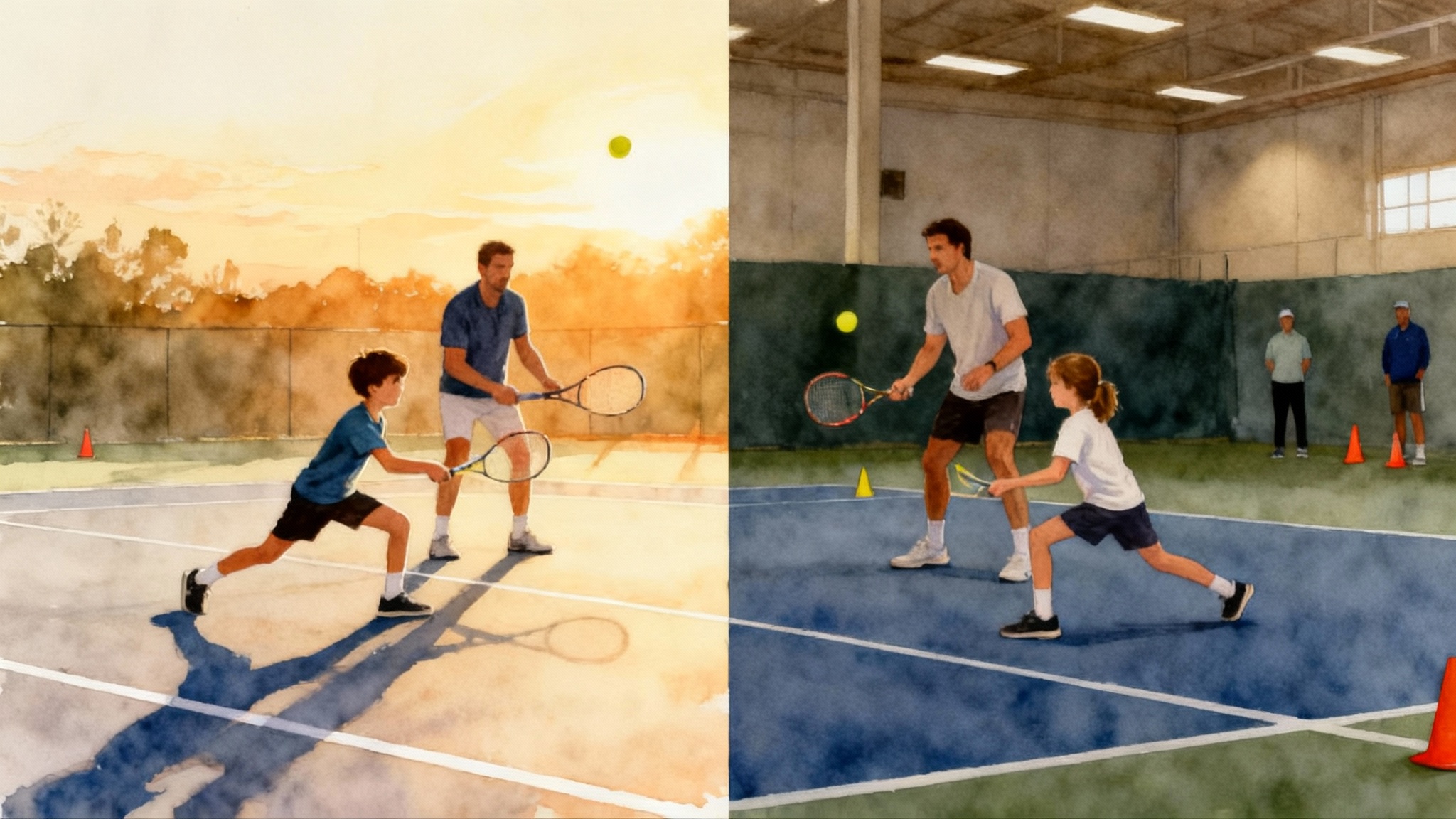
Parents playing with kids
- Warm-up 8 minutes: cooperative rally crosscourt; parent feeds easy balls to net kid.
- Block A 12 minutes: One-up one-back pattern. Parent serves body; kid calls poach on soft replies.
- Block B 12 minutes: Target cones on the service box corners; five successful serves to win the set.
- Game 10 minutes: First volley wins. Any clean volley winner ends the point.
Adult teams
- Warm-up 10 minutes: serves and returns only; call target before each rep.
- Block A 20 minutes: Two-up movement ladder. Volley lanes from center to alley and back. Add fakes.
- Block B 20 minutes: Serve plus poach ladder. Server hits 10 body serves; net player poaches on signal 2, fakes on signal 3.
- Scored set 15 minutes: First to 10 points, serve rotates every two.
Checklist to print for Week 1
- We used the same three hand signals in every game.
- We called a serve target before each point.
- We split stepped at opponent contact.
- We closed to the middle on neutral balls.
Week 2: Formations that hide lanes
- Theme: I-formation and Australian; disguise the first two balls.
- Outcome: You can run I-formation twice per service game and Australian once per return game.
Juniors
- Warm-up 10 minutes: footwork squares with cones; finish with net-to-net volleys.
- Block A 15 minutes: I-formation dry runs. Net player breaks only on jam serves. Add balls after five reps.
- Block B 15 minutes: Australian returns. Returner practices lift down the line and lob over net player.
- Game 10 minutes: Mystery Move. Net player chooses stay, poach, or fake and partner guesses after the point.
Parents playing with kids
- Warm-up 8 minutes: serve toss rhythm and return set position.
- Block A 12 minutes: Australian on second serves only; parent serves, kid breaks first.
- Block B 12 minutes: Lob insurance drill. After any Australian point, kid sprints two steps back to cover lob.
- Game 10 minutes: Two plays per game. Pick two serves and signal sets, then repeat.
Adult teams
- Warm-up 10 minutes: returns crosscourt, two targets.
- Block A 20 minutes: I-formation with three-step rule. Net player must take three strides on any poach call.
- Block B 20 minutes: Australian against backhand returns in ad court. Work serve to body then cover down-the-line.
- Scored set 15 minutes: Play a short set to four games using at least one formation per game.
Checklist to print for Week 2
- We ran I-formation at least twice per service game.
- We used Australian to take away the favorite return.
- Our server moved first after contact to close the open half.
- Our net player sold the fake with footwork, not just a head lean.
Week 3: Returns, transition, and poach or fake logic
- Theme: The return sets the table. Learn when to attack, when to lob, and when to neutralize. For mechanics and reads, see the return of serve blueprint.
- Outcome: Each player can name two poach triggers and two fake triggers.
Juniors
- Warm-up 10 minutes: target returns, body and T.
- Block A 15 minutes: 60 percent rule. On any second serve, return above net height crosscourt 60 percent speed.
- Block B 15 minutes: Lob ladder. Five successful lobs over a stationary net player, then five over a moving one.
- Game 10 minutes: Poach on a promise. Call the poach before the serve; teammates must trust and cover.
Parents playing with kids
- Warm-up 8 minutes: returns with a drop feed; parent shields net lane.
- Block A 12 minutes: Jam and go. Return body at the hip; kid steps across and closes middle.
- Block B 12 minutes: The safe lob. Parent stands on service line and smashes; kid learns defensive lob depth.
- Game 10 minutes: Cross then knife. Two crosscourts, then aim middle to the feet of the net player.
Adult teams
- Warm-up 10 minutes: approach and close; first volley to the middle.
- Block A 20 minutes: Poach triggers circuit: low return, stretched contact, and late split. Call the trigger out loud.
- Block B 20 minutes: Fake and punish. Show the cross, snap back, and take the first middle ball.
- Scored set 15 minutes: First to seven points where a poach or fake is called on every point.
Checklist to print for Week 3
- We called the poach or fake before every point in our set.
- We returned second serves crosscourt at 60 percent pace.
- We landed at least four lobs deep beyond the service line.
- We took the first middle ball after any fake.
Week 4: Pressure, patterns, and match play
- Theme: Close points, adjust patterns, and simulate tiebreak pressure.
- Outcome: Each team has a three-pattern playbook for serving and returning.
Juniors
- Warm-up 10 minutes: serve plus one patterns with cones.
- Block A 15 minutes: Tiebreak to seven; must use one formation in points 1 to 4, a different one in points 5 to 7.
- Block B 15 minutes: Return games only. Start 15 to 30. Focus on depth and middle.
- Match play 20 minutes: One short set to four games; coach or parent counts unforced errors and middle winners.
Parents playing with kids
- Warm-up 8 minutes: rhythm serves, call targets.
- Block A 12 minutes: Two plays, then adapt. Use the same first two points of every game; third point must change based on what you saw.
- Block B 12 minutes: No-ace rule. Parent serves only to body; kid must move the feet and find the middle.
- Match play 20 minutes: Nine-point tiebreaks with a new formation every third point.
Adult teams
- Warm-up 10 minutes: dynamic footwork and directional volleys.
- Block A 20 minutes: Pressure ladder. Down 0 to 30 starts on serve; play out two points with a mandatory formation.
- Block B 20 minutes: Return coaching. Partner calls depth, spin, and target before each return.
- Match play 20 minutes: First to four games, no ad scoring. Change plays on every deuce point.
Checklist to print for Week 4
- We wrote three serve plus one patterns and three return patterns.
- We ran a formation on at least half the points in pressure sets.
- We tracked how many middle winners we created.
- We finished with a plan for next month.
Academy spotlight: Revolution Tennis Academy, Orlando
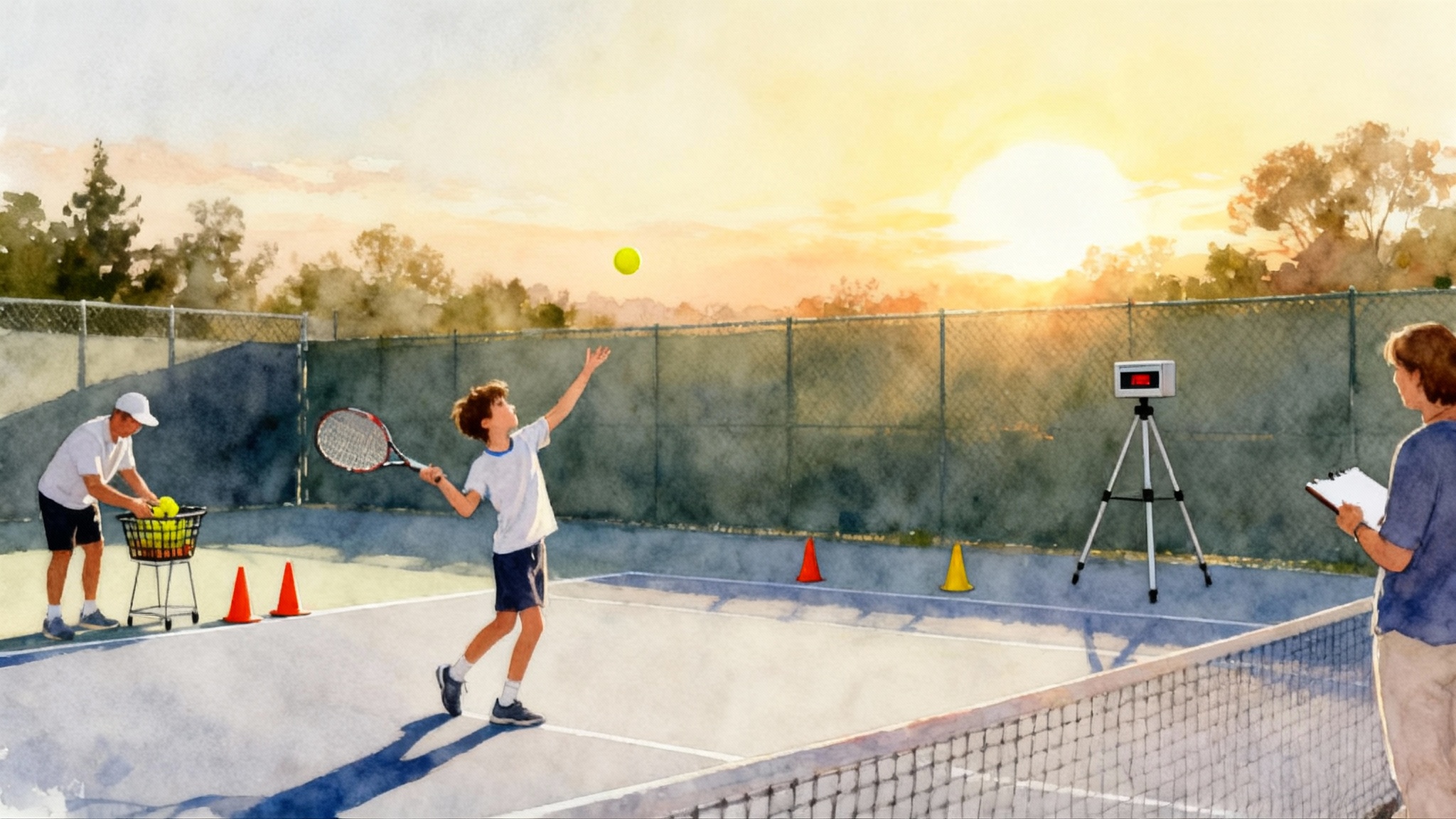
Central Florida is a doubles laboratory. The schedule density, the climate, and the community make it easy to practice, play, and iterate. At the Roth Family JCC in Maitland, Revolution Tennis Academy Orlando runs juniors, adult programs, and high-performance sessions. If you are near Orlando, this is a practical next step for live-ball doubles reps.
What to expect in a doubles-focused session
- Live-ball decision training: short feeds that force middle choices and net coverage rather than long static lines.
- Serve plus poach sequencing: body serves to jam the return, then pre-called poaches in clusters of five.
- Middle winners scoreboard: coaches count points won through the center to reinforce the universal rule.
If you want a deeper sense of the setting and facilities, see our Revolution Tennis Academy profile.
Sample 75-minute doubles block used in academy settings
- 0 to 10 minutes: dynamic warm-up, shadow poach breaks, and footwork squares.
- 10 to 25 minutes: Middle First game to 15 points, then two-up finishing.
- 25 to 45 minutes: Formation clusters, five I-formation points, then five Australian, repeat.
- 45 to 65 minutes: Serve plus one live points. Call the signal, call the target, play two balls aggressive, and reset.
- 65 to 75 minutes: Nine-point breaker with one formation per three points. Write down the pattern that worked best.
How to book next steps
- Try a private lesson for serve plus poach mechanics.
- Join an adult clinic that dedicates at least one segment to team movement.
- Ask for a junior slot in a group that plays live-ball games at least 50 percent of the session.
Scoring games that build match toughness
Add these to any week if you have time.
- 30 to all pressure starter: Begin games at 30 to all, server must run a formation on first point. Great for league players.
- First volley wins: A clean volley winner ends the rally. Builds the instinct to close.
- Middle or miss: Any ball not aimed at the middle third is a minus one. Encourages smart targets under stress.
Equipment and setup that make practice smooth
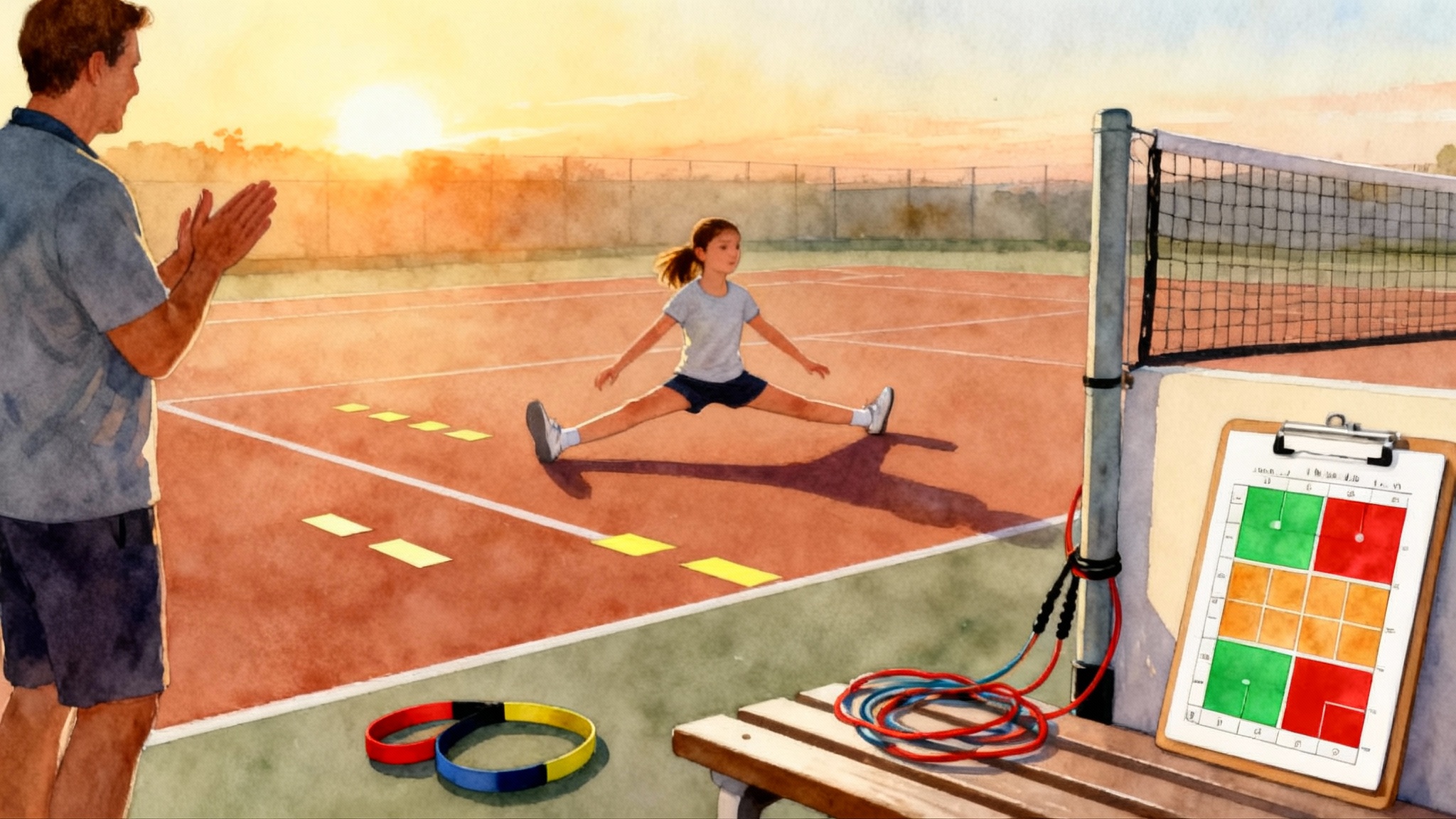
- Four cones and throw-down lines to mark serve targets and middle lanes.
- A whiteboard or notepad to track patterns and middle winners.
- Two colored wristbands to remember who calls signals this game.
- A timer to keep blocks honest. Move on even if a drill is still messy.
Troubleshooting common doubles problems
-
We keep getting lobbed
- Solution: Start two steps deeper, split earlier, and assign the overhead to the better smasher. Add a lob-return signal so the baseliner can start back.
-
Our poaches get burned down the line
- Solution: Serve more body and T to reduce angle, and commit to three-step crosses on called poaches. If opponents pass once, tip your cap and keep the plan.
-
We never get to the net on return games
- Solution: Return crosscourt deep at 60 percent pace, follow to the service line, and look for the first middle ball. Add a lob return once a game to force the net player to respect depth.
A one-page doubles checklist you can print for every match
- Serve target called out loud: T, body, or wide
- Net signal flashed and confirmed: stay, poach, or fake
- First ball plan named: volley middle, roll cross, or lob
- Middle ownership rule stated: take the seam when in doubt
- Changeover script used: what works and one adjustment
- Pattern review after the set: one serve pattern and one return pattern to keep
How to level up after four weeks
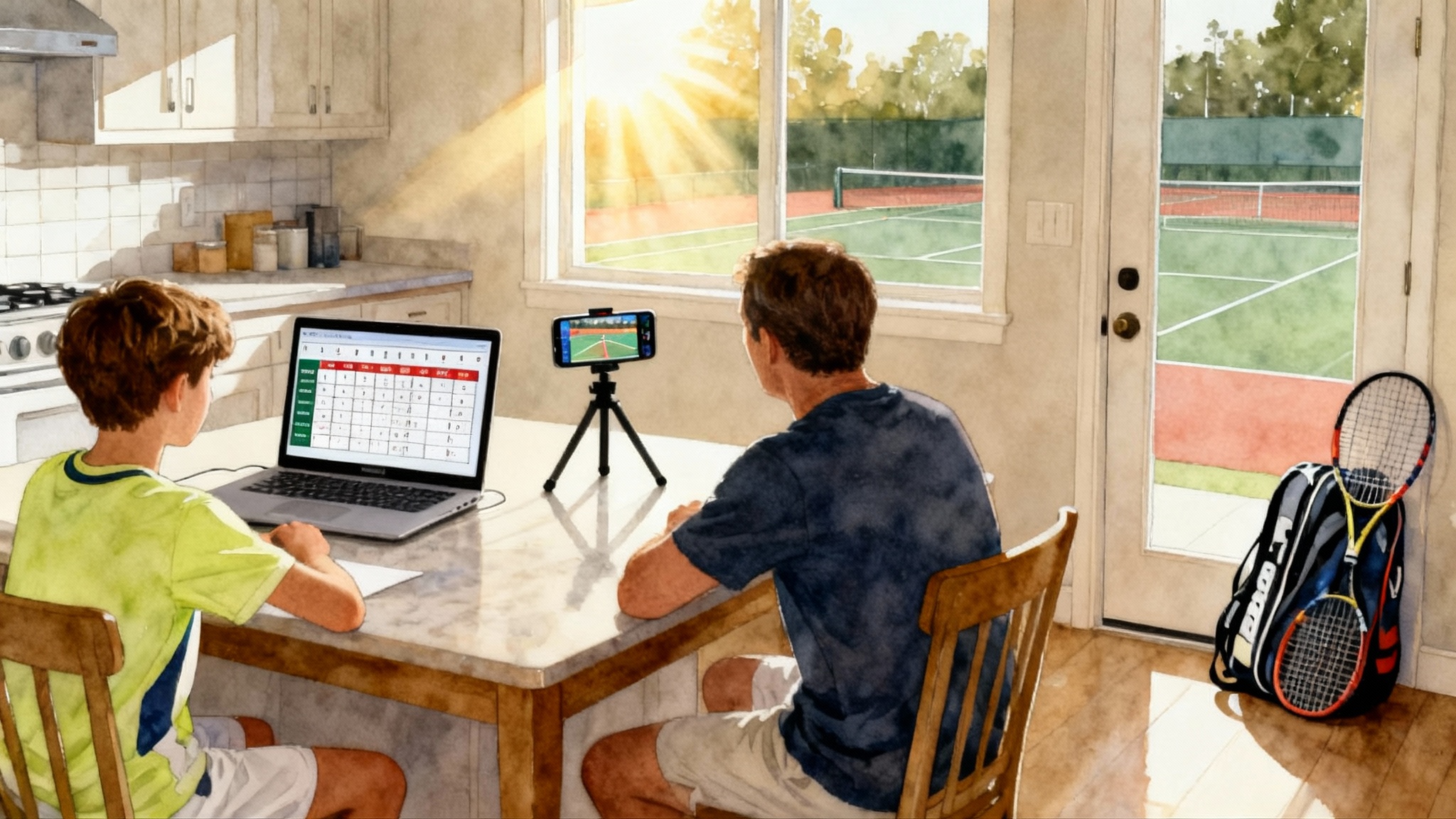
- Film one service game and one return game. Count middle winners, forced errors, and net touches.
- Add one new serve target per side. Many players live on body and wide; learn to hit the T when it matters.
- Expand your formation menu only after your communication is automatic.
The big takeaway
Great doubles is not a collection of tricks. It is a shared plan with a few rehearsed moves, executed on repeat. Learn two-up and one-up one-back, sprinkle in I-formation and Australian, call simple signals, and build momentum with the four-week plan. Do that, and you will feel it in the most important place first, the center seam where most points in this sport are actually won.