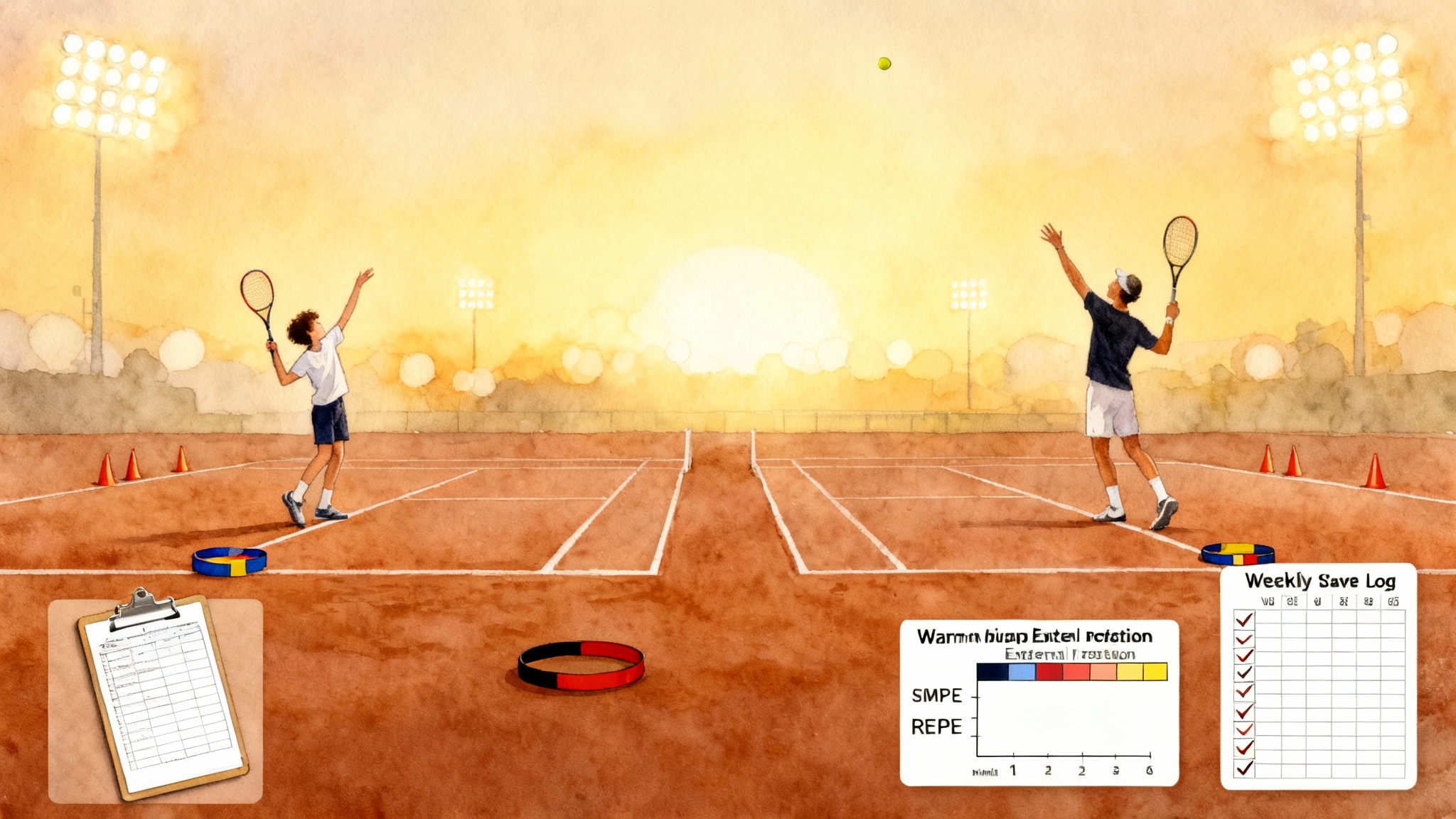
Return of Serve 2026: Read, React, Neutralize Blueprint
A level-by-level plan to build an elite return of serve in 2026. Learn visual cues, split-step timing, stance choices, footwork, targets for singles and doubles, smart drills for juniors and adults, and clear metrics to track.
 Tommy
Tommy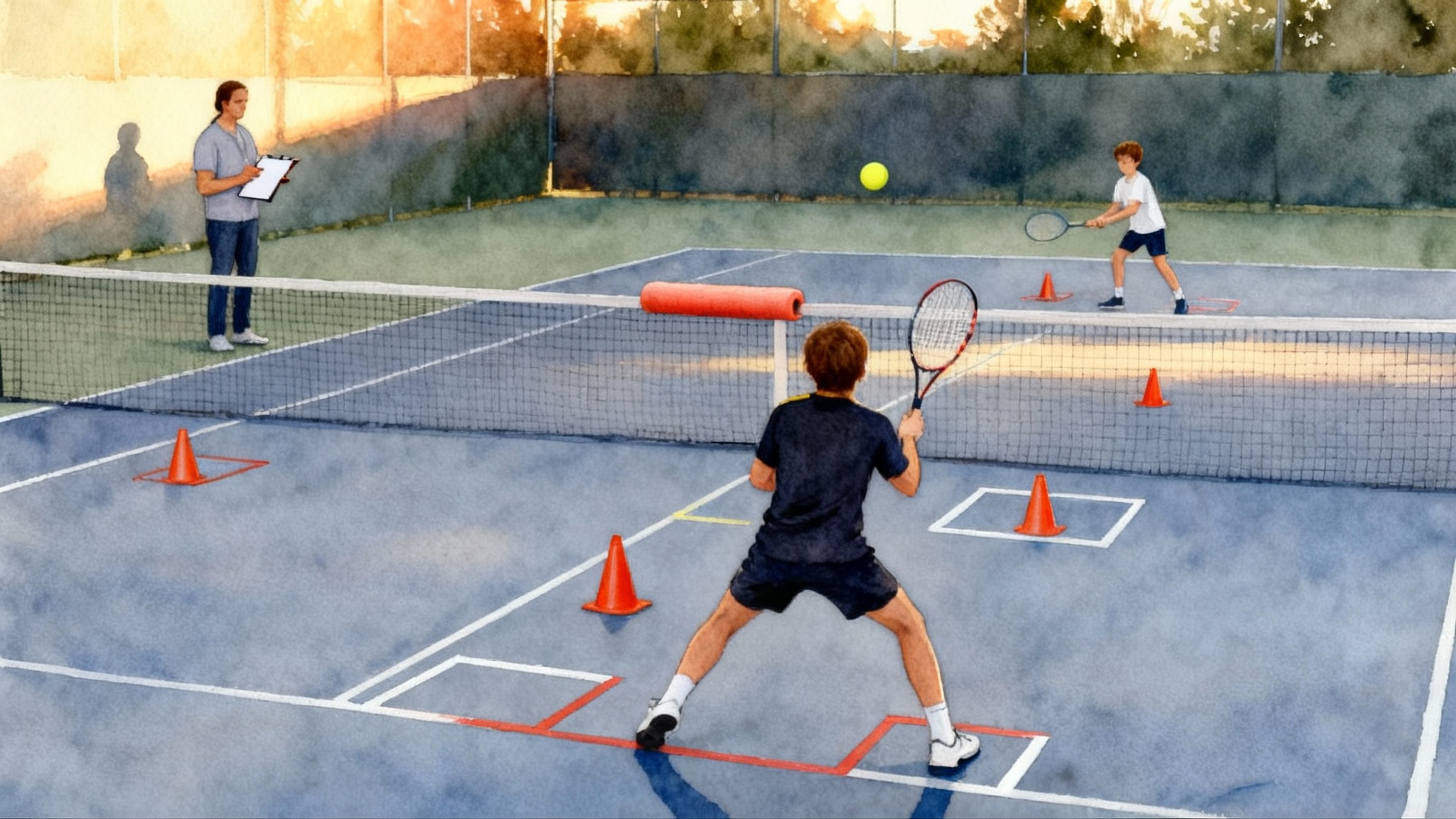
Why the return decides matches in 2026
If you can put one more first serve return in play per game, you change the math of tennis. Break chances increase, pressure shifts to the server, and you play more points on your terms. The return is not guesswork. It is a repeatable skill that any junior, parent, or adult player can build with a clear blueprint: read early, react cleanly, and neutralize the server’s advantage.
This guide is a practical, level-by-level plan you can run at your club, at home, or at public courts. You will learn what to look for before contact, how to time your split, which stance and footwork pattern to choose, where to aim in singles and doubles, and how to measure progress with simple, objective targets.
The read: three visual cues that matter
Great returners do not try to see everything. They filter for a few stable signals that show up before and at contact.
- Toss window
- Height: A high, drifting toss often delays contact and can hint at a heavier kick. A compact, controlled toss that peaks in front of the shoulder points to a flatter contact and faster ball.
- Horizontal placement: A toss to the backhand-side of the server’s head frequently lines up wide or body serves in that direction. A toss that lands more to the forehand side often telegraphs the T or flat body serve.
- Shoulder line
- Closed shoulders at trophy position often load for a slice or flat serve. Open shoulders with a visible tilt and a stronger arch through the torso often pair with kick serves.
- Watch the server’s lead shoulder. If it points inside the court at release, the serve often travels up the T. If it points toward the sideline, expect wide.
- Contact height and reach
- High contact and extended reach forward usually means speed and a lower, skidding bounce on hard courts. A contact that trails behind the head or is lower can accompany heavier spin and a higher bounce, especially on second serves.
Training the read
- Shadow watch: Stand behind the fence and call “T, body, wide” at server’s toss release. Confirm after contact. Aim for 70 percent correct calls before you ever hit a ball.
- Single-cue rounds: For five minutes, call only toss direction. Next five minutes, call only shoulder line. Next five, call only contact height. Narrow focus improves consistency.
The react: split-step timing that holds up under pace
Split-step timing is the hinge between seeing and moving. The goal is to land as the serve leaves the strings so your feet are loaded to push into your first step.
- Timing rule: Start your mini hop as the server begins the upward swing. Land just as the ball leaves the strings. If you land too early, you get stuck and stand up. If you land too late, you chase.
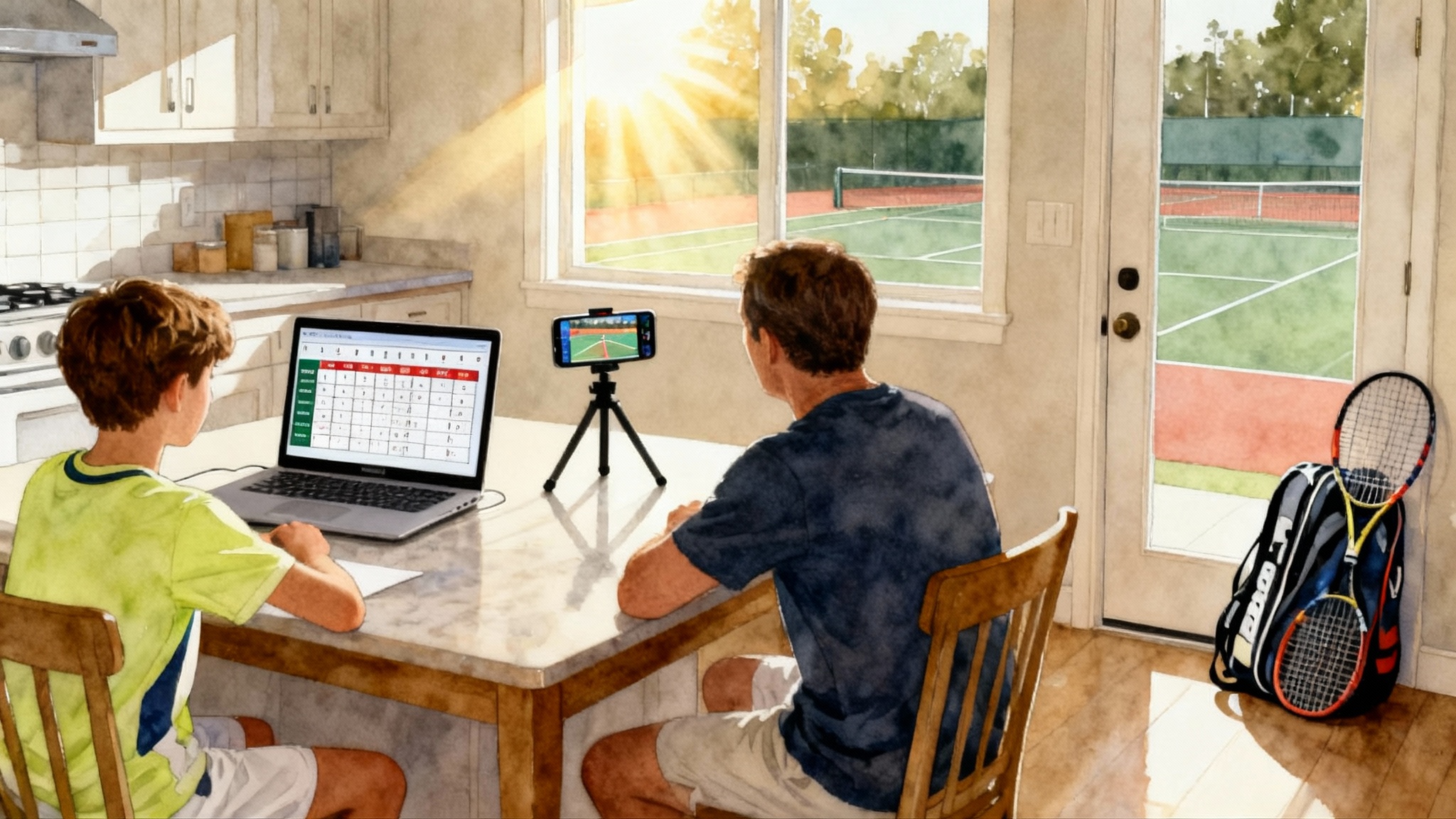
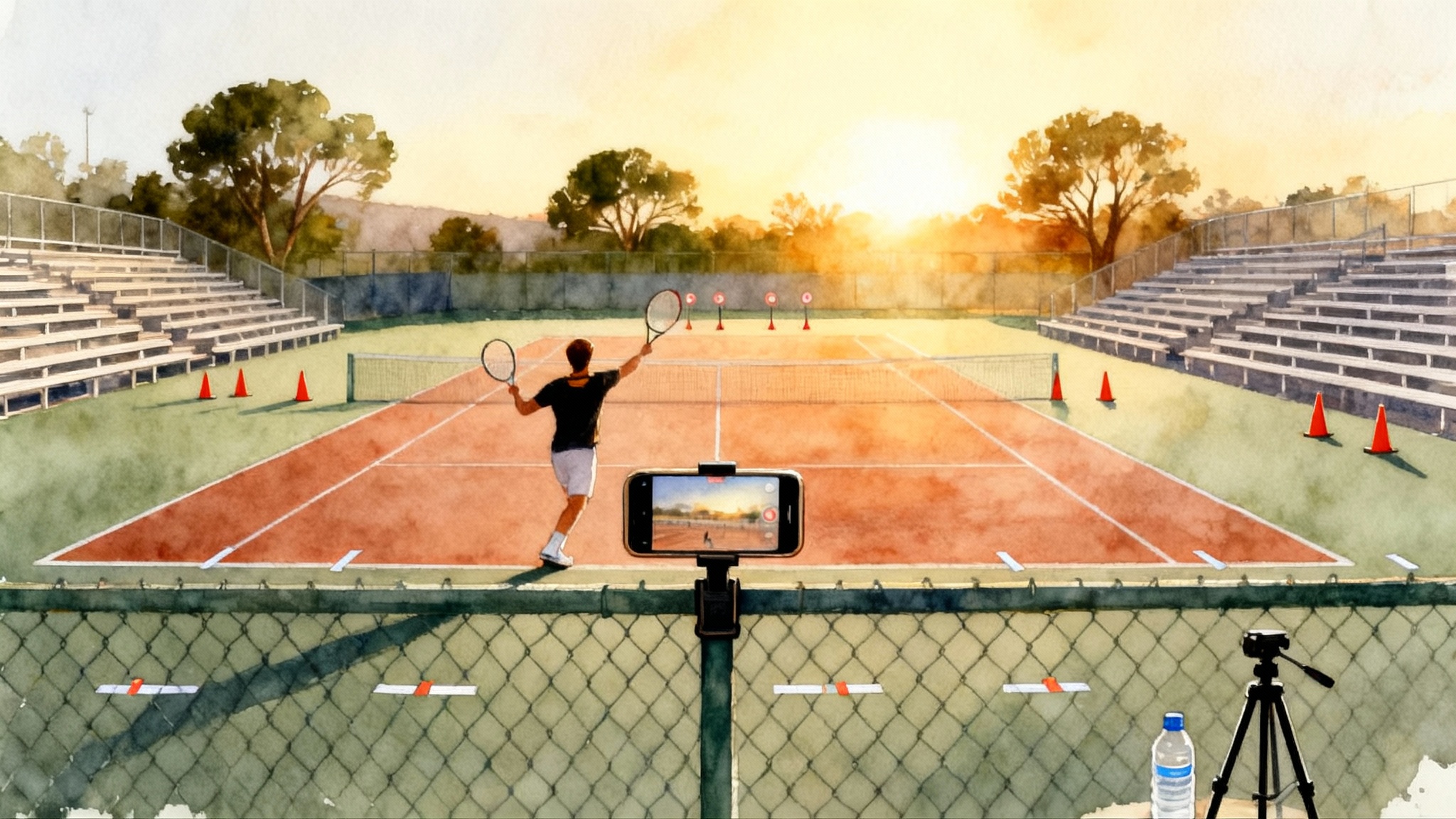
- Audio cue: Have a partner say “up” when the server’s racquet drops into the backscratch position and “land” at contact. Record a few points on a phone and check if your shoes contact the court right as the ball exits the strings. For better video habits, see phone video angles and checks.
- Width and posture: Land with feet slightly wider than shoulder width, chest tall, hands out in front, and the racquet head above your wrists. Think trampoline bounce, not a high jump.
Progressions
- No-ball timing: Face the server for ten straight serves and only practice the split. Your metric is landing on time eight out of ten serves.
- Live speed: Add returns at quarter speed, then half, then match speed. Keep the same landing timing.
For more explosive starts after the split, train first-step power and speed.
Choose the right stance for the serve you face
Your stance dictates how quickly you can align the strings to the ball. Build two primaries and one emergency.
- Neutral stance return: Front foot points at the ball, back foot parallel to the baseline. Ideal for second serves and moderate pace first serves. Lets you drive through the ball with a compact swing.
- Semi-open stance return: Feet more parallel to the baseline. Best for pace to your body or on wide serves when you need to shorten the backswing and rotate through contact.
- Emergency block: On big first serves, set the front foot, keep the back foot anchored, and meet the ball with minimal turn. This is a catch and redirect.
Backhand specifics
- Two handed backhand: Square your hips early. Keep the racquet outside your front knee until the ball is close, then turn the shoulders and drive with short extension.
- One handed backhand: Favor a split that lands slightly lighter to keep your center of mass mobile. Use a short shoulder turn and a firm wrist. When in doubt against heavy kick, chip with a continental grip.
Footwork patterns that simplify the first step
Return footwork is not about fancy steps. It is about getting the body behind the ball and the stringbed square to the target.
- Jab step: On serves to your body, land the split and jab the outside foot toward the ball. This clears space for the swing path.
- Crossover step: On wide serves, land and immediately cross the outside leg over the inside leg to gain ground before contact. Keep your head still.
- Hop and set: On T serves, hop with both feet and set early behind the ball, then drive forward with a compact swing.
- Drop-step block: When jammed, drop the inside foot back a few inches to create space, then block with a firm wrist and a short finish.
Mini drill
- Cones at three spots: T, body, wide. Feed serves or throws to each cone and call the footwork pattern out loud before you move. Ten reps each side.
The decision: block, drive, or chip
Think traffic light. Pace and bounce dictate the shot you can control.
- Red light, block: First serve above your strike zone or on the stretch. Short backswing, firm strings, finish no higher than your shoulder. Goal is neutral height and middle depth.
- Yellow light, chip: Second serve that jumps high or wide. Use a continental grip, carve through the back of the ball, and finish toward the target. Goal is low ball at the server’s feet or a short angle away from the net player in doubles.
- Green light, drive: Slower second serve or a serve that sits in your wheelhouse. Small unit turn, compact loop, drive through the ball with a three-quarter finish. Aim big crosscourt or middle to reduce risk.
A practical rule: if contact is outside your lead shoulder or above your chest, block or chip. If contact is in front and between waist and sternum, drive.
Target zones for singles and doubles
Singles
- First serves: safest, most valuable return is deep middle. It takes away both angles and forces the server to hit up from behind the baseline. Visualize a rectangle from the center hash to one foot inside each singles line and from the service line to three feet inside the baseline.
- Second serves: aim heavy crosscourt to the backhand, or deep at the body. Mix in a short angle when the server starts to cheat.
- Jam returns: when crowded, punch the ball middle and deep. Depth beats angle under pressure.
Doubles
- Against first serves: two primary targets are low at the server’s feet or firm middle between server and net player. Middle draws confusion and reduces poaching lanes.
- Against second serves: drive crosscourt past the server, or chip low and short crosscourt to pull the server off the court. Lob returns are high value if the net player is tight and tall; contact must be early and the lob must clear by at least two racquet lengths.
Serve patterns to anticipate in doubles
- Deuce court: many right-handed servers go wide slice on first, body or T on second. Be ready to block line through the middle when the net player shades.
- Ad court: watch for kick wide that lands high on your backhand. Chip low crosscourt or drive hard middle if you read the poach.
Measurable goals that keep practice honest
Set clear targets that anyone can track with a phone, a notepad, and a few cones.
In-play percentage
- First serves: juniors 10U aim for 60 percent in play, teens and college hopefuls 70 to 80 percent, adult 3.0 to 3.5 aim for 65 to 75 percent, adult 4.0 to 4.5 aim for 75 to 85 percent.
- Second serves: juniors 10U aim for 80 percent, teens and college hopefuls 90 percent, adult 3.0 to 3.5 aim for 85 to 90 percent, adult 4.0 to 4.5 aim for 90 to 95 percent.
Depth boxes
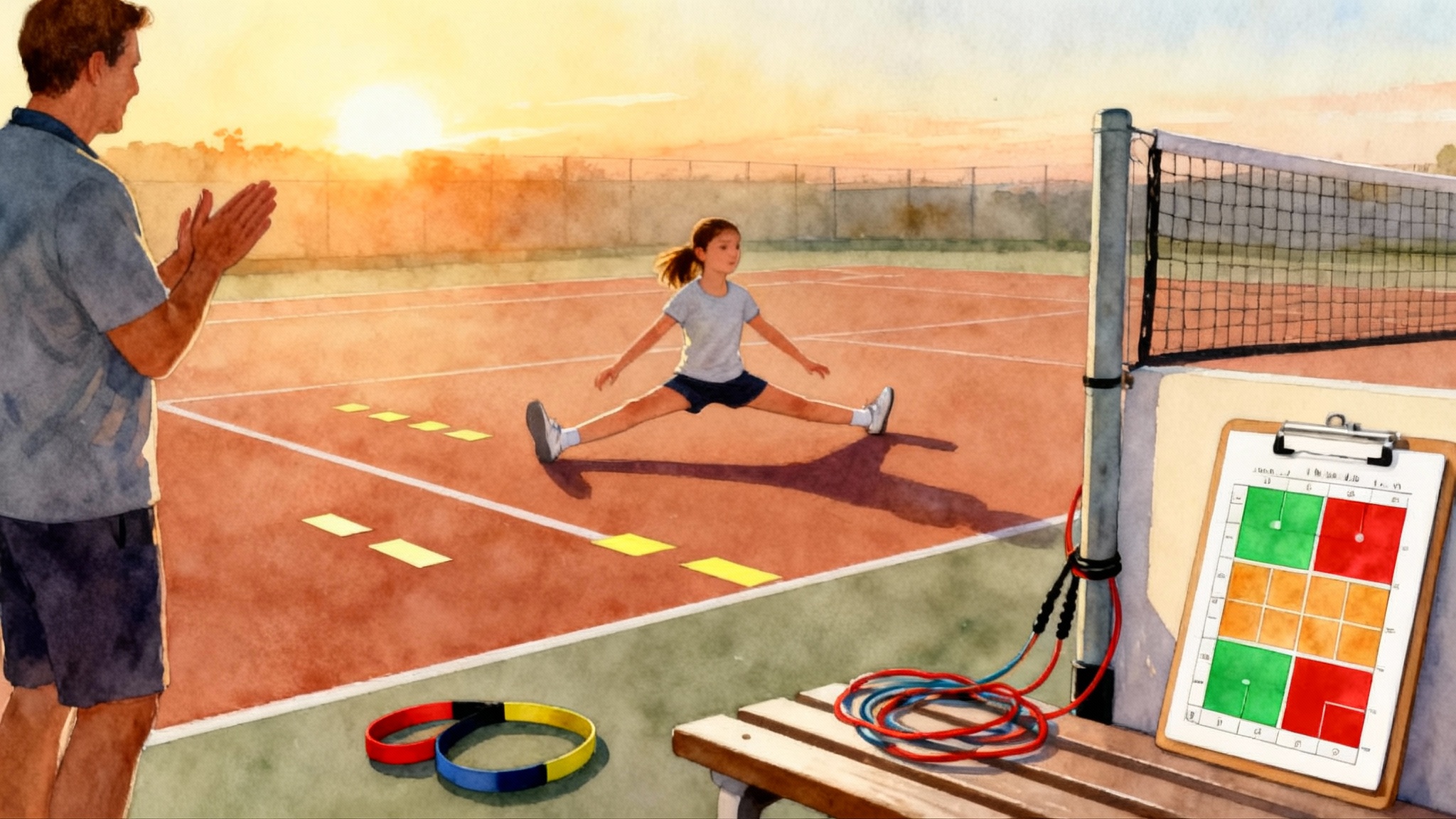
- Create two boxes on each side by placing cones three feet inside the baseline and one foot inside the singles lines. The depth box is the rectangle between the service line and those cones. Goal: 60 percent of first serve returns and 70 percent of second serve returns land in these boxes.
Contact timing
- Use 120 or 240 frames per second on a phone. Count frames from server contact to your split-step landing. Your baseline goal is to land within two frames of the ball leaving the strings. Track improvements weekly.
Rally outcome after return
- Track how often you win the rally when you land the return in a depth box. If that rate is not at least 55 percent, keep the return lower or more centered, or follow with an earlier court position.
Drills by level: simple, repeatable, measurable
All drills list equipment, setup, reps, and a pass mark so the session can run without guesswork.
10 and under
- Toss tracker
- Equipment: two cones for the receiver’s feet, one cone for the read cue.
- Setup: parent or partner stands on service line and tosses while mimicking a serve motion.
- Action: the child calls “T, body, wide” at toss release, then shuffles in the right direction without hitting.
- Reps: 30 calls per corner.
- Pass mark: 70 percent correct calls.
- Big X return
- Equipment: chalk or tape to draw an X from service line corners to a point three feet inside the baseline in the middle.
- Setup: short-court serve from just inside the service line.
- Action: child splits as the ball is struck and bunts the ball into the arms of the X.
- Reps: 20 per side.
- Pass mark: 14 of 20 land in the X.
- Target ladders
- Equipment: four flat markers laid like rungs six feet inside the baseline.
- Action: on coach or parent feeds, the child returns and tries to land on rung one for first serves and rung two or three for second serves.
- Pass mark: 60 percent on first serves, 70 percent on second serves.
Teens and college hopefuls
- Split-step audit
- Equipment: phone at 120 frames per second from the side.
- Action: hit 30 returns while serving partner hits at 60 to 70 percent speed. Log frames between server contact and your landing.
- Pass mark: 24 of 30 landings within two frames of contact.
- Three-pattern return series
- Equipment: cones at T, body, wide.
- Action: server hits randomized locations. Receiver declares footwork pattern out loud before moving: jab, crossover, or drop-step. Then hit the correct shot type: block, chip, or drive.
- Reps: 36 balls, 12 to each location.
- Pass mark: 75 percent in play, 60 percent to depth boxes.
- Second serve aggression ladder
- Action: start by driving crosscourt with a three-quarter swing. If you hit two in a row to depth, move one cone tighter to the sideline for a sharper angle. If you miss twice, move the cone back toward middle.
- Pass mark: finish the ladder with at least six of the last ten returns landing within one racquet length of the target cone.
- Doubles poach breaker
- Equipment: a net player holding a foam noodle across the middle.
- Action: server hits first serves. Receiver must return firm middle below the noodle height. If the return rises above the noodle, the point stops and is scored for the serving team.
- Pass mark: 7 of 10 below noodle at match speed.
Adults 3.0 to 4.5
- Pace filter block
- Action: partner serves first serves at anywhere from 60 to 90 percent. Receiver’s only goal is neutral height, middle depth. Finish with a short punch.
- Reps: 40 balls.
- Pass mark: 70 percent in play, half in depth boxes.
- Chip and charge sampler
- Action: on second serves, chip low crosscourt and take two quick recovery steps forward to the baseline. Stop there and hold a balanced ready position. Add a coach or friend who tosses a short ball to start the plus one rally.
- Pass mark: 8 of 10 returns low crosscourt with two balanced steps forward.
- Footwork mixer
- Action: alternate jab step on body serve, crossover on wide serve, hop and set on T serve. Call the pattern out loud.
- Reps: 36 balls.
- Pass mark: 80 percent correct pattern choice, regardless of outcome. Then repeat for outcome.
At-home options for all levels
- Wall blocks: Mark a rectangle one yard wide by two yards high on a wall. Toss a ball hard into the ground in front of you to mimic a serve, then block into the rectangle. Ten sets of ten with both forehand and backhand.
- Vision ladder: Use a deck of cards. A partner flashes a card at “toss.” Call the color for toss direction and the number for contact height category: 2 to 5 is low, 6 to 9 is medium, 10 to Ace is high. This builds single-cue focus under time pressure.
- Elastic return: With a light resistance band around your waist anchored behind you, practice the split and first step. The band forces you to keep posture and a quick push.
A sample session from Legend Tennis Academy, Spicewood, Texas
This sixty minute template is drawn from how Legend Tennis Academy organizes return work so that parents can help without over-coaching. The parent is the session manager, not the shot mechanic.
Time 0 to 8 minutes: read and react warmup
- Shadow watch for toss and shoulder line from behind the fence. Parent stands beside the player and asks one question: what did you see first.
- Two sets of eight no-ball splits. Parent calls “up” and “land.”
Time 8 to 20 minutes: block and depth
- Coach or older sibling serves at 60 percent to all three locations. Player blocks to middle. Parent sets two depth boxes with cones and counts.
- Goal: 70 percent in play, 50 percent in depth boxes.
- Parent script: name the target and the outcome. Example, “middle, depth box yes.” No technical advice.
Time 20 to 32 minutes: footwork and shot choice
- Three-pattern series: jab on body, crossover on wide, hop and set on T. Add drive on slow second serves and chip on kick.
- Parent role: call location randomly, hold a noodle at net height from the service line to cue low trajectory in doubles simulation.
Time 32 to 44 minutes: singles targets under pressure
- Scored sets of ten returns. Two points for a depth box, one point for in play, minus one for a miss long or wide. Parent tracks on a notepad.
- Goal: 12 points per set by session three.
Time 44 to 56 minutes: doubles patterns
- Alternate first and second serves. First serve goal is middle or at the server’s feet. Second serve goal is drive crosscourt or chip short crosscourt.
- Parent role: adjust the noodle height and call score. Example, “down 30 to 40, deuce court.”
Time 56 to 60 minutes: debrief and one cue
- Player states one cue for next time. Example, “land on time” or “middle on first serves.” Parent writes it at the top of the next session plan.
Equipment checklist
- 6 cones, 1 foam noodle, 20 balls, phone for slow motion.
Why this format works
- It replaces vague coaching with specific tasks. The parent controls tempo, scoring, and targets. The athlete owns the feel and execution. This reduces the risk of over-coaching and keeps attention on outcomes that matter in matches.
Common errors and quick fixes
- Late split: if you land after the ball leaves the strings, start your hop earlier, right as the server’s racquet drops into backscratch.
- Big backswing: place a barrier like a bag behind you during returns. If your racquet hits the bag, you are swinging too long.
- Floating trajectory: lower your finish and aim middle. Focus on striking slightly above the ball’s equator for a flatter, lower flight.
- Chipping too high: exaggerate a continental grip and carve down through the back of the ball. Keep the follow through toward the target rather than up.
- Over-aiming lines: re-center your targets. Use the inside tramline as your outer boundary on first serve returns.
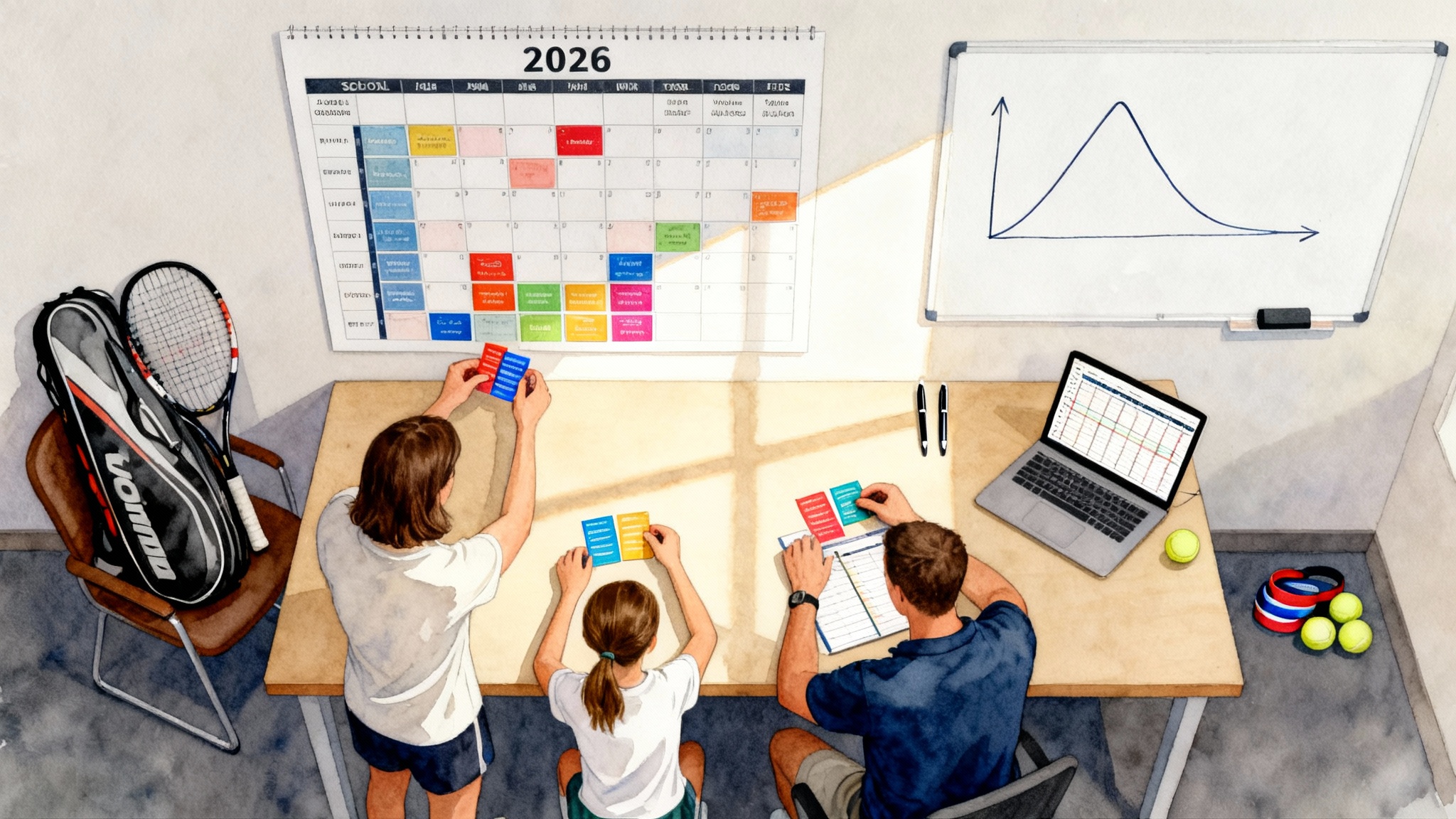
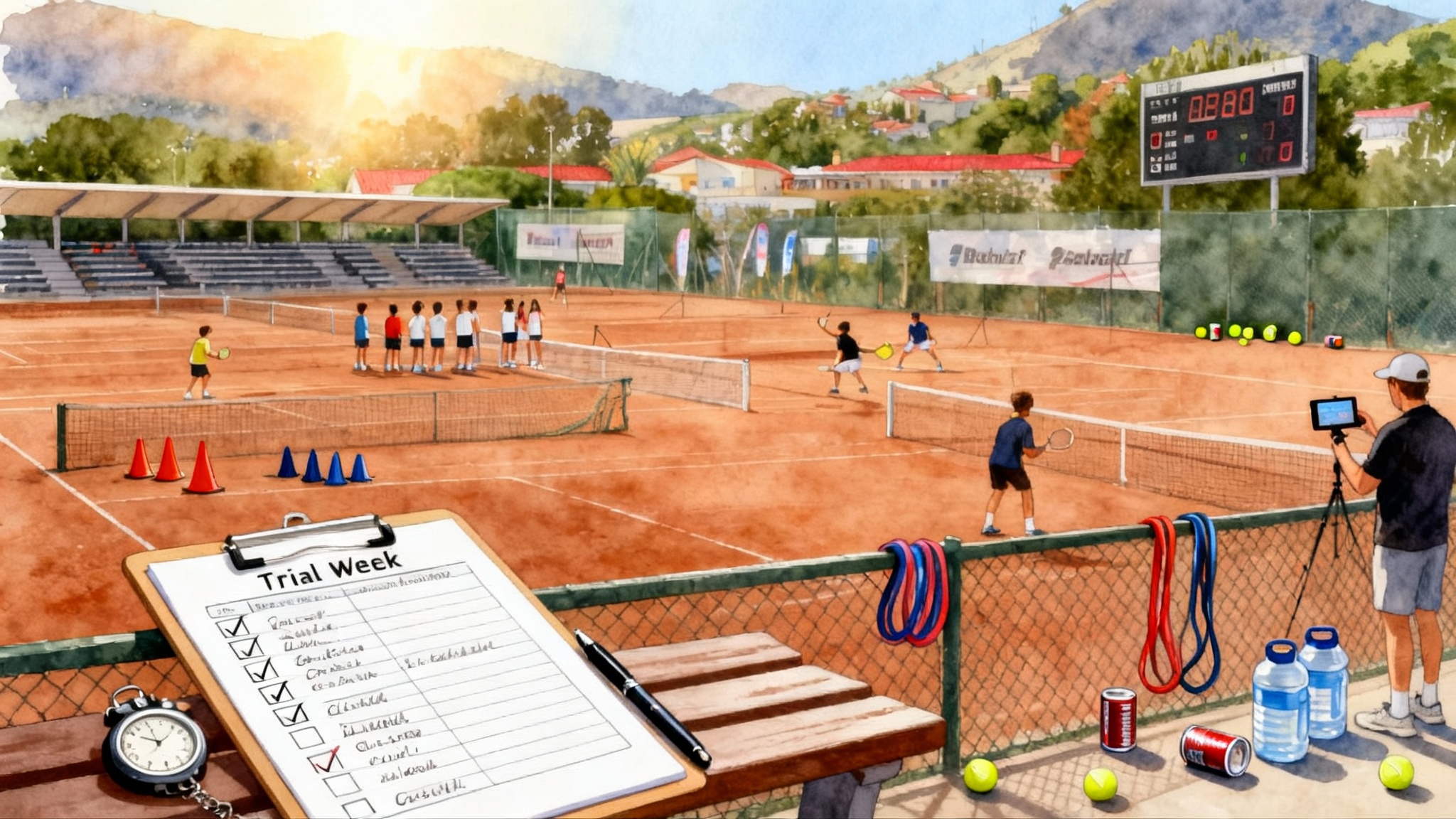
Planning a month of return work
Week 1: timing and in-play
- Two sessions with a split-step audit and block returns only. Measure in-play percentage.
Week 2: depth and middle control
- Add depth boxes. Score 12 out of 20 to boxes before moving on.
Week 3: footwork and shot choice
- Introduce the three-pattern series and the traffic light decisions. Keep the same scoring.
Week 4: match scenarios
- Doubles poach breaker and singles pressure sets. Track rally outcomes after a depth-box return.
By the end of four weeks, you will know your reliable targets, your preferred patterns, and your realistic percentages. That knowledge beats hope when a match tightens.
How to help without over-coaching
Parents and partners can focus on three roles.
- Timekeeper: keep segments short and crisp. Move to the next block even if the previous one was sloppy. Variety keeps attention high.
- Scorekeeper: track in-play, depth, and timing. Numbers reduce debates and keep feedback neutral.
- Prompter: ask one cue question, never a mechanics speech. Good prompts are what did you see, where did you land, what target did you choose.
If the athlete asks for technical help, limit it to one constraint at a time. Examples: stand closer for second serves by one shoe length, switch to continental grip for chips, start the split as the server’s racquet drops.
Equipment and small investments that help
- Cones and flat markers for boxes and ladders.
- A foam noodle for low trajectory cues in doubles.
- A phone tripod for side and back camera angles.
- A lightweight ball machine, if available, to repeat kick serves or body serves. Even without one, you can recreate most patterns with targeted hand feeds.
You can save and reuse this plan inside your own notes app or inside your TennisAcademy.app account.
A final checklist for match day
- Stance plan: neutral for second serves, semi-open for body pace, emergency block for red light balls.
- Footwork plan: jab on body, crossover on wide, hop and set on T.
- Target plan: first serve return deep middle, second serve return crosscourt or at the body, doubles first serve return at the server’s feet or firm middle.
- Timing plan: split as the server lifts, land at contact.
- Adjustment plan: if you float long, lower finish. If you are late, start hop earlier. If you miss wide, re-center target.
Closing thought
Elite returners are not guessing geniuses. They are disciplined collectors of early cues, reliable movers who land on time, and practical hitters who choose the right shot for the ball they see. With simple targets and honest numbers, juniors, parents, and adult players can build the same habits. Use this blueprint for four weeks, keep score, and the server’s advantage will start to feel smaller every match you play.