Tennis Deceleration 2026: 6-Week Change-of-Direction Plan
Build safer stops and sharper turns with a six-week, age-banded plan for juniors, parents, and adults. Three 20-minute sessions per week teach alignment, stick mechanics, reactive drills, and simple at-home strength.
 Tommy
Tommy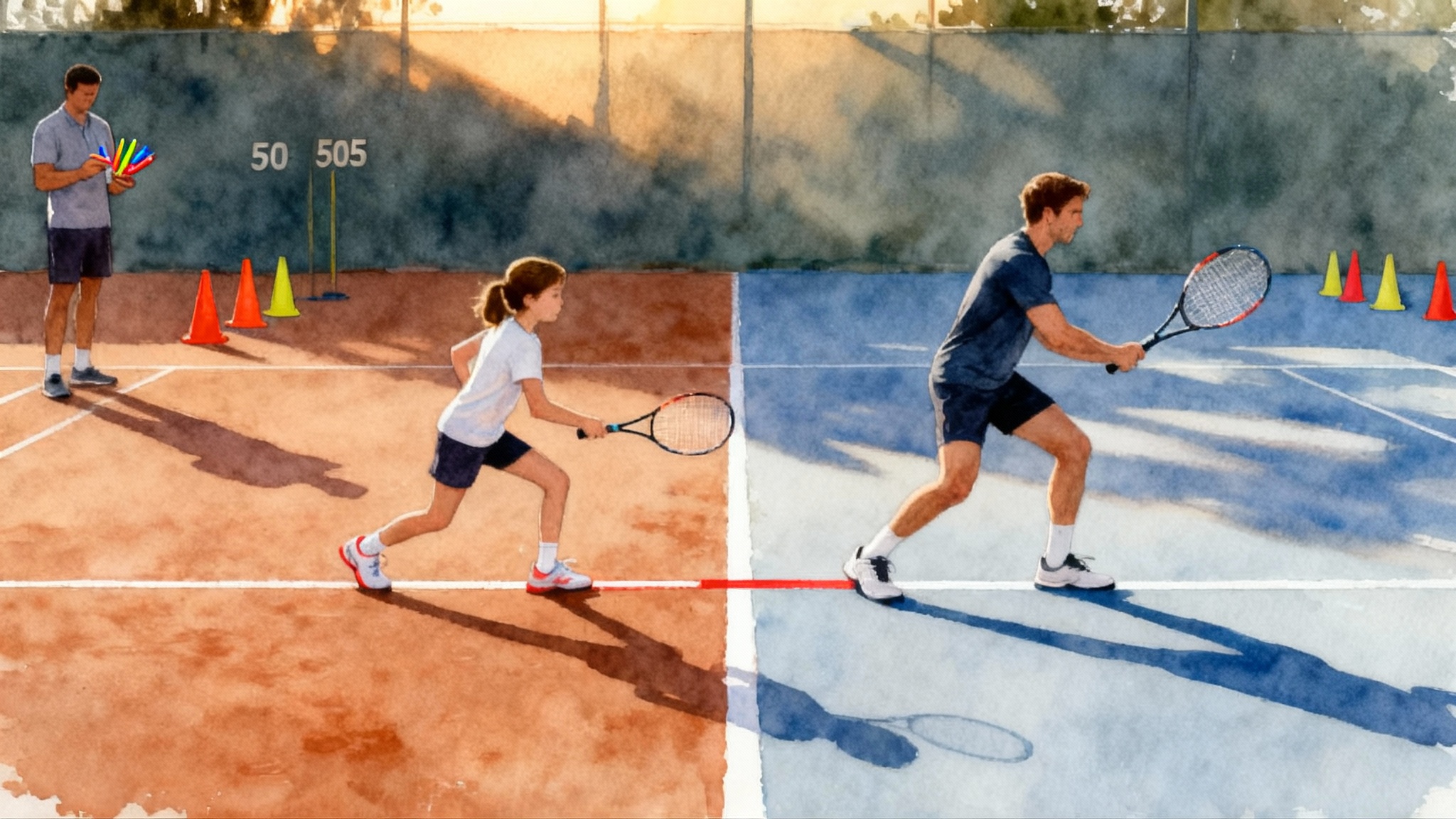
Why deceleration is the missing skill in tennis
Everyone loves acceleration because it looks fast. Deceleration is the quiet partner that keeps you healthy and lets you hit on balance. Every wide ball, short slice, or drop shot asks your body to do the same job: put on the brakes, organize the joints, and change direction with enough stability to swing. When deceleration is weak, the body leaks force in the knees, ankles, and lower back. When it is strong, your first step after the stop is springy and efficient.
This article gives you a six-week plan that fits into 20-minute sessions, three times per week. It is age-banded for juniors, parents, and adult players, and it includes clear technique cues, at-home strength, simple field tests, surface-specific tweaks, and red-flag checkpoints. To sync braking with on-court rhythm, pair this plan with our split-step timing blueprint.
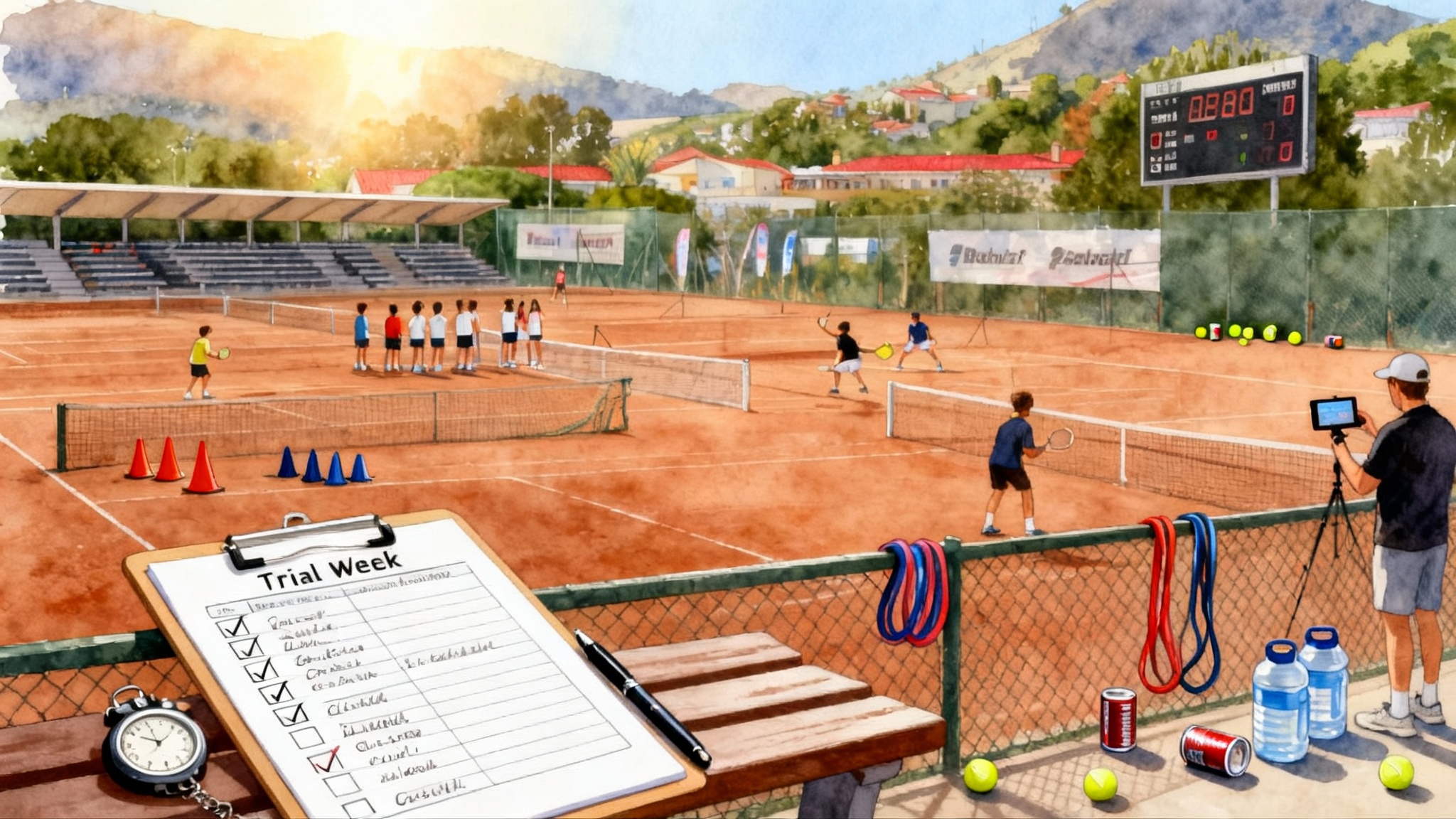
If you want a printable outline to take to the court, grab our 20-minute session template and check off each drill as you go.
The six-week blueprint at a glance
Each 20-minute session follows the same flow:
- Prep and patterning, 5 minutes
- Deceleration skill and "stick" mechanics, 7 minutes
- At-home strength insert or on-court equivalents, 5 minutes
- Cooldown and note one metric, 3 minutes
Weekly emphasis:
- Weeks 1-2: Alignment, landing shapes, and controlled stops
- Weeks 3-4: Planned change-of-direction cuts and controlled speed
- Weeks 5-6: Reactive cues, tennis-specific patterns, and repeat-effort stops
Training frequency: three sessions per week. For players in squads or leagues, you can place one session in practice warm-up, one before a hitting session, and one at home in the driveway or hallway.
Teach alignment and "stick" mechanics
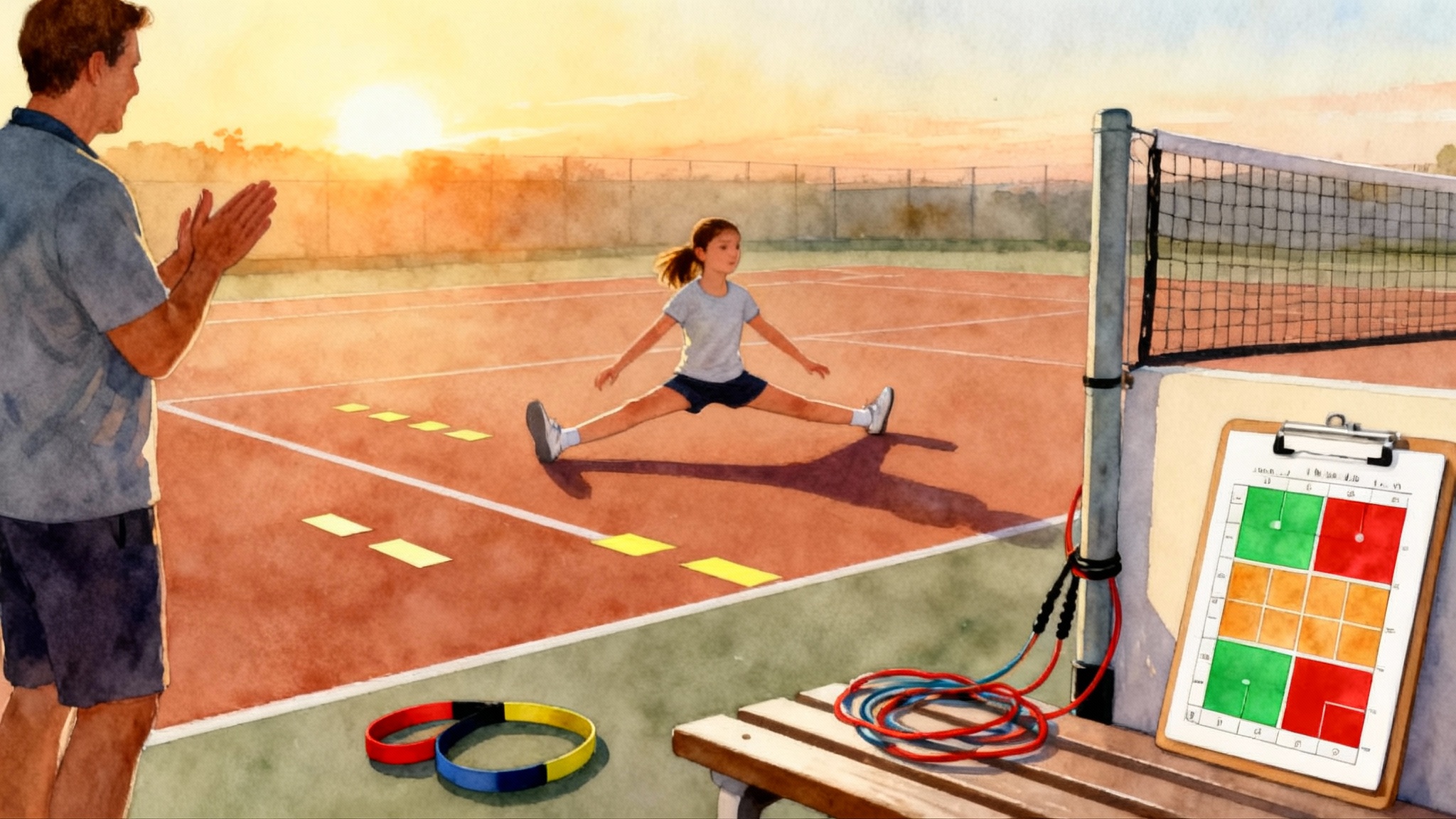
The "stick" is a brief, balanced hold after a stop or cut. Imagine you are a camera tripod. If one leg of the tripod is crooked, the picture blurs. If all three legs are stacked, the shot is sharp. Your three "legs" are foot, knee, and hip.
Key cues for every stop:
- Foot: plant with the whole foot, heel kisses first then midfoot. Toes point slightly out, never caved in.
- Knee: lines up over the middle toes, not collapsed inward. Think of a headlight on your kneecap, pointing straight ahead.
- Hip: sits back slightly like a short chair squat, rib cage stacked over pelvis.
- Trunk and arms: eyes level, off arm out for counterbalance, racquet quiet.
- Stick: hold the finish for two seconds so you can self-check the shape.
Common fixes:
- If the knee dives inward, slow down the entry step, widen the base by one shoe width, and aim the kneecap headlight to the second toe.
- If you tip forward, exhale as you land and think "proud chest, soft ribs."
- If the heel never touches, add ankle mobility prep first, then try again.
Planned to reactive: a simple progression
Move from predictable to unpredictable across six weeks.
- Planned stops: bark out the target line or cone before the rep. The player knows where to go.
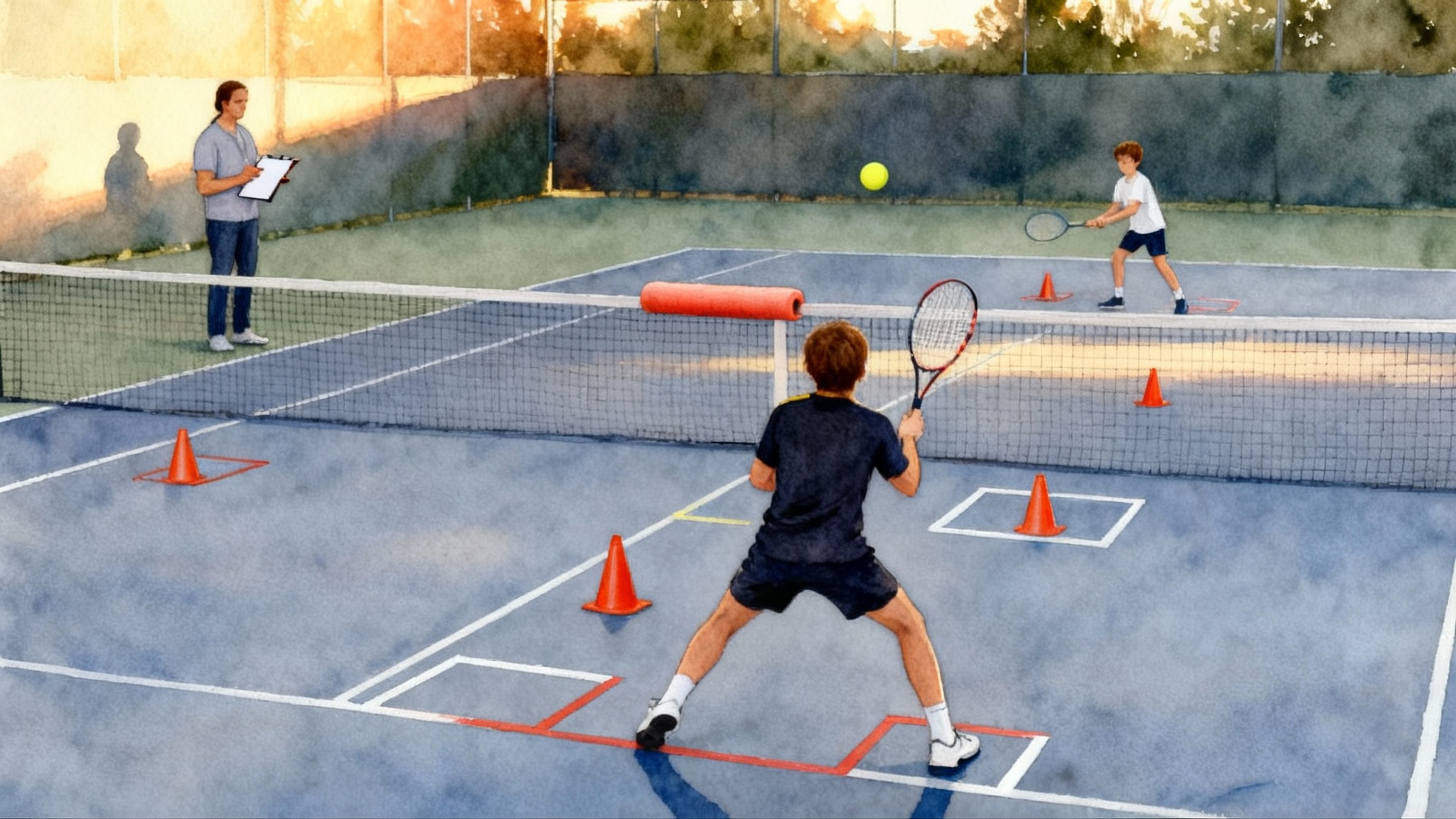
- Semi-reactive stops: show a number on fingers or a colored cone as the player approaches. The decision happens late but with clear cues.
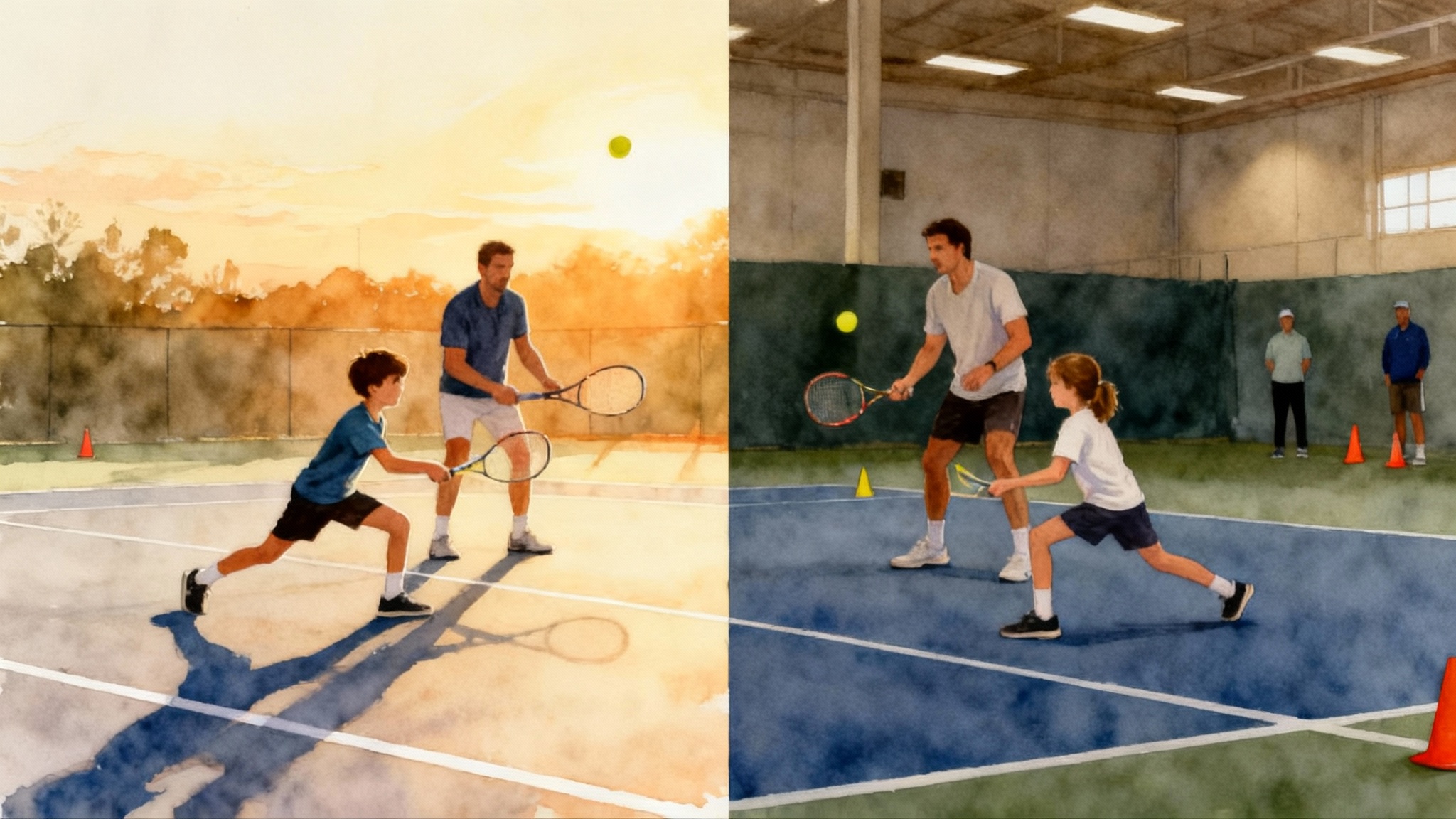
- Reactive tennis stops: coach feeds on the run, then calls "hit or hold." The player must brake, either swing or freeze into a stick, then push out.
This ladder lets players earn speed only after they own the shape.
At-home strength that makes braking safer
You do not need a weight room to build reliable brakes. Four bodyweight staples cover the hips, thighs, and lower legs. Keep the movements slow and controlled. If you have dumbbells or a backpack, add light external load once the shapes are clean.
- Cossack or lateral lunge
- Goal: build frontal plane strength for wide balls.
- How: take a long side step, sit into the hip of the stepping leg, keep the straight leg’s foot flat if possible, chest tall.
- Sets and reps: 3 sets of 6 reps each side.
- Progression: pause two seconds in the bottom. Later, hold a backpack to the chest.
- Regression: reduce depth and hold onto a chair.
- Split squat
- Goal: teach knee and hip to share load in a tennis stance.
- How: stand in a staggered stance, drop the back knee toward the floor, front knee tracks over middle toes, heel stays heavy.
- Sets and reps: 3 sets of 6-8 reps each side.
- Progression: add a slow three-second lower. Later, add light dumbbells.
- Regression: shorten the stance and reduce range.
- Single leg Romanian deadlift
- Goal: posterior chain and balance for braking control.
- How: hinge at the hip on one leg, reach the other leg back, keep hips square, touch the shin with fingertips, return tall.
- Sets and reps: 3 sets of 6 reps each side.
- Progression: hold a single dumbbell or backpack in the opposite hand.
- Regression: toe touch with the back toe lightly on the ground for balance.
- Tibialis raises
- Goal: stronger shins to handle deceleration and reduce toe-stubbing stops.
- How: stand with back against a wall, heels 8-12 inches from the wall, lift toes high toward shins, lower slowly.
- Sets and reps: 3 sets of 12-15.
- Progression: add a two-second hold at the top.
- Regression: reduce heel distance from the wall.
The 20-minute session template
Use this exact layout three times per week.
- Prep and patterning, 5 minutes
- 30 seconds knee-to-wall ankle rocks, each side
- 30 seconds hip airplanes, each side
- 2 rounds of 15 meter build-ups into soft three-step brakes, hold the stick for two seconds
- Deceleration skill, 7 minutes
Pick one pattern per day. Keep the stick honest.
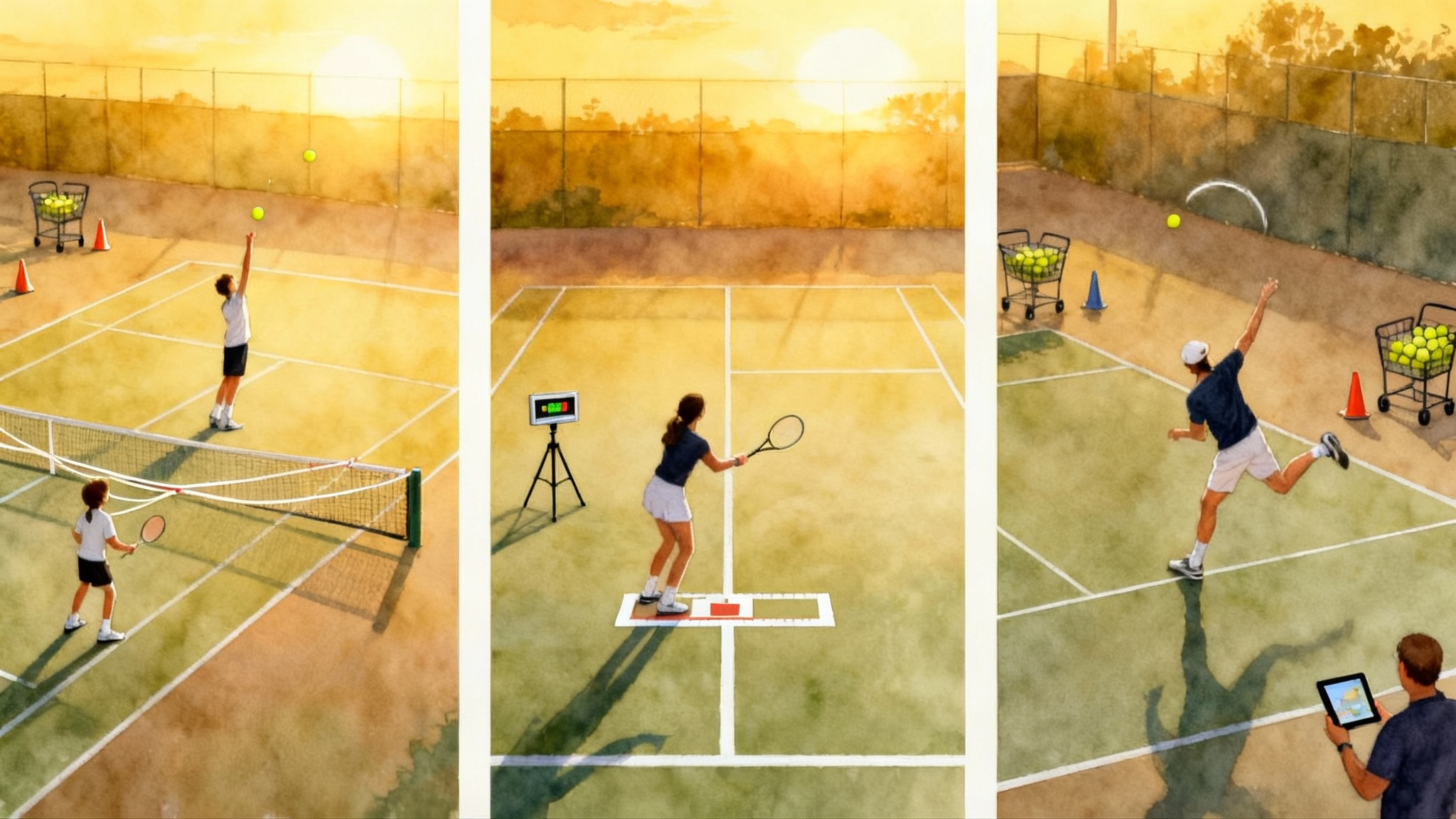
- Linear stop: 10 meter build, stop on a line, hold, walk back, 6 reps
- Lateral plant: shuffle two courts to a line, plant and stick, 5 reps each way
- 45 degree cut: sprint to cone, cut, stick, 4 reps each side
- 180 degree stop and go: sprint to line, stop, stick, push out backwards or forwards, 5 reps
- Strength insert, 5 minutes
- Day A: cossack or lateral lunge, 2 sets of 6 each side
- Day B: split squat, 2 sets of 8 each side
- Day C: single leg Romanian deadlift, 2 sets of 6 each side, plus tibialis raises, 2 sets of 12
- Cooldown and note a metric, 3 minutes
- Slow shuffle and breathe, 1 minute
- Calf stretch against fence, 30 seconds each side
- Note perceived exertion 1-10 and one cue that worked
Age-banded progressions
The drills above are the menu. Here is how to serve them by age.
Age 8-9: movement explorers
- Weeks 1-2: teach the tripod shape. Use foam lines for stops. Linear stops only. 6 reps per pattern.
- Weeks 3-4: add lateral plants and a single 45 degree cut each side. Keep the stick to a full two seconds.
- Weeks 5-6: semi-reactive. Coach shows a red or blue cone late. Player stops at the matching cone. Keep distances short, 6-8 meters.
- At-home strength: all four exercises, but limit to 2 sets. Keep the range small and celebrate balance holds.
Age 10-13: skill builders
- Weeks 1-2: linear and lateral stops, plus 45 degree cuts. Distances 8-12 meters. Add a slow three-second lower to split squat.
- Weeks 3-4: 180 degree stop and go, planned. Add single leg Romanian deadlift with backpack on the light side.
- Weeks 5-6: reactive calls from the coach, hand signals, or colored cones. Short rally add-ons like stop and hit one ball.
- At-home strength: 3 sets on split squat and tibialis raises. Two sets on cossack or lateral lunge and single leg Romanian deadlift.
Age 14-18: performance and resilience
- Weeks 1-2: build speed gradually, cap at 80 percent effort. Use 10-15 meter entries. Add a second rep when the stick is clean.
- Weeks 3-4: planned then semi-reactive cuts with two decisions per rep, for example cone A or B, then hit or hold.
- Weeks 5-6: reactive feeds and repeats, such as stop, hit, recover, and stop again. Keep total quality reps to 18-24 per session.
- At-home strength: progress to loaded split squats and single leg Romanian deadlifts if shapes are clean. Keep tibialis raises in every session.
Adults: joint-friendly confidence
- Weeks 1-2: own the stick at slow jog pace. Stop zones 8-10 meters. Avoid high volume. If you have knee history, cap at 12 total stops.
- Weeks 3-4: add lateral and 45 degree cuts. Keep rests complete, one to one or more between reps, so technique never degrades.
- Weeks 5-6: light reactive calls, one decision per rep. Only add speed if the stick looks the same at the end as at the start.
- At-home strength: split squat and single leg Romanian deadlift are priorities. Give tibialis raises extra love on hard courts.
Simple field tests that fit on a public court
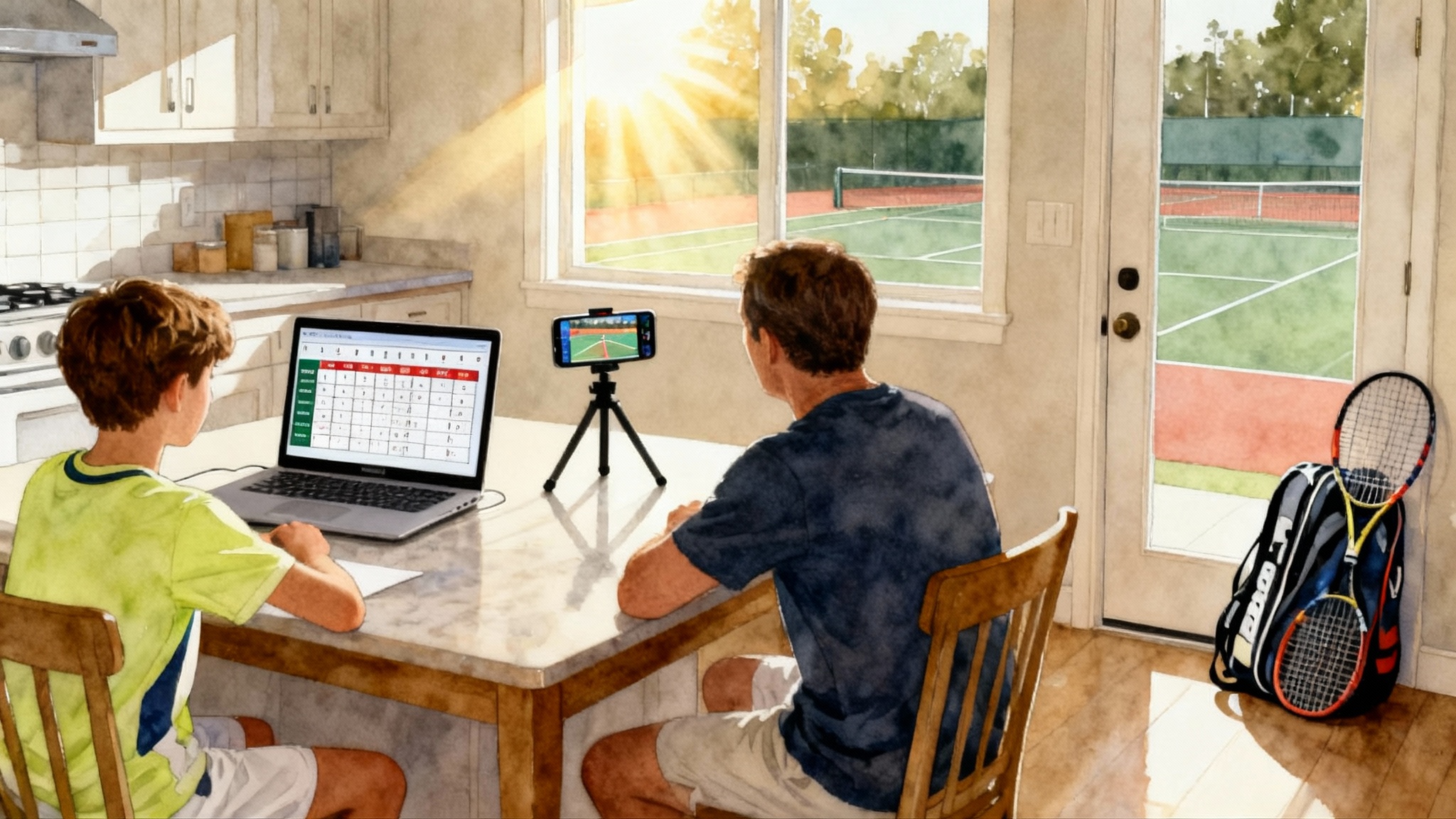
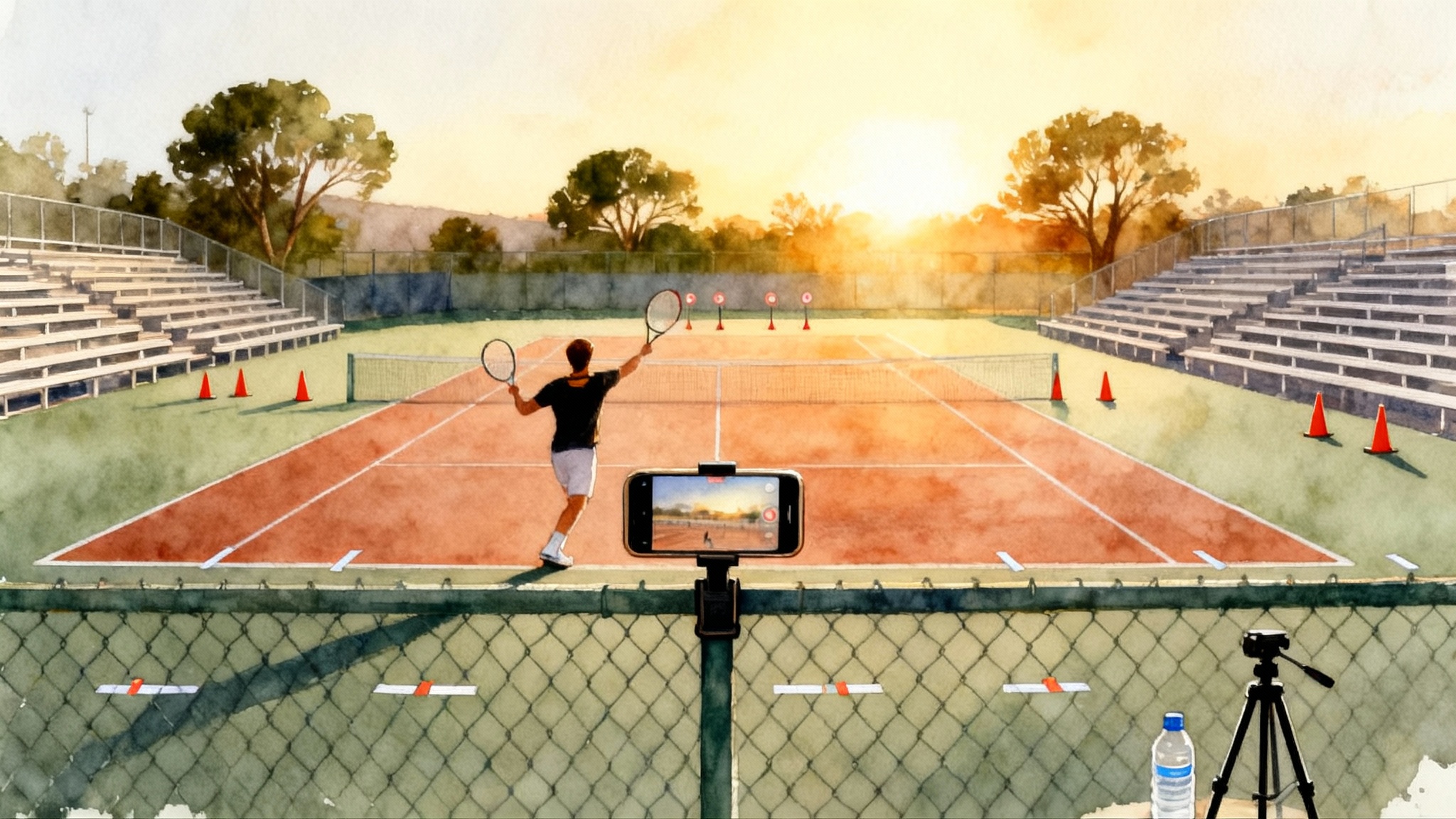
Testing makes the plan feel real and helps you steer volume. Two tests are easy to run with a few cones and a smartphone. For clearer video checks and angles, use our smartphone tennis analysis guide.
Ten meter stop test
- Setup: mark a start line and a stop line 10 meters apart. Use court lines to make it easy.
- Protocol: from a rolling start, build speed for five meters, then time the last 10 meters to the stop line. Plant on the line, hold a clean stick for two seconds. Use your phone’s slow motion to confirm heel contact and knee track. Take two attempts.
- What to note: time across the final 10 meters and whether you held the stick without wobble. Improvement looks like equal or better time with a cleaner, quieter stick.
505 change-of-direction test
- Setup: mark a start line, set a timing line 10 meters ahead, and place a turn line five meters beyond the timing line. You sprint through the timing line, plant at the turn line, turn 180 degrees, and sprint back through the timing line.
- Protocol: time from first pass through the timing line to second pass back. The test isolates braking and reacceleration. Take two to three trials each side, right and left plant.
- What to note: the difference between right and left. If one side is slower by more than 0.20 seconds, emphasize that plant in training.
Record your scores in your training log or inside the two-minute movement screen so coaches and parents can track changes.
Surface-specific tweaks: hard vs clay
Hard courts
- Shorter entry and firmer plant. Think heel to midfoot contact, knee stacked, small hip sit, quiet trunk. Favor shoes with intact tread and a modestly firm heel counter.
- Reduce total high-speed reps by 10 to 20 percent for adults who are new to braking work. Add one extra set of tibialis raises.
Clay courts
- Plan to brake earlier. Begin the deceleration two to three steps before the stop line, then allow a controlled micro-slide with the foot slightly turned out.
- Stick is still a stick. Even with a slide, you must finish balanced. If the foot keeps slipping after the stop, shorten the entry distance and pick a drier patch.
Indoor carpet or slick acrylic
- Treat like wet clay. Start braking earlier, exaggerate the heel kiss, and keep the center of mass slightly lower. Cut volume until you trust the surface.
Red-flag checkpoints and when to stop
Use these checkpoints like a dashboard. If any show up, reduce speed or stop the session and adjust the plan.
Technique red flags
- Knee collapse inward on planting side
- Heel never touches, all forefoot braking
- Trunk whips or the head drops below shoulder height
- Repeated slips on the same surface patch
Symptom red flags
- Sharp knee, ankle, or heel pain during or after reps
- New shin tenderness to touch
- Low back ache that builds across the session
- Swelling that lasts more than 24 hours
Action steps
- Slow the entry speed, shorten the distance, and reduce total reps by one third.
- Swap reactive drills for planned stops until shapes are reliable again.
- Emphasize tibialis raises and single leg Romanian deadlifts in the next two sessions.
- If pain persists across 48 hours, stop the progression and consult a qualified clinician who understands on-court demands.
How academies can plug this into warm-ups and screens
Warm-up integration, 8 minutes inside practice
- Minute 1: ankle rocks and calf pumps while walking the baseline
- Minute 2: two rounds of hip airplanes and split squat iso holds, 15 seconds per side
- Minutes 3-4: three 15 meter build and stick runs, hold two seconds
- Minutes 5-6: lateral shuffles into plant and stick, three reps each way
- Minutes 7-8: single 45 degree cut each side, then feed one ball on balance
Weekly microdose actions
- Monday: planned stops only, quality over speed
- Wednesday: planned cuts with two decisions per set
- Friday: reactive feeds with low volume, finish with two quality sticks
Movement screens in five minutes
- Single leg quarter squat to stick, eyes forward, note knee track
- Lateral bound to stick, small distance, repeat twice each side
- Knee-to-wall ankle test, aim for the kneecap to touch the wall with the heel down at a hand width distance
- Ten meter stop rehearsal, check heel kiss and trunk control
Program delivery tips
- Mark the stick spot on the court with tape so players aim for a target, not a feeling.
- Film one rep per player each week. Use slow motion for instant feedback.
- Set clear ceilings. For example, no more than 18 quality stops in a single session for teens, and no more than 12 for adult returners.
- Post the best stick of the week on your team board to reinforce the standard.
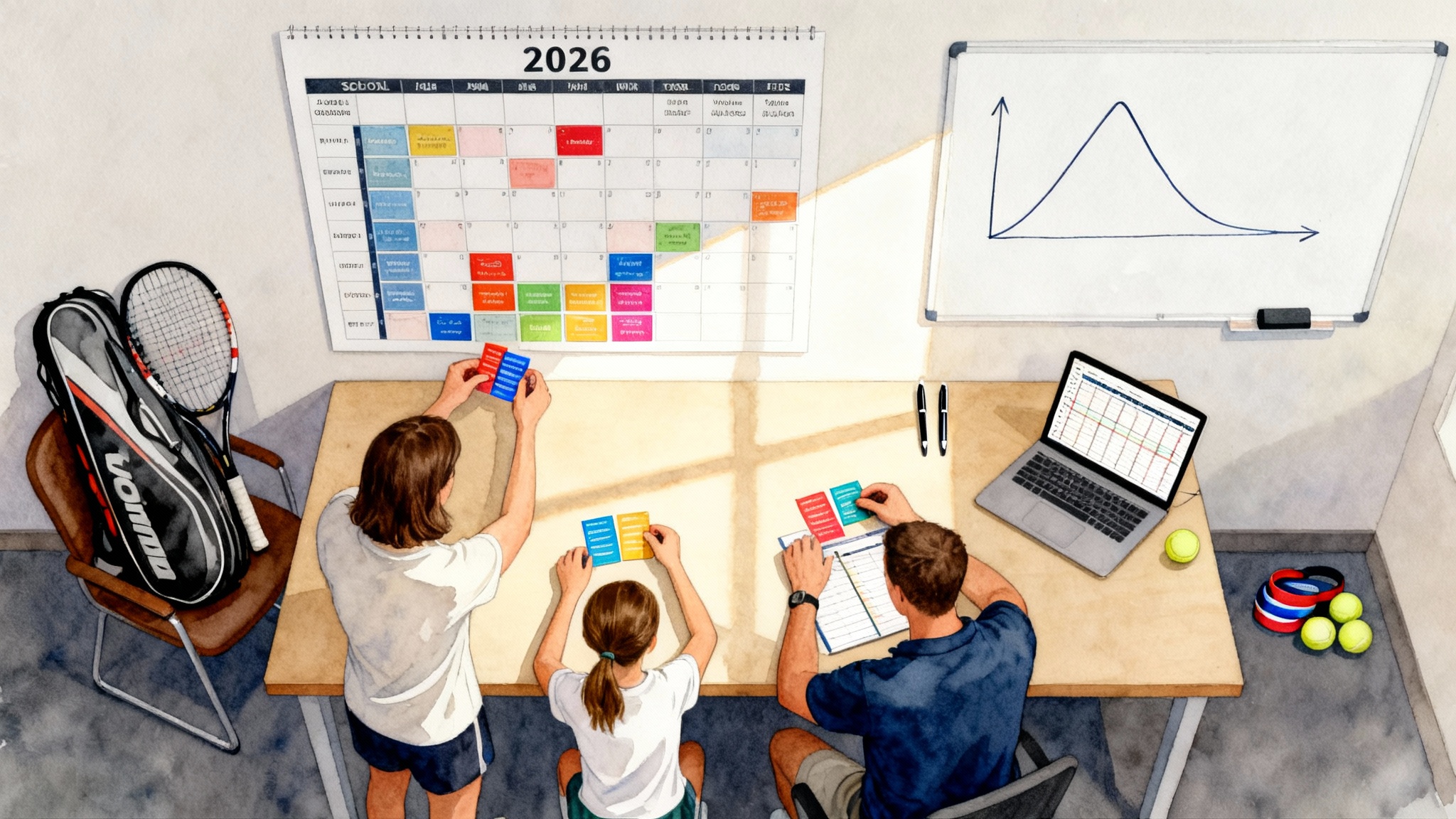
A sample week-by-week calendar
Each session is 20 minutes. Choose Monday, Wednesday, Friday or Tuesday, Thursday, Saturday.
Week 1
- Session A: prep, linear stop sticks, split squat, cooldown
- Session B: prep, lateral plant sticks, tibialis raises, cooldown
- Session C: prep, linear stop sticks, single leg Romanian deadlift, cooldown
Week 2
- Session A: prep, 45 degree cuts planned, split squat, cooldown
- Session B: prep, lateral plants, cossack or lateral lunge, cooldown
- Session C: prep, linear stop sticks, tibialis raises, cooldown
Week 3
- Session A: prep, 180 stop and go planned, single leg Romanian deadlift, cooldown
- Session B: prep, 45 degree cuts planned, split squat, cooldown
- Session C: prep, lateral plants with small speed increase, tibialis raises, cooldown
Week 4
- Session A: prep, semi-reactive 45 degree cuts, single leg Romanian deadlift, cooldown
- Session B: prep, semi-reactive lateral plants with cone colors, split squat, cooldown
- Session C: prep, planned 180 stop and go, tibialis raises, cooldown
Week 5
- Session A: prep, reactive coach call linear stops, single leg Romanian deadlift, cooldown
- Session B: prep, reactive lateral plants into one rally ball, split squat, cooldown
- Session C: prep, reactive 45 degree cuts, tibialis raises, cooldown
Week 6
- Session A: prep, reactive 180 stop and go, single leg Romanian deadlift, cooldown
- Session B: test day, ten meter stop and 505 test, light tibialis raises, cooldown
- Session C: favorite reactive drill, low volume, celebrate and record notes
How parents can help at home
- Create a safe stop lane in the driveway with chalk, 8-10 meters long.
- Film one rep per session for the knee headlight check.
- Count out the stick, "one one thousand, two one thousand," so the hold is real.
- Keep a simple habit: calf raise and tibialis raise pair while brushing teeth.
Equipment checklist and time savers
- Cones or water bottles as markers
- Tape for stick spots
- Measuring tape or a racquet length count for distances
- Smartphone with slow motion and a notes app
- A backpack that can hold two books for light loading
What progress should feel like
- The stick becomes quiet. Less wobble, faster balance.
- The first push after the stop feels springy, not heavy.
- Times on the ten meter stop are steady while shapes remain clean, then times drop by a small margin in Weeks 5-6.
- Players report less knee and shin grumbling after wide balls. For match-week recovery support, see our tennis recovery routines.
Troubleshooting common problems
- My player keeps tipping forward: cut the entry speed, cue heel kiss, and add single leg Romanian deadlift tempo work.
- The knee keeps dropping in: widen the stance one shoe width and add a two-second pause in split squats.
- Sticks are solid but the push-off is slow: add a small arm swing on the plant and practice a double tap push, plant, stick, two quick steps out.
- The surface feels slippery today: mark a new stick spot on a drier patch and begin braking one step earlier.
Make it part of your tennis identity
When you build deceleration, you do more than avoid aches. You give your game clearer options. Safer stops set up faster restarts, and faster restarts steal time from your opponent. Use this six-week plan, keep the stick honest, and treat each stop as a skill worth mastering. The payoff is simple, your body trusts your brakes, your racquet work stays steady, and your next step is ready before the ball bounces.