Pacific Mexico Dry-Season Tennis: Cabo to Vallarta Guide
Build a November to May tennis base on Mexico’s Pacific. Compare microclimates, court access, coaching, and budgets from Los Cabos to Puerto Vallarta. Plan flights, craft weekly schedules, manage wind and heat, and recover smartly.
 Tommy
Tommy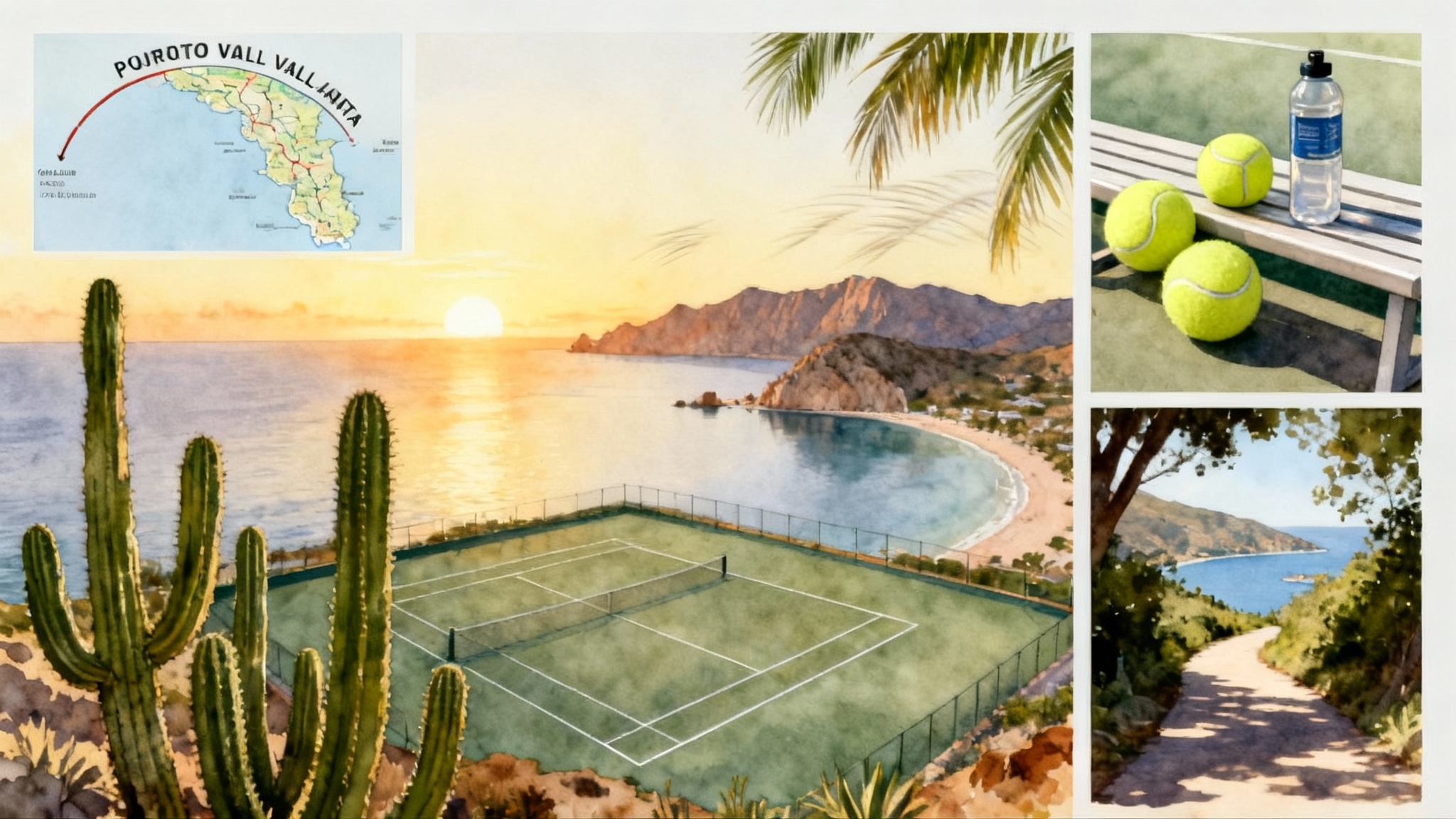
Why this corridor works from November to May
If you want reliable sun, mild mornings, and a playable breeze, the Pacific arc from Los Cabos to Puerto Vallarta gives you a long, flexible training window that starts in November and stretches through May. The spine of the Sierra brings a desert-dry feel in Baja California Sur, while the Bay of Banderas on the Jalisco coast adds coastal humidity and glassy mornings in winter. In practice, that means you can build a steady training base without dodging daily rain or sweating through peak summer stickiness. For a stateside dry-climate alternative, see the Desert Winter Tennis 2026 overview.
Climatology backs up the strategy. Los Cabos sits in a hot desert zone with very low rainfall through winter and spring, which is why mornings are crisp and courts dry fast after any dew. See the Los Cabos dry season averages for the big picture. Puerto Vallarta is tropical but it still has a distinct dry season from November into May, which keeps storm risk down and allows day-after-day hitting with only the occasional windy afternoon to manage. Review the Puerto Vallarta temperature and humidity profile for context.
Microclimates: Los Cabos versus Puerto Vallarta
-
Los Cabos: Think bright sun, low humidity, and a reliable afternoon breeze that can freshen into real wind in March and April. Morning sessions are calm and cool by local standards. Even on warm days, the dry air eases recovery between drills. Courts dry quickly, balls feel lively, and the felt stays crisp longer. The Pacific side beaches can have strong surf and currents, so choose protected coves for post-practice swims.
-
Puerto Vallarta and the Bay of Banderas: Expect slightly higher humidity, greener hills, and glassy mornings. Winter and shoulder-season afternoons often bring a light sea breeze that can add a half-level of difficulty without turning practices into survival drills. Night temperatures are comfortable, which helps with evening match-play blocks.
What this means for your sessions:
- Technique blocks and high-rep drilling are easier to sustain in Los Cabos mornings when the air is driest.
- Pattern play, serve plus first ball, and defensive footwork sets are great fits for Puerto Vallarta when a modest breeze builds later in the day.
- If you are heat sensitive, schedule your longest rallies and footwork ladders before 10:30 a.m. in both locations.
Where you will actually play
Both ends of the corridor offer three practical options, even if the brand names differ by neighborhood.
-
Resort courts open to day guests: Many hotels maintain two to four hard courts and let non-guests book with a day pass or court fee. Surfaces are usually medium pace and well kept. Availability is best midweek and early mornings. Call ahead the day before and ask about shade, wind screens, and lighting.
-
Municipal sports units and public clubs: Towns in both states operate multi-sport complexes that include hard courts. Surfaces are playable and the vibe is social. Expect early morning locals play, late afternoon lessons for juniors, and open ladder matches in the evening. Fees are low and posted by the hour.
-
Private communities and academies: Gated developments and small academies often sell packages that bundle court time with clinics or sparring. This is your best bet for a consistent hitting partner if you are staying more than a week.
Coaching options and what they cost
You can build a lean budget or go premium without losing training quality. Typical ranges in both Los Cabos and Puerto Vallarta:
- Drop-in group clinic, 75 to 90 minutes: 20 to 40 United States dollars per player. Look for 4 to 6 players per court, not 8.
- Private lesson, 60 minutes: 45 to 100 United States dollars depending on coach seniority and resort add-on fees.
- Sparring or hitting session: 25 to 50 United States dollars per hour with a ranked college player or advanced local. Bring your own new balls.
- Stringing: 15 to 30 United States dollars for labor, plus the cost of string if you do not supply it. Turnaround is often next day.
Ask prospective coaches for two items before you book: a sample session outline and one video clip of their live feed drills. This avoids a shag-ball cardio hour when you want live-ball pattern work.
What a week can look like
Here are two sample week plans you can copy and adjust. The goal is to stack your highest quality volume in calm, cool hours, then shift to skills that tolerate wind or heat later in the day.
Los Cabos base, 7 days
- Monday: 7:00 to 8:30 a.m. serve targets plus first-ball patterns; 5:30 to 7:00 p.m. practice sets. Recovery swim at Medano Beach where the bay is more protected.
- Tuesday: 7:00 to 8:15 a.m. crosscourt live ball and transition volleys; noon video review indoors; 6:00 to 6:30 p.m. mobility and band work.
- Wednesday: 6:45 to 8:15 a.m. fitness court session with footwork ladders and 10-ball repeats; late afternoon hike into the foothills below the Sierra de la Laguna for shade and lung work.
- Thursday: Off-court morning. Midday string check and two overgrip changes. 5:30 to 7:00 p.m. match tiebreak ladder at a public club.
- Friday: 7:00 to 8:30 a.m. doubles formations practice; afternoon ocean recovery with 10 minute cool immersion sets in a protected cove.
- Saturday: 7:00 to 9:00 a.m. high-intensity live points; evening ice and stretch.
- Sunday: Easy 60 minute feel session, then rest.
Puerto Vallarta base, 7 days
- Monday: 7:00 to 8:30 a.m. defensive footwork and neutral ball tolerance; 6:00 to 7:00 p.m. serves and returns under lights.
- Tuesday: 6:45 to 8:15 a.m. net rush patterns and reflex volleys; afternoon easy bay swim at Los Muertos Pier area when lifeguards are on duty.
- Wednesday: 7:00 to 8:00 a.m. second-serve plus first forehand; sunset hike to Cerro del Mono above the northern bay to build cardio without pounding hard courts.
- Thursday: Late start. 5:30 to 7:00 p.m. match play with new balls to keep the bounce honest in humid air.
- Friday: 7:00 to 8:30 a.m. crosscourt plus down-the-line pattern work; noon nap, then 20 minute mobility.
- Saturday: 7:00 to 9:00 a.m. set play. Finish with a gentle ocean float for ten minutes to drop heart rate.
- Sunday: Recovery walk along the malecón, then travel or rest.
Managing wind, heat, and humidity like a pro
- Wind: If the breeze builds after 11:00 a.m. in Los Cabos, make that your serve day. Aim for chest-high targets, keep tosses a touch lower, and add 3 to 5 percent more margin over the net. Use the wind to your advantage by serving into it for safer kick, and with it for extra slice.
- Heat: Keep rallies highest in the morning. Build your hydration like a staircase, not a fire drill. Two hours before the hit, drink 500 milliliters of water with electrolytes; then sip every 15 minutes based on thirst. If you cramp easily, add a salted snack right after the first hour.
- Humidity: In Puerto Vallarta the felt will fluff up on older balls. Start sets with a new can in the afternoon so rally tempo stays steady. If the ball is flying in hot sun, increase string tension by 2 to 3 pounds; if it feels dead in heavy air, drop 2 pounds.
- Sun: Wear a brimmed hat, long-sleeve lightweight top, and zinc on the nose and ears. Reapply sunscreen after the first hour when sweat rates peak.
Budgeting a realistic week
Numbers vary by neighborhood and season, but a lean and an upgraded budget both work.
Lean plan for either city
- Courts: two municipal sessions and three day-pass bookings, total 80 to 120 United States dollars.
- Coaching: two small-group clinics and one private, 90 to 180 United States dollars.
- Balls, grips, stringing: 35 to 60 United States dollars for the week.
- Recovery: ocean swims are free; add 10 to 20 United States dollars for ice and sports drinks.
Upgraded plan
- Courts: five resort sessions with peak-hour slots, 150 to 250 United States dollars.
- Coaching: two privates and two sparring hits, 200 to 350 United States dollars.
- Balls, grips, stringing: 50 to 90 United States dollars.
- Recovery: guided hike or boat ride to a calm cove, 40 to 120 United States dollars per person.
Why this beats many Florida or Canary Islands options for value: winter in Pacific Mexico often pairs lower court fees with shorter flights from the Western and Central United States, and the dry-season weather allows more back-to-back days without rain reschedules. For a Florida comparison, skim the Orlando Tennis Hub 2026 guide. For the Canaries, read the Tenerife winter tennis guide.
Getting there from major United States hubs
Flights are frequent in season. Typical nonstop times, subject to schedule changes:
- West Coast to Los Cabos: about 2.5 hours from Los Angeles and 3 hours from San Francisco. Seattle runs closer to 4 hours.
- West Coast to Puerto Vallarta: about 3 hours from Los Angeles and just over 3 hours from San Francisco.
- Southwest and Mountain hubs: Phoenix and Dallas to Los Cabos are roughly 2 to 3 hours; Denver to Los Cabos is about 3 hours. Denver to Puerto Vallarta runs about 3.5 hours.
- Midwest and East: Chicago to Puerto Vallarta is about 4.5 hours on seasonal nonstops. New York area to Puerto Vallarta is about 5.5 to 6 hours when nonstop; otherwise plan a Texas or Mexico City connection.
In practice, pick the city with the most convenient nonstop from your home airport. If you plan a two-stop season, set one long base in January in Los Cabos, then a second in March in Puerto Vallarta. This keeps your heaviest drilling in the driest air and your match play in stable coastal humidity.
Recovery that actually helps you play better
- Ocean swims: Choose sheltered beaches with lifeguards. In Los Cabos, the bay near the marina is usually calmer than Pacific-facing beaches. In Puerto Vallarta, the inner bay is often gentle in the morning. Keep swims to 5 to 10 minutes of cool immersion after practice rather than long workouts that add fatigue.
- Hikes and easy cardio: The foothills near Los Cabos offer graded trails with shade pockets. In Jalisco, the climb to viewpoints above the bay builds aerobic base without joint pounding. Start at sunrise and carry water plus a small salty snack.
- Soft tissue: Use a travel roller on calves, quads, and glutes for eight to twelve rolls per muscle after evening practice. Ten minutes yields better results than a once-a-week deep massage.
- Sleep: Keep your room dark and cool. If a court block starts at 7:00 a.m., lights out by 10:00 p.m. supports a full night of recovery.
Court-surface and gear notes
- Surfaces: Expect hard courts in both regions, typically acrylic over concrete. Pace ranges from medium to medium fast in Los Cabos and medium in Puerto Vallarta.
- Balls: Bring two cans per match day. If you plan doubles in humid air, consider heavy-duty felt to hold bounce integrity longer.
- Strings: Have a backup frame strung 2 pounds higher than your baseline. Heat reduces effective tension. If you normally play poly at 50 pounds, carry a second at 52.
- Grips and sweat: Two overgrips per session in humid conditions is normal. Store extras in a zip bag with a silica packet if you have one.
- Shoes: Durability rubber helps on hotter courts. Rotate pairs every other day so the midsole rebounds fully.
Safety, logistics, and etiquette
- Hydration: Buy a flat of bottled water or bring a filter bottle and refill at your lodging. Most clubs sell sports drinks for a few dollars.
- Sun and skin: Even in winter, ultraviolet is strong. Reapply sunscreen every hour and a half. Use a brimmed hat and polarized sunglasses off court.
- Cash and cards: Small clubs and municipal facilities may prefer cash for hourly court fees. Keep small bills for convenience.
- Court etiquette: Offer fresh balls when you join a local ladder. If you book a public court, leave five minutes early so the next group can set up. A friendly hola at check-in goes a long way.
A two-city template without the hassle
You do not need to move between cities in a single week. Instead, think in blocks. Book the first half of your winter in Los Cabos to maximize dry, still mornings for technical rebuilds. Shift to Puerto Vallarta later in the season for match sharpening in gentle humidity and calm seas. Keep your coach network in both places, and return next year with saved notes on wind patterns, lighting angles, and court speeds.
Bottom line
Pacific Mexico lets you trade winter excuses for reliable reps. With a November to May window, calm sunrise slots, and a mix of public and resort courts, the Los Cabos to Puerto Vallarta corridor can be a cost-effective alternative to Florida or the Canaries. Build your plan around mornings, adjust tension and ball choice to the air, and recover in the water or on a shaded trail. Do it for a week, or make it your seasonal base, and you will head into summer with more legs, cleaner patterns, and fewer interruptions.