Tokyo Spring Tennis 2026: Seijo and Shi Shi under Cherry Blossoms
Plan a rail friendly 7 to 10 day tennis block in Tokyo between late March and mid April. Blend lighted city courts with small group coaching from Seijo and Shi Shi, with backups, match play, and recovery mapped out.
 Tommy
Tommy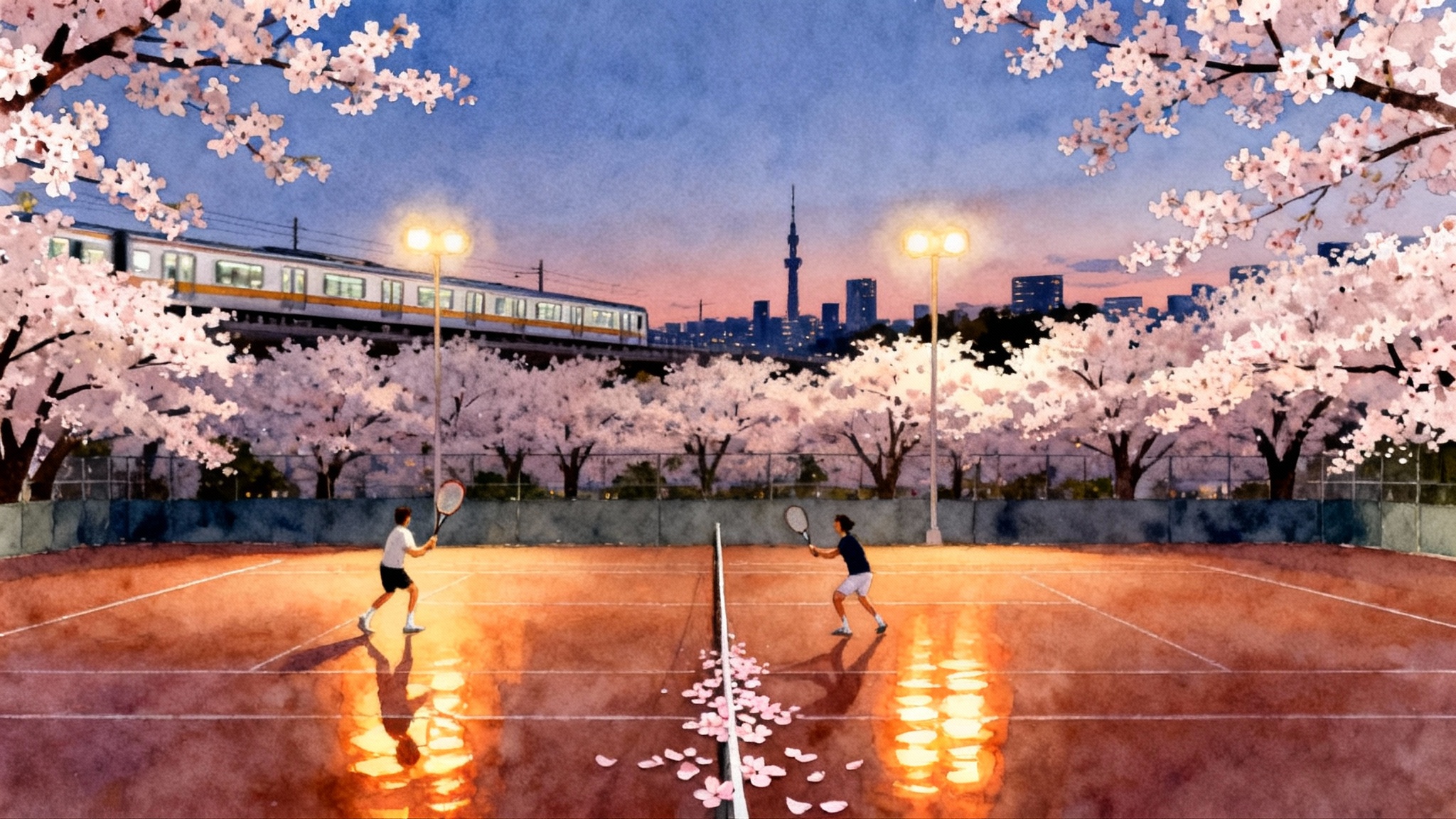
Why late March to mid April is Tokyo’s sweet spot
If you could draw a bullseye on the calendar for tennis in Tokyo, it would be late March through mid April. Mornings are cool enough for quality movement, afternoons are mild, and cherry blossoms turn warm ups into postcards. Expect mornings in the upper 40s to low 50s Fahrenheit and afternoons in the upper 50s to mid 60s, with an occasional light shower and a few breezy days. That blend suits higher tempo footwork, longer rally tolerance, and low dehydration risk. For a data view, see the Tokyo spring climate data.
There are two caveats. First, fast moving showers can clip an afternoon. Second, cedar and cypress pollen peaks around this time. Pack a light rain shell, a compact umbrella, a baseball cap that fits under your hoodie, non drowsy antihistamine, and lubricating eye drops. Mask wearing is common during pollen spikes and can help during walking commutes.
Your plan: a rail friendly 7 to 10 day training block
Think of this trip as a concentrated mini season. You will alternate high touch small group sessions at Seijo and Shi Shi with evening hitting blocks on lighted city courts. The rhythm is deliberate: technical depth early, volume at night, match play every third day, recovery built in.
- Core coaching: Book three to five small group sessions with Seijo Tennis Academy and three to five with Shi Shi Tennis Academy. Ask for high touch groups of four to six players per court, and share your goals and video clips in advance.
- Night hitting: Use lighted public courts for repetition sets, serve buckets, and situational games. Tokyo’s wards maintain dozens of bookable courts, and many light up until 9 or 10 p.m.
- Match play: Enter one Universal Tennis Rating event or a club ladder night mid trip and again near the end. The pressure will clarify what to reinforce. Browse current Universal Tennis Rating events.
- Recovery: Alternate gentle onsen soaks, short mobility blocks, and one physio tune up.
Sample daily schedule that actually works
Here is a sample one day template you can reuse across seven to ten days. Adjust the rail segment to the nearest station for your court or academy.
- 6:30 a.m. Wake, 10 minute balcony mobility and band routine. Banana, yogurt, and water.
- 7:15 a.m. Walk to station, hop a local train. Mobile Suica or Pasmo in your phone keeps it seamless.
- 8:00 to 10:00 a.m. Small group session at Seijo or Shi Shi. Focus blocks: footwork ladder into open stance forehand, serve plus one patterns, and defensive neutralization.
- 10:15 a.m. Convenience store protein snack and onigiri. Short debrief with the coach. Add one homework cue.
- 11:00 a.m. Return ride. Late morning sightseeing on foot to keep blood moving. No long sits.
- 1:30 p.m. Lunch near your neighborhood. Carbs and vegetables now, not at 9 p.m.
- 3:00 p.m. Nap or 20 minute legs up recovery. Five minutes of diaphragmatic breathing.
- 5:30 to 7:30 p.m. Lighted city court. Serve buckets, approach and first volley, then eleven point games. Track one metric, for example first serve percentage under pressure.
- 8:15 p.m. Quick dinner. Hydrate. Ten minute mobility before bed.
On the two match days, swap the night hitting for a ladder or a Universal Tennis Rating draw. On the recovery day, skip the evening court and do an onsen and physio combo.
Lighted city courts and how to actually book them
Tokyo’s courts are tucked into parks, neighborhoods, and sports centers. Many have lights and reliable surfaces after a shower. The goal is not to chase the most famous venue, it is to cut commute time and keep repetitions high.
- Ariake Tennis Forest Park, Koto: Fast hard courts, lights, and a tennis culture that can push your level just by osmosis.
- Komazawa Olympic Park, Setagaya: Multiple courts, lights, and an easy add on if you are staying along the Den en toshi line.
- Shiba Park, Minato: Hit at dusk with Tokyo Tower glowing above. Lights and a central location make it ideal for night sessions.
- Yoyogi Park area: Several courts around the park, with lights and reliable drainage.
Booking tactics that help:
- Register early: Many wards use resident registration for online booking. If you are visiting, have your academy help with reservations or look for non resident slots and day of cancellations.
- Night slots: Look for 5 to 9 p.m. windows where locals drop reservations if work runs late. Set alerts and refresh often.
- One court, two goals: Split the two hour block. First hour is serve, return, and play the first four shots. Second hour is live games to seven with one narrow constraint you want to groove.
Indoor backups that do not derail your plan
If rain is forecast for your key session, treat it as a puzzle rather than a setback. Tokyo has indoor options in private domes, municipal centers, and multi sport complexes. Your academies will have short notice options when possible.
- Keep one morning free: Protect one morning every three days for a sliding indoor backup that your coach can slot you into.
- Use multi sport centers: Many have hourly rentals for tennis and badminton that convert to short court drilling, volley work, and serve mechanics.
- Intensify the gym: If a full rain day hits, turn it into a performance day. Do a three block gym session focused on unilateral leg strength, medicine ball rotational throws, and shoulder care. For more shoulder season planning, see the Europe’s Indoor Tennis Belt guide.
Match play pathways: Universal Tennis Rating and club ladders
Nothing updates your improvement plan like scoreline pressure. Tokyo has growing Universal Tennis Rating activity and lively club ladders. Look for two bites of match play during a ten day stay.
- Universal Tennis Rating events: Search for flexible draws or match days that fit your window. Bring your profile up to date with video and notes so local organizers can seed you well. Start with the Universal Tennis Rating events page and filter for Tokyo.
- Club ladders and socials: Many public and private clubs run weekday evening ladders and Saturday socials. Ask Seijo and Shi Shi for introductions or guest passes. Aim for two matches on a ladder night rather than chasing a single long match.
- Match objectives: Treat each match as an experiment. Pick one pattern to test, for example body serve to backhand plus deep crosscourt, and one defensive rule, for example high heavy crosscourt when pulled wide.
Recovery that keeps you training every day
Spring in Tokyo is made for walking, which helps recovery between sessions. Layer in deliberate recovery so you can train daily with quality.
- Onsen and spa: Consider Spa LaQua near Tokyo Dome City, Thermae Yu in Shinjuku, or a smaller neighborhood sento. Start with a short warm soak, then cold plunge, then ten minutes of quiet rest. Two cycles are plenty.
- Physio and sports massage: Book one appointment mid trip and one near the end. Choose clinics that work with runners or racket athletes. Ask for soft tissue around calves, glutes, and forearms, plus gentle thoracic spine mobility.
- Sleep and caffeine: Keep caffeine early. Protect one early night after a match day. Use blackout curtains or a travel eye mask if your lodging is on a lively street.
Smart packing for rain, pollen, and rail life
Your bag is a rolling locker room. Pack like you will train in comfort in any condition.
- Rackets and strings: Two frames with fresh strings. One reel of your string, a few dampeners, and a small string saver pack.
- Apparel: Quick dry layers, a light rain shell, two pairs of shoes to alternate, and extra socks. A hat that fits under a hoodie and sunglasses for glare.
- Health kit: Non drowsy antihistamine, eye drops, blister care, athletic tape, and a compact massage ball.
- Tech: Portable charger, phone mount for filming, and a small tripod. Bring an outlet adapter if needed. Japan uses two flat blade plugs and 100 volt power.
- Rail smart: Add Mobile Suica or Pasmo to your phone wallet in advance. Carry a small towel and hand sanitizer for court exits.
Where to stay so the commute stays under 30 minutes
Choose neighborhoods that feel like Tokyo but keep your travel short to both academies and evening courts. Most visitors thrive near the western side of the city, where residential calm meets rail access.
- Shimokitazawa and Sangenjaya: Young energy, vintage shops, and quick hops to Setagaya courts. You have the Odakyu and Tokyu lines, plus many buses.
- Meguro and Nakameguro: Riverside walking after night hits, many small restaurants, and good access to central and western courts.
- Shinjuku and Yoyogi: Big station access for the Yamanote Line loop, plus several courts nearby for evening play.
- Jiyugaoka and Den en chofu: Leafy streets and easy access to parks with courts, a calmer base if you prefer quiet nights.
Map every likely commute from your lodging to Seijo and Shi Shi and to two backup city courts. If a ride will exceed thirty minutes at rush, look for another base. The goal is to conserve decision energy for the court.
How to book this trip in ten precise steps
- Pick dates inside March 24 to April 12, 2026. That window balances blossom timing with mild air.
- Reserve rail friendly lodging in one of the neighborhoods above. Confirm walking minutes to at least one line that reaches both academies in under thirty minutes.
- Contact Seijo and Shi Shi six to eight weeks ahead with your goals, Universal Tennis Rating number if you have one, and any injury notes. Request small group sessions and ask for two match play introductions.
- Prebook two night court blocks on day one and day three. Ask your academy which parks are easiest to secure for visitors.
- Set up Mobile Suica or Pasmo on your smartphone wallet. Add a small initial balance, then enable auto recharge with a spending threshold you control.
- Share your schedule with a travel companion or the academy coordinator. Include rail lines and station names for each day.
- Build your packing list using the health and rain items above. Add compression sleeves if you cramp in humidity.
- Save an offline Japanese phrase list in your phone for court etiquette and basic greetings. Tokyo rewards manners and patience.
- Film a short baseline rally and a service game at home. Share it with coaches so day one can skip diagnostics and jump to solutions.
- Place one indoor backup on hold with your academy during your most important training day. That removes the only real variable that can knock you off plan.
What to expect from Seijo and Shi Shi sessions
These are not one size fits all clinics. You are going for high touch adjustments you can feel.
- Seijo Tennis Academy: Expect careful footwork sequencing, ball recognition drills that stress spacing, and pattern construction. Coaches often use a constraints led approach that makes you own each solution. Video review is common after the first hour.
- Shi Shi Tennis Academy: Expect serve and return architecture, first strike patterns, and decision windows in the mid court. Coaches will press you on shot selection under time pressure and help you hard code one executable play from each wing.
Ask both academies to build your cue card. It should fit on one phone screen and list three technical cues, two tactical patterns, and one recovery rule. You will follow this card every night.
Night sessions that compound your gains
The night court is where your cue card becomes automatic. Keep it simple and measurable.
- Serve ladder: 20 first serves wide, 20 body, 20 down the tee. Record makes under a time cap.
- First four balls: Play points where serves and returns must land beyond the service boxes. If you miss, replay. Build sturdy early patterns.
- Constraint games: Play crosscourt only, or every approach must be down the line, or every second ball is a drop shot. Constraints sharpen choices.
- Film three rallies: One forehand exchange, one backhand exchange, one combined. Review on the train back.
Food that fuels and fits the training day
You do not need to hunt for specialty menus. Tokyo convenience stores carry excellent training fuel.
- Pre session: Onigiri rice ball, yogurt, and water. Add a banana and a small coffee if you normally use caffeine.
- Between sessions: Protein drink or tofu snack and fruit. Salted rice crackers for sodium.
- Dinner: Noodles or rice with protein and vegetables. Izakaya skewers are easy to portion control.
The result you can expect in ten days
If you follow the plan, players typically report three concrete gains.
- A reliable first strike pattern that wins free points on serve and return.
- Better spacing on fast courts that cuts unforced errors and raises rally tolerance.
- A recovery routine that travels home and supports your next block.
The mechanism is simple. You alternate deep coaching with deliberate volume, layer in two feedback matches, and protect recovery. Tokyo’s rail network lets you execute the plan without friction, and spring weather keeps the engine cool.
A final word before you book
There are tennis trips that feel like vacations with a few hits, and there are training blocks that change your season. Tokyo in spring can be the second kind. Choose a base with short commutes, book small group time with Seijo and Shi Shi, and let the city’s lighted courts turn your evenings into focused work. Protect one indoor backup, treat match play as a laboratory, and use the onsen to reset. Do it right and you will leave with habits that outlast the blossoms.
References used: the Tokyo spring climate data and current Universal Tennis Rating events for planning windows and match play options.