Shoulder Season Tennis on the French Riviera: Nice to Menton
 Tommy
Tommy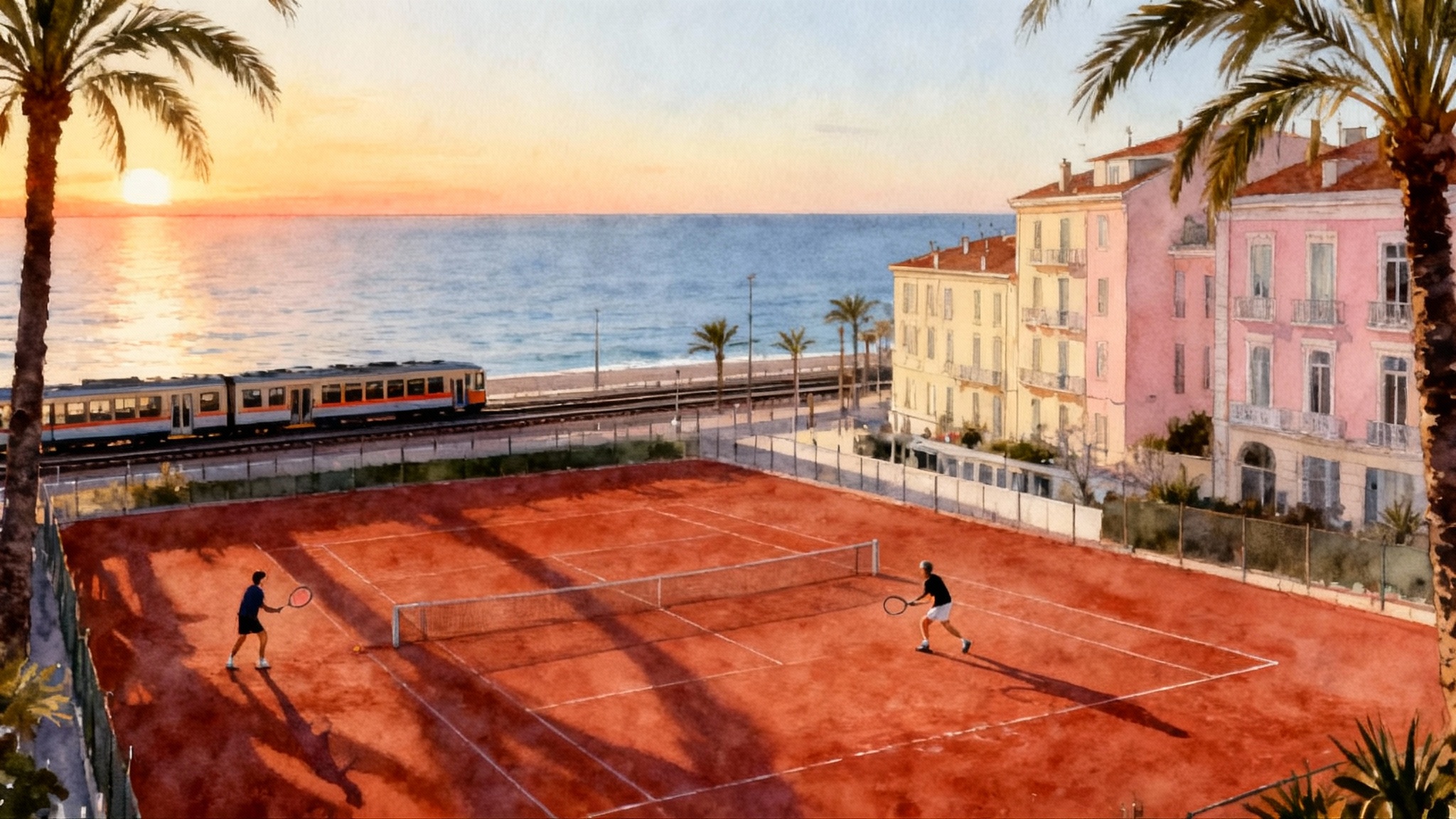
Why the Riviera works in spring and fall
If your calendar is flexible, the French Riviera’s shoulder seasons reward serious players with stable conditions, lighter crowds, and a deep bench of courts and coaches. Spring and fall bring mild temperatures, long daylight, and far fewer cruise ship days than peak summer. That makes it easier to find court time, book high level sparring, and recover between sessions without heat stress.
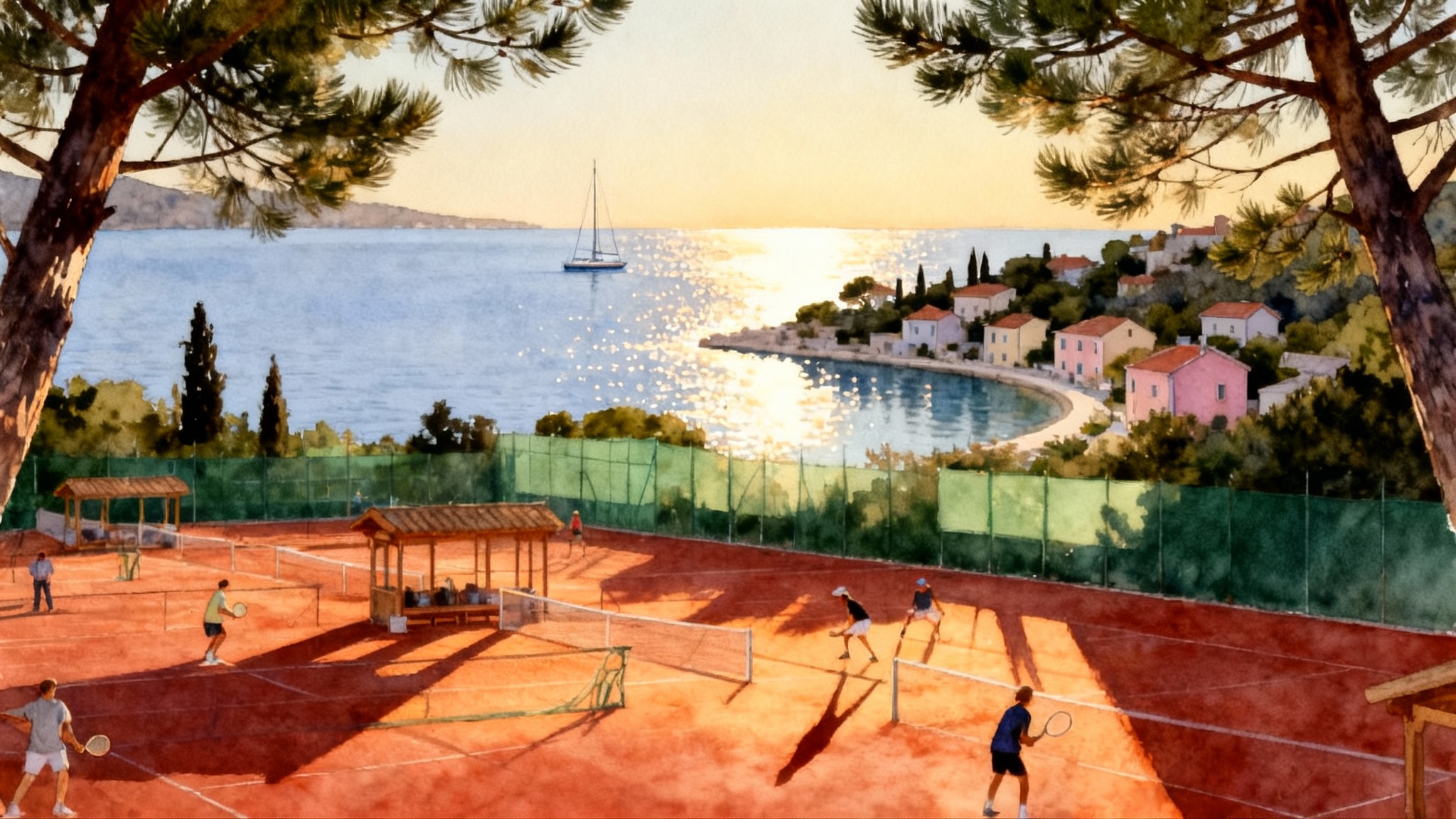
The training environment feels different from classic winter picks like Florida or the Canary Islands. On the Riviera, courts are woven into real neighborhoods rather than resort bubbles. After morning drills you can loosen the legs with an easy promenade along the water, grab a baguette from a corner bakery, then return for pattern work in the afternoon. For a winter sun alternative, see our Tenerife winter tennis guide. Most players will route through Nice Côte d’Azur Airport passenger info and settle somewhere between Nice, Antibes, and Menton, which are linked by a coastal train that runs all day. The corridor is compact enough to keep travel friction low while offering a variety of surfaces and coaching styles.
Choose your base: Nice, Antibes, or Menton
Each town has a distinct rhythm and access profile. Think like a pro setting up a camp: pick the base that reduces commute time to your priority courts and creates recovery options at your door.
- Nice: A practical base if you plan to fly in and out quickly or prioritize variety. Neighborhood clubs, city courts, and private facilities sit close to the tram and train. You can finish a morning block and be in the sea ten minutes later. Food options are dense, which makes fueling and refueling simple.
- Antibes and Villeneuve Loubet: Ideal if you want to plug a few days of structured work at All In Academy into a week of coastal play. Distances are short, there are guest friendly clubs nearby, and the vibe is calmer than central Nice. The marina areas and the old town provide flat, scenic walks for cooldowns.
- Menton: A quieter base near the Italian border. Court access is straightforward outside midsummer, and the microclimate tends to be sunny. Use it if you like second sessions in the late afternoon with less wind and fewer distractions, plus easy day trips into Liguria for match play on traditional clay.
Practical tip: regardless of where you stay, choose accommodation within a ten minute walk of either a train station or your primary club. That single decision often saves an hour per day.
Clay or hard: decide by goal, then plan the ratio
The Riviera gives you both red clay and quality hard courts. Choosing between them is not a style question, it is a training goal question.
- If you are building fitness and patterns: prioritize clay. You get more rallies per basket, slower incoming pace for technical changes, and more time to work on height over the net and heavy crosscourt patterns. Footwork sessions on clay build calves and hips without the joint shock of repeated hard court decelerations.
- If you are peaking for a fast court event: bias toward hard. You will sharpen first step decisions, serve plus one, return depth, and the transition game. Hard courts make timing errors obvious, which is useful right before tournaments.
- Hybrid weeks are powerful: many players split 60 percent clay, 40 percent hard. Clay mornings for volume and mechanics, hard court afternoons for speed and serve patterns. Keep the last session before a match on the surface you will compete on.
Micro planning matters. On clay blocks, string two pounds tighter than your summer setup to control launch angle in the cooler air. On hard blocks, try one grip size thicker or add an overgrip to calm the wrist during high tempo hitting. Take notes after each session to track what sticks.
Build a structured block at All In Academy
All In Academy in Villeneuve Loubet sits in the sweet spot between Nice and Antibes, which makes it easy to insert a three to five day block of coached work into a longer week of club play. Think of this block as the spine of your trip. Surround it with lighter days and independent court time.
Suggested structure for a three day block:
- Day 1 morning: diagnostic court session. Serve targets, neutral ball tolerance, and forehand direction control. Afternoon: supervised points to test the morning’s cues.
- Day 2 morning: footwork patterns on clay or hard depending on your goal. Crosscourt lanes, open stance recovery, and directional intent. Afternoon: serve plus one patterns with scoring pressure.
- Day 3 morning: return plus first four balls. Afternoon: match set with feedback, then a short debrief with video clips and two priority drills to take away.
If you extend to five days, layer in a strength and mobility block midweek, and insert a lighter pattern rehearsal afternoon to avoid neural fatigue. Ask to mix in local sparring partners at least twice. The academy’s coaches typically have deep contacts for competitive sets at your level.
To make the block efficient:
- Send recent match clips in advance. You will spend less time on discovery and more on solutions.
- Arrive warmed up. A twenty minute band and mini tennis routine lets the first balls count.
- Agree on two metrics to track each day, such as first serve percentage and unforced errors on neutral forehands. Numbers keep the sessions honest and let you compare club play to academy play.
Sea level recovery that actually moves the needle
Sea level air density and mild temperatures make the Riviera a recovery playground. Use the environment deliberately, not as a postcard backdrop.
- Water work: five to eight minutes of easy immersion or a waist deep walk in the sea after your morning session reduces soreness. Even in cooler months, short bouts are tolerable and effective. Bring a thin neoprene top if you run cold.
- Promenade strides: striders at conversational pace along the waterfront loosen hips and help you down regulate before lunch. Think of it as an active cooldown rather than exercise.
- Sunlight and sleep: get ten to twenty minutes of morning light within an hour of waking to anchor your clock, then keep evening indoor light warm and low. Shoulder season light is strong enough to help but gentle enough to avoid overheating.
- Food timing: the lunch window matters. Aim for a balanced plate within forty five minutes of finishing your first session. On doubles days, add a small carbohydrate top up ninety minutes before the second hit.
Pack a compact recovery kit: a softball for hips, a mini foam roller, bands, a skipping rope, a small towel for the beach, and swim shoes for pebbly entries.
Sample week itineraries
You can vary the surfaces and intensities, but these frameworks keep decision fatigue low.
Option A: Clay forward development week
- Sunday arrival: easy twenty minute promenade walk, light dinner, early bed.
- Monday: morning clay diagnostic, afternoon rally tolerance drill set. Evening mobility.
- Tuesday: morning clay footwork patterns, afternoon serve plus one on hard. Recovery walk by the sea.
- Wednesday: All In Academy block day 1, two shorter sessions with a technical focus. Cold water immersion.
- Thursday: All In Academy block day 2, morning on clay, afternoon monitored points on hard. Early night.
- Friday: independent clay set play, then a light doubles hit. Optional stringing to adjust for cooler air.
- Saturday: day trip to Menton for coastal courts and late lunch. Keep it playful. Travel back by train.
- Sunday: departure or bonus hit if energy is high.
Option B: Hard court tournament tune up
- Sunday arrival: mobility circuit and an easy jog on the promenade.
- Monday: morning serve and return on hard, afternoon short points from fed balls.
- Tuesday: All In Academy day 1, diagnostic plus supervised sets on hard.
- Wednesday: off feet conditioning in the morning, light pattern rehearsal in the afternoon.
- Thursday: All In Academy day 2, match play with a local spar. Ice the calves after.
- Friday: tempo day on hard. First strike patterns and tiebreakers.
- Saturday: active recovery on a slow clay court to groove height and spin without stress.
- Sunday: travel or doubles for touch.
Option C: Hybrid with more Menton time
- Base in Menton, train mornings on clay, then ride the coastal train for afternoon hard court sessions near Nice or Antibes. This option suits players who like a calm home base and higher variety.
Clubs, guest play, and how to map sessions
Shoulder season is guest friendly, but policies vary. Call or message ahead and be clear about your level and needs. A practical script: “Two players, three sessions this week, one clay, two hard, can we book with a ball machine for thirty minutes?” That signals you are organized and respectful of members’ time.
- Court fees: expect a reasonable guest fee for 60 to 90 minutes. Clay often costs a little more due to upkeep.
- Ball machines: useful on windy days when rally rhythm is messy. Reserve them early.
- Stringing: bring your favorite string, but assume you can restring within 24 hours near major clubs. Cooler air may call for a small tension bump.
When you mix club play with academy days, place the highest cognitive load on academy mornings and make club afternoons either pattern rehearsals or point play with simple constraints like first ball depth goals.
Getting there and around via Nice (NCE)
Nice Côte d’Azur Airport is the obvious gateway. It sits close to town and near the coastal train. Check terminal maps and ground transport on the airport’s official pages so you can move fast on arrival. If you plan to base hop, buy point to point train tickets on the day and keep your schedule flexible. The regional TER line connects Nice, Antibes, and Menton with frequent stops, and you can review timetables and stations through TER Sud coastal trains.
Car rentals are easy at the airport, but parking near coastal courts is the constraint. If you rent, pick a compact model and confirm your hotel has a guaranteed space. Otherwise, trains and short rideshares cover most needs.
Pro packing list for shoulder season travel through NCE:
- Two pairs of shoes, one dedicated to clay and one to hard, plus spare insoles.
- Lightweight waterproof shell and a compact umbrella.
- Two grips per day and a small towel that you can take to the beach for post session immersion.
- Universal adaptor and a small power strip to keep devices and a massage gun charged.
Budget and field notes
Pricing varies by club and coach, but a few rules of thumb help with planning:
- Court time: many clubs price by surface and duration. Clay may carry a modest premium. Expect reasonable guest fees compared with peak summer.
- Coaching: one to one sessions cost more than hitting partners, but a mix of one technical session and one spar per day often beats two pure lessons.
- Academy blocks: budget for coaching, fitness, and any video analysis you request. Ask for a written plan and a post block report so you can keep building after you leave.
Food and recovery are affordable if you shop smart. A simple formula works: bakery plus fruit in the morning, set lunch near your club, light dinner. Carry electrolyte packets and a soft flask. Shoulder season can feel dry even if the temperature is kind.
Compared with Florida and the Canaries
- Time zone strategy: if you compete in Europe, training on Central European Time simplifies travel and sleep. If you compete in North America, consider a short Riviera block two to three weeks before a European swing, then fly in rested.
- Surface specificity: the Riviera offers abundant red clay, which is valuable for pattern building and footwork economy. You can still find quality hard courts for match tune blocks. For a Florida template, see our Orlando tennis hub 2026 guide.
- Density and transit: courts, gyms, physios, and food are packed into a small corridor linked by trains. You spend less time driving and more time doing the work.
- Culture and recovery: easy seaside walks and real neighborhoods make recovery strolls and simple meals part of the routine rather than activities you have to plan.
Rain plan, wind, and other contingencies
Shoulder season is stable, but you will get some weather. Control what you can.
- Light rain: clay can close briefly, hard courts may remain playable. Keep a ball machine slot on standby at a nearby hard court and switch to serve practice if the wind picks up.
- Wind: use the conditions to train depth and height, and play diagonals with conservative targets. Wind sessions are free mental training.
- Indoor backup: some clubs have limited covered options. Ask at check in which affiliates can host guests under cover and how fast they fill.
- Strength and mobility: have a gym drop in mapped for each base. On rain days, replace your second hit with a circuit and a technical video session with your coach.
A Riviera checklist before you book
- Define the purpose of the week in one sentence. Every booking decision follows that sentence.
- Pick your base by proximity to your anchor courts and All In Academy.
- Decide your clay to hard ratio and pre book the first two days. Leave the rest flexible to adjust to how you feel.
- Line up stringing, sparring partners, and a rain day gym.
- Set a recovery routine that includes the sea and a daily promenade walk.
- Keep one empty afternoon for life. The best weeks have a little white space.
The bottom line
The Riviera in spring and fall is a coherent training ecosystem, not just a pretty place to hit balls. You can structure a serious block at All In Academy, plug into club courts for volume, choose your surface by goal, and recover at sea level without wasting energy on logistics. With Nice as your gateway and a simple plan for courts, transit, and recovery, a week between Nice, Antibes, and Menton becomes more than a getaway. It becomes the base that ties your season together.