Tenerife Winter Tennis Guide: Courts, Climate, Recovery
 Tommy
Tommy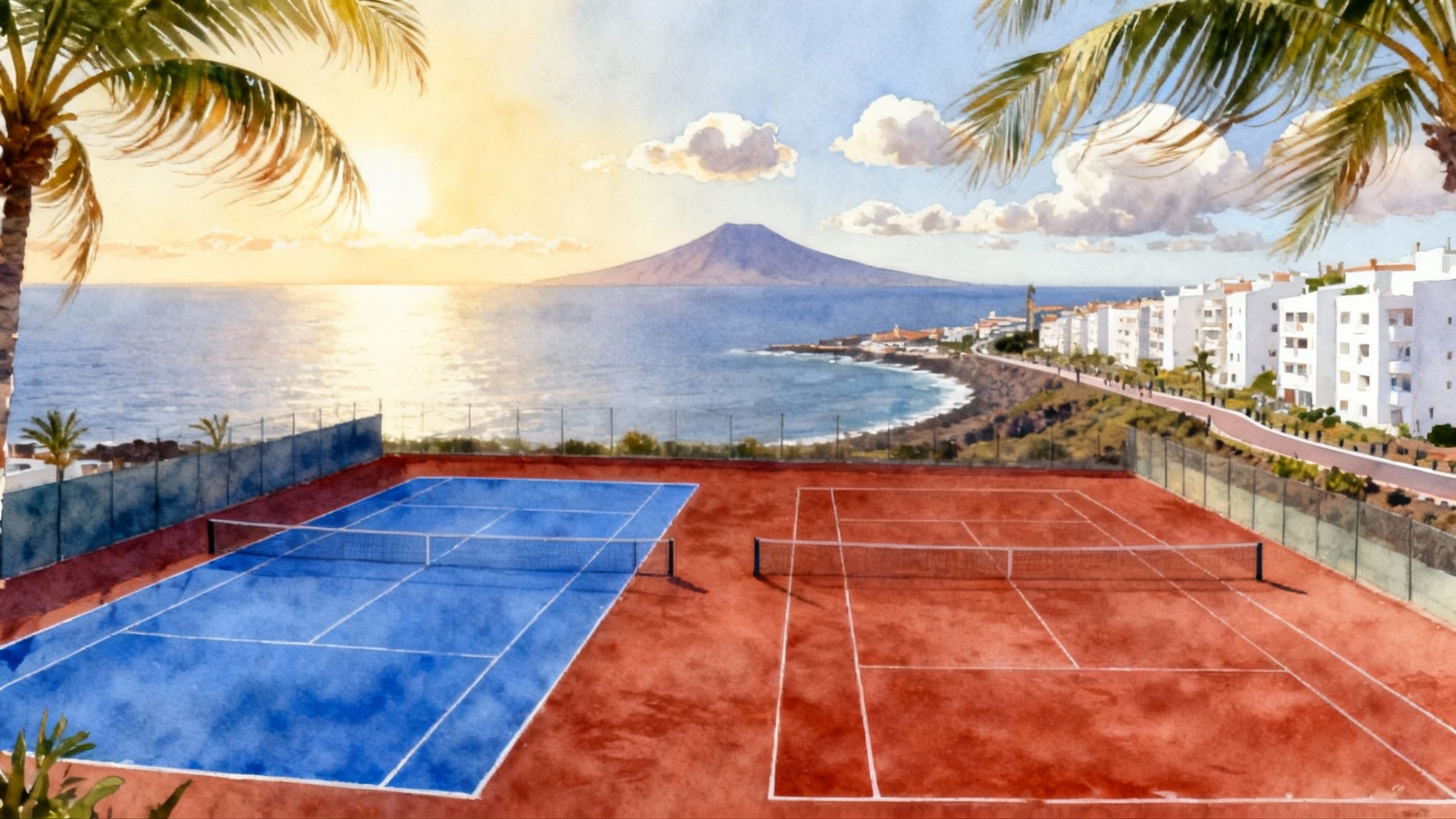
Why Tenerife delivers in winter
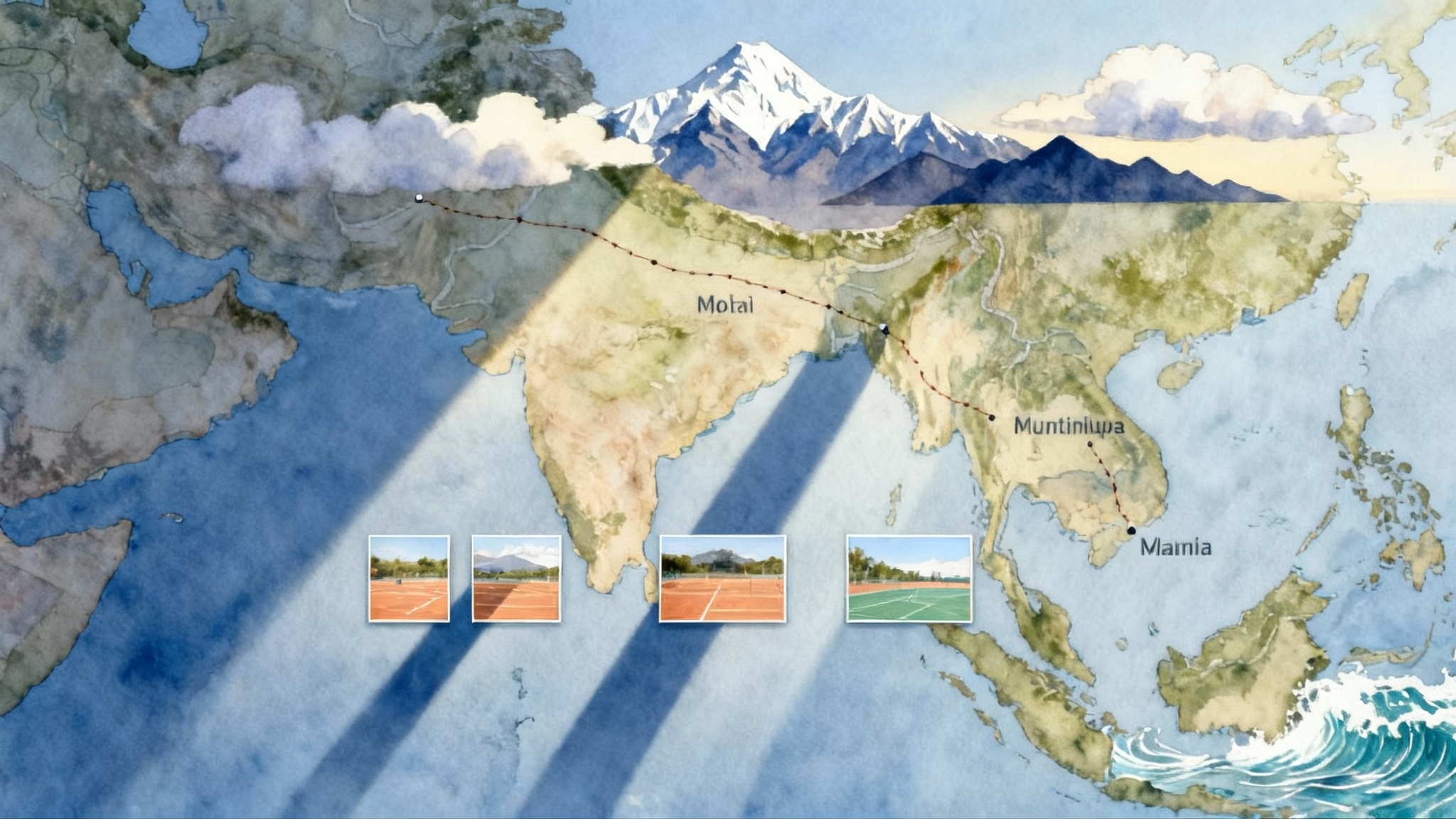
If you draw a line across the Atlantic and put a tennis ball on it, Tenerife sits almost exactly where players want it in winter. The island lies off the northwest coast of Africa, which gives it a mild, dry climate from November to March while much of Europe is flooded, frozen, or fighting short daylight. Three things make the south coast remarkably consistent for tennis: a rain shadow, the northeast trade winds, and long sunshine hours that align with training windows.
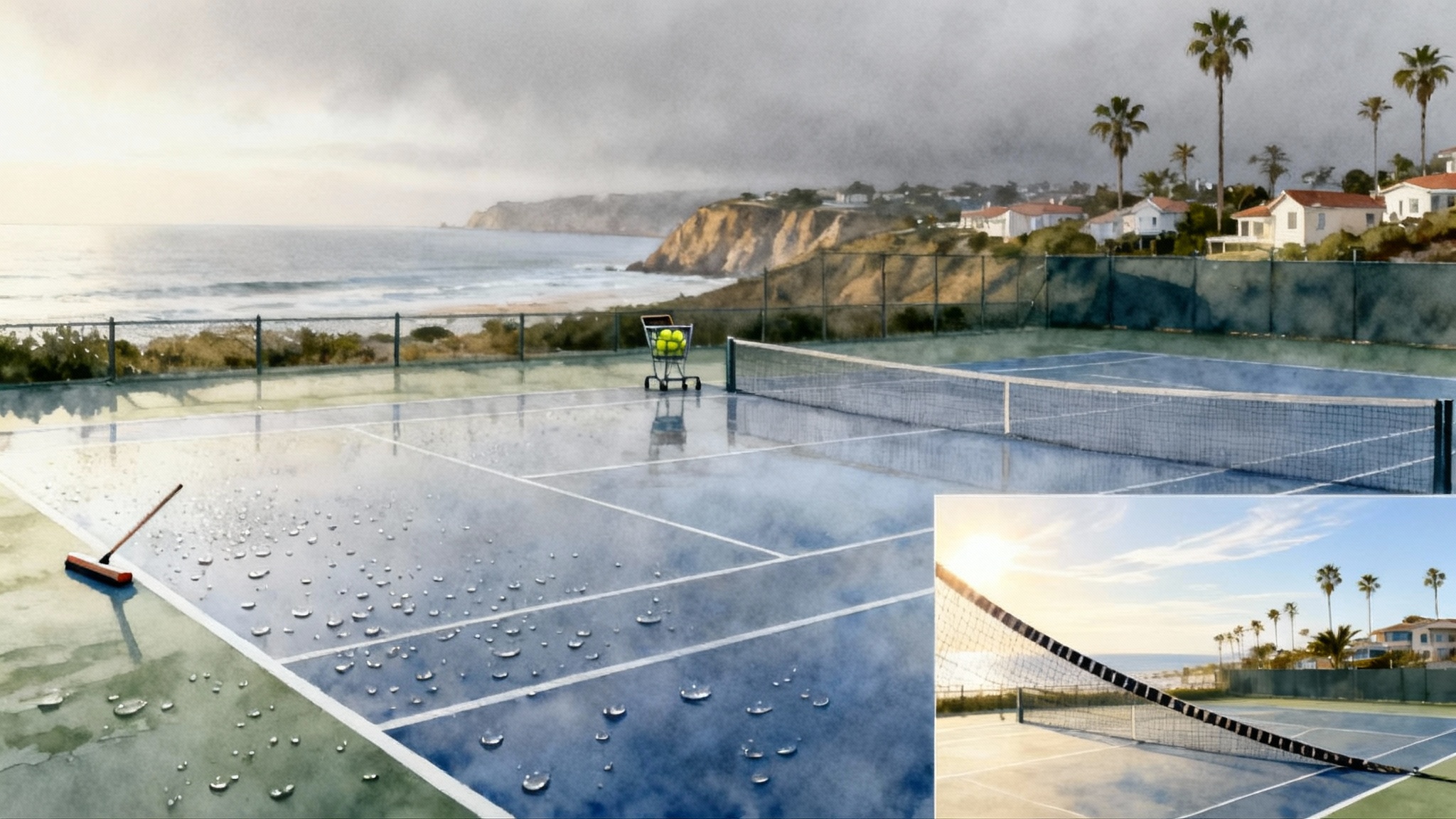
- The rain shadow: Mount Teide and its high central massif block moisture that arrives from the north and northeast. Clouds hit the mountains, drop rain on the northern slopes, and thin out before reaching the south. The result is a reliable pocket of dry weather from Costa Adeje to Los Cristianos where courts dry quickly even after an occasional shower.
- The trade winds: The dominant breeze comes from the northeast. The mountains channel and weaken it by the time it reaches the southern resorts. Mornings are often calmer, and afternoon winds tend to be steady rather than gusty, which is easier to train in because you can plan ball trajectories and footwork drills without constant adjustment.
- Sunshine hours: The south averages high annual sunshine with winter days that feel like late spring elsewhere in Europe. If you want the hard numbers for planning, consult the AEMET climate normals for Tenerife South for temperature and rainfall reference.
The practical implication is simple: if you want to put in 10 to 14 consecutive days on court in January, February, or March, the south coast of Tenerife gives you the best odds in Europe that you will actually train rather than wait. If your dates slide into colder spells or you want a backup, scan our Europe’s Indoor Tennis Belt guide. North America based players can also compare with this Naples winter tennis base.
Where to stay: Adeje vs Los Cristianos
You can run a successful camp from either Costa Adeje or Los Cristianos. Both are close to the island’s best cluster of courts, coaching, and recovery options. The choice is mostly about training flow and lifestyle between sessions.
- Costa Adeje: Close to Tenerife Top Training in La Caleta, access to coastal paths for easy shakeout runs, and a range of self-catering apartments. Restaurants skew toward higher quality seafood and simple grilled options that pair well with a training diet. Travel time to red clay in Chayofa is short by car.
- Los Cristianos: Slightly busier, with a protected harbor that often means calmer early mornings for ocean swims. Accommodation is more varied and sometimes better value. You are well placed for sessions at Tenerife Tennis Academy in Chayofa and still within a short drive of Adeje.
Booking windows
- Peak season weeks from late December through the third week of February require booking accommodation 8 to 12 weeks in advance. Court blocks and coaching slots should be reserved at the same time to avoid split-session days that waste recovery windows.
- Shoulder season in November, early December, late February, and March often works with 4 to 6 weeks notice, but the best morning court times still go first.
Pick a base that reduces transit. The winning setup is an apartment or townhouse with a workable kitchen, a quiet bedroom, a shaded terrace for stretching and video analysis, and reserved parking if you plan to shuttle between hard and clay.
The two-court recipe: hard at Tenerife Top Training, clay at Chayofa
Your week becomes more complete if you alternate surfaces. That is easy here.
- Hard courts: Tenerife Top Training in La Caleta offers high quality hard courts with a true, even bounce and a medium pace. The surface plays very close to modern Grand Slam hard courts, which makes it the right place to tune movement patterns, first step speed, and serve mechanics. Check specs and availability on the official Tenerife Top Training tennis courts.
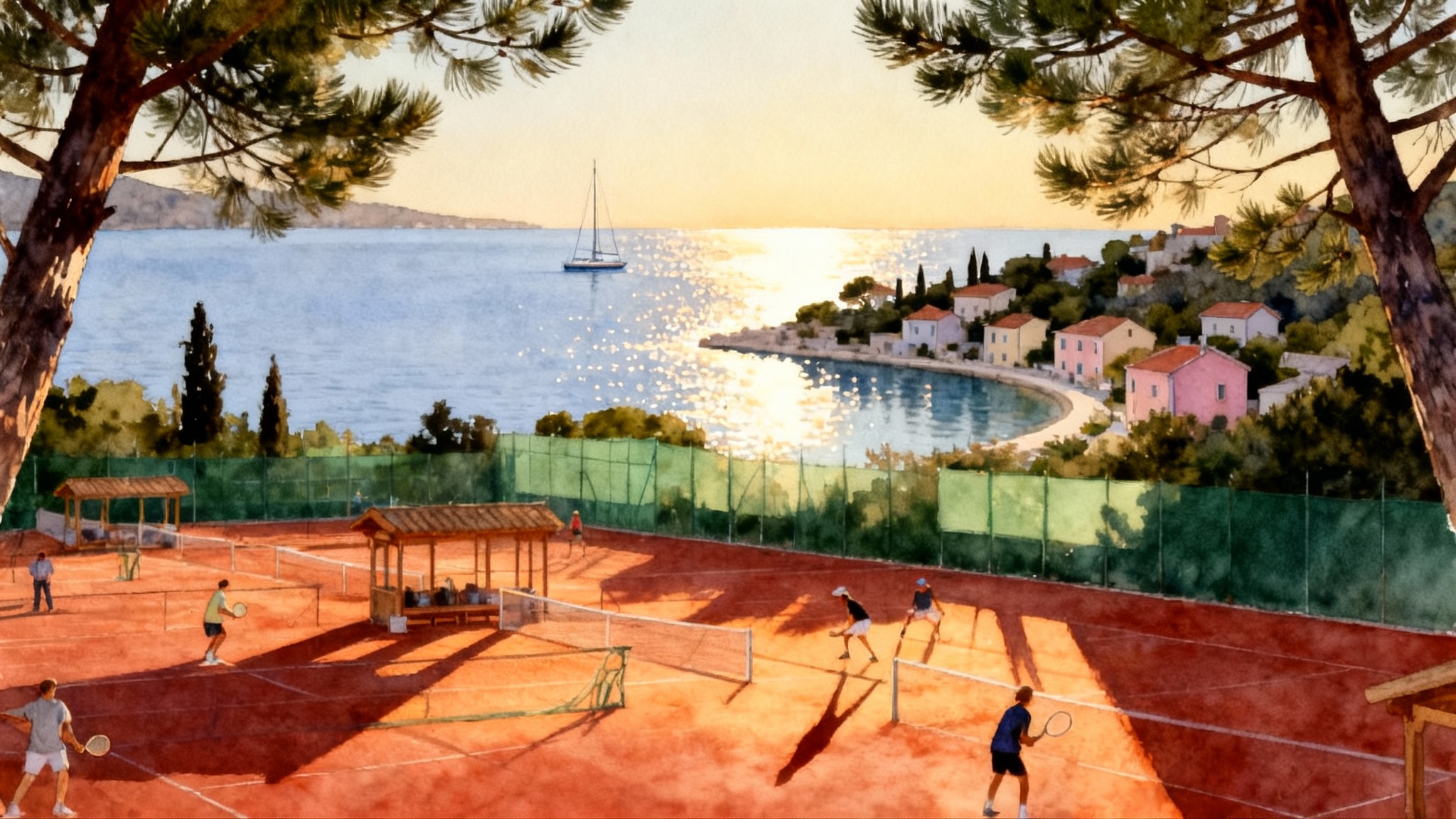
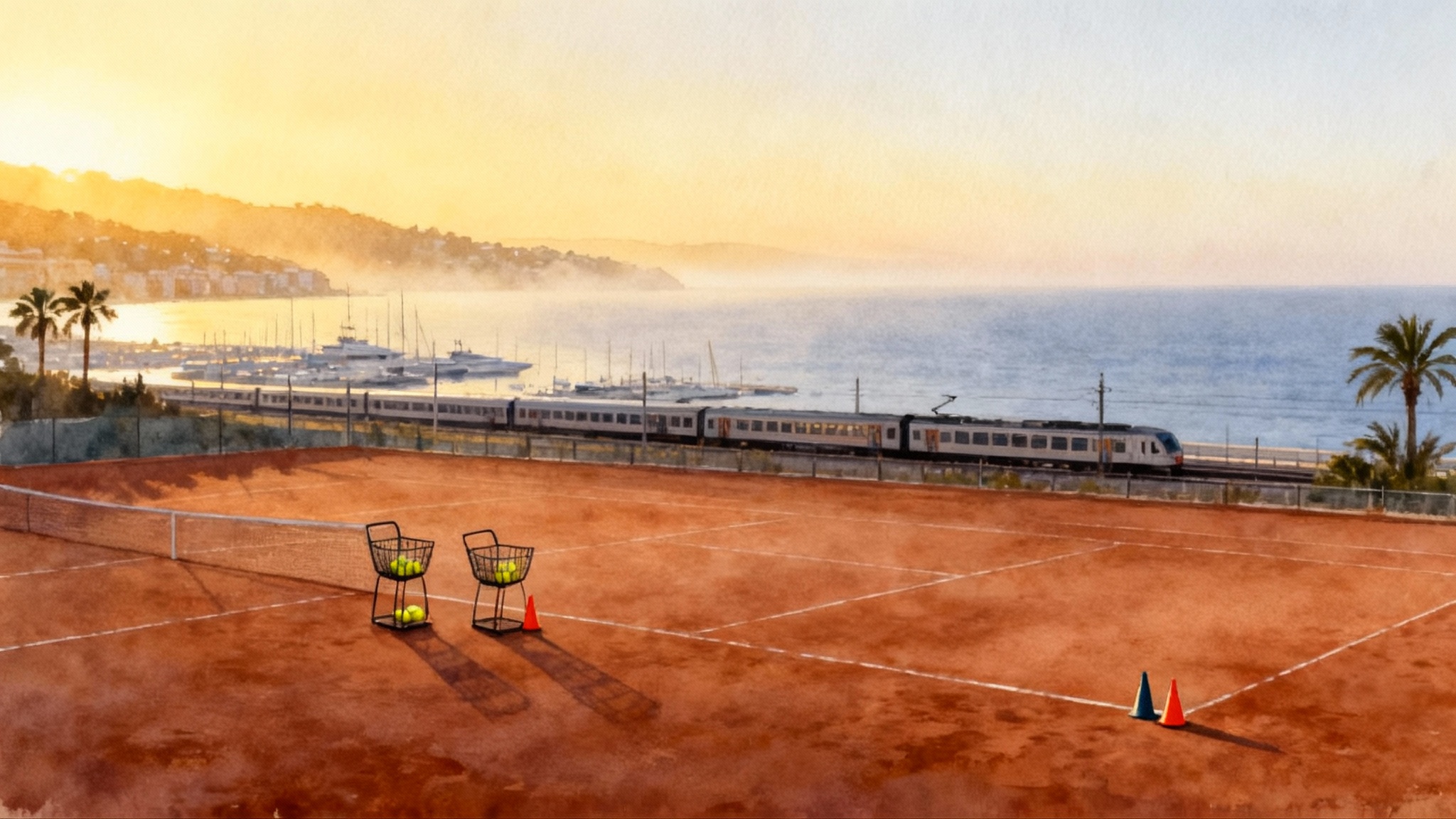
- Red clay: Chayofa is home base for Tenerife Tennis Academy in Chayofa, with traditional red clay that rewards point construction, changes of height and spin, and disciplined footwork through the shot.
If you are here to prepare for early season hard court tournaments, you still benefit from one or two clay sessions per week. Clay sharpens length control, exposes sloppy spacing, and builds a base of rally tolerance that transfers when you step back onto hard court. If you are coming off injury or ramping up after a break, clay days can reduce impact while keeping the mind engaged.
To integrate coaching and sparring easily, coordinate court time, coaching, and hitting partners through the academy’s internal booking channel.
One week template: a measurable, repeatable block
Goal: leave with two measurable wins such as a faster first step to the wide ball on the deuce side and a higher first serve percentage on big points.
Day 1, arrival and assessment
- Morning or early afternoon arrival at Tenerife South Airport if possible. Pick up a small rental car for flexibility.
- Check in, stock the kitchen, and do a 30 minute beach walk or easy jog to reset after travel.
- Late afternoon: 60 minute mobility and band work session on the terrace. No tennis today.
Day 2, hard court acceleration and serve foundation
- 08:00 to 09:30 hard court at Tenerife Top Training. Themes: three ball acceleration patterns, first step out of split, and serve rhythm at 70 percent power focusing on toss consistency.
- 11:30 ocean swim or pool flush: 12 to 15 minutes easy effort, then stretch.
- 16:00 to 17:00 gym: trap bar deadlift technique, lateral lunges, anti-rotation core. Finish with calf work for tendon health.
Day 3, clay patience and patterns
- 08:00 to 09:30 red clay at Chayofa with a Tenerife Tennis Academy coach. Themes: crosscourt forehand height windows, backhand depth to the corner cone, and the one two pattern that brings you forward behind a heavy ball.
- Afternoon: 45 minute hike on a low volcanic trail near Arona to load the calves eccentrically without pounding.
Day 4, hard court plus serve accuracy test
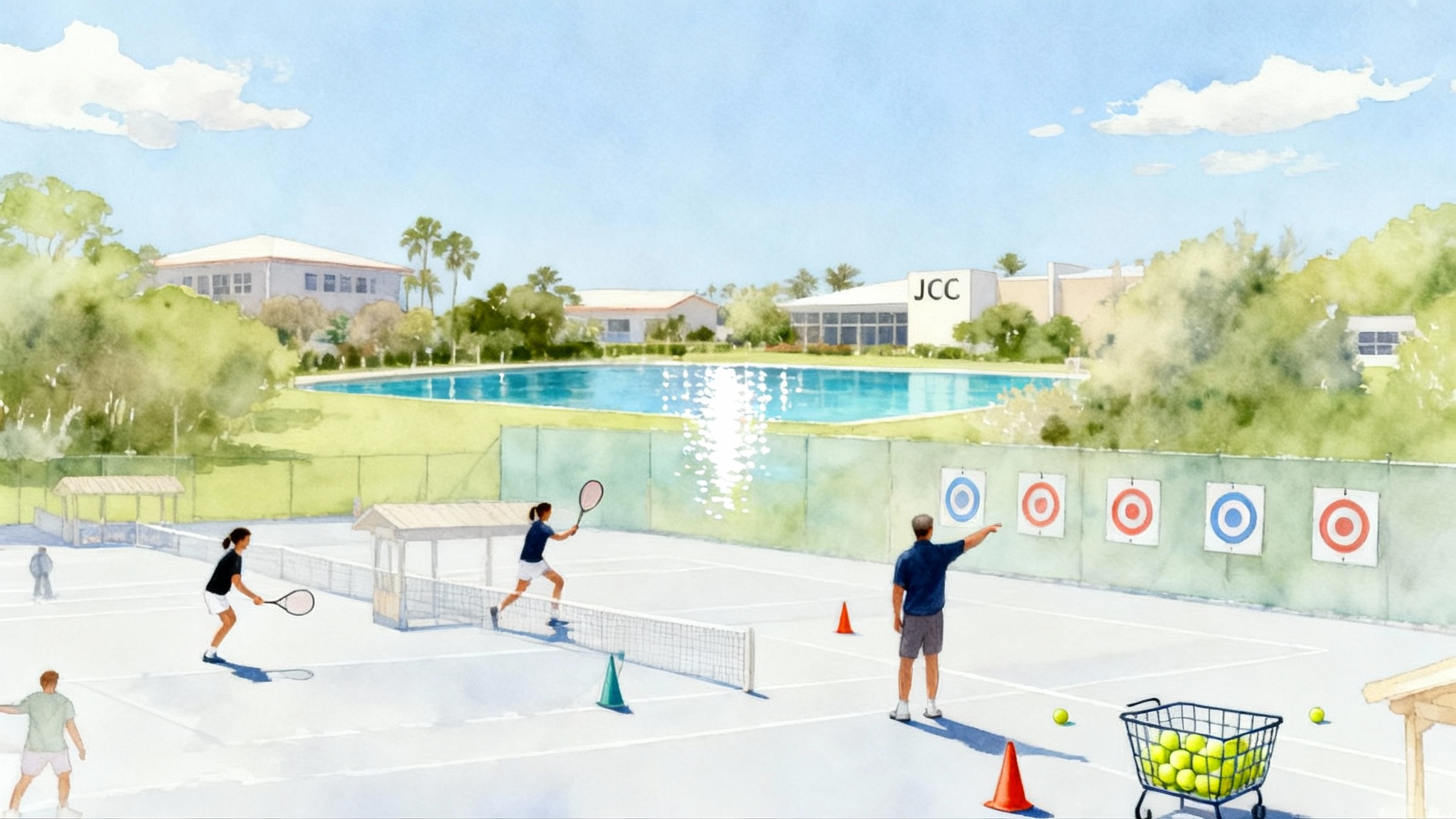
- 08:00 to 09:00 hard court. Serve plus one patterns. End with a 60 ball first serve accuracy test into targets. Record makes, misses, and dispersion.
- Midday: nap and nutrition focus. Aim for 0.6 to 0.8 grams of carbohydrate per kilogram in the post session meal. Keep sodium up if you sweat heavily.
- Optional 17:00 to 18:00 doubles play for variety. Keep intensity moderate.
Day 5, clay defense to offense
- 08:00 to 09:30 clay. Start with open stance wide ball recoveries, then neutral ball tolerance sets to 11, finishing with short set tiebreakers.
- Afternoon: sports massage or self care. If you book a therapist, ask for calf, hip flexor, and thoracic spine emphasis.
Day 6, mixed surfaces and practice match
- 08:00 to 09:00 hard court warm up and serve practice.
- 10:30 to 12:00 practice match on clay with a local hitter. Play best of three short sets starting at two all, change ends quickly, and keep stats for first serve percentage, break points converted, and unforced errors by pattern.
Day 7, recovery and review
- Morning: ocean swim, then a long walk along the Costa Adeje promenade or an easy outing to a low trail with views of the ocean.
- Afternoon: video review. Extract two clips that show the week’s biggest improvement and two that show the next priority. Write next week’s focus in one sentence per item.
Two week template: build, absorb, sharpen
Week 1 follows the template above. Week 2 changes emphasis without increasing overall load.
- Hard court focus: move from mechanics to pressure. Serve plus first ball under scoreboard scenarios, 30 to 15, break point down, tiebreak at five all. Keep targets small and record outcomes.
- Clay focus: integrate variety. Add drop shots, short angles, and looped high balls to pull opponents off their strike zones. Finish with approach and volley sequences to avoid camping behind the baseline.
- Conditioning: choose two dedicated conditioning days that use court specific moves. For example, 6 by 15 seconds of shuffle sprint shuffle on the service boxes with 45 seconds rest, then 6 by 20 seconds of diagonal recoveries. Keep the total under 20 minutes to protect court quality the next day.
- Testing: repeat the serve accuracy test from Day 4 and a crosscourt forehand depth test to a taped target zone. Compare to Week 1.
Working with wind and sun
You cannot control weather, but you can control when and how you train in it.
- Book mornings for your highest skill sessions. Winds tend to be lighter. Use afternoons for match play or tolerance sets that do not require perfect conditions.
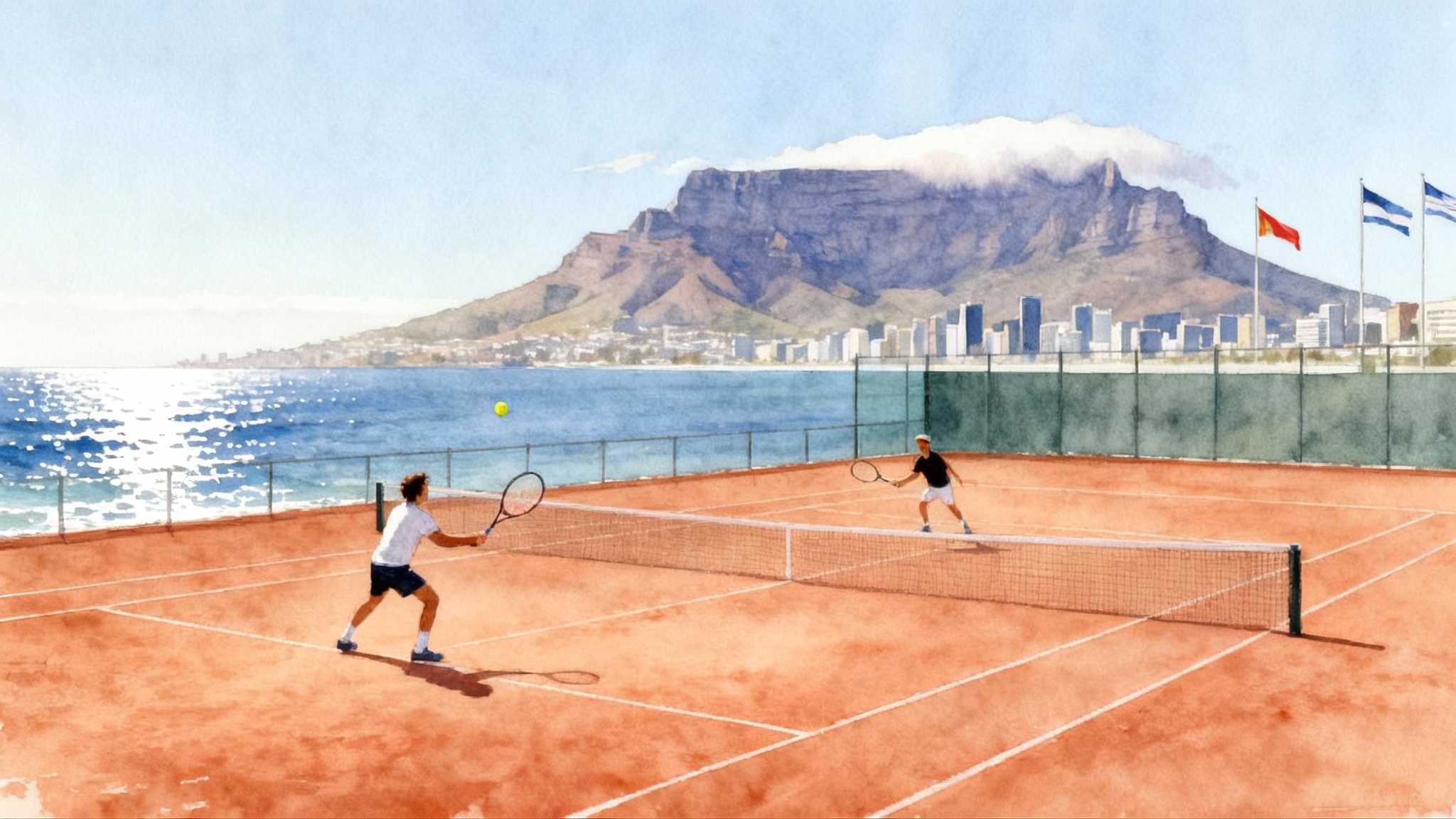
- Use the wind. When it blows into your face, work on heavy topspin and deep targets. When it pushes from behind, practice lower net clearance and earlier contact. When it comes across, aim to a deeper central third to reduce error.
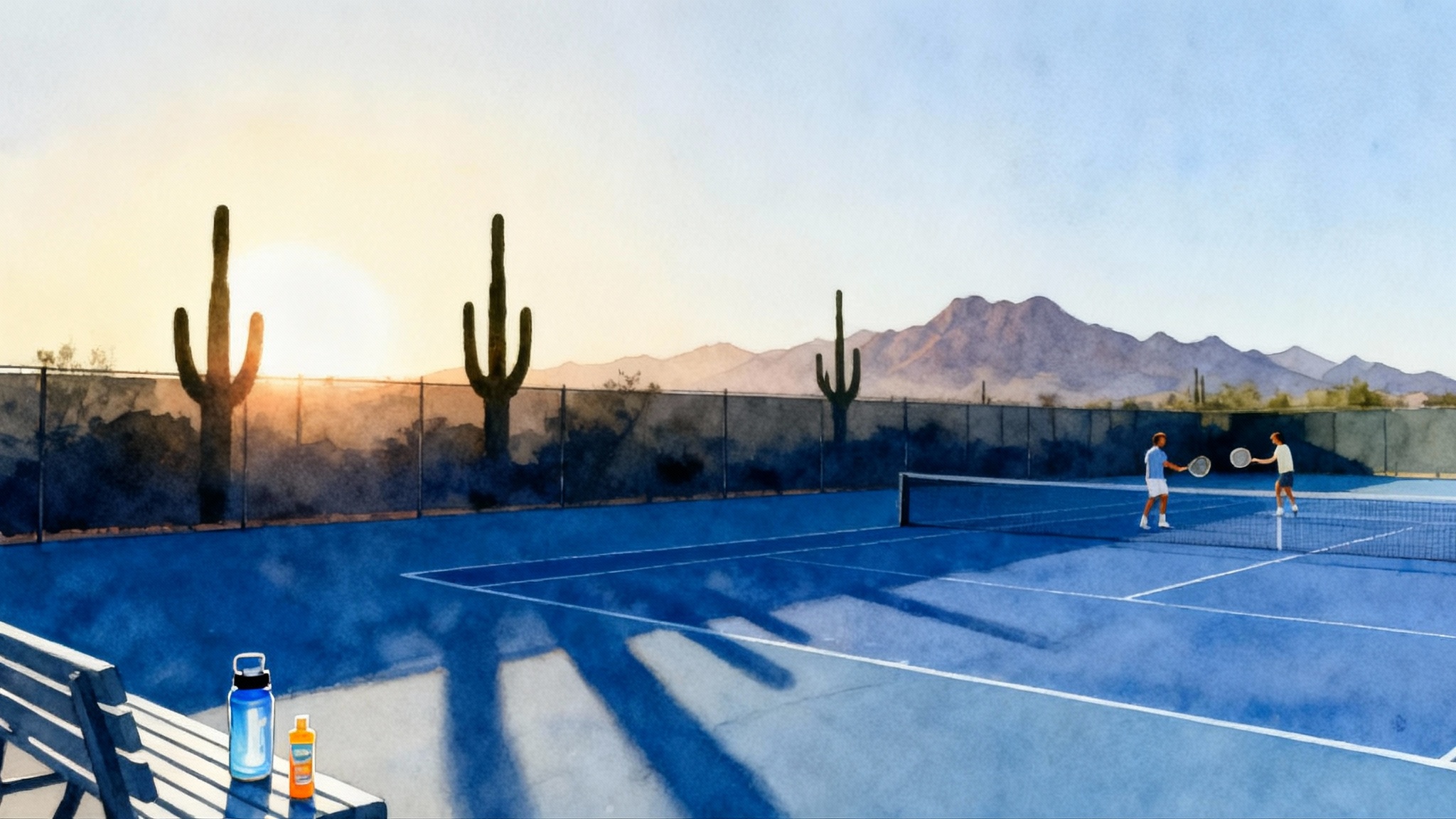
- Manage sun. Early and late sessions will angle sun into one end. Train tosses with a secondary visual cue such as a cloud or a building line. Wear a brimmed cap and high zinc sunscreen and reapply between sets, not only at the start of the session.
Sample daily schedule that actually works
This schedule assumes you are cross referencing court slots at Tenerife Top Training and Tenerife Tennis Academy and staying in Adeje or Los Cristianos.
- 06:45 light breakfast of yogurt, fruit, oats, and water with electrolytes.
- 07:30 arrive at courts. Ten minutes of band activation and ankle work. Five minutes of shadow swings with split step stops.
- 08:00 to 09:30 on court session. Keep a written theme on a sticky note inside the bag to prevent drift.
- 09:45 recovery shake or simple food, then a 10 minute walk in shade.
- 10:30 mobility on the terrace and a short nap. Keep screens off.
- 12:30 lunch built around rice or potatoes, fish or chicken, and vegetables. Add olive oil and salt. Drink water.
- 14:30 technical review and planning for tomorrow. If needed, 30 minutes of light gym work.
- 16:30 optional second hit of 45 to 60 minutes, relaxed intensity, then stretch.
- 18:30 ocean walk or swim if calm. Ten controlled breaths with long exhales to shift out of training mode.
- 20:00 dinner and lights out by 22:15.
Recovery that makes your next session better
Tenerife gives you natural recovery tools in close reach.
- Ocean swims: Early mornings on the south coast are often smooth. Ten to fifteen minutes of easy swimming or waist deep walking reduces soreness and helps sleep. Aim for sheltered spots near Los Cristianos harbor or La Caleta coves when the wind is up.
- Volcanic hikes: The terrain gives you soft surfaces and gradual grades. Choose lower altitude loops near Arona or Ifonche on training days. Save the high altitude Teide National Park outing for the rest day, not the afternoon before a key session.
- Thermal contrast: If your hotel has a cold plunge or chilled pool section, use two or three cycles of two minutes cold and two minutes warm after long hitting days. Keep it brief to avoid excessive nervous system fatigue.
- Massage and mobility: If you book a therapist, ask for a light to moderate session with focus on calves, adductors, thoracic rotation, and forearm flexors. On your own, spend six to eight minutes on ankles and feet with a lacrosse ball.
Logistics: make it seamless
- Flights and arrival: Fly into Tenerife South Airport to reduce transfer time. A small hatchback is easiest for parking at courts and apartments. If you do not drive, budget for reliable taxis and cluster your court times at one venue per day to limit transit.
- Court reservations: Book morning courts first and build the rest of the plan around them. If you can only secure late morning or noon times, shift conditioning to early morning and make the late slot a ball machine session.
- Coaching and hitting partners: Secure two to three pre booked coaching sessions per week and one or two sparring partners who match your level. Use our platform to align times and surfaces so your week does not fracture into inconvenient slots.
- Equipment: Bring two frames strung within two pounds of each other, a small bag of replacement grips, a hat, sunglasses, and sunscreen. On clay, carry a towel to clean your shoes and a brush for the soles. After clay sessions, sweep your half and clean the lines. That is not just etiquette. It teaches you to care for the space you train in.
- Hydration and nutrition: Buy water in larger containers and refill smaller bottles to bring to courts. Add electrolytes on the days you sweat more. Keep simple carbohydrates on hand, such as bananas, rice cakes, or small sandwiches. Eat fiber and heavier meals at dinner so mornings stay light and focused.
How to blend hard and clay without frying your legs
The risk in a sunny environment is doing too much too soon. Protect your next session.
- Alternate intensities. If you go hard on acceleration drills Monday, make Tuesday a clay day with pattern work at submax rally speeds.
- Count sets, not minutes. For example, six rally sets to 11 on clay is a lot of work even if it looks short on the clock. Track how you feel the next morning and adjust.
- Build serve volume with structure. Start at 60 to 70 percent power for feel and rhythm, then add targeted sets of 10 balls into each box with full intent. If your shoulder feels heavy, stop immediately.
Simple metrics to bring home
You want to leave Tenerife with proof of progress. Choose three metrics you can test before and after your block.
- Serve accuracy to targets over 60 balls.
- Crosscourt forehand depth percentage that lands past a taped marker.
- First step time to a wide deuce side ball measured by a smartphone slow motion clip and a stopwatch.
Use the same courts and time of day for both tests if possible. Keep wind conditions as similar as you can.
A day off that still helps tennis
Rest does not mean inactivity. It means different stress.
- Morning: slow coffee, stretch, and a coastal walk from La Caleta toward Playa del Duque. Gentle grades, breathable views.
- Midday: short drive to Teide National Park for altitude air and lunar landscapes. Keep walking under 60 minutes. Hydrate more than you think you need.
- Evening: light dinner with carbohydrates to refill, a short foot soak, and early bed.
Cost control without cutting quality
- Travel in small groups of two to four and split apartment costs. You can then book double sessions with one coach and rotate in and out without losing coaching attention.
- Buy multi session packs. Many academies and coaches offer better rates when you commit to a series. Spread sessions across the two weeks.
- Use lunch as your main cooked meal. Prepare extra portions for dinner to avoid heavy restaurant bills.
When to come
- November and early December: quieter, slightly cooler mornings, great value on accommodation.
- Late December to late February: most reliable stretch for warm days. Book early.
- March: still good weather with more daylight. Can be breezier. Plan key sessions in the mornings.
Final checklist before you press book
- Confirm your morning hard court slots at Tenerife Top Training.
- Confirm two or three clay sessions at Chayofa with Tenerife Tennis Academy.
- Lock accommodation near your first session of each day to limit driving.
- Build a simple spreadsheet that maps each day’s surface, theme, and recovery.
- Set three metrics for progress and the dates you will test them.
The takeaway
Tennis players do not need perfect weather. They need predictable windows and the right surfaces to apply steady work. Tenerife’s south coast gives you both. The mountains create a dry pocket, the trade winds are steady rather than chaotic, and the winter sun gives you light when the rest of Europe is gray. Blend fast days on quality hard courts with thoughtful days on red clay, base yourself in Adeje or Los Cristianos, and build a plan that respects the rhythms of morning calm and afternoon breeze. If you do that for one or two weeks, you will leave with better patterns, stronger legs, and a clear sense of what to chase next when you fly home.