Monsoon-Smart Tennis: May to Nov in India, Philippines, Nepal
A climate-first route for year-round training that strings together RoundGlass Tennis Academy, Philippine Tennis Academy, and Kathmandu Tennis Academy from May to November, using altitude, morning blocks, and local competition windows.
 Tommy
Tommy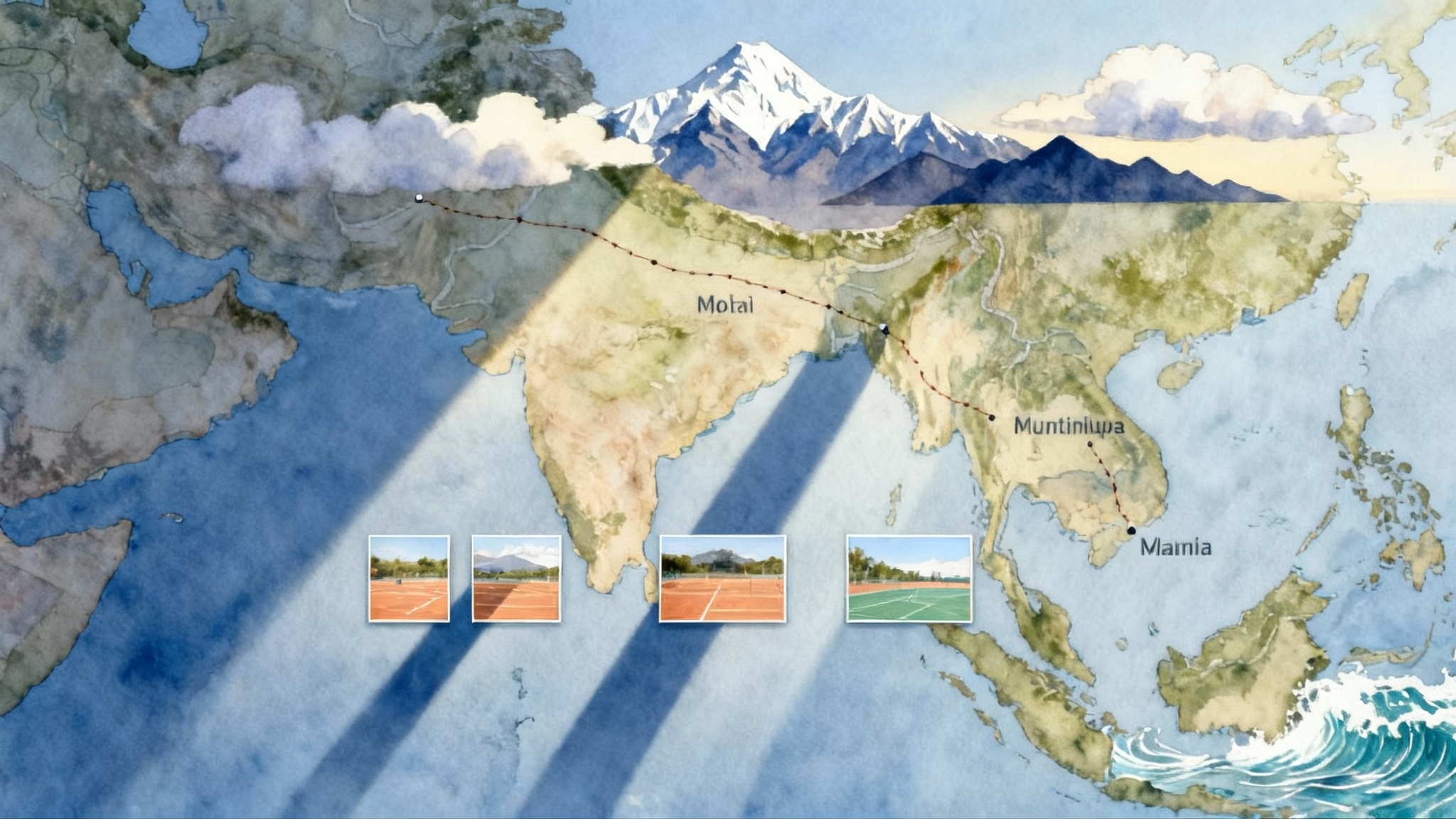
A climate-first alternative to the usual playbook
The classic junior tennis plan treats summer as Europe or Florida, then hopes the rest of the year fills in. That approach burns budget and misses a simple truth about South and Southeast Asia: if you learn to read the monsoon and schedule around it, you can build an unbroken May to November development arc without crossing the Atlantic.
This guide outlines a practical route that sequences three established hubs:
- RoundGlass Tennis Academy in Mohali, India
- Kathmandu Tennis Academy in Nepal
- Philippine Tennis Academy in Muntinlupa, Philippines
The goal is not to fight the weather. It is to surf the edges of the monsoon and use climate to sharpen specific qualities: heat adaptation and ball speed on low, hot courts; aerobic depth at altitude; then confident match play when conditions stabilize.
The core idea: ride the edges of the monsoon
Monsoon is not a switch. It is a pulse that shifts by region. The most reliable windows for outdoor tennis are usually early mornings and late afternoons, with mid to late day convection delivering the heaviest showers. If you plan travel for the quieter shoulders of that pulse and lock in morning court blocks, you can get more sessions than you might expect. Add smart fallback plans for rain days and the result is continuity.
Here is the simple sequencing logic we will use from May to November:
- Start hot and low to train pace and serve production before the wettest period.
- Move to altitude when the heat peaks to prioritize endurance, footwork efficiency, and mental stamina.
- Return to low altitude post-monsoon for reliable hard-court repetitions and live ball volume.
- Finish where the dry season is starting to sync with local tournament calendars.
The route at a glance
- Block 1: May 1 to June 15 at RoundGlass Tennis Academy, Mohali
- Block 2: June 16 to August 31 at Kathmandu Tennis Academy
- Block 3: September 1 to October 15 at RoundGlass Tennis Academy, Mohali
- Block 4: October 16 to November 30 at Philippine Tennis Academy, Muntinlupa
This sequence dodges the worst downpours in each location, exploits morning stability during wetter months, and lines up with local competition cycles in the fall. It also creates a purposeful altitude gradient: roughly 300 meters in Mohali, about 1,400 meters in Kathmandu, then back down to near sea level in Muntinlupa. That gradient is a built-in training tool.
Block 1: May 1 to June 15 in Mohali
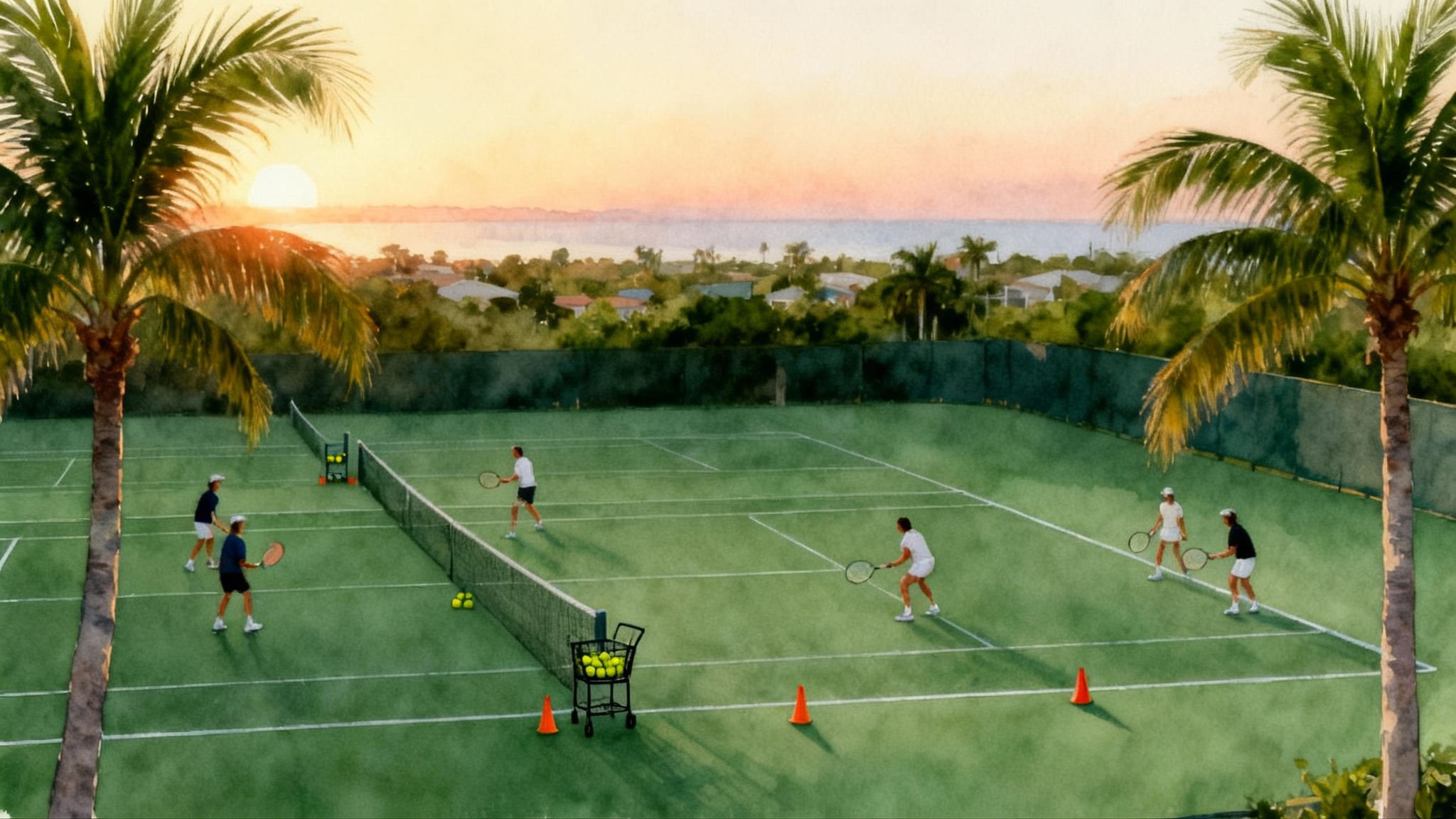
Mohali in May is hot and mostly dry. Courts play quick, the ball stays lively, and serve plus first-strike patterns shine. That is perfect for a speed and power block.
Objectives:
- Serve development: add free points through rhythm and leg drive.
- First two shots: aggressive plus-one patterns off the return and serve.
- Heat adaptation: learn reliable cooling strategies and pacing.
Daily rhythm:
- 6:00 to 8:30: On-court technical work while temperatures are manageable. Use 20-minute work blocks separated by three-minute shade breaks and cold towels.
- 10:30 to 11:30: Strength session with emphasis on lower body power, scapular control, and isometric holds for trunk stability.
- 16:30 to 18:00: Live ball and point construction, or video review if afternoon convection builds.
Metrics to track:
- Serve percentage in game-like sets. Aim for incremental gains each week rather than chasing immediate velocity.
- Shot tolerance in five-ball patterns. Target neutral-to-offense conversion around ball three or four, not at ball one.
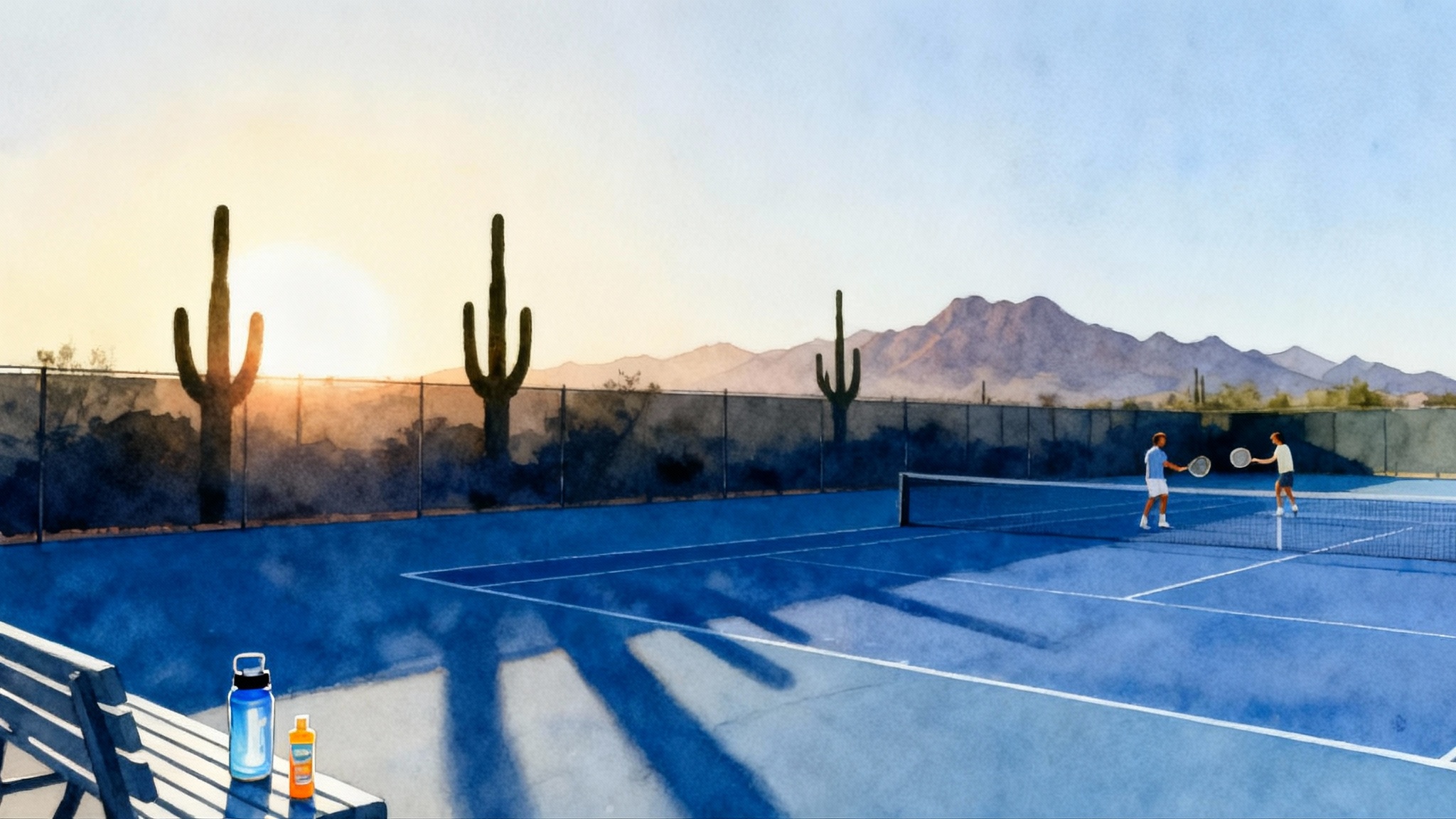
- Heat exposure time and recovery heart rate. Keep hydration simple: one bottle water, one bottle with electrolytes for every 60 to 90 minutes.
Competition tie-in:
Seek weekend match play within driving distance. Treat these as rehearsals rather than results tests: one specific tactical theme per match, such as body-serve frequency or backhand depth off the first neutral ball.
Block 2: June 16 to August 31 in Kathmandu
By mid June, shift to Kathmandu Tennis Academy. This is the endurance and refinement block. Kathmandu sits around 1,400 meters, which modestly reduces oxygen availability and nudges aerobic systems to adapt. During the monsoon, mornings are often the most consistent window. Build your schedule around that.
Objectives:
- Footwork economy: reduce wasted steps and lock in efficient recovery positions.
- Aerobic base and repeatability: longer rallies, disciplined tempo, and breathing patterns.
- Resilience: embrace weather variance without losing training density.
Daily rhythm:
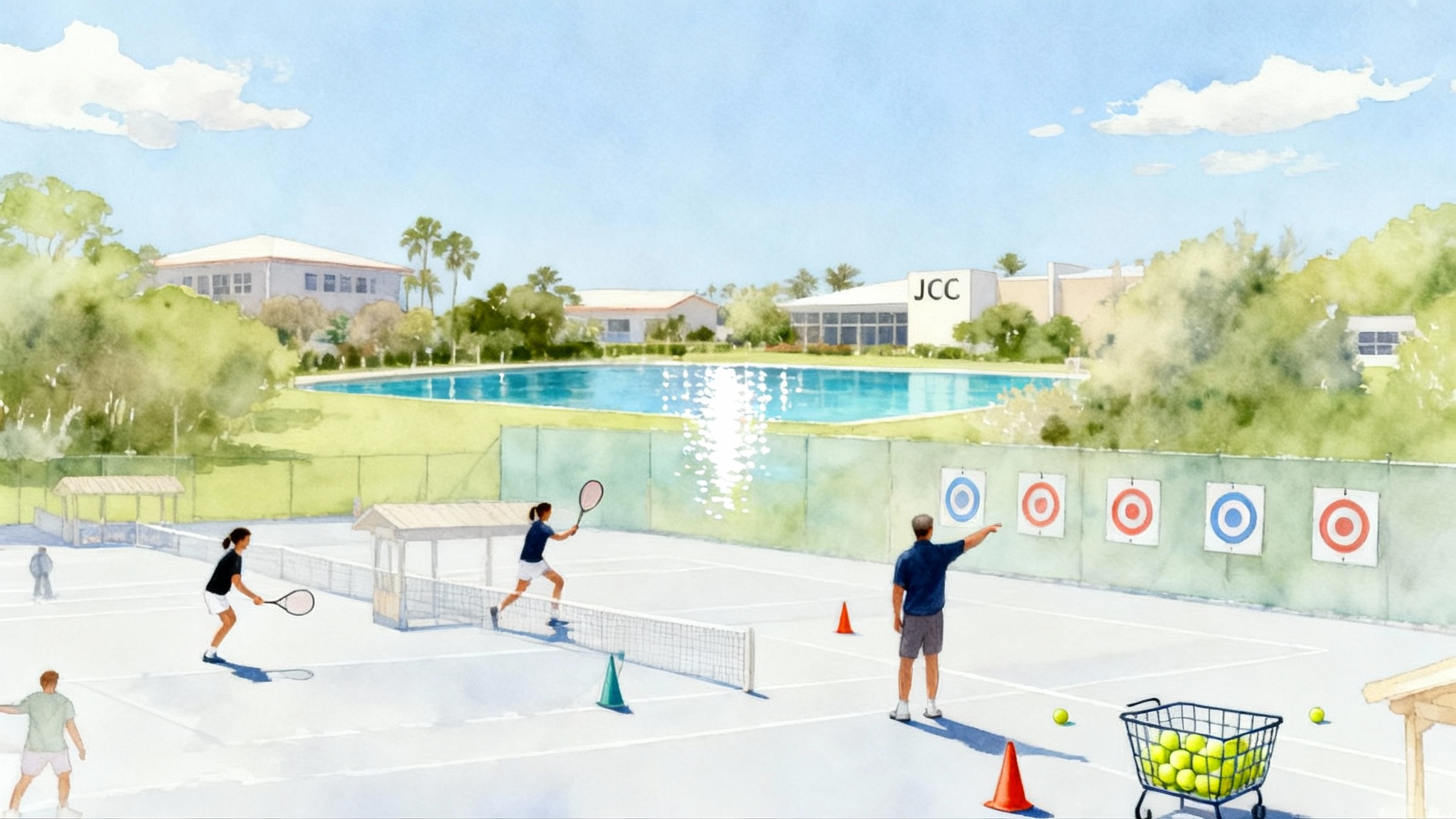
- 6:00 to 9:00: On-court during the clearest slice of the day. Start with 25 to 30 minutes of rhythmic crosscourt exchanges before drilling specific patterns. Limit ball baskets to short, high-quality sets to avoid sliding on damp spots.
- 11:30 to 12:30: Mobility and trunk strength under cover. Focus on hip internal rotation, ankle mobility, and anti-rotation work for the torso.
- 15:30 to 17:00: If dry, points with constraints. If raining, classroom time: scouting clips, tactical frameworks, and notebook work.
Micro-play constraints that work at altitude:
- Two cross, one line: two crosscourt balls before you earn the line change. This teaches patience.
- Serve plus three: every point begins with serve, then three neutral balls before offense is allowed. This removes the urge to force early.
- Directional patterns with recovery calls: call your recovery target out loud to reinforce positioning.
Competition tie-in:
Enter friendly match days with the academy and neighboring clubs. Favor longer formats: two practice sets plus a ten-point breaker. The goal is to accumulate repetitions, not chase a trophy.
Contingency when it rains all day:
- 60-minute video session: review the last week’s shaky points and tag them by cause such as late set-up or ball selection.
- 30-minute shadow movement circuit: split-step timing on a metronome, open stance to neutral stance transitions, and recovery sprints in a hallway or covered space.
- 20-minute serve practice under cover with a ball tube: rhythm, toss height, and landing consistency.
Block 3: September 1 to October 15 back in Mohali
Post-monsoon in Mohali brings more stable sessions, less heat stress, and reliable hard-court repetition. This is the consolidation block.
Objectives:
- Raise rally speed at the same error rate achieved in Kathmandu.
- Expand the return game: add body returns and deeper middle targets against first serves.
- Build match toughness before the fall competition swing.
Daily rhythm:
- 6:30 to 9:00: On-court with a bias toward live ball. Use small-sided games to pressure decision-making.
- 11:30 to 12:15: Short strength primer three days per week. Favor compound lifts at moderate loads, then medicine ball throws for power.
- 16:30 to 18:00: Match play with specific scoring, such as first-strike bonus points or pressure games where errors at 30-all carry extra penalties.
Competition tie-in:
Target a two-week window of local ranking events and club opens. Approach with a simple two-match rule: if you play fewer than two matches in an event, schedule an extra practice match the same week to maintain volume.
Block 4: October 16 to November 30 in Muntinlupa
The Philippine Tennis Academy in Muntinlupa sits near sea level and benefits from the transition toward the drier season in late October and November. Courts are plentiful and the tennis culture is vibrant. This is the execution block: take the technical and physical gains from the previous months and convert them to confident pattern play.
Objectives:
- Serve and first-ball orchestration under match pressure.
- Return plus depth, especially to the deep middle channel against big servers.
- End-of-season race: finish healthier and sharper than you started in May.
Daily rhythm:
- 6:00 to 8:30: Crisp drilling followed by 45 minutes of points. Prioritize second-serve returns and defensive neutralization to the opponent’s weaker wing.
- 10:30 to 11:15: Light gym with power emphasis two days per week. On other days, recovery circuits such as skipping rope, mobility flows, and easy bike sessions.
- 16:30 to 18:00: If dry, match play. If wet, indoor footwork and serve rhythm with a focus on breath and tempo.
Competition tie-in:
November often offers a healthy run of local age-group events and club tournaments. Pick two events four weeks apart. Use the intervening weeks to repair patterns that faltered and create a short list of serve and return targets for each opponent archetype: lefty counterpuncher, big-serving baseliner, or all-court player.
A monsoon-smart daily template you can trust
Monsoon or not, mornings win. Lock this template in and you will get more done than players chasing perfect weather in the afternoon:
- 05:20: Wake, light snack, 250 milliliters water plus electrolytes.
- 06:00 to 08:30: Court time. One technical theme and one tactical theme only.
- 09:00: Breakfast plus protein and fruit. Ten minutes of stretching with breathing drills.
- 11:30 to 12:30: Gym or mobility under a roof. Level the floor, limit maximal lifts when humidity is extreme.
- 15:30 to 17:00: Match play if dry. If wet, video, scouting, or classroom work.
- 21:30: Lights out. Keep sleep as sacred as string tension.
Weekly microcycles for each block
Speed and power block in Mohali, May to mid June:
- Monday: Serve plus first-strike drills. Lower-body strength.
- Tuesday: Return depth and direction. Mobility and sprint mechanics.
- Wednesday: Live ball sets. Contrast training with medicine ball throws.
- Thursday: Pattern drills by hand feed. Upper-body pulling strength and core stability.
- Friday: Serve pace under fatigue. Footwork ladders and change of direction.
- Saturday: Match play or tournament. Light stretch in the evening.
- Sunday: Off or recovery ride, easy mobility.
Altitude block in Kathmandu, mid June to August:
- Monday: Long rally tolerance and depth targets. Hip and ankle mobility.
- Tuesday: Directional control and crosscourt stability. Light strength.
- Wednesday: Points with constraints. Video review.
- Thursday: Serve rhythm and kick development. Trunk strength.
- Friday: Return plus neutral defense. Mobility reset.
- Saturday: Extended practice sets. Breathing drills and relaxation work.
- Sunday: Off or light hike for enjoyable aerobic work if weather permits.
Consolidation block in Mohali, September to mid October:
- Monday: Live ball at higher tempo. Lower-body power.
- Tuesday: Return games starting at 30-all. Mobility.
- Wednesday: Serve plus first three balls. Short strength primer.
- Thursday: Pattern play and transition to net. Movement skills.
- Friday: Pressure games and tiebreakers. Recovery circuits.
- Saturday: Tournament or match day. Stretch and reset.
- Sunday: Off.
Execution block in Muntinlupa, late October to November:
- Monday: Serve targets and patterns by score. Light power work.
- Tuesday: Return plus counterattack. Mobility.
- Wednesday: Practice set with scouting. Video notes afterward.
- Thursday: Transition and finishing skills. Core stability.
- Friday: Match rehearsal with penalties for short errors. Recovery work.
- Saturday: Tournament or match day. Evening walk and breathing drills.
- Sunday: Off.
Equipment and surface planning
- Shoes: bring two pairs so one can dry while the other is in use. Rotate daily.
- Strings: humidity softens the feel. Increase tension by one to two kilograms in the wettest weeks, then return to baseline in drier blocks.
- Balls: store in airtight bags with silica gel packs. Swap more often during wet weeks to keep bounce predictable.
- Grip and rosin: carry overgrips and a small rosin bag for humidity.
- Bag covers: simple rain covers protect strings and electronics. A trash bag works in a pinch.
Surface notes:
- Mohali: hard courts play low and fast in heat, slightly higher and grippier after rain.
- Kathmandu: ball grabs a bit more at altitude; do not overhit. Focus on shape and net clearance.
- Muntinlupa: near sea level with stable bounce as the drier season approaches.
Travel and health logistics that matter
- Flights and transfers: plan one buffer day after each travel leg before your first full training day. Use that day for easy hitting and mobility.
- Hydration routine: in hot blocks, schedule sips at every ball change rather than drinking only at sit-downs.
- Nutrition: keep breakfast simple and repeatable across countries. Eggs, fruit, oats, and yogurt are easy to find.
- Recovery: pack a compact massage ball and a lightweight jump rope. Both work indoors when rain closes courts.
- Communication: keep a shared calendar with coaches from each academy so themes progress from block to block without resets.
What to do on full washout days
There will be days when the sky wins. Use them for skill building that rarely fits a normal week.
- Serve school under a roof: shadow rhythm, toss flight, pronation feel. Ten sets of ten reps with micro-pauses.
- Pattern visualization: draw two or three favorite patterns on paper. Add score situations and opponent types.
- Film room: chart forehand and backhand depth from a recent match. Track how many balls land beyond the service line.
- Footwork puzzles: mark small squares with tape on an indoor floor and run recovery routes on a metronome.
Why this route compounds over seven months
- Clear objectives per block: speed and serve, then endurance and patience, then consolidation, then execution.
- Climate as a training tool: heat to push power, altitude to grow the engine, stable dry weeks to cash in the gains.
- Local match volume: more matches without jet lag or transoceanic costs.
- Continuity of coaching: three academies that communicate and hand off the plan rather than starting over.
How to brief each academy before you arrive
Send a one-page plan one week before arrival:
- Top three technical priorities with short video clips.
- Two tactical patterns you want to sharpen.
- Physical focus for the block and any equipment constraints.
- Recent match notes with two strengths and two issues you want addressed.
Ask for:
- Fixed early morning court slots during wetter weeks.
- A designated coach who reads your handoff notes.
- A weekly debrief meeting of 15 minutes to keep the plan tight.
The bottom line
From May to November you can create a smooth, seven-month arc entirely within India, Nepal, and the Philippines by reading the monsoon rather than fearing it. Start in Mohali to build pace and serve habits before the heaviest rains. Shift to Kathmandu for altitude, patience, and long-rally discipline, using first-light sessions to beat the showers. Return to Mohali when the courts dry to raise tempo without losing control. Close in Muntinlupa as the dry season arrives and local competitions bloom, translating your gains into match wins. The payoff is not just more training days. It is a smarter player who understands when to press, when to absorb, and how to let the climate work for them instead of against them.
Pack light, plan mornings, and let the weather teach you. That is monsoon-smart tennis.