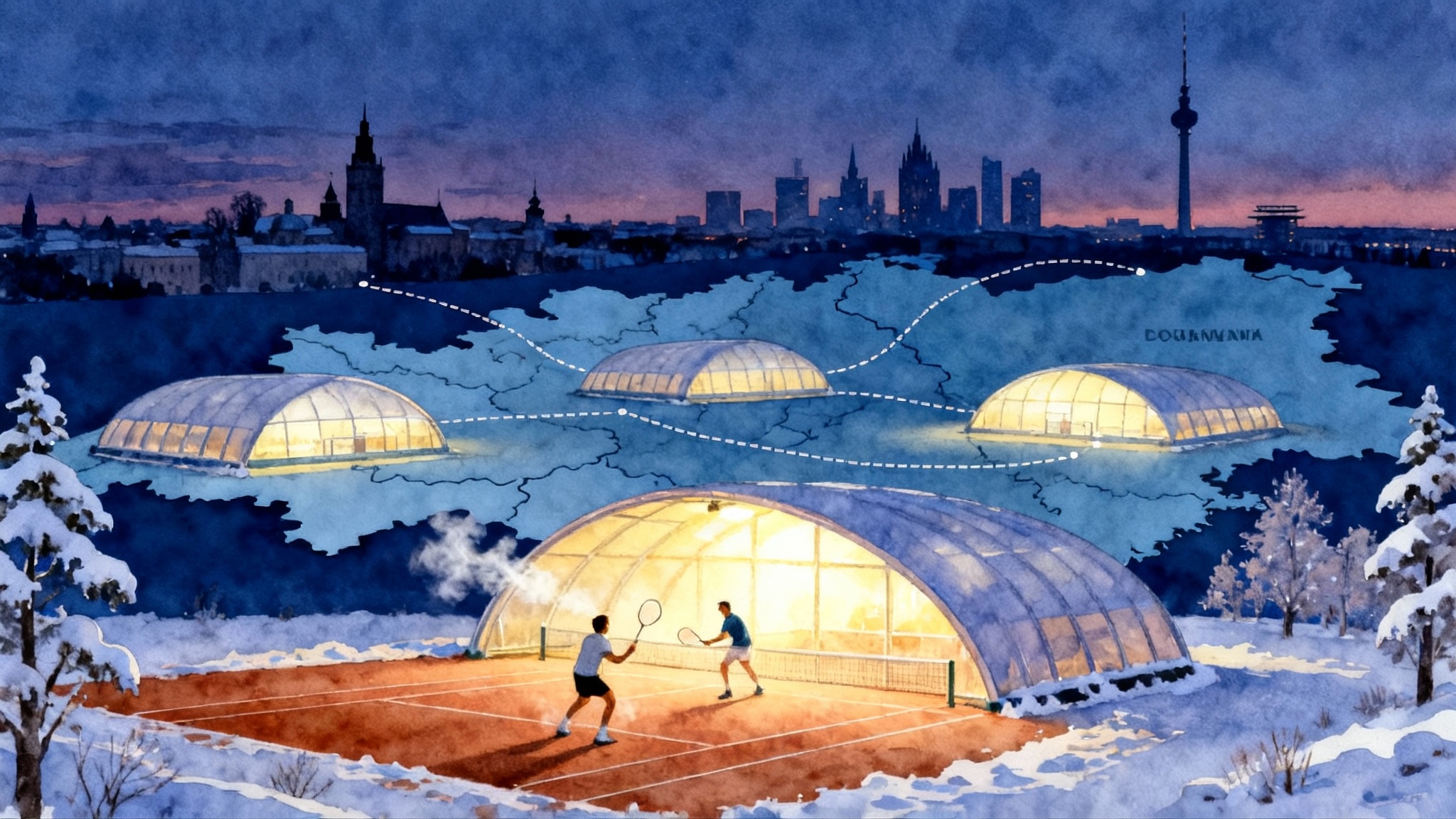
Desert Winter Tennis 2026: Scottsdale, Las Vegas, Palm Springs
 Tommy
Tommy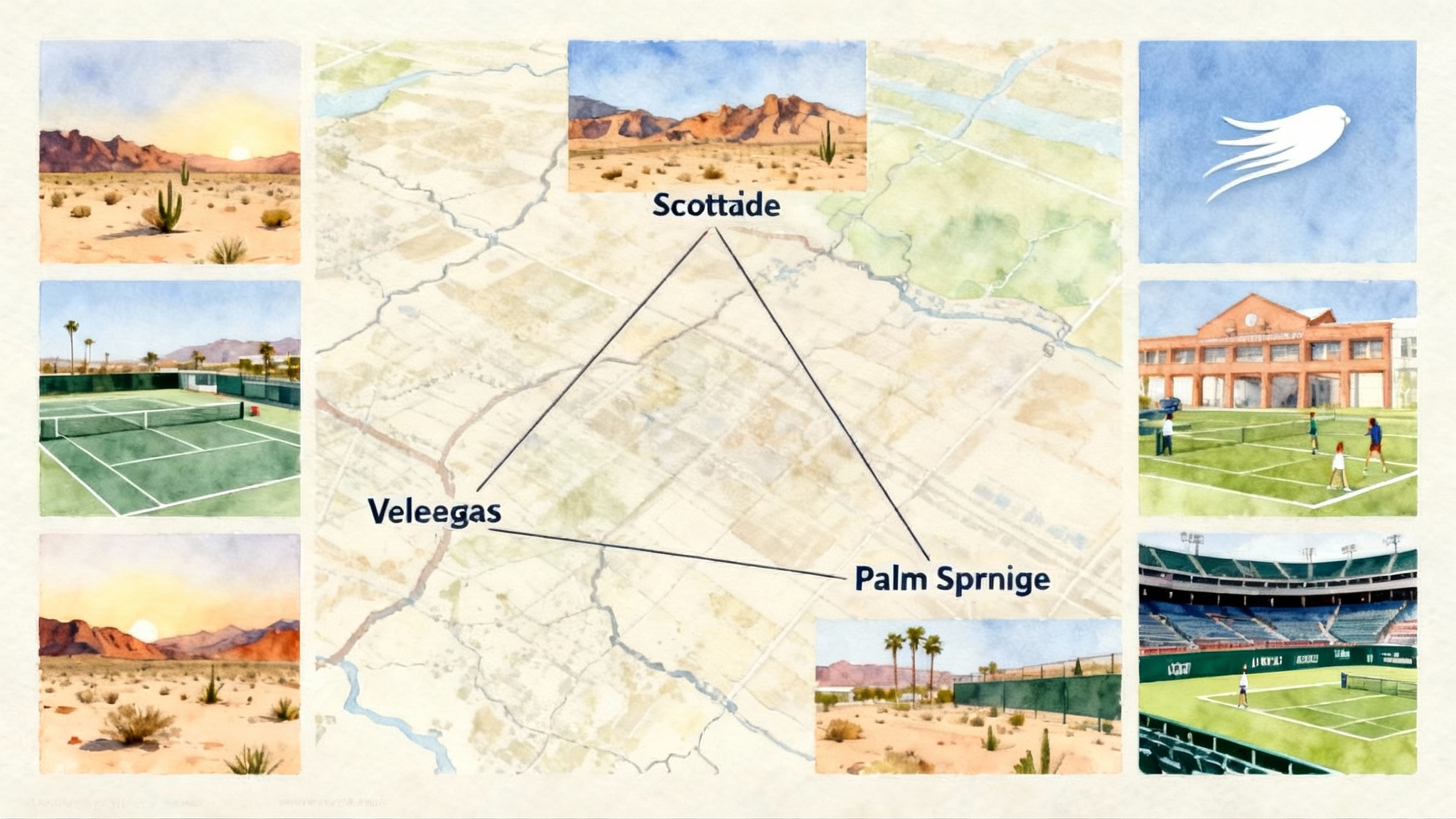
Why a dry-air triangle works in winter 2026
If your goal is to log high quality repetitions in predictable weather, the Southwest desert offers something rare in January through March: stable sun, low humidity, and enough venue variety to shape a progressive training block. Scottsdale, Las Vegas, and Palm Springs sit within a five to six hour driving triangle. Each city has a slightly different altitude, wind profile, and court mix, which lets you manipulate ball flight, bounce, and tempo like dials on a training console. Start the year with volume, add pace and decision making in February, then finish with match sharpness and world class spectating in early March at Indian Wells.
The key is not just that the air is dry. It is that mornings are usually calm, afternoons produce manageable breezes, and rainouts are rare. That combination supports two daily sessions without constant rescheduling. You can ramp workload with intention rather than surviving winter.
Microclimates, at a glance
- Scottsdale, Arizona: Warmest of the three in January, with crisp mornings. The Sonoran setting means cool nights, quick warmups after sunrise, and light morning winds. Afternoon breezes are common but not punishing.
- Las Vegas, Nevada: Cooler mornings than Scottsdale, a touch drier, and the most altitude in the trio. Calm windows are best from sunrise to midmorning. Occasional gusts arrive by midafternoon, which can be used to train directional control.
- Palm Springs, California: The Coachella Valley is ringed by mountains that create wind shadows in the morning, then channel crosswinds later in the day. Temperatures trend similar to Scottsdale by late February. Indian Wells sits near sea level, which slows ball flight relative to Las Vegas.
All three reward early starts. Plan your heaviest technical work from 7:30 to 10:30 in the morning. Use the afternoon for footwork circuits, point construction, and wind-aware games that turn breeze into a coaching tool rather than a nuisance.
Altitude, air, and how the ball behaves
Altitude is invisible until your first rally. Then it is everywhere. Las Vegas sits around two thousand feet above sea level, Scottsdale around one thousand to fifteen hundred feet depending on neighborhood, and Palm Springs is near sea level. At higher elevation, air density decreases, the ball carries farther and launches a touch higher off the strings. At lower elevation, the ball feels heavier and points drag out one extra shot.
What to do with that difference:
- Strings: In Las Vegas, increase tension two to three pounds if you hit a flatter ball or rely on drive volleys. In Palm Springs, drop back to your baseline setup to regain depth. If you use polyester, avoid giant tension swings. Small changes create predictable feedback without overhauling your timing.
- Balls: Extra duty felt for hard courts holds up against the dry air. Rotate a fresh can for the second daily session if you are chasing realistic match bounce. If you train in Las Vegas one week then Indian Wells the next, expect a noticeable drop in jump and depth. Use that to practice closing space with your feet.
- Margins: Aim one ball width inside your normal lines in Las Vegas while you find your launch window. In Palm Springs, aim one ball width deeper to keep opponents under pressure.
Court surfaces and where to train
Desert public facilities are reliable, clean, and lighted. They also give you a spectrum of speed without paying resort rates.
- Scottsdale: Scottsdale Ranch Park and Tennis Center has plentiful hard courts and is a hub for drop-in drilling groups. Many resorts offer day passes for non-guests. If you want a different bounce for footwork variety, a few clubs maintain clay, often available in the midday lull, which can be a nice change for knees and lower backs.
- Las Vegas: Amanda and Stacy Darling Tennis Center is the biggest complex in town, with a steady schedule of drilling blocks and match play. University facilities sometimes host community programming during breaks. Private academies run afternoon performance groups if you want a higher ball tempo.
- Palm Springs area: The Indian Wells Tennis Garden offers day clinics and practice court bookings outside tournament windows, with a medium-slow hard court that rewards point construction. City courts in Palm Desert, Rancho Mirage, and Palm Springs fill early, so book ahead.
If you prefer structured camps, choose two or three day clinics instead of a full week. Shorter clinics layer nicely around your personal plan, and you will avoid overloading the same patterns repeatedly. When you need a sparring partner, check local ladders or our player-match tool on TennisAcademy, which pairs visiting players with comparable levels. For coastal or milder alternatives, see our San Diego marine layer guide and the Austin Hill Country base. If you plan a spring transition after March, explore Revolution Tennis Academy Orlando.
A week-by-week route from January to March
Use this as a template, then adjust for your travel dates. It is written for a Tuesday start in early January 2026, which matches common flight patterns and current weekday court availability. Pivot as needed if your calendar differs.
Week 1, Scottsdale: Foundation volume
- Focus: Timing and rhythm after the holidays. Two sessions per day at moderate intensity. Technical priority on first serve patterns and neutral forehand height.
- Plan: Morning technical block, ninety minutes. Afternoon patterns block, seventy five minutes. One match-play set to ten with serve-plus-one goals.
- Checkpoint: Capture ten forehand contact videos from a fixed baseline angle. Use them to set a baseline for racket lag and contact height.
Week 2, Scottsdale: Movement and defense
- Focus: First step speed and depth tolerance. Add four corner movement drills. One day on clay if available to emphasize balance and recovery steps.
- Plan: Three technical mornings, two competitive afternoons. One day for a hiking recovery session on Camelback or at a flat desert trail to flush legs.
- Checkpoint: Count how many balls you can defend past the service line when pinned. Aim for a small improvement each day.
Week 3, Las Vegas: Pace and altitude adaptation
- Focus: Use the two thousand foot elevation to exaggerate ball speed. Practice taking the ball earlier and aim safer margins.
- Plan: Increase rally tempos. Add serve plus two sequences where the second ball targets depth through the middle third.
- Checkpoint: Tinker with string tension by two pounds on your primary frame. Log depth errors short and long. Keep the more stable setup for Week 4.
Week 4, Las Vegas: Pressure drills and tiebreakers
- Focus: Decision speed under light afternoon winds. Play three tiebreakers at the end of each session.
- Plan: Mornings for patterns. Afternoons for directional control games that require changing crosscourt to down the line on cue.
- Checkpoint: Track first serve percentage and plus-one conversion in a simple table. Use the data to select your go-to point pattern for Week 5.
Week 5, Palm Springs: Transition to slower bounce
- Focus: Depth management as the air thickens near sea level. Build points with shape and height.
- Plan: Two clinic drop-ins at Indian Wells Tennis Garden or a nearby club to feel the surface. Book your own practice courts for three other sessions.
- Checkpoint: Measure average rally length in practice sets. The goal is to maintain aggression while accepting one extra neutral shot per point.
Week 6, Palm Springs: Match set, scouting mindset
- Focus: Play two full practice matches and one Universal Tennis Rating, shortened to UTR, event if it aligns with your schedule. Treat it like a scouting week for what still breaks down under pressure.
- Plan: One day on serve return patterns only. One day on transition volleys and drive volleys to finish shorter points.
- Checkpoint: Identify your least comfortable score. Build a mini plan for that scoreline, for example 30 to 30 on return games.
Week 7, Scottsdale: Reload and refine
- Focus: Rebuild confidence on a familiar bounce. Adjust the string setup back to your Scottsdale baseline. Emphasize fourth ball depth.
- Plan: Morning fundamentals, afternoon point play. One fitness session focused on lateral conditioning and deceleration.
- Checkpoint: A or B test two return positions against strong servers, baseline hash mark versus one shoe inside the baseline.
Week 8, Las Vegas: High-pace rehearsal
- Focus: Simulate big-stadium speed. Train indoors one session if available to sharpen reaction, then outdoors the next to layer wind control.
- Plan: Serve plus one to the body, then depth to big cross. Repeat until the pattern feels automatic.
- Checkpoint: Track return depth with four cones set two feet inside the baseline. Count how many land past the cones in each return game.
Week 9, Palm Springs: Indian Wells immersion
- Focus: Morning training, afternoon spectating or practice-court scouting at the Indian Wells complex to learn by watching. The event’s grounds passes and practice courts can be the best free classroom in tennis.
- Plan: One half day on site to watch how pros construct points on medium-slow hard courts. Confirm schedules through the official BNP Paribas Open schedule. Use one evening to copy a favorite player’s between-point routine.
- Checkpoint: Write three specific insights from live scouting, for example how a player manages height to backhands or where returns land on deuce points.
Week 10, Palm Springs or home base: Taper and test
- Focus: Reduce volume, keep intensity. Play a best-of-three practice match with a clear plan for first four shots.
- Plan: Two shorter practices with extended warmups and extra serving. If you are staying for more matches, enter a local event, such as a weekend Universal Tennis Rating tournament, checking dates on the Universal Tennis events calendar.
- Checkpoint: Finalize your three trusted patterns on serve and two on return, write them on your water bottle for match days.
Wind, light, and the best daily session plan
- Use morning calm for learning. Technical adjustments stick better when the ball flies predictably. Film these sessions from a baseline tripod.
- Schedule afternoon wind windows for skills that need stress testing, for example high backhand contact, topspin lobs, and crosscourt passing angles. Create games with a scoring bonus for depth against the breeze.
- Employ mountain shadows. In Palm Springs, the San Jacinto range casts early shade that cools courts quickly at the end of the day. In Las Vegas, open facilities can feel brighter for longer, so bring a cap and sunglasses that do not shift during serves.
- Respect desert dusk. Temperatures drop fast when the sun sets. Pack a light layer for the last forty minutes. Keep a second grip in your pocket to swap if sweat cools your hands too much.
Smart lodging and transport, city by city
Prices swing with golf weekends, conventions, and spring festivals, so shop midweek and consider neighborhood tradeoffs.
- Scottsdale: North Scottsdale resorts run high on winter weekends. Value appears in Old Town, Tempe, and near Arizona State University, usually with quicker access to food and coffee. If you want a kitchen, choose extended stay properties near the Loop 101 corridor for fast drives to Scottsdale Ranch Park.
- Las Vegas: Off-Strip business hotels and properties west of Interstate 15 often undercut Strip rates and keep you ten to fifteen minutes from Darling Tennis Center. Parking is simpler and quieter, which helps sleep. Book refundable rates around trade shows.
- Palm Springs: Cathedral City and Palm Desert offer better value than downtown Palm Springs, and they sit closer to many public courts. During the Indian Wells event window, reserve early and be flexible on check-in day to avoid late arrival congestion.
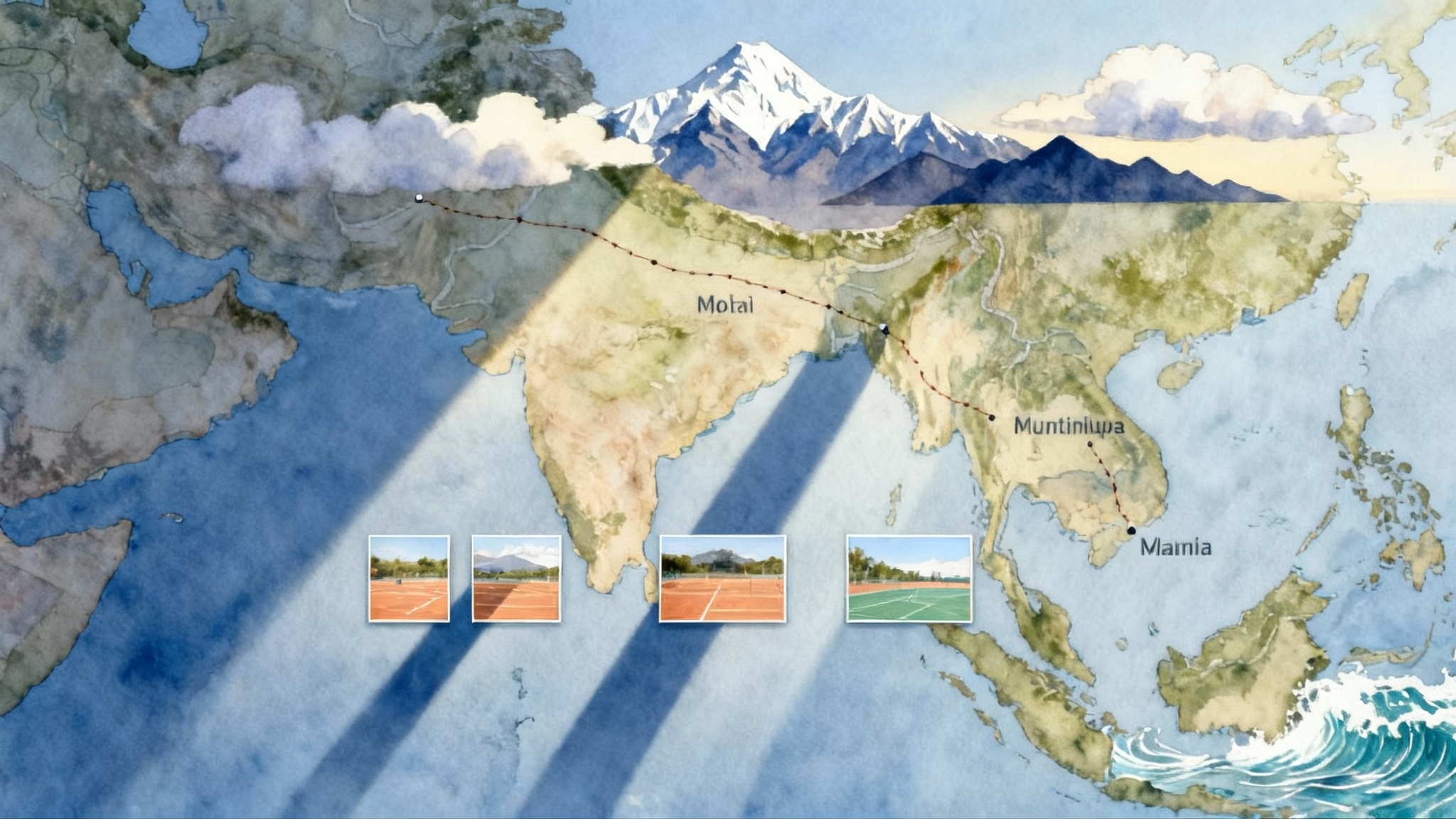
If you are driving the full triangle, the cleanest loop is Scottsdale to Las Vegas on U.S. Route 93, then Las Vegas to Palm Springs on Interstate 15, then Palm Springs back to Scottsdale on Interstate 10. Keep a simple rule for travel days: morning mobility routine, ninety minute hit if possible, then drive after an early lunch to arrive before sunset.
Sample daily template you can repeat
- Warmup, twenty minutes: joint prep, mini tennis, volleys, overhead rhythm.
- Technical block, forty minutes: one stroke priority and serve progression.
- Live ball, thirty minutes: pattern play connected to the technical focus.
- Conditioning finisher, ten minutes: lateral shuffle circuits or medicine ball throws.
- Afternoon match play, seventy five minutes: tiebreakers, serve games under a shot clock, returning to targets.
- Recovery, thirty minutes: feet up, light walk, stretch, protein and electrolytes.
Consistency beats novelty. Keep this template ninety percent intact and rotate only the technical focus and the live-ball goals. That stability reduces decision fatigue and reveals real improvement.
Packing and stringing, tailored to the desert
- Frames and strings: Bring two matching rackets and an extra set of strings in case a restring is needed after a dusty session. Pre-trip, write down your baseline tension and your Las Vegas tension so you can switch quickly.
- Shoes: Hard court shoes with solid outsole durability. Bring a second pair or replacement insoles, the dry air breaks down cushioning faster than you expect.
- Hydration and fuel: Aim for roughly five hundred to seven hundred milliliters of fluids per on-court hour with electrolytes during longer sessions. Pack portable salt and simple carbohydrate snacks for quick adjustments when the sun jumps.
- Sun management: Broad brim hat for off-court, vented cap for play, high SPF sunscreen, and a lightweight long sleeve for spectating.
- Filming kit: Small tripod, phone clamp, and a long charging cable. Video is your best coach between sessions.
Using UTR events and local match play
Universal Tennis Rating, shortened to UTR, events run frequently across the triangle. They match you by rating rather than age, which creates competitive but winnable matches during a training block. Use Friday travel days to check draws, then enter a Saturday or Sunday session. If your rating is new, start in a lower flight, bank confidence, and move up the next week. The point is to rehearse routines, not to chase a perfect rating in January.
When you do not have a formal tournament, set up two match days per week. Choose one with scoring pressure, like starting every game at thirty all, and one with tactical pressure, like first-strike rules that reward depth through the middle.
Budget snapshot and simple booking checklist
- Courts: Public facilities range from free to modest hourly fees, resorts higher with guest privileges. Reserve the entire week in blocks, then release as needed. The peace of mind is worth it.
- Camps and clinics: Target two or three day formats that fit around your own plan. Use them to solve one specific problem, not to overhaul your game.
- Lodging: Midweek is your friend. In Las Vegas, convention weeks move prices sharply. In Palm Springs, the tournament window is the pinch point. Scottsdale is steady but spikes around golf events. Book refundable rates, then monitor weekly.
- Fuel and groceries: Near-court neighborhoods often have local cafes that open early. When possible, stay within a ten minute drive of both a supermarket and your primary court site to reduce friction.
- Transport: If you plan to cover the full triangle, a standard car with good air conditioning is fine. Keep a cheap cooler for hydration, it will earn its trunk space within one day.
Booking checklist, one month before departure:
- Choose your route order and block ten morning courts across the first two weeks.
- Draft your technical priorities for Weeks 1 to 3 and align clinics to those topics.
- Confirm strings and shoes, write your altitudes and tensions in your notes.
- Save the official Indian Wells schedule link on your phone. Build one day of grounds pass viewing around practice windows.
- Identify two UTR events that fit your travel days and register early.
The finishing rally
The desert triangle works because it is both varied and predictable. Scottsdale’s warmth helps you build volume without feeling brittle. Las Vegas raises the pace and forces disciplined margins. Palm Springs stretches rallies and rewards patience, and then Indian Wells lets you learn by standing a few meters from the world’s best. The combination creates a clean arc from rhythm to pressure to mastery. Use the air’s honesty to sharpen your habits, and let the week-by-week plan carry you from the first session of January to a confident March.