2026 Indoor Tennis Dome Guide: Midwest and Northeast Hubs
Train year round without flying south. This 2026 guide maps the fastest growing indoor tennis dome hubs across Chicago, Minneapolis St. Paul, Detroit, Toronto and Ottawa, and Boston, with booking tactics and academy options.
 Tommy
Tommy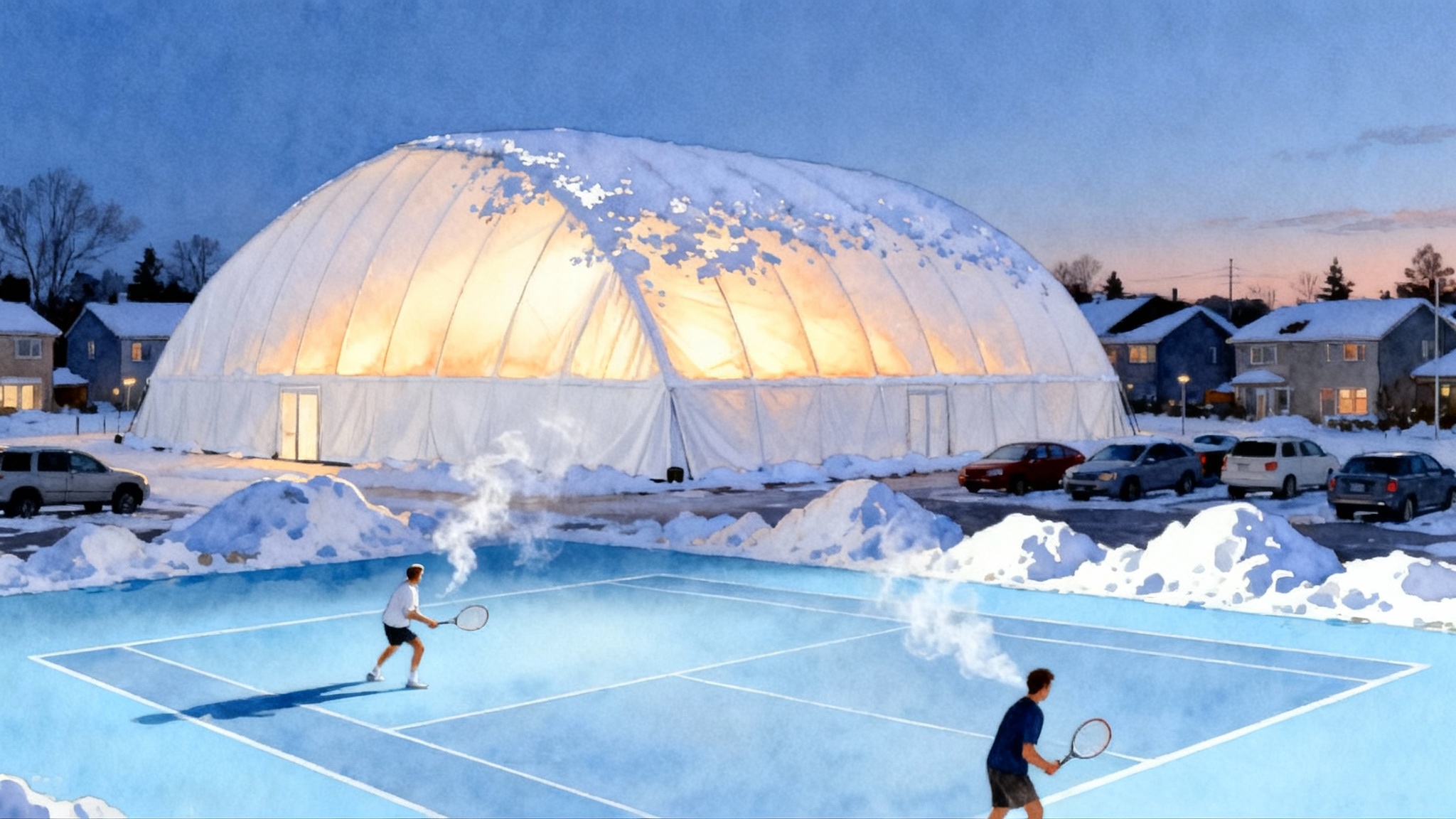
Why indoor domes are having a moment in 2026
Across the Midwest and Northeast, air‑supported tennis domes have shifted from seasonal backup plan to primary training habitat. They are fast to erect, cheaper than steel or brick, and they let communities scale courts exactly where players already live. For coaches and players, the payoff is simple. You get consistent temperatures, predictable lighting, and a court that is open whether it is sleeting in Minneapolis or slushy in Boston.
Chains and academies have leaned into this shift. In the United States, Life Time Tennis Academy runs plug‑and‑play winter training blocks that slot juniors and adults into ready‑made progressions across multiple cities. If you need a turnkey program, start by scanning Life Time Tennis Academy locations and matching your travel or work schedule to a nearby dome cluster. For a deeper look at the model, see our Life Time Tennis Academy pathway.
This guide highlights five metro areas where domes are easy to find and where a visitor or local can assemble a proper winter block without boarding a flight to Florida. You will find booking tactics, what plays differently indoors, and concrete academy options you can plug in today.
How domes play differently
A dome is a giant, gently humming balloon that keeps a pocket of warm, dry air around your court. That small difference changes the tennis you feel.
- Speed and bounce: Indoors, there is no wind to slow the ball, and the air is drier. That raises ball speed and flattens the arc. Most domes use cushioned acrylic or textile carpet on top of asphalt. Compared with outdoor hard courts, serves jump a touch higher while rally balls skid through sooner. If you rely on heavy, wind‑aided topspin outdoors, expect to aim a bit higher and give yourself more margin above the net for the first 15 minutes.
- Humidity: Dome air is controlled but often drier than a July league night outside. Dry felt stays sleek longer, so fresh balls feel crisp and fast for more points. After an hour of play, balls can fluff and slow a little, which favors the player who varies spin and height.
- Lighting and depth: Dome lights sit closer to the ball than stadium rigs. High lobs can clip bright zones. Treat the ceiling as a fifth opponent. If your local dome has darker backdrops, aim to finish points with lower, earlier contact rather than sky‑high lobs.
- Sound: The membrane reflects sound, which makes ball‑strike timing feel snappier. Call lines and scores clearly and early.
Practical adjustments you can make this week
- Drop string tension by 1 to 2 pounds, or switch to a slightly softer string to gain dwell time and control on faster indoor contact.
- Use a new can of balls every 60 to 90 minutes. Rotate cans for extended drills.
- Wear a base layer that wicks sweat and a light mid‑layer you can peel after your first 10 minutes.
- Warm up with 5 minutes of mini tennis and shoulder bands before serves. Your first 20 balls indoors decide the pace of the session.
Booking smarter in winter
Dome court time is scarce at peak hours. A few tactics help you outsmart the rush.
- Map booking windows: Many facilities open courts 3 to 7 days ahead at a fixed time. Set an alarm 2 minutes before the window with your credit card stored and your partner confirmed.
- Use waitlists efficiently: Add yourself to two time slots and drop the one you do not need when the first confirms. Be courteous and cancel early so others can take the slot.
- Go off‑peak: If you can play at lunch or after 9 p.m., you will often find better availability. For a 4‑week block, anchor two off‑peak sessions and two peak sessions so you always have reps.
- Book a lane, not a dot: Instead of hunting single courts, ask the desk about recurring blocks. A 4‑week same‑time reservation is easier for staff to protect than four scattered singles.
- Scan late openings: Snow days and sick days create same‑day gaps. Call the front desk at 9 a.m. and 3 p.m. These are the two moments when schedules reshuffle.
Build a winter training block without travel
A winter block is a simple bundle: four to six weeks, the same days, the same goals. Keep it boring and repeatable so progress compounds.
A sample 4‑week template for busy adults
- Monday: 90‑minute drilling. Focus on first‑ball quality and crosscourt consistency. Finish with 10 minutes of serve targets.
- Wednesday: Match play set with a partner at your level. Track two stats only: first‑serve percentage and unforced errors inside the baseline.
- Saturday: Academy group session for footwork and live ball patterns. Layer in 20 minutes of point‑start games.
- Two strength days: 30 minutes each, hinge and lunge patterns, plus scapular control. Keep soreness low so you never skip court time.
A sample 4‑week template for competitive juniors
- Three on‑court sessions: One technical, one pattern play, one match play with constraints.
- One academy practice: Choose a setting with fed‑ball volume and supervised points.
- Two strength and movement sessions: Short, high quality, include sprint mechanics and deceleration.
- Weekly review: Film 15 minutes of points. Pick one theme to fix next week.
Plug‑and‑play options that make this easy
- Life Time Tennis Academy groups in U.S. markets offer consistent schedules and level‑based drills, so you can drop in week after week without building a team from scratch. Explore the Life Time Tennis Academy pathway.
- SCORE in Ottawa serves Eastern Ontario and visiting families. Programs there make it simple to reserve courts, book group training, and add supervised match play under one roof. Start with the SCORE Tennis Academy overview and browse SCORE Ottawa tennis programs.
City guide: where the dome clusters are strongest
Below are practical snapshots. Facilities shift hours through the season, so call ahead to confirm specifics.
Chicago
Pattern of play
- Where to look: The North Shore suburbs and the corridor from the western suburbs toward O’Hare often concentrate domes. City players can also find seasonal bubbles attached to multi‑sport complexes.
- When to book: Weeknights fill 5 p.m. to 8 p.m. Consider late evenings midweek or early weekend mornings. Sunday late afternoon tends to open up after league lines finish.
- Surfaces: Expect cushioned acrylic with medium speed. Some domes use carpet that rewards early contact and compact swings.
How to set up a block
- Pair one academy group with one recurring partner hit. Many Chicago‑area chains allow recurring slots on a four‑week roll. Ask for a Monday or Tuesday anchor and add a floating weekend hit that you confirm on Thursday.
- If you coach or spar, bring two hopper labels: one for heavy spin drills, one for approach and volley. Dome time rewards planning, and a labeled hopper keeps you on track.
Travel note
- O’Hare proximity helps visiting players. Aim for hotels near the tollway corridors to cut drive time during snow.
Minneapolis St. Paul
Pattern of play
- Where to look: South and west of downtown you will find clusters in Edina, Bloomington, and nearby suburbs. University‑adjacent facilities offer seasonal bubbles as well.
- When to book: Weekend late mornings are popular family times. Try weekday early afternoons or 9 p.m. closes for reliable access.
- Surfaces: Many domes maintain medium‑fast acrylic. With dry winter air, the ball zips. A small tension drop makes control easier.
How to set up a block
- Anchor two nights per week for four weeks, then add one drop‑in academy session for patterns under pressure. Life Time locations in the metro make it easy to stitch a dependable schedule if you commute across the river.
- Movement matters here. Add 10 minutes of split‑step and first‑step drills before points. Cold air outside often means stiff hips. You want to feel springy before you serve.
Travel note
- If you arrive through Minneapolis–Saint Paul International Airport, budget extra drive time during snow and plug in a session close to your lodging to reduce risk of a missed booking.
Detroit
Pattern of play
- Where to look: The northwest corridor has a strong dome presence, and you will also find bubbles aligned with multi‑sport complexes in other suburbs.
- When to book: After‑school junior blocks are busy, which makes late evenings friendlier for adults. Early weekend mornings are a gift for doubles groups.
- Surfaces: Mostly acrylic, often with a bit of cushion. Balls stay lively longer than in humid summer air.
How to set up a block
- Adults: one drills night, one match night, and one short serve session. Many facilities let you reserve a serving court for a lower rate. Thirty minutes of serves indoors pays off fast.
- Juniors: ask about match‑play ladders that run inside academy nights. These give competitive touches without extra travel.
Travel note
- The airport is southwest of the core suburbs. If you are visiting, anchor sessions near where you sleep rather than ping‑ponging across town.
Toronto and Ottawa
Pattern of play
- Where to look in Toronto: Greater Toronto Area suburbs like Markham, Vaughan, and Mississauga stack domes near multi‑sport centers. Transit corridors help if you are visiting without a car.
- Where to look in Ottawa: Domes are tied to community clubs and multi‑court centers, including SCORE, which bundles courts and programs.
- When to book: After‑work blocks are tight in both cities. Midday windows are friendlier. Sunday evenings can also be workable.
- Surfaces: Mix of carpet and acrylic. Carpet rewards early prep and neutral stance returns. Acrylic plays closer to outdoor hard but with that extra indoor pop.
How to set up a block
- Toronto: Build a cross‑town calendar. One session north of the city and one west lets you hedge against traffic. For a four‑week block, alternate the two locations so you always have a backup.
- Ottawa: SCORE makes plug‑and‑play simple. Book a weekly program and one independent hit. Use the same partner for all four weeks to measure progress.
Travel note
- Winter storms can slow highways across both cities. Keep one flexible slot you can move inside the same week.
Boston
Pattern of play
- Where to look: The Route 128 corridor and the North Shore have the heaviest concentration of winter bubbles. City players can also find seasonal covers attached to clubs within a short drive.
- When to book: Post‑work peaks are intense. Early weekday mornings and late evenings are the pressure release valves. Saturday afternoons can open after junior programming wraps.
- Surfaces: Mostly cushioned acrylic. With dry air, slice skid bites hard, so practice low slices and deep recovery steps.
How to set up a block
- Adults: stack a 60‑minute serve‑plus‑one session on a weeknight, then a 90‑minute rally and point workshop on the weekend. Add 20 minutes of returns at the service line to simulate speed indoors.
- Juniors: choose one academy pattern class and one supervised match slot. Keep the rest of the week light to avoid burnout during school.
Travel note
- Snow can clog surface roads. Choose one club within 20 minutes of home or work and ride that routine for four weeks.
Surface and gear cheat sheet
- Strings: lower by 1 to 2 pounds. For polyester users, consider a slightly softer gauge. For multifilament users, a small tension drop can bring depth control.
- Shoes: pick an outsole with solid pivot grip. Carpet courts may require non‑marking soles. Ask the desk so you protect the surface and avoid fines.
- Balls: rotate fresh cans more often than in July. If you drill a lot, label cans for feeds versus live points.
- Layers: a thin base layer, a breathable top, and a packable jacket. You warm up fast, then cool fast when you rest.
- Hydration: dry air dehydrates quietly. Bring a full bottle and sip every changeover.
How to choose the right dome for your game
- Match your surface to your goals: Want to sharpen reactions and take time away from opponents? Pick carpet sessions. Want outdoor‑like feel? Choose cushioned acrylic.
- Check the ceiling height and backdrop: If you rely on heavy topspin or high lobs, a higher ceiling and dark curtains suit your game.
- Look at court spacing: Tighter courts save space but reduce safe chase zones. If you are training footwork patterns, ask for end courts where you can extend without traffic.
- Ask about ball policy: Some domes restrict outside balls or require specific pressureless practice balls for ball machines.
Weather, closures, and backup plans
Winter brings surprises. Protect your plan.
- Subscribe to text alerts. Many clubs send weather updates the moment they decide. Act on them quickly to grab newly freed slots.
- Build a two‑club safety net. Hold a membership or punch card at a secondary facility. If your main dome closes for snow removal, you can still train.
- Keep one at‑home workout ready. A 25‑minute band and movement circuit preserves rhythm on storm days. If you need a sun break and outdoor rhythm, scan our desert winter tennis guide for easy flight plans.
Example four‑week schedules by city
Use these as templates and pin them to your calendar. Adjust for school, commute, and snow.
Chicago, adult 4.0 singles player
- Weeknight: 60 minutes serve plus first ball at a North Shore dome.
- Weekend: 90 minutes academy group for live ball and patterns.
- Floating: Sunday evening match play, booked on Thursday.
Minneapolis St. Paul, junior tournament player
- Monday: Technical session, 75 minutes, focus on contact height and early prep.
- Wednesday: Academy night for volume and point starts.
- Friday: Supervised match play, two sets to four.
Detroit, adult doubles pair
- Tuesday: 90‑minute drilling on poach timing and middle control.
- Thursday: 60‑minute serves and returns, no points.
- Saturday morning: Two hours of sets with another pair.
Toronto, adult league player
- Tuesday night: 90 minutes at a west‑end dome, pattern play.
- Thursday lunch: 60 minutes serves and first‑ball depth.
- Sunday: Match play in the north suburbs.
Ottawa, junior performance block
- Monday: SCORE group class for footwork and live ball.
- Wednesday: 60 minutes technique with a coach, film 10 minutes.
- Saturday: Ladder matches under supervision.
Boston, adult 3.5 improving to 4.0
- Monday: 60 minutes serve targets and approach volleys.
- Wednesday night: Academy drills with point starts.
- Sunday morning: Singles set to six with stat tracking.
Budgeting and saving time
- Use punch cards or off‑peak passes. Prepaid packs usually drop the hourly rate. Ask if they pause for travel weeks.
- Share a lane. Two pairs can split a two‑hour block, each taking a side for 45 minutes, then finishing with cross‑court games.
- Hire focused coaching blocks. One 45‑minute check‑in every two weeks beats four scattered half‑lessons.
- Track only two metrics per month. Examples: first‑serve percentage and neutral rally error rate. Indoor progress loves focus.
Common indoor mistakes to avoid
- Same pace, every rally: Mix in height and spin to break the indoor skid. Add three high neutral balls in every third rally.
- Overhitting returns: Stand half a step farther back on first serves until you recalibrate.
- Skipping recovery steps: Indoors gives you less visual space. Rehearse split step, first step, and recovery at least five minutes per session.
The bottom line
Winter tennis no longer depends on a plane ticket. In 2026, domes across Chicago, Minneapolis St. Paul, Detroit, Toronto and Ottawa, and Boston give you the same ingredients that pros build seasons around. A controlled environment, predictable surfaces, and a calendar you can lock weeks in advance. Pick your surfaces, set a four‑week block, and lean on plug‑and‑play academies like Life Time in the United States and SCORE in Ottawa to handle the logistics. If you plan with intention, you will step into spring sharper, faster, and ready to play the outdoor ball you actually want.